When topping up becomes a regular chore, you’ll want a Level 2 charger that’s safe, code‑compliant, and future‑ready. You’ll match 240 V capacity to 40–60 A hardware, confirm UL/ETL listing and built‑in GFCI, and pick NACS or J1772 with the right adapter. You’ll weigh app reliability, OCPP/local control, solar surplus use, and load sharing that won’t trip breakers under NEC. Here’s how to choose smartly—and avoid expensive surprises.
Key Takeaways
- Choose UL-listed Level 2 EVSE (UL 2594/2231) with 20 mA GFCI, NEMA 3R–4 enclosure rating, and published temperature derating suitable for your climate.
- Match connector to your car: SAE J1772 or Tesla NACS/SAE J3400; use only listed adapters rated for full current and thermally robust.
- Size power appropriately: 32–48 A output (7.6–11.5 kW) covers most homes; follow 80% continuous-load rules, breaker labeling, and onboard-charger limits.
- Choose installation: plug-in NEMA 14-50 (40 A continuous) or hardwired 60 A (48 A output); plan permits, inspections, cable length, and cord management.
- Prioritize smart features: reliable app, Wi‑Fi/Ethernet, OTA updates, OCPP/local API, energy monitoring, scheduling, load sharing, solar integration, and safe offline fallbacks.
What a Level 2 Home Charger Is and How It Works
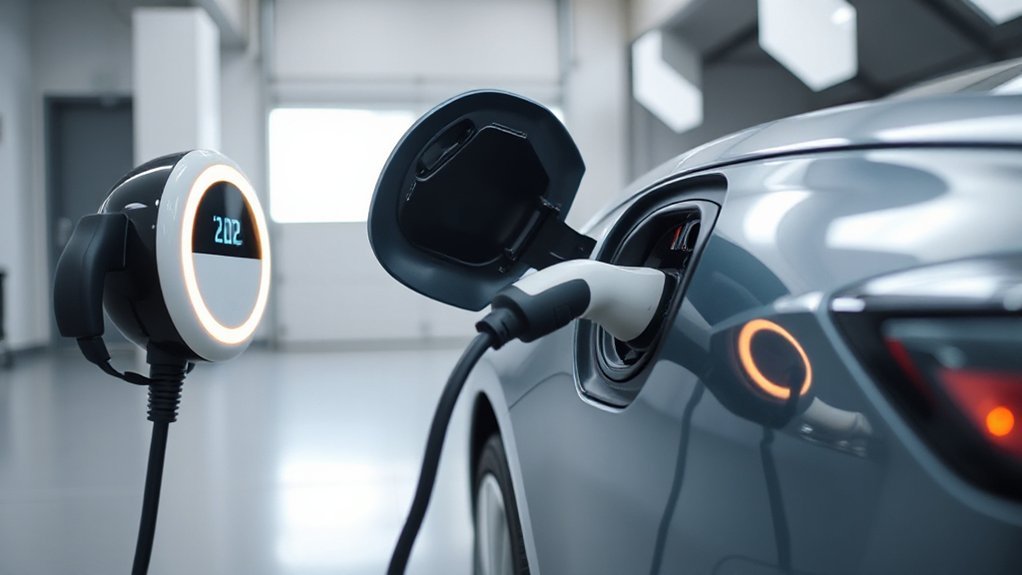
A Level 2 home charger is a listed EVSE that supplies 208–240 V AC to your EV through a J1772 or NACS connector and typically delivers about 3.3–19.2 kW, depending on the circuit and unit rating. It’s not a battery; it’s a smart switch. You plug in, the EVSE and vehicle exchange pilot and proximity signals, it verifies ground, GFCI readiness, and temperature, then closes a contactor to energize. You should install on a dedicated breaker per NEC 625, with conductors sized for continuous load and a disconnect where required. Choose an enclosure rated for the location. Follow maintenance tips: inspect cable strain reliefs, test the GFCI, and update firmware. Ignore consumer myths—properly installed Level 2 charging is safe, efficient, and grid-friendly and code compliant.
Charging Speed Explained: Kw, Amps, and Miles per Hour
Because charging speed depends on power, you’ll see it expressed in kilowatts (kW), which equals voltage times current (V×A) divided by 1,000. On 240 V circuits, amps set the ceiling: 16 A (~3.8 kW), 32 A (~7.6 kW), 48 A (~11.5 kW). Your EV’s onboard charger and the breaker rating limit draw; size wiring per NEC, and use a dedicated circuit. To estimate miles per hour, use conversion math: miles/hr ≈ (kW × efficiency) ÷ Wh/mi. Account for efficiency losses (cable, electronics, battery temperature), typically 5–15%.
| 3.8 kW | 12–18 mi/hr |
|---|---|
| 7.6 kW | 24–36 mi/hr |
| 11.5 kW | 34–54 mi/hr |
Choose the highest safe continuous load at 80% of breaker rating. Verify labeling and permits before installation.
Connector Types: J1772 Vs Tesla NACS and Adapters
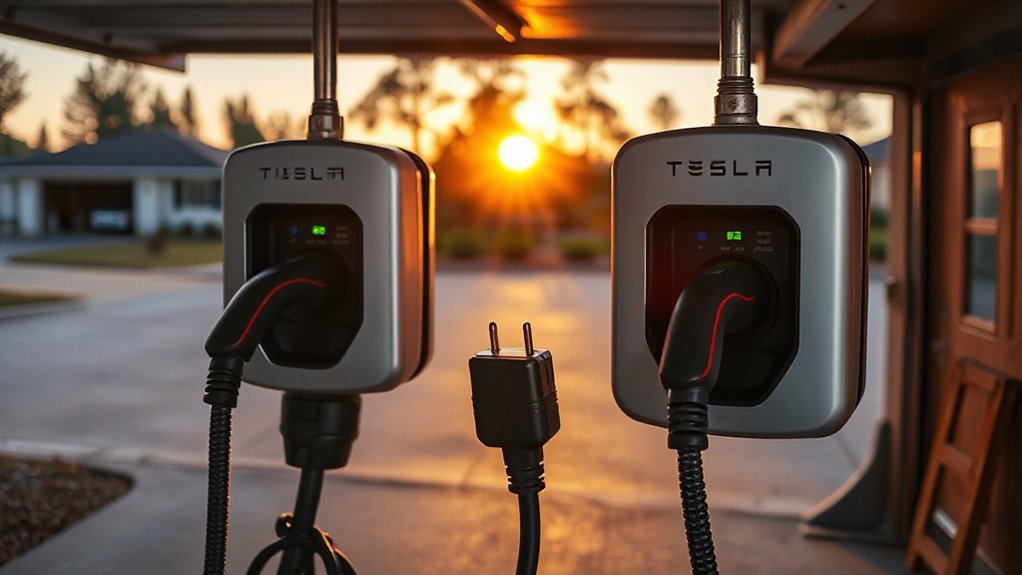
While Level 2 charging relies on the same AC signaling, North America uses two connector families: SAE J1772 and Tesla’s NACS (now SAE J3400). Most non-Tesla EVs since 2011 ship with J1772 ports; many 2025 models adopt NACS. You should match the EVSE plug to your vehicle, or use an adapter only if it’s UL/ETL listed, rated for the full current, and thermally robust. Avoid unlisted dongles; poor contacts overheat.
For branch circuits, size per NEC: EVSE is a continuous load, so 40 A output requires a 50 A breaker. Choose units with integrated 20–30 mA ground-fault protection.
Adapters work both ways (J1772-to-NACS and inverse), but verify enclosure ratings, strain relief, and warranty coverage. Patent disputes aside, Standard evolution favors J3400 convergence across manufacturers.
Smart Features to Look For: Apps, Scheduling, and Energy Monitoring
Beyond connector choice and breaker sizing, smart features shape how your Level 2 charger behaves day to day and what it costs to run. Look for a stable app with Wi‑Fi or Ethernet, offline fallbacks, and secure logins. Scheduling should support utility time‑of‑use rates, departure targets, and minimum‑charge thresholds, with local override. Energy monitoring must report kWh, amperage, and session cost, export CSV, and integrate with solar or home energy management. Seek load sharing to balance multiple EVs on one circuit. Confirm over‑the‑air firmware updates and clear release notes. Open standards (OCPP or local API) enable integrations and voice control while preserving privacy controls. Evaluate account deletion, data retention, and local‑only modes. Finally, require robust authentication and encrypted communications. Detailed audit logs aid accountability.
Safety and Reliability: UL Listing, GFCI, and Temperature Performance
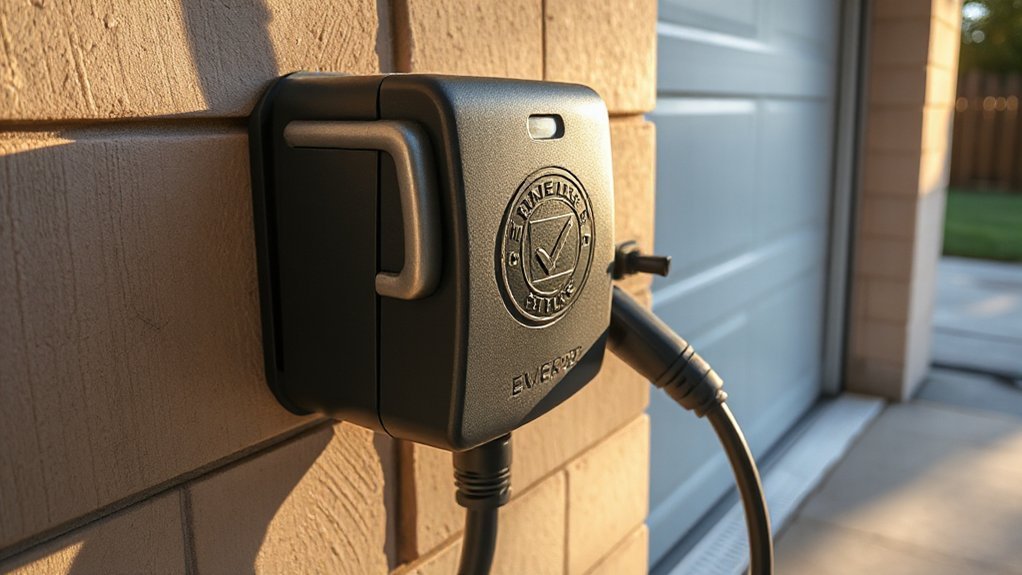
When you choose a Level 2 home charger, insist on third‑party safety certification and proven protections before anything else. Look for a UL or cUL listing, a built‑in 20 mA GFCI, ground monitoring, and welded relays rated for continuous duty. Verify environmental sealing (NEMA 3R or better) and strain‑relieved, oil‑resistant cables to prevent thermal degradation and moisture ingress. Demand temperature derating data, sensor placement, and recovery behavior.
| Factor | What to verify |
|---|---|
| UL/cUL | Standard number (UL 2594/2231), production surveillance |
| GFCI | 20 mA trip, self‑test, lockout on fault |
| Temperature | Operating −22°F to 122°F, derate curve published |
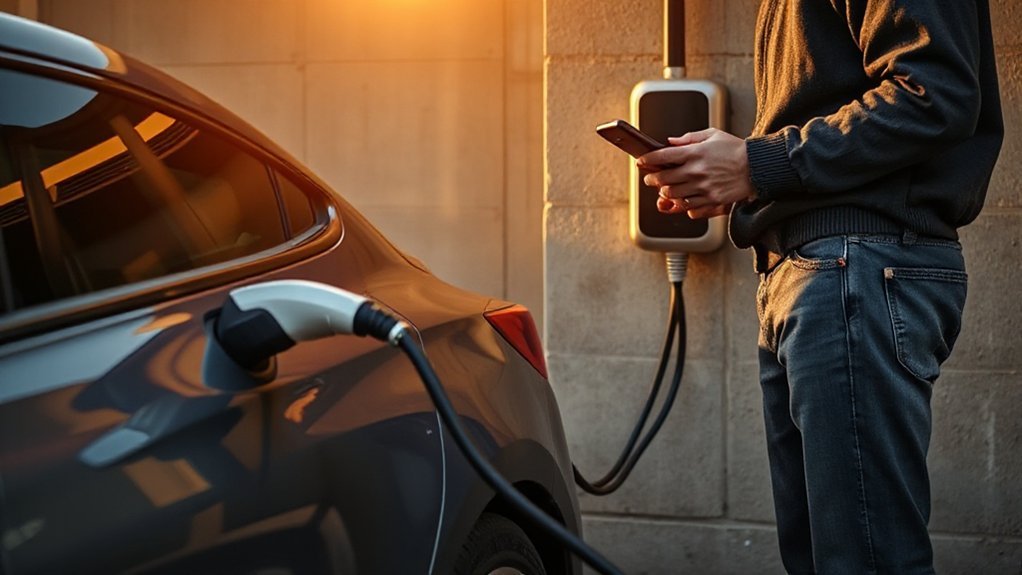
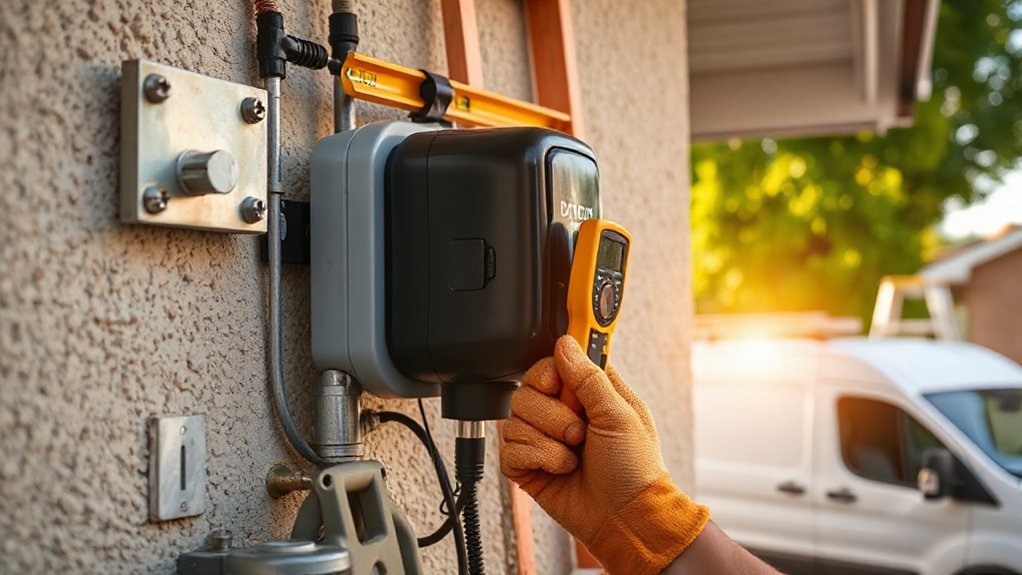
Also confirm surge immunity (IEEE C62.41), clear labeling, and tamper‑resistant enclosures. Run self‑tests before first charge; check logs for nuisance trips. If any protection faults, stop use and contact manufacturer.
Installation Choices: Hardwired Vs Plug‑In, 40A Vs 48A Circuits
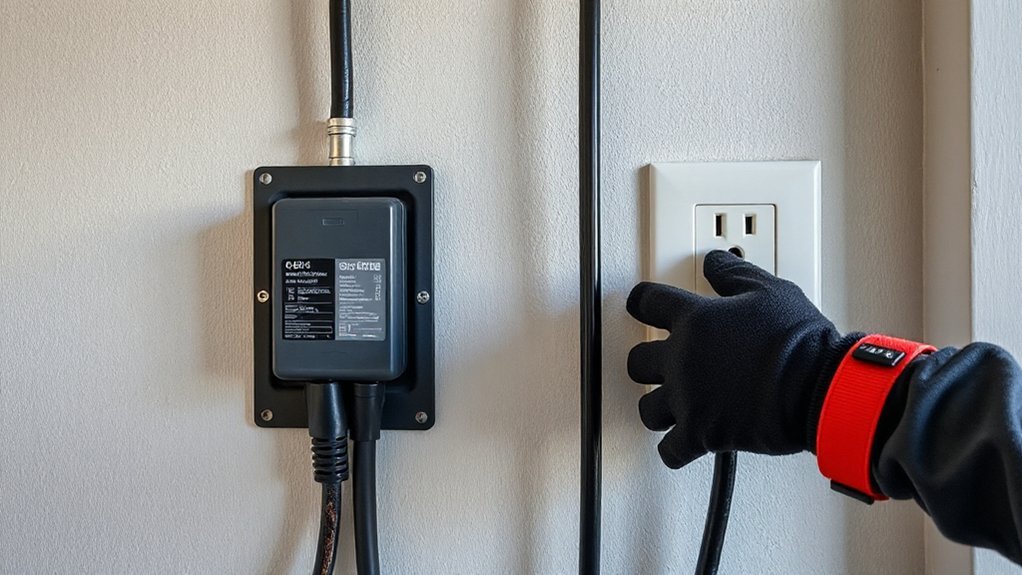
Although both options can be safe, your installation choice dictates allowable current, reliability, and code obligations. Plug‑in EVSEs use a NEMA 14‑50 or 6‑50 receptacle on a 50A circuit and are limited to 40A continuous by code’s 80% rule. They’re flexible, but receptacle heat, cord strain, and nuisance trips from required GFCI receptacles can reduce uptime. Hardwired units eliminate the receptacle, improve connections, and can deliver 48A on a 60A circuit, maximizing onboard‑charger rates. Obtain Local permits, complete load calculations, and schedule inspection; utilities may offer rebates. Verify breaker type, conductor sizing, and bonding. If the EVSE isn’t within sight, add a lockable disconnect. Choose hardwired for permanence and resale appeal; plug‑in for portability. Either choice can enhance Property value when installed correctly today.
Practical Hardware Factors: Cable Length, Holsters, and Indoor/Outdoor Ratings
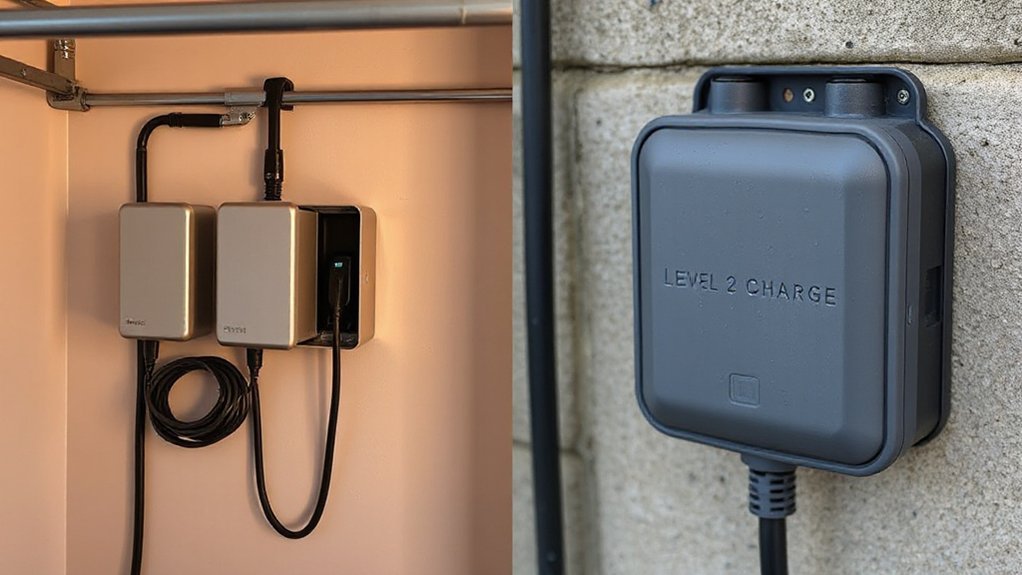
While power ratings set the ceiling, practical hardware choices—cable length, holster design, and enclosure rating—govern daily usability and safety. Choose a cable length that reaches your charge port without stretching across walkways; 18–25 feet suits most garages, but verify local code on tripping hazards and mounting height. Favor robust holsters that fully capture the J1772/NACS handle, protect pins, and provide positive retention; integrated Cord Management keeps loops off the floor and reduces strain relief fatigue. For outdoor installs, require NEMA 4 enclosures, UV-stable plastics, stainless hardware, and continuous Weatherproof Seals around doors and knockout entries. Indoors, NEMA 3R/IP54 is often adequate, but avoid ceiling drape and heater proximity. Confirm cold-weather flexibility ratings for cables and a replaceable holster. Label hooks and torque fasteners correctly.
Load Sharing and Dynamic Load Management for Multi‑EV Homes
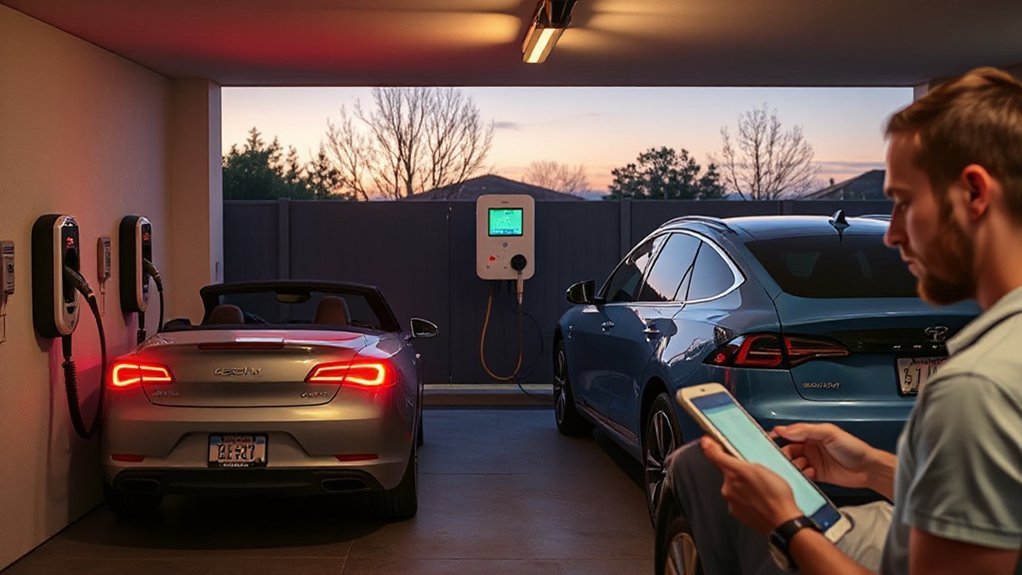
With smart load balancing, you allocate amperage across multiple EVSEs to stay within the service limit using NEC 625 and 220 load calculations. You configure multi‑EV charging schedules to prioritize vehicles, shift load to off‑peak rates, and prevent nuisance trips. Use networked chargers or a panel‑level DLM controller, verify OCPD sizing, and commission the system under monitored conditions before full load.
Smart Load Balancing
Coordinating multiple EV chargers in one home hinges on smart load balancing—load sharing and dynamic load management that allocate available amperage across EVSE so you never exceed the branch circuit, feeder, or service rating. You deploy controllers that read service capacity, EVSE setpoints, and real‑time current via CTs, then proportion output using priority rules. Systems should support NEC 625 and 220 load calculations, respect breaker limits, and fail safe to reduced current on comms loss. Look for Predictive Optimization that anticipates demand spikes from other appliances and preemptively trims EV current. Require hard‑wired networking or secured Wi‑Fi, TLS, and signed updates; Firmware Security matters. Verify UL 2594/2231 listing, HACR‑rated breakers, neutral handling for 120/240 V, and commissioning logs for AHJ review and periodic verification.
Multi‑Ev Charging Schedules
In a multi‑EV home, you schedule charge windows and priorities so each vehicle gets the energy it needs without exceeding branch, feeder, or service limits. Use a charger or EMS that measures real‑time service amperage and enforces per‑circuit limits, NEC 625 and 220 demand factors, and breaker ratings. Assign primary, secondary, and guest profiles with kWh caps, departure times, and minimum SOC targets. Apply guest protocols and policy templates so visitors charge safely without overriding household capacity. Enable dynamic load management to throttle outputs when the dryer, range, or heat pump spikes. Prefer OCPP‑capable units for schedule coordination and utility TOU signals. Log events, verify GFCI readiness, and fail‑safe to reduced current on communication loss. Test schedules after firmware updates and after power changes.
Solar and Home‑Energy Integration, Open Protocols, and OCPP
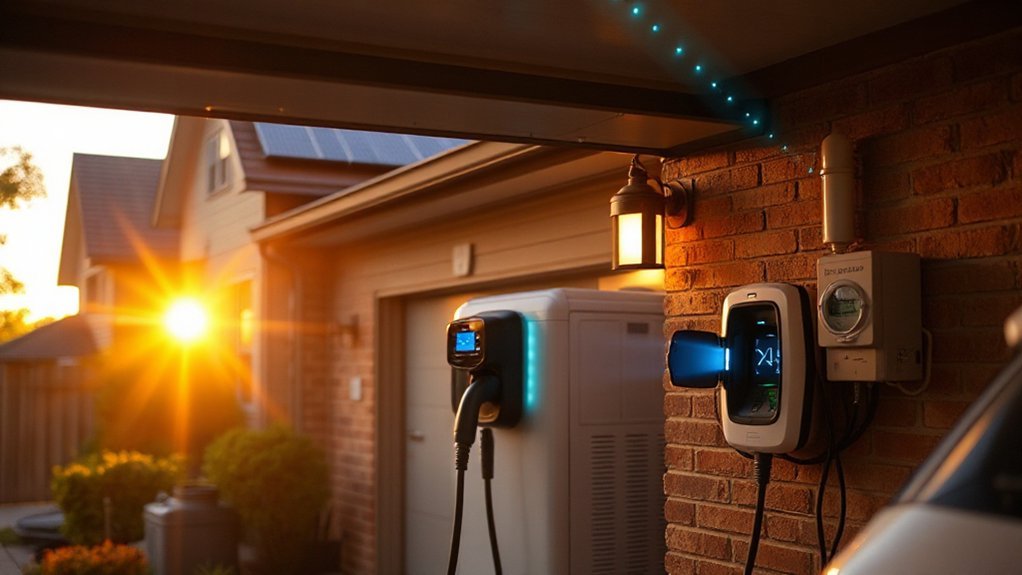
You can configure your Level 2 charger for solar surplus charging by using CTs or inverter telemetry to modulate current, preventing backfeed and meeting NEC 690/705 interconnection rules. For load balancing integration, pair the EVSE with a listed energy management system to respect service capacity and breaker ratings (e.g., NEC 625, 220) while coordinating with other loads. Select equipment that supports open protocols—OCPP 1.6/2.0.1 and secure local APIs—so you retain interoperability, reliable updates, and safe fail‑safe behavior across chargers, EMS, and utility programs.
Solar Surplus Charging
While rooftop PV can offset EV charging, solar‑surplus charging targets only the kilowatts that would otherwise export to the grid. You pair your charger with PV/inverter telemetry or CT sensors to modulate amps in real time, honoring service limits and code. Open protocols (OCPP 1.6/2.0.1, SunSpec, Modbus) let the charger follow solar, enable surplus forecasting, and log surplus monetization.
- Choose a unit with UL 2594/2231, integral GFCI, and adjustable pilot current; require installer to commission CT polarity and verify anti‑islanding behavior.
- Configure “PV‑only” mode, a minimum hold at 6–8 A, and a safe fallback to schedule or stop on grid import.
- Use OCPP to expose meter values, set export thresholds, and integrate with tariffs for credits or VPPs in your area.
Load Balancing Integration
Beyond PV‑only control, load balancing keeps EV charging within service, feeder, and busbar limits in real time. You meter mains, solar, and critical loads, then modulate the EVSE pilot current so total demand stays below breaker and utility service ratings. Prioritize life‑safety and essential circuits; shed or delay EV load during HVAC or cooking peaks. Choose controllers that support open protocols (Modbus, SunSpec, IEEE 2030.5) and basic OCPP smart charging profiles without proprietary lock‑in. Verify Utility integration for demand response and time‑varying limits. Require Cybersecurity integration: TLS, certificate management, signed firmware, and role‑based access. Configure per NEC 625, 220, and 705; set minimum/maximum amperes, phase limits, and brownout thresholds. Test fail‑safe behavior—on comms loss, the charger must ramp down or stop to protect equipment.
OCPP Interoperability
How does your Level 2 charger stay open, secure, and grid‑aware? Choose OCPP‑compliant hardware and firmware that support 1.6J or 2.0.1, TLS, and secure boot. Open protocols let you pair the EVSE with solar inverters, home batteries, and demand response without vendor lock‑in. Confirm version governance, utility tariffs, and metering accuracy before commissioning.
- Verify OCPP certificate management, CSMS failover, and offline authorization lists.
- Require interoperability testing against your CSMS, inverter, and EMS; validate smart charging profiles and EIM.
- Map Modbus/SunSpec to OCPP data fields; align CT polarity, phase mapping, and safety limits.
With OCPP smart charging (Profile 1/2), you can time-shift loads to solar surplus, enforce NEC 625 limits, and track kWh. Keep firmware updated, rotate keys, and audit logs. Document vendor upgrade timelines.
Costs, Incentives, Warranties, and What “Future‑Ready” Really Means
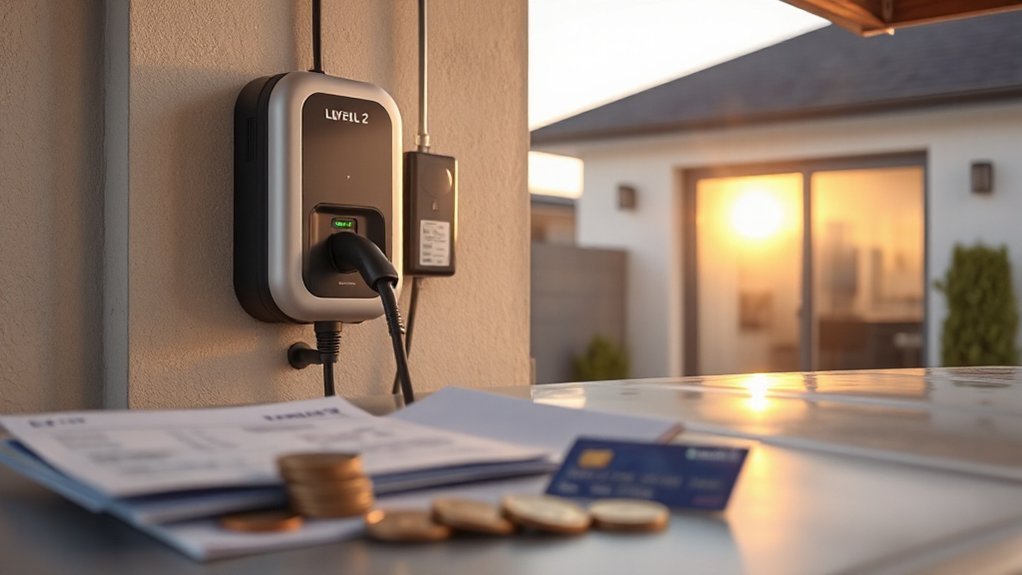
What does “future‑ready” really mean for a Level 2 home charger—and how do costs, incentives, and warranties shape a safe, code‑compliant install? It means 60A capable hardware on a 75A feeder or adjustable current with load management, Wi‑Fi plus Ethernet, OCPP, and firmware updates. Budget for NEMA 3R enclosures, GFCI protection, permits, and utility coordination. Track total cost of ownership, not sticker price. Verify Warranty Transparency, UL listing, and parts availability. Capture incentives early; watch Incentive Expiry and inspection deadlines.
| Item | Spec/Note | Action |
|---|---|---|
| Hardware cost | $500–$1,200; select 48–80A capable | Confirm UL, NEMA 3R, firmware updatable |
| Installation | $600–$2,500; permits, AFCI/GFCI as required | Size feeders per NEC 625, 125% rule |
| Incentives | Utility/state rebates; tax credits | Confirm eligibility and Incentive Expiry |
Prioritize safe, scalable, code‑compliant performance today.
Conclusion
You’ve got the guidance to pick a future‑ready Level 2 charger. Prioritize properly sized 240‑V circuits, adjustable 40–60 A hardware, and UL/ETL listings with built‑in GFCI. Choose connectors carefully—native NACS or J1772 with a vetted adapter. Favor solid software: stable apps, scheduling, and OCPP/local APIs. Seek safe, sealed enclosures, sturdy cables, and NEC‑compliant installation by a licensed electrician. For multiple EVs or solar, select smart load sharing and surplus‑aware control. Buy once, charge confidently daily.