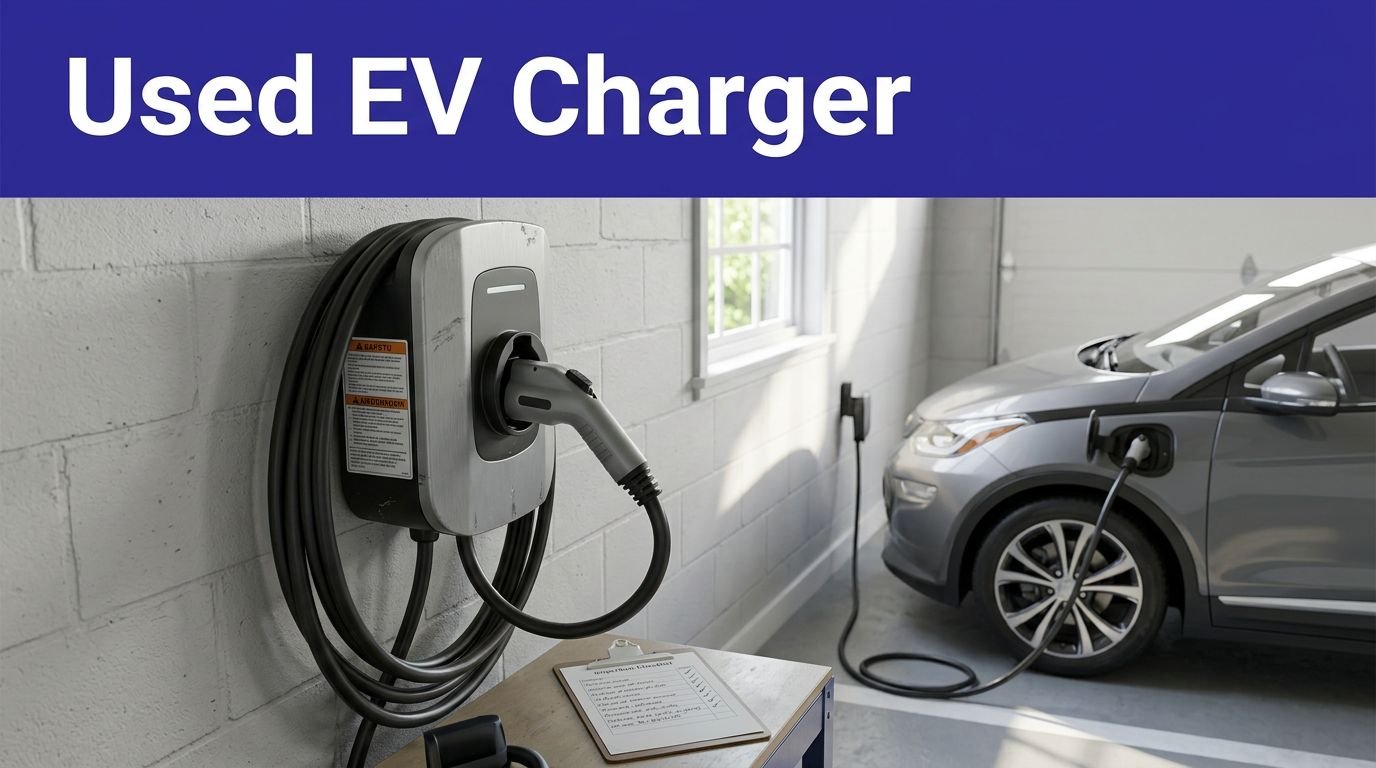
You’re weighing rugged NEMA‑4 aluminum against a polished app and 50 A headroom. Grizzl‑E delivers 40 A (9.6 kW) with simple OCPP‑friendly control and budget‑minded durability; ChargePoint Home Flex pushes up to 50 A (12 kW), with OTA diagnostics, load management, and utility integrations. Both use SAE J1772 and follow NEC 80% continuous‑load sizing. But installation method, circuit limits, and rebate eligibility could tip the scales next.
Key Takeaways
- ChargePoint Home Flex delivers up to 50 A (~12 kW); Grizzl‑E maxes at 40 A (~9.6 kW), both constrained by vehicle and circuit limits.
- Grizzl‑E’s NEMA 4 aluminum, potted design is more rugged; ChargePoint’s NEMA 3R polycarbonate handles rain but is less dust/jet resistant.
- In cold climates, Grizzl‑E’s TPE cable rated to −40°C stays more pliable; ChargePoint’s TPU cable is typically rated to about −30°C.
- ChargePoint can be hardwired for 48–50 A on 60 A circuits; both support plug‑in 50 A circuits with configurable current limits.
- ChargePoint’s integrated cradle and cable wrap keep things tidy; Grizzl‑E’s simple holster tolerates rough handling and off‑axis parking.
Charging Speed and Power Options
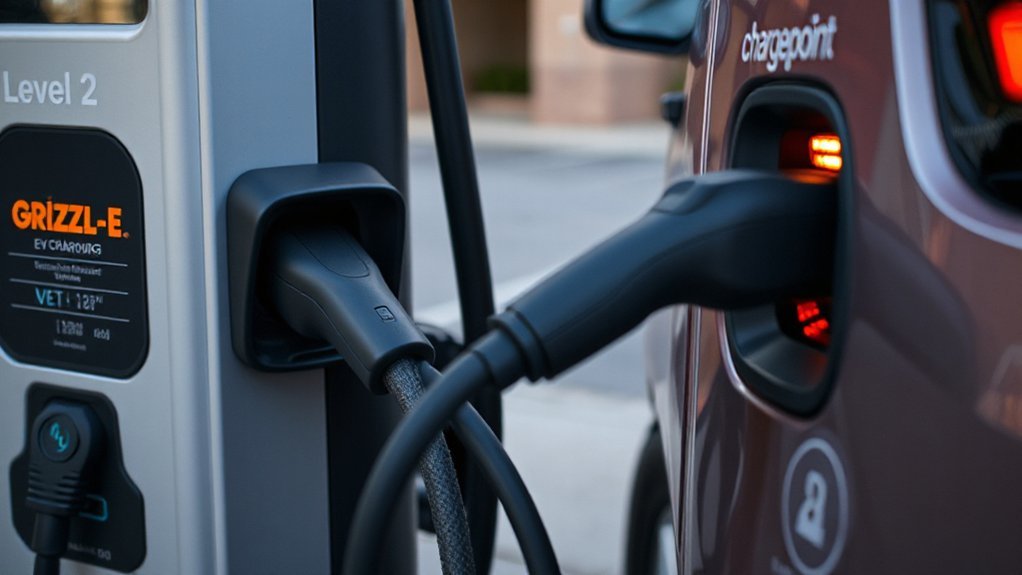
Metal housings aside, the key difference is output: Grizzl‑E (Classic/Smart) is a Level 2 EVSE rated up to 40 A continuous at 240 V (≈9.6 kW), with DIP‑switch selectable current limits at 16/24/32/40 A to match breaker capacity (e.g., 20/30/40/50 A). Compared with ChargePoint Home Flex, which delivers up to 50 A at 240 V (≈12 kW) and configures 16–50 A for 20–60 A circuits, you’ll choose based on available service and your car’s onboard charger. Per SAE J1772, the EVSE advertises a pilot; the vehicle dictates charging curves and actual draw. Both units implement safe power throttling—thermal or user‑set—to honor NEC 625’s 80% rule and upstream limits. Expect roughly 21–38 miles/hour across 7.2–12 kW, depending on efficiency (~3–3.5 mi/kWh) and ambient temperature conditions.
Build Quality and Weather Resistance
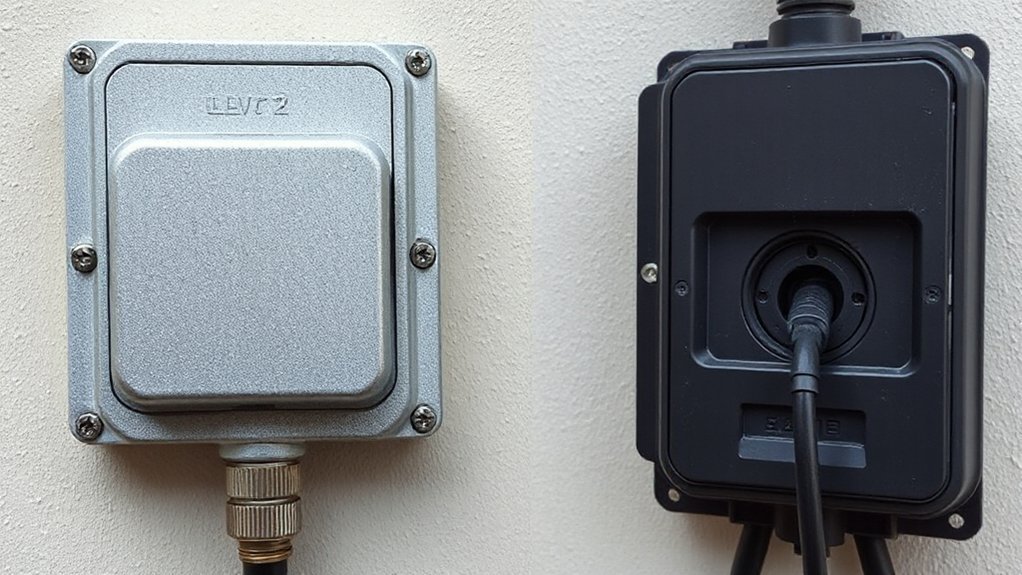
Although both units are outdoor‑rated, their enclosure specs diverge: Grizzl‑E uses a sealed NEMA 4, gasketed aluminum housing (cUL/UL 2594, UL 2231‑1/‑2), while ChargePoint Home Flex employs a NEMA 3R polycarbonate enclosure (UL 2594, UL 2231‑1/‑2, Energy Star). You’ll see clear differences in splash resistance, dust exclusion, and robustness. Grizzl‑E’s metal body and potted electronics suit harsher sites; Home Flex favors lightweight, clean mounts.
Grizzl‑E’s NEMA 4 metal shell suits harsh weather; Home Flex’s 3R polycarbonate favors clean installs.
- Ingress: NEMA 4 blocks hose‑directed water and dust; 3R resists rain/sleet, not dust jets.
- Temperature: Grizzl‑E −30°C to 50°C; Home Flex −30°C to 50°C; derating varies with ambient.
- UV/impact: Aluminum with powder coat vs UV‑stabilized polycarbonate; IK impact favors metal.
- Longevity: Material sourcing, gasket chemistry, fastener alloys, and corrosion testing (ASTM B117 salt fog) drive lifecycle.
Smart Features and App Experience
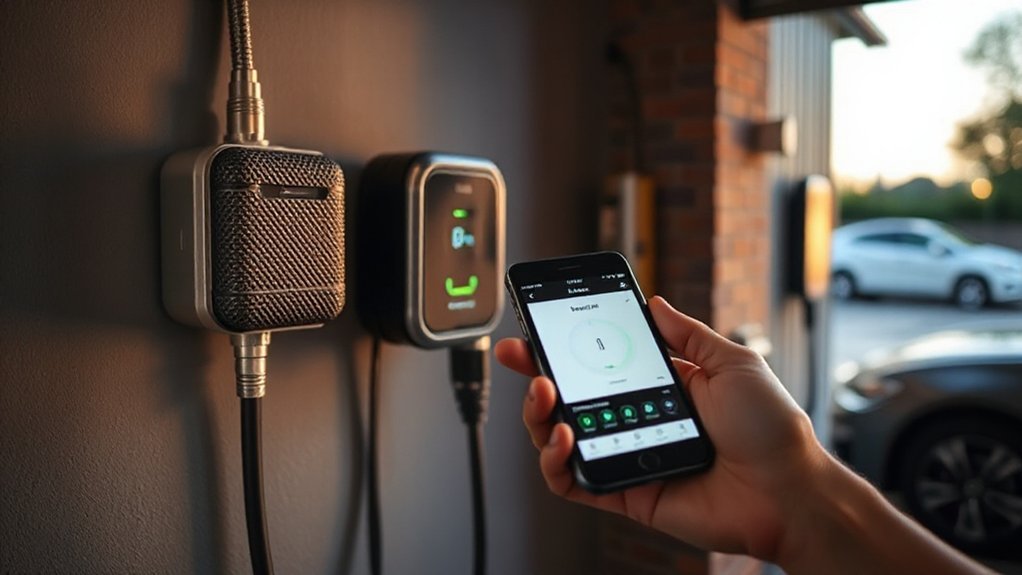
How do their smart stacks actually differ? ChargePoint Home Flex runs a closed, polished platform: Wi‑Fi (2.4 GHz), Bluetooth onboarding, secure OTA updates, and a mature app with scheduling, usage kWh/cost reports, utility demand‑response enrollment, and Alexa support. Its user interface is refined and responsive, and ChargePoint’s backend offers device health telemetry and remote diagnostics with high uptime. Grizzl‑E Smart targets openness: OCPP 1.6J over Wi‑Fi enables third‑party apps (e.g., AmpUp/ChargeLab), fleet rules, and standards‑based session data. You get core features—start/stop, 15‑minute schedules, firmware updates, and basic alerts—plus operator‑grade remote diagnostics via OCPP. Security differs too: ChargePoint uses app‑account control in a proprietary cloud, while Grizzl‑E favors standards (TLS/WPA2, OCPP authentication), trading slickness for interoperability. For data portability, Grizzl‑E’s openness benefits most power users.
Installation: Plug-In Vs Hardwired
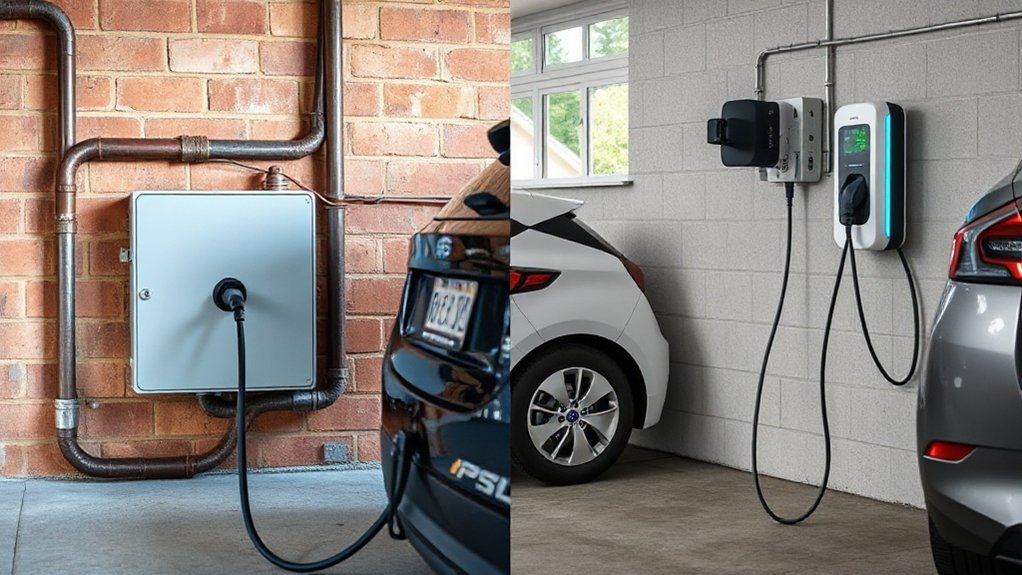
You’ll size the circuit first: plug-in EVSE on a NEMA 14-50 or 6-50 at 240 V typically draws 32–40 A continuous, so NEC 625/210 require 125% continuous-load sizing (e.g., 40 A EVSE → 50 A breaker), while hardwired units can run 48–80 A on dedicated conductors with a disconnect. You can DIY a plug-in if a code-compliant receptacle with required GFCI protection already exists, but hardwiring usually needs a permit, a licensed electrician, and inspection per local amendments. You’ll gain portability with plug-in (unplug and move in minutes), while hardwired is fixed and requires labor to remove and reterminate.
Electrical Circuit Requirements
While both units can run on a dedicated 240 V branch circuit, their plug-in vs hardwired options drive different breaker, receptacle, and conductor requirements under NEC 625. You’ll size the circuit as a continuous load at 125% of nameplate current, then verify ampacity and voltage drop.
- Plug-in Grizzl-E (32–40 A) on a NEMA 14‑50/6‑50 requires a 50 A breaker; use #6–#8 Cu depending on length and 75°C lugs; hold branch-circuit voltage drop to ≤3%.
- Hardwired Grizzl-E at 40 A still uses a 50 A breaker; omit receptacle, wet-location enclosure if outdoors.
- Plug-in ChargePoint (up to 40 A) mirrors 50 A breaker sizing; receptacle listed for EV use.
- Hardwired ChargePoint at 48–50 A needs a 60 A breaker and #6 Cu; follow 625.41 ground-fault provisions.
DIY Setup Vs Electrician
With circuit sizing established, the choice between DIY and hiring an electrician largely tracks plug‑in vs hardwired. For a NEMA 14‑50 or 6‑50 plug‑in Grizzl‑E or ChargePoint, you can mount the EVSE, verify GFCI protection isn’t duplicated, torque terminals to spec, and perform continuity and load tests. Hardwired installs trigger different requirements: dedicated disconnects in some jurisdictions, wet‑location fittings, proper conduit fill, and inspection. A licensed electrician verifies NEC 625, 210.8(F), and 110.14(D) compliance, correct breaker type, and labeling.
Perform a candid Skill assessment. If you’re not proficient with permit processes, voltage drop calculations, conductor derating, and fault‑current availability, hire out. Liability concerns matter: improper terminations overheat, void warranties, and jeopardize coverage. Document torque values and photos for commissioning and utility rebates where applicable.
Portability and Relocation
Although both units can deliver similar energy over time, plug-in configurations prioritize portability, whereas hardwired installs become effectively fixed assets. You can unplug a NEMA 14‑50 Grizzl-E in minutes and redeploy at any site with a 50A receptacle; ChargePoint Home Flex offers plug-in variants, yet many installs are hardwired for NEC 625 continuous-load compliance. For relocations, you’ll manage transport logistics, IP67/65 enclosure limits, and storage solutions that prevent cable kinks. Plan cord management and verify EVSE firmware region settings.
- Time: plug-in move ≈5–10 minutes; hardwired decommission/reinstall ≈1–3 hours.
- Tools: plug-in needs none; hardwired requires disconnect, torque, and insulation tests.
- Electrical: verify 40A–48A circuit capacity, GFCI protection, and conductor gauge.
- Site: confirm mounting height, drip loops, and receptacle orientation meet code.
Cable Length and Management
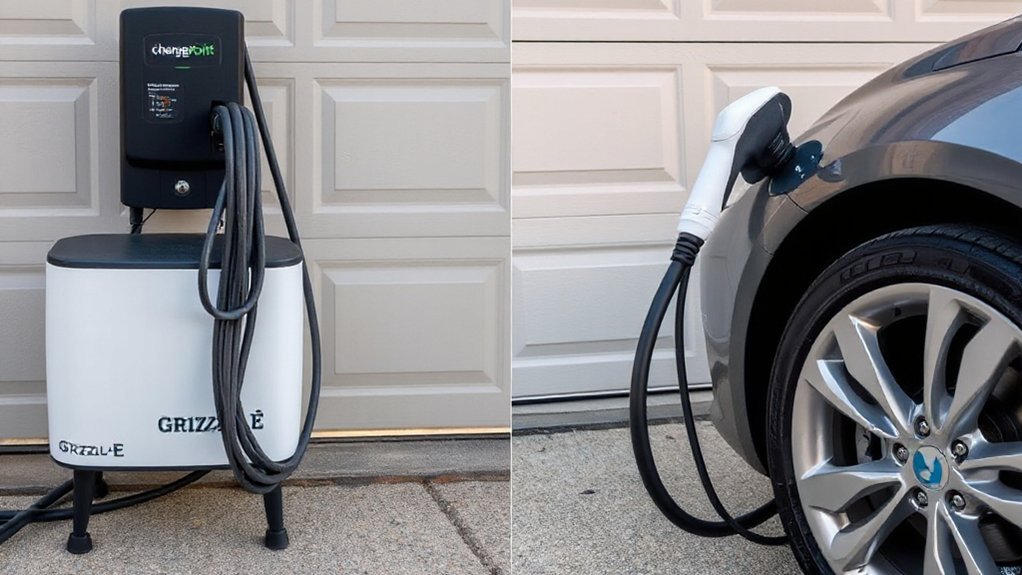
You should compare cable length options against NEC 625’s 25 ft maximum and your parking geometry, noting that many home EVSEs ship with ~23–24 ft leads that determine reach and strain relief. Evaluate holster and docking—integrated J1772 docks, cable wraps, or wall-mount hangers—confirming UL/CSA listing and secure latch retention per SAE J1772. For cold-weather flexibility, check jacket material and temperature ratings (e.g., bend performance to about -30°C) so the cable stays pliable, coils safely, and avoids trip hazards in winter.
Cable Length Options
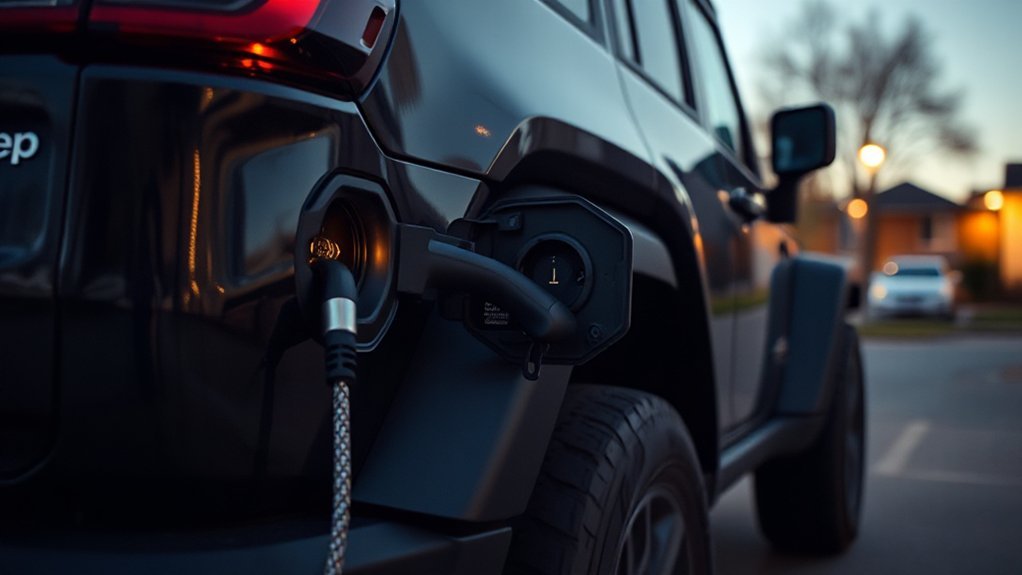


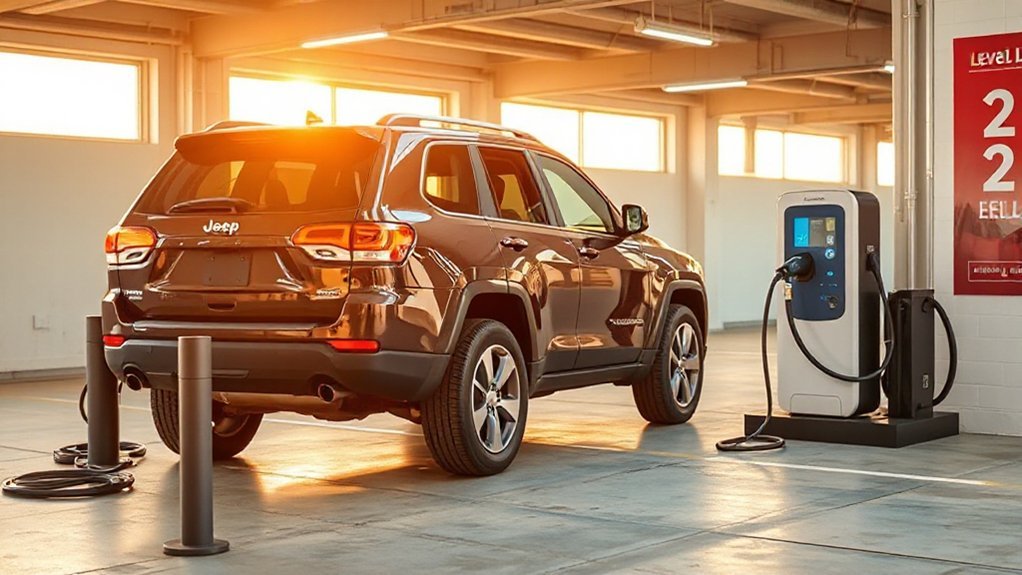
Two practical cable-length profiles distinguish Grizzl‑E and ChargePoint Home Flex. Grizzl‑E lets you choose 18‑ft or 24‑ft J1772 cables; ChargePoint standardizes on a 23‑ft lead. Both comply with NEC 625 (≤25 ft) and UL 2594 bend/strain requirements. Balance reach, voltage drop, and Aesthetic impact: longer cords cover more but add coil bulk. For Theft prevention and trip‑hazard mitigation, shorter spans reduce exposure in shared parking. At 40 A continuous (48 A circuit), select lengths that handle cold well and fit your vehicle inlet locations.
- Typical reach: 18 ft serves adjacent bay; 23–24 ft spans diagonals.
- Voltage drop: 24‑ft 10‑AWG loop ≈1.9 V at 40 A; ~1.5 V at 32 A.
- Cold‑flex: longer cords stiffen; TPE jackets improve handling.
- Bend radius: ≥5× OD; plan wall clearance.
Holster and Docking
From length selection to storage, holster design dictates day‑to‑day usability and standards conformance. You want a dock that supports SAE J1772 geometry, one‑handed insertion, and positive retention per typical 45–100 N mating forces. ChargePoint’s integrated cradle optimizes Docking ergonomics with a molded channel and cable wrap, minimizing bend radius violations and trip hazards. Grizzl‑E’s separate wall holster is simpler, accepts off‑axis parking, and tolerates rough handling.
Evaluate Locking mechanisms. Both rely on the J1772 latch for nozzle retention; ChargePoint adds a firm detent in the dock, while Grizzl‑E’s steel bracket provides friction capture. For security, ChargePoint’s hard‑fixed cable discourages removal; Grizzl‑E uses a mounting plate you can padlock. In small garages, integrated docks reduce clutter; flexible, modular holsters suit multi‑bay driveways and varied layouts.
Cold-Weather Flexibility
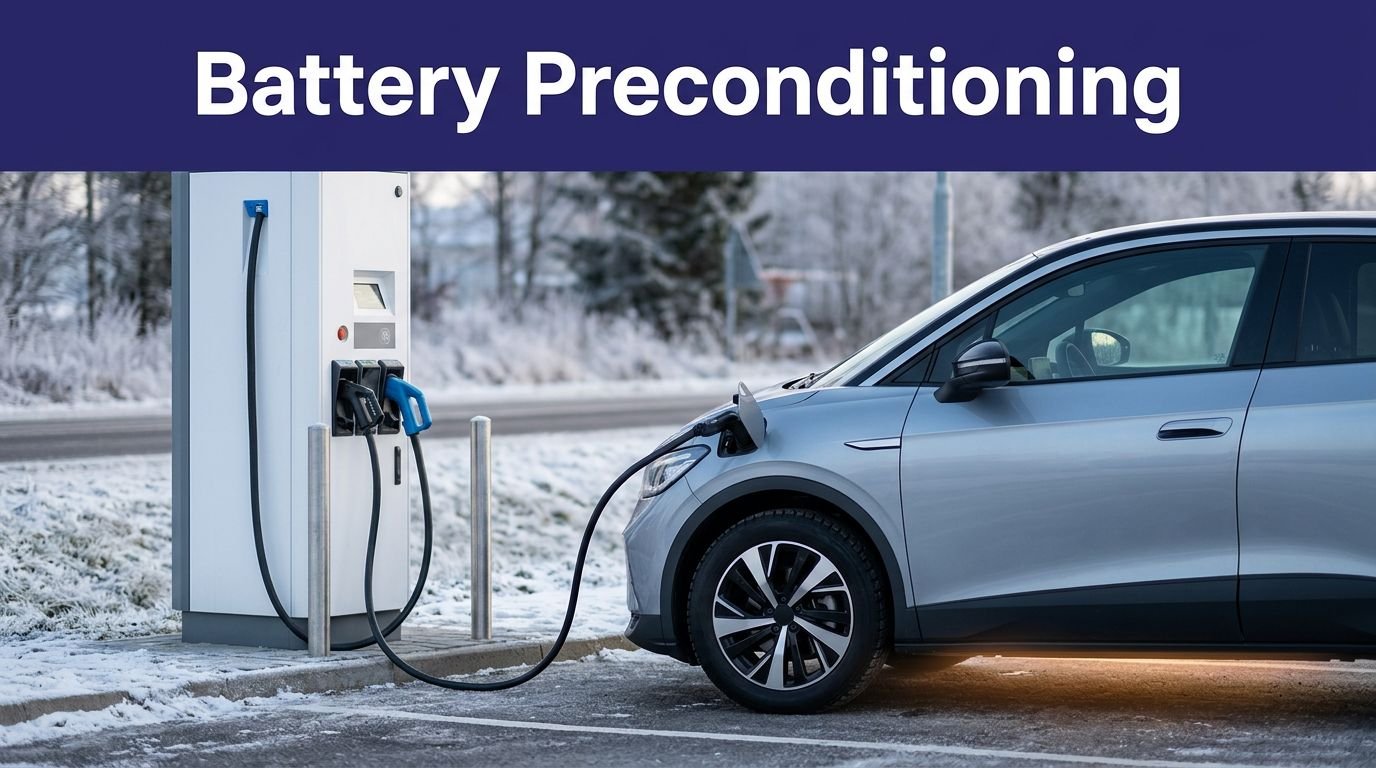
Although subfreezing temps stiffen most EVSE cords, cold‑weather usability depends on jacket formulation, low‑temperature rating, and how the dock controls bend radius and coil height. You need pliability at -30°C, a 10–12in nominal bend radius, and cable length that avoids sharp turns when battery preconditioning extends dwell time.
- Grizzl‑E: 24–25 ft cable, TPE jacket rated to -40°C; wall dock keeps coil height low to reduce strain and thermal cycling.
- ChargePoint Home Flex: 23 ft cable, TPU blend typically rated to about -30°C; compact dock encourages tighter loops.
- Longer runs require heavier gauge; verify UL 2594 and NEC 625 compliance for cold derating and strain relief.
- Prioritize gloves-friendly latch, drip loop, and anchors to maintain SAE J1772 bend-radius limits in snow.
Vehicle Compatibility and Connector Standards
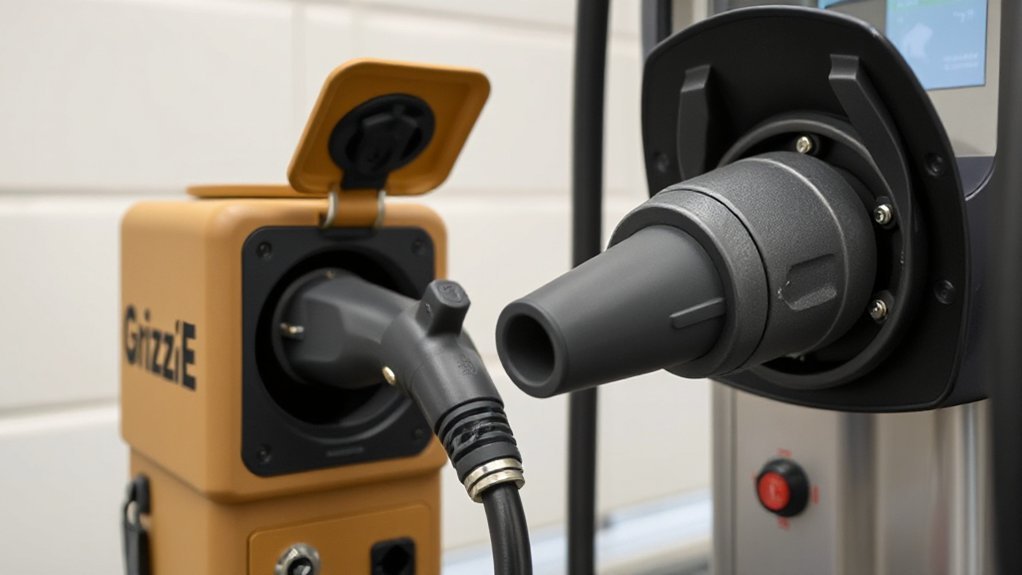
Where do these units stand on plugs and vehicle support? You get SAE J1772 as the default on both Grizzl‑E and ChargePoint Home Flex, ensuring broad North American coverage for BEVs and PHEVs. Connector Types include J1772 cables standard; Grizzl‑E also sells a NACS variant, while ChargePoint offers a NACS cable option. If you drive a Tesla, you’ll charge via the included J1772-to-Tesla Vehicle Adapters or the native NACS options. Pilot signaling follows SAE J1772/IEC 61851, with proximity detection and PWM current negotiation. Home Flex advertises up to 50 A (≈12 kW) output; Grizzl‑E delivers up to 40 A (≈9.6 kW), subject to circuit limits. Both operate on 208–240 V, supporting single-phase AC across common residential and light-commercial installs. Compatible with CCS-equipped vehicles today.
Reliability, Safety Certifications, and Support
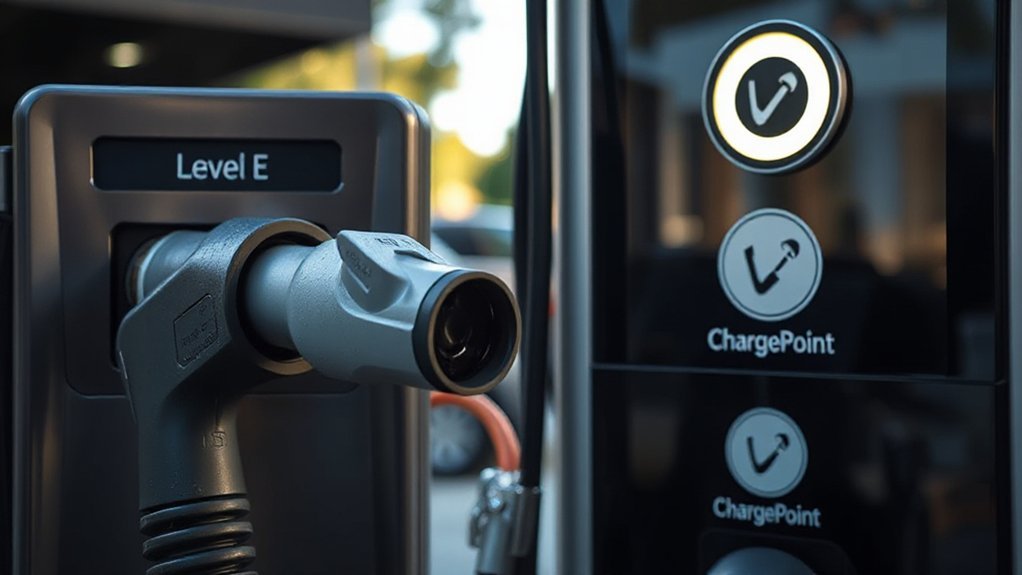
How do Grizzl‑E and ChargePoint Home Flex stack up on durability and safety? You care about Field Reliability, third‑party safety marks, and responsive support. Grizzl‑E uses NEMA 4 enclosures, aluminum heat sinking, and straightforward firmware; ChargePoint Home Flex employs aggressive thermal derating and mature network diagnostics. Both meet UL 2594/2231; verify labels and recent Certification Audits. For support, assess app stability, firmware cadence, and access to live troubleshooting. Look for independent test data, MTBF estimates, and Mean-Time-To-Repair metrics gathered from fleet deployments. Check contactor cycle ratings and life.
- Ingress protection: outdoor‑rated housings, UV‑resistant cables, gasketed seals.
- Electrical safety: ground‑fault detection, welded‑contact sensing, open‑neutral protection.
- Thermal management: onboard sensors, current throttling, connector temperature alerts.
- Software resilience: OTA update integrity, crash rates, cloud uptime, log export.
Warranty and Service Coverage
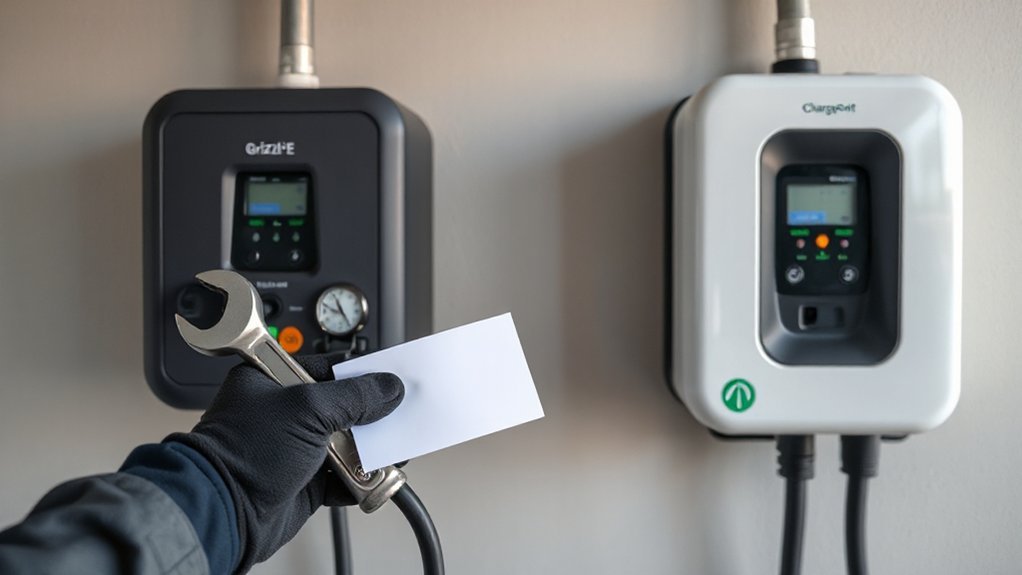
Before you compare pricing, scrutinize warranty and service terms: both Grizzl‑E and ChargePoint Home Flex publish limited warranties typically spanning 3 years in the U.S./Canada, covering defects in materials and workmanship on the EVSE, cable, and connector but excluding installation labor, electrician visits, and damage from improper installation, misuse, or surges. Evaluate transferability terms (original purchaser vs subsequent owner), registration requirements, proof‑of‑purchase rules, and claim windows. Check coverage exclusions specific to wear items, cosmetic damage, or third‑party adapters. Ask who pays inbound and return shipping, whether advance replacement is offered, and average RMA turnaround in business days. Confirm whether firmware updates are required to maintain coverage. Review region applicability, serial verification, and authorized‑installer conditions. If uptime is critical, assess extended protection or spare‑unit strategies.
Ongoing Costs, Energy Tools, and Utility Rates
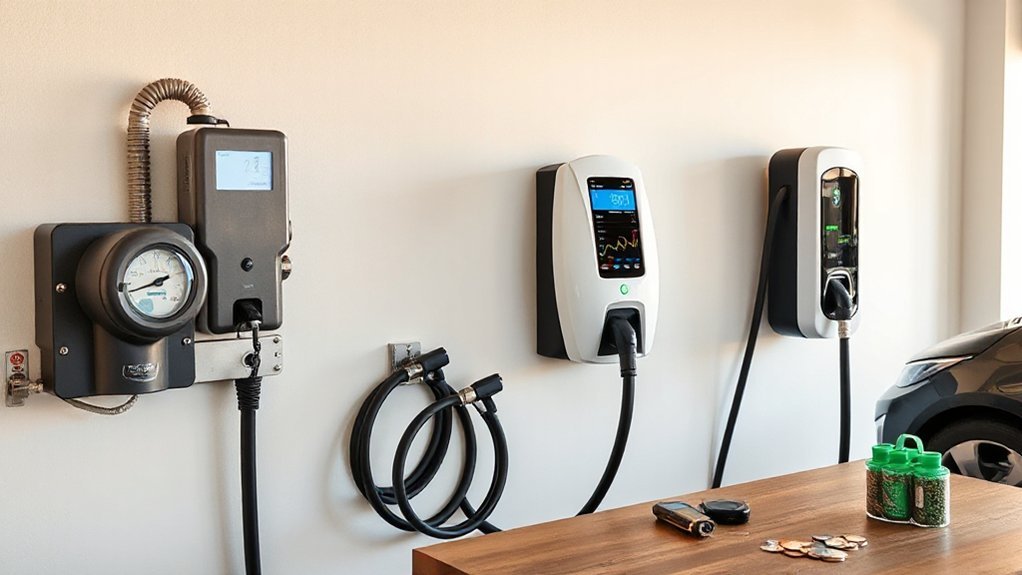
You should quantify ongoing app fees and subscriptions, including any paid features that affect total cost of ownership. You’ll also assess dynamic pricing compatibility—support for TOU/RTP schedules and standards like OCPP 1.6J, OpenADR, or utility APIs that enable automated rate-based charging. You’ll compare measurable outcomes: scheduling accuracy, response latency to price signals, and modeled bill savings under variable tariffs.
App Fees and Subscriptions
Why do ongoing app costs matter? You’ll budget hardware once, but software can tax you monthly. With Grizzl‑E Smart (OCPP), you might use third‑party platforms whose premium tiers add per‑month fees for analytics and multi‑user control; ChargePoint Home Flex typically bundles core app features without a subscription. Evaluate Billing Transparency, itemized taxes, and cancellation terms alongside Refund Policies.
- Account tiers: Verify free vs paid features (schedules, usage exports, utility-rate entry), storage limits, and device caps.
- In‑app purchases: Check per‑session fees, add‑on widgets, and firmware‑gated functions.
- Data access: Confirm CSV/API exports, retention periods, and role‑based permissions for households.
- Support scope: Compare SLAs, outage credits, and refund windows; require clear proration rules.
You’ll minimize TCO when app pricing stays predictable and auditable.
Dynamic Pricing Compatibility
While both chargers can align charging with utility price signals, they take different paths. ChargePoint Home Flex implements native Tariff Mapping in its app, letting you select TOU, CPP, or RTP plans and compute per‑kWh cost projections; schedules then optimize start/stop to minimize marginal cost. Grizzl‑E Smart leverages OCPP 1.6J with the ev.energy platform for Tariff Mapping and automated off‑peak shifting.
For Market Participation, ChargePoint integrates with utility managed‑charging and demand‑response programs (OpenADR in supported territories), enabling event-based throttling and incentive accrual. Grizzl‑E Smart participates via ev.energy’s utility partnerships, providing similar event controls.
Ongoing costs stay low: you avoid session fees, and program enrollment is typically free. In both ecosystems, energy tools report savings, kWh, and avoided peak usage by rate period each month.
Rebates, Incentives, and Eligibility
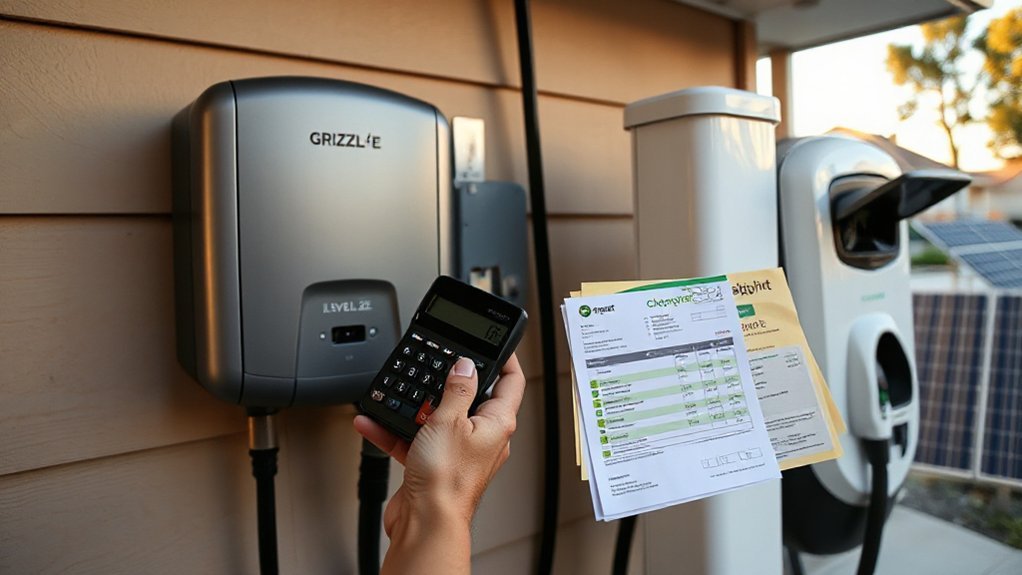
How do rebates and incentives differ between Grizzl‑E and ChargePoint? You’ll qualify based on standards, not brand—but model certifications matter. Many utility rebates mandate ENERGY STAR, OCPP capability, or UL/CSA safety marks. ChargePoint Home Flex is ENERGY STAR and widely approved; some utilities accept Grizzl‑E Smart, while Classic may be excluded. Verify income eligibility, site ownership, and installation method (hardwired vs NEMA 14‑50) to avoid denials. Confirm program stacking rules before combining federal credits, state rebates, and utility incentives.
- Certification: ENERGY STAR, UL/CSA file numbers, OCPP, J1772.
- Network: demand response enrollment, utility load control, Wi‑Fi reliability, and telemetry verification, participation audits, reporting.
- Documentation: itemized invoice, permit/inspection proof, serial and MAC IDs.
- Tax strategy: federal 30C eligibility, census‑tract limits, cap amounts.
Conclusion
You want speed, polish, and integrations? Choose Home Flex: up to 50 A (40 A continuous per NEC 625), slick app, OTA diagnostics, utility programs, tidy holster. You want rugged value? Pick Grizzl‑E: 40 A (32 A continuous), NEMA‑4 aluminum, OCPP‑friendly simplicity, lower capex. Both speak SAE J1772, demand right‑sized circuits, and chase rebates. In short, you optimize for features or survivability. Either way, you’ll still wait on electrons—physics remains stubbornly standards‑compliant and budget‑aware too.