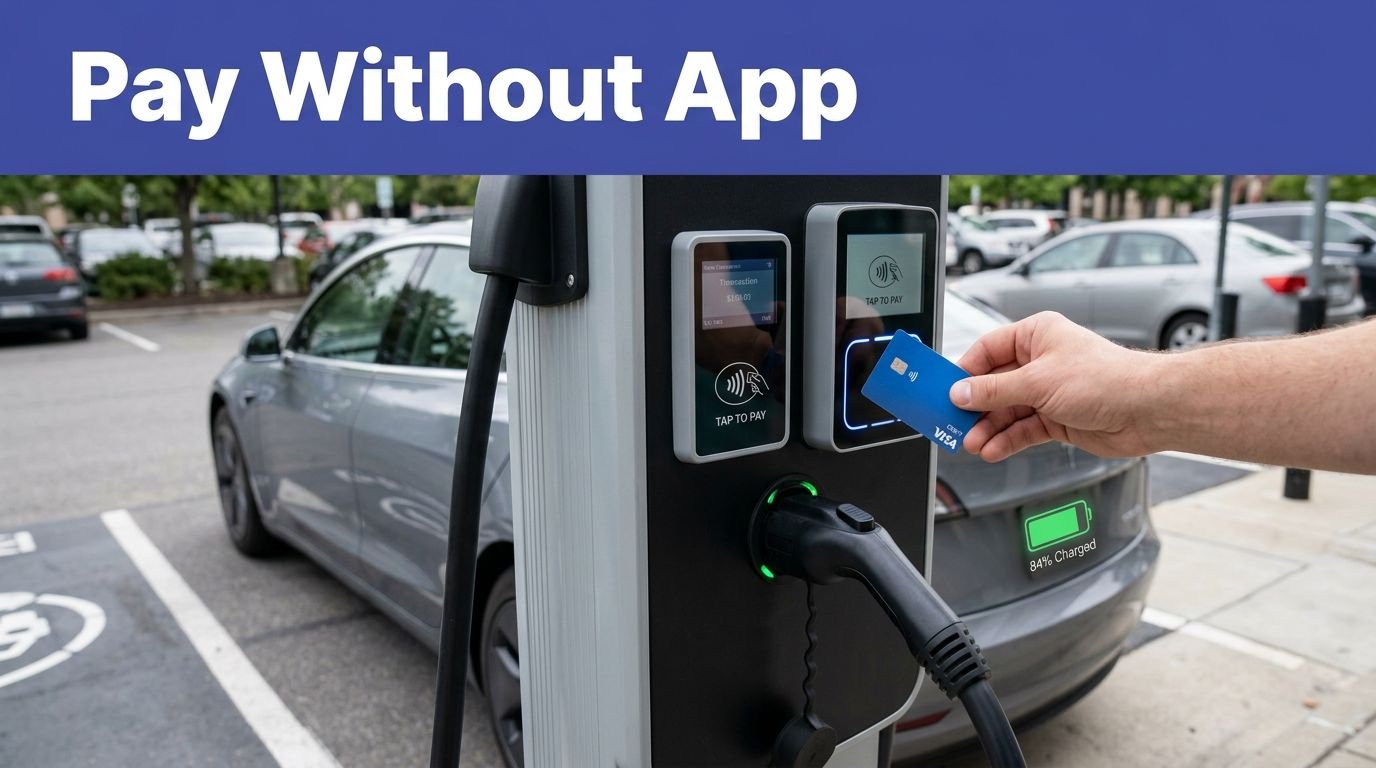
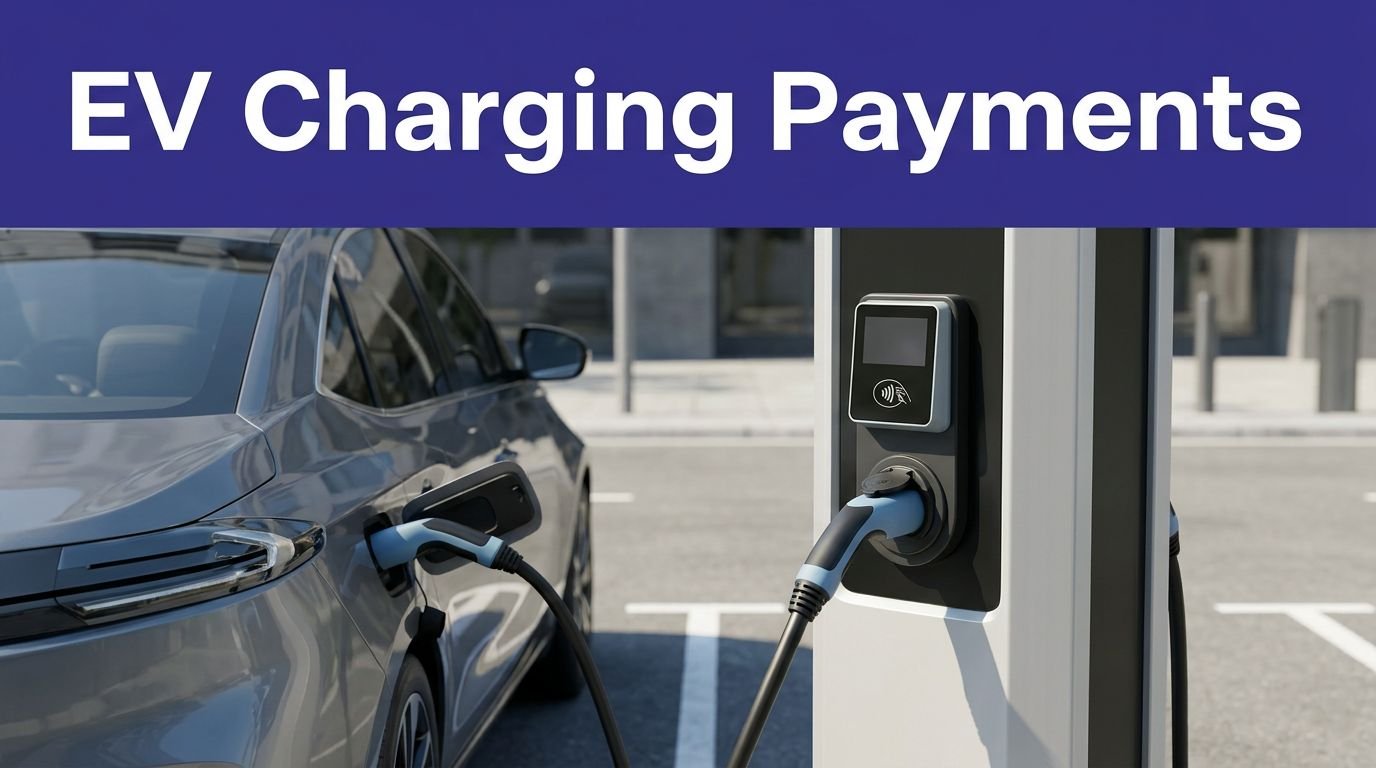
You want to know if a 7 kW home charger is enough. On a 240 V/32 A circuit it delivers ~7.2–7.4 kW, typically adding 18–30 miles per hour, but onboard charger limits, cold weather, and tapering change results. Safety matters: use a dedicated, RCD-protected circuit and load management. Wondering when 11–22 kW AC or DC rapid makes sense, or how smart scheduling and future-proof wiring factor in?
Key Takeaways
- A 7 kW charger typically delivers about 7.2–7.4 kW AC; your car’s onboard charger limits the actual speed.
- Expect roughly 18–30 miles of range per hour, depending on vehicle efficiency and conditions.
- Larger batteries don’t increase miles per hour; they just take longer to fill at the same power.
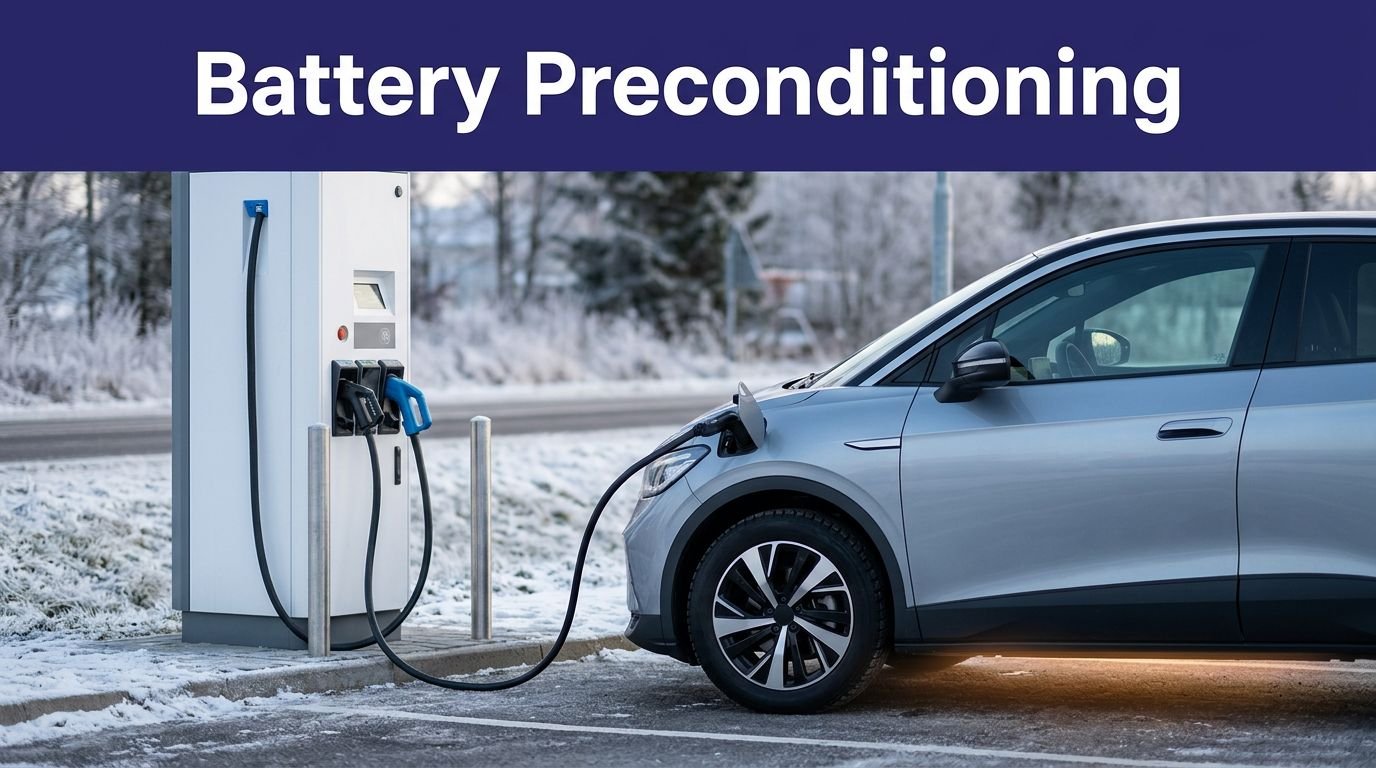
- Cold or high state of charge reduces intake due to tapering and thermal management; precondition to maintain speed.
- Use a dedicated 240 V, 32–40 A circuit and the correct connector; three‑phase won’t speed up single‑phase cars.
What a 7kW Home Charger Actually Delivers
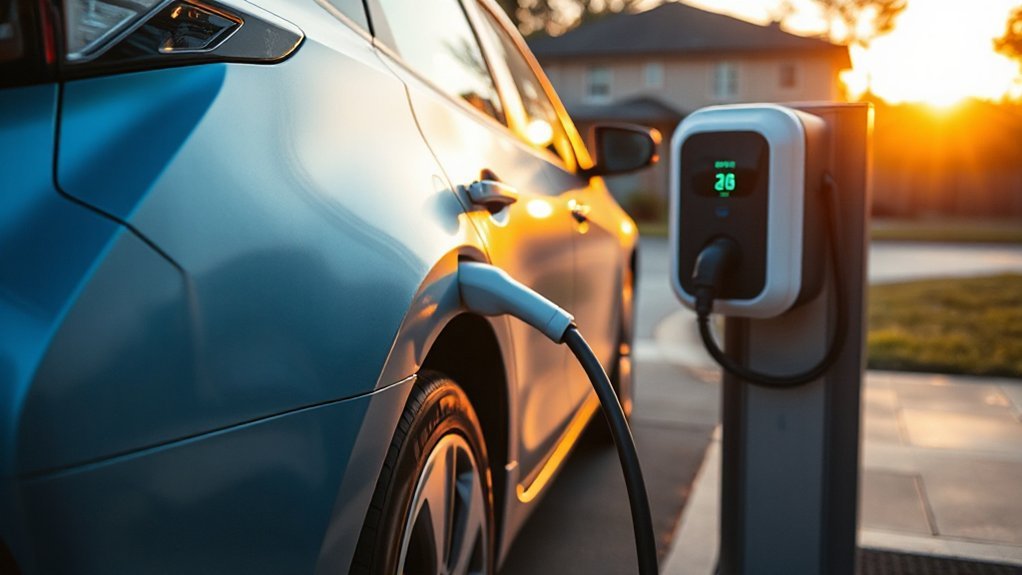
While it’s marketed as “7 kW,” a home charger delivers up to about 7.2–7.4 kW of AC power (≈230 V × 32 A) under ideal single‑phase conditions. In practice, you’ll see the EV’s onboard charger set the limit, voltage sag reduce current, and thermal protection derate output. A correctly sized circuit (32 A breaker, appropriately rated cable), RCD protection, and solid earthing preserve power stability and safety.
You should commission load management so the charger curtails current when your panel nears capacity. Expect small standby draw for communications and contactor readiness; verify the spec and enable eco modes. Use a dedicated circuit, tightened lugs, and weather‑rated enclosure and labeling. Confirm firmware supports OCPP, PEN fault detection, and DC leakage monitoring to remain code compliant.
Range per Hour: Real‑World Charging Speeds
On a 7 kW Level 2, you typically gain about 20–30 miles of range per hour, based on 3–4 mi/kWh and modest charger losses. You’ll see slower rates with larger batteries or at higher state of charge because the BMS tapers current to protect cells. Temperature also shifts results—cold packs accept less power and hot conditions trigger cooling—so precondition when available and follow the manufacturer’s thermal and charging guidelines.
Typical Miles per Hour
Most 7 kW home chargers add about 18–28 miles of range per hour, but your actual rate depends on vehicle efficiency, temperature, and charge‑curve taper. You’ll see higher miles per hour when you arrive with a warm battery, use short, rated cables, and keep the connector fully seated. Driver habits and Trip planning matter too; steady speeds and preconditioning reduce wasted energy.
- Verify supply: a dedicated 240 V, 32 A circuit, tight lugs, and correct breaker sizing prevent voltage sag that slows charging.
- Control conditions: charge in a garage, avoid extreme cold or heat, and enable thermal management to stabilize intake power.
- Measure results: track mi/hr in your app, adjust charge windows, and schedule off‑peak sessions for consistent, safe performance daily.
Battery Size Impact
Understanding battery size helps you set realistic “miles per hour” expectations: a 7 kW (240 V, 32 A) Level 2 circuit delivers power, not range, so your mi/hr mainly depends on vehicle efficiency (Wh/mi), not pack capacity. Larger batteries don’t charge “faster” per hour; they store more energy, so you’ll add the same miles per hour as a smaller pack with identical efficiency. However, a bigger pack may hold higher charge rates into the state‑of‑charge window, reducing taper time across a session.
Focus on usable capacity. Capacity isn’t what you can access; buffers and degradation effects shrink it. For planning, calculate: charging mi/hr ≈ 7,000 W ÷ Wh/mi. Verify circuit ratings, EVSE labeling, and cable condition and grounding to maintain code compliance and safety.
Temperature Impact on Charging
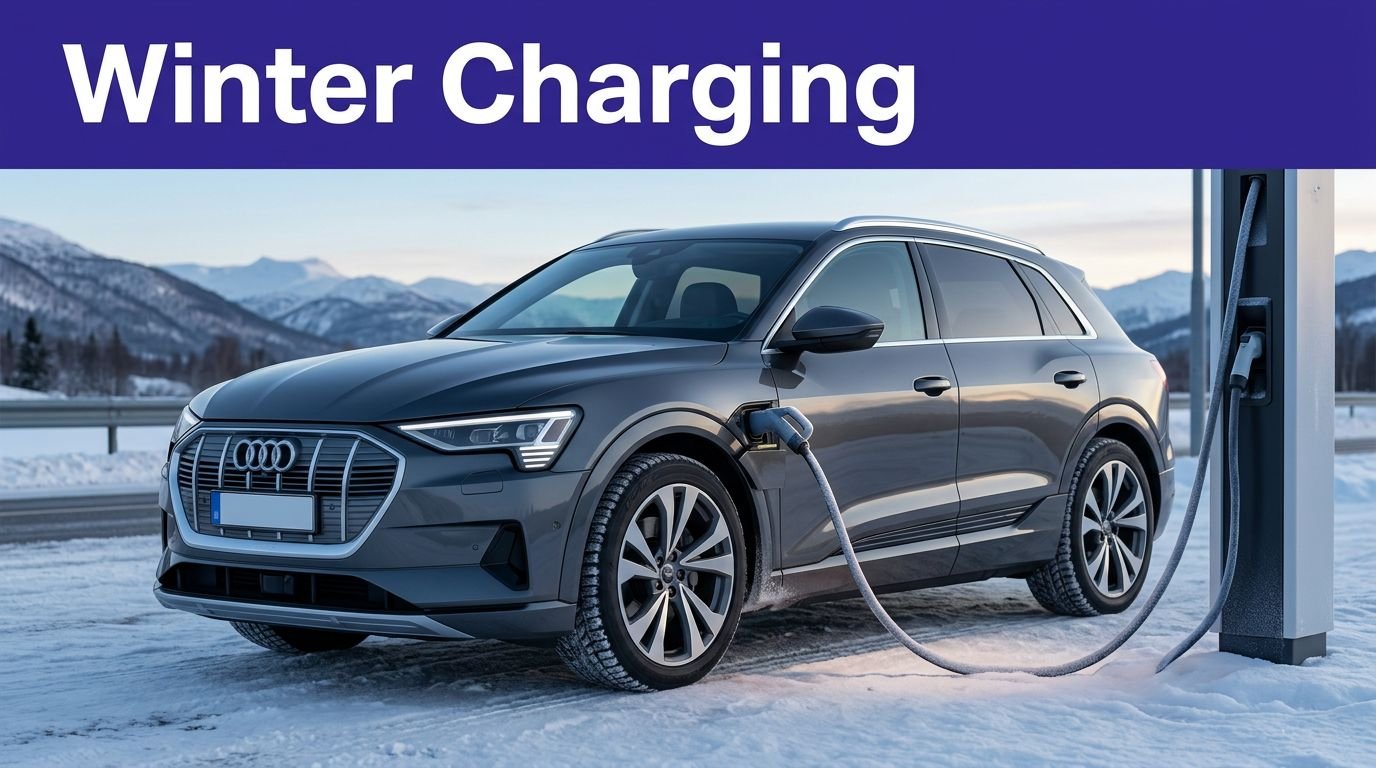
How much range you add per hour swings with temperature because the battery management system and thermal loads change both net charging power and vehicle efficiency. In cold weather, the pack may draw hundreds of watts to heat itself, and current is limited to protect cells, causing cold start reduction. In heat, pumps and fans run, and high cell temps lower charge rates; heat soak effects after driving can cut intake power.
1) Precondition the battery on grid power to cut losses and raise charge acceptance.
2) Schedule charging after arrival or before departure based on ambient to balance load and maximize range per hour.
3) Keep the charge port and vents clear; verify ventilation per code and monitor inlet temperature for consistent operation at 7kW continuously.
Key Factors That Affect Your Charging Time

While a 7 kW unit sounds straightforward, your actual charge time depends on constraints in the car, the circuit, and the environment. Your onboard charger sets a maximum AC intake; if it’s below 7 kW, you’ll see lower power. State of charge matters: at higher charge level, most packs taper current to protect cells. Supply limits count too—dedicated 32 A breaker, RCD, and correct conductor gauge prevent nuisance trips and overheating. Voltage drop from long runs or undersized wiring reduces power. Cable quality and connector condition affect resistance, heat, and the pilot signal; replace damaged leads. Ambient heat or cold can trigger Battery Management System derating. Preconditioning and turning off HVAC reduce auxiliary loads and shorten sessions. Verify earthing and bonding meet code requirements.
3‑Pin Vs 7kw Vs 11–22kw AC Vs DC Rapid: How They Compare
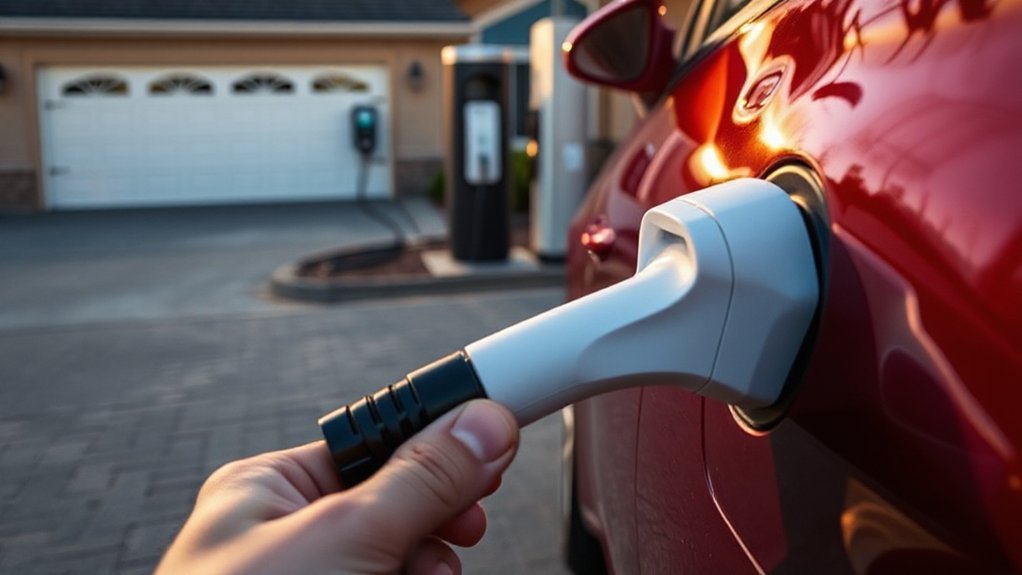
Why compare a 3‑pin lead with 7 kW home charging, 11–22 kW AC, and DC rapid? You make safer, faster, code‑compliant choices when you know limits and connectors. A 3‑pin at 2.3 kW is emergency‑only; it heats outlets and lacks load management. A 7 kW wallbox on a dedicated circuit adds RCD protection, PEN fault detection, and scheduling. Many EVs cap AC at 7–11 kW anyway.
Know limits and connectors to choose safer, faster charging: 3‑pin is emergency-only; 7 kW adds protection; many EVs cap AC to 7–11 kW.

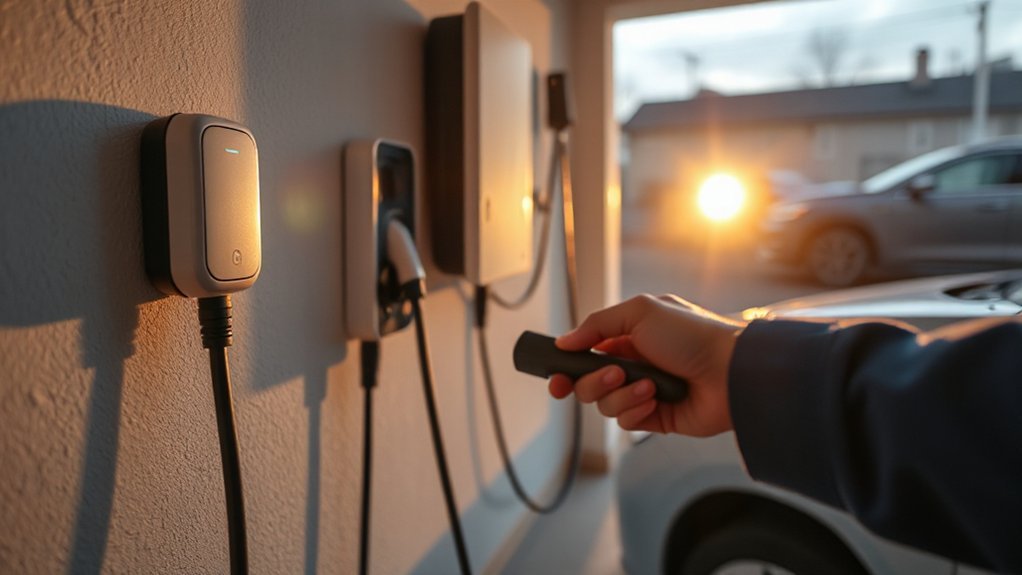
1) 3‑pin: ~8–12 miles/hour; avoid extension leads; inspect plugs; don’t exceed circuit rating.
2) 7 kW AC: ~25–30 miles/hour; ideal for home, urban deployment; supports smart tariffs and solar.
3) 11–22 kW AC vs DC rapid: three‑phase AC needs onboard capacity; DC rapid (50–350 kW) bypasses the onboard charger, suiting commercial fleets and en‑route top‑ups; monitor battery temps.
When Upgrading Beyond 7kW Makes Sense

Upgrade beyond 7 kW when your charge window is short, your daily kWh is high, or you run multiple EVs that must recover overnight. Higher power helps if your commute patterns vary and you often arrive late with low state of charge, need preconditioning, or must stay within tight time-of-use windows. Verify your EV’s onboard AC limit; 11 kW or 22 kW capability actually benefits from faster AC. Fast home charging also reduces depth-of-discharge per session, supporting battery longevity and predictable departure readiness. For shared driveways, load balancing across vehicles works better with more headroom. Choose equipment rated for continuous duty, correct RCD/GFCI protection, suitably sized conductors, and thermal derating. Future-proof capacity can improve property resale value and support bi-directional or fleet use needs.
Costs, Grants, and Typical Installation Considerations

Before you pick a 7 kW charger, map the total cost: hardware, installation labor, permits/inspection, potential panel or service upgrades, trenching/conduit, and required protection devices. Factor utility fees, GFCI/AFCI needs, and surge protection. Check rebate rules, grant eligibility, and tax credits; many require licensed electricians and load calculations (NEC Article 625). Verify Permit timelines with your authority having jurisdiction; plan for inspections and utility coordination.
- Do Installer vetting: verify licensing, EVSE certifications, insurance, and references; request a written load calc and one-line diagram.
- Confirm site conditions: cable run length, conduit type, grounding/bonding, mounting height, outdoor ratings (NEMA/IP), and fault protection.
- Budget contingencies: panel derating, feeder upsizing, meter-main swaps, trench depth, saw cutting, and patching.
Get fixed quotes detailing scope, parts, warranties; require torque logs.
Smart Features, Apps, and Off‑Peak Scheduling
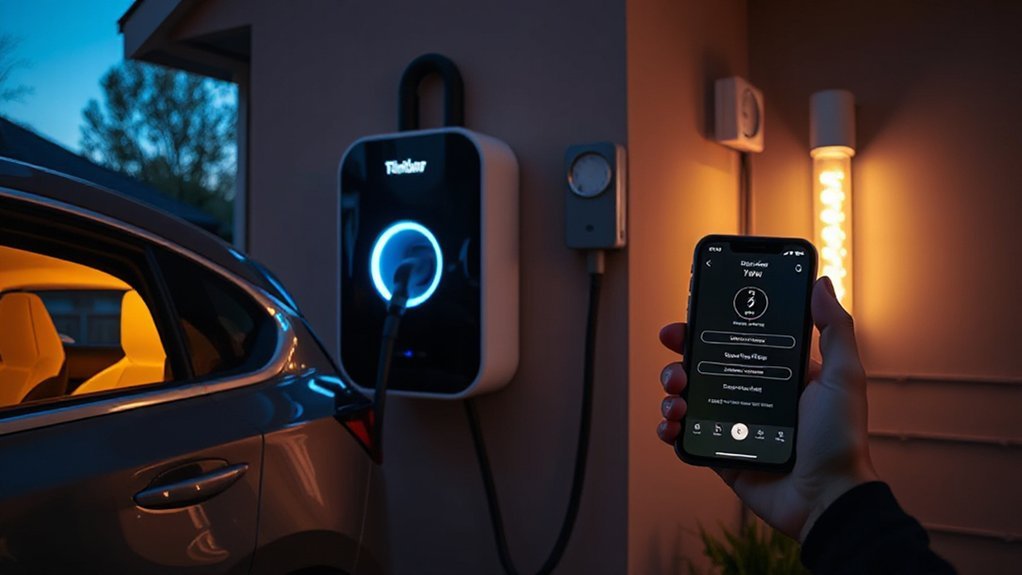
How do smart features actually help you charge safer and cheaper? Your charger’s app lets you set off‑peak schedules aligned to your utility’s time‑of‑use rates, so the session starts automatically when tariffs drop. You can cap current and set departure times, ensuring you meet range needs without wasting energy. Real‑time alerts flag interruptions, overheating, or plug faults, prompting you to stop and inspect.
Choose hardware that supports secure firmware updates and transparent cybersecurity measures. Require strong authentication, encrypted traffic, and PIN or RFID start controls, especially for shared driveways. Prefer chargers compatible with open protocols for dependable app support and diagnostics. Use charging histories to audit costs, verify off‑peak execution, and detect anomalies. Review permissions, update passwords, and disable cloud features you don’t need.
Load Balancing, Safety, and Electrical Requirements

Smart controls matter most when your 7 kW EVSE sits on a circuit that’s properly sized, protected, and coordinated with the rest of the home’s load. Use a dedicated 240 V branch circuit, copper conductors, and an OCPD sized at 125% of continuous load. Provide a disconnect within sight, bonding, and an enclosure rated for the location.
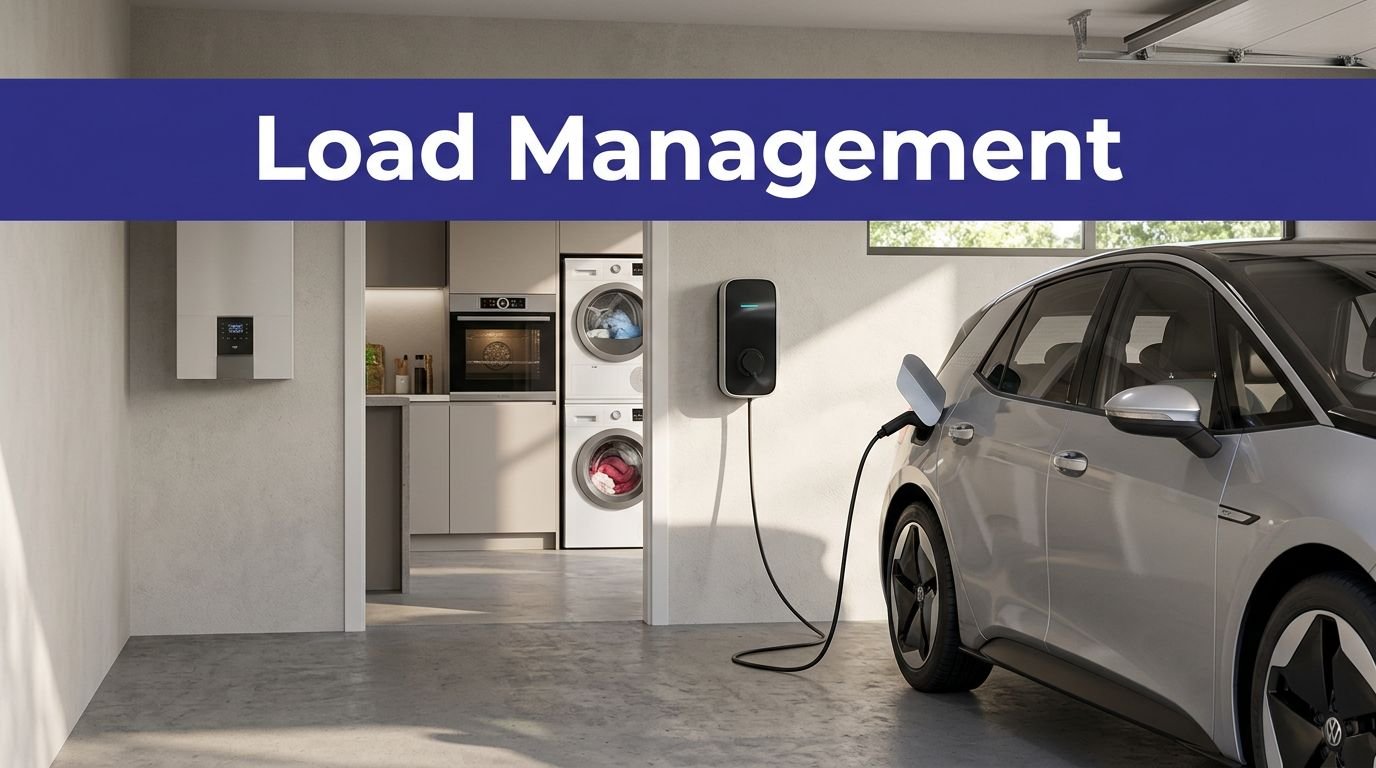
- Manage demand: enable dynamic load balancing with CTs and set a site limit; allow Load shedding to avoid main trips.
- Size correctly: 7 kW at 240 V ≈ 29 A; continuous rating → 125% ≈ 36 A; choose a 40 A breaker with 8 AWG Cu.
- Protect and verify: integrate Ground fault protection, add surge protection, perform torque/insulation tests, pull permits, and commission.
Vehicle Compatibility and On‑Board Charger Limits

Match your EV’s onboard charger rating, since a 7 kW single-phase circuit will be capped by a vehicle with a lower AC limit. Confirm whether your car supports single-phase only or three-phase AC; a three-phase-capable vehicle will still draw up to 7 kW on single-phase supply. Verify inlet standards (Type 2/IEC 62196-2, J1772/Type 1, CCS1/CCS2) and use only certified, code-compliant adapters and cables to prevent overheating or connector mismatch.
Onboard Charger Ratings
Why does your EV’s onboard charger rating matter? It sets the maximum AC power your car can safely convert, so a 7 kW wallbox won’t charge faster than the vehicle’s onboard limit. Check your owner’s manual and connector plate; manufacturers use Standardized labeling and publish Testing procedures to verify ratings and thermal performance. Exceeding the vehicle’s rating doesn’t add speed—it only adds cost.
- Verify kW and amperage limits, and confirm the charger’s output doesn’t surpass the onboard rating.
- Match circuit capacity, cable gauge, and breaker to the expected current to remain code compliant and avoid overheating.
- Monitor charge-session data for tapering; if power plateaus below 7 kW, the onboard charger is the bottleneck.
This provides safe, predictable charging and realistic expectations at home everyday.
Single Vs Three-Phase
After confirming your onboard charger’s kW and amp limits, verify whether it accepts single-phase or three-phase AC. Your EV’s onboard charger dictates AC charging speed: if it’s single-phase only, a three-phase supply won’t charge faster; the car will draw from one phase. If it supports three-phase (commonly 11 kW), a 7 kW single-phase circuit will cap the rate.
Regional standards and historical adoption matter. In North America, most OBCs are single-phase and target about 7.2 kW at 240 V. In much of Europe, many OBCs accept 3×16 A (≈11 kW). For a compliant install, perform load calculations, select conductors and breakers for continuous duty, balance phases, provide proper earthing, and use Type A/Type B RCDs as required. Don’t exceed pilot-current, thermal, or firmware limits.
Vehicle Inlet Standards
Standards matter: the vehicle’s inlet defines the plug type, signaling, phase availability, and current ceiling your 7 kW EVSE can deliver.
Most EVs use Type 2 (EU/UK) or J1772/NACS (North America). Your inlet dictates whether 32 A single‑phase yields the full ~7.4 kW, or whether the OBC limits you to a lower draw.
- Verify the inlet standard and pinout. Type 2 can accept single or three‑phase; J1772 is single‑phase AC. Match the EVSE cable and connector rating.
- Check your on‑board charger’s kilowatt limit. If it’s 3.3–6.6 kW, a 7 kW EVSE won’t speed charging; it only supplies what the OBC requests.
- Confirm safety: Ingress Protection (e.g., IP54+), temperature sensing, and Locking Mechanisms that meet IEC/UL requirements. Inspect seals, latches, strain relief.
Future‑Proofing Your Home Charging Setup

How do you add a 7 kW charger today without boxing yourself in tomorrow? Plan capacity, compliance, and upgrades. Ask your electrician to install conduit, a 60–80 A feeder, and a 2‑pole breaker sized per code with 125% continuous‑load margin. Specify load management, GFCI, and surge protection. Choose a unit with Wi‑Fi, OCPP, and dual‑voltage flexibility. Prewire for solar readiness and battery integration. Include a NEMA enclosure rating suited to your site. Keep documentation; it helps permits and resale impact.
| Item | Spec | Note |
|---|---|---|
| Feeder | 60–80 A | Allows future 11 kW |
| Conduit | 1 in | Pull extra conductors |
| Network | Wi‑Fi/OCPP | Vendor portability |
| Protection | GFCI, SPD | Code, survivability |
Label circuits, archive settings, and schedule annual inspections to verify torque, insulation resistance, and firmware integrity, and test GFCI.
Conclusion
You know a 7 kW charger delivers about 7.2–7.4 kW on a 240 V/32 A circuit, adds roughly 18–30 miles/hour, and depends on your EV’s onboard limits. Plan for a dedicated, code‑compliant circuit; install proper RCD/GFCI protection; verify load calculations. Use smart scheduling, monitor temperatures, expect tapering. If you need faster, add three‑phase where supported, or plan conduit for future upgrades. Choose safely, charge efficiently, future‑proof wisely—and you’ll meet daily needs without overbuilding or overspending.