Here’s what may surprise you: a 7 kW unit often fills your EV overnight as fast as you truly need. But that’s only true if your onboard AC limit, supply phase, and daily mileage align. You must confirm grid capacity, permits, and RCD protection, then weigh install cost, smart tariffs, and resale value. Want faster top‑ups, larger batteries, or three‑phase? The best choice isn’t the one you expect.
Key Takeaways
- 7 kW suits most single‑phase homes; 11 kW requires three‑phase supply and roughly 16 A per phase.
- Your car’s onboard AC charger caps speed; an 11 kW wallbox is wasted if the car only takes 7 kW.
- For a 60 kWh pack, 10–80% takes ~6.7 hours at 7 kW versus ~4.2 hours at 11 kW.
- 11 kW installs are costlier and may need service upgrades; 7 kW usually fits existing circuits with simpler permitting.
- If future‑proofing or daily energy needs are high, prepare wiring for 11 kW, but use smart scheduling to minimize running costs.
Real‑World Charging Speeds and Time to Full
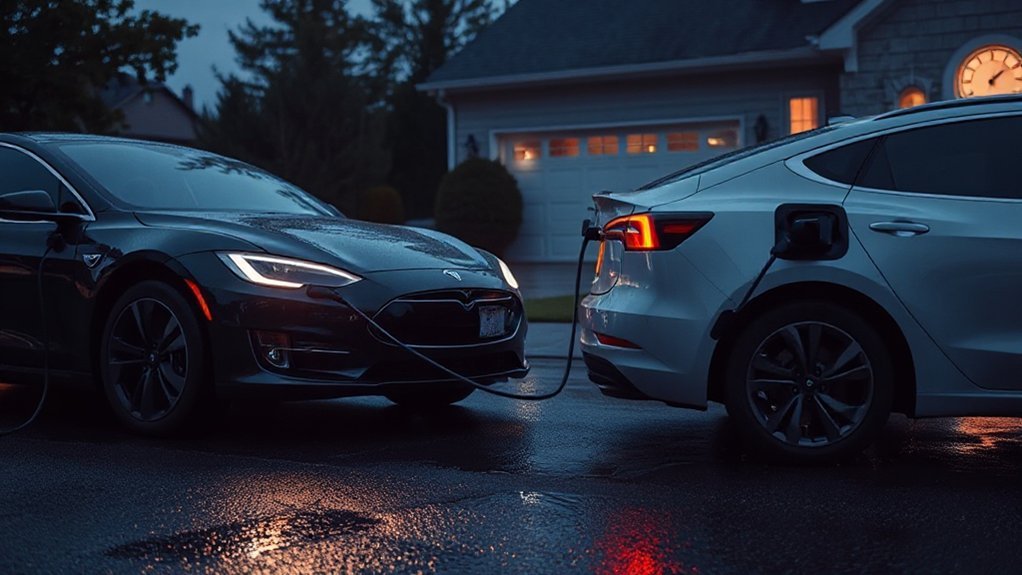
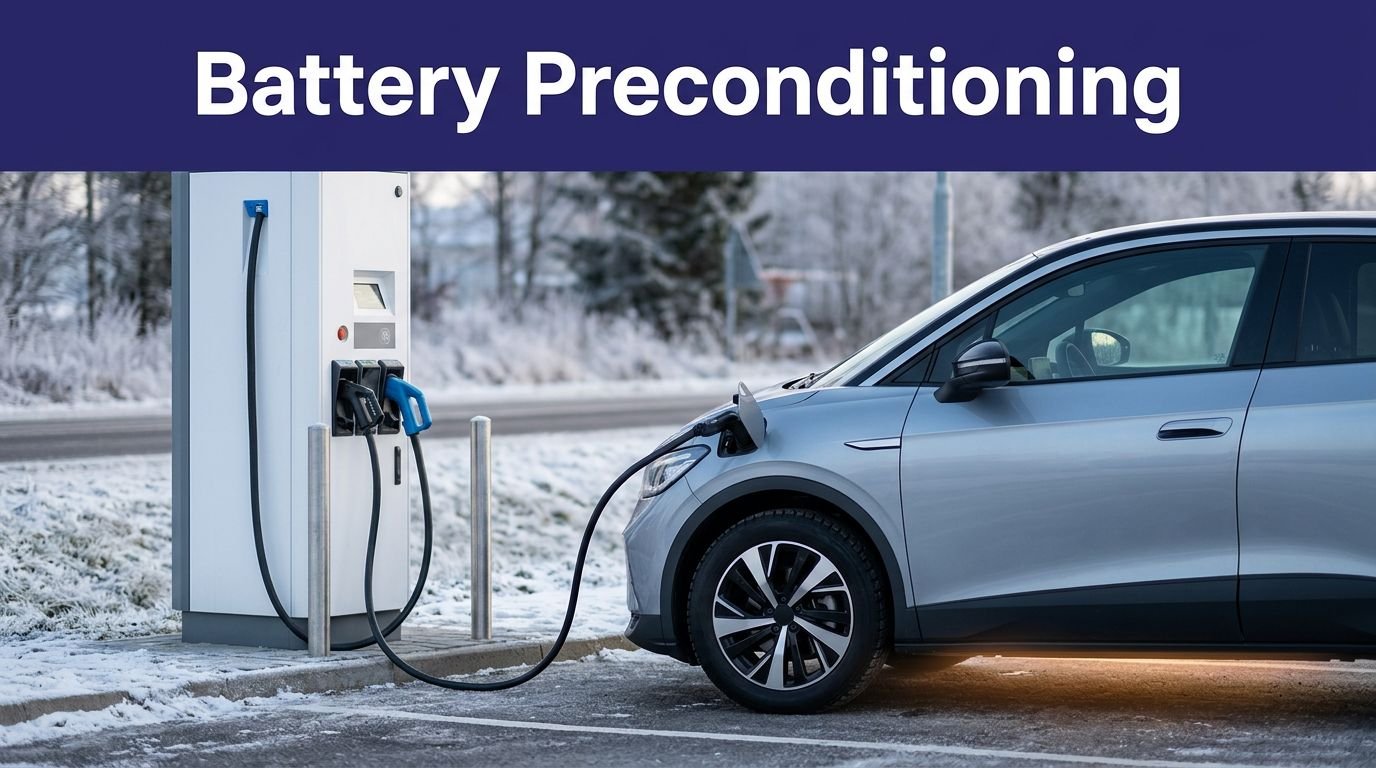
How long will a 7 kW vs 11 kW home charger actually take to fill your battery? In real use, divide usable pack energy by effective AC power (charger rating × charging efficiency). For a 60 kWh pack, 10–80% adds ~42 kWh. At 7 kW with 90% efficiency (~6.3 kW), that’s about 6.7 hours; at 11 kW with 92% efficiency (~10.1 kW), about 4.2 hours. Near 90–100%, balancing slows current, so a “full” top-off can add 30–60 minutes. Ambient temperature matters: cold packs raise internal resistance, warming cycles, and time; extreme heat can trigger thermal limits. For safety and consistent results, schedule off-peak sessions, precondition the battery, keep cables uncoiled and undamaged, and use listed equipment with intact ground-fault protection. Avoid extension cords outdoors.
Power Supply and Vehicle Compatibility Checks
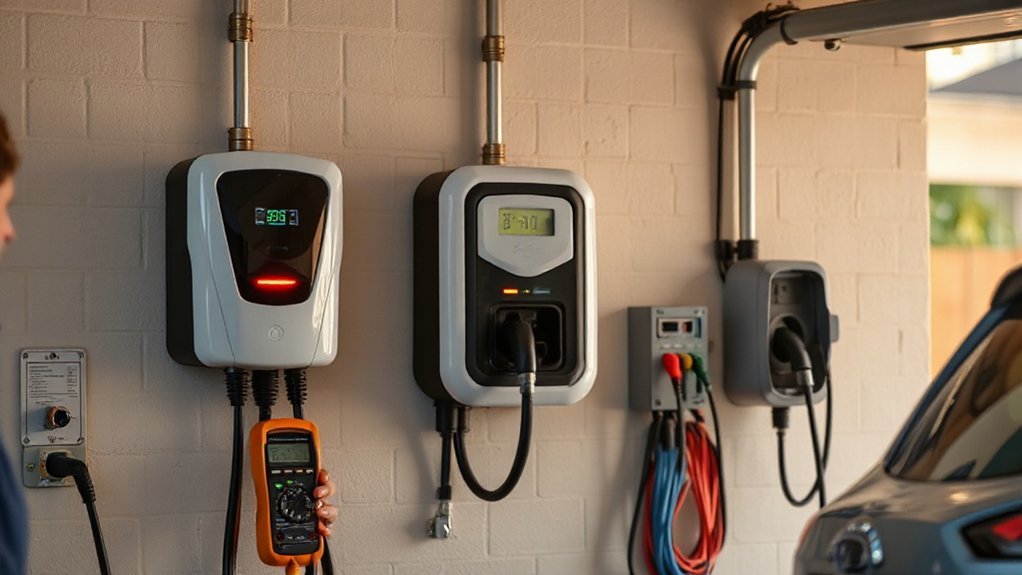
Why install anything before confirming your home supply and your EV can safely support 7 kW or 11 kW? Verify supply type first: most homes are single‑phase, suitable for ~7 kW at 230 V/32 A; 11 kW requires three‑phase with roughly 16 A per phase. Check the service rating and main breaker capacity, then perform a load calculation to make sure diversity won’t be exceeded during peak demand. Confirm your panel short‑circuit rating matches prospective fault currents.
Match the charger to your car’s onboard AC charger limit; if the car is capped at 7 kW, an 11 kW unit won’t charge faster. Confirm connector and socket standards (e.g., Type 2), earthing method, required RCD type, and utility rules for demand response or export limits applicable.
Installation Requirements, Complexity, and Cost
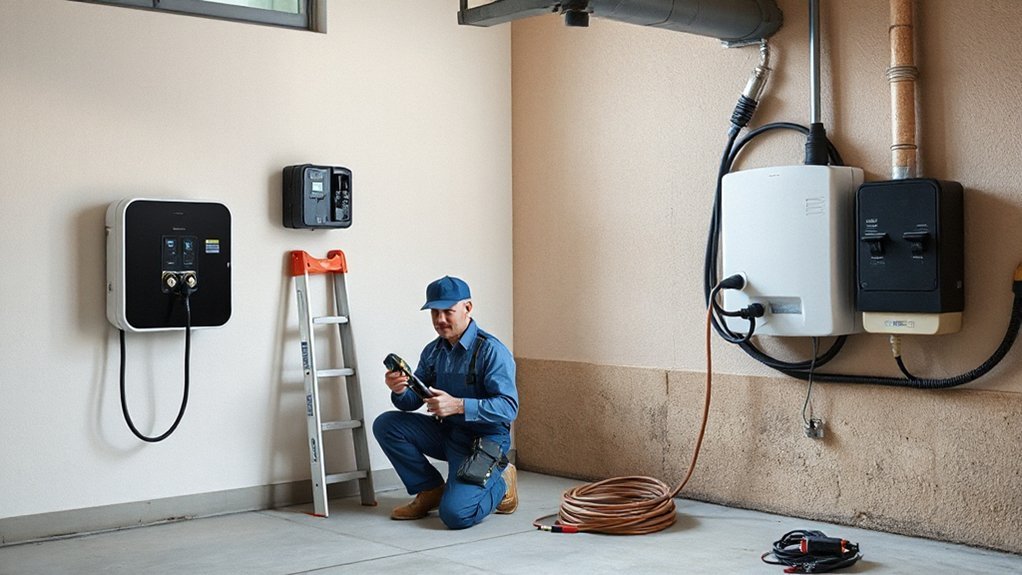
Although 7 kW and 11 kW wallboxes look similar, their installation requirements, complexity, and cost differ materially. You’ll assess supply capacity, breaker availability, and cable routes; then choose protection, isolation, and RCD types per code. A 7 kW unit usually fits single‑phase services, shorter cable runs, and smaller breakers. An 11 kW unit often needs three‑phase, service upgrades, thicker conductors, and higher fault-current ratings. Confirm bonding, earthing, and enclosure IP ratings. Obtain approvals early; local permit processes and utility coordination can extend timelines.
| Item | Typical 7 kW vs 11 kW impact |
|---|---|
| Service | Single-phase vs three-phase upgrade |
| Cable/breaker | Smaller vs larger gauge and MCB/RCBO |
| Time/cost | Shorter works, lower labour estimates vs longer, pricier |

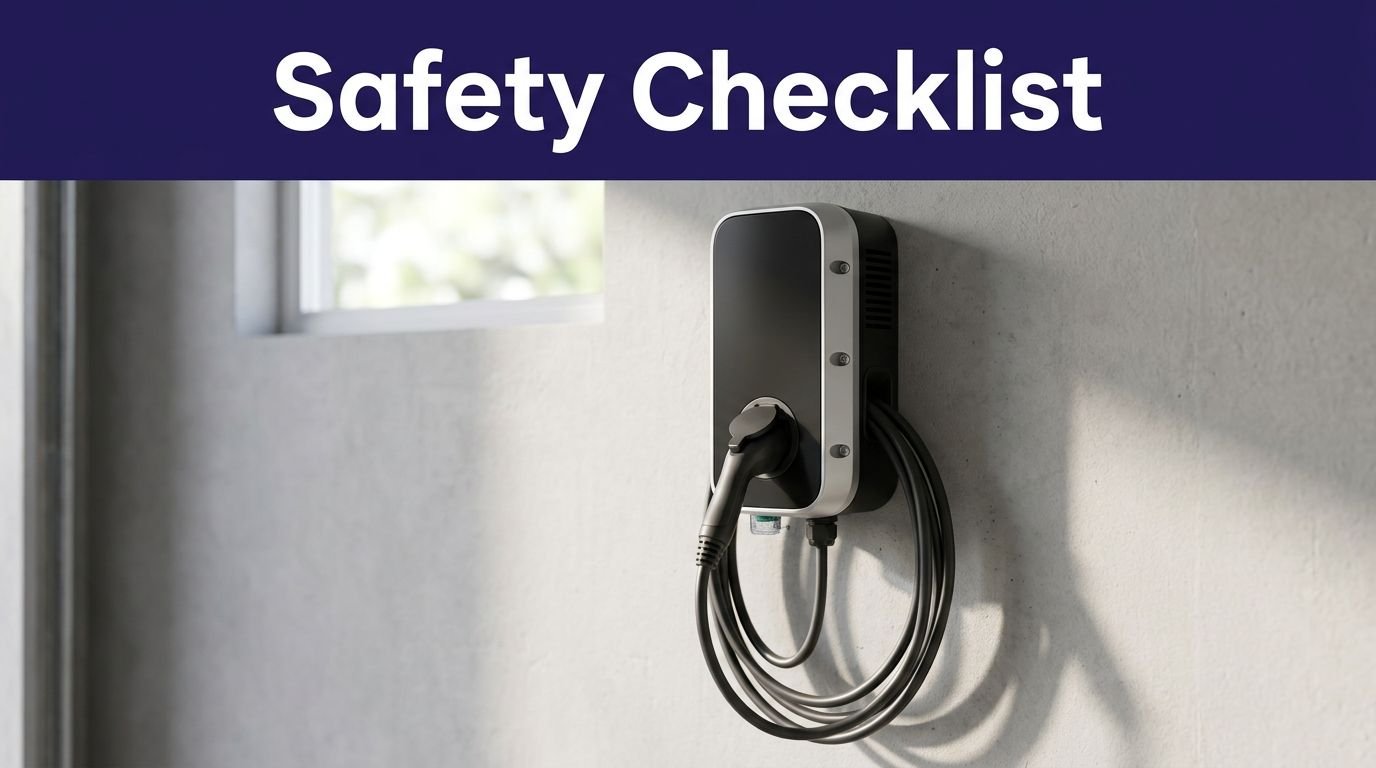
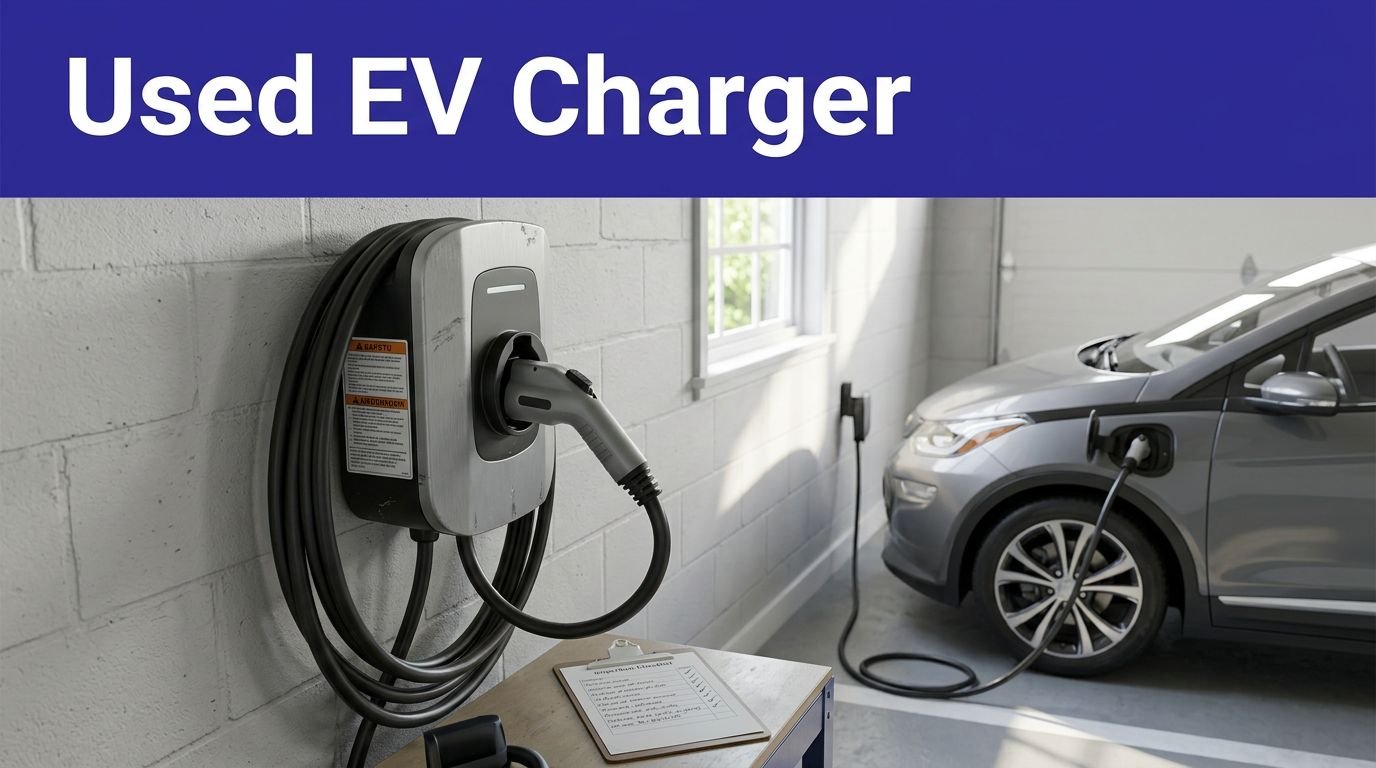
Get a written load calculation, as-built diagrams, and commissioning tests before energizing.
Energy Tariffs, Smart Scheduling, and Running Costs
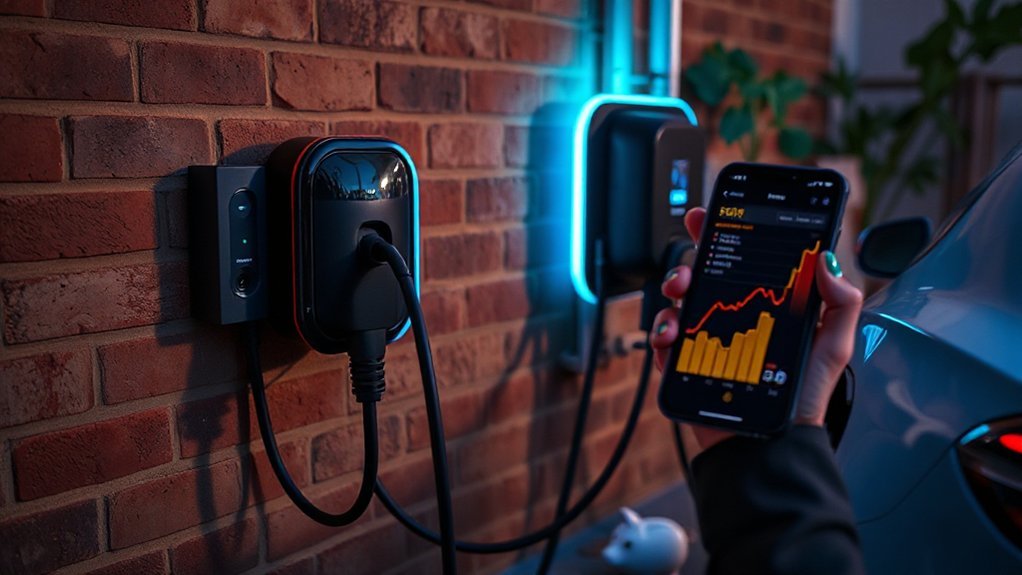
Because tariffs vary by time and demand, you should pair your wallbox with smart scheduling to cut running costs without breaching electrical limits.
Set charge windows to exploit Off peak pricing while honoring your supply’s maximum demand and the EVSE’s current limits.
A 7kW unit typically draws ~32 A on single phase; an 11kW unit draws ~16 A per phase on three phase.
Use load balancing to prevent nuisance trips and overheating.
Dynamic tariffs can change hourly; link the charger to your supplier or an API so it pauses or ramps within configured amperage caps.
Always verify breaker ratings, cable size, and RCD type before enabling boost modes.
Track kWh, not time, to compare costs; higher power shortens sessions but doesn’t reduce per‑kWh price.
Future‑Proofing: Daily Mileage, Battery Size, and Resale Considerations
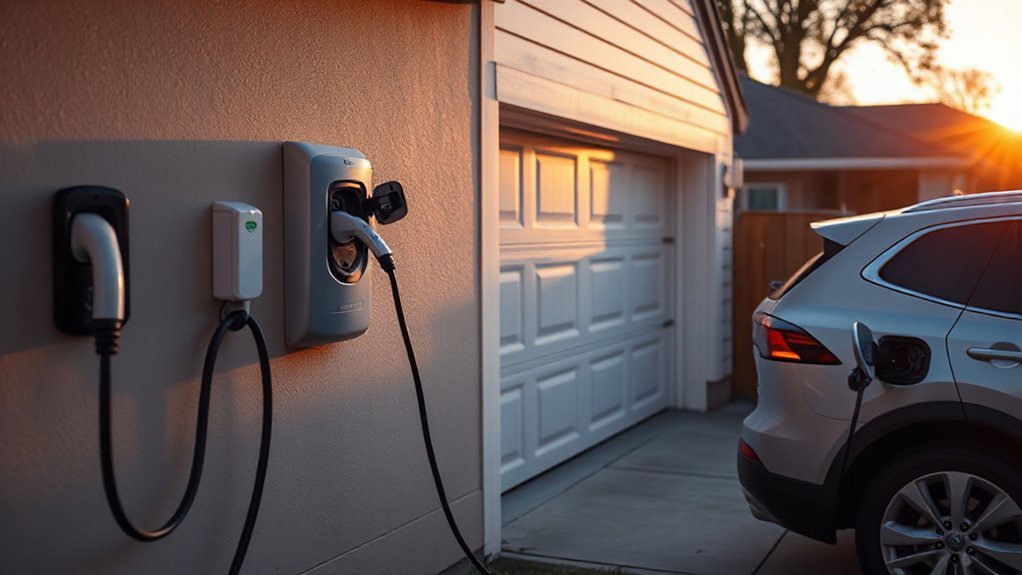
How will your real daily miles, battery size, and dwell time shape the charger you choose? Quantify.
- Daily mileage and dwell time set the required charge rate. Divide kWh needed by available hours. If you’ll need 40 kWh over 8 hours, 7 kW suffices; 11 kW adds margin.
- Battery size matters. Larger packs accept higher power longer, but your onboard charger caps AC (often 7–11 kW). 11 kW will help only if your car supports three‑phase.
- Prioritize battery longevity and safety. Use scheduled charging, limit to 80–90%, avoid heat, and install a dedicated circuit with RCD/RCBO and load management.
- Resale and market trends favor scalable hardware: 11 kW readiness, solar/load integration, OCPP updates, correct permits, and upsized cable for future circuits.
Conclusion
Choose the charger that matches your supply, car, and routine. With about 80% of EV charging done at home, you’ll feel the difference: 7 kW suits typical single‑phase homes and overnight top‑ups; 11 kW shines on three‑phase for faster daily turnarounds and future‑proofing. Verify onboard AC limits, service capacity, permits, RCD/earthing, and load management. Use smart off‑peak schedules to cut costs and reduce grid stress. Document inspections and keep clearances to stay code‑compliant and safe.