You might not know 2025 code updates can add GFCI/AFCI and load‑calc requirements that change your 240V Tesla outlet price and scope. You’ll need a permit, inspection, and the right breaker/conductor sizing for continuous EV load. Panel capacity, run length, and indoor vs. outdoor placement matter, and a licensed electrician should quote fixed pricing and warranty. Want to avoid surprise upgrades and still charge safely and fast?
Key Takeaways
- Most installs cost $350–$900, $900–$1,800, or $2,500–$6,000+ based on run length, finished walls, and required panel or service upgrades.
- Primary cost drivers include panel capacity, wiring length, drywall/trenching, and conductor type; long runs may need upsized wire to meet 3% voltage drop.
- Permits and NEC Article 220 load calculations are required; EV circuits are 125% continuous loads; inspections add time and typically $75–$250 in fees.
- Upgrades can add: panel $1,800–$3,500, 200A service $3,000–$6,500, subpanel $700–$1,800; utility coordination may add 5–20 business days.
- NEMA 14‑50 on 50A yields ~32A with Tesla Mobile Connector; Wall Connector on 60A delivers up to 48A; choose for current and future needs.
Cost Ranges for 240V Tesla Outlets in 2025
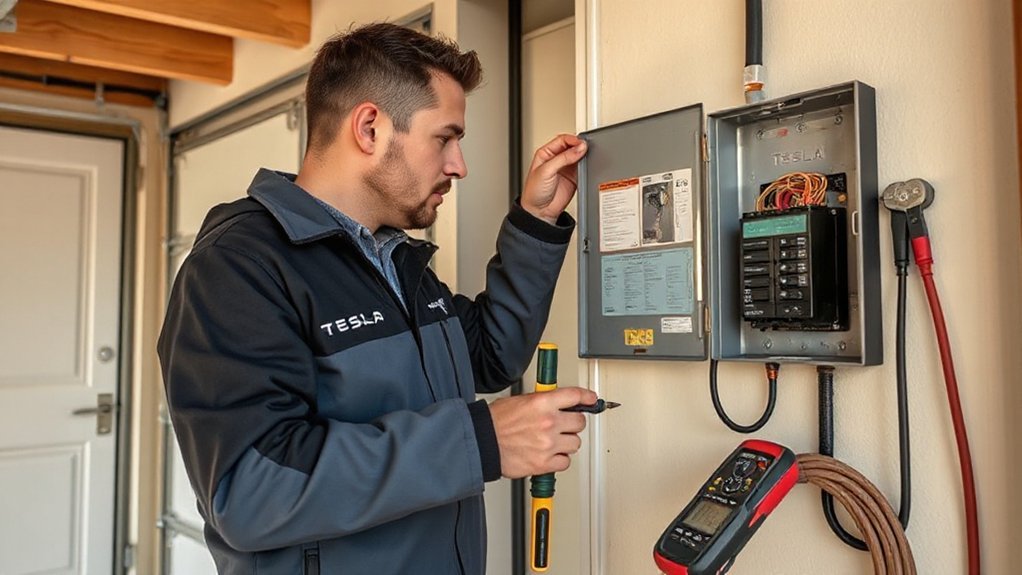
Most homeowners should budget for three tiers of 2025 pricing: $350–$900 for a straightforward, code-compliant 240V Tesla outlet (NEMA 14-50 or 6-50) within about 30 feet of a modern panel; $900–$1,800 when longer wire runs, finished walls, or difficult routing are involved; and $2,500–$6,000+ if you need a subpanel or service upgrade.
You’ll usually get permit filing, a load calc, a dedicated 50A circuit with copper conductors sized per ampacity tables, a 2‑pole breaker with GFCI where required, labeling, and inspection scheduling. Confirm what’s excluded. Ask about financing options with no prepayment penalties. Compare warranty differences: labor 1–3 years vs. manufacturer parts. Require UL‑listed components, torque logs, and testing before energizing. Don’t accept unpermitted work or circuits that exceed panel capacity or violate code.
Key Factors That Influence Your Final Price
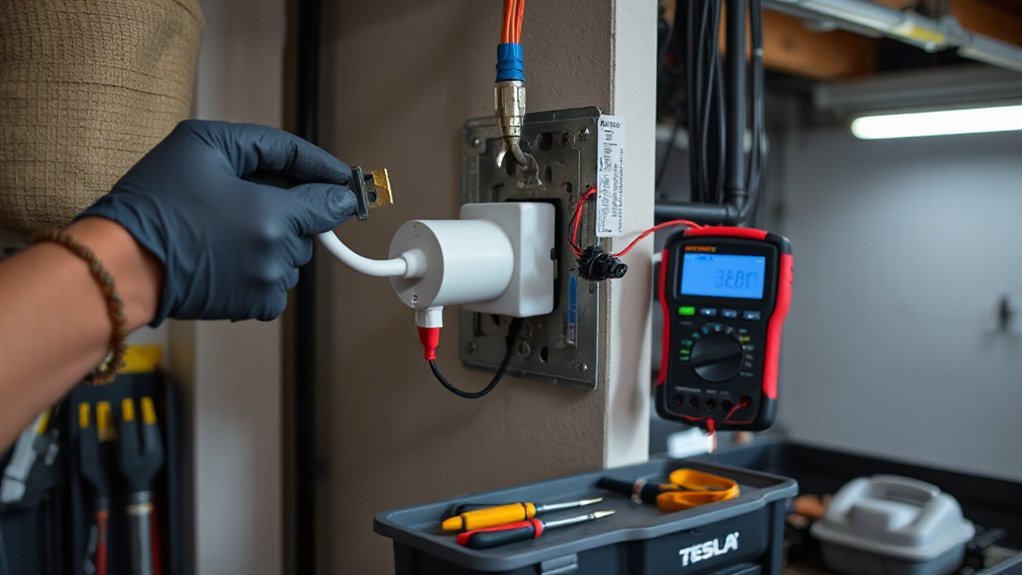
You’ll see costs shift based on two code-critical items: panel capacity upgrades and the wiring’s length and type. If your service or main panel lacks spare amperage, you may need an upgrade or a subpanel to safely support a 240V circuit. Longer runs, conduit needs, and conductor size (copper vs. aluminum, THHN in conduit vs. NM-B where permitted) directly affect labor and material pricing.
Panel Capacity Upgrades
If the main panel lacks spare spaces or ampacity, the electrician must run a NEC Article 220 load calculation to confirm a 240V EV circuit can be added safely. If the demand exceeds service rating, you’ll weigh a main panel upgrade, meter-main swap, or a feeder to a dedicated EV subpanel. Future proofing capacity and subpanel planning help you avoid repeat permits and outages. Expect service upgrades to require utility coordination, AFCI/GFCI compliance, proper grounding and bonding, and new breakers listed for the panel. Typical costs vary by service size, meter location, and inspection requirements. Permits and utility shutdowns can extend timelines and increase costs substantially.
| 60–100A main panel upgrade | $1,800–$3,500 |
|---|---|
| 125–200A service upgrade | $3,000–$6,500 |
| Add 60A EV subpanel | $700–$1,800 |
| Meter-main combo swap | $1,500–$3,000 |
Wiring Length and Type
How far the circuit runs and what wiring method you use drive both price and compliance. Longer runs mean larger voltage drop; you may upsize conductors to keep within 3% at 240V. Conduit with THHN/THWN-2 suits garages; NM-B is limited to dry, protected spaces. Outdoor or damp locations require moisture sealing, correct fittings, and GFCI protection. Choose conductor materials wisely: copper costs more but carries current better; aluminum reduces material cost but needs larger gauge, antioxidizing compound, and CU/AL-rated terminations.
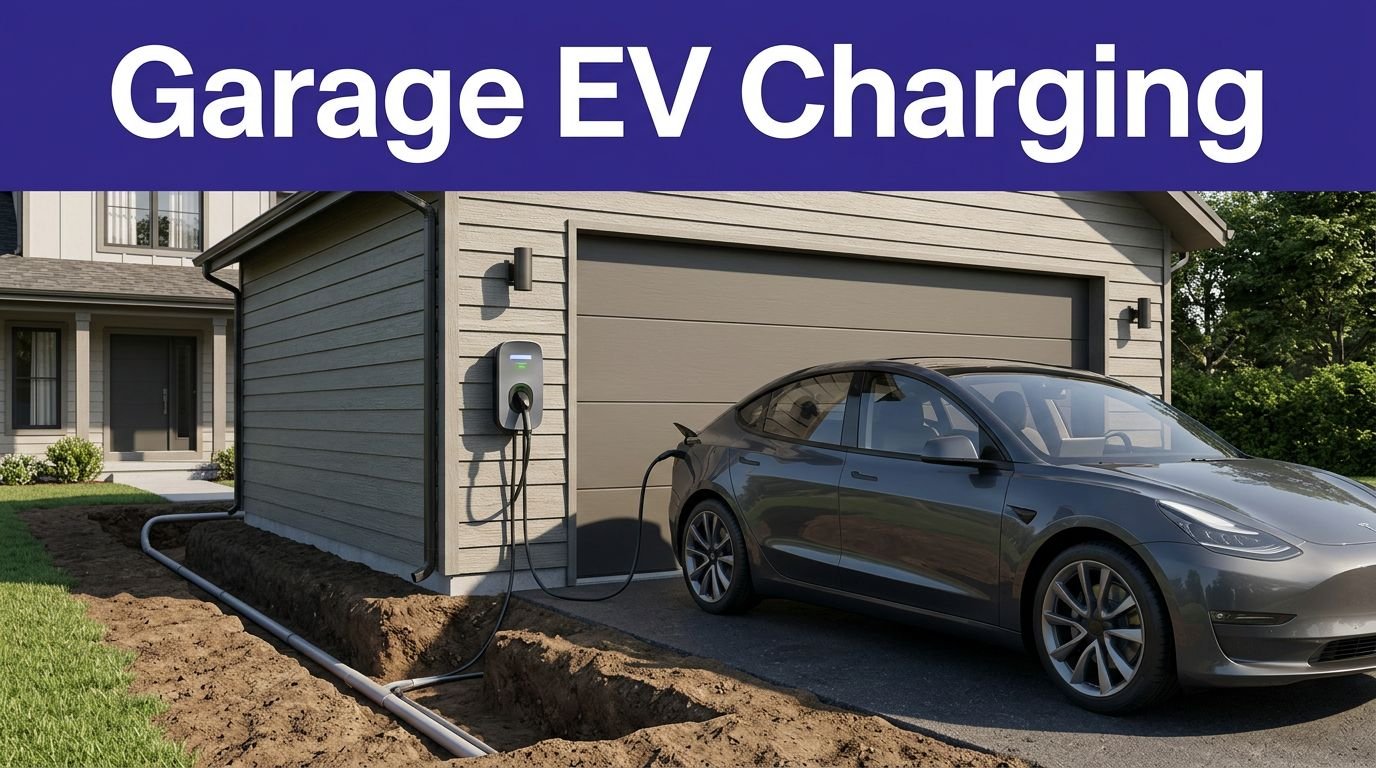
You’ll price bends, trenching, and derating. Above-ground EMT or PVC with pull points eases maintenance; underground requires burial depth per NEC 300.5. Use a 50A, 4-wire circuit (hot-hot-neutral-ground) only if the receptacle requires neutral; otherwise install 3-wire. Label breakers and receptacles per code clearly.
NEMA 14‑50 vs. Tesla Wall Connector: Pros, Cons, and Costs
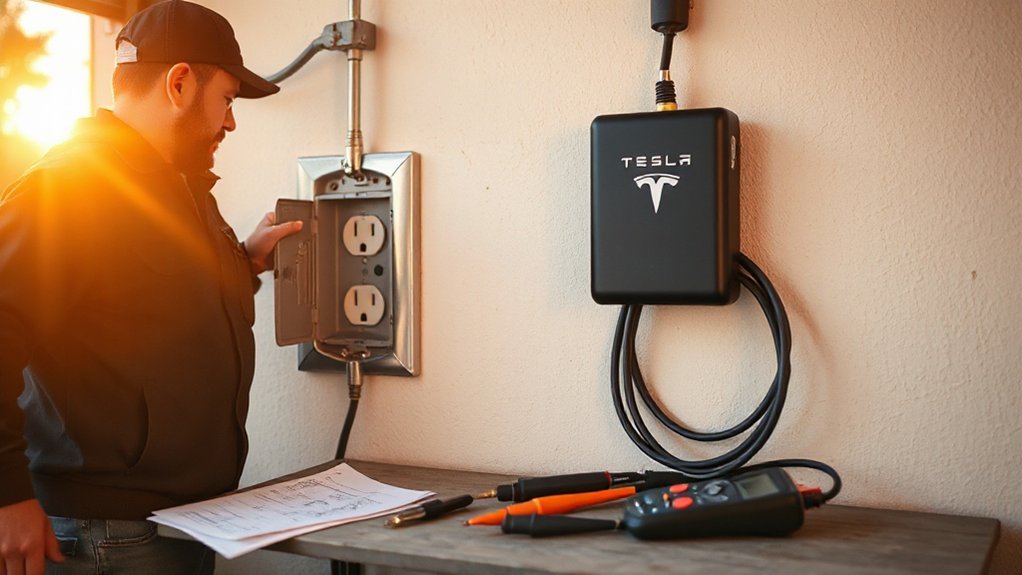
While both options use a 240V dedicated circuit, a NEMA 14‑50 receptacle and a Tesla Wall Connector differ in charging speed, code requirements, and total cost. On a 50A circuit, you’ll see about 32A from a 14‑50 with the Mobile Connector; a Wall Connector can supply up to 48A (≈11.5 kW) on a 60A circuit, vehicle‑dependent. Apply the 125% continuous‑load rule, use copper conductors, and size breakers and wire correctly. A 14‑50 needs GFCI protection in garages; the Wall Connector is hardwired and includes integral ground‑fault protection. Portability Options favor the 14‑50; Aesthetic Impact favors the Wall Connector’s clean look and cable management. Typical hardware: $40–$90 (14‑50) vs. $475–$550 (Wall Connector). Installation labor varies with run length, panel capacity, and mounting height clearance requirements.
Permits, Inspections, and 2025 Code Changes to Budget For

You should confirm 2025 permit requirements with your AHJ, including load calculations (NEC 220), service/panel capacity verification, a one‑line diagram, and the licensed installer’s details. Plan for inspection timelines and fees—permit application, rough‑in (if new conduit or trenching), final inspection—and budget for possible reinspection charges. Review 2025 code updates your jurisdiction will enforce (local adoption of NEC 2023), including GFCI protection for 14‑50 receptacles in garages, approved EV load/energy management, and conductor/overcurrent sizing and labeling rules that can change breaker type, wiring method, and total cost.
Permit Requirements 2025
Before scheduling an electrician, confirm your jurisdiction’s 2025 permit, inspection, and code updates for a 240V EV outlet, because they drive both scope and cost. Gather the Application checklist early: site plan, load calculations, panel rating, breaker size, conductor type and gauge, GFCI requirement, receptacle type (NEMA 14‑50 or 6‑50), circuit length, and mounting details. Verify AFCI/GFCI provisions, labeling, tamper‑resistant devices in garages, and bonding for metal boxes. Some cities now require EV‑ready branch circuits, dedicated disconnects, and fault‑monitoring devices. If you’re in a managed community, secure HOA approvals before filing to avoid plan conflicts.
Confirm service capacity with a load calculation (NEC Article 220) and note derating for conduit fill or ambient temperature. Submit drawings if required; unpermitted work risks fines and rework.
Inspection Timelines and Fees
Because 2025 code updates tighten EV branch‑circuit requirements, expect longer lead times and higher fees in many jurisdictions. Plan inspections early—most AHJs need 1–3 weeks to schedule rough and final checks. Fees typically include application, plan review, and site visit charges. Missed appointments can trigger rescheduling penalties and reinspection fees. Confirm that your licensed electrician is present and the circuit is energized safely for load verification; incomplete work delays approval and may affect insurance implications.
- Typical timeline: rough-in 5–10 business days after permit issuance; final 2–7 days after installation.
- Common fees: $75–$250 inspection, $50–$150 reinspection.
- Preparation: clear panel access, labeled breaker, GFCI/AFCI devices installed, load calc on-site.
- Documentation: permit card, one-line diagram, breaker/ampacity specs, photos for virtual inspections.


Confirm expedited options and cancellation windows.
2025 Code Updates
While 2025 adoptions tighten EV branch‑circuit rules, budget for five changes that drive permit scope, inspection steps, and material choices. You’ll likely need a load calculation under NEC 220, torque‑verified terminations, GFCI protection on 240V receptacles, an emergency disconnect assessment, and panel labeling updates aligned with smart standards.
| Update | What to budget |
|---|---|
| Load calc + service review | Engineer stamp or contractor documentation |
| GFCI and in-use cover | Listed device, weatherproofing where required |
| Conductor/box upsizing | 75°C terminations, derating, conduit fill checks |
| Signage and labeling updates | Permanent directory notes, EV outlet ID, torque logs |
Expect one rough and one final inspection; have permit set, spec sheets, and photos ready. If you add a NEMA 14‑50, use 125% continuous load sizing, dedicated breaker, and AFCI where mandated. Verify compliance.
Load Calculations and When Panel or Service Upgrades Are Needed
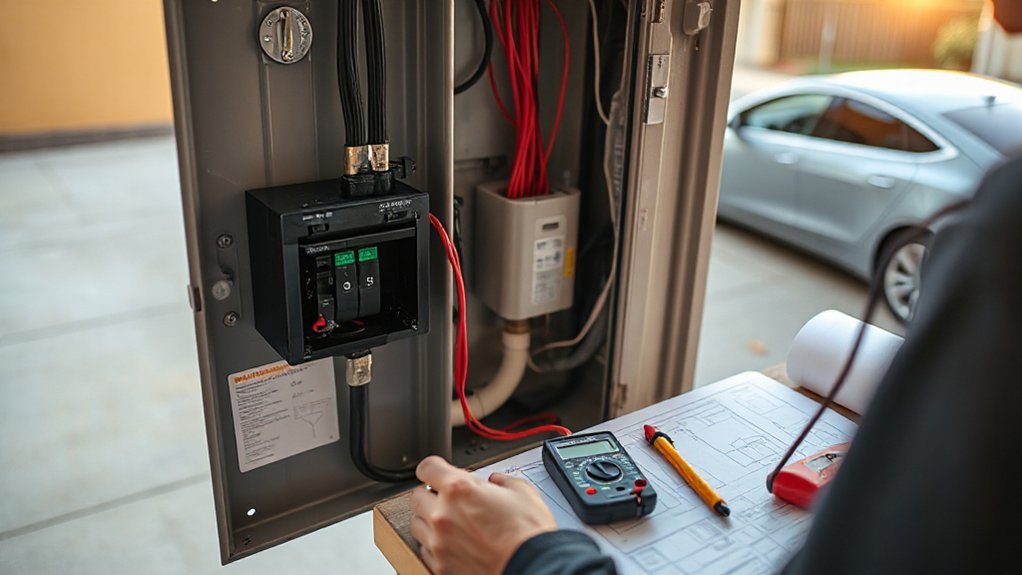
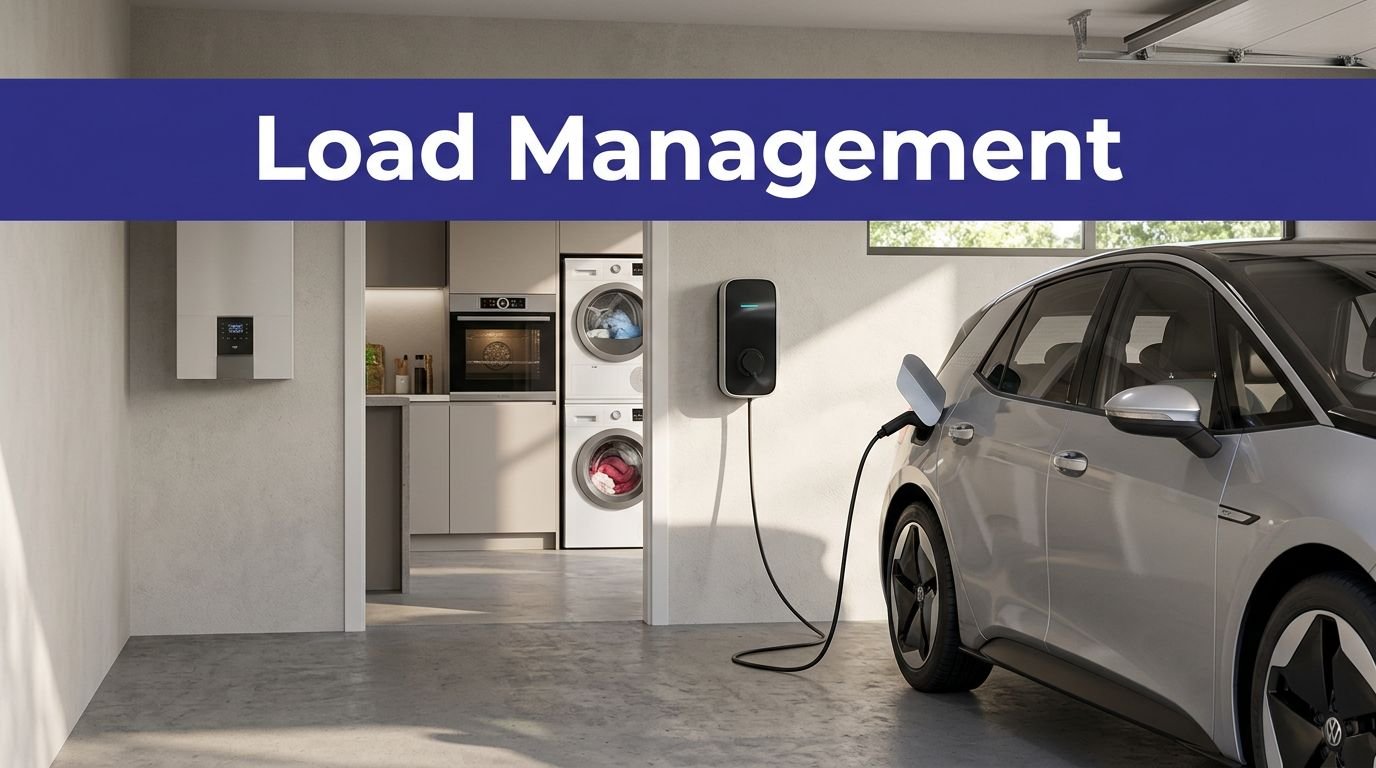
Even though a 240V Tesla receptacle looks straightforward, you must verify capacity with an NEC Article 220 load calculation before adding the circuit. Treat the EVSE as a continuous load at 125% of nameplate amperage. Apply demand factors, diversity factor, and load profiling for existing appliances, HVAC, and general lighting to determine the dwelling’s calculated load. Compare that total to the service rating and busbar limits. Document calculations for permit and inspection.
- If the calculated demand exceeds service rating, plan a service upgrade (e.g., 100A to 200A).
- If service is adequate but spaces or bus ampacity are not, consider a subpanel.
- Confirm feeder, breaker, and conductor sizing match the EVSE’s 125% requirement.
- Verify neutral/grounding, fault current, and AFCI/GFCI requirements per 210, 215, 220, 625.
Labor, Materials, and Distance: Breaking Down the Estimate

With the load calc verified, the estimate comes down to labor, materials, and run length. Labor includes site assessment, permitting, layout, safe lockout/tagout, and workmanship by a licensed electrician; expect hourly billing plus permit fees. Materials cover a listed 2-pole breaker matched to panel series, a NEMA 14‑50 or 6‑50 receptacle, a properly rated box, cover, and copper conductors sized per NEC ampacity, plus staples and fittings. Run length drives conductor quantity and may require upsizing to keep voltage drop near 3%. Longer routes, tight spaces, or drywall fishing increase time. Accessibility affects crew size and duration. Recent supply chain variability and lead times can influence pricing and scheduling, especially for specific breaker models. Your written quote should itemize each component and labor hours.
Indoor vs. Outdoor Runs, Conduit Choices, and GFCI/AFCI Requirements
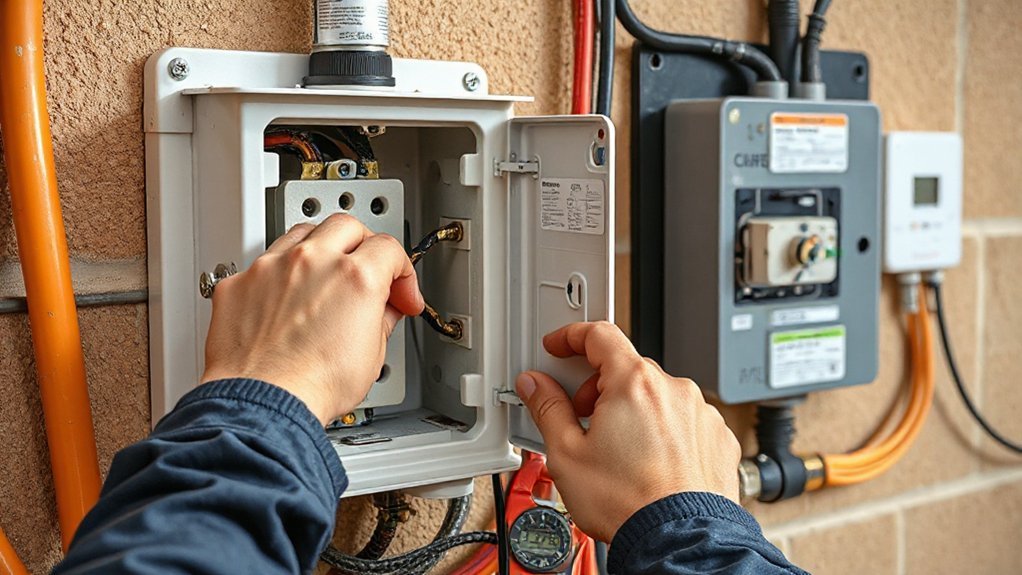
Because EV branch circuits often cross environments, you must match wiring methods and protection to the location. Indoors, EMT or MC cable works where concealed and dry; outdoors or damp garages require PVC Schedule 80 or rigid metal with raintight fittings. Use THHN/THWN-2 conductors sized for the breaker and temperature ratings. Seal penetrations for Corrosion Prevention and Rodent Protection.
Match EV branch wiring to environment: EMT/MC indoors; Schedule 80 PVC or rigid with raintight fittings outdoors; use THHN/THWN-2; seal penetrations.
- Support conduit per code spacing; use expansion fittings across joints, changes, and temperature swings.
- Maintain burial depth: 18 inches for PVC, 6 inches for rigid metal under a driveway, as permitted.
- Provide GFCI for garage and outdoor receptacles; add AFCI where the branch originates in dwelling areas.
- Install in-use covers, weatherproof boxes, bonding bushings, and anti-oxidant on aluminum terminations for EVSE.
Timeline: Site Visit, Scheduling, and Installation Duration
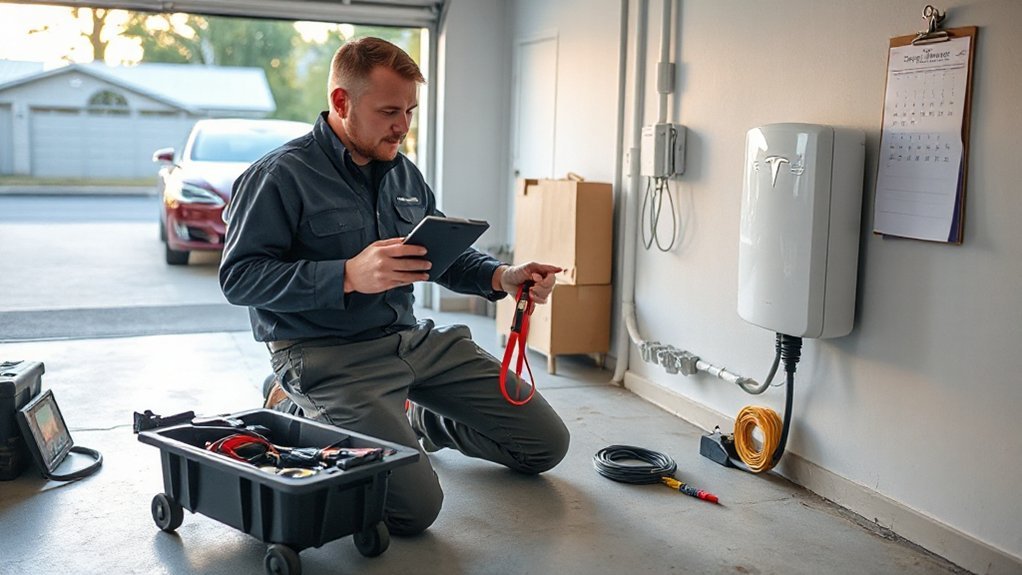
You start with an initial site assessment to confirm panel capacity via load calculations (NEC 220), breaker/conductor sizing (NEC 210/310), grounding/bonding, GFCI/AFCI requirements, and a safe conduit route. You then secure permits and coordinate with the AHJ and utility for inspections and any needed meter pulls or service shutdowns, which can extend scheduling by days to weeks. On installation day, expect about 2–8 hours for a standard run—longer with trenching or a panel upgrade—with lockout/tagout, torque-to-spec, and verification testing before energizing.
Initial Site Assessment
A clipboard and multimeter set the tone for the initial site assessment, a 30–60 minute visit (in-person or virtual) where a licensed electrician verifies panel capacity, breaker space, grounding/bonding, and the conduit route to the 240V receptacle location.
They’ll document Driveway Access, clear working space, and Structural Integrity around mounting points. You’ll get a snapshot of load calculations and a preliminary cable path, including GFCI and NEMA configuration. If conditions look good, you’ll leave with a realistic schedule and install duration.
- Service panel check: amperage rating, breaker positions, torque and labeling.
- Load calc: NEC 220 method, continuous EV load at 125%, conductor and breaker derating.
- Pathway and mounting: conduit size, penetration method, moisture protection, structural fastening.
- Site logistics: parking, clearance, outage window, noise constraints.
Expect most installs to take 2–5 hours; complex runs may extend to a full day. You’ll receive a written scope, materials list, and safety notes.
Permit and Utility Coordination
How soon permits clear depends on your AHJ and utility, but the process starts immediately after the site assessment. Your contractor submits permit drawings, load calcs, and a one-line per NEC/CEC within 1–2 business days. Typical plan review takes 3–10 business days; expedited queues vary. If a service upgrade or new meter-main is required, expect utility authorization to add 5–20 business days and possible outage coordination. You’ll approve scheduling once the permit issues. Maintain Stakeholder Communication: respond to plan-review comments fast, sign utility forms promptly, and coordinate access for inspections. Provide Neighbor Notifications when work may affect parking or short street closures. Verify trench, conduit, and breaker specs match the approved plans; changes trigger resubmittals and new review clocks. Keep documentation organized and accessible.
Installation Day Duration
Once permits issue, the contractor books your installation window and confirms access, shutoff, and any utility coordination. Expect a pre-install site check to verify panel capacity, conduit path, and mounting height. Most schedules lock 1–2 weeks out; emergencies or utility holds can extend that. On installation day, you’ll see 2–4 technicians for 2–6 hours; panel upgrades or long conduit runs may push to a full day. Power is off 30–120 minutes during breaker tie-in and testing. Plan Pet Management and set Noise Expectations for drilling and panel work. Keep the work zone clear.
- Verify parking, panel clearance, and driveway access.
- Secure pets behind doors; post “Do Not Enter” signs.
- Protect EVSE location from moisture.
- Confirm GFCI/AFCI and labeling before sign‑off.
Rebates, Tax Credits, and Utility EV Programs to Cut Costs
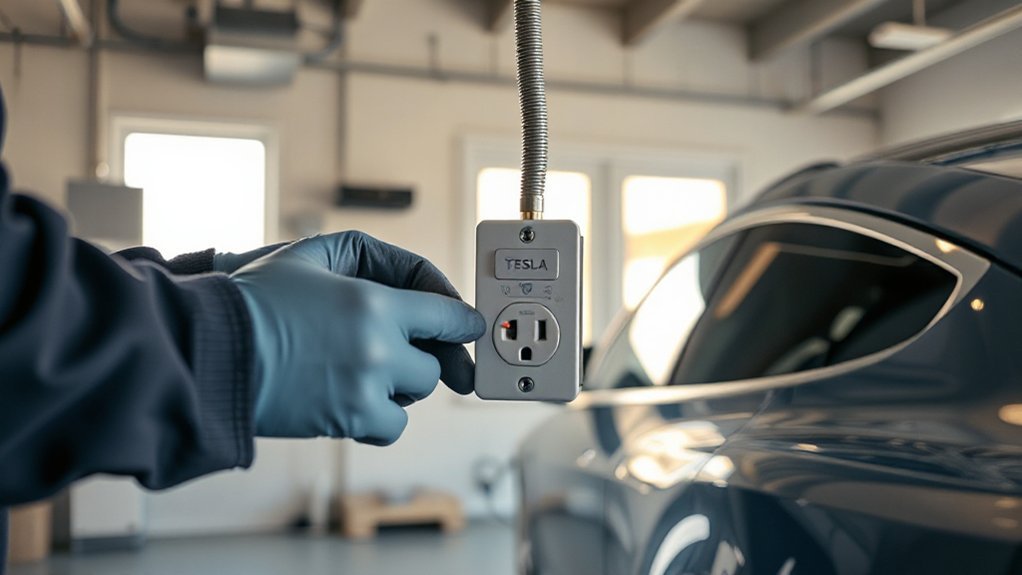
While upfront labor and materials add up, you can offset a 240V Tesla outlet installation with rebates, tax credits, and utility EV programs that reduce both installation and ongoing charging costs. The federal Alternative Fuel Refueling Property Credit may cover 30% of qualifying costs up to $1,000 if your home sits in an eligible census tract; verify eligibility requirements before you buy. Many states and utilities add rebates for wiring, panels, and NEMA 14‑50 or 6‑50 receptacles, but most require pre‑approval, a permit, and final inspection photos. Observe stacking rules: apply rebates first, then calculate any federal credit on the net cost, and avoid claiming the same expense twice. Time‑of‑Use EV rates, off‑peak charging credits, and make‑ready programs further lower lifetime charging costs substantially.
How to Choose a Licensed Electrician and Compare Quotes
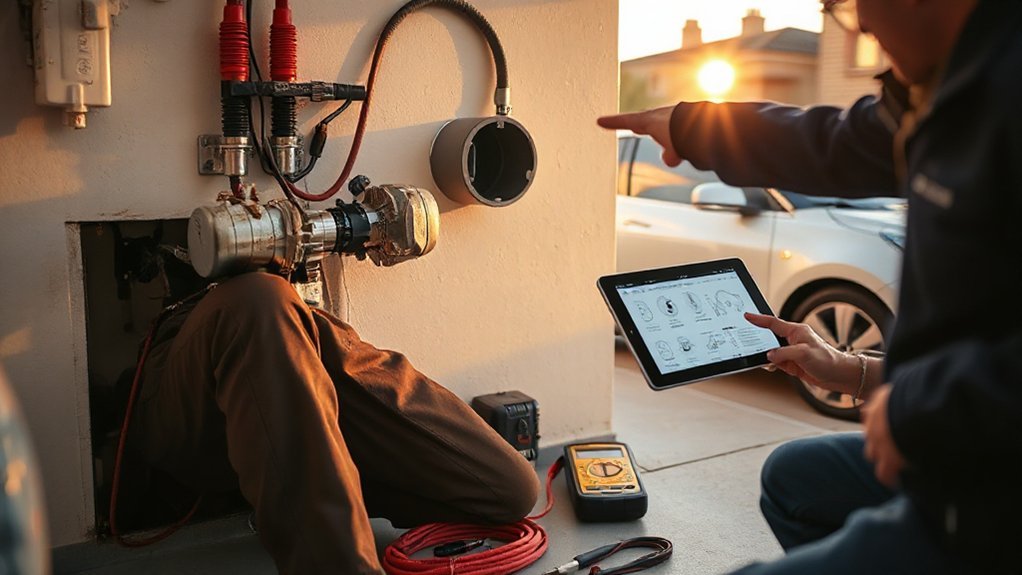
After you line up rebates and credits, hire a licensed, insured electrician who will pull a permit and install a code-compliant 240V circuit for your Tesla outlet. Verify an active license, request Insurance Verification (general liability and workers’ comp), and confirm they follow NEC load calculations and local amendments.
- Ask for a site assessment, panel capacity check, and written scope (breaker size, conductor gauge, run length, GFCI/AFCI, NEMA type).
- Require a fixed-price quote with line items: materials, labor, permit fees, travel, and inspection.
- Compare Warranty Terms on parts and workmanship; get them in writing.
- Confirm timeline, cleanup, and inspection scheduling; make sure they’ll label circuits and provide as-built photos.
Choose copper THHN/THWN conductors in metallic conduit where exposed, or NM-B if allowed in finished spaces.
Conclusion
You came in testing a theory: a 240V “simple outlet” is always the cheapest way to charge. Now you know it’s only true when the run is short, the panel has capacity, and code items—permit, load calc, GFCI/AFCI—are straightforward. Expect $350–$900 then; $900–$1,800 with longer or finished runs; $2,500–$6,000+ if a subpanel or service upgrade’s required. Hire a licensed pro with a fixed-price quote, warranty, and utility/REBATE guidance, and you’ll charge safely, fast, and compliantly.