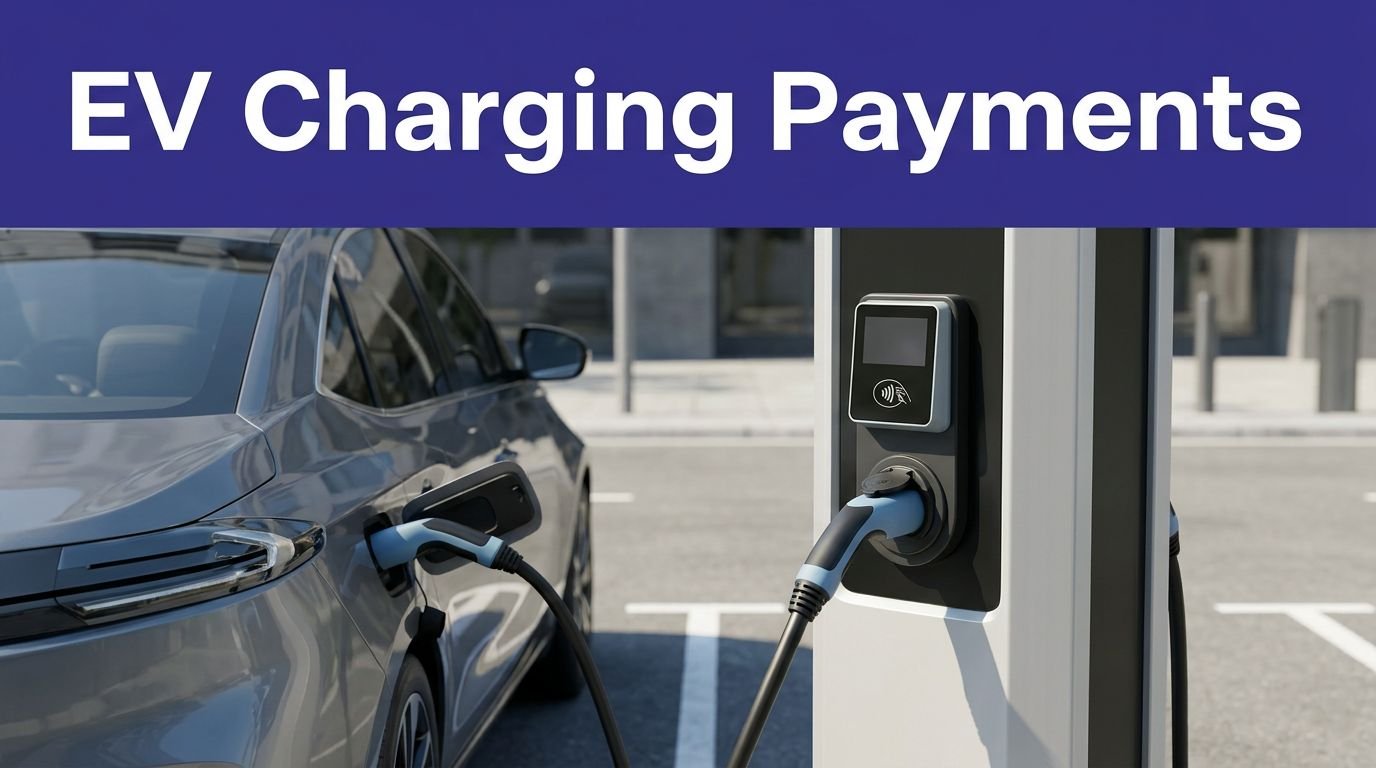
You weigh costs, you model ROI, you choose brands. Level 2 ports run $6–30k installed; DC fast chargers often cost $90–370k with site prep and grid upgrades. Incentives and make‑ready can compress payback, but tariffs, utilization, and uptime decide outcomes—DCFC typically pencils out in 5–8 years. Favor 97%+ uptime, OCPP/OCPI, and strong field support—because the best franchise fit depends on your territory, utility, and capital stack…
Key Takeaways
- Typical startup costs: $6–12k per L2 port plus $8–25k install; $40–120k per DCFC plus $50–250k install, plus software and contingency.
- Expected payback: L2 3–5 years; 150–350 kW DCFC 5–8 years; target DSCR ≥1.3 and model NPV/IRR sensitivities.
- Choose brands with 97–99% uptime SLAs, open OCPP, OCPI roaming, dynamic pricing, APIs, and 4–8 hour on-site support.
- Monetize via kWh pricing, session fees, subscriptions, advertising, fleets; track utilization 15–30% and uptime >97% to drive revenue per port.
- Prioritize territories with AADT >20,000, 30–60 minute dwell, grid capacity, limited competitors; stack utility make-ready funds and rebates to cut payback.
The EV Charging Franchise Model at a Glance

While EV adoption accelerates, an EV charging franchise gives you a repeatable, asset-backed service business: you deploy Level 2 and DC fast chargers at high-demand sites under a proven brand, then monetize kWh sold, session fees, subscriptions, advertising, and fleet contracts. You operate within a franchise agreement that defines protected territory, performance metrics, and brand standards. Expect franchisor support across site selection, utility coordination, interoperable software, uptime monitoring, and field service. You track KPIs: utilization rate (target 15–30%), revenue per port per day, first-time activation speed, and uptime above 97%. Standardized playbooks let you scale multi-unit clusters near retail, travel corridors, and fleet depots. Strategic levers include dynamic pricing, loyalty programs, data partnerships, and co-marketing with host properties. Prioritize grid-ready sites and tenure length.
Startup Costs Breakdown: Hardware, Installation, Software, and Site Prep

Most EV charging franchise projects pencil out only after you map the full stack of startup costs by line item and power level. Hardware dominates: plan ~$6–12k per networked Level 2 port and ~$40–120k per DC fast charger, plus pedestals, cables, warranties, and spare inventory. Installation ranges widely—$8–25k per L2 and $50–250k per DC—driven by trenching, switchgear, panel upgrades, bollards, and ADA layout. Budget site prep: civil work, signage, lighting, canopies, and cybersecurity enclosures. Account for shipping logistics, taxes, and customs if importing. Software and networking typically run $200–800 per port for provisioning, uptime monitoring, and payment integration; add cellular backhaul hardware. Include design, permits, utility interconnection studies, commissioning, and training. Build 10–15% contingency for unknowns. Document quotes, timelines so you’ll prevent scope creep.
Operating Economics: Utilization, Pricing, Demand Charges, and Incentives
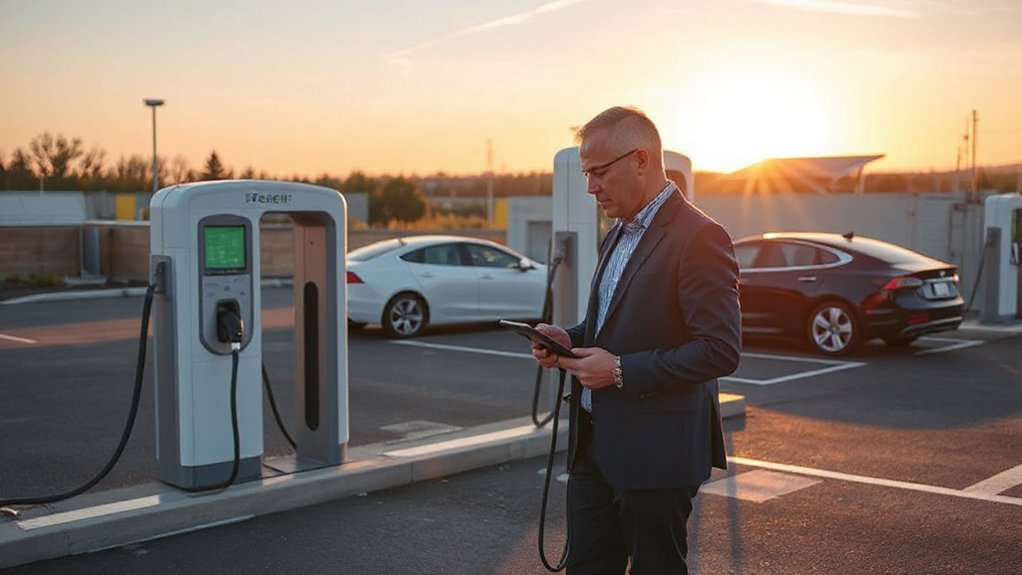
You’ll quantify utilization in sessions per port per day, kWh per port per day, and peak-coincident load to anchor revenue and capacity planning. For DC fast charging, target 12–25% average utilization (≈2–6 energized hours/day) or roughly 60–150 kWh/port/day, and monitor 95th‑percentile demand to flag costly peaks. Mitigate demand charges with power sharing and scheduled caps, EV-specific tariffs and demand response, and—when the math works—battery storage for peak shaving.
Utilization Rates & Throughput
Because utilization drives nearly all unit economics in EV charging, you need to quantify and manage throughput at the port level with rigor. Track active hours per port, vehicles served, kWh dispensed, Session Duration, and queue time. Benchmark by daypart and season. Shorten dwell with clear pricing and idle fees; maximize turns without compromising experience. Model revenue as kWh throughput × price, then stress test with Peak Flow scenarios and weather or event spikes. Use heatmaps to rebalance capacity and signage to reduce false occupancy. Calibrate targets, then review weekly.
| Metric | Target |
|---|---|
| Utilization (hours/port/day) | 6–8 |
| Sessions/port/day | 10–14 |
| kWh/port/day | 250–400 |



Prioritize stations with high retail adjacencies, reliable uptime, and clear wayfinding. Your goal: smooth arrivals, fast turns, predictable revenue, and loyal repeat drivers over time.
Demand Charge Mitigation
High throughput lifts kWh revenue, but unmanaged peaks can let demand charges dominate your P&L. You mitigate them by controlling peak kW, not just energy. Start with tariff engineering: pick TOU rates with low demand components and enroll in demand response. Set site-level kW caps and use Smart scheduling and dynamic load sharing to flatten the 15‑minute interval. Pair DCFC with right-sized storage (e.g., 100–300 kW, 200–600 kWh) to shave coincident peaks 30–60%. Price to steer behavior: deploy Behavioral incentives—off-peak discounts, idle fees, reservations—to spread load. Stagger charger ramps, limit simultaneous maximums, and precondition via solar or battery. Monitor in real time; alert on approaching thresholds. Model scenarios; size interconnection and hardware to your capex/ROI target. Audit bills monthly to verify savings and compliance.
Payback Periods and Pro Forma Scenarios

While site context drives outcomes, payback periods for EV charging franchises typically span 3–5 years for Level 2 and 5–8 years for 150–350 kW DC fast charging, contingent on capex, utilization, tariffs, incentives, and revenue share. You’ll build a pro forma with capex by line item, forecast sessions/day, kWh/session, price/kWh, ancillary parking fees, and uptime. Model utility demand charges, escalation, and maintenance, then apply discount assumptions to compute NPV and IRR. Run sensitivity analysis on utilization (20–60%), pricing (±15%), and incentive timing to bound payback and downside risk. For DCFC, include charger throughput limits, dwell-time constraints, and demand-charge mitigation impacts from managed charging or batteries. Stress test interconnection delays, construction overruns, and debt service coverage; target DSCR ≥1.3 and minimum cash reserves, monthly buffer.
Brand Comparison: Leading Franchise and Network Options
Your pro forma set the financial guardrails; now the brand and network you choose will materially shift utilization, capex, OpEx, and incentive eligibility. Compare on four levers: hardware reliability, network reach, monetization tools, and field support. Favor DC fast platforms with 97–99% uptime SLAs, redundant power modules, and open OCPP. Assess brand reputation via verified uptime dashboards and driver app ratings. Prioritize roaming (OCPI) with Tesla, EVgo, ChargePoint, Electrify America, and Shell Recharge to widen demand. Monetization matters: dynamic pricing, idle fees, fleet portals, and API reporting improve ARPU. Strong service networks cut truck rolls and downtime; insist on 24/7 monitoring and 4–8 hour on-site response. Verify NEVI compliance, warranty length, and parts availability to protect cash flow. Model total-cost over five years carefully.
Territory Vetting, Real Estate, and Utility Program Alignment
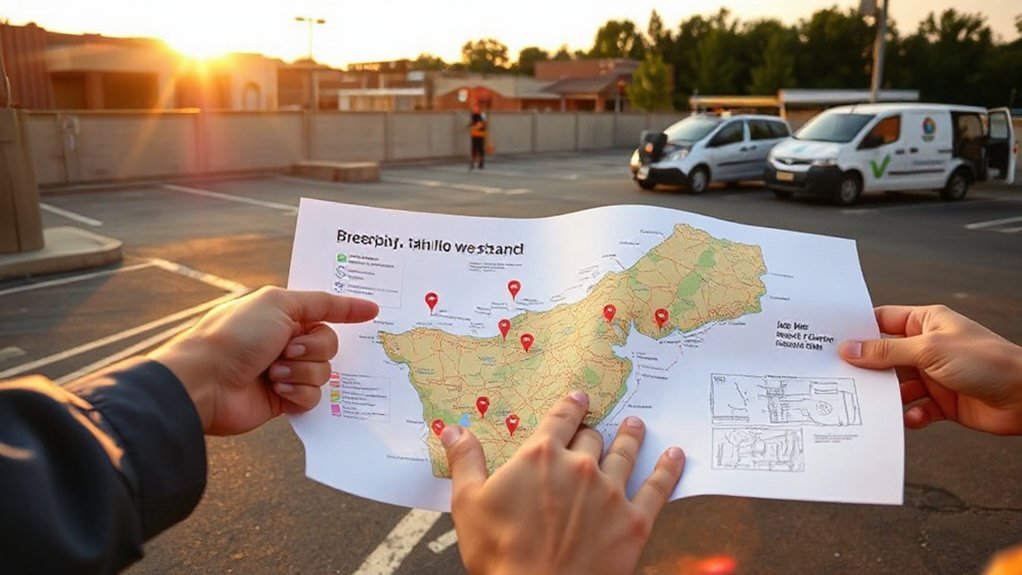
You vet territories with quantified site selection criteria—AADT >20,000, 30–60 minute dwell times, reliable grid capacity, favorable zoning, limited competitor overlap, and rising EV registrations—to prioritize high-yield parcels. You map utility incentives and interconnection timelines by feeder/substation to stack make-ready funds, rebates, and demand-charge relief against capex and payback. Using both lenses, you rank sites and sequence leases and applications to target sub-36 month paybacks and uphold uptime SLAs.
Site Selection Criteria
Where you place chargers dictates utilization, revenue, and ROI, so vet territories with hard metrics before signing a lease. Rank sites by traffic flows, dwell times, grid capacity, zoning, and total addressable EVs within 10–15 minutes. Account for safety, visibility, light pollution constraints, and microclimate effects that impact uptime and comfort.
- Demand and access: Use anonymized mobility data, competing stations, and retail anchors to project sessions per day and peak-hour stacking.
- Power and constructability: Verify transformer proximity, trenching distance, easements, ADA compliance, and stormwater; prefer pull-through layouts.
- Real estate terms: Negotiate long options, relocation clauses, 24/7 access, signage rights, and maintenance responsibilities; align with utility programs without delaying permits.
Score each site, pilot quickly, and iterate before scaling capital commitments. Reduce soft costs early.
Utility Incentive Mapping
Mapping utility incentives upfront anchors territory vetting and site control to the real economics of EV charging. You’ll map service territories, demand charges, make-ready budgets, and interconnection queues to rank ZIP codes by net installed cost and time-to-energize. Pull Program Timelines and Eligibility Criteria for each utility: rebate caps, step-down schedules, small-business carveouts, transformer upgrade coverage, and required charger specs. Crosswalk those rules with your franchise’s preferred hardware, throughput targets, and landlord profiles. Flag parcels within feeders with available capacity and near substation upgrades to compress lead times and avoid costly redesigns. Model cash flows both with and without incentives, then prioritize sites where incentive certainty, queue position, and host readiness intersect. Lock LOIs contingent on award milestones to de-risk capital deployment and execution.
Financing Paths, Risk Checklist, and Key Diligence Questions

How can you finance an EV charging franchise while controlling risk and validating the economics? Blend capital sources—SBA 7(a)/504 loans, equipment leases, utility rebates, tax credits, and revenue-share site hosts—to minimize cash outlay and accelerate break-even.
- Financing paths and protections: Model debt service coverage >1.5x, keep LTV <70%, secure step-down prepayment terms, and line up Exit Strategies (refi, sale-leaseback, portfolio sale). Maintain Insurance Coverage: general liability, cyber, environmental, equipment breakdown, and business interruption.
- Risk checklist: interconnection delays, demand charges, uptime SLAs, charger obsolescence, vandalism, host churn, and permitting. Set reserves, hedges, and KPI triggers; require redundancy and remote diagnostics.
- Key diligence questions: utilization ramp assumptions, tariff forecasts, warranty depth, parts logistics, roaming partnerships, EMV compliance, revenue reconciliation, and franchisee support benchmarks.
Conclusion
You want profits and electrons, not lawn ornaments. Budget $6–30k per Level 2 and $90–370k per DCFC, then bully demand charges with smart tariffs and incentives. Aim for 97%+ uptime, OCPP/OCPI, and field support; otherwise you’re franchising frustration. Model 20–40% utilization, 5–8 year DCFC paybacks, and cash-in on make-ready freebies. Vet territories, utility programs, leases, and SLAs like a hawk. Finance strategically, track KPIs weekly, and let broken chargers happen to your competitors instead. Seriously.