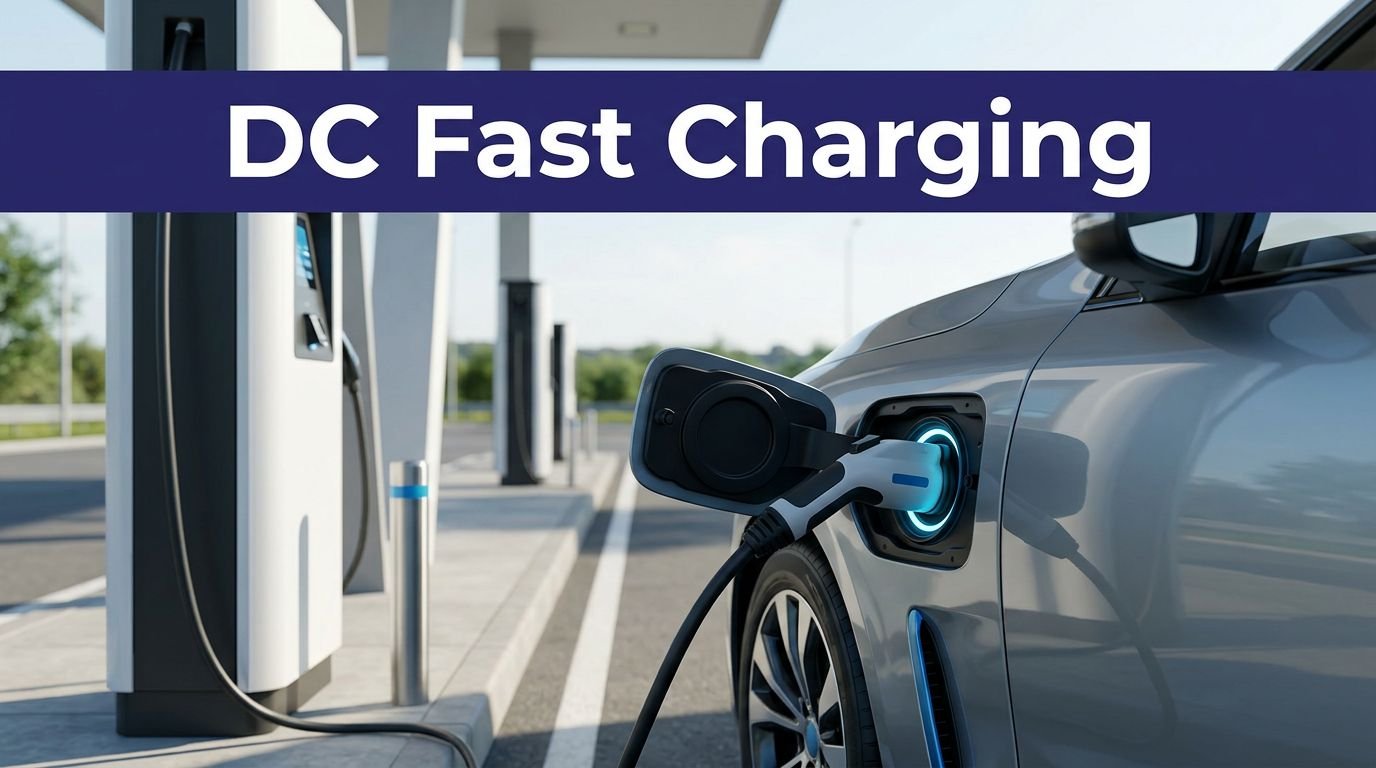
It’s no coincidence that as EV adoption accelerates, your charging ROI hinges on utilization, tariff design, and capex discipline. You’ll weigh hardware and trenching against demand charges, uptime SLAs, and grid upgrades, then stress‑test cash flows with dynamic pricing, fleet contracts, and incentives. Location and charger level drive revenue per kW and dwell time, but the margin story changes fast—especially when one overlooked variable tips the model…
Key Takeaways
- Capex: L2 $5k–$12k/port; DCFC $80k–$150k/dispenser, with installation and utility upgrades adding $50k–$250k+ and significant lead times.
- OPEX includes maintenance ($150–$400 L2; $1k–$3k DCFC), networking ($210–$420/port/year), and demand charges that can dominate electricity costs.
- Profitability hinges on utilization (targets: L2 15–25%, DCFC 20–40%), dynamic pricing, idle fees, subscriptions, and ancillary retail basket uplift.
- Urban corridors, logistics hubs, and fleet partnerships (ride‑hail, last‑mile, municipal) deliver predictable, high‑frequency sessions that stabilize revenue and improve ROI.
- Stack incentives and negotiate EV tariffs; model 15‑minute load profiles and build 10%–20% contingencies to mitigate demand charges, delays, and cost overruns.
Market Landscape and Demand Drivers

While EV adoption remains uneven by region, the addressable load for public charging is scaling fast and becoming monetizable. You’re seeing utilization lift where density, dwell time, and route intensity converge. Urban corridors and logistics hubs post the strongest throughput, with peak sessions aligning to commuting and delivery windows. Consumer Behavior favors reliable, well-lit sites near retail; basket-lift and loyalty partnerships enhance yield per kWh. Fleet Electrification is the primary accelerator: ride-hail, last‑mile, and municipal fleets concentrate predictable, high-frequency charging that stabilizes revenue. Policy credits and demand charges matter, but the core drivers are vehicle mix, site placement, and pricing sophistication. Dynamic tariffs, idle fees, and subscriptions increase ARPU, while API integrations with navigation apps pull incremental traffic and strengthen lifetime value across cohorts.
Capital Expenditures: Hardware, Installation, and Grid Upgrades
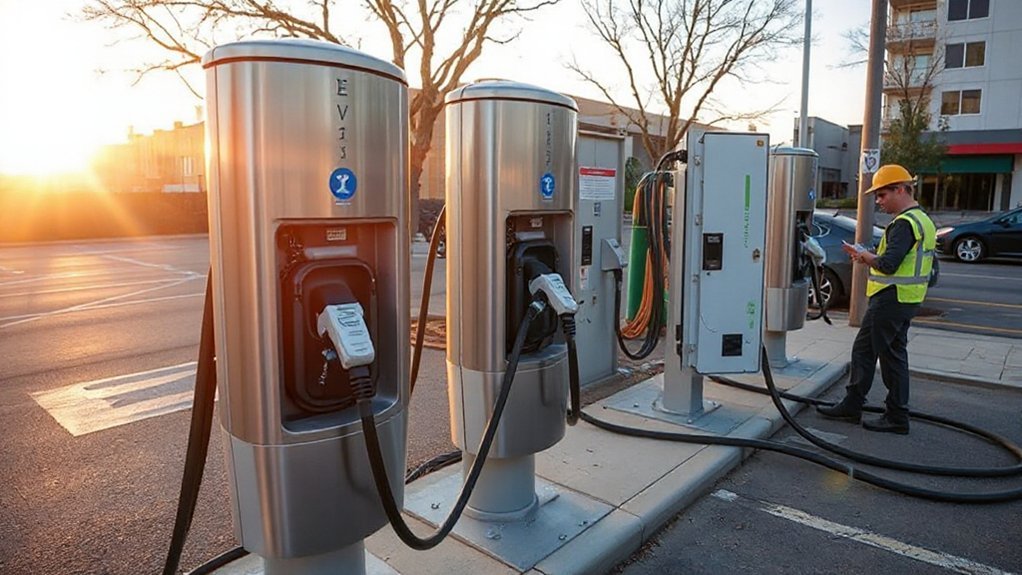
You should quantify capex by isolating charger hardware from site work and grid interconnection: expect Level 2 units at roughly $800–$2,500 per port and DC fast chargers (50–350 kW) at ~$30,000–$150,000 per dispenser. Installation typically clocks in at 40–70% of total project cost, with Level 2 site work at ~$2,000–$10,000 per port and DCFC at ~$50,000–$200,000 per site depending on trenching, panels, and permitting. Grid upgrades—new transformers, switchgear, and service extensions—can add ~$20,000–$500,000 and months of lead time, materially affecting demand charges, cash burn, and project IRR.
Charger Hardware Costs
Because charger hardware, installation, and grid upgrades dominate upfront capex, you should size and site equipment with precise cost assumptions. Hardware alone will typically run $1,200–$2,500 per Level 2 port and $18,000–$45,000 for 50–150 kW DC fast chargers, or roughly $250–$500 per kW. Break costs into enclosure, power modules, thermal management, cables/connectors, payment controller, communications, and pedestal/mounts. Specify industrial-grade components with tight manufacturing tolerances to reduce failure rates and warranty claims. Model component obsolescence: power semiconductors and payment terminals often refresh on 3–5 year cycles, affecting spares and software support. Compare modular architectures that let you add 25–50 kW blocks and swap failed modules without full replacement. Budget for certifications (UL, OCPP compliance), extended warranties, and field-replaceable parts inventory to improve uptime and ROI.
Installation and Grid Upgrades
Aligning civil, electrical, and utility scopes determines installation and grid-upgrade capex. You’ll scope trenching, pads, bollards, conduits, switchgear, and interconnection before locking costs. Expect installation to run $25k–$60k per Level 2 site and $150k–$500k per DC fast site, excluding make‑ready. Utility upgrades—new transformer, service lateral, and protection—add $50k–$250k, or $200–$600 per kW for high‑power hubs. Trenching runs $100–$400/ft; union electrical labor often prices at $150–$300/hr. Build 10%–20% contingency for unknown subsurface conditions and supply variability. Model critical‑path risks: permitting timelines (4–12 weeks), utility design/queue (6–18 months), equipment lead times (8–24 weeks). Sequence community outreach with permitting to reduce variance and change orders. Negotiate cost‑sharing or make‑ready incentives to compress capex and improve IRR. Lock fixed bids and escalation caps to protect budget certainty early.
Operating Costs: Maintenance, Networking, Electricity, and Demand Charges

You should benchmark routine maintenance at $150–$300 per L2 port annually and $2,000–$5,000 per DC fast charger, covering inspections, replaceables, and uptime SLAs. You should budget networking service fees at $120–$300 per port per year plus 2–5% for payment/roaming, noting higher tiers add load management and analytics. You should model electricity using a blended $/kWh and utility demand charges of $10–$25/kW-month; at 150 kW nameplate, a DCFC can accrue $1,500–$3,750 monthly in demand costs that can exceed energy spend at low utilization.
Routine Maintenance Costs




Often, routine maintenance sets the floor for your EVSE operating budget, covering predictable tasks that sustain uptime and protect warranties. Budget for quarterly inspections, contactor torque checks, enclosure cleaning, cable and connector wear checks, and consumables. For Level 2, expect $150–$400 per port annually; for DC fast, $1,000–$3,000 per dispenser. Typical line items include onsite labor at $90–$150/hour, connector replacements at $200–$600, cable swaps at $300–$1,000, and signage/paint touch-ups at $50–$200. Track these via strict Expense Categorization to benchmark cost per session and per kWh delivered. Treat routine maintenance as OPEX; it’s generally deductible in the year incurred, improving after‑tax cash flow via Tax Deductions. Prioritize preventive schedules over reactive repairs to minimize downtime and avoid voiding warranties and extend asset life and ROI.
Networking Service Fees
Beyond scheduled upkeep, networking service fees anchor the digital layer of EVSE operations and your recurring OPEX. These subscriptions enable authentication, pricing, remote diagnostics, firmware updates, and uptime SLAs that protect revenue. You should budget per-port charges plus per-transaction takes; model three-year totals with churn scenarios. Negotiate open protocols (OCPP, OCPI) to mitigate Vendor Lock in and preserve switching leverage. Demand Service Transparency: publish API access, data ownership, fee change clauses, and support response times. Track KPIs—authorization success, session drop rate, mean time to repair—and tie penalties or credits to thresholds. Bundle volumes to compress pricing.
| Cost Driver | Typical Range |
|---|---|
| Software platform | $150–$300/port/year |
| Cellular data | $60–$120/port/year |
| Transaction fees | 2.5%–5% + $0.10 |
Electricity and Demand Charges
While energy costs seem straightforward, electricity and demand charges usually drive the largest variance in EVSE OPEX and margin. You pay energy ($/kWh) and capacity ($/kW) based on the month’s coincident peak; a single 15‑minute spike can erase margins. Use Load forecasting to flatten profiles: stagger sessions, throttle power, and precondition during off‑peak. Model multiple tariffs, including TOU, RTP, and demand ratchets, with seasonality and feeder constraints. Validate Metering accuracy to avoid overbilling or lost revenue, and reconcile utility interval data with charger logs. Consider on‑site storage or solar only if demand reduction value exceeds capex and degradation. Negotiate dedicated EV tariffs, install demand limiters, and set dynamic prices that reflect marginal cost, occupancy, and risk-adjusted revenue targets. Track incentives and penalties each billing.
Revenue Streams: Session Fees, Subscriptions, Dynamic Pricing, and Partnerships

How do you architect a revenue stack that maximizes lifetime value per port under real‑world utilization and power constraints? You blend session fees, subscriptions, dynamic pricing, and partnerships, then benchmark ARPU, gross margin, and churn monthly. Start with transparent session fees indexed to kWh and dwell time; layer memberships to smooth cash flow; use time‑of‑day pricing to protect margins during peak tariffs. Partnerships enable Advertising Revenue and Data Monetization, converting footfall and telemetry into CPM and B2B insights. Negotiate revenue shares, SLAs, and attribution. Instrument price tests, cohort LTV models, and elasticity curves to tune mix. Automate alerts and exception handling.
| Lever | Financial effect |
|---|---|
| Session fees | High variable margin; elastic demand |
| Subscriptions | Predictable MRR; lower CAC, churn risk |
| Partnerships | Non-energy gross profit; shared upside |
Utilization, Charger Level (L2 vs. DC Fast), and Location Strategy

Where you site ports—and whether they’re L2 or DC fast—sets your utilization ceiling and unit economics. Match charger level to dwell time and Traffic Flow: L2 excels at workplaces, multifamily, and long-stay retail; DC fast monetizes highway and convenience nodes. Expect L2 capex of ~$5k–$12k per port and DC fast of ~$80k–$150k per dispenser; higher throughput must offset the spread. Target sustainable utilization of 15–25% for L2 and 20–40% for DC fast; beyond that, queues erode User Experience and churn revenue. Model demand using vehicle counts, parking turnover, and amenity density; optimize ingress/egress, lighting, and visibility. Right-size power and parking inventory to avoid marooned assets. Co-locate with anchors that lift basket size, extend dwell, and stabilize session mix. Instrument, monitor, and iterate to maintain profitability.
Policy, Incentives, and Utility Tariffs Impact on Margins

Because incentives and tariffs directly shape cash flows, you need to underwrite them with the same rigor as utilization. Model stacked incentives—federal credits, state rebates, make-ready grants, sales tax exemptions—by timing and probability. Discount refundable vs nonrefundable credits differently. Map utility tariffs by TOU, demand charges, ratchets, and seasonal tiers; simulate 15‑minute load profiles to quantify margin sensitivity to demand peaks. Negotiate EV‑specific tariffs or rider eligibility. Stress test delays from zoning restrictions and permit timelines; shifts in in-service dates can forfeit incentives or trigger step-downs. Incorporate interconnection upgrade quotes, transformer lead times, and refundable deposits into NPV. Forecast carbon credit and LCFS revenue with conservative price curves. Document clawbacks, prevailing wage rules, and domestic content requirements impacting capex and margins over project life.
Uptime, SLAs, and Operational Excellence

After underwriting incentives and tariffs, the cash you actually capture hinges on uptime and operational discipline codified in SLAs. Specify measurable targets, remedies, and reporting. Performance Monitoring should stream charger status, energy throughput, and error codes to trigger Incident Response within minutes. Tie vendor fees to availability, MTTR, and first-contact resolution. Stock critical spares, enable remote fixes, and schedule preventive maintenance during off-peak windows. Treat downtime as lost gross margin and reputational drag; each hour offline compounds acquisition costs and cannibalizes repeat usage.
| Metric | Economic impact |
|---|---|
| Uptime ≥ 98% | Protects session revenue; avoids SLA penalties |
| MTTR < 4 hrs | Minimizes churn; preserves utilization |
| Remote resets ≥ 70% | Restores service without dispatch |
Audit logs monthly, enforce credits automatically, and publish uptime dashboards customers can verify to build trust.
Financial Modeling, Sensitivity Analysis, and Risk Mitigation

While incentives and SLAs shape revenue capture, your investment case rests on a driver-based model that translates site physics into cash flows and risk-adjusted returns. Quantify utilization via traffic, dwell time, charger power, and uptime; link them to sessions, kWh sold, tariff mix, and ancillary revenue. Map capex, O&M, network fees, and energy costs; model demand charges with load management and storage. Set scenarios for incentive decay, pricing power, and competitor entry.
Run Monte Carlo simulations on utilization, energy prices, and downtime to derive distributions for EBITDA, DSCR, and IRR. Apply stress testing against grid constraints, hardware failures, and delayed interconnects. Hedge power with fixed-price blocks or PPAs, structure revenue floors, require performance bonds, and maintain reserves aligned to downside cases. Include covenant packages.
Conclusion
You captain a power fleet, not a fairy tale. Chart routes by utilization currents, not hope. Price dynamically, trim demand peaks, and lock 98%+ uptime with SLAs. Fund hull and rigging—hardware, install, grid—then ration OPEX—energy, demand charges, networking, maintenance. Harvest incentives and co‑tenancy like trade winds. Model cash flows, test sensitivities, and hedge with subscriptions and PPAs. Pick corridors, fleets, and long‑dwell ports. Do this, and your EV harbor compounds ROI, storm after storm profitably.