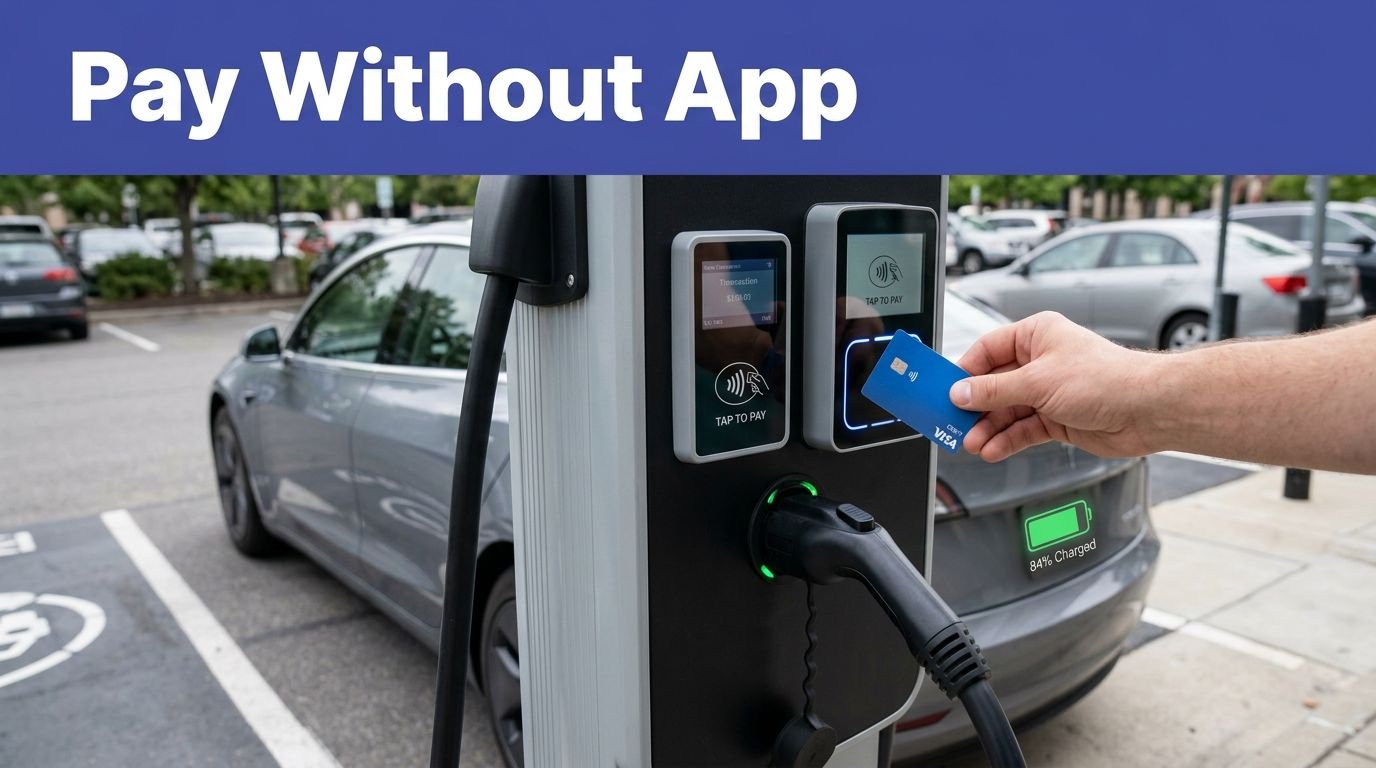
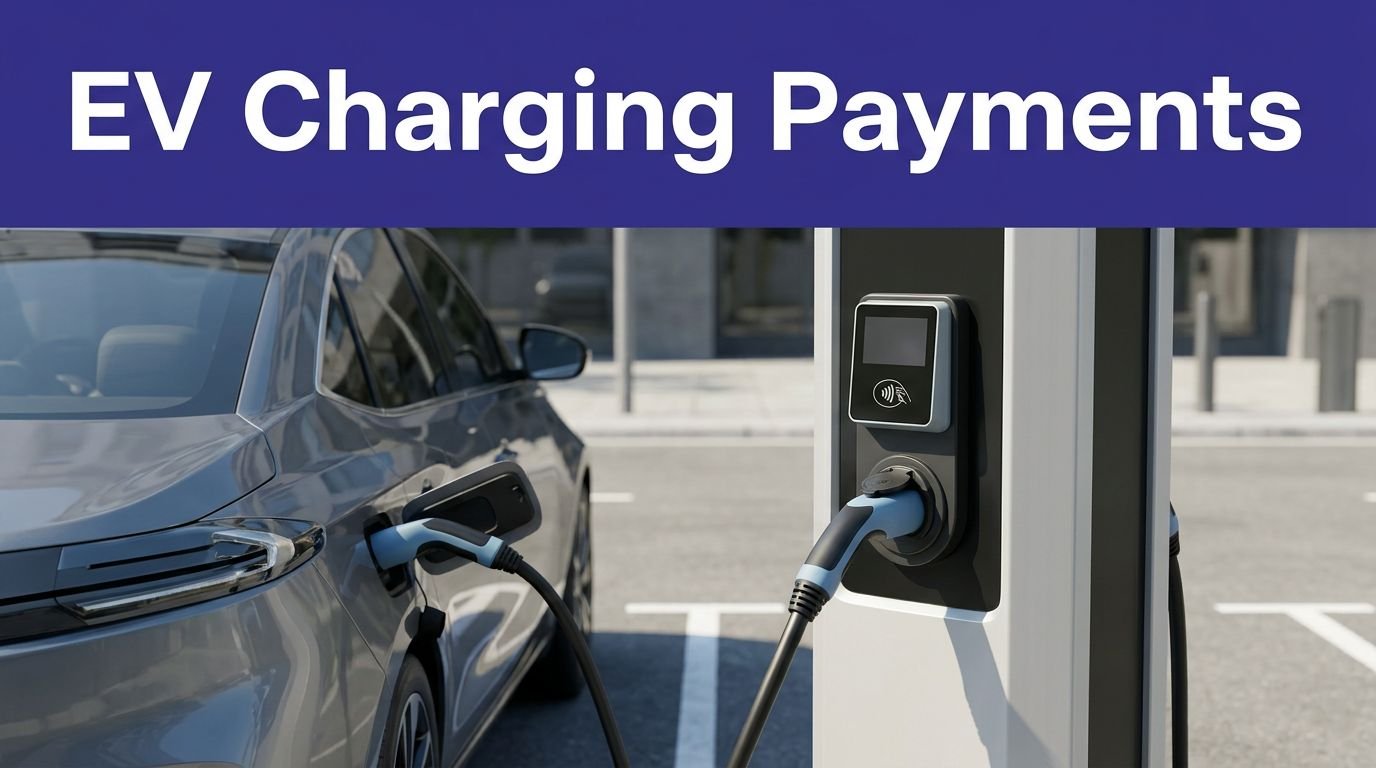
You probably don’t know DC fast‑charge sites can break even at just 12–22% utilization with blended margins of $0.18–$0.35/kWh—if policy incentives stack. NEVI/state grants can cover up to 80% of capex and trim WACC 150–400 bps, but tariffs and demand charges can erase that. Hitting >97% uptime and 180–300 kWh/port/day is pivotal. Whether you profit will depend on site selection and revenue stacking—here’s what the data says next.
Key Takeaways
- Profitability hinges on utilization: DCFC breakeven at ~12–15% (180–300 kWh/port/day); Level 2 at ~22–28% (12–18 kWh/port/day).
- Capex ranges: Level 2 $8k–$15k per port; DCFC $200k–$500k per dispenser; incentives can offset up to 80%.
- Operating margins are driven by electricity and demand charges (55–80% of Opex); TOU strategies can lift gross margin 5–12 points.
- Policy and capital tailwinds lower WACC 150–400 bps; lenders target DSCR ≥1.25x and >2,000 kWh/port/month by year three.
- U.S. EV stock >4.5 million in 2025, creating 20–25 TWh charging demand and improving station throughput assumptions underpinning profitable business cases.
Market Drivers and Investor Thesis

As policy, technology, and consumer demand converge, EV charging is shifting from pilot phase to scaled infrastructure with investable cash flows. You’re seeing U.S. EV stock exceed 4.5 million in 2025 (up ~35% YoY), pushing annual charging demand toward 20–25 TWh. Policy Signals are clear: NEVI allocates $7.5B, 52% of Americans now live in jurisdictions targeting 100% ZEV sales by 2035, and fleets face electrification mandates across California, New York, and EU states. With smart pricing, sites targeting 15–25% utilization can gross $0.18–$0.35/kWh, plus $0.03–$0.06/kWh from demand response and ancillary services. EBITDA margins of 20–35% emerge when energy procurement and uptime exceed 97%. Investor Sentiment follows: yieldco-style rollups, green bonds, and infrastructure funds are accelerating allocations. M&A pipelines signal scale; credit spreads keep tightening.
Capex by Charger Type: Level 2 vs. DC Fast
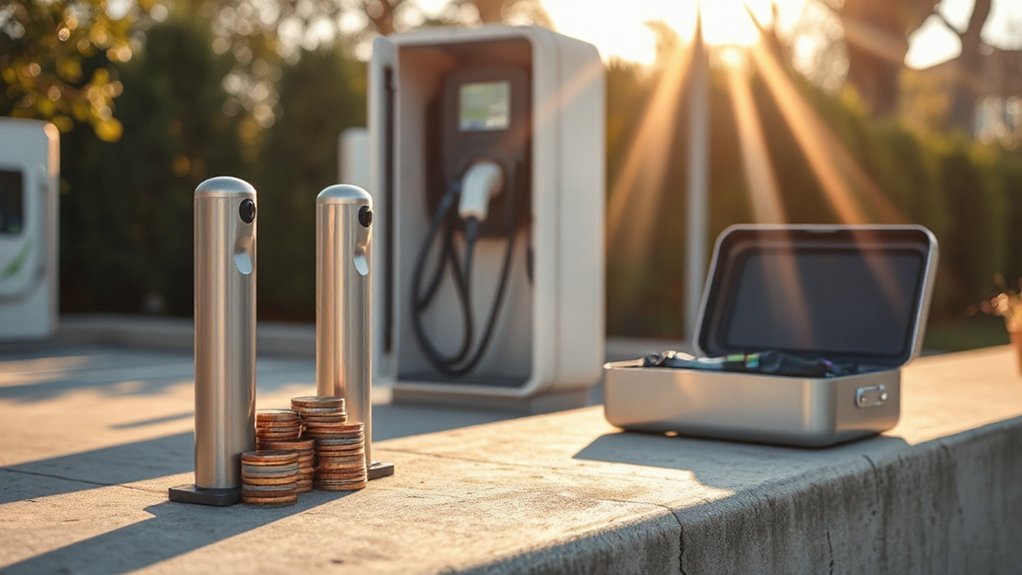
While hardware grabs attention, capex for EV charging skews toward construction and grid make-ready, with stark differences between Level 2 and DC fast. For Level 2, plan roughly $8,000–$15,000 per port all-in: hardware $1,000–$3,000, installation $5,000–$10,000, and modest service upgrades. For 150–350 kW DC fast, budgets jump to $200,000–$500,000 per dispenser: hardware $40,000–$120,000, civil/electrical $80,000–$250,000, and utility upgrades $50,000–$200,000, especially when new transformers or switchgear are required. Trenching length, panel capacity, and parking layout drive variance. NEVI and state programs can offset up to 80% capex, but Buy America rules, prevailing wage, and permitting extend timelines. Manufacturing bottlenecks and supply constraints add 10–25% to lead times and pricing. Expect 6–18 months from design to commissioning. Urban sites trend higher; greenfield corridors skew highest costs.
Operating Costs, Tariffs, and Demand Charges

Capex sets the table, but your pro forma lives or dies on operating costs and the tariff you sit on. Electricity typically accounts for 55–80% of Opex: energy at $0.08–$0.28/kWh plus demand charges at $8–$30/kW/month can swing gross margin by 15–30 points. Time-of-use rates reward managed charging; a 50 kW station avoiding a 5–7 pm peak can save $200–$400/month. Add fixed costs: network and cellular $15–$40/port, payment processing 2.5–3.5%, maintenance and parts $300–$800/port/year, site lease $0–$500/month, insurance and taxes $50–$150/month. EV-specific tariffs and demand-charge holidays (24–60 months in some states) materially reduce risk. Codify uptime SLAs and billing transparency to prevent revenue leakage, and tighten vendor contracts to reduce warranty gaps and contract disputes. Budget for vandalism repairs, snow removal, and utility meter fees.
Utilization Benchmarks and Breakeven Thresholds

Because utilization ultimately pays the bills, benchmark it with hard metrics: percent of plug-hours in use, kWh/port/day, and sessions/connector/day. For L2, target 12–18 kWh/port/day (about 25–35% plug-hours) and 2–4 sessions/connector/day; breakeven typically starts near 22–28% if energy margin is $0.12/kWh and fixed OPEX is $250/port/month. For DCFC, aim for 180–300 kWh/port/day (10–20% plug-hours) and 6–10 sessions/connector/day; breakeven often starts near 12–15% assuming a $0.25/kWh margin and $1,200/port/month fixed costs. Use hourly profiles and weekday patterns to quantify sustained load, not just peaks; a flat 15% all-day beats a spiky 25% afternoon. Build a simple model: price × kWh − (energy + demand + OPEX) ≥ 0; solve for utilization, then track it weekly to confirm trajectory. Adjust pricing and access rules to stabilize utilization.
Site Selection, Traffic Patterns, and Grid Constraints

Hitting your utilization targets starts with sites that concentrate predictable EV demand and have grid headroom to serve it. Use origin‑destination data, hourly traffic counts, and dwell-time analytics to rank corridors; target exits with >25,000 AADT, retail nodes with 30–60 minute average stays, and fleets or multifamily gaps within 1–3 miles. Run visibility analysis to maximize line-of-sight from arterials and signage capture. Layer accessibility mapping for 24/7 access, ADA compliance, and truck turning radii.
Validate power: confirm available capacity of >1–2 MVA for 8–12 DCFC ports, short feeder distances, and transformer upgrade timelines under 9 months. Cross-check interconnection queues, resiliency constraints, and TOU tariffs; prefer circuits with coincident peak after 7 p.m. Co-locate near amenities but avoid competing stations within a 5–10 minute drive.
Incentives, Grants, and Financing Structures
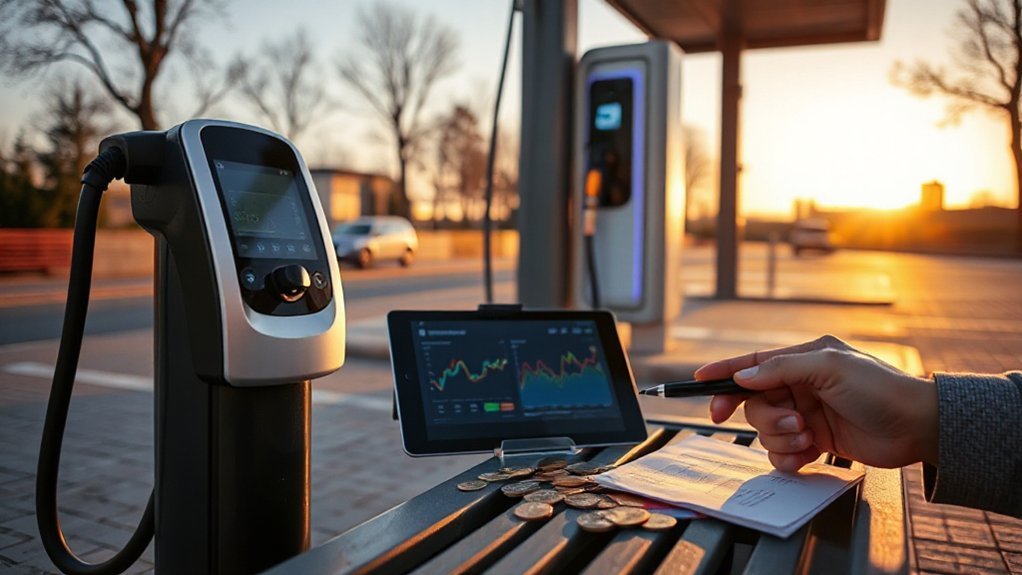
You can cut upfront costs with incentives: the federal 30C credit covers 30% up to $100,000 per charger in eligible census tracts, and you can stack state rebates of roughly $2,000–$10,000 per port plus utility make‑ready support that often funds 50–100% of service upgrades. For grants and loans, NEVI can cover up to 80% of eligible corridor-site costs (e.g., four 150 kW ports, 97% uptime, open payment), while CFI and USDA REAP add competitive funding for community and rural projects. You should model capital stacks that blend credits, grants, and amortized debt, and bake in compliance (eligible tracts, Buy America, labor standards) because it drives eligibility, timelines, and cash flows.
Tax Credits and Rebates
While federal and state incentives can cover a large share of project costs, accessing them requires meeting precise eligibility and compliance rules. The Section 30C credit can offset 30% of station costs, capped at $100,000 per unit, if you meet prevailing wage/apprenticeship and place equipment in an eligible census tract. Miss those, and the rate drops to 6%. Many states layer rebates: e.g., California programs have offered $3,500–$6,000 per Level 2 port and $30,000–$80,000 per DC fast charger; New York rebates commonly cover 50%, up to $4,000 per Level 2 port. Model cash flows with eligibility timelines, basis-reduction effects, and stacking limits. Track sunset provisions, recapture risks, and locality carve-outs; delays can erase 5–15% of expected ROI. Verify documentation, certification, and placed-in-service dates carefully.
Grants and Loan Programs

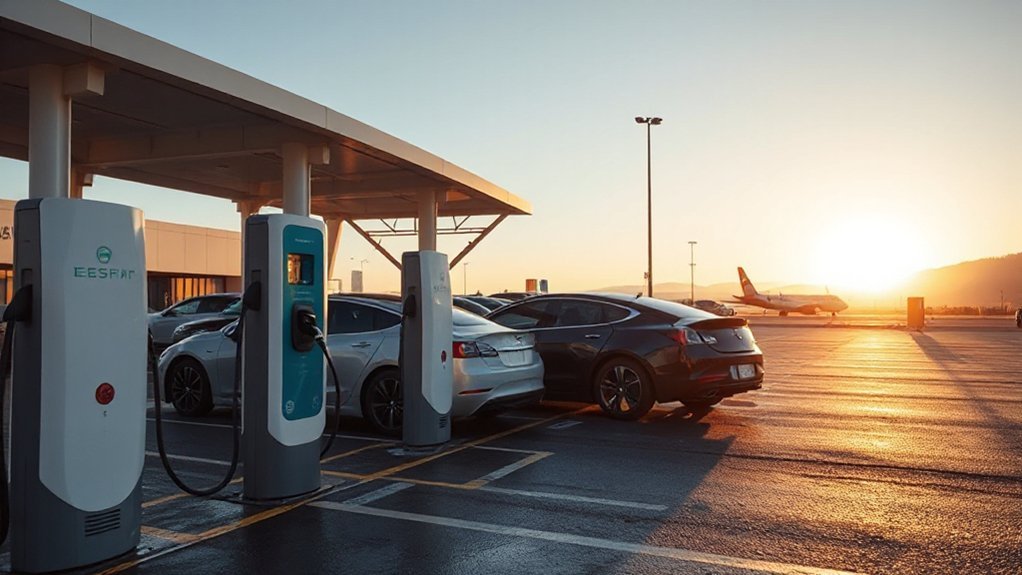
Dozens of federal and state programs can materially change your capital stack for EV charging, but each comes with strict cost-share, domestic-content, and labor rules. NEVI grants typically cover up to 80% CAPEX for highway DCFC, with uptime, open-access, and pricing transparency conditions. CFI and state corridors add 50–80% matches. DOE LPO loans can finance 55–80% with 10–30 year terms at Treasury+0–2%, but require BABA, Davis-Bacon, and community benefits plans. USDA REAP offers 25–50% for rural sites. Expect monthly reporting requirements on uptime (>97%), kWh dispensed, and pricing; noncompliance risks clawbacks. Lenders target DSCR ≥1.25x and site throughput >2,000 kWh/port/month by year 3. Prepare audit procedures, cybersecurity plans, and NIC compliance. Layering incentives lowers WACC 150–400 bps. Model timelines: 6–18 months to award, typical.
Revenue Stacks: Session Fees, Advertising, Fleets, and Ancillary Services
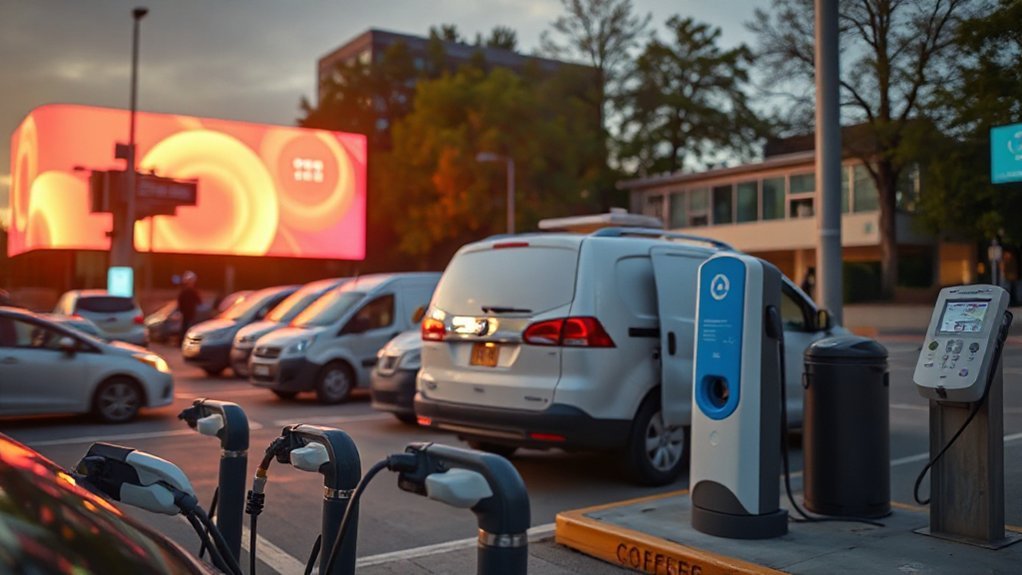
You’ll optimize session fees using TOU tariffs and elasticity data—e.g., $0.28–$0.42/kWh or $1–$3/session peak adders—to target 15–25% margins at 20–40% utilization while managing demand charges. You can monetize onsite advertising via high-traffic screens at $8–$18 CPM, yielding ~$0.05–$0.12 per session, and layer sponsored promos compliant with local signage ordinances. Lock in fleet contracts with minimum kWh commitments, uptime SLAs, and $0.02–$0.05/kWh discounts, then add ancillaries—reservation fees, V2G/DR payments, LCFS credits—to lift ARPU 10–25% within regulatory constraints.
Optimizing Session Fees
Because session fees anchor your unit economics, price them from a cost-up model and adjust with policy and demand signals. Start with marginal kWh cost, demand charges, O&M, payment fees, and amortized capex per expected sessions. Layer in TOU tariffs and incentives, then set a target gross margin per session. Use price anchoring: publish a core session fee plus transparent kWh or minute adders, and apply idle penalties to hit 15–20% peak availability. Run A/B testing across sites and dayparts to estimate elasticity; raise fees when utilization >60% and queues appear, lower when <25%. Align formats with state rules (per-kWh vs per-minute caps). Update quarterly, indexing to tariff changes, and protect low-income or fleet contracts with fixed bands. Track churn and session length shifts.
Monetizing Onsite Advertising
Leveraging dwell time at chargers turns screens and site assets into a measurable DOOH revenue stream. You can sell impressions programmatically at $6–$18 CPM (local Brand sponsorships up to $500–$2,000/month per site). With 300 sessions/day, 1.2 viewers/session, 20‑minute dwell, 8‑spot loop, and 60% viewability, you’ll deliver ~2,160 daily impressions (~65k/month), yielding ~$390–$1,170/month at typical CPMs. Dynamic signage tied to weather, daypart, and POS can lift local advertiser CTR 20–40% and justify premium pricing. Keep OPEX low: a 250‑nit, 55‑inch display draws ~200–300W; at $0.15/kWh, power is ~$13–$29/month. Stay policy‑aligned: comply with municipal signage ordinances, luminance caps, ADA reach ranges, and MRC‑audited measurement. For data use, honor GDPR/CCPA consent and avoid biometric identifiers. Secure zoning permits, cap animation, and track attribution with unique promo codes.
Fleet Contracts and Ancillaries
While session fees and ads set the baseline, fleet contracts enable predictable, higher‑margin load and attach ancillary revenue. You can lock in utilization with per-kWh or per-session rates, minimum volume clauses (e.g., 500–2,000 sessions/month/site), and demand-charge pass-throughs. Structure time-of-use pricing to shift fleets to off-peak, lifting gross margin 5–12 points under typical tariffs. Layer ancillaries: Driver Incentives (loyalty, idle-fee waivers), paid reservations, and depot O&M. Add Insurance Partnerships to bundle uptime guarantees and liability coverage; these can add $0.02–$0.05/kWh in margin. Co-location services—telematics data, wash bays, micromobility charging—can yield $300–$1,200/month. Bid under public fleet electrification RFPs; compliance with NEVI, ADA, and uptime KPIs (97–99%) improves award odds and opens up subsidies, lowering payback to 3–5 years. Integrate APIs for routing to secure recurring dispatch volume.
Interoperability, Reliability, and Competitive Dynamics
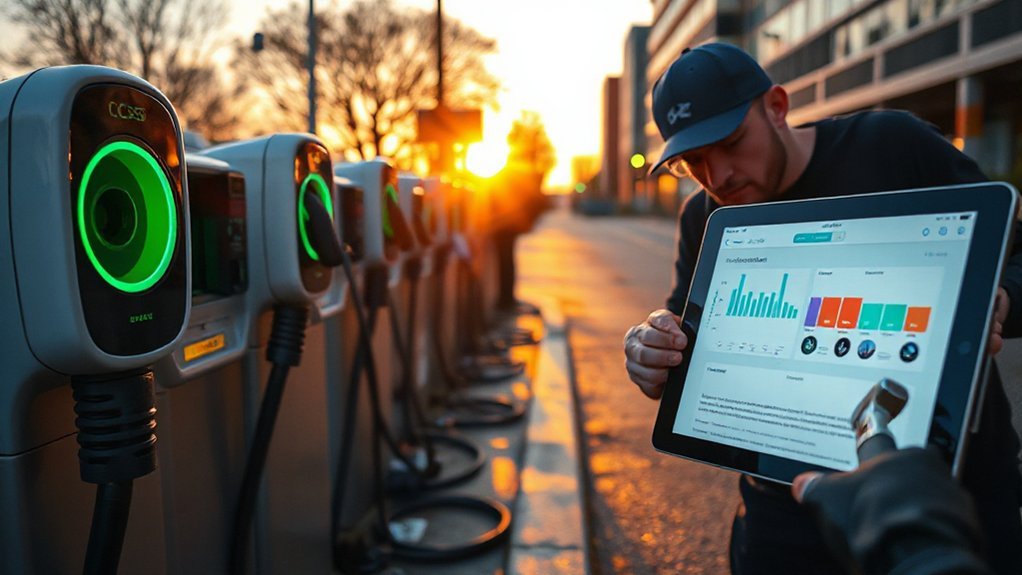
Although standards are converging, interoperability and reliability still determine who captures margin in EV charging. You win share by minimizing session failures and roaming friction. Protocol standardization (OCPP 2.0.1, OCPI 2.2) and vendor neutrality let you swap hardware, aggregate networks, and negotiate better tariffs. Regulators increasingly tie subsidies to 97%+ uptime, open access, and transparent pricing. Quantitatively, each 1% uptime gain lifts utilization 2–4%, while roaming coverage expands addressable demand 10–20%.
| Metric | Benchmark | Impact on EBITDA |
|---|---|---|
| Uptime | 98% | +300–600 bps |
| Session success | 95% | +$0.03–$0.07/kWh margin |
| Roaming partners | >15 | +8–15% revenue |
| Open access compliance | NEVI, AFIR | Eligibility; lower capex share |
Competitive dynamics reward networks that publish APIs, share data with utilities, and co-optimize maintenance schedules; laggards face churn, higher SLA penalties, and stranded assets risks.
ROI Scenarios, Sensitivity Analysis, and Case Studies

Interoperability gains and 97%+ uptime targets translate directly into cash flows; here’s how the math plays out across ROI scenarios. Using Scenario Modeling, you vary utilization (10–60%), tariff spreads ($0.12/kWh wholesale vs. $0.35–$0.55 retail), demand charges, and incentives (NEVI at 80% CAPEX, tax credits) to map IRR and payback. Result Visualization highlights break-even at ~18–22% utilization for DC fast chargers with $160k CAPEX and $12k/year OPEX. Stress-test policy shocks, volatility.
Interoperability and 97%+ uptime drive cash flows; scenario modeling maps utilization-to-IRR, break-even ~18–22% for $160k DCFC, stress-testing policy volatility
1) Urban corridor case: 4 stalls, 32% utilization, blended margin $0.23/kWh, 420 MWh/year, EBITDA ~$96k, payback 3.4 years.
2) Suburban retail: 2 stalls, 15% utilization, margin $0.18/kWh, 110 MWh/year, EBITDA ~$20k, payback 6.8 years.
3) Fleet depot: 8 ports, 55% utilization, managed charging cuts demand charges 35%, EBITDA margin 42%, PPA-backed, payback 2.6 years.
Conclusion
You can profit from EV charging if you hit the right numbers. Target 12–22% DCFC utilization (180–300 kWh/port/day), blended margins of $0.18–$0.35/kWh, and >97% uptime while taming tariffs and demand charges. Leverage NEVI/state grants covering up to 80% capex and financing that trims WACC by 150–400 bps. Layer fleet contracts, DOOH, and ancillary services. Choose sites with strong traffic and grid capacity. Mind interoperability and reliability. As the adage goes, “measure twice, cut once.” Well.