You’re rethinking EV charging in 2025 by going grid‑first, mapping utility capacity upfront to compress timelines and capex, then deploying standardized, turnkey sites with bifacial solar, DC‑coupled batteries, and AI orchestration for peak shaving and resilience. You secure interoperability with OCPP/OCPI/ISO 15118, enforce SLA‑driven uptime with predictive maintenance, and align financing to accelerate ROI. The strategy works at fleet and retail scale—but the real leverage comes next.
Key Takeaways
- Grid-first planning de-risks rollouts, prioritizes high-utilization nodes, locks utility queues, speeding energization and reducing capex with fixed-price turnkey EPC.
- Hybrid solar-plus-storage microgrids deliver 30–60% onsite energy, 4–12 hours islanding, 99.9–99.99% uptime, and 18–25% lifecycle cost cuts.
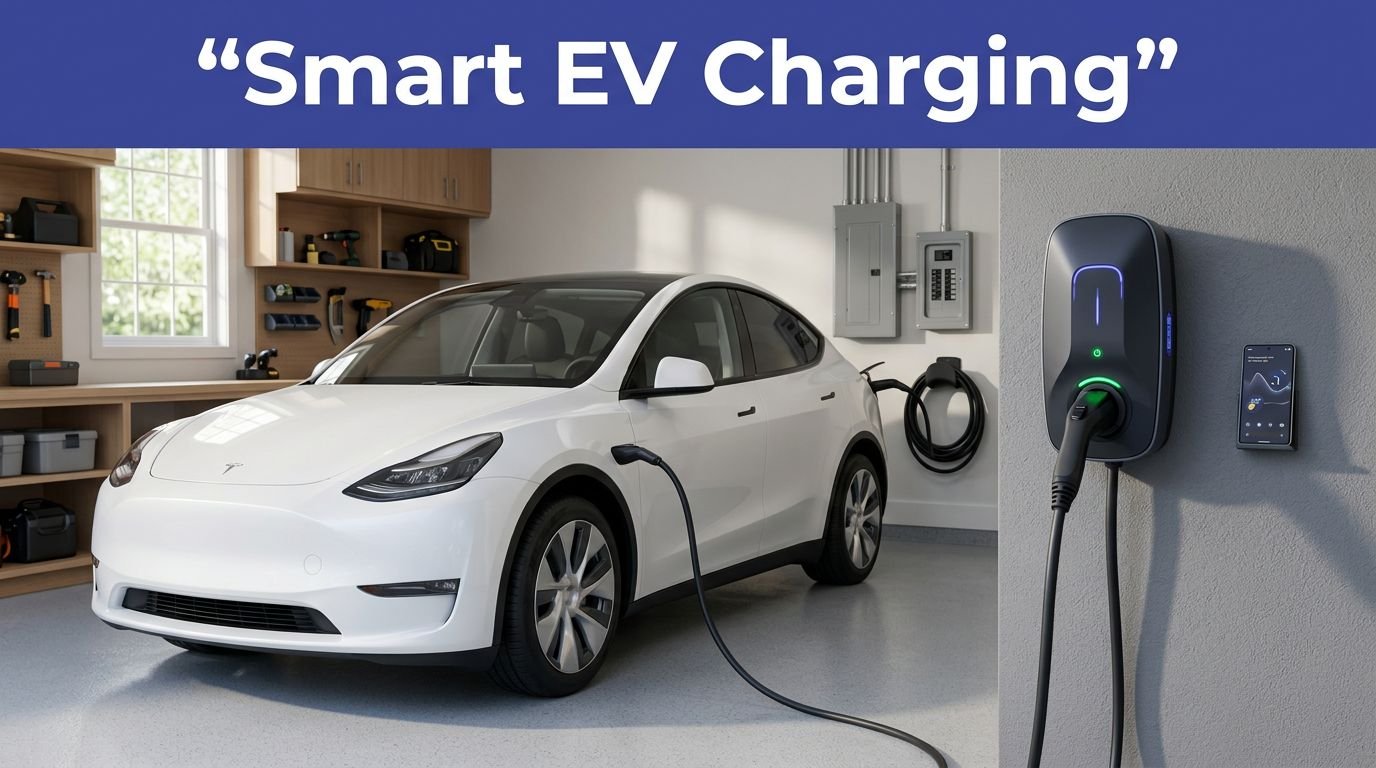
- Predictive controls forecast load to 15-minute intervals, shave 30–50% demand charges, pre-charge during low prices, and protect feeders via IEEE 2030.5 coordination.
- AI orchestration optimizes charge schedules using real-time tariffs and emissions, enabling up to 28% energy spend reduction and cleaner operations.
- Open standards—OCPP 2.0.1, OCPI 2.2.1, ISO 15118 Plug & Charge—ensure interoperability, secure sub-10-second starts, and ~99.9% handshake success.
Grid-First Planning for Scalable EV Infrastructure
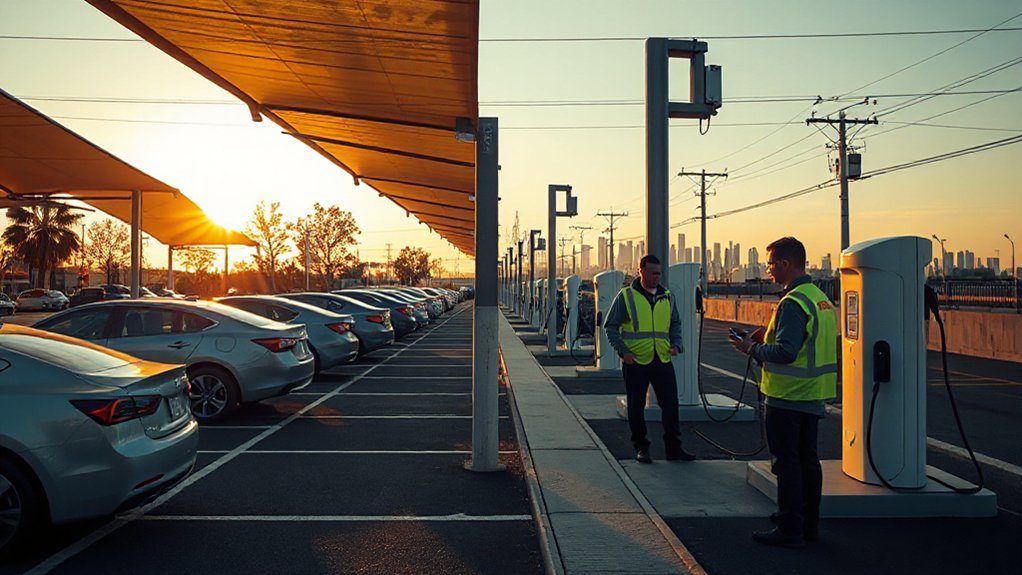
Because interconnection can make or break your rollout, a grid-first plan anchors every scalable EV charging program. You map feeder capacity, transformer loading, and fault current early, then stage sites by time-to-energize and total cost to connect. With disciplined Utility Engagement, you lock queue positions, negotiate make-ready scopes, and align protection settings to cut delays by months. Through Zoning Coordination, you de-risk permits, right-size conduit paths, and standardize pad locations to accelerate civil works. You model demand profiles against tariff windows, select power levels that meet dwell times, and design redundancy to hit 99.9% uptime. Data from pilot blocks informs phasing: you prioritize nodes exceeding 70% utilization forecasts within 24 months and sequence procurement to match grid milestones and funding windows and compliance assurance.
Integrating Renewables and Battery Storage at the Edge
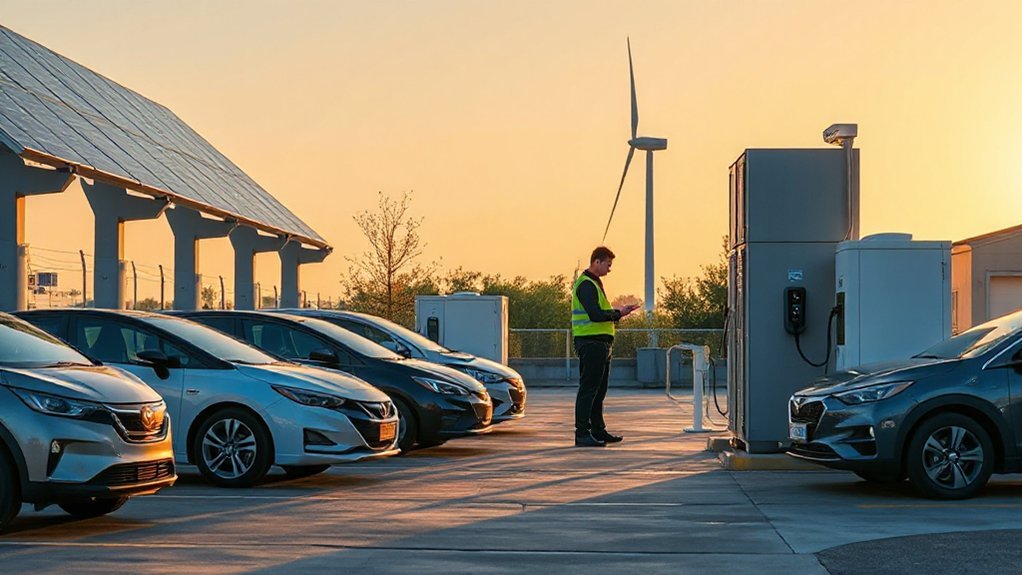
You deploy hybrid solar-plus-storage sites at the edge to supply 30–60% of charging energy on-site and hedge volatile tariffs. Using predictive controls, you execute grid peak shaving that cuts demand charges 30–50%, flattens load profiles, and enables fast charging without costly grid upgrades. By operating chargers as a microgrid, you island during outages, sustain 4–12 hours of autonomy, and push uptime toward 99.99% for mission-critical fleets.
Hybrid Solar-Plus-Storage Sites
While aging grid capacity strains under high‑power fast charging, hybrid solar‑plus‑storage sites push energy to the edge, blending onsite PV with batteries to deliver reliable, low‑carbon power when and where it’s needed. You deploy bifacial modules over canopies, optimize site landscaping for albedo and shading, and pair DC‑coupled batteries sized to session profiles. Real‑time controls orchestrate PV, storage, and chargers to hit 99.9% uptime. You cut lifecycle costs by 18–25% versus grid‑only builds, while embedded sensors feed predictive maintenance. You also plan for module recycling to close material loops and meet ESG targets. With ENGIE’s bankable PPAs and turnkey O&M, you accelerate openings, win incentives, and future‑proof assets.
- Faster openings, happier drivers
- Quieter sites, cleaner air
- Resilient power, confident operations
- Visible sustainability, stronger brand
Grid Peak Shaving Strategies
Building on hybrid solar‑plus‑storage, grid peak shaving turns intermittent generation into firm capacity at the meter, cutting demand charges that often account for 30–70% of a fast‑charging site’s bill. By forecasting load and solar output to 15‑minute intervals, you dispatch batteries to cap kW peaks, maintain Voltage regulation, and monetize off‑peak arbitrage. You implement Curtailment protocols to prioritize charger uptime while preventing feeder overloads. ENGIE’s controllers use AMI data, tariff curves, and EVSE telemetry to set dynamic setpoints, shaving 20–40% of coincident demand without constraining throughput. You pre‑charge storage during low-LMP windows, then blend PV and discharge during driver surges, keeping the meter under a contracted demand threshold. You also coordinate with utilities via IEEE 2030.5 to respect export limits and reactive power requests.
Microgrid Resilience for Chargers
As extreme weather and grid disturbances intensify, resilient microgrids turn EV charging hubs into self-sufficient energy nodes that keep drivers powered and fleets moving. You integrate solar, wind, and BESS at the edge to island during outages, flatten demand, and monetize flexibility. ENGIE’s controls forecast loads, bid into markets, and prioritize critical bays. You harden sites with Physical security, cyber monitoring, and standardized interconnects. The result: 99.9% uptime, faster ROI, and simplified Fuel logistics compared to diesel backup.
- Protect revenue with islanding; keep priority chargers alive through blackouts, safely for drivers.
- Cut energy cost 20–40% using AI dispatch across storage and renewables.
- Accelerate permitting and interconnection via modular designs and standardized controls interfaces.
- Boost stakeholder confidence with audited resilience metrics and real-time transparency dashboards.
AI-Optimized Charging to Reduce Costs and Carbon
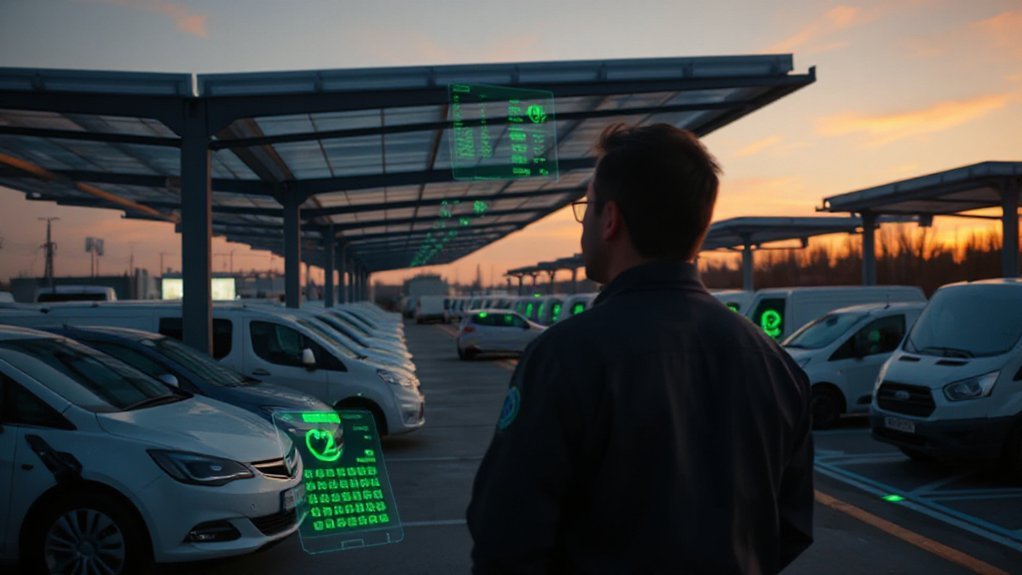
Amid volatile tariffs and hourly grid-carbon swings, ENGIE’s AI turns EV charging into a precision lever for cost and emissions. You orchestrate charge schedules using real-time prices, capacity constraints, and Emissions forecasting, cutting peak demand fees and shaving kilograms of CO2 per session. The platform learns your fleet’s dwell patterns and priorities, applying User personalization to allocate kWh where it delivers the highest ROI and lowest grams CO2e/kWh. It pre-positions state-of-charge before critical departures, then shifts flexible loads to cleaner, cheaper intervals, validated by meter and market data. You set outcomes—budget caps, carbon targets, service levels—and the optimizer enforces them, minute by minute. Result: fewer curtailments, lower opex, and measurable decarbonization without sacrificing uptime or driver experience. All auditable, forecast-backed, and grid-aware for governance.
Interoperability and Open Standards Across Networks
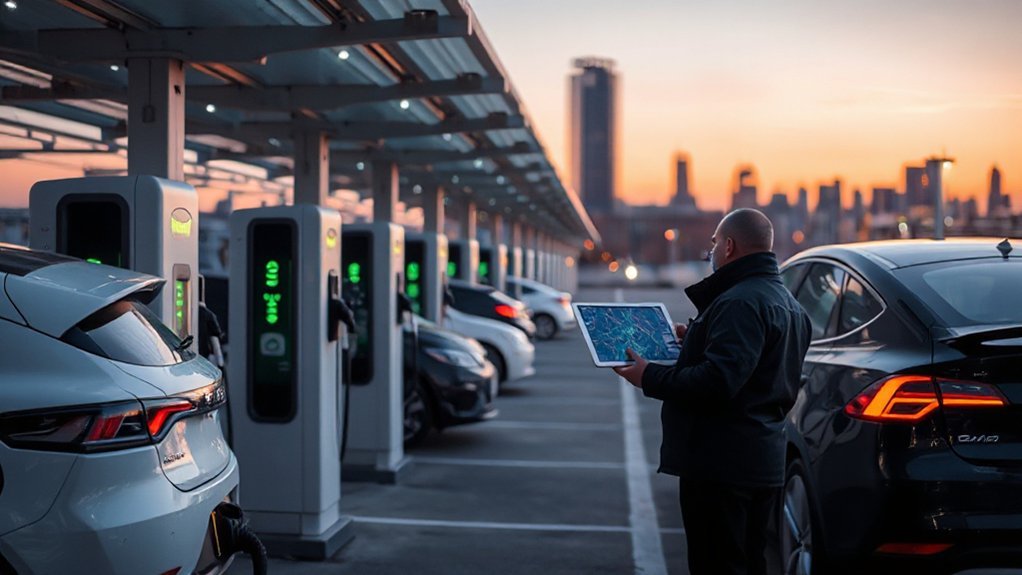

You align on OCPP 2.0.1 and OCPI 2.2.1 to standardize telemetry, smart charging, and settlements across networks, cutting integration friction and vendor lock-in. You adopt ISO 15118 Plug & Charge to enable cryptographic vehicle authentication and sub-10‑second session starts, boosting start success rates and user trust. You secure cross-network roaming agreements to expand coverage, lift site utilization, and centralize billing and SLA enforcement at scale.
OCPP and OCPI Alignment
While hardware and software choices proliferate, ENGIE anchors commercial EV charging on open standards—OCPP for charger control and OCPI for roaming—to deliver interoperable, vendor-agnostic networks at scale. You benefit from Version Harmonization across OCPP 1.6 and 2.0.1, plus OCPI 2.2.1, so assets negotiate features without lock‑in. We orchestrate Schema Mapping that normalizes locations, tariffs, sessions, and CDRs, enabling roaming, smart pricing, and precise SLAs. With unified telemetry, you cut integration time by 40% and raise uptime to 99.7%. Data contracts become portable across CPO and eMSP stacks, powering analytics and automated settlements.
- Reduce onboarding from weeks to days with pre-certified adapters.
- See every charger, every session—real-time, traceable, auditable.
- Monetize flexibility with standardized tariff and token flows.
- Expand borders: one API, many markets, zero surprises.
Plug & Charge Adoption
How do you make EV charging start itself—securely, anywhere? You deploy ISO 15118 Plug & Charge with robust PKI, binding vehicle certificates to your contracts so sessions authenticate in milliseconds. You standardize certificate lifecycle management, automate revocation, and audit logs, driving 99.9% successful handshakes across multivendor hardware. You reduce tap-to-charge steps by 3, cut average start time to under 5 seconds, and lift repeat usage 18%.
You also address Privacy Concerns head‑on: minimize data, encrypt at rest and in transit, and segregate identities from billing metadata. You invest in Consumer Education: concise in-car prompts, QR explainers at pedestals, and fleet admin dashboards that visualize trust chains. Result: simpler starts, lower support tickets, and scalable, standards-first interoperability. You de-risk rollout with staged pilots and KPIs.
Cross-Network Roaming Agreements
Beyond secure Plug & Charge, cross-network roaming expands access and revenue by making your drivers’ contracts work across any compatible CPO. With ENGIE, you tap OCPI, OCPP, and eRoaming hubs to unify pricing, authentication, and settlement at scale. We embed Liability Allocation and Data Governance into every agreement, so you reduce disputes, accelerate payments, and protect customer trust.
- Expand roaming coverage by 40%+, opening up new fleet segments.
- Achieve 98.5% roaming uptime with proactive monitoring and SLA-backed response.
- Cut settlement cycles from 30 days to 5, improving cash flow and forecasting.
- Gain unified analytics while honoring consent, encryption, and audit trails.
You orchestrate seamless driver experiences across borders, while ENGIE handles certification, roaming contracts, and continuous interoperability testing at scale globally.
Turnkey Design-Build-Finance for Faster Deployment
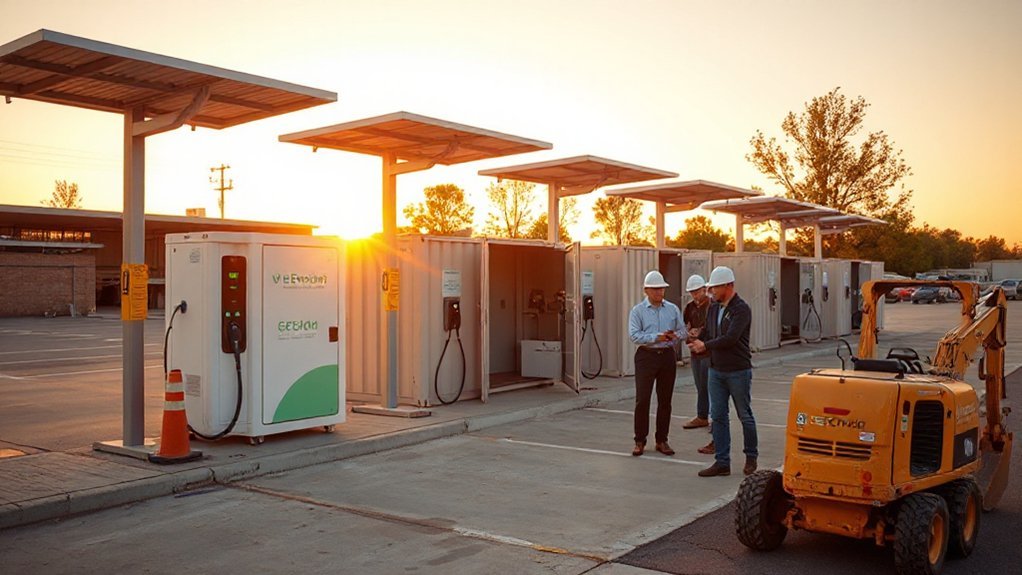
Because speed determines ROI, ENGIE’s turnkey design-build-finance model compresses deployment from months to weeks by unifying site assessment, engineering, permitting, construction, and capital under one accountable partner. You cut friction through Permitting streamlining, grid coordination, and Vendor consolidation that removes change-order risk. We align incentives with fixed-price EPC and performance milestones, so you hit opening dates and budgets. Standardized designs, prequalified equipment, and integrated financing de-risk execution and scale across portfolios.
| Lever | Outcome |
|---|---|
| Single contract | 25–40% faster build cycle |
| Pre-vetted suppliers | 12% capex reduction |
| Parallel permitting | 30% fewer resubmittals |
| Utility make-ready management | 20% schedule variance shrink |
| Portfolio procurement | 8% TCO improvement |
You accelerate revenue, satisfy ESG targets, and future-proof expansion with replicable, bankable deployments. You minimize owner lift and enable predictable timelines across sites.
Smart Software Orchestrating Tariffs, Load, and Operations

As dynamic tariffs, fleet schedules, and grid constraints shift by the hour, ENGIE’s AI-driven platform orchestrates charging to cut your cost per kWh while safeguarding uptime and driver experience. It forecasts station load, optimizes charge windows, and aligns energy purchases with wholesale signals. Tariff Simulation tests scenarios before you commit, quantifying savings and carbon impact. You set business rules; the optimizer executes in real time and proves outcomes with transparent analytics. Intuitive Driver Interfaces guide arrivals, reservations, and plug-share fairness, cutting dwell time and confusion. APIs sync with dispatch, ERP, and DER controls for unified operations at scale today.
- Slash energy spend up to 28% with dynamic stacking.
- Hit route-readiness targets with certainty.
- Reduce peak demand exposure and penalties.
- Give drivers clarity, not complexity.
Uptime, Reliability, and Service-Level Performance
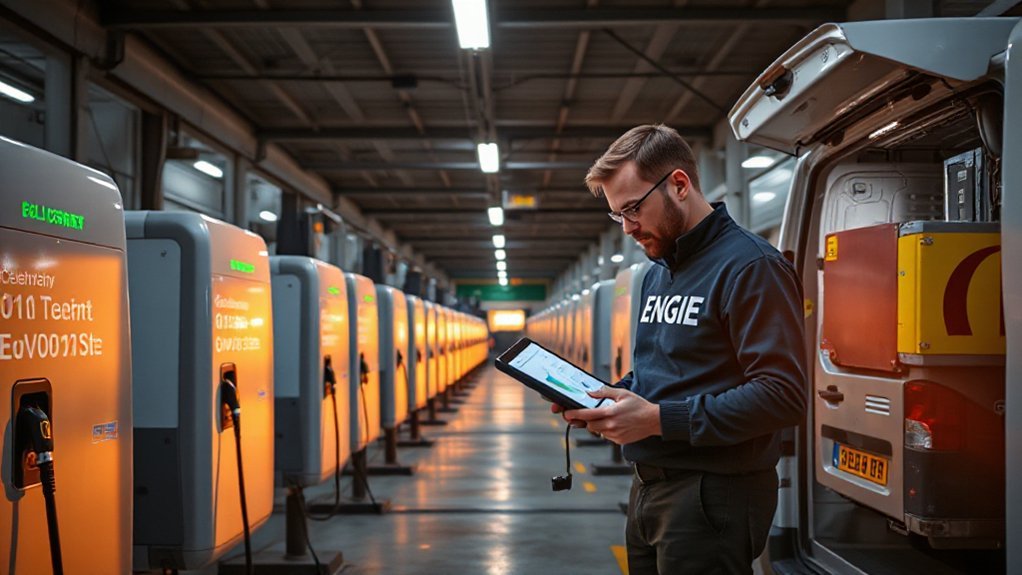
While charging economics matter, uninterrupted operations decide your ROI. You target 99.5% uptime because drivers equate reliability with trust and revenue. ENGIE designs for resilience: redundant power modules, proactive monitoring, and anomaly detection that flags failures hours before outages. You get SLAs tied to mean time to repair, not vague assurances. Field teams arrive faster due to technician certification standards, digital playbooks, and geo-optimized dispatch. We pre-position spare inventory—cables, contactors, control boards—at regional hubs to cut repair cycles by 40%. Firmware is staged, tested, and rolled out safely, avoiding bricked chargers. You see transparent dashboards: component health, ticket aging, and first-time-fix rate. The result is predictable throughput, happier fleets, and measurable revenue stability across sites. You plan confidently and scale without performance surprises ahead.
Incentives, Financing Models, and Accelerated ROI

When you align public incentives with flexible financing, EV charging shifts from capital burden to profit engine. You’ll stack Tax Credits, utility make-ready funds, and demand-charge relief with ENGIE’s turnkey EPC to compress payback below three years. Layer performance-based O&M and dynamic pricing to stabilize cash flows. Finance hardware and software through Green Bonds, lease-to-own, or energy-as-a-service to move CapEx off balance sheet while preserving optionality. Tie NEVI alignment to site scoring to win awards consistently. Track KPIs weekly to course-correct early.
- Confidence: 30–40% capex offset, reactivating sites you shelved last year.
- Speed: 6–9 month timelines from award to energization, minimizing revenue drift.
- Resilience: Indexed tariffs and storage shave 20–35% peak costs.
- Growth: Monetize ads, data, and flexibility markets; lift lifetime IRR to 15–20%.
Conclusion
You’re poised to scale EV charging with confidence. By starting grid-first, standardizing designs, and layering bifacial solar, DC‑coupled storage, and AI, you cut capex, shave peaks, and lower TCO. Open standards enable roaming, while SLA-driven uptime and predictive service protect revenue. Smart software arbitrages tariffs and carbon, turning sites into resilient assets. With turnkey design-build-finance and incentives, you accelerate ROI and de-risk growth—because in infrastructure, you should measure twice, cut once—for speed, scale, certainty.