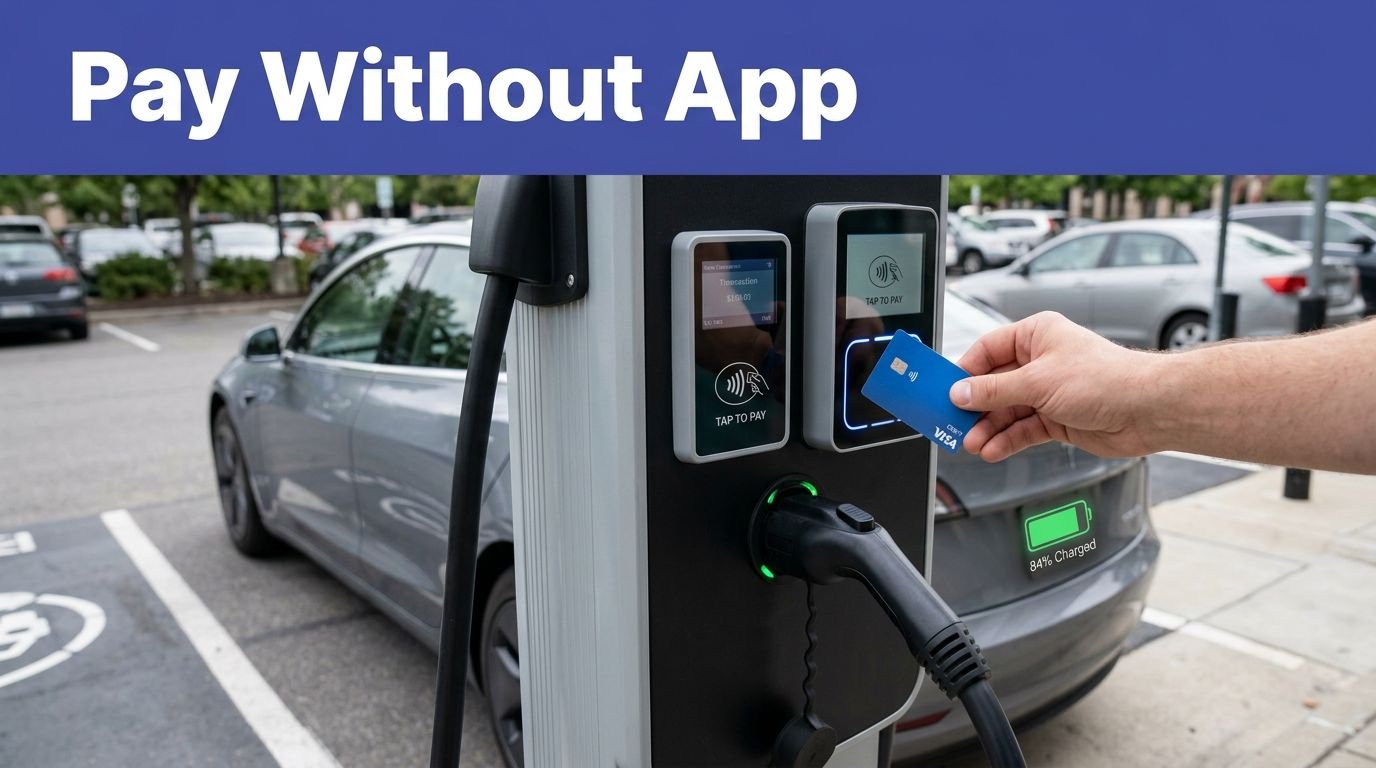
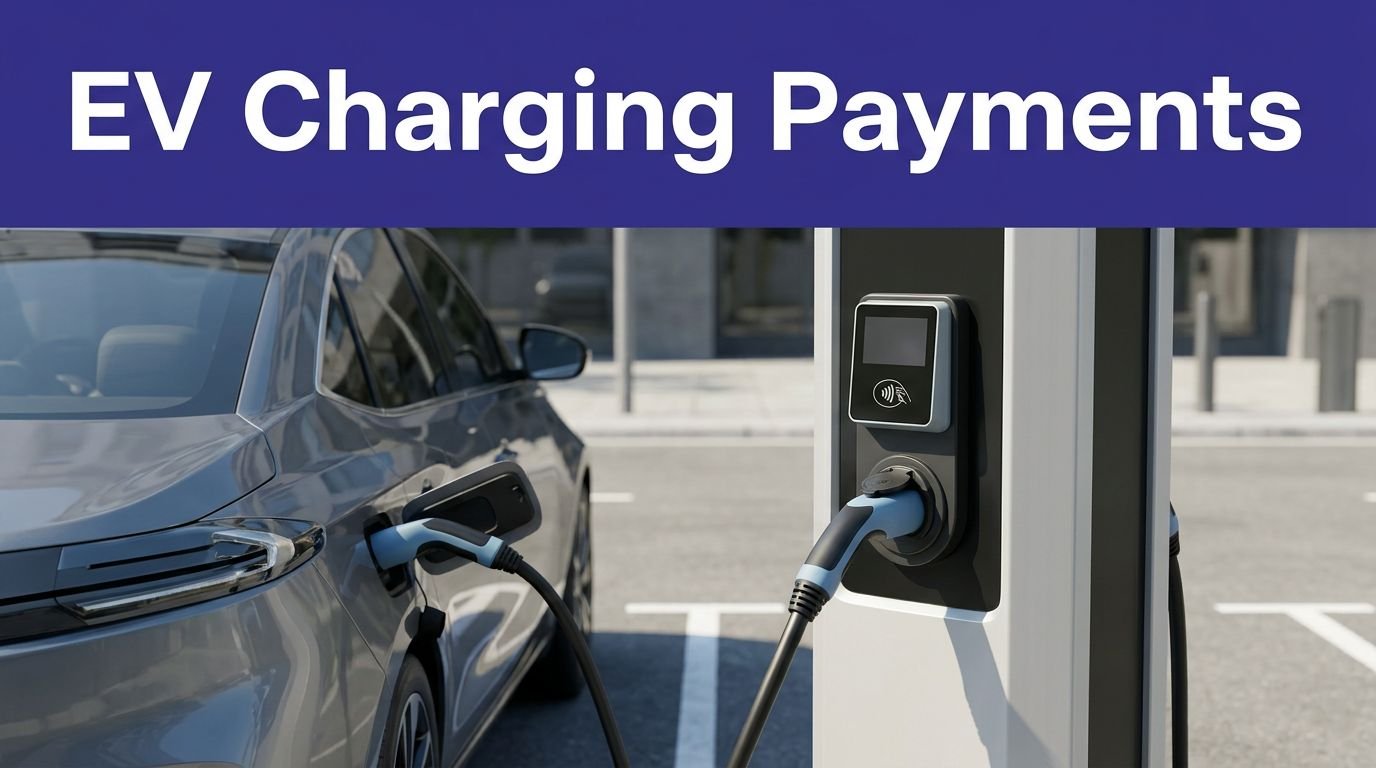
You want EV-friendly hotels that actually charge your car, not your patience. Start by filtering for on-site charging in booking sites and brand apps, then verify pins on PlugShare, Google Maps, and network apps for connector type, kW, access rules, and recent check-ins. Compare rates that include charging, call to confirm availability, and map a DC fast backup nearby. Here’s how to stack the odds—and skip dead pedestals.
Key Takeaways
- Use EV charging filters on booking sites; save presets combining Level 2, free parking, and flexible cancellation.
- Sort results by charger availability, then total trip cost to catch parking, energy, or idle fees.
- Verify chargers via PlugShare, Google Maps, and network apps; check recent photos, check-ins, live status, and exact location.
- Confirm charger details: power per port, connector type (J1772, CCS, NACS), access rules, hours, and stall count versus rooms.
- Book rates bundling charging or EV credits; compare member prices, and call hotel to confirm fees, access, and overnight etiquette.
Use Smart Filters on Booking Sites and Hotel Apps
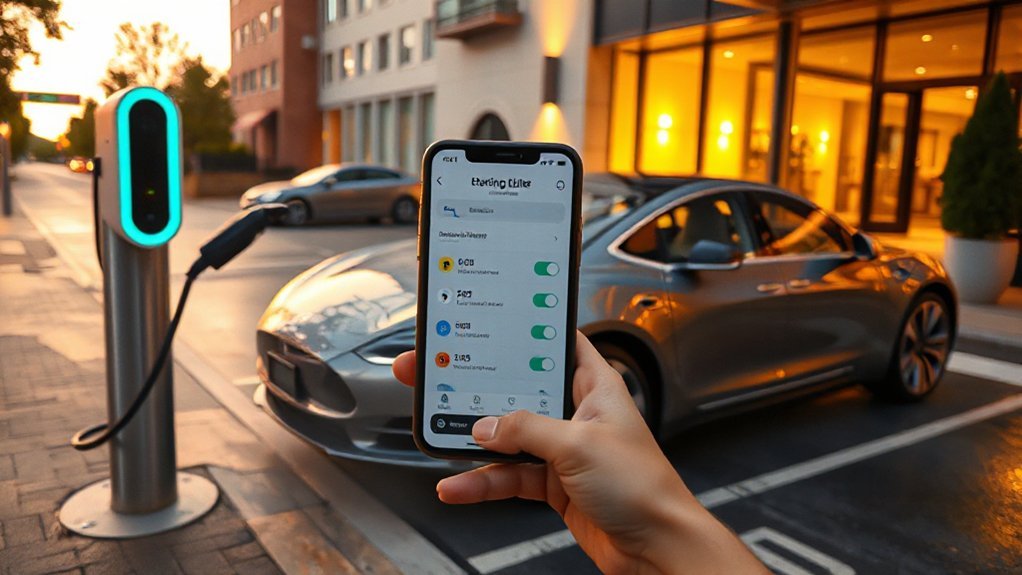
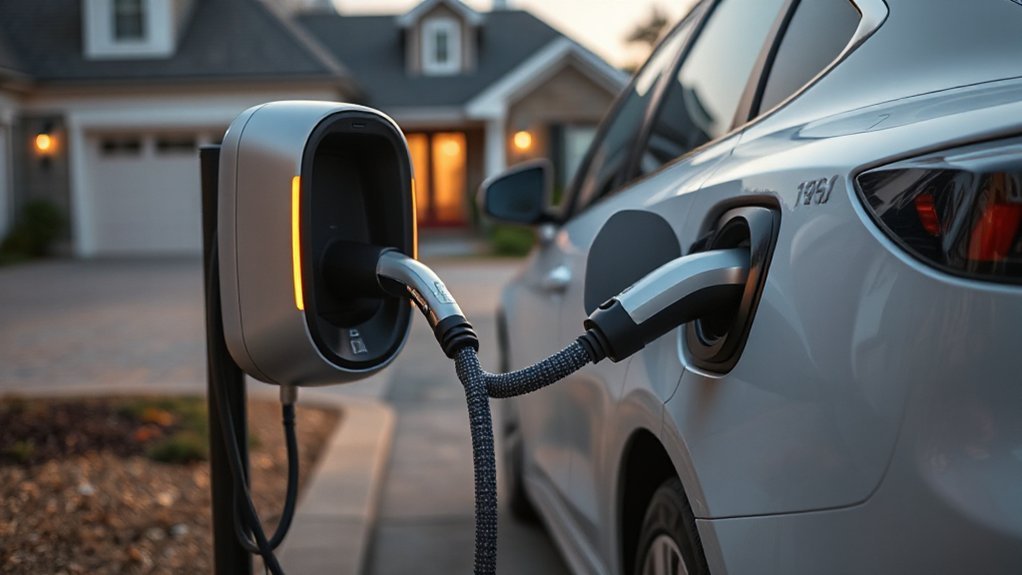
How do you zero in on hotels that actually let you plug in? Start by applying the EV charging amenity filter on major booking sites and brand apps, then layer price, parking, and cancellation filters. Use Amenity prioritization to push “EV charger on-site” above pool and breakfast. Create Search presets like “Level 2 + free parking + late checkout” to reuse on future trips. Sort results by charger availability, then by total trip cost to catch parking or charging fees. Read amenity details for charger type, kW rating, number of ports, guest-only access, and hours. Scan recent reviews for charging mentions and photos. Favor properties listing multiple ports or 7+ kW per plug to guarantee overnight replenishment without queueing. Filter by EV-friendly hotel brands.
Verify Chargers With Maps and Network Apps
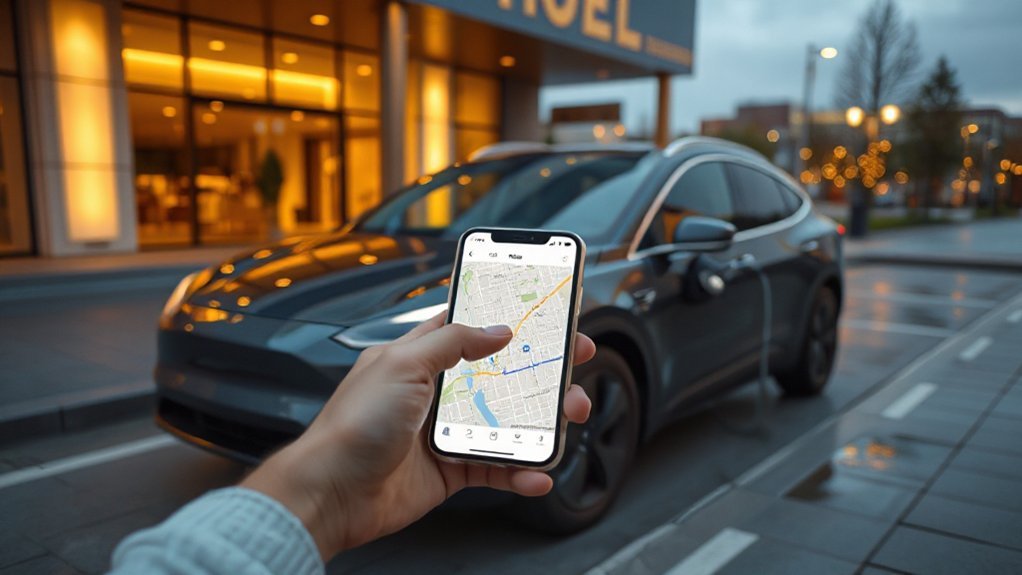
You’ve filtered the listings; now validate the plugs. Open EV maps and network apps to confirm a charger actually exists on-site. Cross-check the hotel’s pin on PlugShare, Google Maps, and the operator’s app (ChargePoint, Tesla, EVgo, Electrify America). Look for recent check-ins, photos of the station in the parking area, and hotel tags. Prioritize sites with frequent activity in the last 30–60 days.
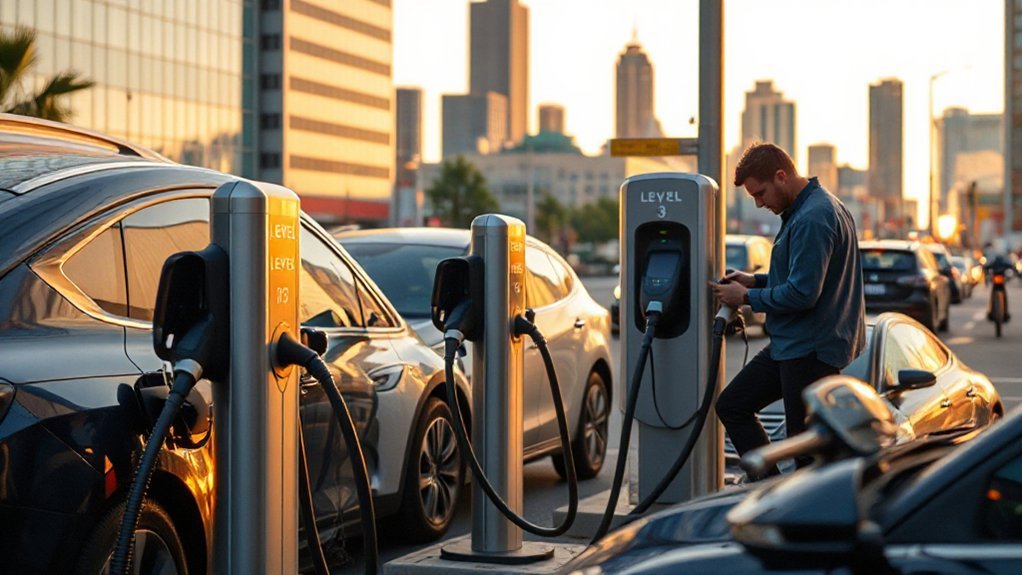

Assess availability accuracy before you book. Network apps show live status—available, in use, offline—and often display last session time, uptime percentages, and station count. Read comments for patterns like blocked stalls or broken equipment; crowdsourced updates surface issues fast. Use satellite view to confirm location and entrances. Save the site, enable alerts, and recheck the day before arrival for added certainty.
What to Look For: Levels, Connectors, Access, and Fees
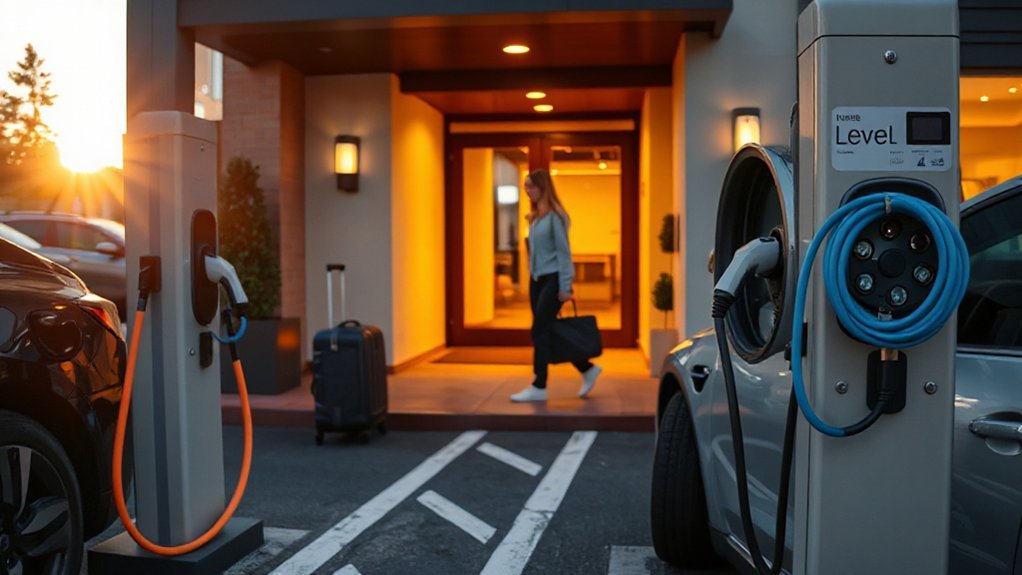
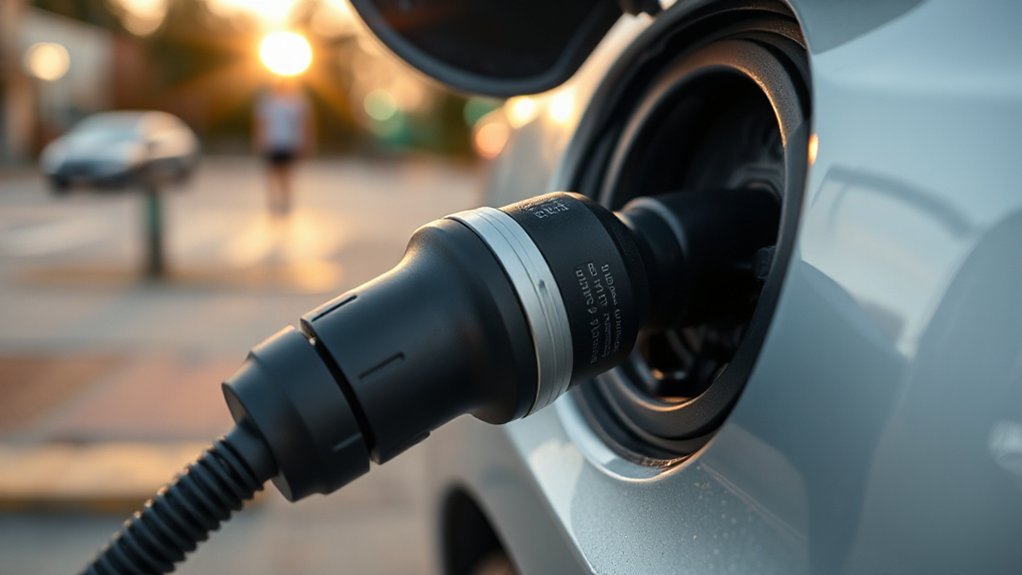
When comparing hotels, focus on four essentials: level, connector, access, and fees. Check charging levels: Level 2 (6–11 kW) suits overnight; DC fast (50–350 kW) turns a lunch stop into a top-up. Verify power ratings per port, not just “fast charger” claims. Confirm connector types match your car—J1772 for Level 2, CCS or NACS for DC, and destination Tesla/NACS options for adapters. Ask about access: guest-only, valet-only, or public; hours; parking height limits; stall count versus room count to gauge availability. Scrutinize fees: session, per-kWh, idle, and parking surcharges. Demand billing transparency and roaming support to avoid surprise authorizations. Note uptime and maintenance: recent check-ins, support line, and onsite signage for outages and time limits. Prioritize redundancy: multiple stations reduce competition and risk overall.
Booking Strategies: Rates, Perks, and Loyalty Plays
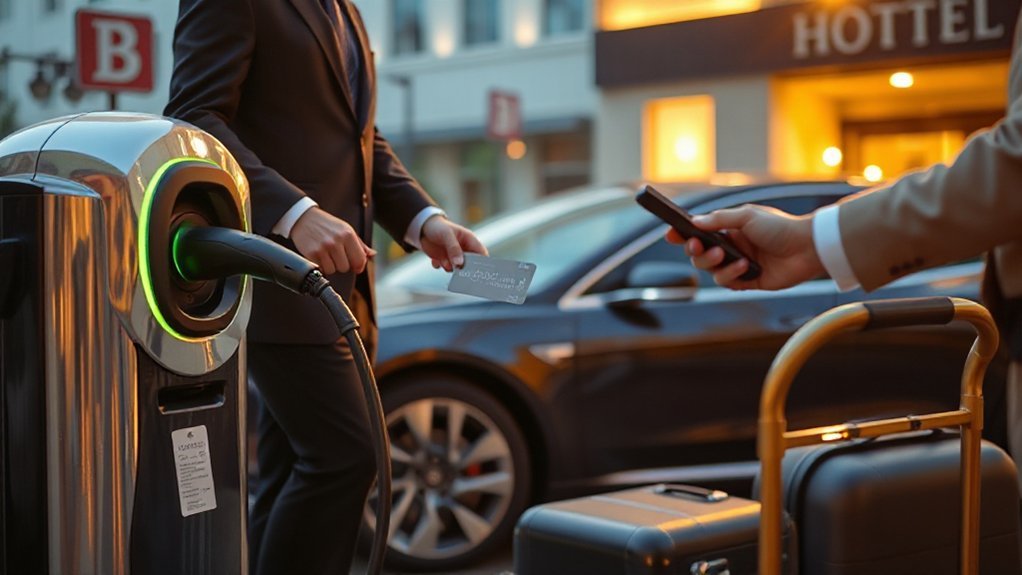
Why pay for kilowatt-hours twice? Book rates that bundle charging or offset parking with EV credit. Compare member vs public prices; EV-included packages often cost 8–15% more, but you’ll save $12–$30/night on energy. Stack savings: apply corporate discounts, loyalty stacking, and credit card offers. Always confirm charger type and access hours in the rate description, not just amenities, to avoid add-on fees at check-in.
| Strategy | What to check | Typical impact |
|---|---|---|
| Member EV package | “Charging included” text, nightly cap | Net −$8 to −$20/night |
| Corporate code | Eligibility, blackout dates | −5–20% room rate |
| Loyalty promo | Bonus points tied to EV rate | +1k–5k points/stay |
| Card offer | Statement credit on brand | −$25–$60 after spend |
Book direct when rates match OTA; hotels waive charging fees more often. Ask for confirmation.
On‑Site Tips: Parking, Etiquette, and Backup Plans
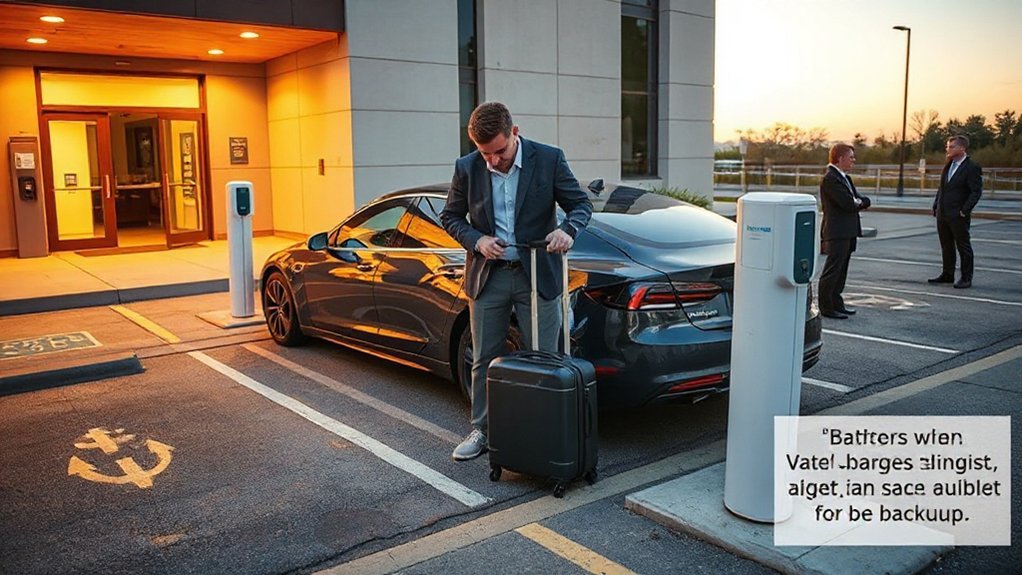
Although listings tout EV amenities, treat on‑site chargers as scarce inventory: most hotels offer 1–4 ports and peak use hits 6–10 p.m. Arrive before dinner or plug after 10 p.m. when turnover rises. Verify connector types and kW; plan for 25–35 miles added per hour on 7 kW AC. Log your plate at check‑in and request concierge coordination for a rotation list, text alerts, or a wake‑up call. Follow posted limits and overstay signage; set an 80–90% cap and move promptly. Use cable locks carefully; avoid blocking stalls while not charging. Photograph charger IDs for support.
Build a backup: pre‑bookmark two nearby DC fast sites, check recent uptime, and price caps. Carry a Level 1 cord, and park near a safe outlet with permission.
Conclusion
You’ve got the playbook: filter for EV charging on booking sites and brand apps, then verify pins on PlugShare, Google Maps, and network apps for connector type, kW, access, and recent check-ins. Book rates that include charging, confirm spots and peak times with the hotel, and line up a DC fast backup nearby. On arrival, park, share plugs, and move when topped up. Do this, and road trips run like a well-tuned circuit—efficient and stress-light.