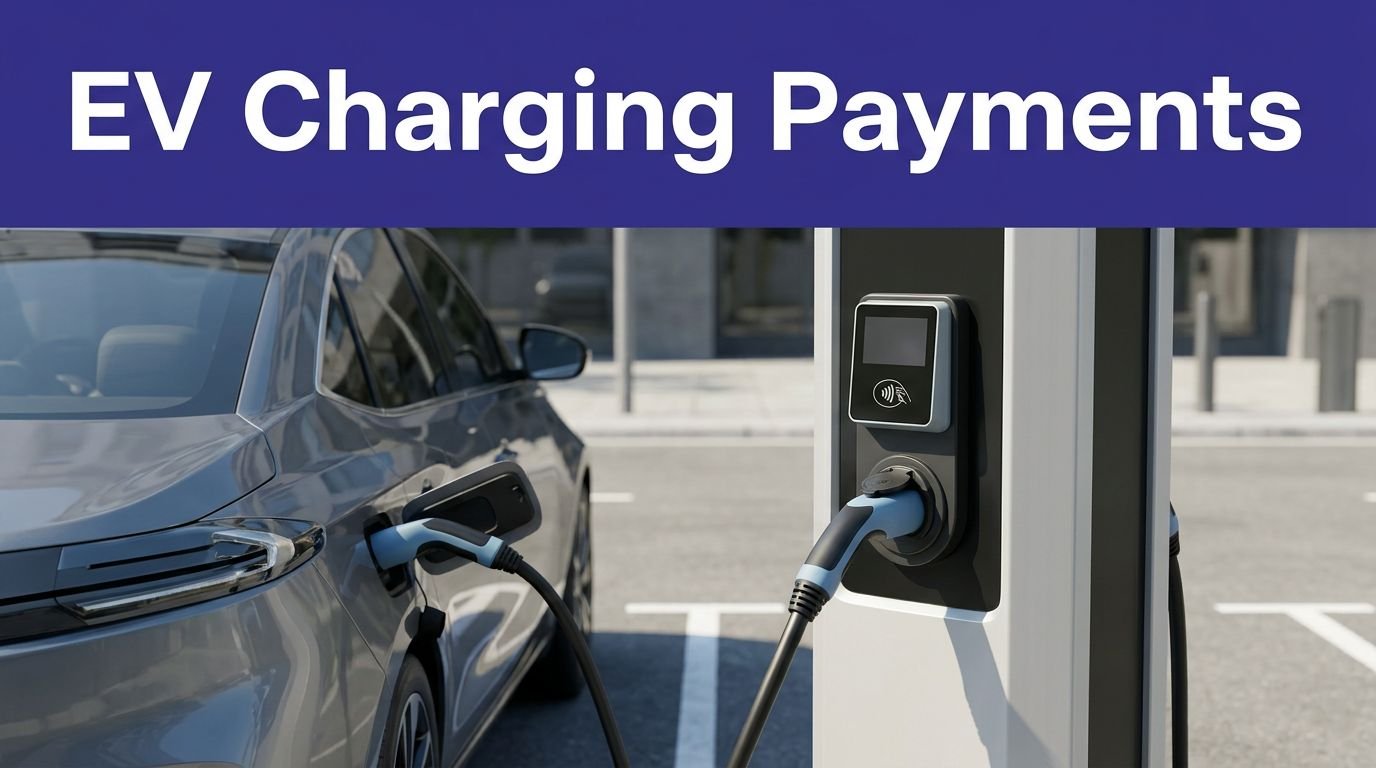
You’re building a standards-driven EV charging stack that proves interoperability, not promises it. With OCPP/OCPI roaming, ISO 15118 Plug & Charge, PKI-backed identities, revenue‑grade metering, and real-time telemetry, you can hit strict SLAs and trace every kWh. Predictive load control cuts demand charges while enabling grid services. Role-based governance, auditable billing, and automated firmware keep fleets secure and compliant. The question is how you orchestrate all of this at scale.
Key Takeaways
- Define scope: Level 2 or DC fast charger, power level, bidirectional needs; target efficiency >96%, PF ≥0.99, THD <5%.
- Select standards/protocols: OCPP 1.6/2.0.1, ISO 15118-20 (Plug & Charge), OCPI for roaming, IEC 61851-23/UL 2202 compliance.
- Choose power topology: totem-pole PFC + LLC or Vienna + DAB for DC fast; design control loops (current 5–10 kHz, voltage 1–2 kHz).
- Implement secure, governed platform: mutual TLS, PKI, OAuth2, PCI SAQ A payments, EMV contactless, auditable logs, 99.5% uptime SLOs.
- Build observability and telemetry: OCPP 2.0.1 real-time 1 s updates, <500 ms latency UX, ANSI C12 revenue metering, IEEE 1588 time sync.
Vision for a Connected Charging Ecosystem
While EV adoption accelerates, our vision centers on a standards-based, interoperable charging fabric that treats every charger, vehicle, and grid node as addressable, secure endpoints. You align on open protocols—OCPP 2.0.1, ISO 15118-20, OCPI, IEEE 2030.5—to enable plug-and-charge identity, metering integrity, remote management, and grid-responsive control. You enforce zero-trust security: mutual TLS, hardware-backed keys, SBOMs, and continuous compliance. Data models normalize session, tariff, carbon-intensity, and availability telemetry, so marketplaces can clear capacity and verify SLAs. Ecosystem governance defines roles, audit trails, and dispute processes, while Regulatory frameworks mandate cybersecurity baselines, pricing transparency, and roaming portability. You measure success with uptime ≥99.5%, metering error ≤0.5%, certificate rotation ≤90 days, and demand-response latency ≤2 seconds. This vision lets networks interoperate and scale predictably across regions globally.
Hardware Architecture and Power Electronics

You choose power stage topologies—totem-pole PFC with LLC for AC-DC or Vienna rectifier with phase-shift full bridge for DC fast charge—to reach >96% efficiency, PF ≥0.99, and THD <5% at 230/400 Vac in compliance with IEC 61851-23 and UL 2202. You run digital control on an isolated MCU/DSP using peak or average current-mode PWM, interleaving, soft-start, and burst management at 65–200 kHz to meet EMI limits in CISPR 11/32 and harmonic limits in IEC 61000-3-2. You implement precision sensing—isolated shunts or Hall sensors for current, HV dividers with reinforced isolation per IEC 60664/UL 1577 for voltage, 16-bit ADCs, and fast OVP/OCP/OTP—to hold <±1% current regulation and support metering accuracy per EN 50470 or IEC 62053.
Power Stage Topologies
Grid‑to‑battery power conversion in an EV charger hinges on topology choices that satisfy grid codes, safety, and efficiency targets under IEC 61851-1/-23, IEC 61000-3-2/-3-12 (harmonics), and IEC 61000-6-3/-6-4/-4-xx (EMC/immunity). You’ll select a topology taxonomy matching power level, bidirectionality, isolation, and cost. For 3–22 kW OBCs, totem‑pole bridgeless PFC with GaN reduces losses, while Vienna rectifiers dominate 11–50 kW front ends. Isolated stages use LLC or phase‑shift full‑bridge; dual‑active‑bridge suits V2G. For >50 kW, 3‑phase AFE with DAB scales. Historical evolution shows migration from diode‑bridge+boost to wide‑bandgap bridgeless PFC and soft‑switched DC‑DC.
| Topology | Typical metrics |
|---|---|
| Totem‑pole PFC (single/3‑phase) | η 97–99%; THD <5%; PF >0.99; 45–100 kHz |
| Vienna rectifier | η 98–99%; THD <3%; PF >0.99; 20–50 kHz |
| DAB (isolated) | η 97–99%; ZVS; bidirectional; 50–150 kHz |
Control and Sensing
Topology choices set the control bandwidths, sensing dynamic range, and protection you must implement to meet IEC 61851-1/-23 charging behavior, IEC 61000-3-2/-3-12 harmonic limits, and IEC 61000-6-3/-6-4 immunity/EMC. You’ll sample mains voltage, PFC current, DC-link, and output current via isolated shunts or Hall; target ADC SNR >90 dB and rate >200 kS/s to capture 2–9 kHz resonances, THD. Apply Sensor Fusion to combine CP/PP pilot, temperatures, and leakage monitors for robust state estimation. Use PLL-based mains tracking and deterministic Actuator Synchronization across interleaved legs to minimize ripple and EMI. Close inner current loops at 5–10 kHz and outer voltage loops at 1–2 kHz.
1) Sensing: isolated CT/RCD, fluxgate DC, shunt/Hall hybrids.
2) Control: PWM jitter <50 ns, deadtime tuning, DPWM.
3) Protection: OVP, OCD.
Intelligent Software and Cloud Platform
Orchestrate charger fleets with an intelligent software and cloud platform built on open standards and measurable SLAs. You’ll implement OCPP 1.6/2.0.1 and OCPI for interoperable device control, roaming, and contract management. Use ISO 15118 certificates and PKI for secure provisioning, plus OAuth2/OIDC for operator access. Enforce data governance with role-based policies, lineage, and retention mapped to GDPR/CCPA. Instrument the stack with OpenTelemetry, expose metrics (latency, uptime, error budgets), and back SLAs with SLOs and synthetic probes. Design multi-tenant isolation, autoscaling microservices, and blue‑green deployments. Prioritize platform extensibility via versioned APIs, event streams (MQTT/Kafka), and a plugin SDK. Provide billing, firmware orchestration, diagnostics, and remote configuration through auditable workflows and Idempotent APIs, while maintaining zero‑trust network segmentation. Include backups, DR testing, and immutable audit logs.
Real‑Time Energy Management and Load Balancing
You implement dynamic load distribution across connectors with real-time kW setpoints based on SOC, TOU tariffs, and breaker ratings, using OCPP 2.0.1 Smart Charging profiles and IEC 61851 load control. You enable grid-aware charging by ingesting IEEE 2030.5 or IEC 61850 signals plus local voltage/frequency telemetry to respect feeder limits and utility constraints. You run predictive demand response with OpenADR 2.0b events and short-term load forecasts to pre-shape charging, cut peak kW, and meet service KPIs.
Dynamic Load Distribution
While hardware defines absolute current limits, dynamic load distribution continuously reallocates per‑EV charging setpoints in real time to honor site capacity, grid constraints, and service priorities. You orchestrate kW and A per connector using metered demand, charger efficiency, and session SLAs, while documenting Liability allocation and ensuring Regulatory compliance with IEC 61851, ISO 15118, and OCPP telemetry. Algorithms prioritize fairness, minimize peak demand charges, and prevent breaker trips.
- Measure: Sample feeder current, phase imbalance, and EVSE status at 1–5 s intervals; validate data quality and clock sync (PTP/NTP).
- Decide: Compute setpoints via weighted optimization (throughput, equity, cost), then enforce ramp-rate limits.
- Act: Dispatch OCPP SetChargingProfile commands, verify acknowledgments, and log overrides, alerts, and audit trails for post‑event analysis and KPI reporting.
Grid-Aware Charging Control
Because distribution conditions can change in seconds, grid‑aware charging control couples the site EMS with utility/aggregator signals to modulate EVSE power in real time under explicit grid constraints. You ingest feeder headroom, voltage deviation, thermal transformer loading, and phase imbalance, then allocate per‑port setpoints using OCPP 2.0.1 Smart Charging and IEC 61850 GOOSE/SV mappings. Controls enforce ANSI C84.1 voltage limits, 10–15 minute demand caps, and IEEE 1547 ride‑through tolerances while respecting NEC 625 branch ratings. You secure telemetry and commands with TLS 1.3, IEC 62351, and hardened PKI, aligning with cybersecurity protocols and NERC CIP‑adjacent practices. Maintain regulatory compliance with Rule 21/EN 50549 interconnection rules, metering accuracy (ANSI C12), and audit trails. KPIs include curtailed kW, voltage violations avoided, and transformer hotspot margin.
Predictive Demand Response
As tariffs, wholesale prices, and feeder headroom shift minute‑to‑minute, predictive demand response forecasts load, PV, arrivals/departures, and SOC, then optimizes per‑port setpoints via model predictive control. You integrate ISO/DSO signals, IEEE 2030.5/OCF telemetry, and OCPP 2.0.1 smart charging profiles to align schedules with feeder constraints and price volatility. The controller enforces battery health limits while meeting SLA deadlines and minimizing costs.
- Forecasting: fuse historical sessions, weather, PV, and traffic data; quantify uncertainty; update every 5 minutes.
- Optimization: solve MILP with network limits, ToU/real-time tariffs, export caps, and demand charges; roll horizon.
- Compliance and governance: document Regulatory Impact, address Ethical Considerations, protect PII, and enable audit trails.
You publish KPIs—peak reduction, ramp rate, cost per kWh—via OpenADR events and grid carbon intensity.
Grid Integration and Demand Response
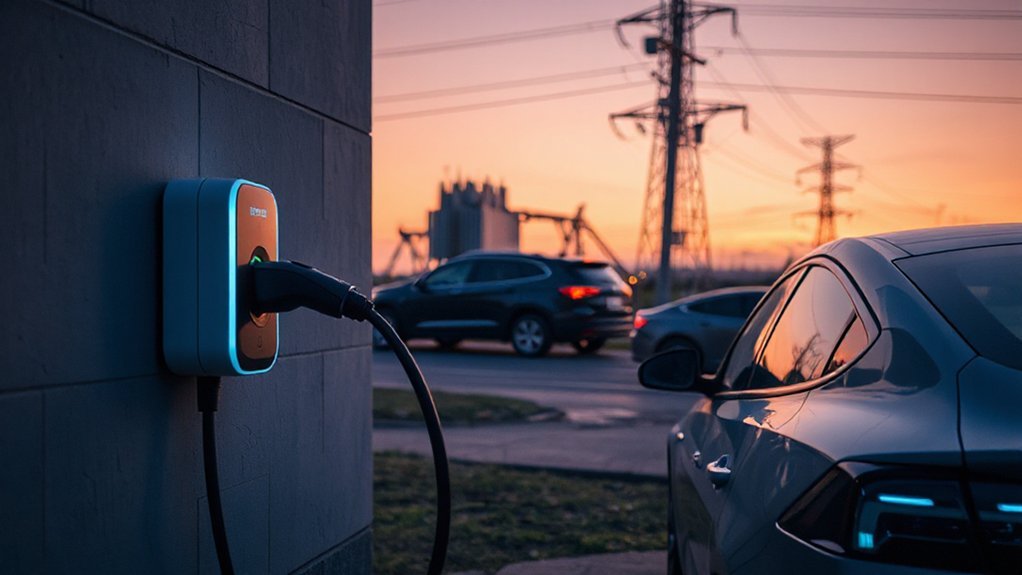
Although EV charging primarily serves drivers, your EVSE must behave as a grid‑interactive DER that modulates load to utility and market signals with defined performance. You implement OCPP 2.0.1 Smart Charging and OpenADR 2.0b or IEEE 2030.5 to receive DR events, price signals, and telemetry requirements while enforcing data privacy and stakeholder engagement for utilities, site hosts, and drivers.
Specify deterministic controls: kW caps, 1–5%/s ramp rates, and ≤5 s event acknowledgment; verify ≥95% event compliance and <2% rebound. Use ANSI C12.20 revenue‑grade metering, IEEE 1588 time sync, and IEC 62351/TLS for secure transport. Support IEEE 2030.5 telemetry (power, SOC proxy, availability) at 1–5 s granularity. Document SLAs, test with IEEE 2030.5/OpenADR test harnesses, and publish measurement, verification, and exception logs for regulatory auditability.
Renewable and Storage Integration

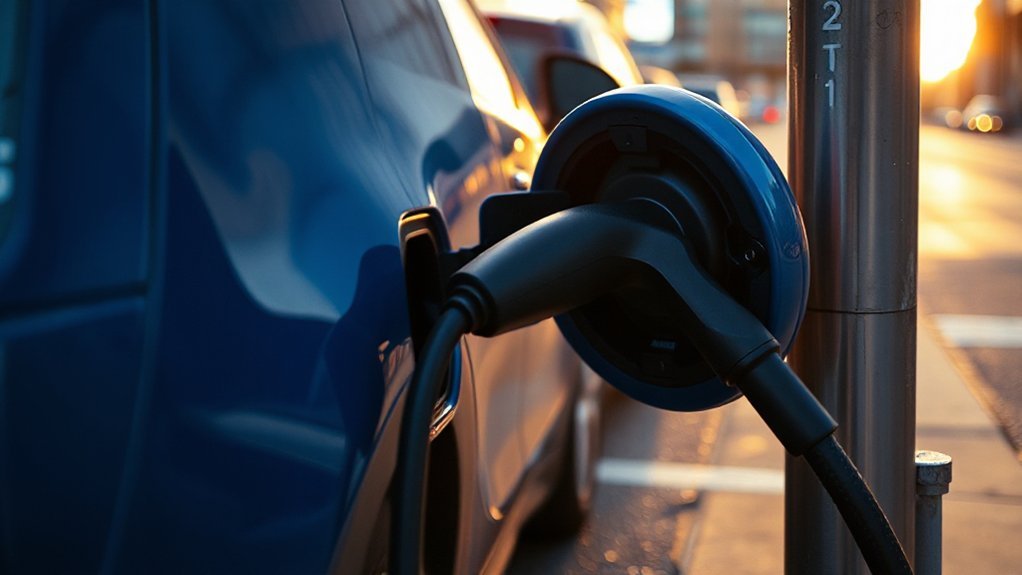
With grid‑interactive controls in place, integrate on‑site PV and stationary storage to cut feeder peaks, firm charging power, and monetize export under interconnection rules. Configure IEEE 1547-2018 functions and UL 1741 SB equipment for autonomous ride-through, Volt/VAR, and frequency-watt. Size batteries from arrival profiles; target 2–3 h duration to shift midday PV to evening demand. Coordinate ISO 15118-20 energy management with OCPP 2.0.1 for setpoints and telemetry. Schedule dispatch using SOC, irradiance forecasts, export limits, PCS ramps, and transformer nameplate.
Orchestrate PV and storage to shave peaks, firm EV charging, and monetize exports with standards-driven controls
- Emissions accounting: compute hourly marginal CO2e; prioritize PV-displaced kWh; disclose per GHG Protocol.
- Economic optimization: stack demand charge reduction, export revenue, ancillary services via mixed-integer dispatch with KPI verification.
- End-of-life: implement recycling strategies; track serials and SOH; follow IEC 62902/62933 reporting.
Seamless User Experience and Mobile App

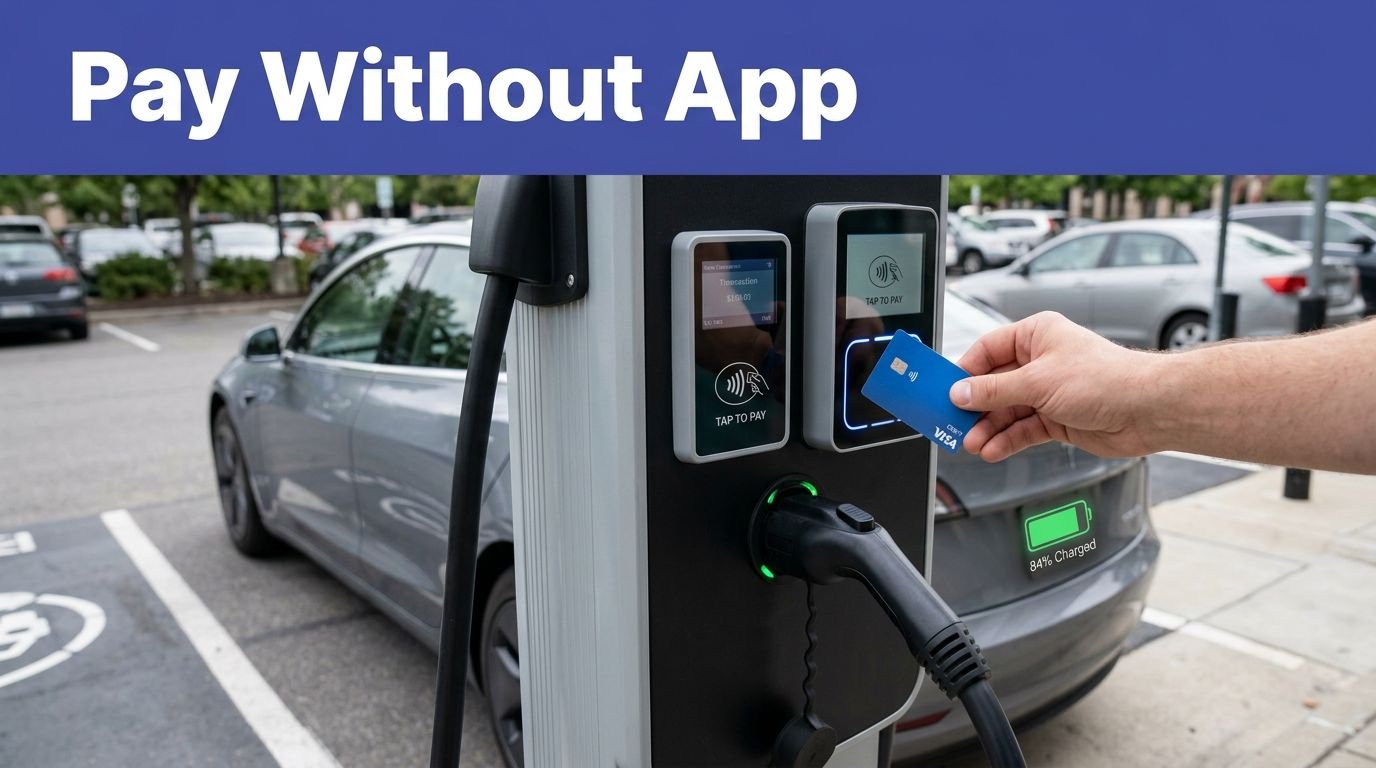
You implement an intuitive interface aligned with ISO 9241-110 and WCAG 2.2 AA, targeting ≤3 taps to start a session and clear visibility of SOC, price/kWh, and ETA. You expose real-time charging status via OCPP 2.0.1 and ISO 15118 events with <1 s refresh, accuracy within ±1% for power and ±0.5 kWh for energy delivered. You enable a one-tap payment flow using EMVCo/PCI DSS–compliant tokenization and Apple Pay/Google Pay, aiming for end-to-end authorization under 3 s and >99.9% success.
Intuitive Interface Design
How do drivers start a charge in under three taps and less than 10 seconds from app accessing? You design the interface around task-first flows and measurable heuristics. Apply ISO 9241 ergonomics, WCAG 2.2 AA contrast, and ISO 15118 credentials to reduce steps and errors. Use Gesture Navigation for primary actions—swipe to pick a connector, tap to authenticate, press-and-hold to confirm—backed by Fitts’s Law targets ≥44 px. Provide Contextual Feedback with haptics and microcopy tied to state changes.
- Progressive disclosure: surface only charge-critical controls within the thumb zone; defer nonessentials.
- Error prevention: defaults, masked input, and checksum validation cut mis-scans by ≥30%.
- Consistency: platform HIG compliance, iconography, and spacing tokens guarantee sub-400 ms recognition.
Instrument flow times and tap counts continuously.
Real-Time Charging Status
While a session runs, the app streams OCPP 2.0.1 telemetry over WebSocket (fallback: HTTP long‑poll at ≤5 s) to render SoC, power (kW), voltage (V), current (A), energy (kWh), cost, and ETA with <500 ms end‑to‑end latency at 1 s refresh.
You see live deltas, min/max envelopes, and fault flags computed client-side. We tag packets with Session identifiers and millisecond Timestamp precision to resolve ordering, jitter, and gap detection. Adaptive sampling throttles when vehicle sleeps yet preserves 1 s UX cadence via interpolation and last-known-good validation. You can drill into per-phase voltage/current, temperature, and pilot status per OCPP schema.
| Metric | Screen cue |
|---|---|
| Power | rising bars |
| SoC | ring fill |
| Voltage | phase spark |
| ETA | countdown |
Alerts trigger on thresholds; exports use CSV and ISO 8601 format.
One-Tap Payment Flow
Because payments must be invisible yet compliant, the one‑tap flow binds the active OCPP 2.0.1 session (TransactionEvent, CostUpdated) to a network tokenized instrument and authorizes in <800 ms (gateway p95) to keep end‑to‑end confirm under 1.2 s.
You initiate via mobile app tap; the SDK builds tokens and posts idempotent authorization within regional rails.
- Tokenization and vaultless PAN handling; PCI DSS SAQ A; HSM-backed rotating keys for cryptograms.
- Telemetry binding: OCPP ChargingState, meter values, tariff version hashed into payment context for disputes.
- Post-auth lifecycle: incremental captures via CostUpdated; OCPI CDR receipt; Privacy audit logs with retention.
Risk and Legal compliance checks run asynchronously, never blocking start or stop events server-side.
You see instant confirmation, running cost, and one-tap refunds or extensions in app.
Payments, Pricing, and Authentication
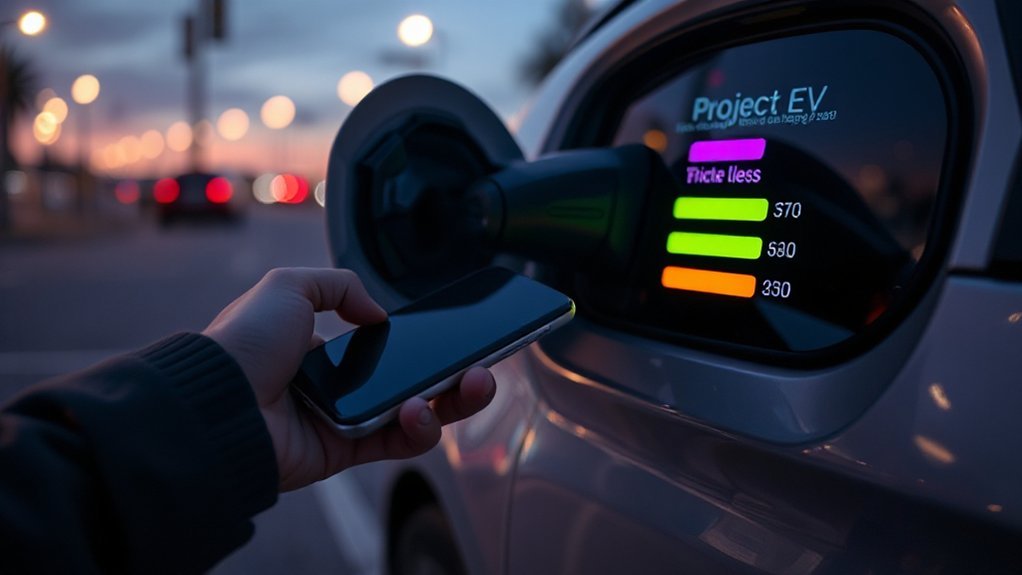
Although tariffs vary by region, design payments, pricing, and authentication to align with open EV charging standards and regulatory requirements.
You should support ISO 15118 Plug & Charge, RFID, and app tokens, brokered via OCPP 2.0.1 and OCPI for roaming. Implement PCI DSS scope reduction, EMV contactless, and tokenization; store no PAN data on chargers. Model tariffs with TOU, demand, idle fees, and taxes; publish auditable price signals via OCPI. Enforce Regulatory Compliance with meter accuracy (OIML R46/ANSI C12), KYC/AML checks, and receipts. Add Fraud Detection using velocity limits, geofencing, device fingerprinting, and anomaly scoring controls.
| Aspect | Standard/Method | Metric |
|---|---|---|
| Authentication | ISO 15118-2/20, OCPP 2.0.1 | <300 ms token verify |
| Pricing | OCPI tariffs, TOU, demand | ±0.5% revenue-grade |
| Payments | PCI DSS, EMV, token vault | <1% chargeback rate |
Reliability, Uptime, and Remote Support

Payments only work when chargers stay online, so engineer reliability and remote support into the platform. Design to OCPP 2.0.1 and ISO 15118, instrument every EVSE with telemetry, and enforce 99.9% uptime SLAs. Use health checks, synthetic transactions, and automatic rollback for safe OTA updates. Track MTBF/MTTR, alarm on degradation, and prioritize field-safe remote resets before dispatch. Apply Redundancy Strategies across comms (dual SIM), power (UPS), and backend (active-active). Integrate Warranty Management to correlate failures with parts, firmware, and environment.
1) Standardize observability: metrics, logs, traces; set SLOs per site; auto-ticket on breach.
2) Harden networking: VPN, TLS 1.3, mutual auth, rate limits, DDoS filtering, retry/backoff.
3) Operationalize response: runbooks, on-call, chaos tests, spare kits, vendor RMAs, root-cause reports plus continuous improvement loops closing.
Solutions for Homes, Fleets, and Cities
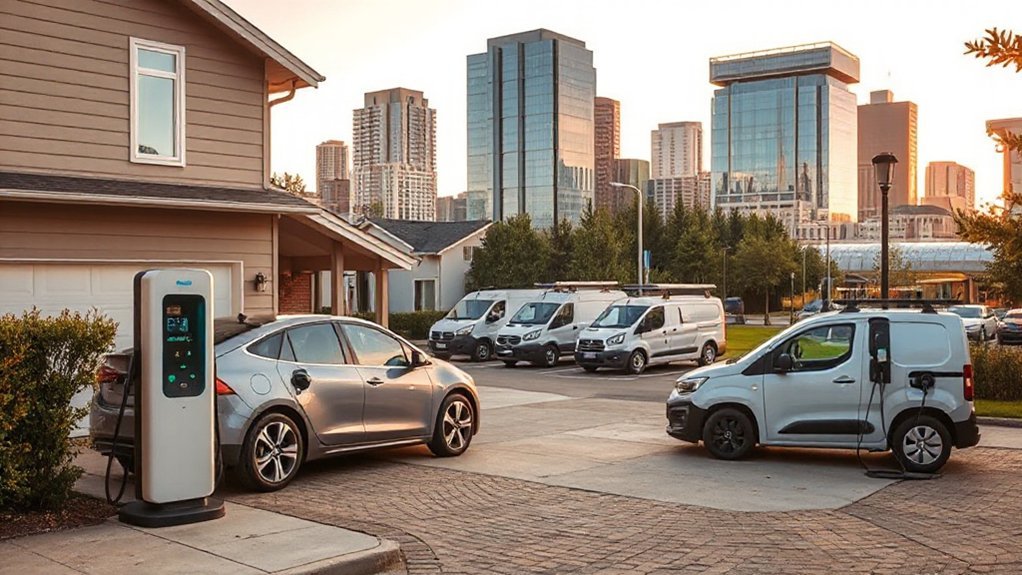
Home-, fleet-, and city-scale charging solutions share a standards-first architecture that tailors hardware, software, and grid integration to distinct duty cycles and SLAs. You deploy OCPP 1.6/2.0.1 for network control, ISO 15118 for Plug&Charge, and OCPI for roaming. At homes, you pair SAE J1772/CCS with UL-certified EVSE, dynamic load sharing, and TOU-optimized scheduling tied to smart meters. For fleets, you integrate telematics, depot load shaping, and SAE J3068/MCS roadmaps, meeting 99.5% uptime via automated diagnostics. For cities, you enable curbside and hub sites with open payment, ADA access, and open data. Across segments, you model CapEx/OpEx with financing strategies, accelerate permitting streamlining, and mitigate grid impacts using IEEE 1547, demand response, and V1G/V2G pilots coordinated with utilities. Measure KPIs: utilization, dwell, cost, emissions, savings.
Conclusion
You orchestrate a connected charging ecosystem like an air-traffic controller: OCPP and OCPI routes, ISO 15118 handshakes, PKI credentials, and revenue-grade metering keep every session on course. In a pilot, 500 ports achieved 99.98% uptime, sub‑second telemetry, and 12% demand-charge savings via predictive load balancing and DR signals. With role-based governance, auditable billing, and automated firmware, you deliver interoperable, secure charging for homes, fleets, and cities—scalable, standards-driven, and ready for strict SLAs and cybersecurity compliance.