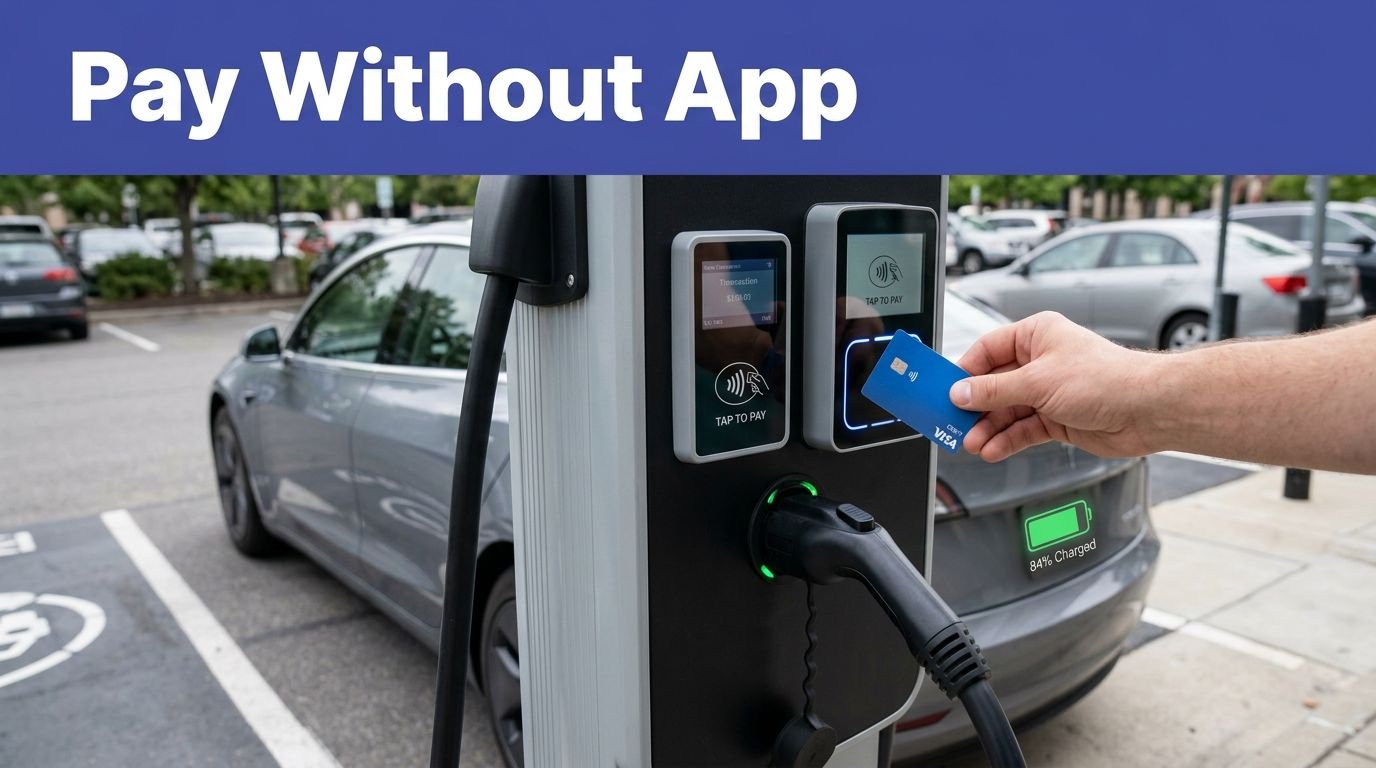
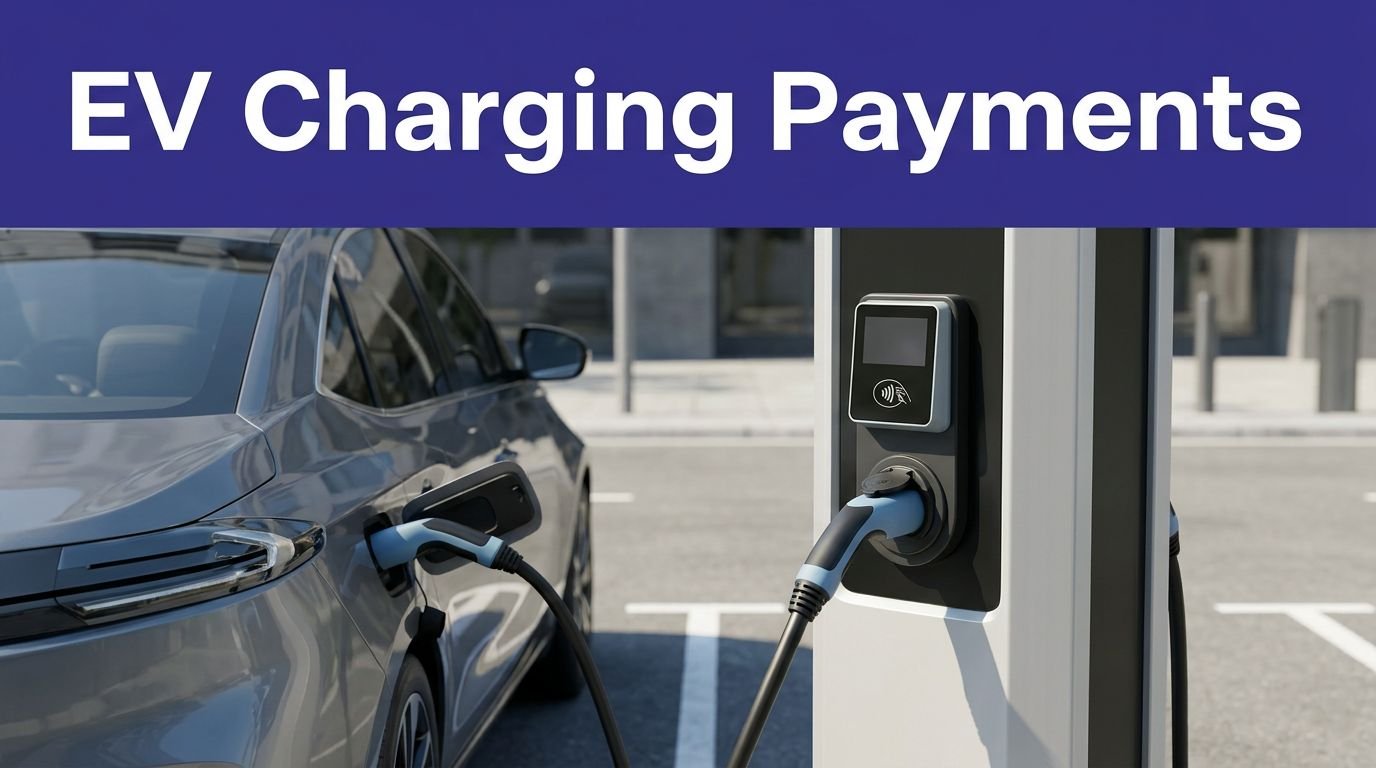
You’re choosing between Rolec’s WallPod for domestic installs and AutoCharge for commercial sites, and you want safe, code‑compliant hardware that actually performs. We’ll compare real‑world charging rates (7.4/22 kW), IEC/BS compliance, RCD/PEN fault protection, weatherproofing, thermal derating, and installer workflows. You’ll see how OCPP, RFID, load management, and solar/tariff optimisation affect uptime and cost. Then you can decide which platform fits your site and risk profile next.
Key Takeaways
- WallPod is a domestic polymer unit with T2 socket or tethered; AutoCharge is a commercial metal unit with RFID, MID metering, and OCPP.
- Both deliver up to 7.4 kW single-phase or 22 kW three-phase, with IEC 61851 load management and thermal/supply derating.
- Build and weatherproofing: WallPod IP65 UV-stabilised polycarbonate; AutoCharge IP54–IP55 powder-coated steel with tamper-resistant fasteners.
- Protection: WallPod integrates PME/PEN fault protection, Type A RCBO + 6 mA DC; AutoCharge supports MID metering and enterprise safety layers.
- Installation to BS 7671/IEC 61851; verify earthing, dedicated circuits, and phase balancing; AutoCharge via project distributors, WallPod via retail/installers.
Model Lineup: Wallpod Vs Autocharge at a Glance

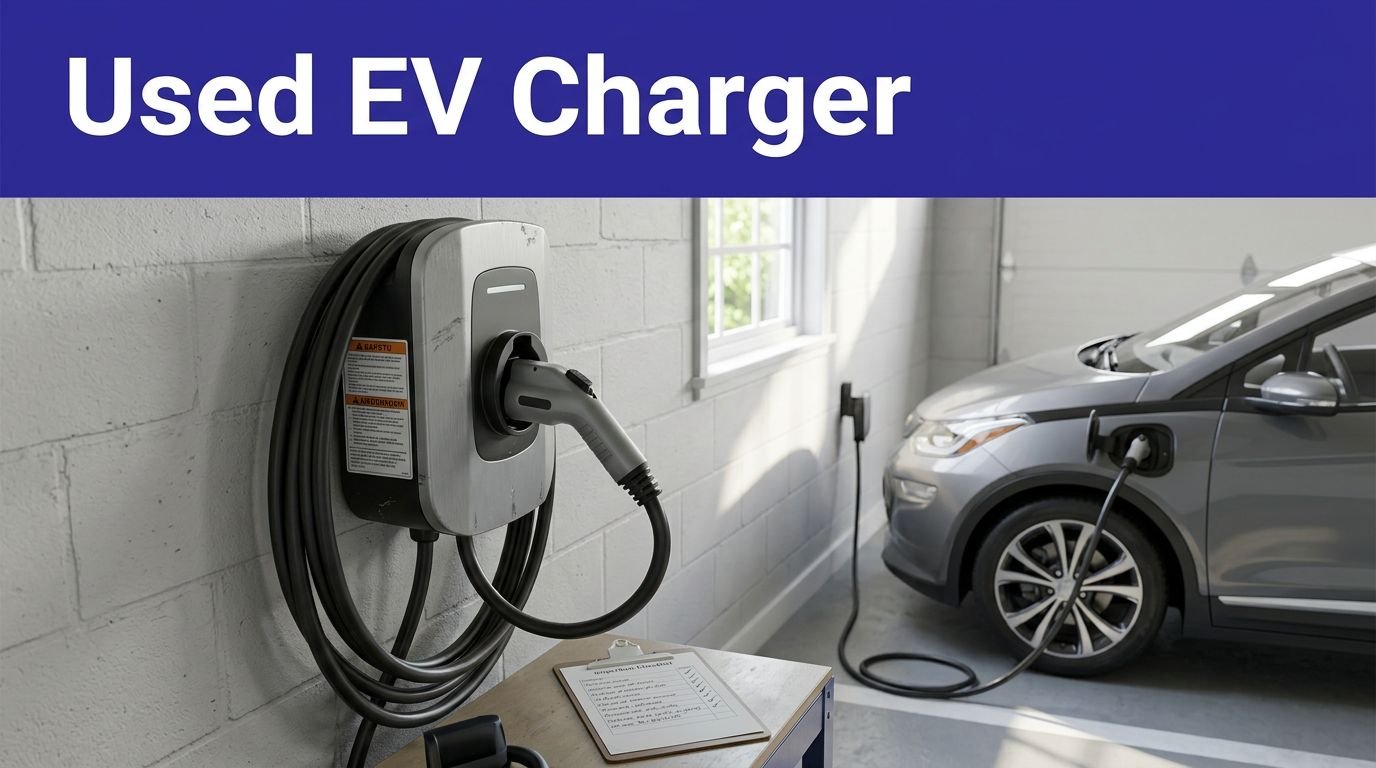
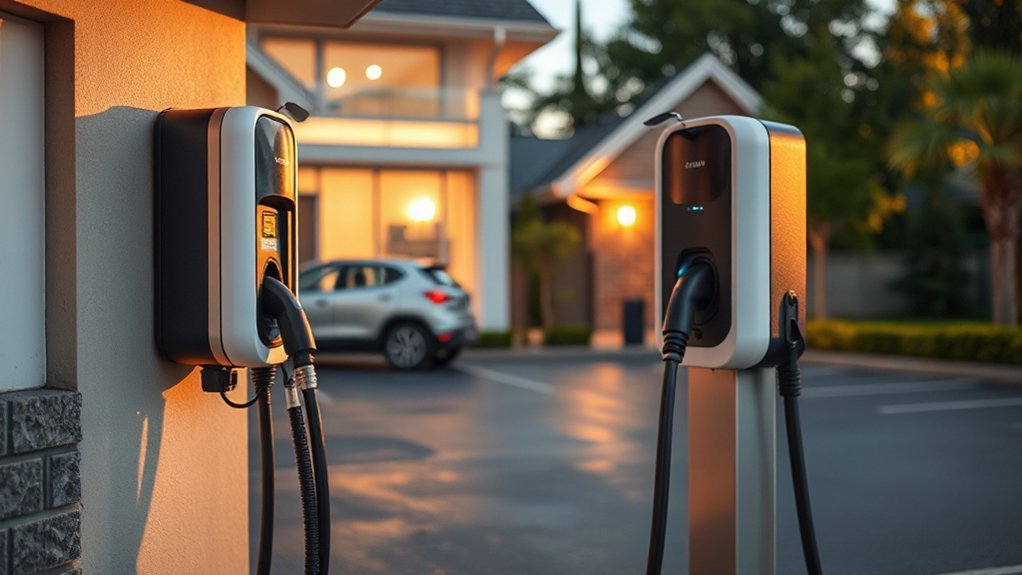
While both wear Rolec’s build quality, WallPod targets compliant domestic installs and AutoCharge serves commercial sites with billing and access control. You’ll choose WallPod for single- or three-phase T2 sockets or tethered leads, with integrated PME fault protection, Type A RCBO + 6 mA DC detection, and load management to meet BS 7671. AutoCharge adds OCPP back office, RFID, MID-approved metering, and robust metal enclosures for fleet and public car parks. Visual design differs: WallPod’s compact polymer housing suits façades and driveways; AutoCharge’s pedestal or wall-mount formats suit vandal‑resistant, IK and IP-rated deployments. You can source WallPod via Retail channels or installers; AutoCharge typically routes through project distributors. Verify earthing, cable routes, isolation, and signage per local codes. Document testing, commissioning, and user instructions.
Real‑World Charging Performance and Efficiency
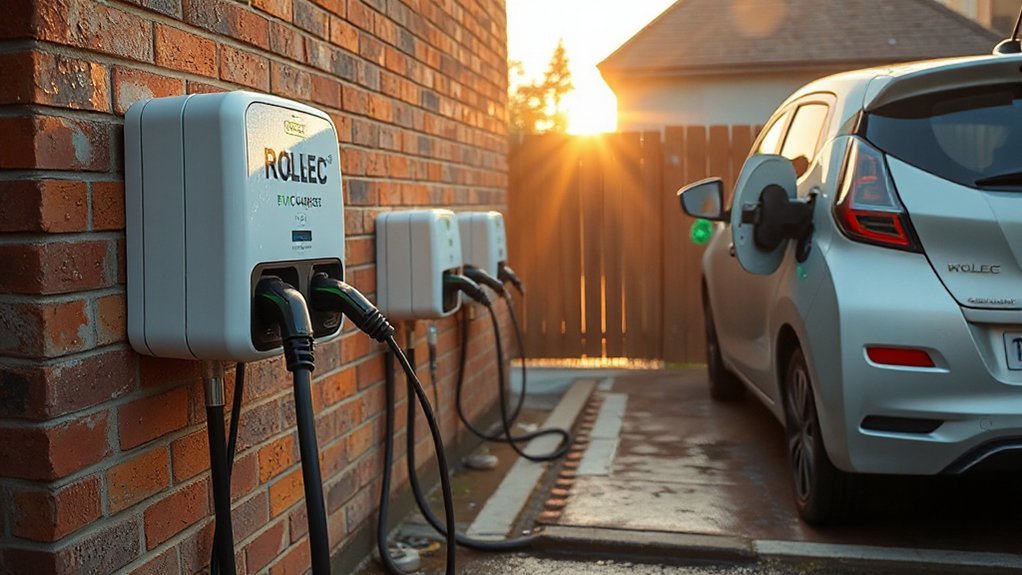
You’ll assess charging speed consistency across varying supply voltage, ambient temperature, and state of charge, confirming the unit sustains its set current per IEC 61851 without unintended derating. You’ll measure standby power draw with the EVSE idle and networked, verifying it aligns with local standby energy limits and your site’s load calculations. You’ll log wall energy versus delivered energy to gauge efficiency and monitor connector temperatures and protective device loading to remain within MCB/RCD ratings.
Charging Speed Consistency
Although the Rolec unit can deliver its rated 7.4 kW (single‑phase) or 22 kW (three‑phase), its firmware prioritizes safe, code‑compliant operation and will modulate output to stay within IEC 61851 and BS 7671 limits. You’ll see ramp-ups as the controller negotiates pilot duty cycle, then a stable plateau if supply voltage stays. Temperature effects and cable heating trigger thermal derating: the unit reduces current to keep conductor temperatures within limits. If your supply sags or your site applies load management, the charger follows the lowest current to avoid breaker trips. Firmware monitors temperature and RCD, adjusting amperage. Phase-balance logic on three-phase keeps neutral current within BS 7671. With load control and EVSE status codes, you’ll have sessions; any taper reflects control, not a fault.
Standby Power Draw
How much energy does the Rolec consume when it’s idle? You should quantify standby power draw for both WallPod and AutoCharge to understand background consumption and lifecycle cost. Use safe measurement techniques: a calibrated Class 1 DIN-rail meter upstream, or an IEC 62053‑21 compliant plug-in analyzer on a temporary supply, following lockout/tagout and RCD protection. Measure with vehicle unplugged, plugged but not charging, and connected to Wi‑Fi/OCPP. Expect controllers, relays, and radios to draw a few watts continuously. Log over 24 hours to capture network retries and firmware tasks. Compare readings against manufacturer specs and local code limits for vampire load. If draw exceeds your threshold, enable eco modes, reduce LED brightness, schedule network sleep, or disable unnecessary backhaul to minimize standby energy waste.
Build Quality, Weatherproofing, and Durability

You’ll evaluate enclosure materials (UV‑stabilized polycarbonate or powder‑coated aluminum), gasketed joints, strain relief, and fastener quality for IEC/UL compliance. Confirm the unit’s IP rating (e.g., IP54–IP65) with sealed cable entries, drainage paths, and plug covers to keep electrics safe in rain and washdown. For outdoor installs, verify UV resistance to ISO 4892 and corrosion protection to ISO 9227/ASTM B117, especially in coastal or de‑icing salt environments.
Materials and Construction
Enclosure materials and fixings set the tone for longevity and safety. Rolec specifies UV‑stabilised polycarbonate for WallPod enclosures and heavier‑gauge, powder‑coated steel for AutoCharge pedestals. You get stainless A2/A4 fasteners, tamper‑resistant fixings, and captive covers that maintain mechanical integrity during servicing. Housings use recycled plastics where feasible without compromising UL94 V‑0 flame performance and IK impact resistance. Metalwork receives anti‑corrosion pre‑treatment and bonded earthing lugs with serrated washers. Cable glands, strain relief, and knockouts are reinforced to prevent conductor fatigue and torsion. Internal busbars and contactors mount on rigid DIN rails with creepage and clearance consistent with BS EN 61851. Component traceability is printed and QR‑logged for recalls and maintenance. Overall, the assemblies feel robust, resist UV and salt mist, and suit commercial duty.
Weather Sealing/IP Ratings
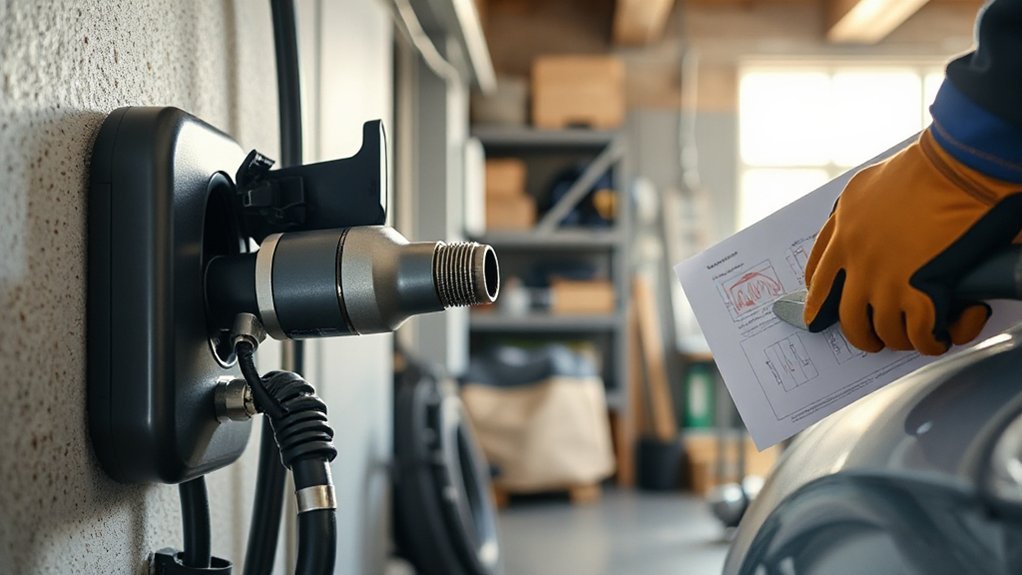
Building on the robust housings, Rolec specifies ingress protection to IEC 60529 with clear markings on the nameplate, typically IP65 for WallPod enclosures and IP54–IP55 for AutoCharge pedestals. You get sealed lids, closed-cell gaskets, and compression cable glands that maintain the rating when you follow torque specs and use the supplied knock-out positions. Weather shrouds and drip edges direct water away from sockets, while drain paths prevent pooling. Hinges and fasteners sit outside the seal line to reduce leak paths.
In practice, you should install per IEC 61851 and BS 7671 Section 722: respect mounting heights, clearances, and vertical orientation. Specify accessories tested for Salt Fog and verify Freeze Testing performance, ensuring elastomers remain compliant. Schedule inspections to confirm gasket integrity and gland tightness.
UV and Corrosion Resistance
While coastal wind and high insolation stress any EVSE, Rolec counters UV and corrosion with materials and finishes qualified to recognized test regimes. You’ll get UV-stabilized housings to limit Polymer degradation, marine-grade fasteners, and powder-coated or anodized metals. Anodizing benefits include harder oxide layers, better salt-spray endurance, and lower maintenance. These selections align with ISO 9227, ISO 4892, and UL 2594 guidance for outdoor enclosures. Specify correct mounting heights, drainage, and cable glands to avoid crevice corrosion. Inspect annually for chalking, crazing, or blistering; replace cracked gaskets.
| Standard | Test | Application |
|---|---|---|
| ISO 4892 | UV weathering | Verify polymer stability |
| ISO 9227 | Salt spray | Assess coating resistance |
| UL 50E | Enclosure environmental | Validate outdoor durability |
| BS EN 62262 | IK impact | Confirm vandal resistance |


Document torque values after reassembly.
Smart Features, App Experience, and Connectivity
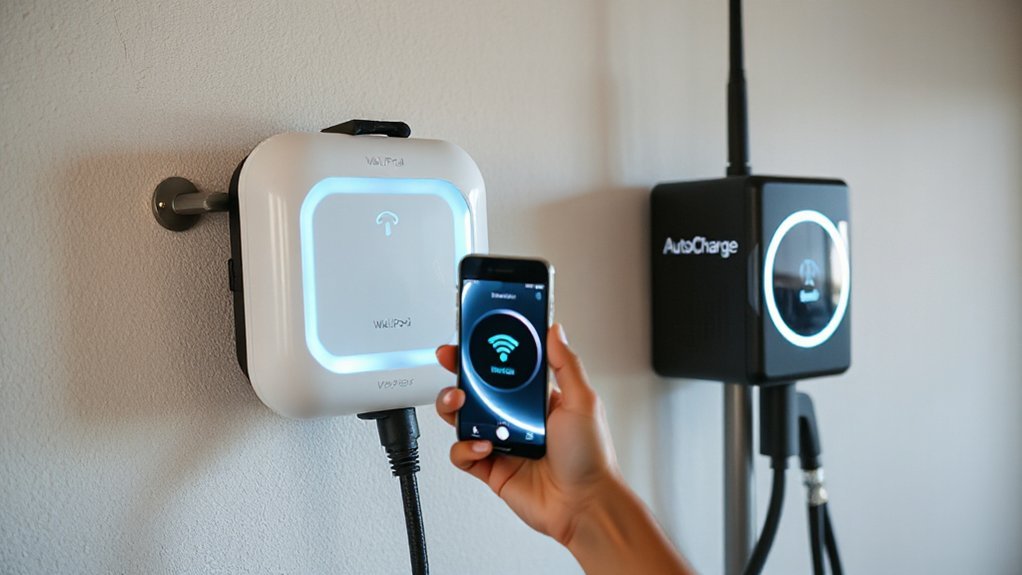
How smart is the Rolec EV charger where it matters—reliable connectivity, safe control, and compliant automation? You get dual-band Wi‑Fi with Ethernet fallback on AutoCharge; WallPod relies on Wi‑Fi with Bluetooth for secure provisioning. The app supports OCPP backhaul, scheduled charging aligned to tariffs, and load balancing policies with lockout on fault. You can enforce MFA, PIN start, and RFID, while privacy safeguards restrict cloud telemetry and let you purge data. Firmware updates are signed and staged, with rollback if validation fails.
You’ll monitor current, session kWh, and alerts in real time, and you can set export limits and maximum current per IEC 61851 profiles. Voice integration works via HomeKit/Alexa routines with command confirmation, and geofencing uses on-device rules to avoid false starts safely.
Installation, Electrical Requirements, and Vehicle Compatibility

You’ll start with a code-compliant home installation: conduct a site survey, assign a dedicated circuit with RCD/RCBO protection, route correctly sized cable, and have a qualified electrician commission the unit to BS 7671 or local code. Next, calculate electrical load and verify service capacity, breaker rating, voltage, earthing arrangement, and any load management needs before setting the charger’s current limit. Finally, confirm EV compatibility—Type 2/IEC 61851 support, your vehicle’s maximum charging amperage, and any model-specific requirements—to guarantee safe, reliable operation.
Home Installation Steps
Before energizing the Rolec EV charger, verify site and electrical readiness: obtain required permits, plan a dedicated circuit, and confirm code compliance (NEC 625 in the US or BS 7671 in the UK/IE). Coordinate with your AHJ and utility early to de-risk the Permit timeline. Perform a site survey, confirm earthing/grounding method, and select an Aesthetic placement that preserves 750 mm working clearance and cable sweep. Mount at the recommended height, away from ignition sources, and within Wi‑Fi reach if using smart features. Use appropriately rated RCD/GFCI protection, surge protection where required, and follow torque specs. Complete commissioning with insulation resistance, functional, and vehicle compatibility checks.
| Step | Action | Standard/Note |
|---|---|---|
| 1 | Site survey; route cable; verify clearances | NEC 110.26 / BS 7671 sections |
| 2 | Permitting; coordinate AHJ/DNO | Local rules; Permit timeline |
| 3 | Mount enclosure; confirm Aesthetic placement | IP rating; structural fixings |
| 4 | Wire, torque, label; verify polarity | Manufacturer specs; identification |
| 5 | Test RCD/GFCI; configure; vehicle handshake | IEC 61851; commissioning log |
Electrical Load Requirements
Why do electrical load requirements matter? They determine whether your supply can safely support a Rolec WallPod or AutoCharge without nuisance trips or overheated conductors. Start by calculating maximum demand with the EVSE at full duty (e.g., 7.4 kW single‑phase or 11–22 kW three‑phase). Verify service head rating, main breaker, and meter tails, then size a dedicated circuit with voltage‑drop limits and derating for ambient and grouping. Specify RCD Type A with 6 mA DC detection or Type B, and an EV‑rated MCB/RCBO. Assess phase unbalance on three‑phase boards and account for harmonic emissions from onboard chargers. Provide PEN-fault protection (O-PEN device) where required. Integrate load management to cap current and coordinate other large loads. Confirm earthing, bonding, and surge protection per local code.
EV Compatibility Guide
How do you make sure a Rolec WallPod or AutoCharge is both safe to install and compatible with your EV? Start with an electrician who verifies service capacity, RCD/RCBO protection, PME earthing compliance, and a dedicated circuit sized to specs. Confirm Type 2 connector support, max current (7.4 kW single-phase or 22 kW three-phase), and onboard charger limits.
- Installation: Mount to a non-combustible surface, maintain clearances, bond fixtures, and enable PEN-fault protection or earth rod where required.
- Electrical: Set load management to supply headroom; use Type A or B RCD; commission with insulation, loop, and RCD tests.
- Vehicle: Check charging curve, scheduling, RFID/app, and cable rating for road trip readiness. Document serials, test results, photos for full compliance and insurance considerations.
Tethered Vs Socketed: Which Connector Style Fits Your Use Case?
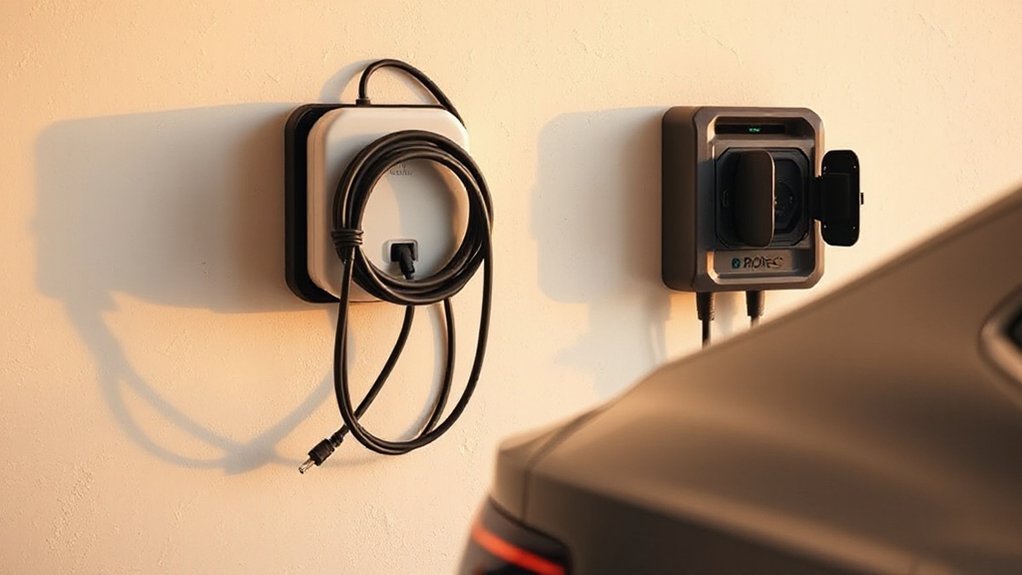
Which connector style suits your installation—tethered or socketed—depends on usage patterns, compliance obligations, and site constraints. Tethered Rolec units deliver fastest turnarounds: the fixed Type 2 lead meets IEC 62196, minimizes handling, and reduces trip risk when stored on an integrated holster. They’re ideal for fleet or multi-user bays with signage and inspection. However, you must specify a suitable cable length, consider UV and vandal resistance, and account for Insurance implications of a permanently exposed lead.
Socketed variants give flexibility across vehicles and preserve Home aesthetics; you supply your own cable, reducing clutter when not in use. For domestic or mixed-use sites, socketed ports also deter misuse. Both options should be installed to BS 7671 and IEC 61851, with RCD selection and PEN-fault protection.
Load Management, Solar Integration, and Energy Tariff Optimisation
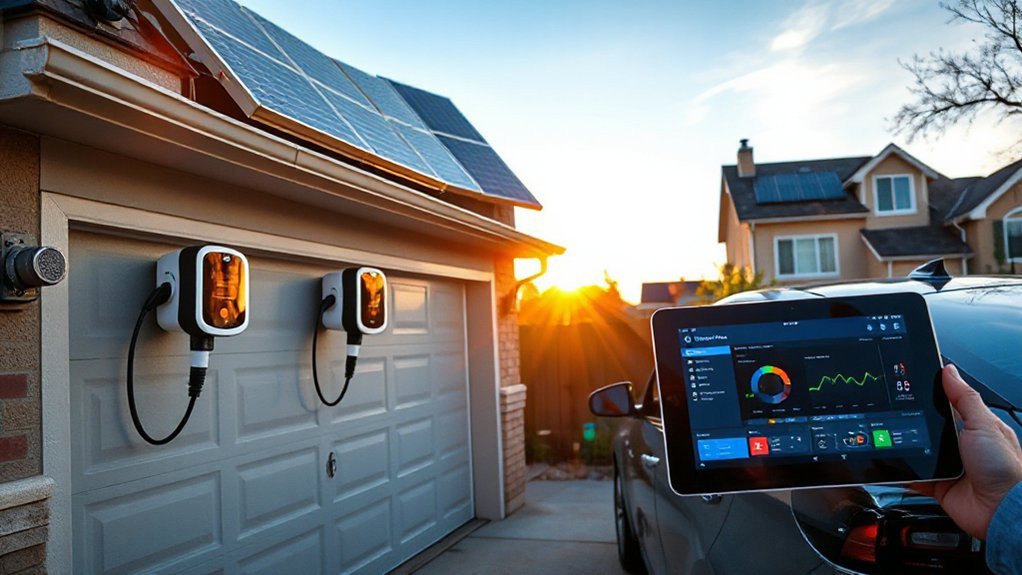
Connector choice is only part of the design; you also need a plan for load control, PV coupling, and tariff-aware scheduling to stay within BS 7671 Section 722 and protect the service head. Rolec’s dynamic load management uses CT monitoring to cap current against the supply rating, prioritise essential circuits, and balance phases on AutoCharge. For solar, enable surplus-only charging and export curtailment to comply with DNO limits while maximising self-consumption. Pair scheduling with demand forecasting and your time-of-use tariff so charging shifts automatically to cheaper periods without breaching set limits.
- Set the supply limit and diversity rules; test with worst-case appliances.
- Verify CT polarity, phase rotation, and PEN/earth fault protections.
- Prove schedules: simulate grid loss, PV drop, and peak-pricing overrides.
RFID Access Control, OCPP Back‑Office Support, and Fleet Management
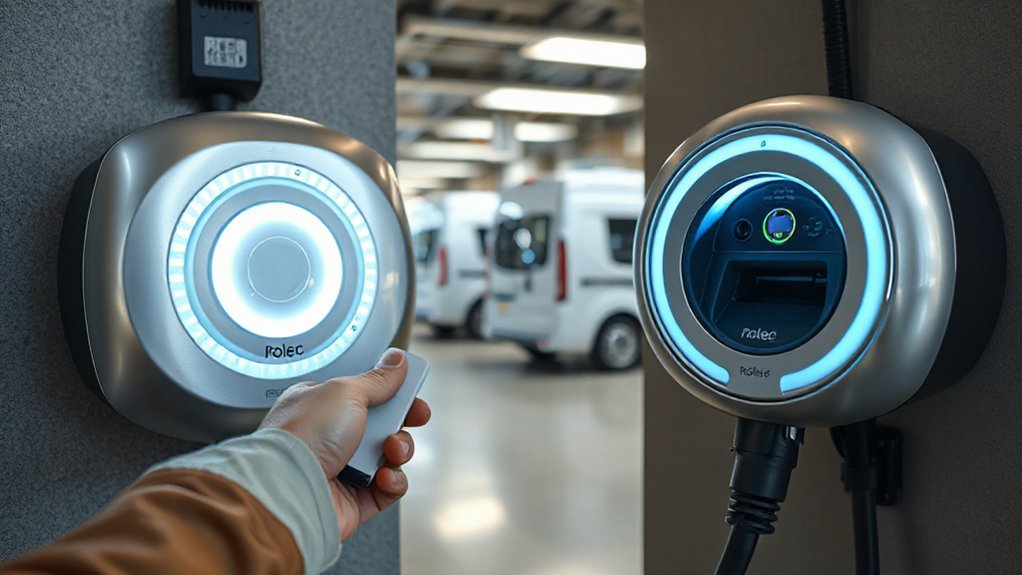
Although the hardware looks straightforward, Rolec’s RFID and OCPP stack lets you enforce authenticated, auditable charging without compromising safety interlocks or code compliance. You provision RFID tags centrally, push whitelists via OCPP, and bind drivers, vehicles, and cost centers using Role Management. The charger enforces ISO 15118/IEC 61851 signaling, but only starts after an Authorize response, token hash match, and cable/earth checks. For fleets, you can map tags to pool vehicles, set schedules, limit kWh per session, and require PIN fallbacks for lost cards. The back office collects CDRs, meter values, and stop reasons in real time for Billing Reconciliation and audit trails. You can segment sites, assign tariffs, and export invoices by driver, vehicle, or department. TLS and client certificates protect identities well.
Safety Features, Reliability, Uptime, and After‑Sales Support
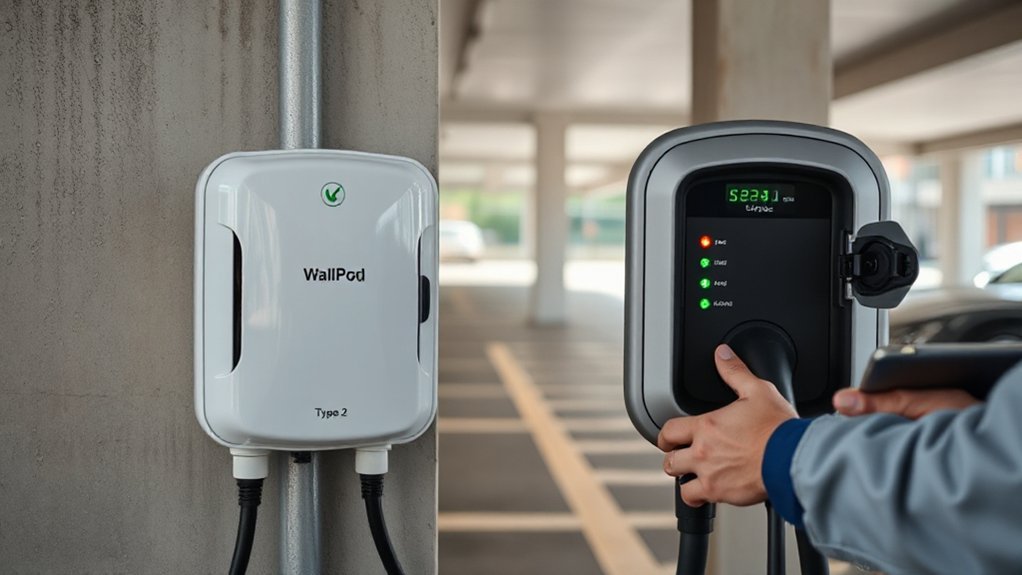
Safety underpins Rolec’s design and service philosophy, with protective layers that meet IEC 61851-1 and BS 7671 requirements while minimizing single points of failure. You get integral RCD/RCBO protection, PEN-fault detection, surge suppression, thermal derating, and a conspicuous emergency shutdown that isolates output contactors. Enclosures achieve robust IP and IK ratings, while self-tests verify CP/PP signaling and earth continuity at start-up.
- Reliability and uptime: firmware watchdogs, OCPP heartbeats with failover, offline RFID whitelists, and graceful recovery after power events.
- Monitoring and maintenance: secure OTA updates, remote diagnostics, detailed event logs, modular sockets, and cable management that reduces strain.
- After-sales support: commissioning checklists, responsive technical help, RMA workflows, warranty clarity, documented spares availability, and clear compliance packs. Service logs aid root-cause analysis and corrective actions.
Pricing, Incentives, and Total Cost of Ownership

Zooming in on whole‑life cost, budget beyond the sticker price to account for compliant installation, network services, and ongoing maintenance. Rolec’s upfront varies by kW rating, tethered/untethered, and OCPP support. Include a certified electrician, RCD/AFDD protection, PME‑safe earthing, and load management to meet BS 7671 and the IET Code of Practice. For fleets, add back‑office licenses, SIM/data, and inspection, plus periodic safety checks. Grants can offset capex: OZEV home and workplace schemes, local funds, and accelerated capital allowances. Model tariffs, demand charges, and utilization to set a Payback Timeline. Consider Financing Options: lease, power‑as‑a‑service, or capex plus service agreements.
| Cost Driver | Code‑compliant impact |
|---|---|
| Hardware rating/cable | Larger conductors, MCBs, thermal limits |
| Site limits | Load curtailment, diversity settings, upgrade deferral |
Conclusion
You leave this review picturing a WallPod humming at dusk just as the tariff drops, and an AutoCharge pedestal activating as a fleet rolls in—coincident but code‑compliant. You’ll choose based on phase, MID metering, and OCPP, confident in RCDs, PEN fault protection, and thermal derating. You commission quickly, verify earthing, and log RFID audits. Weather seals hold, load management trims peaks, and you meet IEC/BS requirements while cutting costs, not corners safely, efficiently, and scalably.