Under a bright rooftop array, you watch surplus PV poised to charge your car. With Zappi, you control it: CT-based real-time metering, IEC 61851 pilot modulation, Eco/Eco+ modes to prioritize self-consumption, and three‑phase balancing to keep loads symmetric. You get IP65/IK08 hardware, dynamic load management, TOU-aware scheduling, and secure firmware. But does it truly minimize grid import, integrate cleanly, and pay back as claimed?
Key Takeaways
- Solar-aware charger prioritizes self-generated PV, with Eco and Eco+ modes that modulate current or pause to avoid grid import.
- CT-based real-time import/export monitoring adjusts charging via IEC 61851 pilot to prevent backfeed and respect DSO export limits.
- App schedules time-of-use windows, PV-only rules, departure targets, and supports manual boosts with second-level command latency.
- Dynamic load balancing manages whole-home and multi-EV charging in 1 A steps, maintaining phase symmetry on three-phase systems.
- Detailed telemetry logs power, energy, costs, and per-phase metrics with one-second intervals; security includes encrypted sessions and signed firmware updates.
What Sets the Zappi Apart
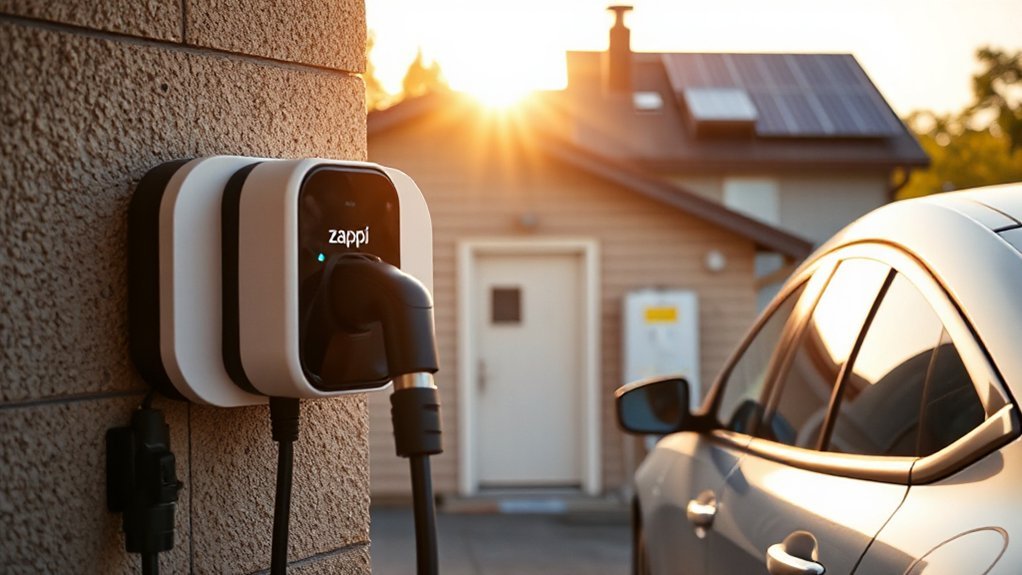
Solar-aware smart-charging sets the Zappi apart by natively prioritizing self-generated energy and enforcing grid-safe operation. You configure Eco, Eco+ and Fast modes to match PV output, while dynamic load management caps current to maintain main-service headroom. It measures import/export in real time via CT feedback and modulates to IEC 61851-1 limits, avoiding backfeed. Scheduled charging aligns with time-of-use tariffs; surplus-only charging minimizes grid kWh. Compliance features include open-RCD self-test, PEN fault protection, and configurable export limiting per local DSO rules. Firmware updates add features and fix issues with audit logs. You monitor KPIs—kWh sourced from PV vs grid, peak current, session cost—through the app and reports. Warranty Coverage and responsive Customer Support reduce lifecycle risk and downtime. Installers access commissioning metrics and compliance reports.
Design, Build Quality, and Hardware Options
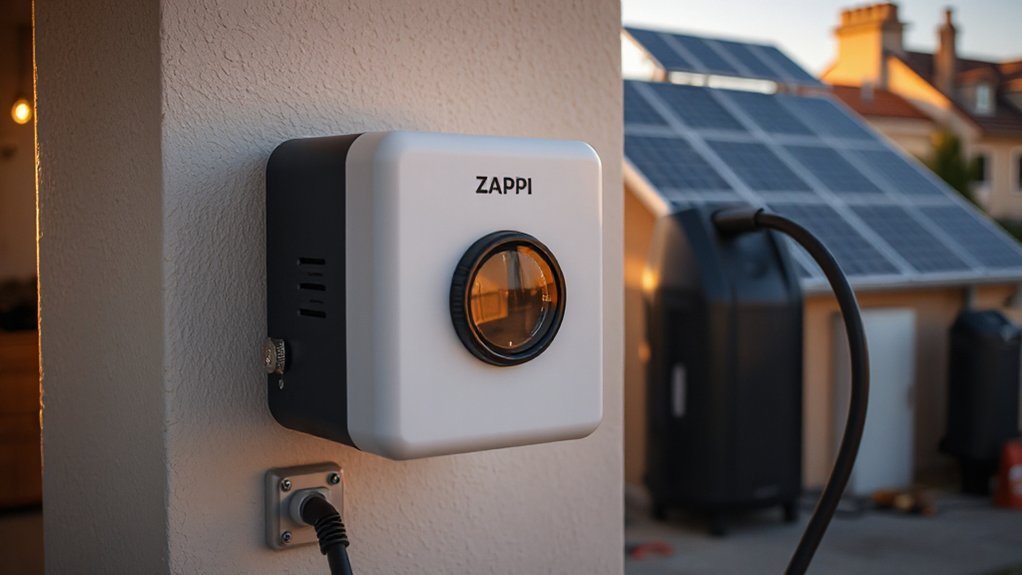
Those grid-aware features sit on hardware that meets Mode 3 charging per IEC 61851-1 and uses a Type 2 interface compliant with IEC 62196. You get a compact enclosure with disciplined Material selection: UV-stable, impact-resistant polymer over a rigid chassis, minimizing thermal creep and resonance. Fasteners are stainless, glands are compression-sealed, and strain relief is robust. The Weatherproofing rating achieves IP65, with validated salt-mist and IK08 impact performance. Single- and three-phase variants cover 7.4 kW to 22 kW; tethered and untethered options maintain identical safety interlocks.
| Parameter | Spec |
|---|---|
| Enclosure rating | IP65, IK08 |
| Operating temp | -25°C to +50°C |
| Output options | 7.4 kW, 11 kW, 22 kW |
| Cable/Plug | Tethered or Type 2 socket |
Mounting tolerances and connector wear are cycle-tested to IEC 60529/60068; install once securely.
Solar and Wind Integration: How Eco Modes Work
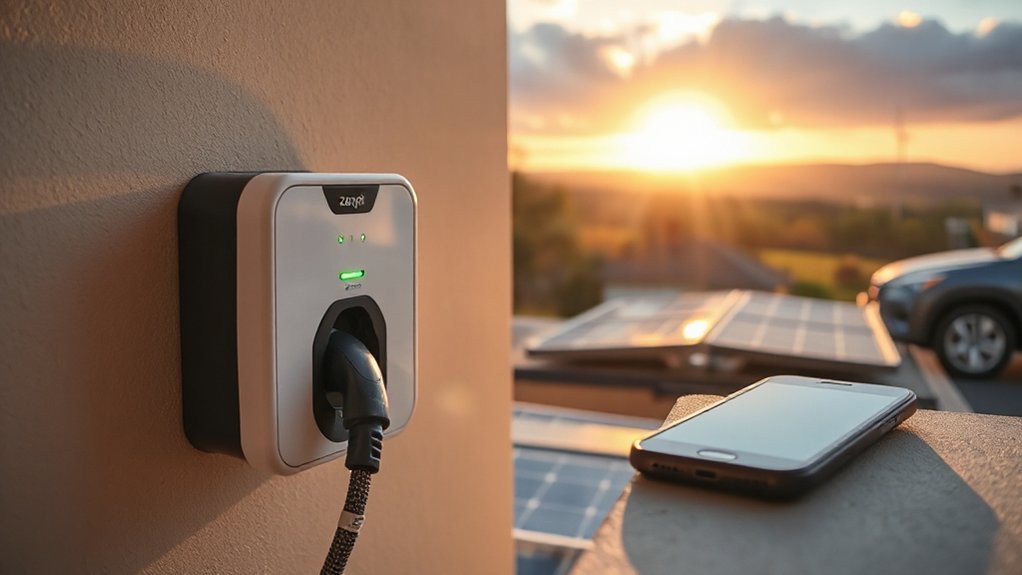
While your PV or wind output fluctuates, Zappi’s Eco modes sample real‑time import/export with clamp CTs on the supply and generation feeds, then modulate the EV’s charge current via the IEC 61851 control pilot (PWM duty cycle) so the car absorbs only available surplus. In Eco, you set a target above the 6 A minimum, and Zappi tracks net export to ramp current smoothly. In Eco+, you prioritize zero grid import; if export drops below thresholds, Zappi pauses within seconds and resumes when surplus returns. Three-phase systems adjust per phase to maintain symmetry and avoid nuisance trips per EN 61000-3-2. Forecast Integration lets you preselect Eco mode behavior using irradiance or wind predictions, reducing starts and stops. Curtailment Strategies cap current and prevent backfeed.
Smart Features: Load Balancing, Scheduling, and the App
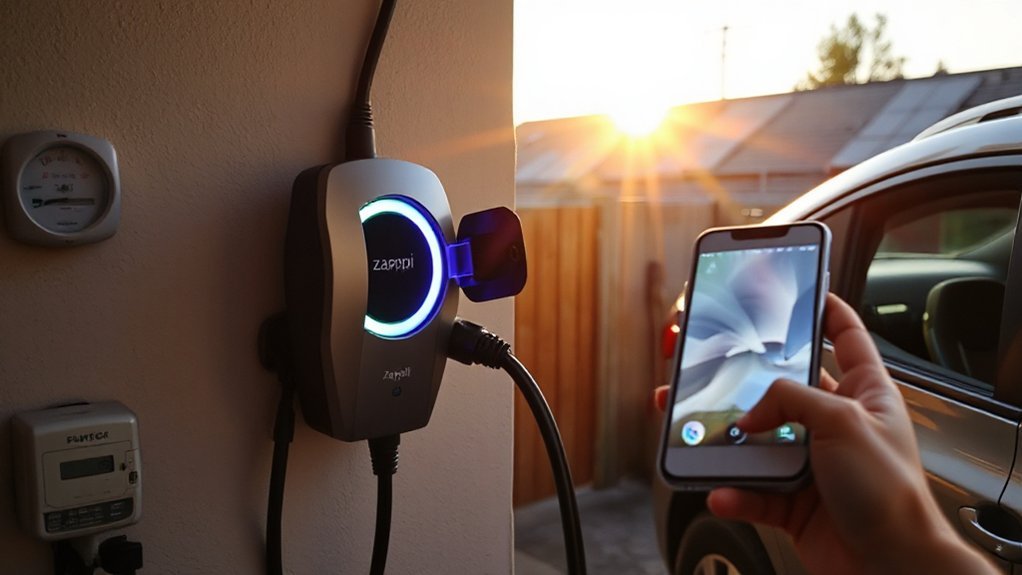
Building on surplus-aware charging, Zappi adds whole‑home and multi‑EV control via standards‑based current limiting, scheduling, and a telemetry‑rich app. You set per‑circuit limits to respect the main service while prioritizing vehicles; Zappi modulates current at 1 A granularity under IEC 61851 signaling to avoid breaker trips. Dynamic load balancing redistributes available amperage in real time, logging power, energy, and session costs at one‑second intervals. The scheduler supports time‑of‑use windows, minimum charge kWh, departure targets, and PV‑only rules, with overrides for immediate boosts. The app exposes phase currents, voltage, power factor, and historical CSV export. Security Protocols include encrypted sessions and role‑based access. Firmware Updates are signed, verifiable, and reversible, enabling feature rollouts and bug fixes without disrupting schedules. Audit logs track changes and access.
Installation, Compatibility, and Connectivity
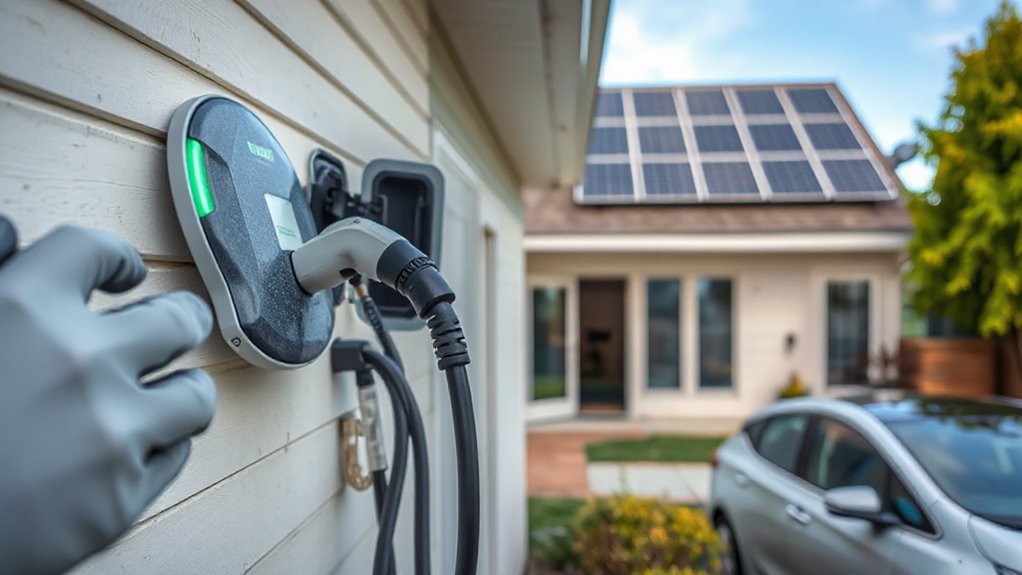
Kick off installation with a dedicated circuit sized to the unit’s rating—32 A single‑phase (≈7.4 kW) or 3×32 A three‑phase (≈22 kW)—wired by a qualified electrician to IEC 60364/BS 7671 or NEC 625 as applicable. Follow Mounting Standards: fix 0.5–1.5 m above grade, use IP-rated glands, and bond per IEC 60364-4-41. Provide a Type A RCD with 6 mA DC protection (IEC 62955) unless integrated. Verify PEN-fault protection where required.



For compatibility, confirm IEC 61851-1 control signaling and IEC 62196-2 Type 2 interface; single- and three-phase EVs supported. Commission CT sensors for solar/house load via wired runs or an RF bridge. Prefer Ethernet; if using 2.4 GHz Wi‑Fi, set WPA2, RSSI targets, and DHCP reservation. Enhance Network Resilience with router UPS and fallback schedules.
Day-to-Day Performance and User Experience
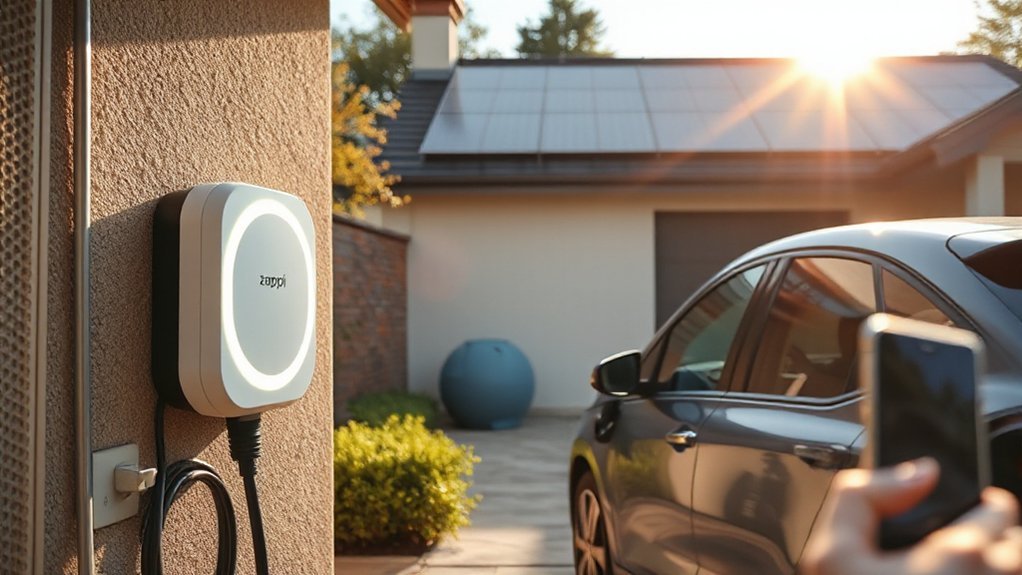
You’ll evaluate daily charging reliability using start success rate, session stability, and error codes against IEC 61851 expectations. You’ll verify app controls and scheduling by measuring command latency, schedule adherence (±1 min), and override behavior via OCPP/API events. You’ll assess solar matching in practice by tracking real-time PV surplus utilization, minimum export thresholds, and phase balancing to quantify self-consumption gains.
Daily Charging Reliability
Typically, Zappi establishes an IEC 61851-1 Mode 3 handshake in under a few seconds and ramps current smoothly to the configured limit, maintaining a stable pilot on an IEC 62196 Type 2 connection. In daily use, you’ll see consistent initiation, low mis-handshake incidence, and robust fault recovery. Thermal design keeps contactor, socket, and cable within spec, limiting Connector wear. It rides supply dips and resumes within tolerance, aiding Grid resilience. Earthing and RCD monitoring trip predictably under faults, then re-arm cleanly once cleared.
| Metric | Typical | Evidence |
|---|---|---|
| Handshake time | 2–4 s | Timer logs |
| Current accuracy | ±1 A | Clamp measurements |
| Pilot duty stability | <1% jitter | Scope traces |
| Brownout restart | <10 s | Event log |
| Enclosure temp rise | <25°C @ 32 A | Thermocouples |
Cable lock actuates reliably daily.
App Controls and Scheduling
How well does Zappi’s app enforce schedules and respond to commands in daily use? In practice, you’ll set time-bound charge windows and the charger honors them with minute-level resolution. Commands—start, stop, boost, lock—apply reliably within a few seconds on Wi‑Fi or ethernet. Conflicts resolve predictably: manual overrides take precedence for the current session, then schedules resume. Logs show timestamps, outcomes, and reasons (e.g., locked, outside window), helping you audit behavior. Notification Customization lets you choose events and channels to reduce noise. User Permissions control who can edit schedules versus view-only access, supporting household safety.
- Minute-precise schedules with per‑weekday profiles
- Manual Boost with optional kWh/amp/time limits
- Granular alerts: start/stop, faults, firmware, access
- Role-based access, PIN/app lock, remote disable for added security
Solar Matching in Practice
With schedules handled, Zappi’s solar‑matching modes show their value in daily use by modulating charge current to track real‑time PV surplus while holding grid import near zero. You see stable ramping, fast response (~1 s), and minimal oscillation thanks to export thresholds and hysteresis. CT-based metering accuracy keeps balancing tight, even with household transients. In ECO+ you prioritize self‑consumption; in ECO you maintain a floor current to avoid EV sleep. Seasonal variability matters: winter clouds force more pauses; summer sustains 11 kW on three‑phase when PV allows. If surplus collapses, Zappi drops current gracefully, avoiding backfeed and flicker.
| Mode | Amps | Grid Import |
|---|---|---|
| ECO+ | 0–32 A dyn. | 0–100 W spikes |
| ECO | 6–32 A min. | 50–200 W avg. |
| Fast | 32A | Import |
| Boost | Up to limit | TOU‑aligned |
Pricing, Tariffs, and Long-Term Savings
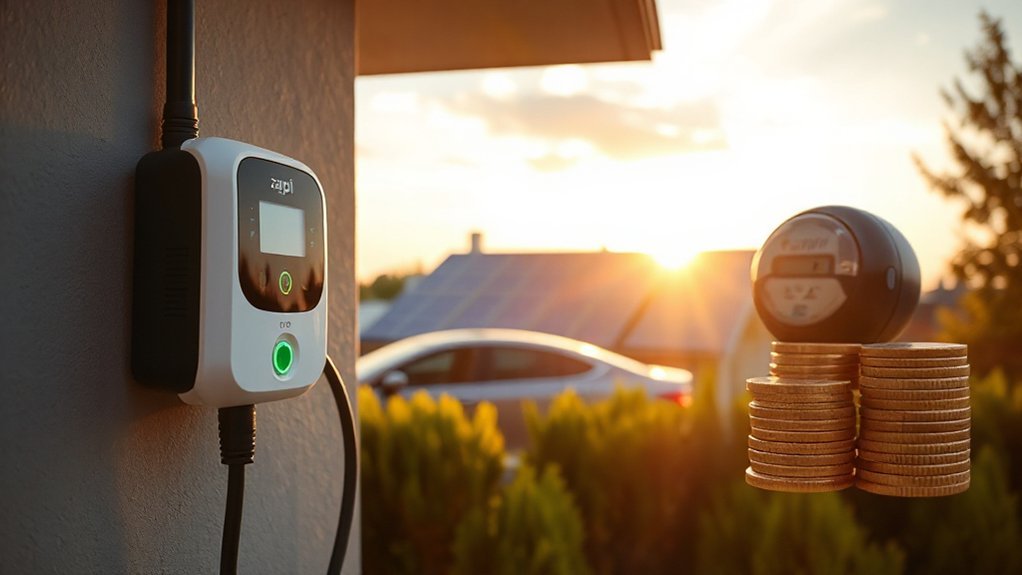
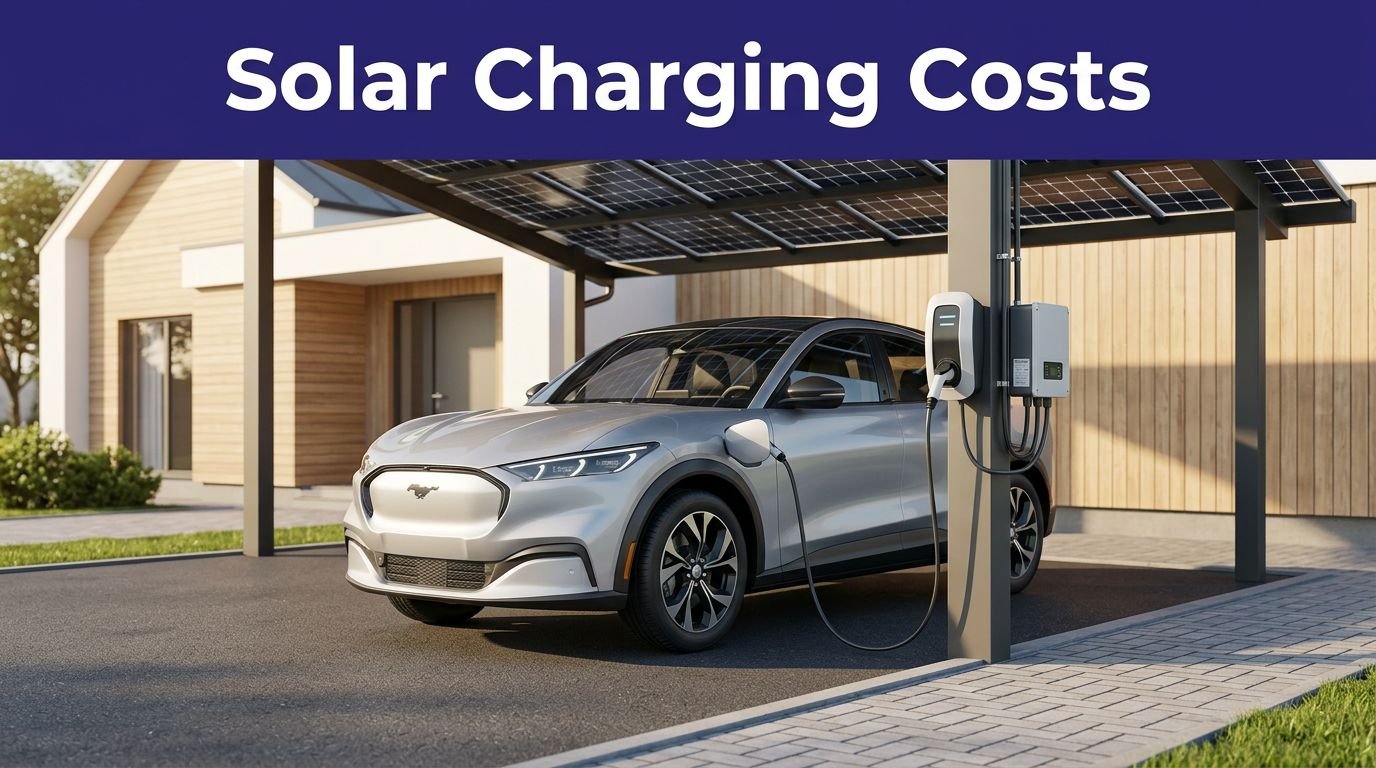
You can exploit time-of-use tariffs by scheduling off-peak charging, where unit rates are typically 40–60% lower than peak. For 3,000 kWh/year of home charging and a £0.12–£0.18/kWh off-peak vs peak differential, shifting 70–100% off-peak yields about £250–£540/year savings. With hardware and install at £900–£1,400, your payback period is roughly 2–5 years, depending on tariff spread and off-peak share.
Time-of-Use Savings
Why does time‑of‑use pricing matter with Zappi? You cut charging costs by aligning sessions to off‑peak tariffs and prioritizing solar. Zappi’s schedules, ECO/ECO+ modes, and CT‑based import metering execute Peak avoidance and Rate optimization automatically, respecting utility TOU windows and on‑site limits.
- Tariff profiles: Define weekday/weekend windows (e.g., 00:00–06:00); Zappi queues charging until the rate boundary.
- Dynamic control: If a peak begins mid‑session, Zappi throttles current per IEC 61851, preventing demand spikes.
- Solar synergy: ECO+ diverts surplus PV first; only deficit energy draws at off‑peak rates.
- Data visibility: The app logs kWh by tariff band, enabling audit‑ready reporting and alerts.
Net effect: lower average cents/kWh, reduced grid stress, and consistent compliance with circuit capacity. You manage loads proactively and protect budgets under volatile pricing.
Payback Period Estimates
Because payback hinges on both capital outlay and tariff arbitrage, model it explicitly: Simple Payback = (Hardware + Install − Incentives) ÷ Annual Bill Savings. For a Zappi at $900–$1,200, typical install $600–$1,500, and incentives of $200–$1,000, your net cost spans $300–$2,500. Annual bill savings depend on TOU spread, solar export price, and vehicle kWh. With 3,500 kWh/year shifted or self-consumed, a $0.18/kWh differential yields ~$630/year; at $0.08, ~$280/year. That implies payback of 1–9 years. Run a sensitivity analysis across tariff tiers, PV surplus, and charging behavior per ISO 17742 load profiles. Owner surveys indicate median savings cluster near $400–$700/year when PV oversizing exists. Stress-test scenarios: low miles, winter output, export tariff cuts. Include maintenance and firmware longevity in lifecycle economics. Quantify uncertainty ranges.
Conclusion
You leave the driveway knowing each kilowatt-hour was steered, not spilled. Zappi’s CTs sample flows in real time and IEC 61851 pilot control modulates current, so Eco/Eco+ sip PV surplus without backfeed. Three‑phase balancing holds symmetry; dynamic load management and TOU schedules trim peaks. The IP65/IK08 enclosure shrugs off weather, while secure firmware and logs prove compliance. If you want measurable self-consumption gains and predictable costs, this charger turns sunlight into disciplined mobility for homes.