Think it’s all about the charger’s posted kW? You actually set charging speed by matching station power with your car’s acceptance curve, negotiated via CCS/ISO 15118 voltage-current limits. Pack chemistry and size, SoC, and temperature dictate taper and BMS caps. Connector resistance and site load-sharing can derate output. Precondition and target the mid-SOC window to maximize kW—then consider how trip timing and hub selection change your stop time.
Key Takeaways
- Charging speed is limited by the lower of charger power and the vehicle’s charge curve/BMS limits, varying with SOC and temperature.
- DC fast charging offers 50–350 kW; peak power occurs around 20–50% SOC, tapering above roughly 60–80%.
- Battery size and chemistry set safe C-rate; higher pack voltage reduces current and heat for the same power.
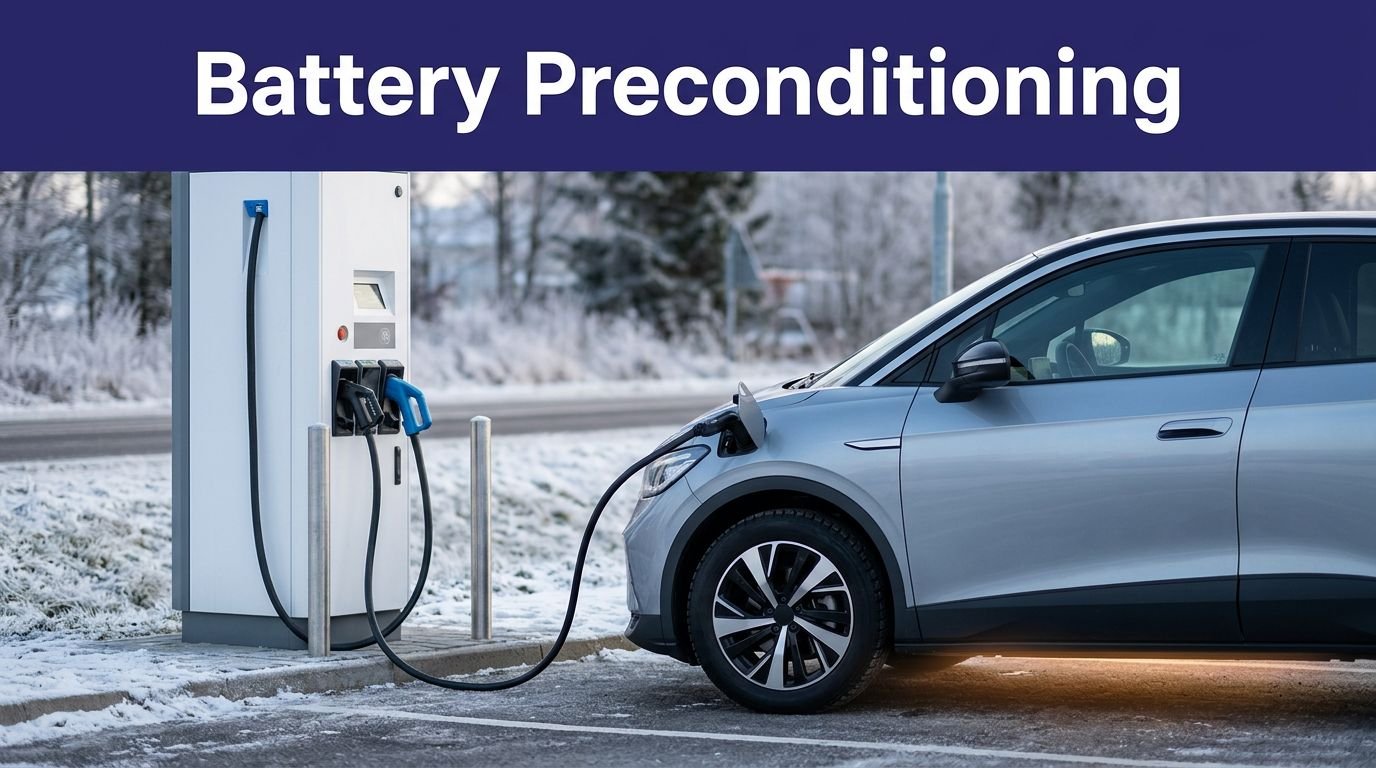
- Thermal management and preconditioning enable higher power; cold or hot batteries reduce allowable current to protect cells.
- Station factors—power sharing, cable limits, and firmware handshakes—can derate charging despite the charger’s advertised kilowatt rating.
What Determines EV Charging Speed
While marketing emphasizes kW ratings, EV charging speed is fundamentally constrained by the lower of the charger’s available power and the vehicle’s allowable charge power curve. You’re limited by pack voltage, maximum current limits, and the BMS’s thermal and SOC-based taper. At 20–50% SOC and nominal 400 V packs, many vehicles accept 200–300 A; above ~60–70%, current reduces per cell voltage and temperature. Ambient and coolant capacity dictate derating. Standards-driven handshakes (ISO 15118, DIN 70121) negotiate limits; firmware compatibility with the EVSE and OCPP backend affects setpoints and interruptions. Cable gauge, length, and connector resistance raise I²R losses; connector corrosion increases contact resistance and heat, triggering reduced current. Accurate preconditioning and validated charge curves determine realistic kWh/min outcomes across sessions and environmental conditions consistently.
Charger Types: Level 1, Level 2, and DC Fast
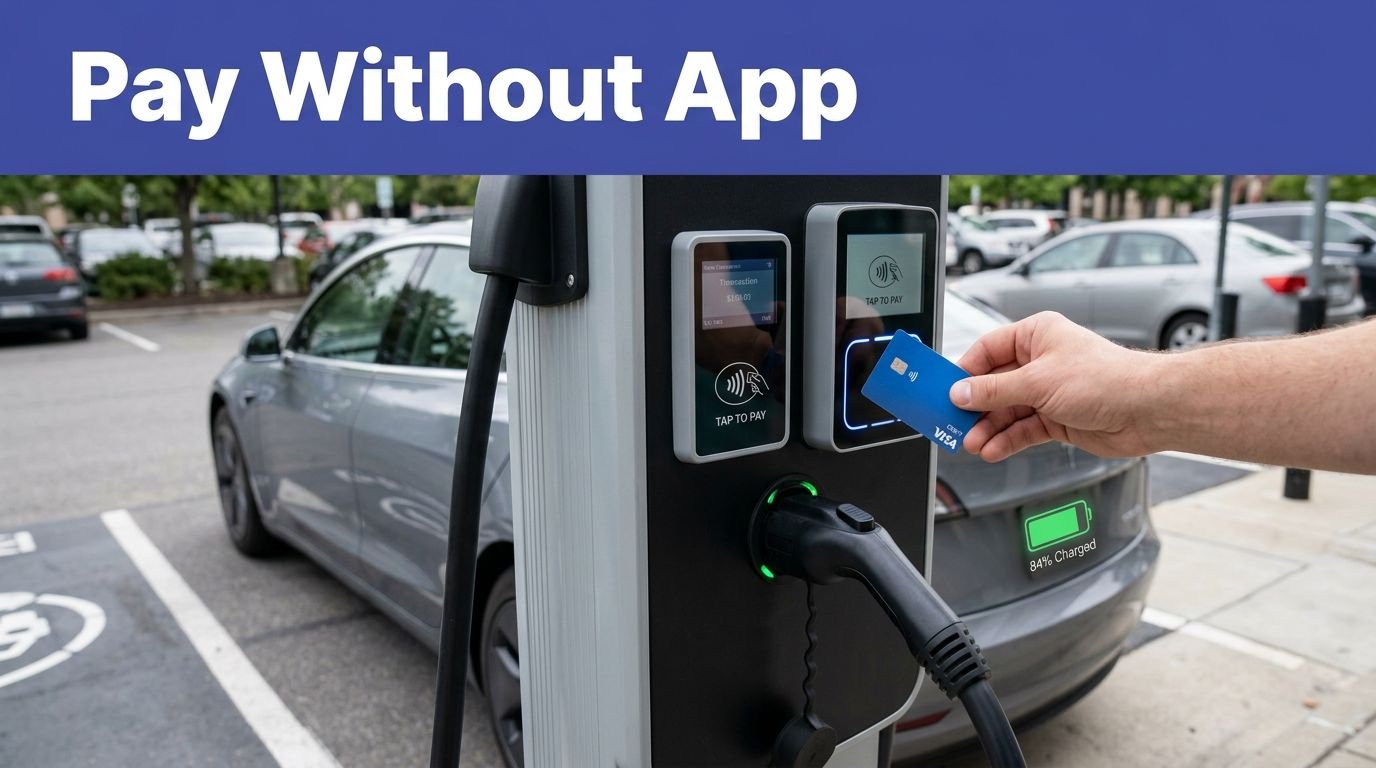
How do Level 1, Level 2, and DC fast charging differ in power, voltage, and standards? Level 1 uses 120 V AC, 12–16 A, delivering ~1.4–1.9 kW via SAE J1772 (NACS adapters common). You plug in with negligible installation costs. Level 2 uses 208–240 V AC, typically 16–80 A (3.3–19.2 kW), J1772 or NACS in North America, Type 2 in Europe. Home installs run ~$500–$2,500; commercial adds load studies, permits, and networking. DC fast charging supplies 400–1000 V DC, 50–350 kW, using CCS1/CCS2, NACS DC, or CHAdeMO. Equipment and installation costs range from ~$50k–$200k+, driven by utility upgrades and trenching. Networks provide payment options: RFID, mobile app, or contactless EMV; pricing may be per kWh, per minute, or session. Idle fees may apply onsite.
Vehicle Acceptance Rates and Power Limits
Why doesn’t a “350 kW” charger always deliver 350 kW to your car? Because delivered power equals voltage × current negotiated between the EVSE and your BMS under ISO 15118/DIN 70121. If your car’s maximum acceptance is 400 V × 500 A = 200 kW, the station can’t exceed it. Manufacturer caps and firmware limits often reduce these ceilings to protect components (busbars, contactors, cooling) or to comply with certification margins.
You also face external caps: cable/connector ratings (e.g., CCS/NACS 500–600 A with liquid cooling), site power allocation, and backend load management. Power sharing can derate stalls to a per-vehicle limit. State-of-charge and temperature dynamically adjust the BMS-requested current, enforcing a tapered profile. Always consult the vehicle’s published max kW and max amps specs.
Battery Size and Chemistry Impacts


Capacity sets the ceiling: for a given allowable C‑rate, charging power scales with pack energy (P ≈ C‑rate × kWh), so a 100 kWh pack at 2C can accept ~200 kW, whereas a 60 kWh pack at 2C tops out near ~120 kW. Chemistry sets the C‑rate: NMC/NCA cells typically allow 1.5–3C peak; LFP supports ~1–2C; LTO reaches ~4–6C. Higher energy density often reduces peak C‑rate, while low‑energy‑density chemistries enable higher power. You’ll also trade energy density against cycle life: LTO excels in cycle life, LFP is strong, and high‑nickel NMC sacrifices some longevity at high C. Pack voltage architecture matters: higher nominal voltage reduces current for the same power, lowering resistive losses. Follow cell‑level specifications (IEC 62660, SAE J2929) when setting charge limits.
Temperature Effects and Thermal Management
Although charger nameplate power doesn’t change, temperature governs the allowable C‑rate via kinetics, diffusion, and safety limits. You’ll see internal resistance rise ~2%/°C below 25°C and Arrhenius acceleration above 40°C, so ideal fast‑charge cell temperatures sit near 25–40°C. Below ~10°C, lithium plating risk forces C‑rate reduction; above ~55°C, gas evolution and accelerated SEI growth trigger limits per IEC 62660‑2 and ISO 6469. Design your coolant architecture to reject 5–15 kW during high‑power charging while holding cell ΔT ≤3°C and surface gradients ≤1°C. Use cold‑plate or immersive systems, validated with calorimetry. Integrate thermal insulation to minimize winter warm‑up energy and reduce parasitic losses. Implement model‑predictive control of pumps, valves, and chiller, and verify per SAE J2929 thermal performance tests and UN 38.3 verification where applicable.
State of Charge and the Taper Curve
As state of charge rises, the BMS shifts from constant‑current to constant‑voltage control and enforces a taper to keep each cell below its voltage ceiling and thermal limits. You’ll see charge power drop as pack voltage nears the CV setpoint, per IEC 61851 profiles. Taper mechanics follow cell impedance: higher SOC raises polarization, heat, and risk; so current scales down to maintain Vcell ≤ 4.20 V (Li‑ion typical) and ΔT within spec. Voltage hysteresis and measurement latency require guard bands, so the controller targets slightly under limit, e.g., 4.18 V, with stepwise current decrements.
| SOC | Feel | Power |
|---|---|---|
| 20–50% | Hope | High |
| 50–80% | Patience | Moderate |
| 80–100% | Resolve | Low |
Plan sessions to exit near 60–80% for time efficiency. This optimizes kWh per minute without stressing aging cells.
Station Power Sharing and Real-World Variability
Even with a “350 kW” placard, delivered power hinges on how the site allocates a finite DC bus among EVs and on external limits. You may see per-stall power dynamically capped by cabinet limits (e.g., 500 kW per cabinet, 250 kW each) and grid constraints (kVA, voltage sag). ISO 15118 and IEC 61851 govern handshake and current requests, while OCPP enables power sharing. Temperature, cable gauge, and battery voltage set amperage ceilings, triggering thermal derates and taper onset. Verify posted policies on charger queuing and billing transparency before plugging in.
- Adjacent EVs can halve available kW if they share a rectifier stack.
- Low site voltage reduces kW at constant current.
- Hot cables force current limits.
- Utility demand caps throttle sessions.
Trip Planning for Minimum Stop Time
Targeting minimum stop time starts with sizing hops to keep the battery in its high-power SOC window (typically 10–60%) and choosing sites whose advertised kW matches or exceeds the pack’s peak C‑rate. Use route optimization that constrains leg length by Wh/mi, elevation, wind, and temperature, yielding predicted SOC on arrival between 8–15%. Prefer hubs with >250 kW per stall and low utilization; filter networks by connector standard and payment interoperability. Plan arrival windows that avoid congestion peaks and align with taper profiles; schedule short top-ups to ~55–60% rather than single long charges. Estimate stop duration by integrating the vehicle’s charge curve P(SOC) and the station’s net limit, then add fixed overhead (plug-in, authentication) of 1–2 minutes. Continuously re-optimize using live availability and derating telemetry.
Practices to Protect Battery Health While Charging
You limit DC fast charging (e.g., >1C or >100 kW on 60–100 kWh packs) to necessary use, preferring AC charging per SAE J1772/IEC 61851 for daily needs. You operate within a 20–80% state-of-charge window to reduce high-voltage and deep-discharge stress that accelerates lithium plating and SEI growth. These practices can reduce capacity fade by ~20–40% over 500–1,000 cycles versus frequent 0–100% DCFC use while preserving practical charging speed.
Limit Fast Charging
While DC fast charging (e.g., >1C charge rate or >100 kW on many 60–100 kWh packs) shortens dwell time, it increases lithium plating risk and accelerates impedance growth, so limit its use to preserve capacity retention. Plan around policy restrictions and equity considerations when allocating fast-charge access.
- Prefer AC or lower-power DC when trip time allows; target an average charge rate ≤0.5C for routine use.
- Keep cell temperatures between 15–35°C; precondition before arrival; avoid inlet temperatures >45°C; watch ΔT and internal resistance trends.
- Apply standards-based controls: ISO 15118 charging profiles, OCPP power caps, and in-vehicle current limits; cap sessions near 60–80 kW when feasible.
- Avoid back-to-back fast sessions; limit to two >0.8C events per day; track high-C equivalent cycles via telematics; audit aging KPIs.
Maintain 20–80% Charge
Because high SoC accelerates calendar aging and very low SoC raises copper dissolution and BMS cutoff risk, maintain a routine 20–80% state of charge (SoC) window to limit voltage stress and preserve cycle life. Target daily charging to 70–80% for LFP and 60–80% for NMC/NCA; reserve 90–100% only before long trips. Avoid resting above 4.10 V/cell (~85–90% SoC for many chemistries) for more than 2–4 hours. Configure your EVSE or app to stop at the desired limit and Schedule reminders for top-ups when SoC nears 20%. If winter reduces range, charge later so the pack reaches 70–80% near departure. Ignore Battery myths that “full charges condition the pack”; modern BMS performs balancing near 70–80% and doesn’t need frequent 100% charges. Except for calibration events.
Conclusion
You optimize EV charging by matching charger kW to your vehicle’s acceptance curve and standards (ISO 15118, CCS). Precondition to hit mid-SOC window where BMS allows peak current, then expect taper as pack voltage rises. Monitor inlet temperature and connector condition to limit resistive losses. Prefer hubs with dedicated power, not shared. Plan arrivals 10–50% SOC to minimize stop time. Want quick sessions? Obey firmware limits and avoid repeated 0–100% fast charges to minimize degradation.