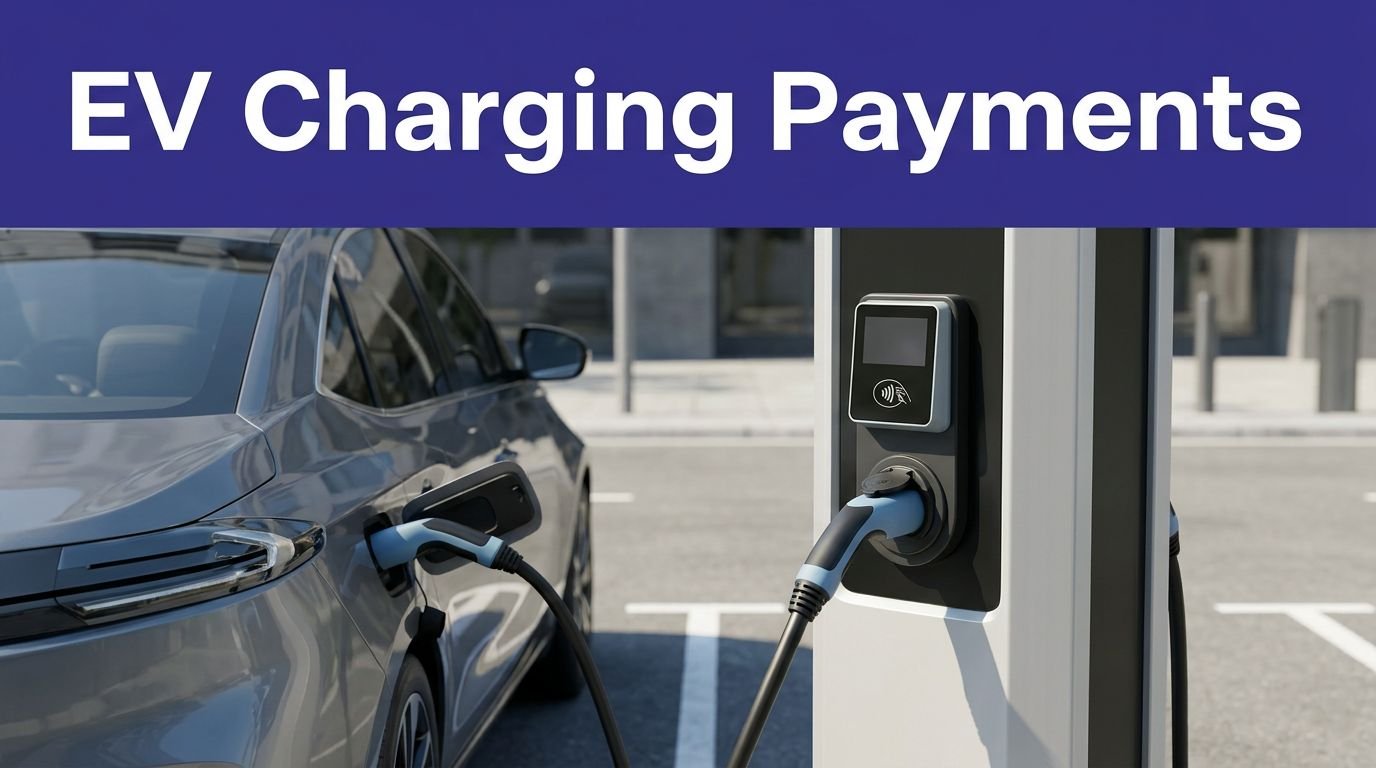
Think of charging as a race against resistance—what sets your pace? You manage pack size (kWh), voltage (400/800 V), and chemistry C‑rate limits, while the BMS enforces CC–CV curves that taper past ~50–70% SoC. Temperature swings (≈0–45°C) and preconditioning dictate acceptance, and charger current/connector ratings cap power. Cooling, busbars, and firmware decide sustain. You’ll see why an 80 kWh pack can outpace a 60 kWh one—and what to tweak on your next stop…
Key Takeaways
- Pack size, cell chemistry, and internal resistance set allowable C-rate; larger packs and low-resistance designs accept higher power without overheating.
- State of charge dictates the curve: fastest from roughly 5–40%, then tapering significantly above 60–70% toward full.
- Battery temperature is critical: peak acceptance near 25–45°C; cold or hot packs reduce current unless preconditioned to ~30–40°C.
- Charger and vehicle hardware cap power: station kW, current limits, system voltage, cables, and cooling define sustainable amperage.
- BMS software manages safety and longevity, tapering current, balancing cells, and using route-aware preconditioning and scheduling to optimize average charging speed.
Battery Size, Chemistry, and Architecture
Although charging power headlines dominate, the pack’s size, chemistry, and architecture set the true fast‑charge ceiling. You charge at a rate bounded by C‑rate and thermal limits. A 100 kWh pack accepting 250 kW is charging at 2.5C; a 60 kWh pack at 150 kW equals 2.5C as well. Cell Chemistry dictates allowable C‑rate and voltage: NMC/NCA cells often permit 2–3C bursts; LFP typically tolerates 1–2C but with lower voltage, reducing cable current for equal power. Internal resistance scales heat as I²R; lower‑resistance cells sustain higher current. Pack Architecture governs current pathways: more parallel cells reduce per‑cell current, enabling higher total power, while series count sets system voltage, lowering current for a given kW. Robust busbars, contactors, and cooling keep gradients tight and uniformity.
State of Charge and the Charging Curve
Because cell voltage and diffusion kinetics vary with state of charge (SoC), fast charging follows a CC–CV profile: you pull near‑max allowable current at low SoC, then taper current once cell voltage hits the pack’s limit.
Fast charging follows CC–CV: high current at low SoC, taper as pack voltage caps.
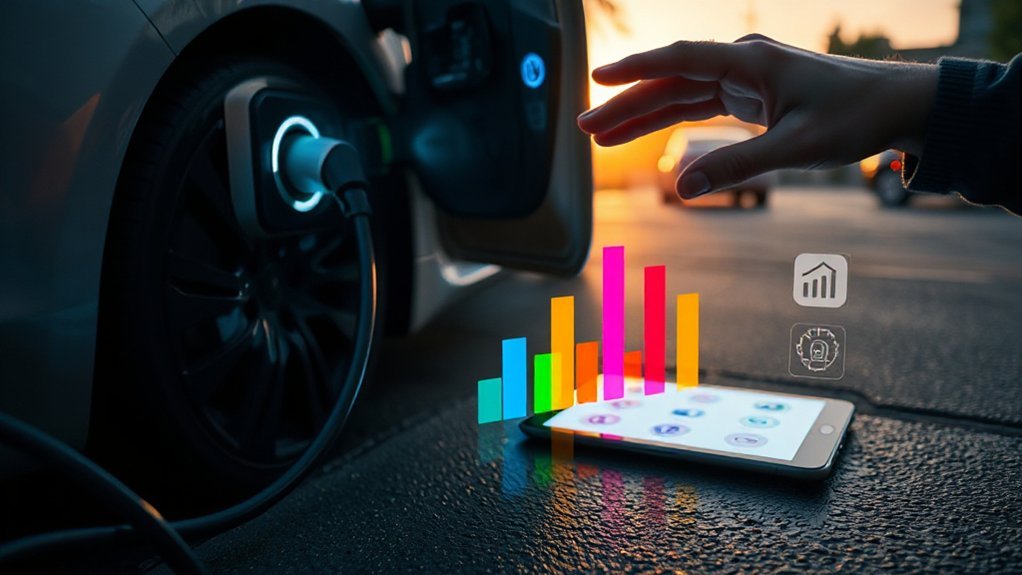


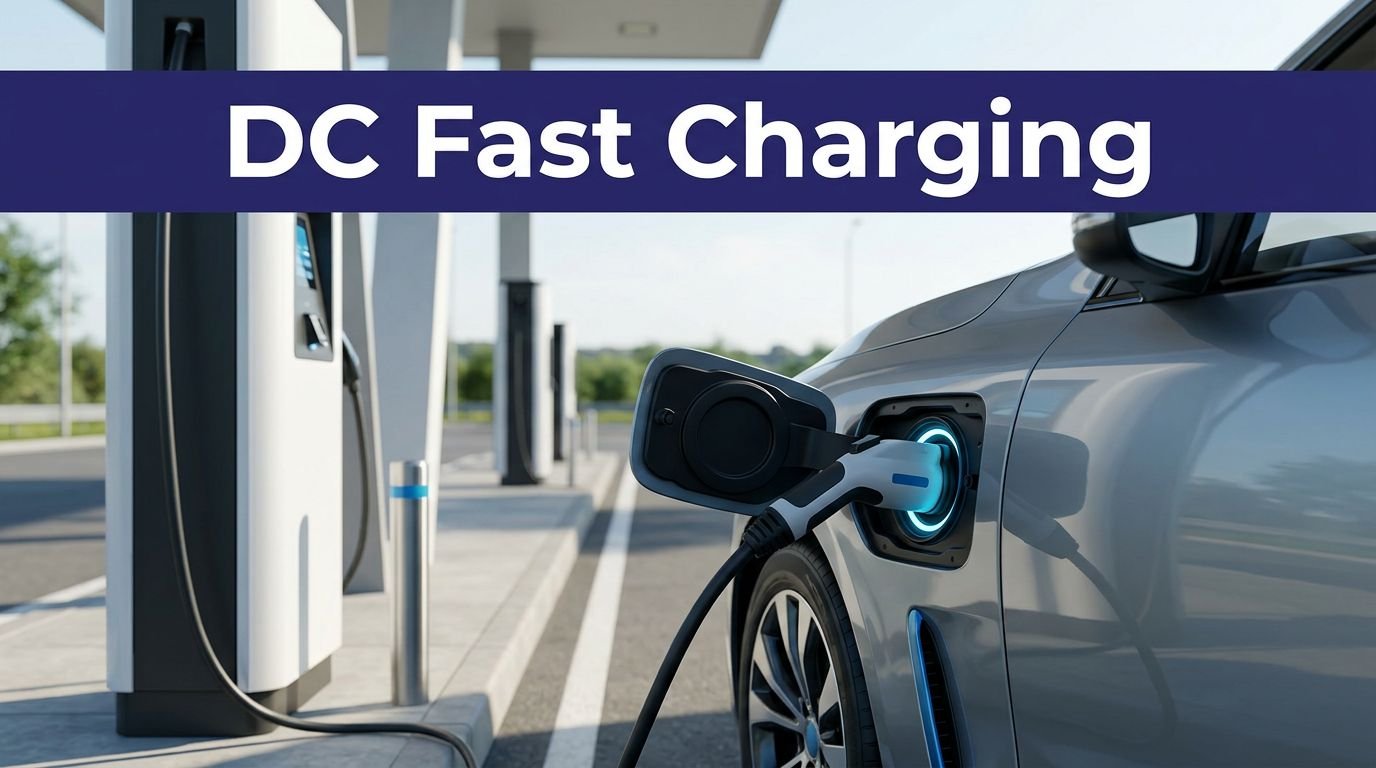
You see the highest kW from 5–40% SoC, flatten through a knee point around 50–70%, enter constant‑voltage taper. Above ~80%, power decays with diminishing headroom, limiting plating and rising resistance, extending the top off period.
- 0–10%: pack accepts peak C-rate; power limited by charger or BMS cap.
- 10–50%: near-constant power; voltage rises ~3–5 mV/% cell.
- 50–70% knee point: current starts decreasing; dP/dSoC < 0.
- 70–80%: taper cuts current ~30–60%; time per % significantly increases.
- 80–100% top off period: CV holds Vmax; final 20% may take 30–50% of time.
Temperature, Preconditioning, and Ambient Conditions
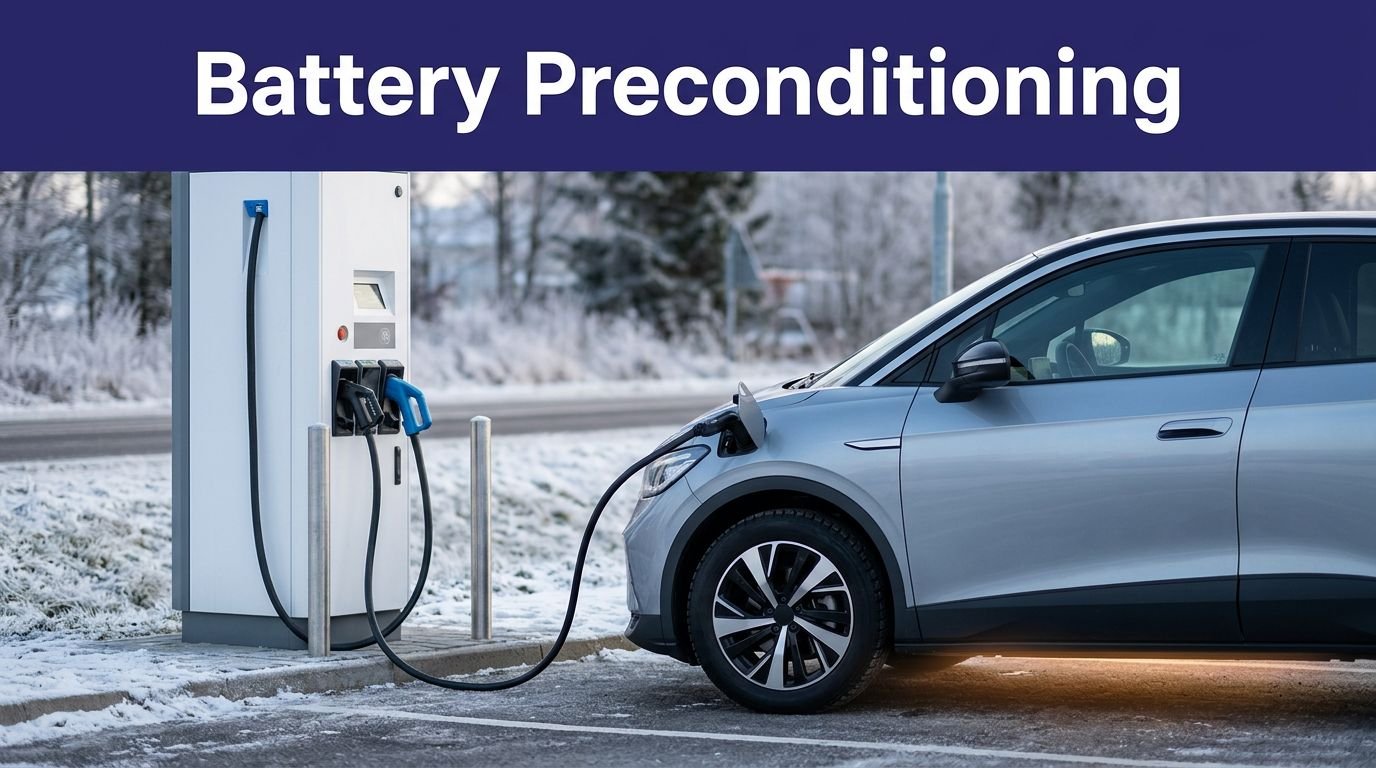
While pack voltage sets the ceiling, cell temperature governs how fast you can approach it. Lithium‑ion cells accept peak charge between roughly 25–45°C; below ~10°C, the BMS cuts current to avoid lithium plating, and above ~50°C it tapers to protect longevity. Use preconditioning to target ~30–40°C before fast charging; you’ll see higher average kW and shorter sessions. Ambient conditions matter: cold-soaked packs can need 10–20 minutes of heating; in heat waves, cabin pre‑cooling and shaded parking reduce thermal load. Improve garage insulation to moderate overnight lows and highs. Minimize sun exposure before a session; radiant heating elevates surface temps and delays stabilization. Arrive with the pack warm from driving, not idling; waste heat raises cells efficiently. Avoid deep cold soaks by scheduling charging soon.
Charger Ratings, Vehicle Limits, and Hardware Factors
Thermal readiness sets the cell current ceiling; the next constraint is the power path—charger rating, vehicle limits, and hardware. You draw power only as fast as the weakest element allows: station kW, EVSE output current, onboard limits, and losses along the cable and inlet. DC fast charging bypasses the onboard charger, yet the pack’s allowable voltage window and bus current rating still cap kilowatts.
Thermals set current; the power path enforces the weakest-link rule on charging speed.
- Connector standards (CCS, NACS, CHAdeMO) define max voltage, current, pin temperature.
- Station rating: 400 V x 500 A = 200 kW; 800 V doubles.
- Vehicle limits: inverter, contactor, and fuse ratings bound pack current to absolute Imax.
- Cable resistance and contact mΩ cause I^2R heating; systems derate above 50–60°C.
- Cable gauge, length, and cooling (liquid vs air) set sustainable amperage.
Software Management, Degradation, and Smart Charging Strategies
Although hardware sets the instantaneous ceiling, software determines how you approach it: the BMS shapes the charge curve using pack models that fuse cell voltage, impedance, temperature, and SOC to enforce C‑rate, temperature, and voltage limits that minimize degradation. You’ll see tapered current above ~50–60% SOC, cell balancing near top-of-charge, and preconditioning that targets 25–35°C for fast DC sessions. Firmware Updates refine pack models and safety margins; Adaptive Algorithms learn your usage, adjusting target SOC windows (e.g., 70–80% daily), max currents, and cooling setpoints to cut calendar and cycle aging. Smart scheduling shifts energy to low-price, low-grid-carbon hours, while demand limits avoid peak tariffs. Use route-aware preheating and stall selection to hold high power longer and reduce time-to-80%. Battery reports guide maintenance and planning.
Conclusion
You control charging speed by matching battery size, chemistry, and architecture to capable hardware. Target low SoC: from 10–50% you’ll see peak power; above ~60% the CC–CV taper bites. Precondition to 20–35°C; cold or hot packs slash acceptance. Use high‑voltage (800 V) systems to cut pack current for the same kW. Verify charger and cable limits (amps, volts), because a chain’s only as strong as its weakest link. Track degradation and schedule smart charging accordingly.