Think of your garage as a modern well that fills your car with electricity. You’ll want to know how much a full charge costs and what drives that total. I’ll cover typical 2025–2026 rates, battery size and efficiency, time-of-use plans, and smart-charging tips to cut your bill:
Key Takeaways
- Typical residential electricity costs in 2025–2026 range about $0.12–$0.25 per kWh.
- A 60 kWh EV costs roughly $7–$15 per full charge before accounting for charging losses.
- Include 5–15% charging losses: cost per charge = usable kWh × $/kWh × (1+loss).
- Cost per kilometre depends on vehicle efficiency (kWh per km); lower kWh/km means lower charging cost.
- Shift charging to off-peak or use a smart charger/TOU tariff to substantially reduce home charging bills.
Typical Home Charging Costs in 2025–2026
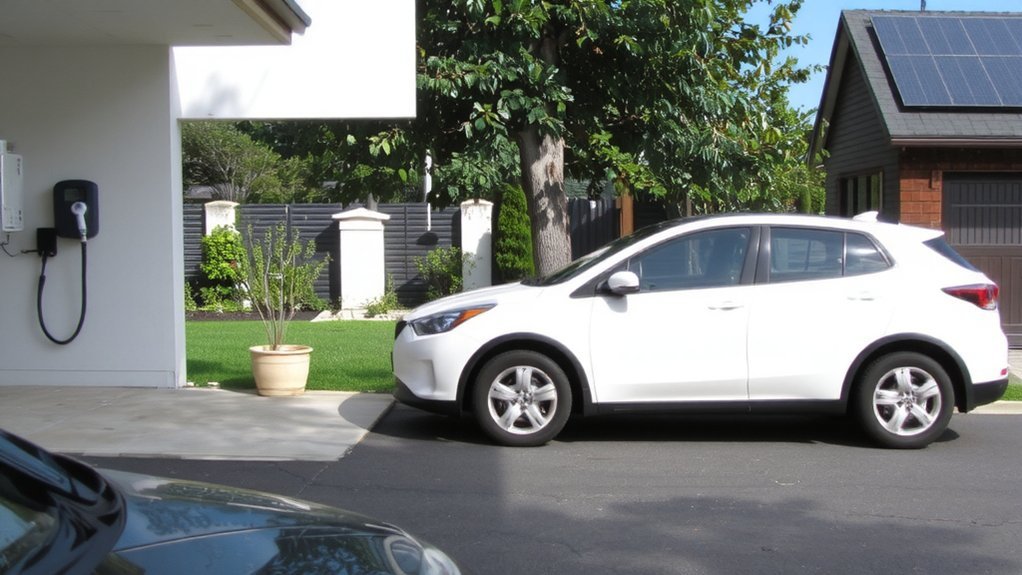
By 2025–2026, you’ll typically pay roughly $0.12–$0.25 per kWh at home depending on where you live and your utility plan, so a common 60 kWh EV will cost about $7–$15 for a full charge before accounting for charging losses.
Expect home electricity costs of about $0.12–$0.25/kWh — a 60 kWh EV costs roughly $7–$15 per full charge (before losses).
You’ll usually see three billing factors: flat residential rates, time-of-use pricing, and special EV tariffs that lower off-peak costs. Check your utility’s website for exact rates and enrollment rules.
Expect 5–15% charging losses; include them when estimating bills. If you have a smart charger, schedule overnight charging to take advantage of lower rates and reduce strain on your home electrical system.
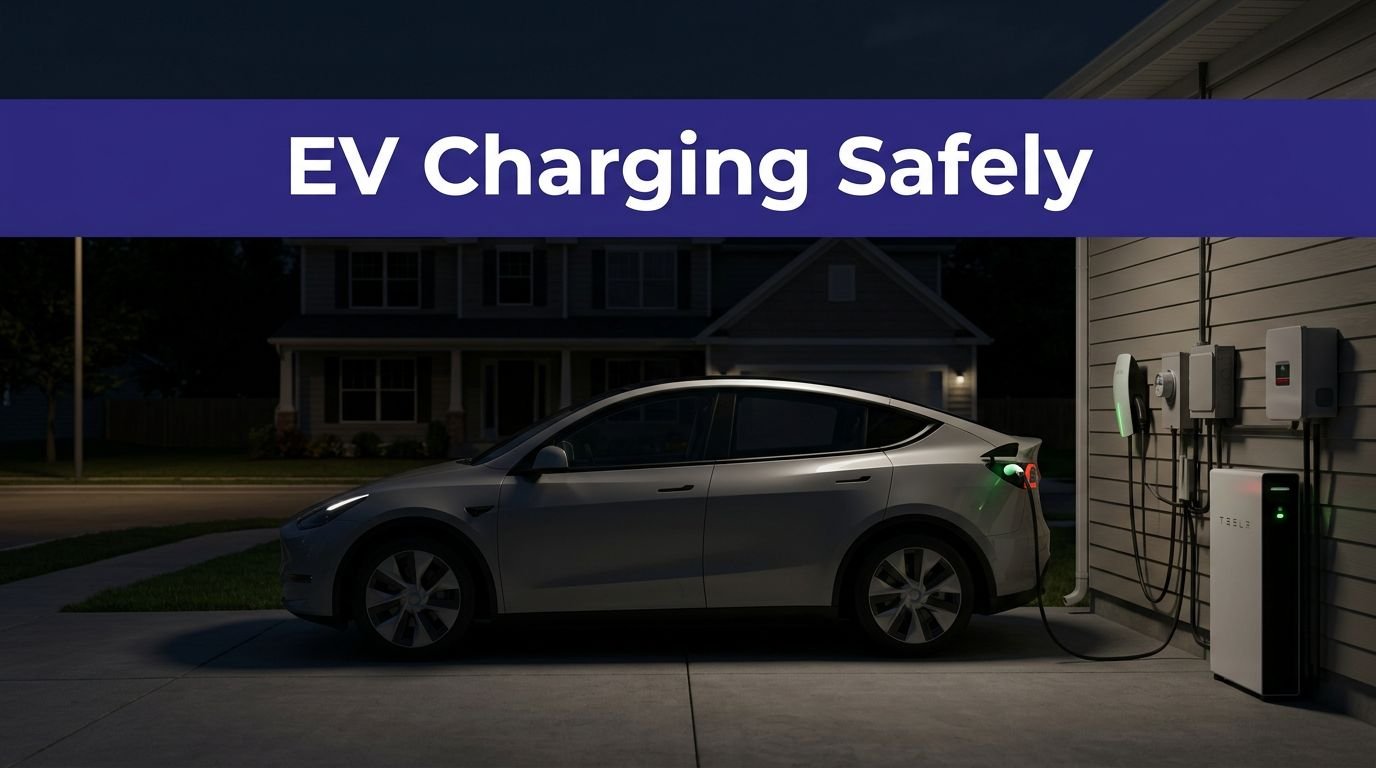
For safety, use a certified electrician for installation, follow manufacturer guidelines, and inspect cords and connectors regularly. Don’t ignore breaker limits or outdated wiring.
How Vehicle Efficiency and Battery Size Affect Cost

Because efficiency determines how many kilowatt-hours you use per mile, a more efficient EV will cost less to drive even if its battery is the same size. You’ll see efficiency expressed as kWh per mile or per 100 miles; lower numbers mean fewer kWh needed for the same distance.
A larger battery increases range and raises the cost to fill from empty, but it doesn’t change energy used per mile. That means you’ll charge less often with bigger batteries, which can simplify planning and reduce range anxiety.
Remember that driving habits, speed, and climate affect real-world efficiency, so plan conservatively. Protect battery health by avoiding extreme states of charge and fast-charging habitually; that keeps range reliable and charging costs predictable, and follow manufacturer guidance.
Impact of Electricity Rates and Time-of-Use Pricing
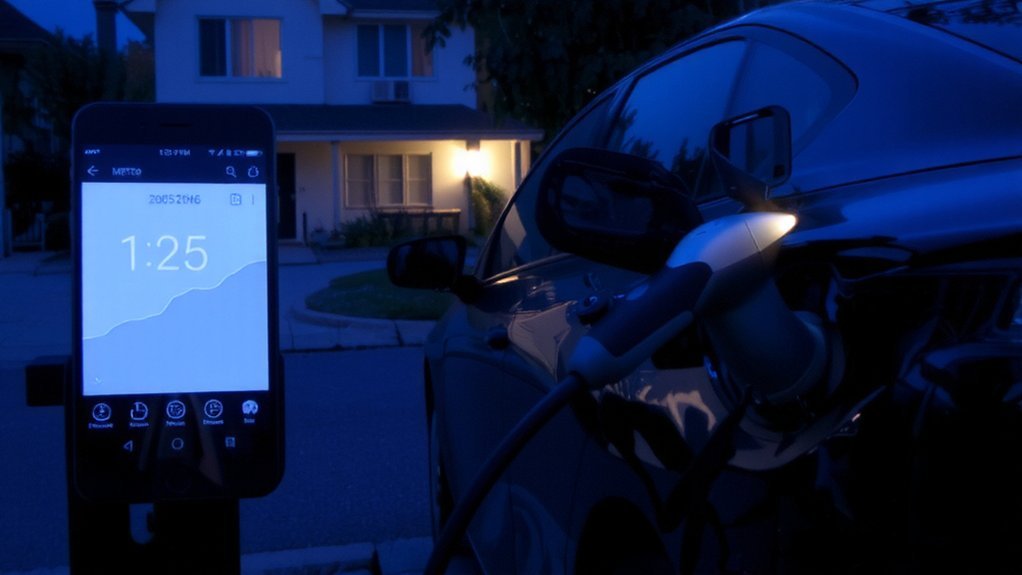
While electricity prices change hour to hour across different utilities, you can cut charging costs greatly by shifting most of your charging to off‑peak periods. Check your utility’s rate schedule and enroll in a time‑of‑use (TOU) plan if available; TOU rates often slash nighttime prices and reward predictable, delayed charging.
Set charging schedules so your car finishes when rates are lowest, and confirm your home electrical system and outlets are rated for repeated use to keep charging safe. Monitor bills and use smart meters or the vehicle’s app to track energy and costs.
If your utility offers demand charges or seasonal variations, plan accordingly to avoid surprises. Small timing changes reduce expense without compromising your daily travel needs. Review rates annually for continued savings.
Charger Types: Level 1, Level 2, and Smart Chargers
You can charge with Level 1 using a standard 120V outlet, and it’s the slow option best for overnight top-ups.
Level 2 chargers use 240V and let you charge much faster, cutting home charging time by hours.
Smart chargers add scheduling and energy‑management features, but they cost more upfront and can lower your bills if you use time‑of‑use rates.
Level 1: Slow Charging
Although it’s the slowest option, Level 1 charging uses a standard 120-volt household outlet and typically comes with the car, so you can plug in without installing equipment. You’ll get roughly 3–5 miles of range per hour, making it ideal for overnight top-ups or drivers with short daily commutes.
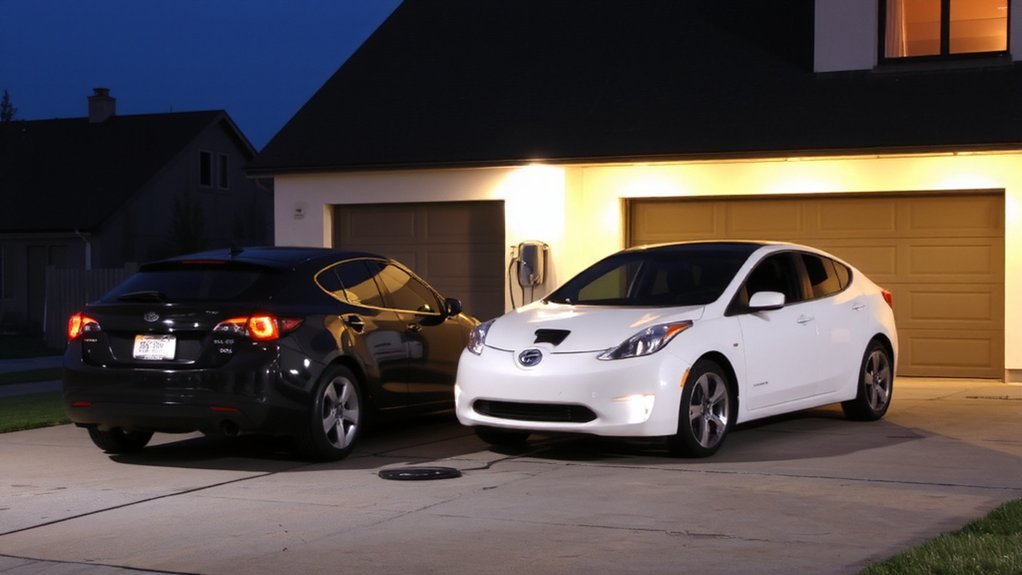
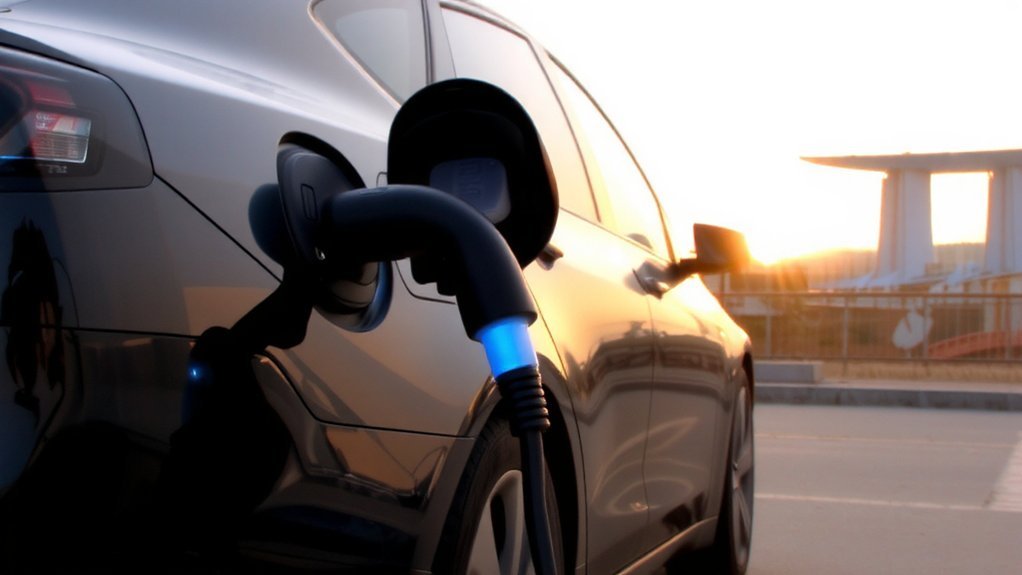
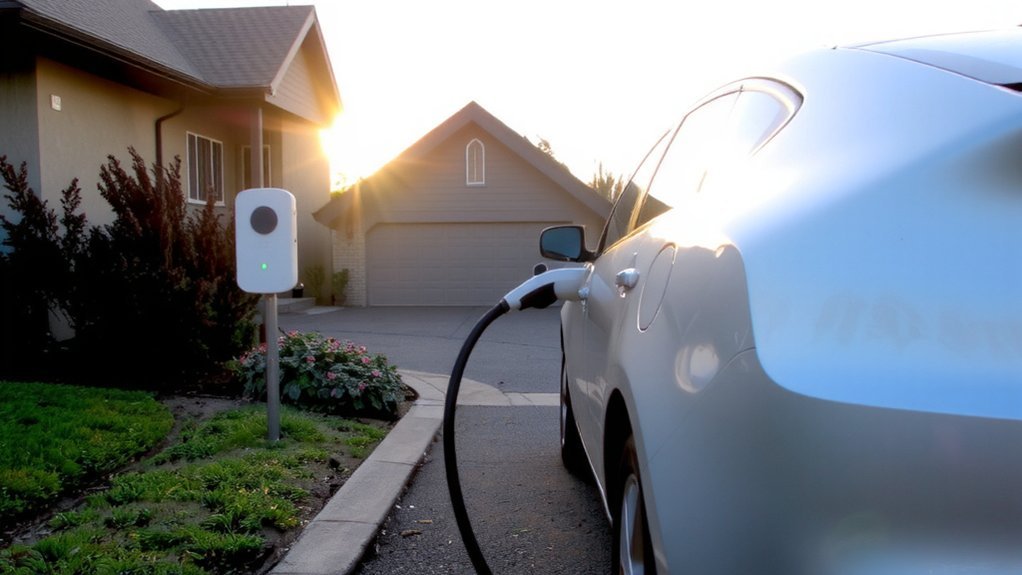
To stay safe, inspect the cord and plug for damage before each use, avoid extension cords, and keep the outlet clear of debris. Charge in a dry, well-ventilated area and follow the vehicle manufacturer’s instructions. Monitor for unusual heat during the first few charging sessions and stop use if you notice melting, burning smells, or tripped breakers.
Routine checks help prevent electrical hazards and extend your battery’s life. Contact an electrician if you’re uncertain immediately.
Level 2: Faster Charging
If Level 1 handles overnight top-ups, Level 2 gives a much quicker way to recharge at home. You’ll get 3–10 times faster charging, typically 7–11 kW units that add about 20–60 miles per hour depending on your EV.
Installation usually requires a dedicated 240V circuit and a certified electrician; you should get permits and an inspection to stay safe and compliant. A hardwired or plug-in wallbox is compact and weather-resistant, and you’ll want proper grounding, a GFCI and a secure mounting.
Expect higher upfront costs than Level 1 but lower per-mile time cost. Maintain your unit per manufacturer guidance, keep the cord tidy, and never override safety features. If you’re unsure about capacity, consult your electrician and EV dealer to confirm compatibility before purchasing today.
Smart Chargers: Costs
When weighing costs, smart chargers sit above basic Level 1 cords and overlap with mid-to-high-end Level 2 wallboxes: entry-level Wi‑enabled Level 2 units run roughly $400–$800, midrange models $800–$1,200, and premium hardwired chargers $1,200–$2,000+; by contrast, simple Level 1 cords cost about $0–$200 and basic Level 2 plug-in units about $300–$600.
You’ll pay more for smart features—scheduled charging, load management, app control, and energy reporting—but those features help you save money and protect your electrical system when used correctly. Choose units with UL/ETL listing, grounded installation, and a qualified electrician for hardwired setups.
If you want utility integration and firmware support, budget for subscription fees or occasional upgrades. Prioritize certified equipment and professional installation for safety and reliable long‑term operation. Check warranty terms.
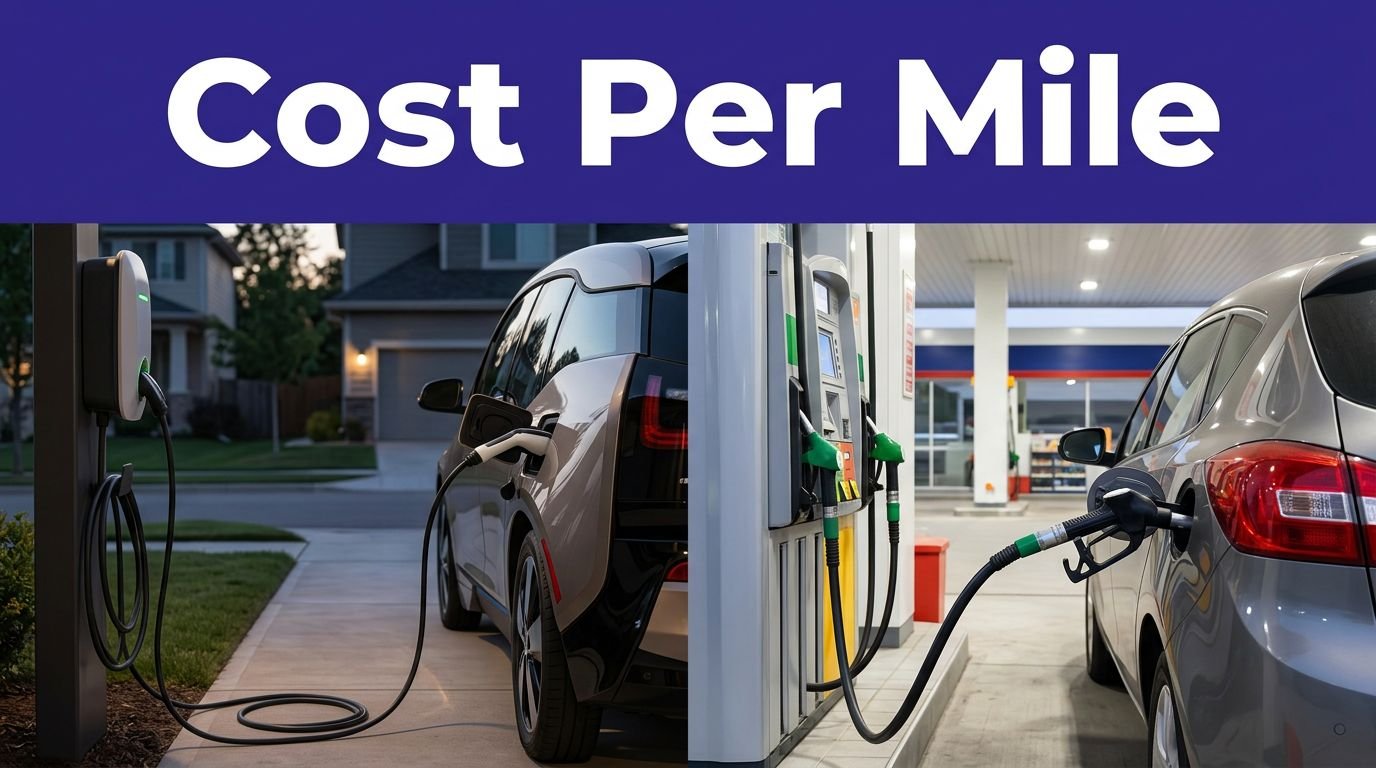
Estimating Cost Per Charge and Per Kilometre
To estimate the cost per charge and per kilometre, you’ll multiply the battery’s usable capacity by your electricity rate and account for charging losses, then divide by range; in practice that means: cost per charge = usable kWh × $/kWh × (1 + charging loss), and cost per km = cost per charge ÷ typical range (or use kWh/100 km to get cost per km directly). Use your vehicle’s usable battery size, real-world range, and your actual tariff. Include a sensible charging loss (typically 8–15%) to stay safe and avoid underestimating.
Example: 60 usable kWh × $0.20/kWh × 1.10 = $13.20 per charge; if range is 400 km, cost per km = $0.033. Check meter readings occasionally to confirm calculations and for safety.
Practical Tips to Reduce Home Charging Expenses
You can cut charging costs by scheduling most of your charging for off-peak hours when electricity rates are lower. Use a smart charger to set charging windows, track energy use, and take advantage of time-of-use tariffs.
Together, scheduling and smart controls let you charge more cheaply without changing how you drive.
Charge During Off-Peak
How much can you shave off your electric bill by shifting charging to nights and low-demand windows? You can cut costs by using your utility’s off-peak hours and lower Time‑of‑Use rates, so check your tariff and calendar.
Manually schedule charging to begin after peak periods, or plug in only when rates drop. Avoid charging during local demand events, and watch for seasonal rate changes.
For safety, confirm your outlet and circuit are rated for EV charging, inspect cords and connectors before use, and keep the charging area dry and ventilated. Don’t run high-load appliances simultaneously on the same circuit.
Track energy use and bills for a few months to verify savings and adjust habits when rates or household needs change. Always follow manufacturer instructions.
Use Smart Chargers
When you switch to a smart charger, you’ll gain precise control over when and how your EV draws power, letting you schedule charging for off‑peak rates, throttle amperage to avoid tripping circuits, and pause charging remotely.
Smart chargers also monitor electrical load and can balance charging with other home appliances, reducing risk of overload and costly breaker trips. You can set charging limits, track energy use, and receive alerts if faults or unusual currents occur, which helps you act quickly and safely.
Choose models with safety certifications (UL/ETL), secure Wi‑Fi, and clear firmware updates. Install via a qualified electrician, follow manufacturer instructions, and test interlocks and notifications regularly to keep charging reliable and safe. Document maintenance dates and keep emergency shutoff instructions at home.
Conclusion
You can expect to pay roughly $7–$15 for a full 60 kWh charge at home in 2025–2026, which means charging costs often work out to about 12–25 cents per kWh after losses. That $7–$15 range highlights how simple steps — shifting to overnight time‑of‑use rates, using a smart charger, or improving driving efficiency — can lower your bills. With a 5–15% charging loss, smart habits really add up. You’ll save noticeably over months and years ahead too.