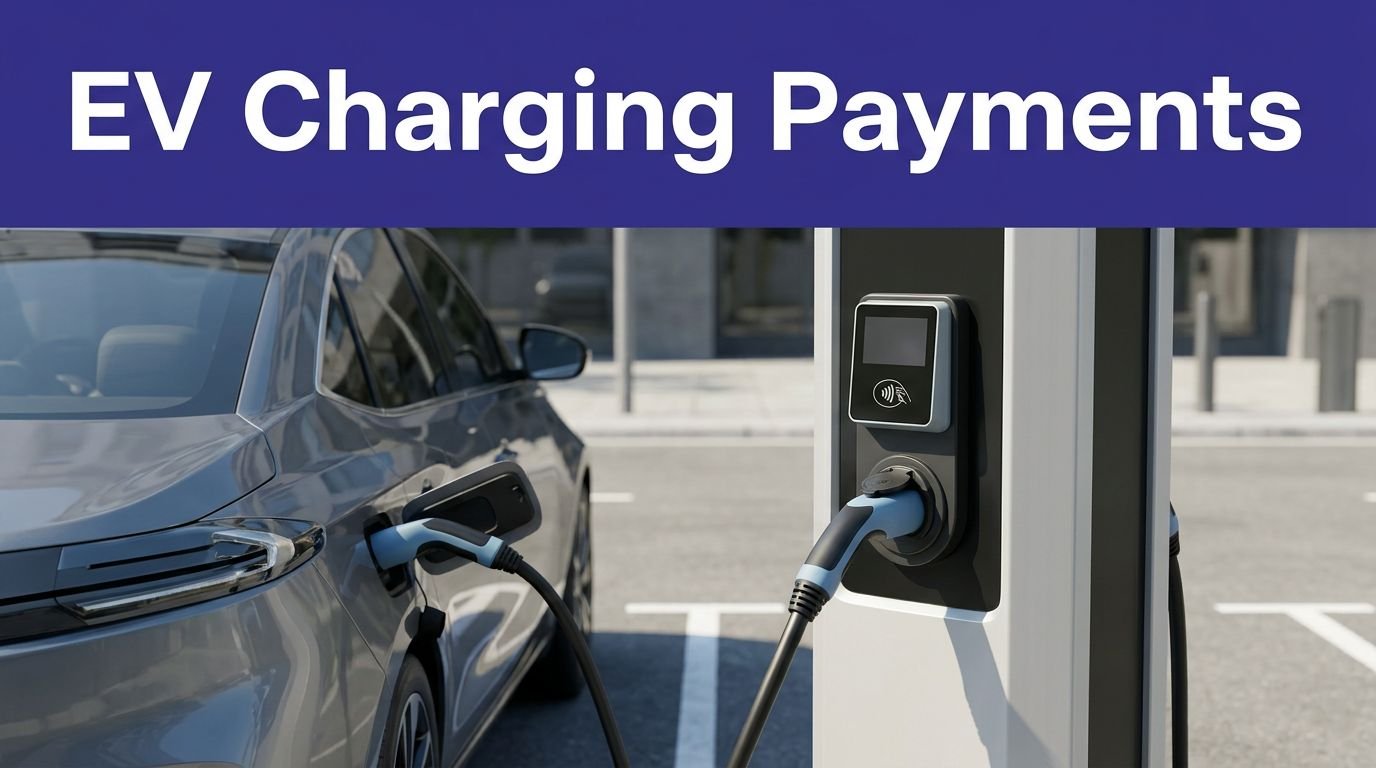
Range is the new horizon for your electric car. You can expect average EPA ranges surpassing 300 miles in 2025, with top sedans exceeding 500 miles and many SUVs nearing 400. But actual distance varies with weather, driving style and charging habits. If you’re planning long trips, you’ll need a realistic strategy to bridge the gaps…
Key Takeaways
- EPA-rated ranges for 2025–26 EVs typically span about 150 to 512 miles, depending on model and battery size.
- Lucid Air Grand Touring tops the list with an EPA estimate near 512 miles for 2025 models.
- Many mainstream EVs deliver 300–400 miles: Tesla Model S, Mercedes‑EQS, BMW i7, and several SUVs and trucks.
- Affordable options can still exceed 300 miles, like the Chevrolet Equinox EV and Hyundai Ioniq 6 under $40,000.
- Real-world range often falls 10–30% below EPA due to cold weather, high speeds, heavy loads, accessory use, and battery aging.
What EPA Range Numbers Mean

Because the EPA runs standardized city and highway driving cycles, its range numbers tell you how many miles an EV should travel on a full charge under those test conditions. As of 2025, the average EV range has climbed past 300 miles. EPA figures come from multiple drive cycles that simulate varied traffic flows and speeds, producing a combined, conservative range estimate expressed in miles.
You should treat EPA numbers as realistic baselines: real-world range can drop with cold weather (often 20–30% loss), sustained high-speed driving (about 10–15% loss), heavier loads, accessory use, and battery aging. WLTP and other protocols often report higher numbers, so compare standards when you’re shopping.
Use EPA ratings for planning trips and safety margins, and expect variability. Check vehicle listings for EPA ratings and allow buffer distance to avoid roadside emergencies.
Longest-Range Electric Cars for 2025–2026
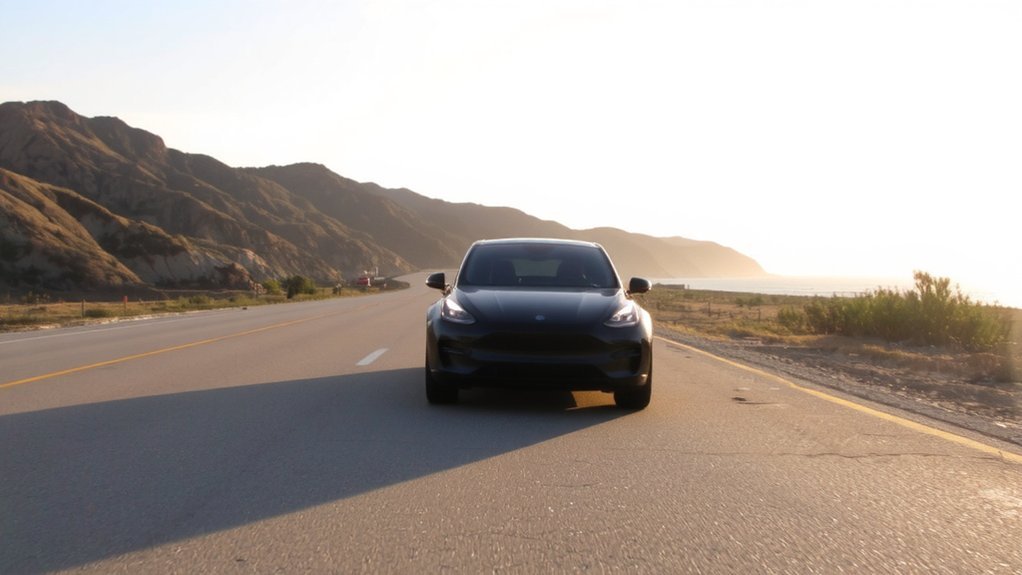
While battery chemistry hasn’t radically changed, 2025–2026 models push single-charge distance farther than before: Lucid Air Grand Touring tops the list with an EPA-estimated 512 miles, giving you exceptional confidence for long trips.
Battery tech steady, but 2025–26 models extend single‑charge range — Lucid Air Grand Touring leads at 512 EPA miles
For example, the Nissan LEAF delivers an EPA range of 149-212 miles depending on battery size.
Tesla’s Model S — Plaid and Long Range — reach about 405 miles, and Mercedes‑EQS sedan offers roughly 400 miles, both delivering proven high-speed safety systems and stability.
BMW i7 comes in near 310 miles for premium comfort with strong safety tech. Hyundai Ioniq 6 yields around 300 miles as a practical, efficient choice.
On a budget, Tesla Model 3 Long Range exceeds 360 miles, Chevy Equinox FWD claims 319 miles, and Kona Electric provides about 200 miles.
You should prioritize tested EPA range and active safety features when choosing carefully.
Top Electric SUVs and Trucks by Range
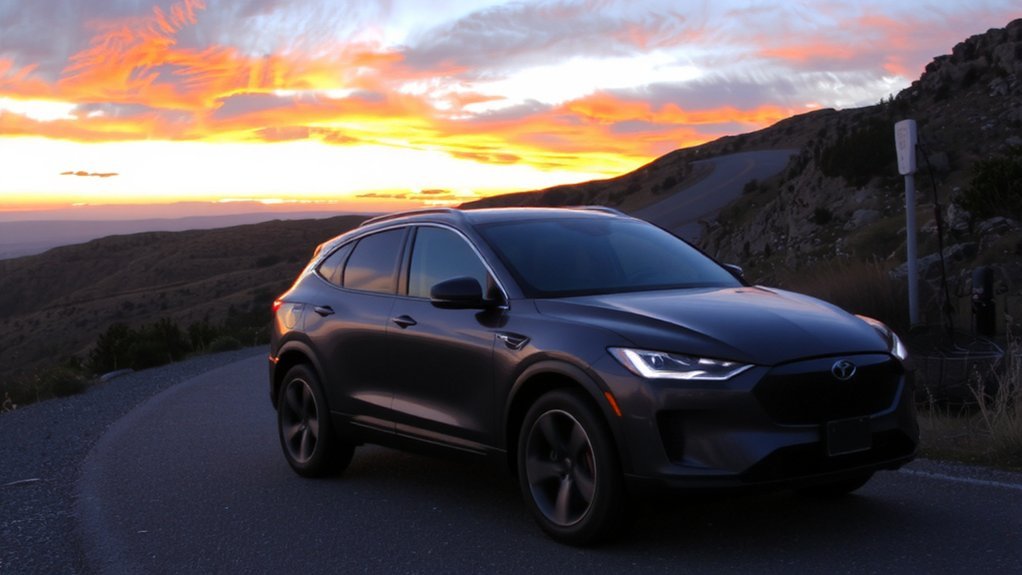
Now you’ll look at the longest-range electric SUVs and top long-range EV trucks. You’ll see leaders like the Lucid Gravity and Rivian R1S/R1T pushing past 400 miles, while luxury and mainstream models cluster between roughly 250–380 miles. For example, the BMW iX xDrive50 offers one of the top ranges at around 380 miles, highlighting EVs’ advancing capability.
I’ll highlight which models deliver the most range today and which upcoming pickups might close the gap.
Longest-Range Electric SUVs
If you’re prioritizing range, the 2025–26 lineup now includes SUVs that can rival gas models: the Lucid Gravity leads with an estimated 450 miles, followed by the Rivian R1S at about 410 miles and the Mercedes‑Benz EQS SUV near 390 miles. Notably, the 2025 Rivian R1S offers around 410 miles on a full charge.
You can also consider Tesla Model Y (~357 miles) and several models exceeding 300 miles — Polestar 3, Chevrolet Blazer EV and Tesla Model X. When choosing, weigh EPA range alongside safety features, charging compatibility and real‑world factors like climate and load.
Kia EV3, Lexus RZ, Audi Q6 e‑tron and Cadillac Lyriq offer strong mid-range options with efficient powertrains and driver assistance systems. Prioritize models with robust crash protection and available advanced driver aids for safer long trips. Check certified ratings and up-to-date safety recalls regularly.
Top Long-Range EV Trucks
For buyers who want SUV-level range in a pickup, electric trucks are closing the gap: The 2026 Chevrolet Silverado EV Max Range WT gives an EPA-estimated 493 miles and reached 1,059.2 miles in GM’s optimized test; it uses advanced battery chemistry, delivers 775 lb-ft of torque, and starts near $55,895. Engineers observed the most efficient cruising speed was 20-25 mph. Tesla’s Cybertruck Tri Motor tops out around 500 miles, pairs efficient powertrain and unique exoskeleton design with access to the Supercharger network for confident long trips. Rivian R1T variants typically exceed 400 miles, blending rugged off-road capability with luxury. GMC Sierra EV offers up to 410 miles, Super Cruise, and off-board power. Ram 1500 REV adds a range-extender generator to reduce charging dependence for safer long-haul use. You’ll appreciate robust safety and towing features.
Affordable EVs That Deliver Practical Range
You can get affordable EVs that still cover 200+ miles without breaking the bank. Models like the Chevrolet Equinox EV (319 mi), Hyundai Ioniq 6 (up to 342 mi), and the upcoming Kia EV4 (≈330 mi) show long-range capability near or under $40k. The Chevrolet Equinox EV is highlighted in our list as offering Best value for families.
Still, check charging speed, interior space, and incentives to compare real-world value.
Top Affordable Long-Range EVs
Several affordable EVs now deliver real-world range you can rely on without paying premium prices: you can choose efficient, safe models that balance range, charging speed and cost.

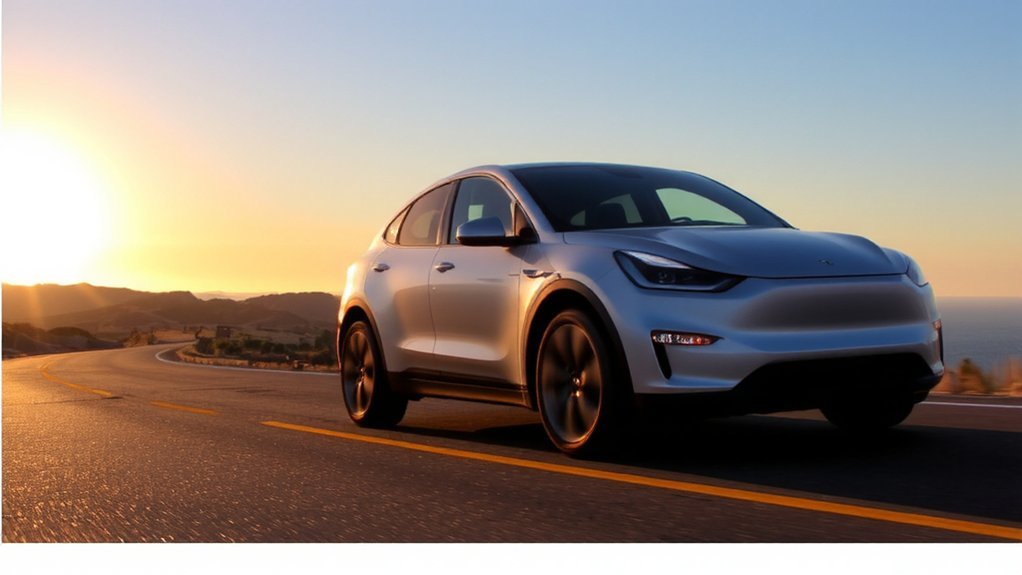
The 2026 Nissan Leaf crossover offers up to 303 miles with a 75‑kWh pack around $31,485, while the Hyundai Kona Electric delivers about 261 miles for roughly $34,470 and agile efficiency.
The 2025 Chevrolet Equinox EV starts just under $35,000 and targets practical daily range, and the 2025 Hyundai Ioniq 6 reaches an EPA 342 miles with prices under $40,000.
Fast charging—Nissan and Chevrolet support ~150 kW; Ioniq 6’s 800‑volt system can do 10–80% in as little as 18 minutes—adds safety by preserving battery health and emergency usability. You’ll get confidence for longer trips and commutes. For those prioritizing maximum range, the Tesla Model 3 delivers up to 357 miles on a full charge.
Budget EVs Over 200 Miles
Many budget EVs now clear the 200‑mile mark while staying around or below $35,000, so you can get practical range without a premium. Also, keep in mind that EPA estimates guide range figures but real-world range can vary. You’ll find models like the 2025 Hyundai Kona Electric (about $32,675–$32,875) offering 200–261 miles EPA, and the Chevrolet Equinox EV LT1 FWD at $33,600 with a 319‑mile EPA range, giving you confident daily range and highway capability.
If you want used savings, used Chevy Bolt and Nissan Leaf examples under $20,000 can exceed 200 miles. The 2025 Hyundai Ioniq 6 SE Standard Range (~240 miles) edges toward the $38K mark but delivers strong efficiency and fast‑charging safety features. Choose an EV with solid EPA figures and reliable charging options to reduce range anxiety and stay safe on longer trips and roadside assistance.
How Driving Conditions and Climate Affect Range
Because cold air reduces battery efficiency and forces heavy cabin heating, EV range can plummet—often 25–59% below summer estimates in freezing conditions—while hot weather typically trims range by about 10–20% due to air conditioning and thermal management. Weather influences range through air drag, rolling resistance, and climate control. You’ll see range drop on snowy or windy routes because rolling resistance and headwinds raise energy use.
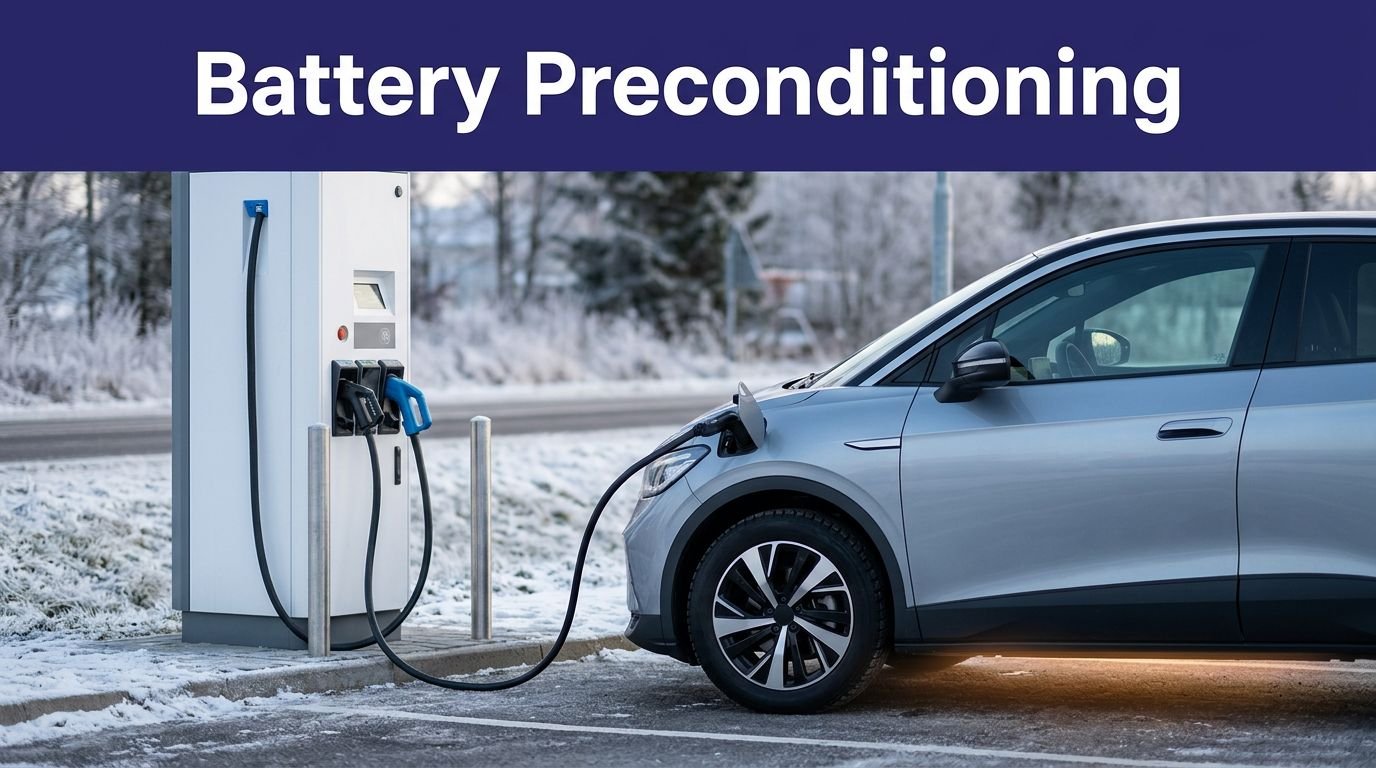
Drive steady, use regen in traffic, and precondition battery to preserve miles. Prefer heat pumps over resistive heaters; they save 15–20% in cold. At high speeds expect aerodynamic losses; climbing costs more energy despite regen on descents.
- Precondition battery and cabin before departure.
- Use regenerative braking and smooth driving.
- Reduce highway speed and avoid heavy HVAC when safe.
Monitor weather and plan charging stops to maintain safety and avoid surprises.
Real-World Range vs. EPA Ratings
You’ll find EPA ratings give a consistent baseline, but real-world range often differs because of how people actually drive and the conditions they face. Notably, the Lucid Air Grand Touring offers an EPA range of 512 mi, which sets it apart. When you plan trips, note EPA mixes city and highway cycles, so sustained 70–75 mph highway driving typically cuts range 10–15%. Cold weather can reduce range 20–30%, and payload, terrain, aggressive driving, tire pressure, and climate control further lower efficiency.
Some models outperform EPA in city use thanks to regenerative braking, while others fall short—Lucid’s 516‑mile EPA drops to ~410 in highway tests; the Model 3 Long Range’s 310 becomes ~280. Use EPA figures as a conservative baseline, adjust expectations for speed and climate, and monitor your car’s real-world numbers for safer trip planning, and drive defensively to avoid surprises.
Charging Strategies for Long Road Trips
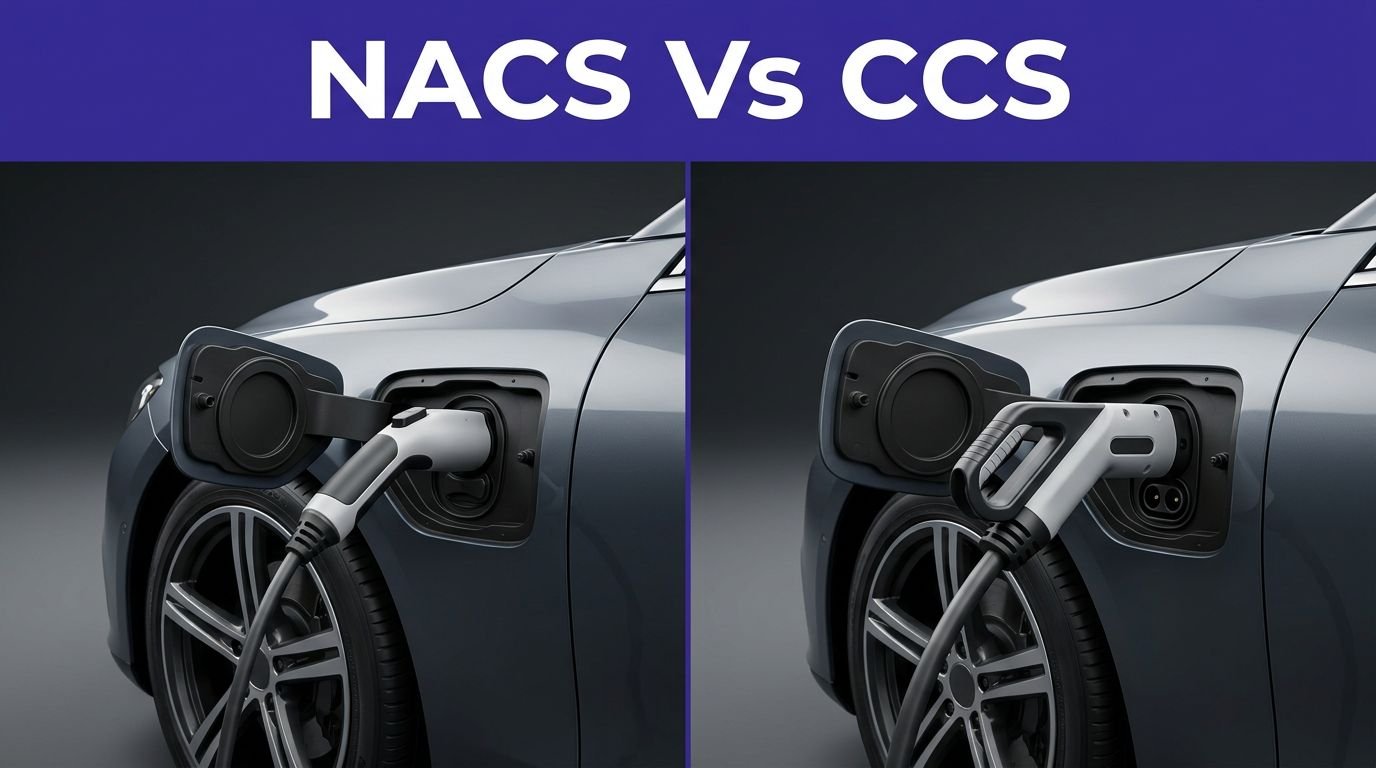
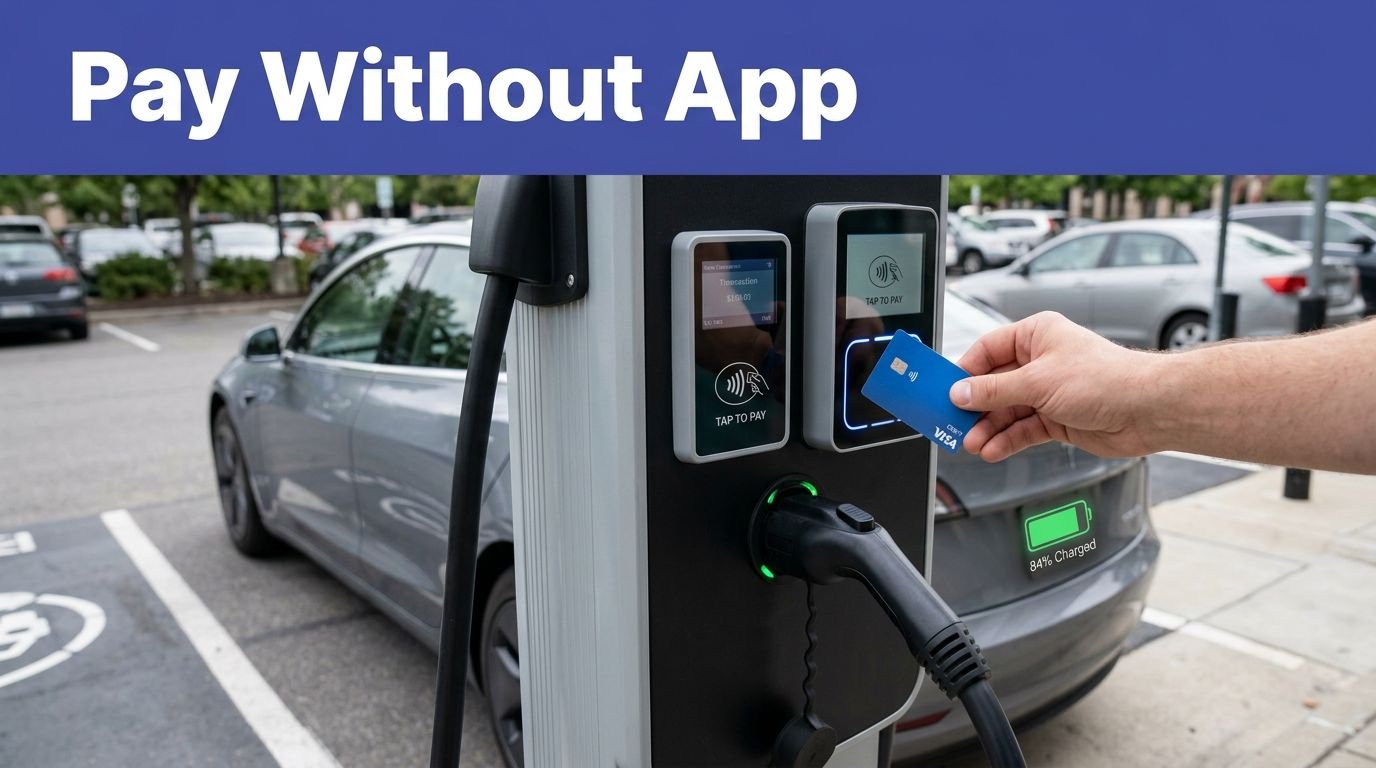
Use your EV’s navigation or a charging app to map DC fast chargers along your route and plan stops near highways during meal or rest breaks. Look for DC fast chargers along major routes to reduce charging time. Confirm connector compatibility and identify overnight hotels with Level 2 chargers so you’re not stranded.
Map DC fast chargers and compatible plugs along your route; plan highway stops and overnight Level‑2 hotel charging.
Map DC fast chargers near highways.
Charge 10%→80% at DC fast stations for speed.
Top to ~95% overnight with Level 2.
Limit climate control and accessories while charging, and precondition the battery while plugged in if your car supports it. Always have backup stations and carry adapters for differing networks. Report broken chargers.
Plan stops to match meals or sleep to minimize delay and maintain safety. Drive at moderate speeds after charging to maximize range and reduce stress on the battery and stay calm.
Emerging Trends in EV Range and Battery Technology
As battery chemistry, power electronics and vehicle design advance, EV ranges are rising rapidly and charging times are dropping. You’ll see flagship models like the 2025 Lucid Air Grand Touring hit 512 miles EPA and trucks/SUVs such as the Silverado EV and Escalade IQ claim 450+ miles (Edmunds even recorded 558 miles in the Escalade IQ).
900V+ architectures and 350+kW+ charging shorten stops, while silicon-anode and prototype solid-state cells promise higher energy density and faster charging. Mainstream packs now commonly exceed 90 kWh, and aerodynamic bodies plus improved thermal management boost real-world highway and cold-weather performance.
Expect continued range gains as battery costs fall, but note the longest-range vehicles still command premium prices above $70,000. You should balance range desires with safe charging practices. Many mainstream European and Chinese models now commonly offer ranges around 475 km range.
Practical Tips to Maximize Your EV’s Range
Recent improvements in range and charging mean you can go farther, but small daily choices still make the biggest difference in real-world mileage. Always Drive smoothly to reduce energy use and improve real-world mileage. Drive smoothly, use strong regenerative braking, use cruise control at safe speeds to avoid energy-sapping speed changes.
Precondition cabin and battery while plugged in, use seat and wheel heaters instead of full HVAC in cold weather, and avoid running climate systems while idle. Keep tires at recommended pressure, remove extra weight and roof racks, and consider low-rolling-resistance tires. Charge regularly, avoid deep discharges, and schedule charging to warm battery. Plan routes to reduce high-speed driving and stops.
Key actions:
- Smooth acceleration; anticipate stops and use max regen
- Precondition while plugged in; prefer seat/steering heaters
- Maintain tire pressure; reduce drag and top up charge
Conclusion
You might’ve heard the theory that electric cars can’t go far enough for real life; testing shows it’s outdated. With many 2025–2026 models topping 300–500 miles on EPA figures, and practical ranges improving with tech and smart charging, long trips are increasingly realistic. You still face weather, driving style, and aging batteries, but planning routes and charging stops turns range anxiety into confidence. Expect continued gains as batteries and infrastructure evolve over the next decade.