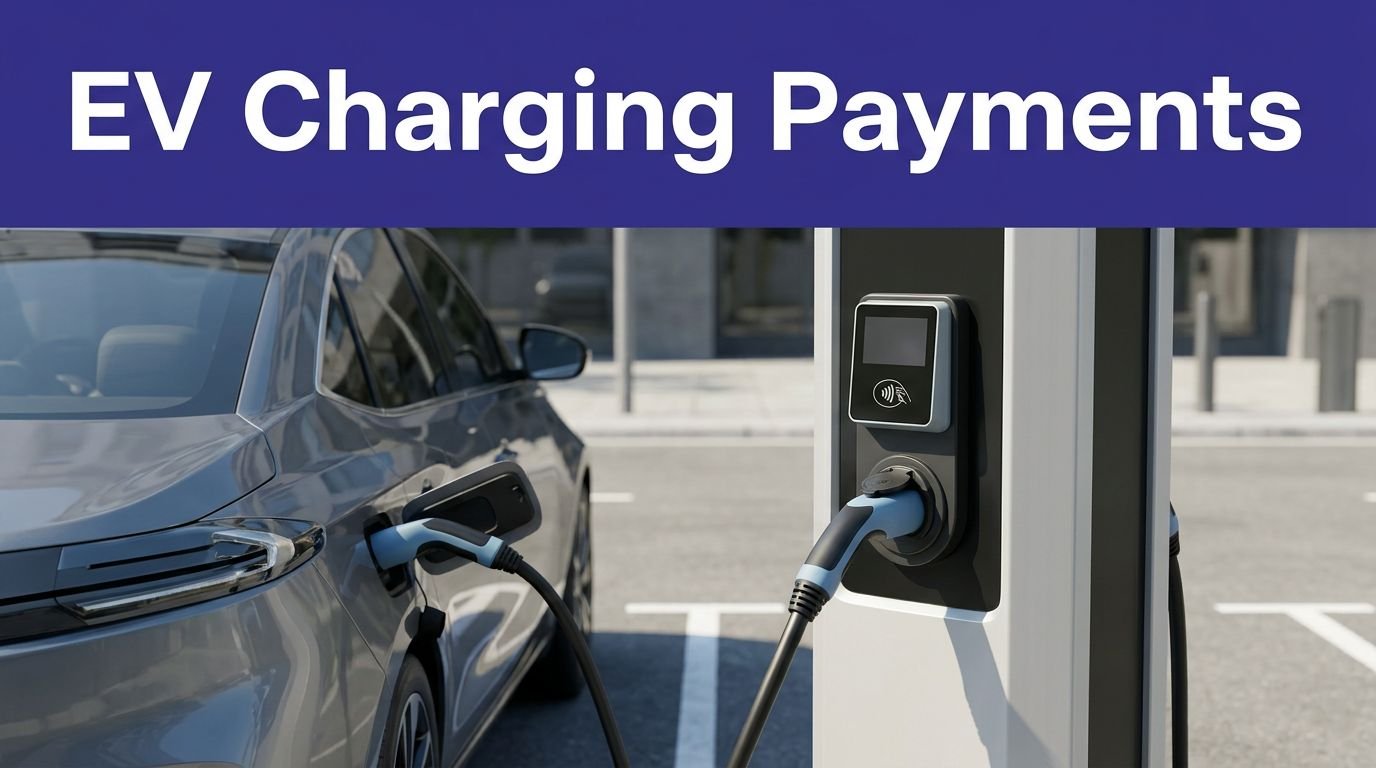
Imagine you pull into a highway rest stop and plug into a 350 kW charger to top up for a long drive. You’ll want to know what kWh means for range, when chargers use AC or DC, and how CHAdeMO and NACS differ. Get those basics right and you’ll save time, money, and hassle—here’s how.
Key Takeaways
- kWh measures an EV battery’s total energy capacity; usable (net) kWh gives realistic range when divided by Wh/mi consumption.
- AC charging (Level 1/2) uses onboard chargers, providing ~1–19 kW and typically recharges overnight or in 4–8 hours.
- DC fast charging bypasses the onboard charger, delivering 15–350+ kW directly for rapid charging, fastest between 10%–50% SOC.
- CHAdeMO is an older DC fast standard (common in Japan), supports V2G, but its public network and adoption are shrinking.
- NACS (Tesla’s standard) supports very high power and plug‑and‑charge, rapidly expanding across public networks and via adapters.
What Kwh Means for EV Batteries and Range

Think of kWh as your EV’s fuel tank size: it tells you how much energy the battery can store and consequently how far you can go. Typical battery sizes range from 50–100 kWh for EVs and crossovers. kWh (kilowatt-hour) measures total energy capacity — one kWh is 1,000 watt-hours. Unlike kW, which measures power rate, kWh shows how much energy the pack holds and supplies for driving.
To estimate range, divide battery kWh (in Wh) by your car’s consumption (Wh/mi); for example, 50 kWh ÷ 235 Wh/mi ≈ 212 miles. Remember manufacturers often limit usable kWh with buffers to protect battery health, so displayed capacity can exceed usable energy.
Use net (usable) kWh for safe range planning, and check real-world factors — speed, temperature, terrain — that raise consumption. Charge wisely to protect battery lifespan.
How AC Charging Works: Level 1 and Level 2 Explained
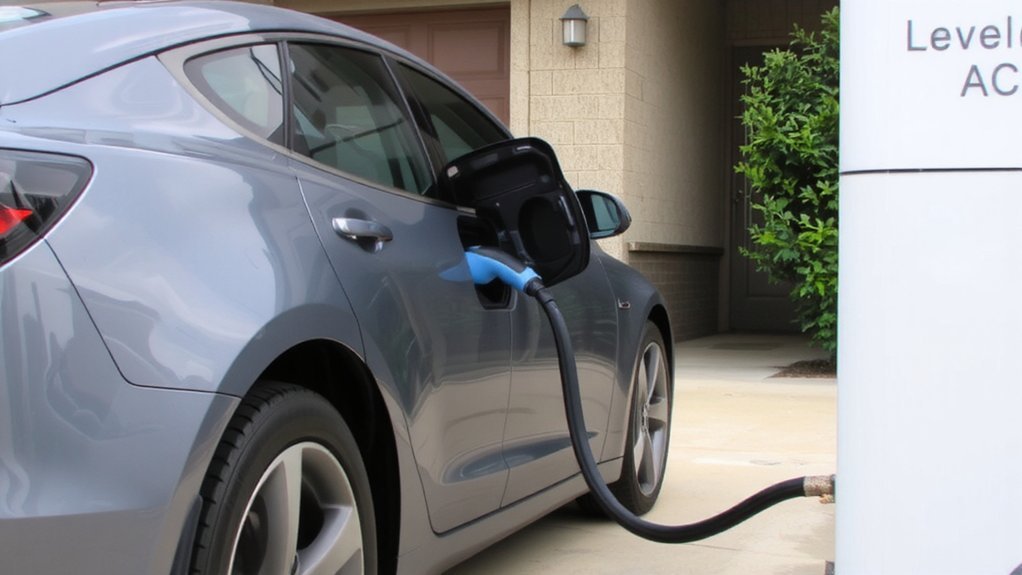
Understanding how AC charging works will help you pick the right setup for daily driving. AC charging supplies alternating current from the grid that your car’s onboard charger converts to DC for the battery, so you’ll always rely on the onboard charger’s capacity when charging at home or work.
Level 1 uses a standard 120V outlet, gives about 1–1.8 kW (roughly 4–5 miles per hour), and suits overnight charging or low daily mileage. Level 2 uses a 240V circuit, delivers roughly 3–19 kW (about 10–60 miles per hour), and usually charges a depleted battery in four to eight hours. Note that the charging rate is limited by the vehicle’s onboard charger.
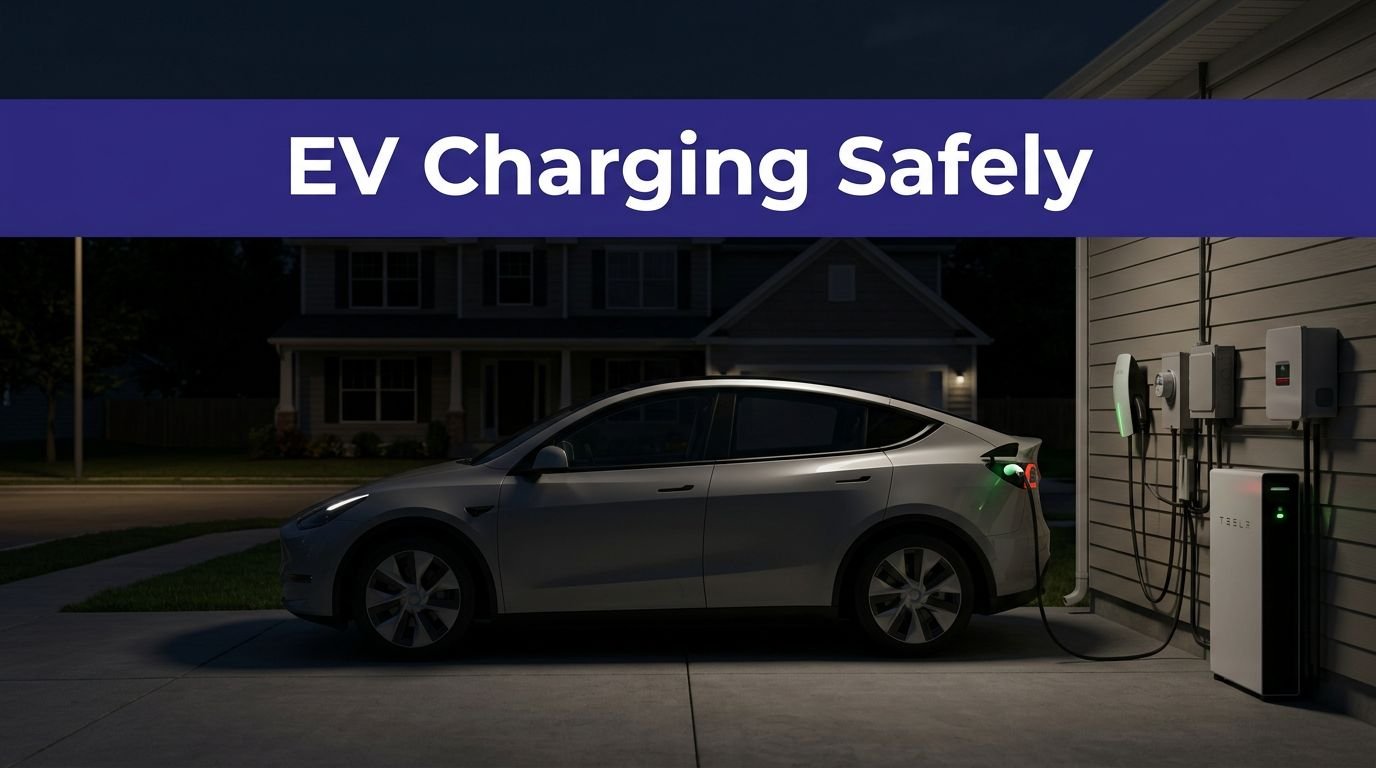
Install a dedicated Level 2 station safely, check connector compatibility, and account for possible electrical upgrades. Follow manufacturer guidance and a qualified electrician for installations.
DC Fast Charging: Technology and Real‑World Speeds
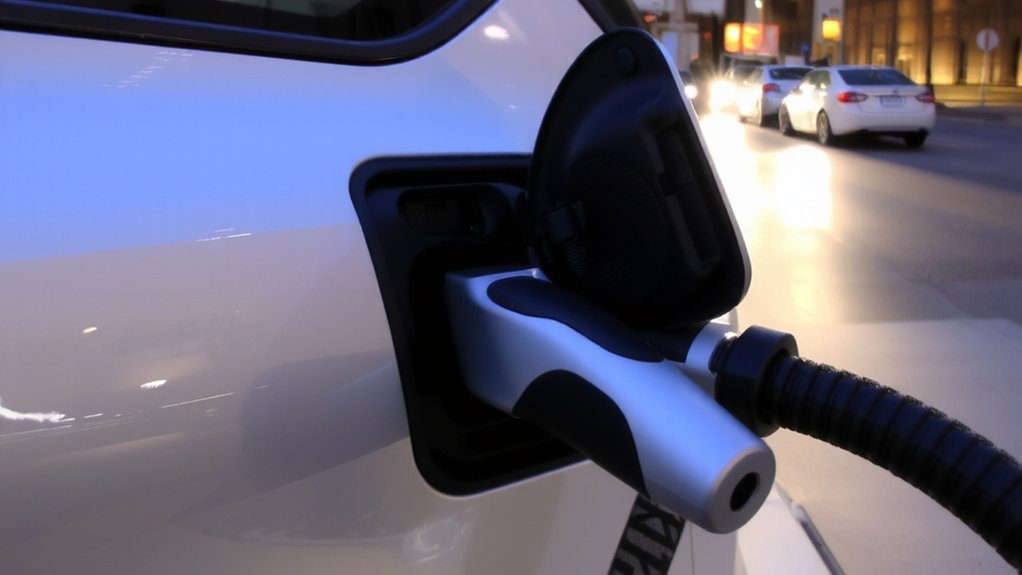
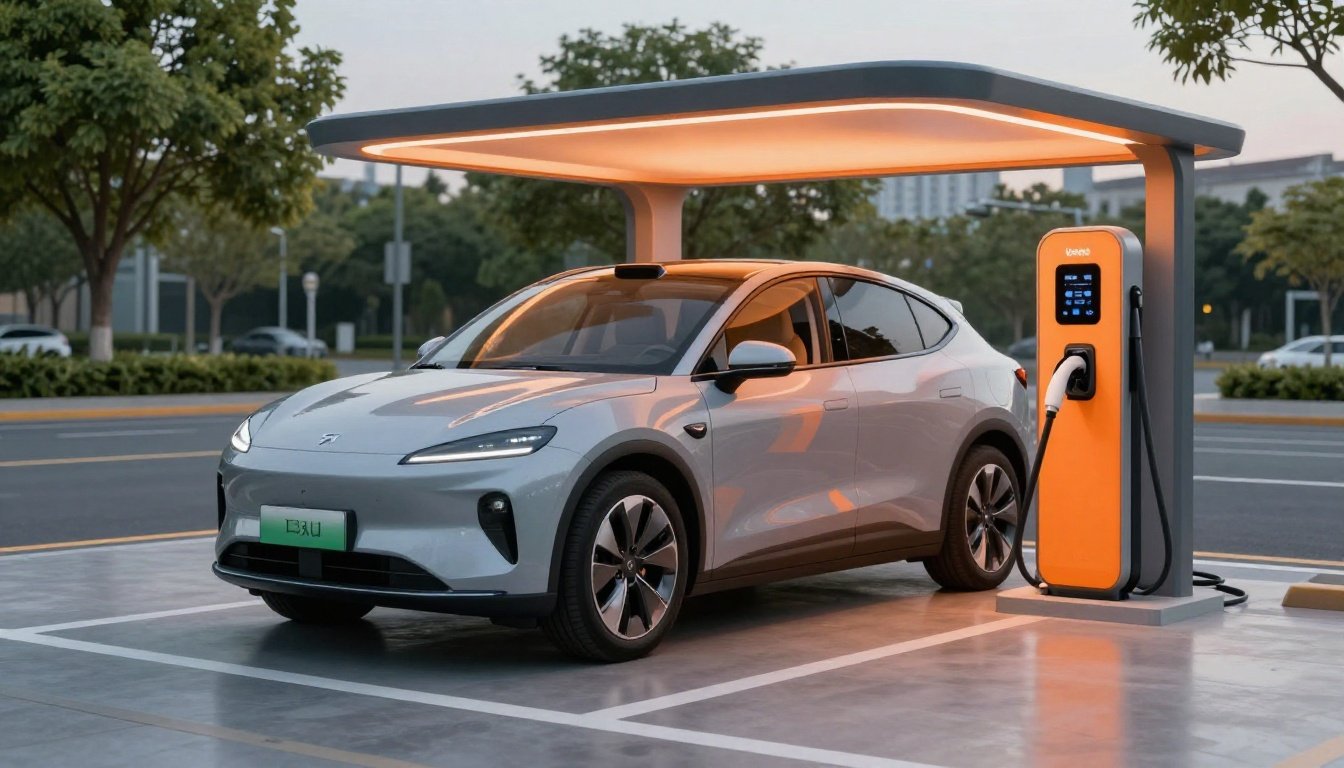
When you use DC fast charging, the station’s power rating (typically 15–350 kW) sets the maximum available output. This works because DC chargers deliver direct current to the battery, bypassing the vehicle’s onboard charger. But your car’s charge acceptance rate and battery management system ultimately limit how many kilowatts it will take.
Expect peak power only at low state of charge, then a taper as the battery approaches 80–100% to protect longevity.
Charger Power and Output
Although DC fast chargers span roughly 15 kW to 350 kW (with megawatt stations emerging), the charging speed you actually get depends on both station power and your vehicle’s acceptance; deployments are shifting toward ultra‑fast 250+ kW ports—63% of new public ports—and Tesla’s Superchargers largely exceed the federal 150 kW minimum.
You should know higher-rated chargers enable quicker fills when your car accepts the power, and modern 800V platforms plus 350 kW-capable stations cut stop times for compatible vehicles. Chargers and vehicles communicate via protocols (CCS, CHAdeMO, Tesla variants) and negotiated charge rates guarantee safe delivery; look for interoperable networks and plug‑and‑charge support.
Use certified, well‑maintained stations and follow on‑screen prompts to keep charging safe and reliable. Always monitor battery temperature and cable condition.
DC fast charging bypasses the on-board charger by converting power at the station and delivering DC directly to the battery, which enables much faster charging.
Vehicle Limits and Tapering
You’ll see that the maximum power you actually get on a DC fast charger is controlled by your car’s charge‑acceptance rate, which the battery management system (BMS) negotiates with the station and will cap if temperature, voltage, or SOC demand it. Tests typically use the most powerful public chargers available to show realistic peak rates. Know that charge acceptance is the true limit: a 150 kW stall won’t push more than your vehicle’s kW limit.
Charging is fastest between about 10%–50% SOC and slows as it approaches 80% and above to protect the battery. The BMS monitors temperature, voltage and SOC, reduces power when needed, and can precondition the pack to improve acceptance.
Real‑world speeds depend on battery chemistry, architecture, age and ambient temperature — prioritize safety over chasing peak numbers. Stop charging if you detect unusual heat.
CHAdeMO: Legacy Standard, Current Use, and Where It Fits
You should know CHAdeMO started in Japan around 2010 as a DC fast‑charging standard, originally supporting about 62.5 kW and later scaled toward several hundred kilowatts.
Today its network is concentrated in Japan with some legacy stations elsewhere, most offering 50–150 kW rather than the high‑power chargers you see for CCS or NACS. Compatibility is mainly with older Japanese models and CHAdeMO 3.0 adds bidirectional V2G capability, but manufacturers and stations are shifting toward CCS/NACS with migration efforts like ChaoJi underway. It also supports bidirectional communication, enabling vehicle-to-grid functionality and continuous power control during charging.
CHAdeMO Origins and Specs
Developed by Japan’s electric-vehicle groups beginning in 2005 and formalized by the CHAdeMO Association in 2010, CHAdeMO—literally “charge for a tea break”—pioneered DC fast charging with first commercial deployments around 2009 and government-backed expansion overseas. It is part of a broader four-world pattern of global charging standards. You should know it built on TEPCO trials from 2006 and a connector specified in G105-1993, and major Japanese automakers led its rollout.
Early protocol supported 62.5 kW; later revisions raised safe charging to 200 kW (v1.2) and CHAdeMO 2.0 defined up to 400 kW with higher voltages. The connector combines power with CAN-bus communications for interlocks and battery data exchange, helping protect you and preserve cells.
Today CHAdeMO functions as a proven, legacy DC fast-charging protocol for many older Japanese EVs. You should follow manufacturer guidance when charging.
Current Network Presence
Although once a leading DC fast‑charging option, CHAdeMO now functions mainly as a legacy standard in the US—only 10% of new DC fast ports added in Q1 2025 supported it, and of roughly 55,750 DC fast ports reported in May 2025 CHAdeMO represents only a small slice.
You’ll find most CHAdeMO connectors at older or legacy stations, often co‑located with CCS or NACS, concentrated in major metros—especially California, New York, and Washington. Usage is lower than CCS and NACS, typically under 10% utilization, and is driven by older Nissan Leaf and some fleet vehicles.
For safety and planning, assume CHAdeMO availability will shrink: rely on CCS or NACS for broader, higher‑utilization coverage unless you’re supporting legacy fleets. Check station maps before every charging session. Industry forecasts indicate DCFC ports are expected to grow significantly, with a projected 245% increase from 2021 to 2025.
Compatibility and Transition Path
Seen as a legacy DC fast‑charging standard, CHAdeMO still reliably serves older Japanese models and some fleets, but it’s being phased out in favor of CCS and NACS for broader, higher‑utilization coverage. CHAdeMO was originally developed by Japanese automakers. You’ll find CHAdeMO on many Nissan and Mitsubishi vehicles and in legacy sites; its CAN‑based communication and IEC certifications mean charging remains safe when you follow manufacturer guidance.
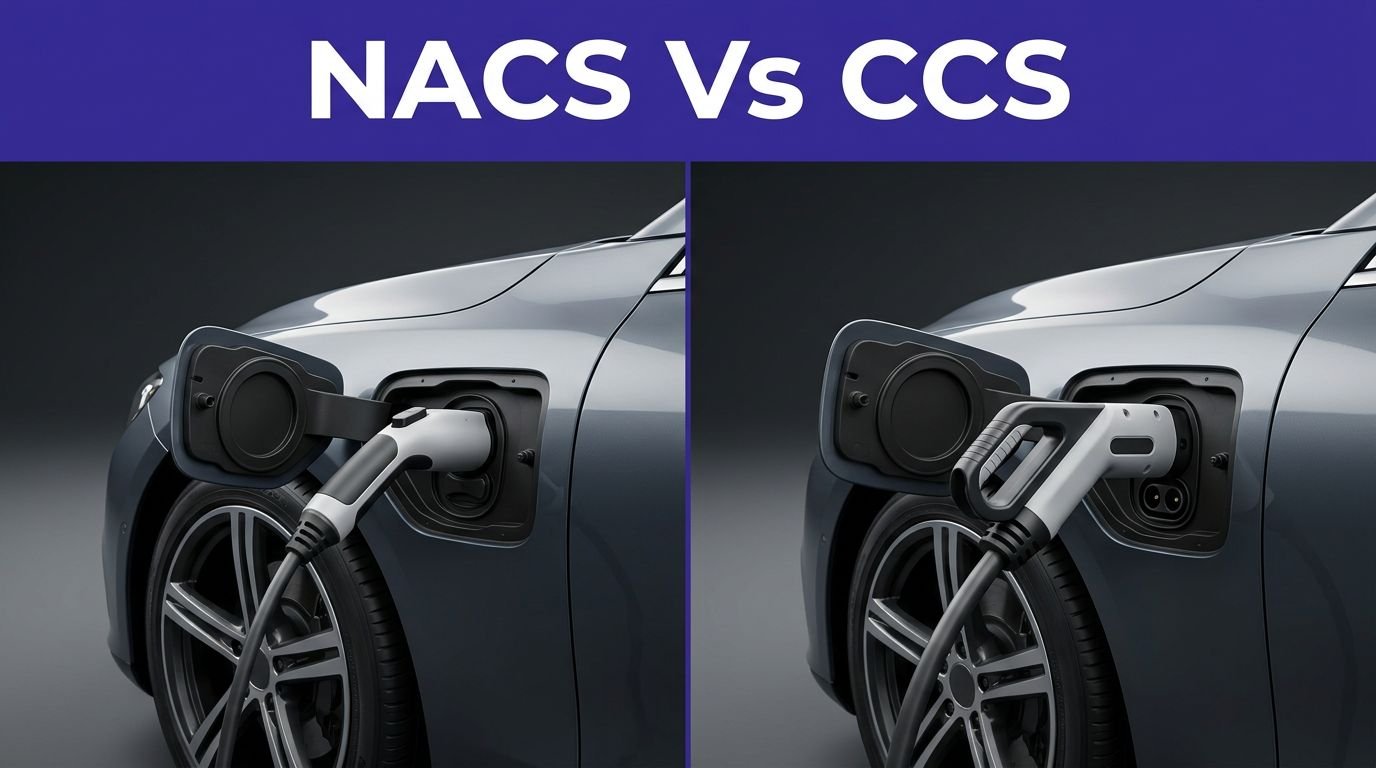
Expect compatibility challenges: the plug differs from CCS and Tesla/NACS, so you may need adapters or separate chargers. Industry momentum favors CCS and NACS for unified infrastructure, yet CHAdeMO’s backward compatibility and continued charger production keep it viable during migration.
When charging, always confirm connector type, allowable power, and BMS limits to protect battery health and safety. Follow certified installers and updated signage guidance.
NACS: Tesla’s Connector and Its Growing Industry Adoption

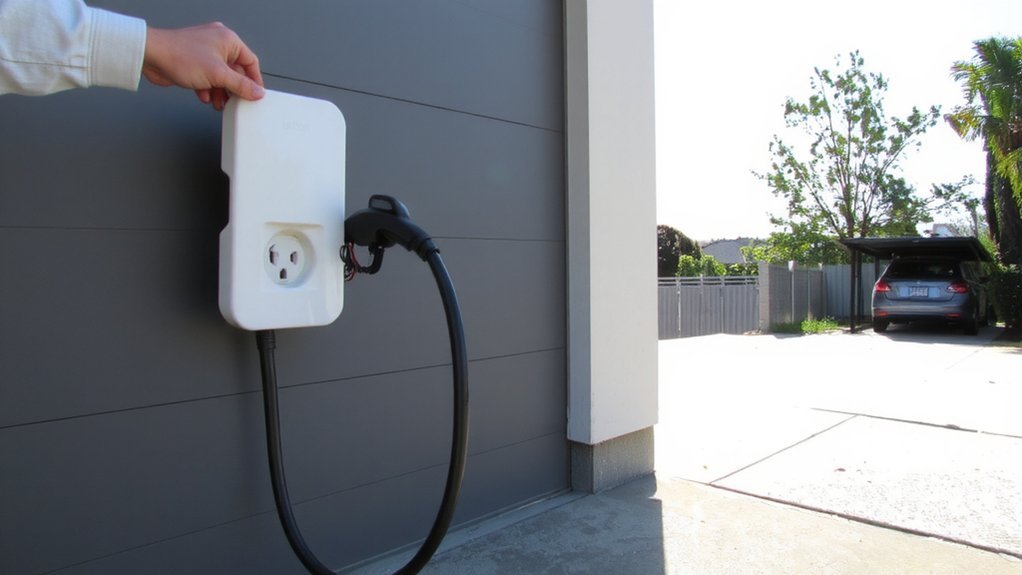
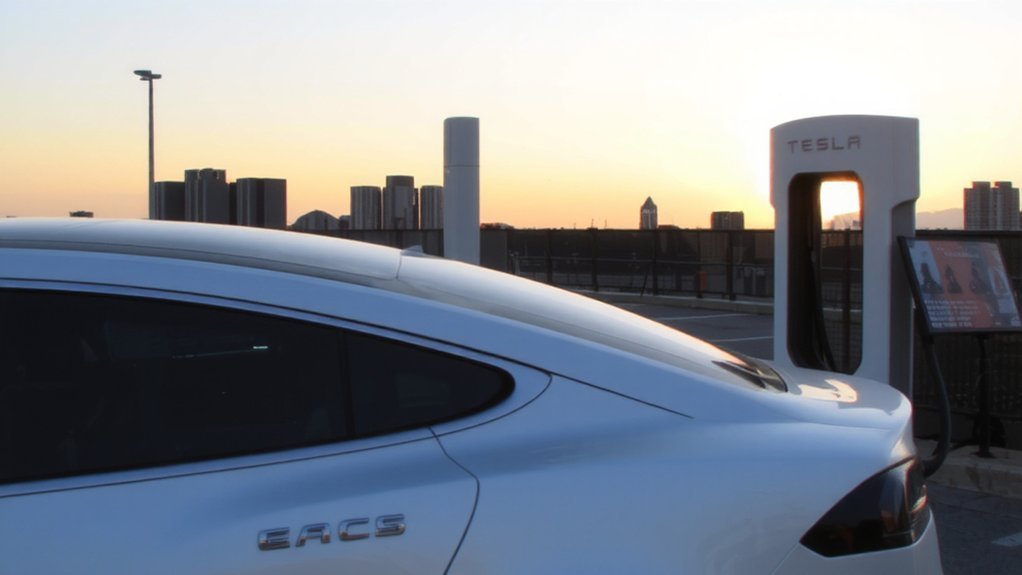
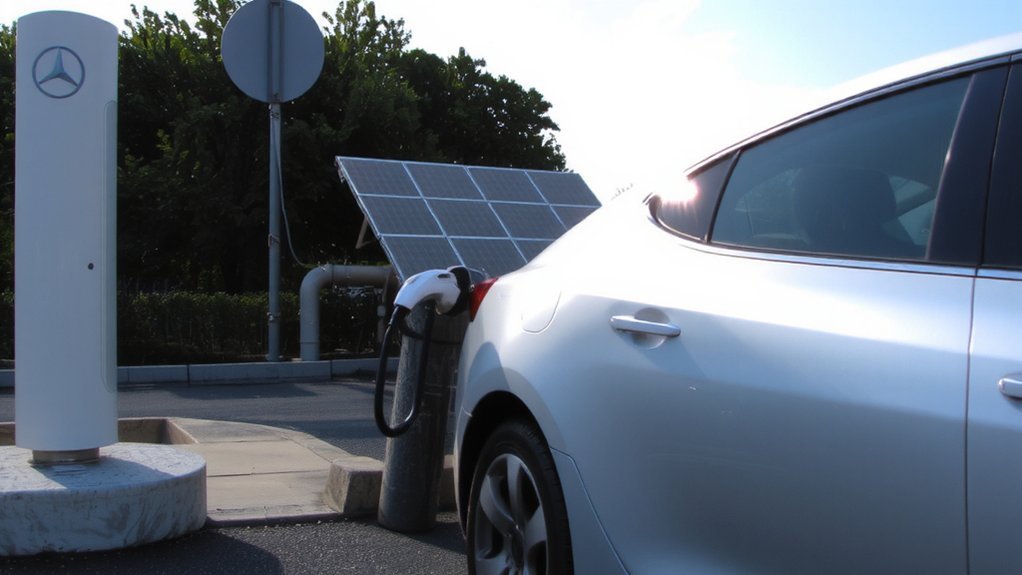
Anyone plugging in an EV will notice NACS’s single, streamlined connector handles both AC and DC charging, supports dual DC voltage configurations (up to 500 V and 1,000 V) with backward compatibility, and has been shown in tests to carry continuous currents up to 900 A. The standard defines a 48A AC connector known as 48A AC.
NACS’s single streamlined connector handles AC/DC, dual 500/1,000 V configurations, tested to 900 A
You’ll benefit from broad OEM adoption—Ford, GM, Rivian, Hyundai, Kia, BMW and others are moving to native NACS ports and offering adapters during changeover—so charging networks are becoming more interoperable.
NACS is backed by SAE J3400 and federal guidance requiring adapters on funded chargers, improving safety and predictability.
Practical limits (thermal, vehicle inlet, charger power) still govern real-world rates; treat connectors and cables carefully, follow manufacturer instructions, and always verify station status before high-power charging to stay safe.
Charging Levels Compared: When to Use Level 1, 2, or 3
For home and overnight charging, Level 1 or Level 2 will usually cover your needs depending on daily mileage and whether you can install a dedicated Level 2 circuit. Level 2 chargers typically add 10–60 miles of range per hour, making them a practical choice for most daily drivers. For long trips you’ll rely on Level 3 DC fast chargers to regain most of your range in 20–40 minutes and minimize stops.
Use this comparison to match charging speed to your routine and travel plans.
Home & Overnight Charging
When you charge overnight at home, Level 1’s slow trickle can work for plug‑in hybrids or occasional top‑ups, but most battery EV owners will want a Level 2 charger to reliably restore a full battery while they sleep.
In most households, Level 2 is the optimal solution for home use.
Level 1 (120V) gives 3–5 miles/hour, costs nothing extra, suits emergencies. Level 2 (240V) delivers 12–60+ miles/hour; a 19.2 kW unit adds ~75 miles/hour and finishes charging overnight. Install Level 2 professionally on sized circuit; higher‑amperage units may need upgrades, hardwiring for safety. DC fast (Level 3) isn’t practical at home.
- Choose Level 1 for PHEVs or when upgrades aren’t feasible.
- Choose Level 2 for daily BEV use and overnight range.
- Use smart Level 2 chargers for scheduling, load management, and safer tracking.
Long Trips & Fast Charging
Road-tripping means balancing speed, cost, and battery care. Among crossovers, the KIA EV6 stands out as a top fast-charging performer (KIA EV6). For fast highway stops, use Level 3 DCFC: 50–350+ kW supplies 200–1000+ miles/hour and typically brings you to about 80% in 20–60 minutes, minimizing downtime—use it selectively to reduce battery wear and avoid repeated fast charging in heat.
Level 2 (240V, 3–22 kW) adds 12–60 miles/hour and suits workplace, shopping, or overnight stops where you can wait several hours; it’s cheaper and kinder to batteries. Level 1 (120V, 1.3–2.4 kW) gives 3–5 miles/hour and is only for emergencies or very long rests.
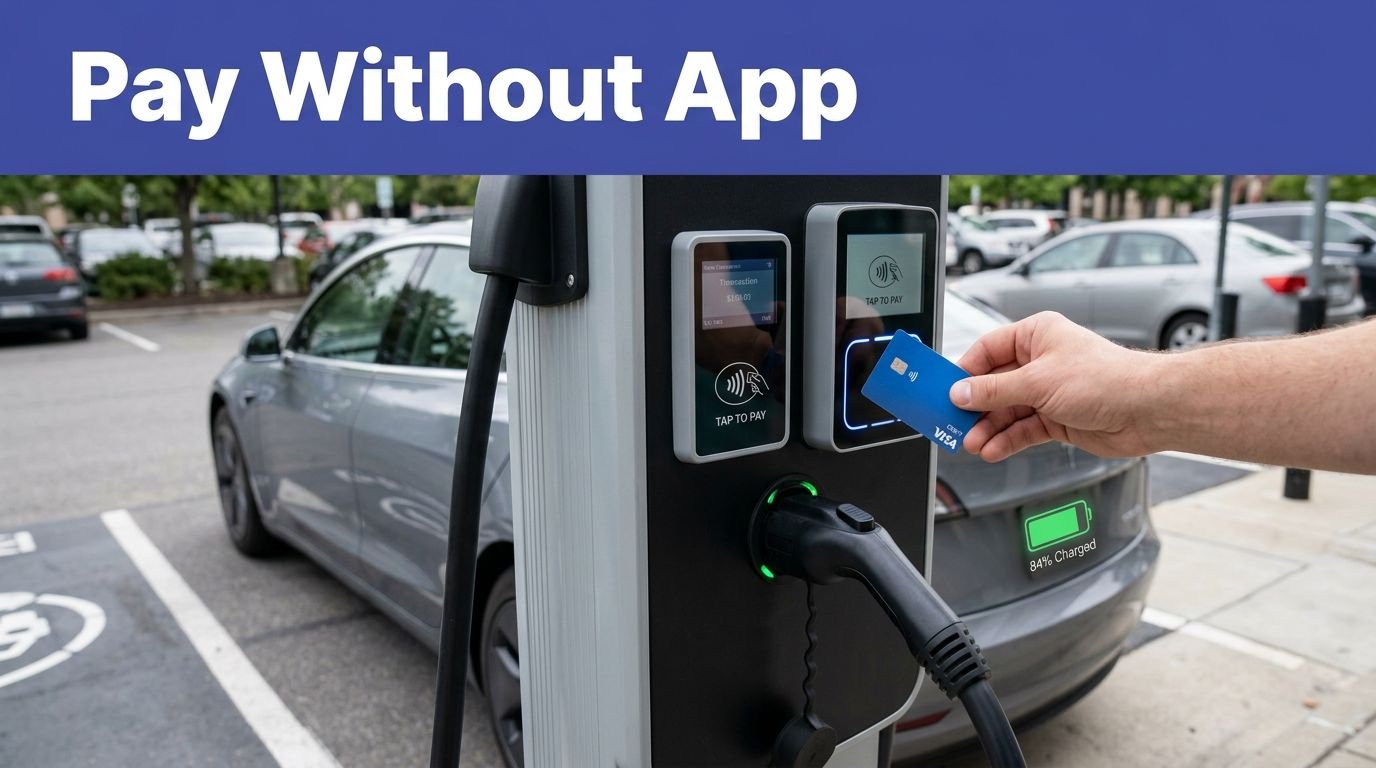
Plan routes around DCFC corridors, mix Level 2 at destinations, and monitor temperature and state of charge for safe, efficient travel. You should consider station availability, payment methods, and charging etiquette to stay safe and courteous.
Home Charging Setup: Power, Chargers, and Installation Basics
Most homes built since the late 1980s have 150–200 amp service. Check your panel capacity and distance to the charger location so you won’t overload circuits or create unsafe wiring runs. If you have under 100 amps, contact your utility before proceeding. Level 2 charging is the sweet spot for home installation and typically requires a dedicated 240V circuit Level 2 charging.
Hire a licensed electrician to perform load calculations, run a dedicated circuit, mount and wire the Level 2 charger, and arrange permits and inspection.
- Assess: panel amperage, breaker space, cable length, and feasibility.
- Install: licensed electrician runs dedicated 30–40 A circuit (typical Level 2) and secures permits.
- Verify: final inspection, tester operation, and Wi‑Fi setup for smart charging.
Follow codes and professional guidance to keep your home and family safe. Don’t attempt unauthorized DIY high‑power installations without approval first.
Road‑Trip Charging Strategy and Fast‑Charger Planning
For longer trips you’ll rely on DC fast chargers to keep moving—these stations can add 60–200+ miles in 20–30 minutes, so plan stops around 10–80% fills rather than topping to 100%.
On long trips, use DC fast chargers—add 60–200+ miles in 20–30 minutes.
Also, remember to top off the charge before departing.
Use route planners like A Better Route Planner, PlugShare, or Chargeway to map NACS and CCS stations, check real‑time status, and build 30–50 mile backups.
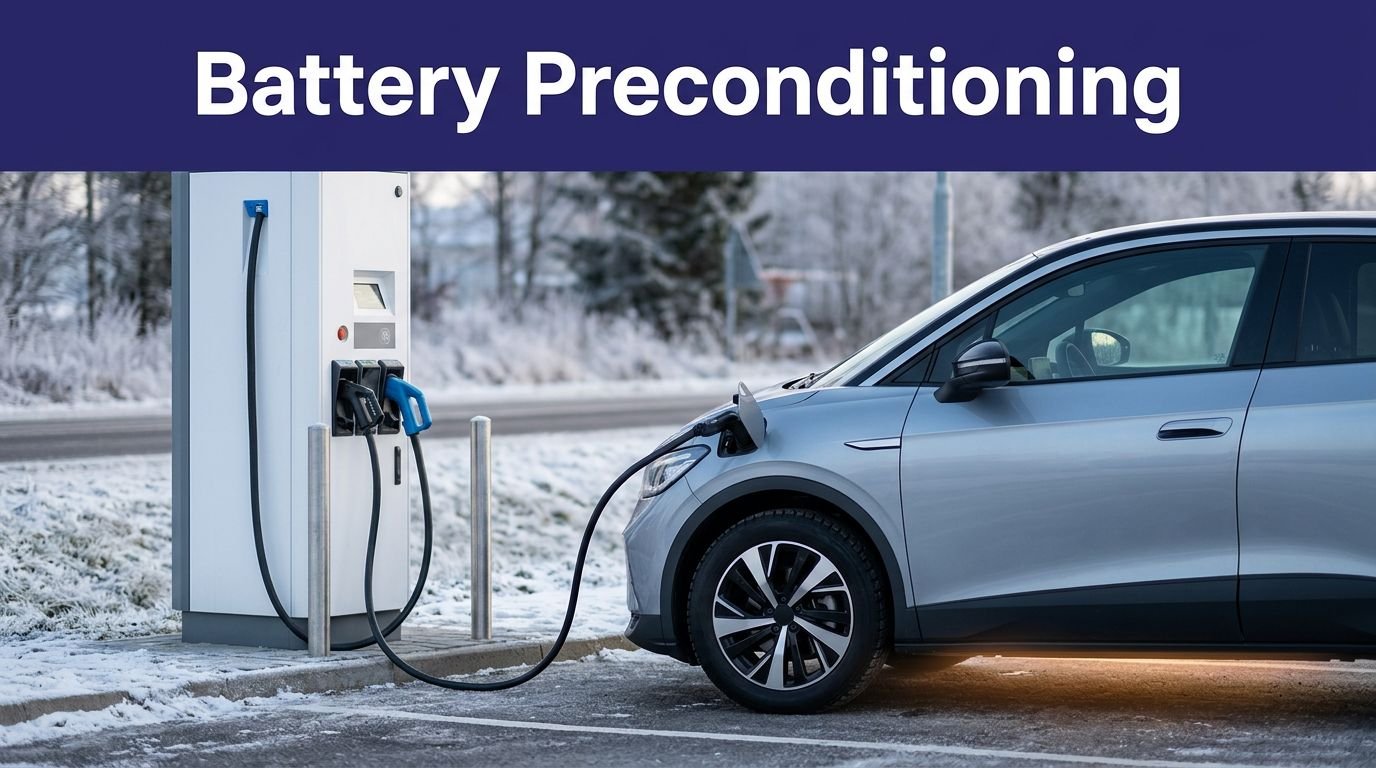
Pre‑condition your battery before arrival to maintain peak charging speed and avoid charging below 20% for safety.
Expect 20–40 minute sessions from 10–80% depending on output and battery size; aim for 80% to avoid slow tail charging.
Bring adapters only as a fallback since direct connector compatibility is more reliable.
Follow etiquette: move when done, keep stations tidy, and report faults promptly.
Stay patient and prioritize safe parking.
Costs, Billing Models, and How Kwh Impacts Your Charging Bill
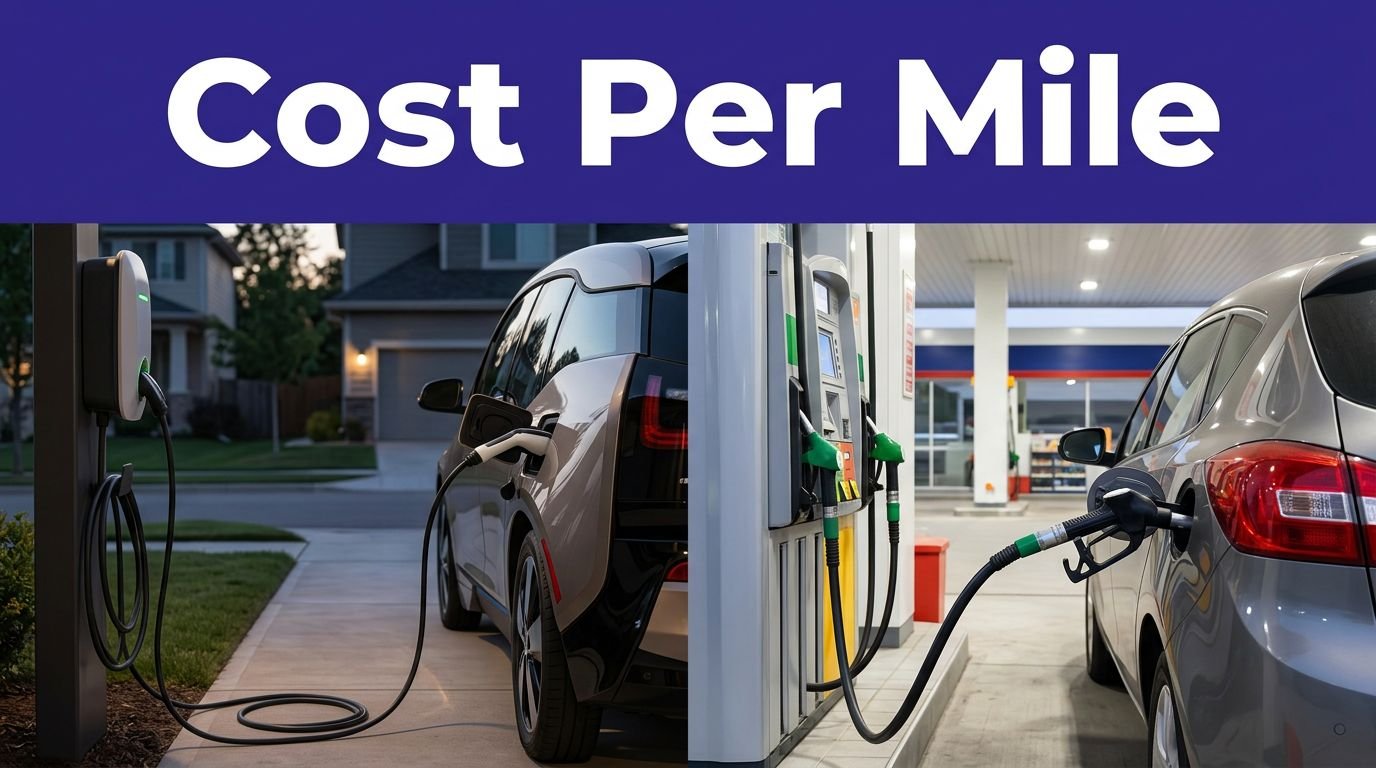
Because you pay for the electricity an EV uses, understanding kWh rates and billing models directly shapes your monthly charging bill. You typically use 0.3–0.35 kWh per mile, so driving 1,000 miles costs about $55–$60 at the 2025 U.S. average (~$0.176/kWh). Home charging is usually under half the cost per mile of gasoline, but charging losses raise the actual kWh drawn.
Time-of-use plans, EV-specific meters, and network subscriptions change your effective $/kWh and safety-conscious charging habits.
- Monitor kWh: track monthly kWh to forecast bills and avoid overloading circuits.
- Choose billing: prefer per-kWh or TOU rates over per-minute for fairness.
- Compare locations: home Level 2 is cheaper; DC fast charging costs more per kWh.
Check local rules and tax changes affecting billing. Many states have passed laws to allow kWh-based pricing at public chargers.
Infrastructure Trends and Standards to Watch in 2025–2026
As federal funding and new technical standards roll out in 2025–2026, you’ll see EV charging move from pilot projects to coordinated, safety-focused networks. Also, expect a shift away from DIY installs as the 2026 NEC’s qualified person requirement pushes more work to licensed electricians. NEVI’s $5 billion and minimum network rules will space chargers no more than 50 miles apart on AFCs, each site offering four Level‑2 or DC fast ports and capacity for four simultaneous vehicles, with DC ports up to 150 kW.
NEVI requires open, non‑proprietary hardware and payment systems. Safety protocols add automatic cutoffs, sensor monitoring, emergency alerts, and physical protections to cut fire and failure risk. Watch UL 3141 for certified power control systems that balance chargers, storage, and renewables, and NEC 2026 GFCI rules—both improve protection but may affect reliability at outdoor sites.
Coordinate site planning, access control, rapid response.
Conclusion
By mastering kWh, AC vs DC, CHAdeMO and NACS, you’ll plan charging like a pro and avoid surprises on long trips. Think of your EV as a smartphone: a 60‑kWh battery is like carrying ten 6,000‑mAh power banks, so you’ll know when to top up. With regulators pushing open hardware and safer billing, you’ll find charging becoming more predictable, affordable, and as simple as plugging in overnight. You’ll get where you need to go reliably.