Like a universal key, NACS aims to open a simpler, faster charging future. You’ll get a clear look at what the connector does, the tech behind its higher power, and how networks and cars will change. Stay with this—because it’ll affect where and how you charge on your next trip.
Key Takeaways
- NACS is Tesla’s compact combined AC/DC charging connector and protocol, codified as SAE J3400 in 2023.
- The slim single-plug design supports scalable DC up to 500/1000 V and very high continuous currents.
- NACS enables digital vehicle-charger communication for safe, high-power charging and thermal management.
- Tesla cars accept NACS natively; many non‑Tesla EVs use adapters or are adopting the port in 2025–2026.
- Benefits include smaller, lighter hardware, easier handling, lower installation costs, and broad Supercharger network access.
What NACS Is and How It Works
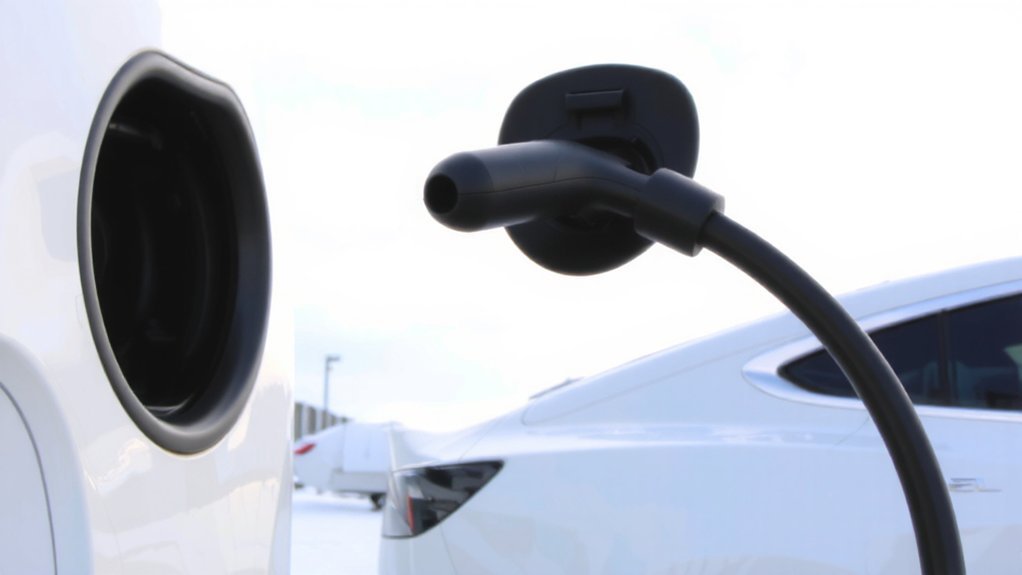
Although it was originally developed by Tesla, NACS was opened in 2023 and has since been codified as SAE J3400 to become North America’s unified EV charging standard. You’ll find NACS uses a compact, lightweight connector that combines AC and DC pins into one durable, easy-to-handle plug with no moving parts.
You can plug in faster, with built-in digital communication between vehicle and charger that manages charging sessions and prioritizes safety. Tesla vehicles accept NACS natively; non‑Tesla cars can connect using an adapter.
Tesla’s expansive Supercharger and Destination Charger networks mean broad access across North America as more automakers and networks adopt NACS. You should still follow obvious precautions: inspect connectors, keep contacts clean, and follow charger instructions to stay safe. Report any faults. The connector is part of the North American Charging Standard.
Technical Specs: Voltage, Current, and Power
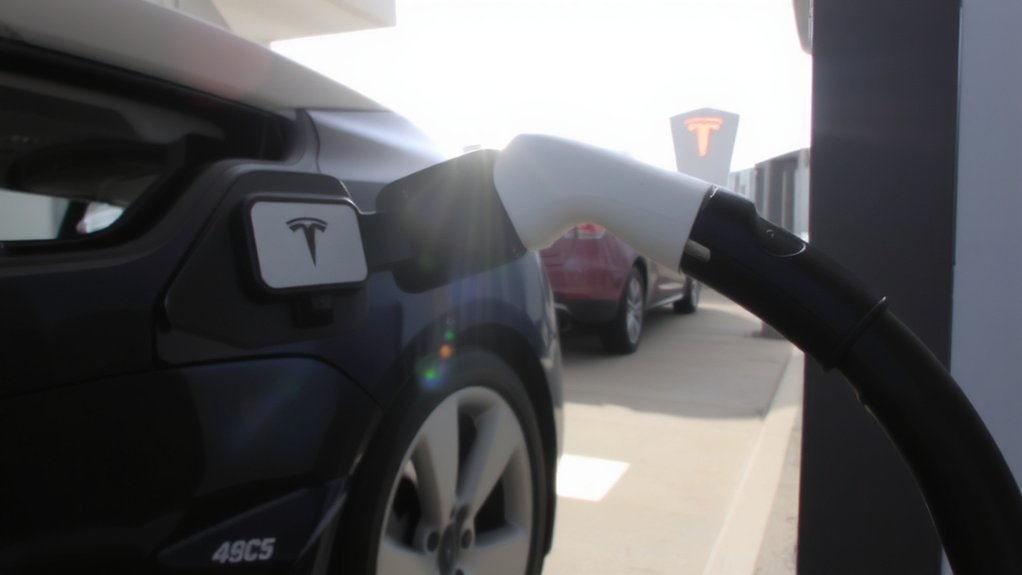
With NACS now codified as SAE J3400, you can expect defined and scalable electrical capabilities: the connector supports DC configurations up to 500 V and up to 1000 V (the higher-voltage option is backward compatible), and industry reports and Tesla operation show continuous currents into the high hundreds of amps (Tesla has cited ~900 A in practice) with a theoretical DC capacity up to 1 MW. You should know thermal limits and that power depends on vehicle and charger; follow certified equipment and safe procedures. SAE International has codified the NACS connector as the SAE J3400 standard.
NACS (SAE J3400) supports scalable DC up to 500/1000V, high‑hundreds of amps, and theoretical 1MW; follow certified equipment.
- DC: theoretical 1 MW; real ~325 kW
- Voltage: DC up to 500 V or 1000 V; AC 120/240 V
- Current: no fixed cap; Tesla reported ~900 A continuous
- Safety: connector thermal limit ≤105°C; precondition battery
Design Benefits: Size, Simplicity, and User Experience

Why does NACS feel so much simpler to use? You get a single, slim connector for AC and DC, half the size of older plugs, making it easier to grip, handle, and store. Additionally, some NACS chargers can deliver up to 500 amps at 500 volts for DC fast charging. The design has no moving parts and one central button that triggers a UHF signal to engage and release the latch, lowering mechanical failure risk and simplifying operation.
Compact hardware reduces weight and space needs, so chargers fit tighter stations and vehicles retain cleaner port placement. Fewer components mean less maintenance, lower installation costs, and more durable, weather-resistant units. With broad network access and faster charging, you’ll spend less time connected and more assured that ergonomics, thermal limits, and standardization prioritize safe, reliable charging. You can trust it in everyday conditions.
How NACS Compares to CCS
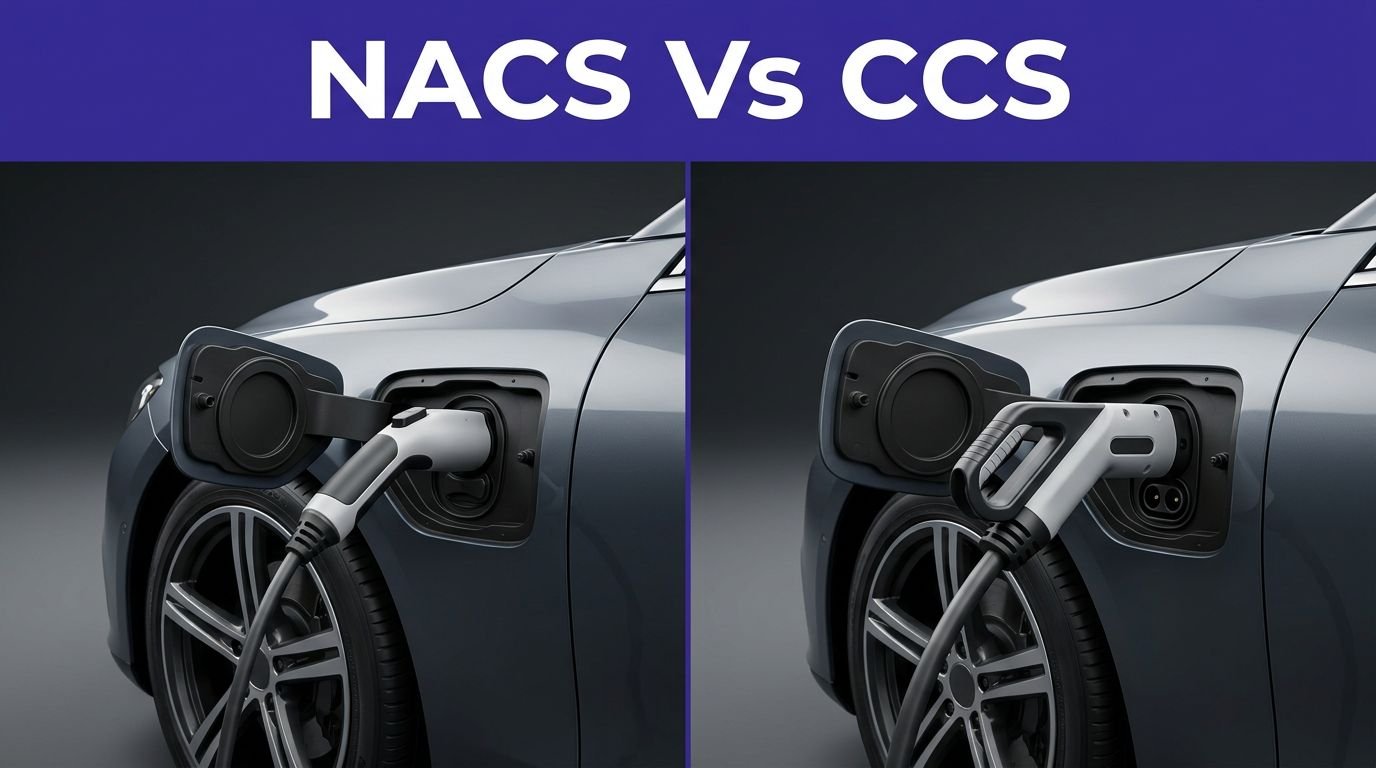
Connector design shapes the experience: NACS uses a smaller, single plug for both AC and DC that’s lighter and easier to handle, while CCS relies on a larger seven-pin design with separate AC/DC pins.
You’ll notice NACS is more ergonomic, with fewer pins and simpler handling, which reduces user fatigue and lowers chances of mishandling. Technically, CCS can offer higher peak power in some setups, but both standards support safe fast DC and slow AC charging when properly used. Tesla Superchargers also tend to deliver more consistent real-world performance consistent performance.
Consider these key distinctions for safe, reliable charging:
- NACS: compact, single connector, fewer pins.
- CCS: bulkier, seven-pin AC/DC split.
- Power: CCS up to 350 kW; NACS commonly 250 kW, scalable.
- Conversion: adapters and automaker shifts improve interoperability.
Follow manufacturer guidelines and inspect connectors before use.
Tesla Supercharger Network: Access and Performance

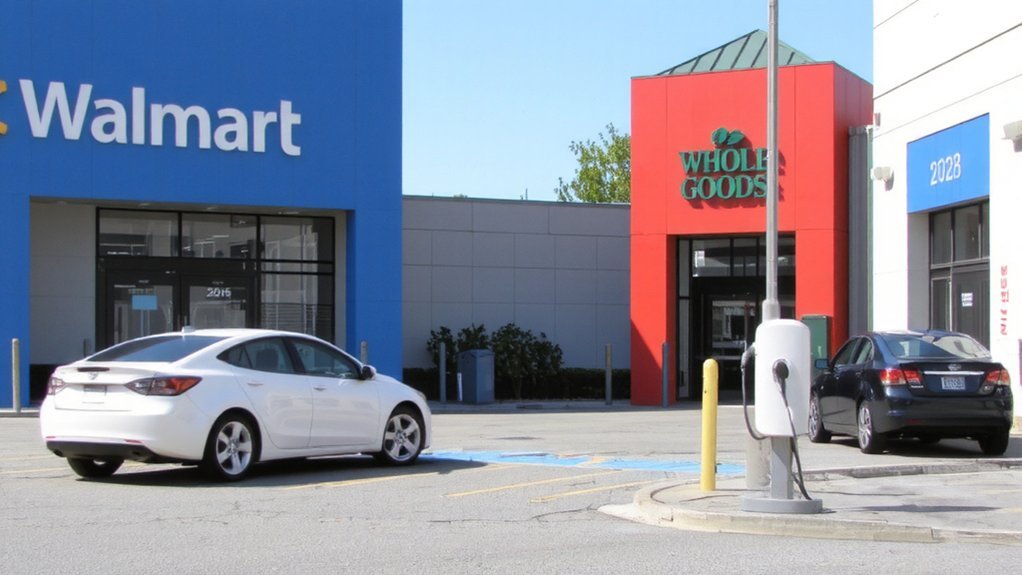
As Tesla opens more stalls and invites non‑Tesla drivers, you’ll find over 25,000 Supercharger stalls across North America and about one new stall being commissioned every hour. You can use V3 and V4 stalls with NACS-equipped vehicles or certified adapters; V2 stalls aren’t available to non‑Tesla cars.
V4 cabinets support up to 500 kW for passenger EVs (1.2 MW for Semis) and first 500‑kW pilots arrive in Q3 2025. Use the Tesla app or manufacturer services to start and pay sessions; Mercedes drivers use Mercedes me Charge.
Charging speed depends on your vehicle’s battery and systems, so plan stops conservatively. Tesla maintains reliability through upgrades and rapid expansion, prioritizing safe, straightforward charging for all eligible EV drivers. Check connectors and follow on‑screen instructions each visit. MINI CCS BEVs are planned to gain Supercharger access in 2025, enabled via adapters and integration with the network, offering MINI access to customers.
Industry Adoption and Transition Strategies
The industry is moving fast to adopt NACS: most major automakers are fitting 2025 model‑year EVs with native NACS ports while providing CCS‑to‑NACS adapters for existing vehicles, and they’re pushing software updates and station retrofits so non‑Tesla cars can plug into Tesla Superchargers smoothly. By mid‑2025, many manufacturers will introduce NACS as a standard port on new models, accelerating adoption. You should expect factory timelines, adapter rollouts, and network upgrades to prioritize safety and interoperability.
Automakers, charging operators, and regulators are coordinating hardware, firmware, and standards to guarantee reliable, high‑power charging across vehicles. You can rely on phased rollouts to keep installations safe, tested, and predictable.
- Adapters bridge legacy CCS fleets while native NACS ports arrive.
- Software updates enable secure communication with Tesla stations.
- Supercharger retrofits and NEVI funding expand high‑power NACS sites.
- SAE standardization and OEM commitments reduce fragmentation.
Practical Considerations for Drivers and Charging
You’ll want to cover home charging setup, public charging etiquette, and adapter compatibility to make the NACS shift smooth. Install a correctly rated Level 2 charger at home, confirm wiring and charger firmware, and plan charging around your vehicle’s acceptance rate.
The new connector provides a simpler experience for plugging in and managing charging sessions.
On the road, check station status via apps, follow etiquette (don’t block or overstay), and verify adapter specs and firmware to avoid reduced speed or damage.
Home Charging Setup
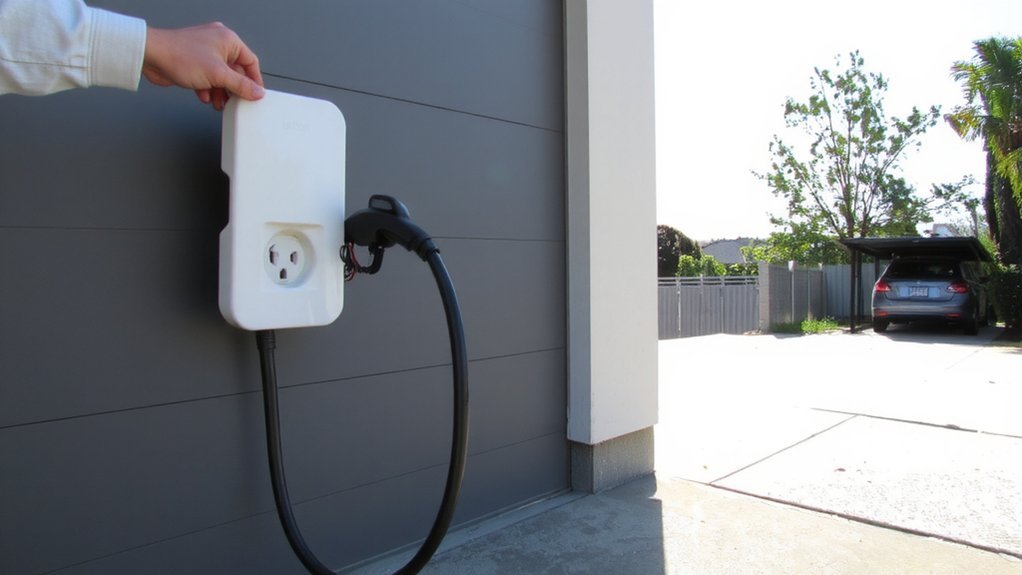
Plan your home charger around a 240 V, 48 A branch circuit, since NACS delivers up to about 11.5 kW on residential AC and that’s the typical target for efficient Level 2 charging; you’ll need appropriately sized wiring, a 60 A breaker (per code and continuous-load rules), and a qualified electrician to confirm service capacity or recommend a panel or meter upgrade. NACS uses a single connector for both AC and DC charging, which can simplify home charger compatibility. Check that your panel accommodates the load, consider a dedicated NACS-capable wall charger, and verify compatibility with your vehicle or adapter. Keep connector cooling and thermal limits in mind for higher-power hardware. Follow code, use certified equipment, and plan ventilation if you’re upgrading.
- Hire a licensed electrician
- Confirm panel and meter capacity
- Choose a NACS-capable charger
- Inspect grounding and circuit protection regularly
Public Charging Etiquette
When using public chargers, treat them as shared resources: charge only when necessary and leave promptly when finished. Don’t occupy spots without charging or plug in and loaf; follow posted time limits and avoid overnight stays.
If others wait, respect the line—don’t skip ahead—and communicate availability via apps for non-networked stations. Never unplug another vehicle; instead coordinate politely if multiple cars need a single fast charger.
Use fast chargers for quick top-ups and Level 2 when you can stay longer; avoid charging to 100% at fast chargers—stop around 80% to speed turnover. Return cables to holders, keep cords off walkways, and report broken or ICE’d vehicles to property managers so everyone stays safe and has access, and follow station signage and fee rules promptly. When possible, charge at home or work to reduce strain on public networks and preserve availability for others charge at home.
Adapters and Compatibility
How do adapters change charging for CCS drivers? They let you use Tesla chargers with eligible CCS EVs but only when your automaker and vehicle have Supercharger access enabled. Check compatibility before relying on one; adapters are provisional as new EVs ship with NACS ports. They also enable non‑Tesla EVs to access 25,000+ Supercharger ports on Tesla’s network where supported.
Use manufacturer adapters (Ford, Mercedes, Audi) when available for secure access. Third‑party options like Lectron exist but may not grant access to Tesla network for every brand. Expect app integration, locking features, and site-dependent charge rates; verify settings before plugging in.
Keep safety in mind: inspect adapters, follow vehicle prompts, and only charge at approved Supercharger locations.
Also budget for official adapter costs, confirm regional rollouts, and treat adapters as temporary tools while prioritizing certified equipment and safe procedures every time.
Conclusion
You’re stepping into a simpler charging future with NACS, where one compact plug serves as your key to faster, cleaner journeys. It’s a bridge that shrinks cables and complexity, humming like a well-tuned engine as it feeds your battery. You’ll feel the difference in fewer stops and smoother charging, and you’ll carry less worry about adapters. Embrace the change — it’s not just new hardware, it’s a lighter, speedier rhythm for how you travel every day.