A pair of chargers is like your home’s twin heartbeats, syncing or straining against the same pulse. If you own two EVs, you’ll want them charged without tripping breakers or overpaying. You’ll check panel capacity, circuit rules, and whether smart load sharing will suffice or a panel upgrade is inevitable—what you find next will decide the simplest path forward.
Key Takeaways
- Yes, you can—use two Level 2 chargers, a dual-head charger, or a load-sharing setup to charge two cars simultaneously.
- Check your service panel (commonly 100–200A); add ~30–50A per Level 2 charger when calculating spare capacity.
- Each Level 2 charger needs a dedicated 240V circuit sized so continuous load stays ≤80% of the breaker rating.
- Use smart load-sharing or a single dual-head charger to avoid panel upgrades and prevent breaker trips when capacity is limited.
- Dual chargers often cost less than two stations, support scheduling, Wi‑Fi control, V2H/V2G, and may be eligible for rebates.
Why Dual Home Charging Is Becoming Common
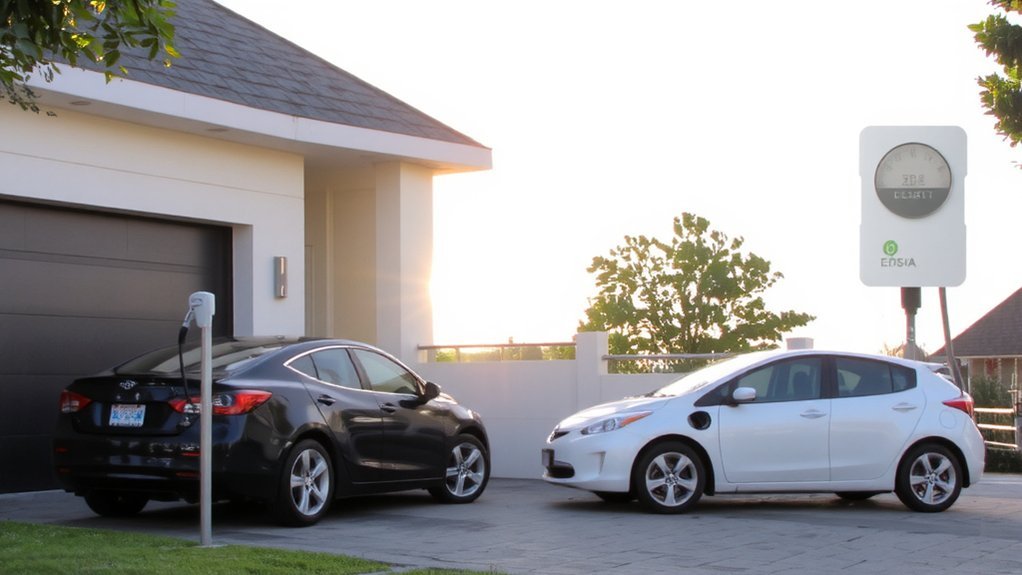
As more households buy two or more EVs, dual home chargers are becoming a practical necessity rather than a luxury. You’ll appreciate how dual units let two cars charge at once, cutting wait times and keeping both vehicles ready for daily use.
Smart scheduling and automatic load sharing help you shift charging to off‑peak hours and prioritize the vehicle that needs range most. A single dual charger usually costs less than two separate stations and reduces installation complexity, and eligible rebates often make the upgrade more affordable.
Advanced features — dynamic load balancing, Wi‑Fi control, and bidirectional V2H/V2G capabilities — let you use EV batteries to support your home or the grid safely. Dual charging supports efficient, resilient, lower‑carbon, and convenient household transport needs. Many dual units now support bidirectional charging, allowing energy to flow from the car back to the home or grid.
Assessing Your Home Electrical Capacity

You should check your service panel capacity (commonly 100–200 amps) to see if it can handle two Level 2 chargers or needs upgrading. Perform a circuit load calculation that adds existing appliance loads plus about 30–50 amps per charger to identify spare capacity.
If the numbers show insufficient capacity, call a licensed electrician to discuss panel upgrades, subpanels, or load-management solutions. A typical Level 2 charger adds about 7,200 watts (approximately 30 amps) to your load.
Service Panel Capacity
When planning to charge two EVs at home, check your service panel’s amperage and available breaker slots so you don’t overload it. Most homes have 100‑ or 200‑amp panels; older ones may be 60‑amp or marginal for EV charging.
Level 2 chargers can draw high continuous currents, so a 200‑amp panel usually gives safer headroom for two vehicles plus HVAC and appliances. Inspect for empty spaces—double‑pole 240V breakers need physical slots. If space or amperage is lacking, a subpanel or full upgrade is common.
Watch for hot panels, frequent trips, or flickering lights as warning signs. Work only with a licensed electrician who’ll verify NEC compliance, recommend upgrades, and install load‑management or subpanels where needed. You’ll protect your home and charging reliability by upgrading. Level 2 chargers typically draw 15 to 80 amps, so you should plan your panel capacity and load management accordingly.
Circuit Load Calculation
After inspecting your service panel and breaker availability, calculate the circuit loads to confirm your home can actually support two EV chargers. A proper load calculation should be performed by a licensed electrician before installation. Sum major household loads (HVAC, appliances, lighting) in watts, convert to amps, then add each charger’s rated current and voltage per manufacturer specs. Treat EV charging as continuous: apply 125% sizing and don’t exceed 80% of breaker rating for continuous loads.
For example, two 40A Level 2 units equal 80A demand (40A×240V×2), which may overwhelm a 100A service when combined with existing loads. If your calculated total exceeds panel capacity, consider load management, splitters, smart chargers, or a panel upgrade.
Have a licensed electrician verify calculations and install compliant overcurrent protection to maintain safety and NEC compliance and prevent overheating or fire.
Level 2 Chargers and Dedicated Circuit Requirements
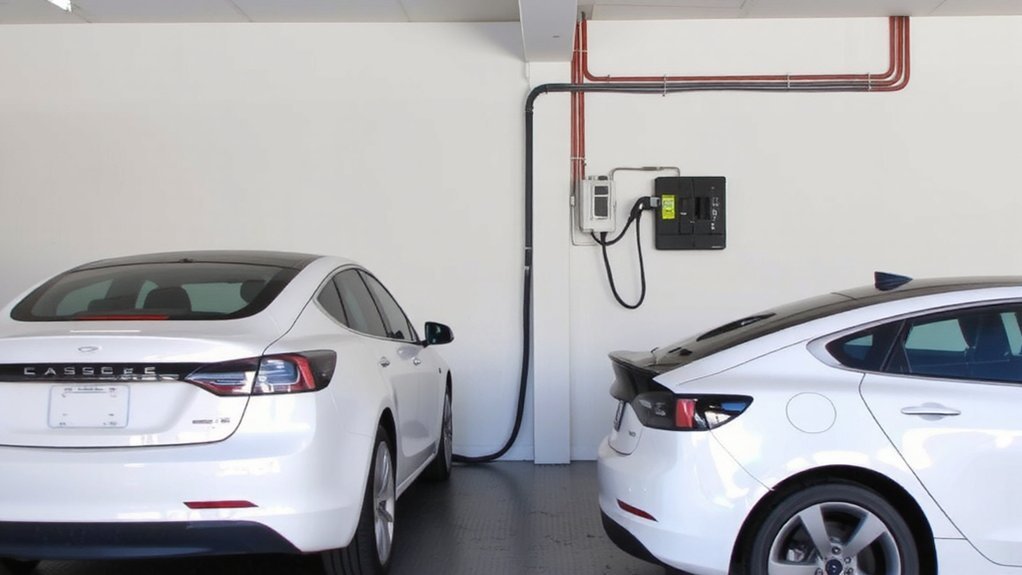
You’ll need a dedicated 240-volt circuit for each Level 2 charger to supply safe, continuous power. Level 2 chargers typically require a 240-volt supply and significantly reduce charging time compared with Level 1. You’ll also need the correct wire gauge and a dual-pole breaker sized so the charger’s continuous load stays at or below 80% of the breaker rating.
Hire a licensed electrician to size breakers (for example, an 80-amp charger typically requires a 100-amp breaker) and install the wiring to meet code.
Dedicated Circuit Basics
Because Level 2 chargers draw significant power, you need a dedicated 240‑volt circuit for safe, consistent charging. You should never share that circuit with appliances or general outlets because sharing risks overloads, nuisance trips, and electrical hazards.
The National Electrical Code requires dedicated circuits for residential Level 2 installations, and local rules or permits may add requirements. Wiring must be sized and routed to match the charger’s specifications and local code, with GFCI protection installed where required. Use conduit and wire types specified by your authority having jurisdiction, and include surge protection if local code mandates it.
Hire a licensed electrician to perform load calculations, install the circuit, and verify compliance so charging stays reliable and safe. Don’t shortcut safety—proper installation protects lives, property. Because Level 2 chargers draw more power than standard appliances, most homeowners install them on a dedicated circuit by a licensed electrician.
Breaker Sizing Requirements
When sizing a breaker for a Level 2 charger, you should size it to the charger’s continuous load rating and apply the NEC’s 125% rule—meaning a charger that draws 32 A needs a 40 A breaker, and typical residential installations fall between 30 A and 50 A depending on the unit. A Level 2 charger must be installed on its own dedicated circuit with an individual breaker to prevent overloads from other appliances.
You must select an overcurrent device that matches the manufacturer’s maximum current and meet NEC continuous load criteria; chargers require dedicated 240 V branch circuits with no outlets.
If you plan two chargers, each circuit needs its own breaker unless a certified load management system limits simultaneous draw.
Have a qualified electrician perform load calculations and panel capacity checks; upgrades or subpanels may be necessary to avoid overheating, nuisance trips, and fire hazards.
How Load Sharing Works and When to Use It
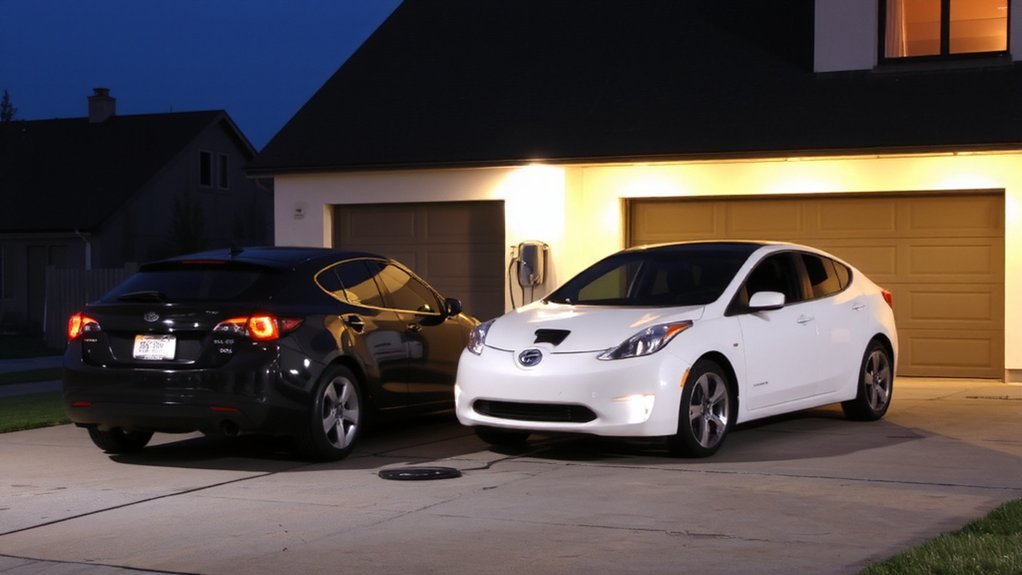
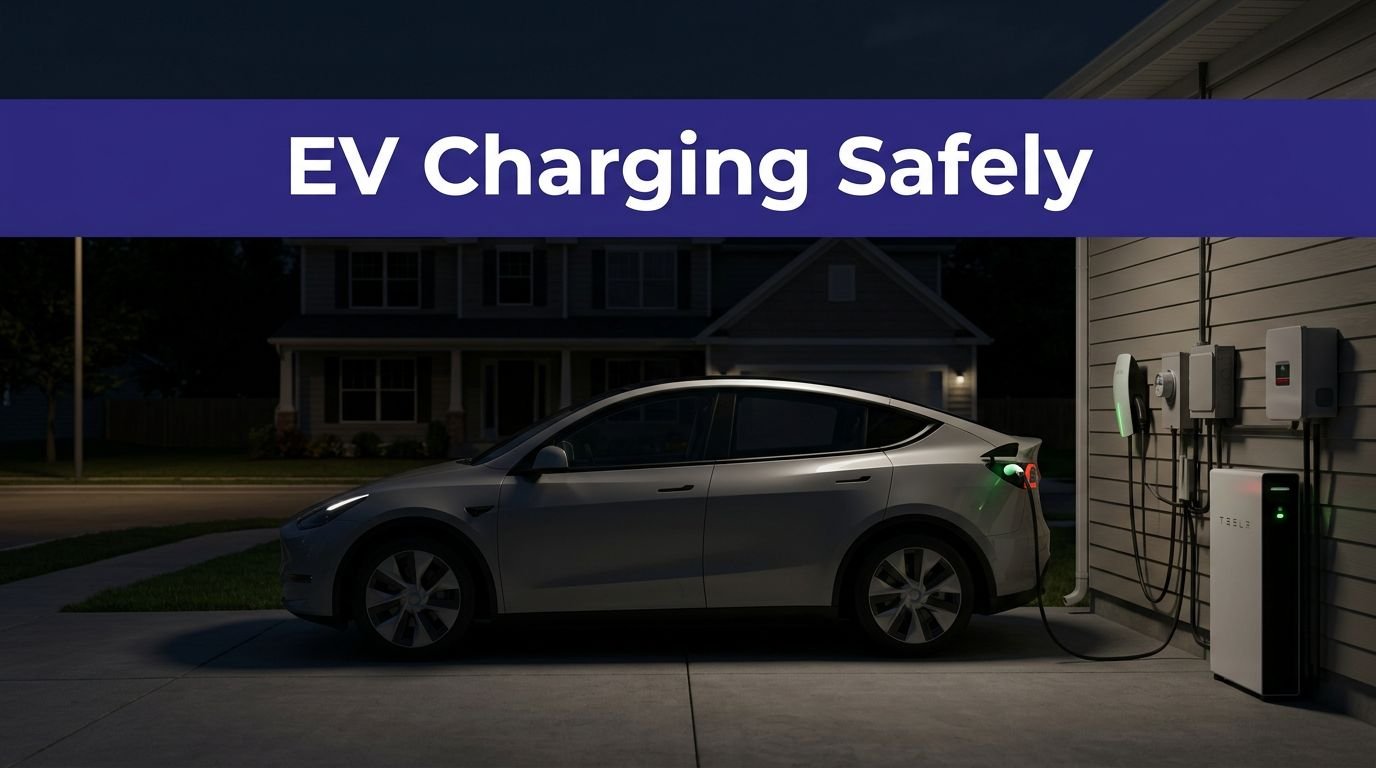
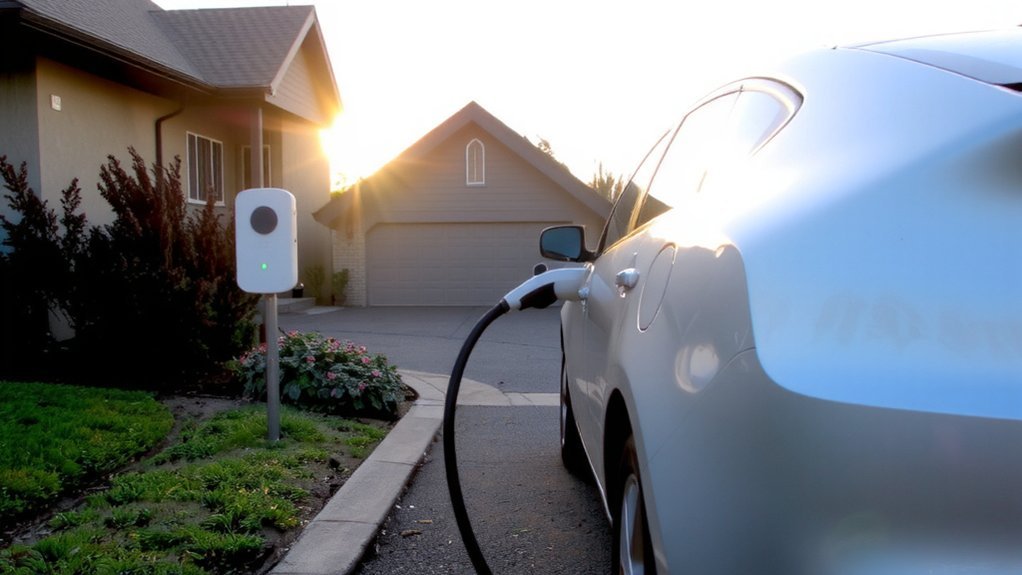
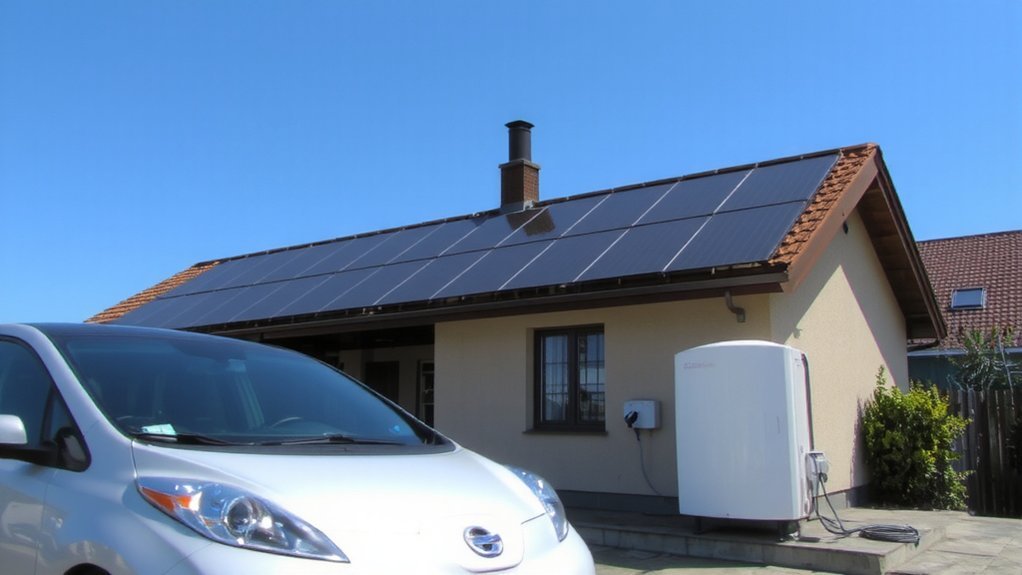
Two or more EV chargers on a limited panel can share the panel’s available power through load sharing, which dynamically divides capacity so every vehicle charges without tripping breakers. This system is a form of EV charging load management that distributes power between chargers to prevent overloads. You’ll rely on charging software and current meters that measure total available power, then allocate it proportionally across active chargers in real time.
That prevents any single vehicle from monopolizing power and avoids overloads as cars arrive or depart. Use load sharing when multiple EVs need simultaneous charging but panel capacity is limited—homes, condos, multiunit buildings, or sites where upgrades are impractical. It maximizes existing infrastructure, maintains equitable charging during peak demand, and reduces cost and failure risk. Implement it when safety, reliability, and fair access are priorities. Plan installation with a qualified electrician first.
Charger Options for Powering Two EVS
Load sharing lets you squeeze more utility from limited panel capacity, but you still need to pick the right charger setup for your household. You can choose dual EV chargers—single units with two ports that save wall space, lower hardware cost, and offer smart power distribution so charging balances automatically between cars. Alternatively, two separate chargers give dedicated charging per vehicle but take more space and usually cost more.
Load balancing chargers and smart systems allocate available power dynamically to avoid overload and maximize efficiency. If your home supports higher power, faster 22 kW units shorten charge times for two EVs. Most home solutions rely on Level 2 (240 V) chargers, which provide reliable, safe, and relatively quick charging for two cars at home. Many households find that a dual EV charger is the best solution for two vehicles.
Installation, Permits, and Hiring an Electrician
You’ll need to pull the proper electrical permit and follow local codes and NEC requirements before installing Level 2 chargers. For most homes, Level 2 charging is the sweet spot for home installation.
Check load calculations and wiring diagrams required for approval and be prepared for a typical 1–2 week inspection timeline.
Hire a licensed, bonded electrician experienced with EV chargers to handle panel work, permits, and final testing so the installation’s safe and compliant.
Permit Requirements and Codes
Why check permits before you buy a charger? You’ll need an electrical permit for most new 240V circuits, hardwired Level 2 chargers, panel upgrades, or wiring changes so installations meet the NEC and local codes. A licensed electrician can usually complete and submit the permit application on your behalf. Plugging into an existing, properly rated outlet may not need a permit, but confirm with your municipality. Permit applications usually require load calculations, diagrams, equipment certifications, and installer credentials; fees are modest and review typically adds one to two weeks.
After installation local inspectors verify breaker sizing, grounding, wiring methods, and any local amendments. Some areas combine building and electrical permits or demand extra documentation for incentives.
Start by contacting your permitting authority to confirm exact requirements and inspection timing to keep your installation safe and compliant and documented.
Choosing a Qualified Electrician
After you confirm permit requirements and inspection timing, hire a licensed electrician who’s experienced with EV charger installs and local code enforcement. You’ll want someone with EVITP or equivalent certification and manufacturer training for the charger you choose. They should understand NEC Article 625, load calculations, and when panel upgrades are needed. Verify licensing, insurance, and references before scheduling work. Many jurisdictions require electricians to have completed 8,000+ hours of supervised experience before qualifying.
- Check: EVITP, manufacturer credentials, up-to-date continuing education.
- Confirm: practical experience with Level 1/2 installs, breaker sizing, and troubleshooting.
- Coordinate: permit submission, inspection scheduling, and utility/rebate paperwork.
Pick a technician who documents safety protocols, follows code, and manages permits so your dual-car charging is compliant and safe. Ask for a written estimate, timeline, and warranty before work begins for safety and compliance.
Costs, Rebates, and Cost-Saving Strategies
Cost is the biggest factor when you charge two EVs at home: expect roughly double the electricity use — for example, charging a large-battery EV four times a week can add about $270/month, so two cars could add around $540 depending on local rates and driving. A typical full charge for a large Tesla at home falls in a range of $10.98–$18.00.
You should budget using local kWh rates (roughly $0.10–$0.32) and typical charge costs — small EVs cost about $6.80 per full charge while big Teslas run $10.98–$18.00.
Factor installation ($1,200–$2,500) and available rebates: federal tax credits cut vehicle costs and many utilities offer $500–$1,200 rebates for Level 2 chargers.
To lower bills, use TOU rates, smart/load-sharing chargers, solar pairing, and demand-response programs —and confirm incentives before installing to guarantee safe, compliant equipment. Keep records and consult your electrician.
Practical Charging Schedules and Load Management
If you’re planning to charge two EVs at home, managing when and how they charge matters as much as the dollars you just budgeted — smart scheduling and load management keep your panel from overloading, prevent breaker trips, and can let you avoid expensive panel upgrades. Most home setups use Level 2 chargers, which provide faster overnight charging than standard 120V outlets. Use smart chargers and load managers that monitor household use in real time and throttle charging to match capacity.
Hire a licensed electrician to confirm panel amperage and proper UL/CSA-certified equipment. Stagger charging sessions or enable automatic load sharing on dual-port Level 2 units. Use apps to schedule off-peak charging and remotely pause sessions if needed. Follow permit and inspection rules.
- Assess panel and wiring capacity.
- Install certified load management.
- Schedule staggered, off-peak charging safely.
Real-World Scenarios: Matching Daily Mileage to Charging Capacity
Most drivers average about 37 miles a day, so you can usually meet daily needs for two EVs with overnight Level 2 charging and simple load management. Recent advancements mean some models now exceed 500–600 km on a single charge. If you both drive under 50 miles, a 7–11 kW charger will replenish each battery overnight when you stagger sessions; charging to about 80% covers daily use and preserves battery health.
For one long commuter (100+ miles) paired with a short commuter, prioritize the larger-battery vehicle or schedule peak charging for the higher-mileage car, and use the second car’s lower-power session later. Cold climates need a larger buffer because range can drop; plan margins accordingly.
Fleet or heavy-vehicle use needs dedicated higher-capacity charging or access to fast chargers to avoid operational gaps and keep daily operations predictable.
Safety, Maintenance, and Future-Proofing Your Setup
Once you’ve matched daily use to charger capacity, protect that setup with proper safety measures, routine maintenance, and a plan for future upgrades. Have a qualified electrician verify and install any required wiring. Install dedicated 240V circuits, RCD/GFCI protection, and surge protectors; avoid extension cords and keep chargers sheltered from moisture.
Match daily use to charger capacity, then protect installations with dedicated circuits, RCDs, surge protection and dry shelter.
Inspect cables, connectors, and units monthly, follow manufacturer service intervals, update station firmware, and store gear securely when idle. Verify your service capacity with an electrician; get an EICR and upgrade the consumer unit or looped supply as needed to support two Level 2 chargers. Train household users on emergency shutdown and troubleshooting.
- Circuit integrity: dedicated circuits, correct breaker sizing.
- Ongoing care: inspections, firmware, secure storage.
- Future-proofing: service checks, consumer unit and network upgrades.
Document work and keep records current.
Conclusion
You can confidently set up dual charging at home if you plan and upgrade where needed. With load sharing, you’ll keep both cars ready without blowing the breaker, and smart scheduling saves money on peak rates. Choose a charger that matches your circuits and future plans, apply for rebates, and maintain safety checks. Think long-term—this investment keeps you ahead of the curve and ready for whatever the road throws at you, come rain or shine.