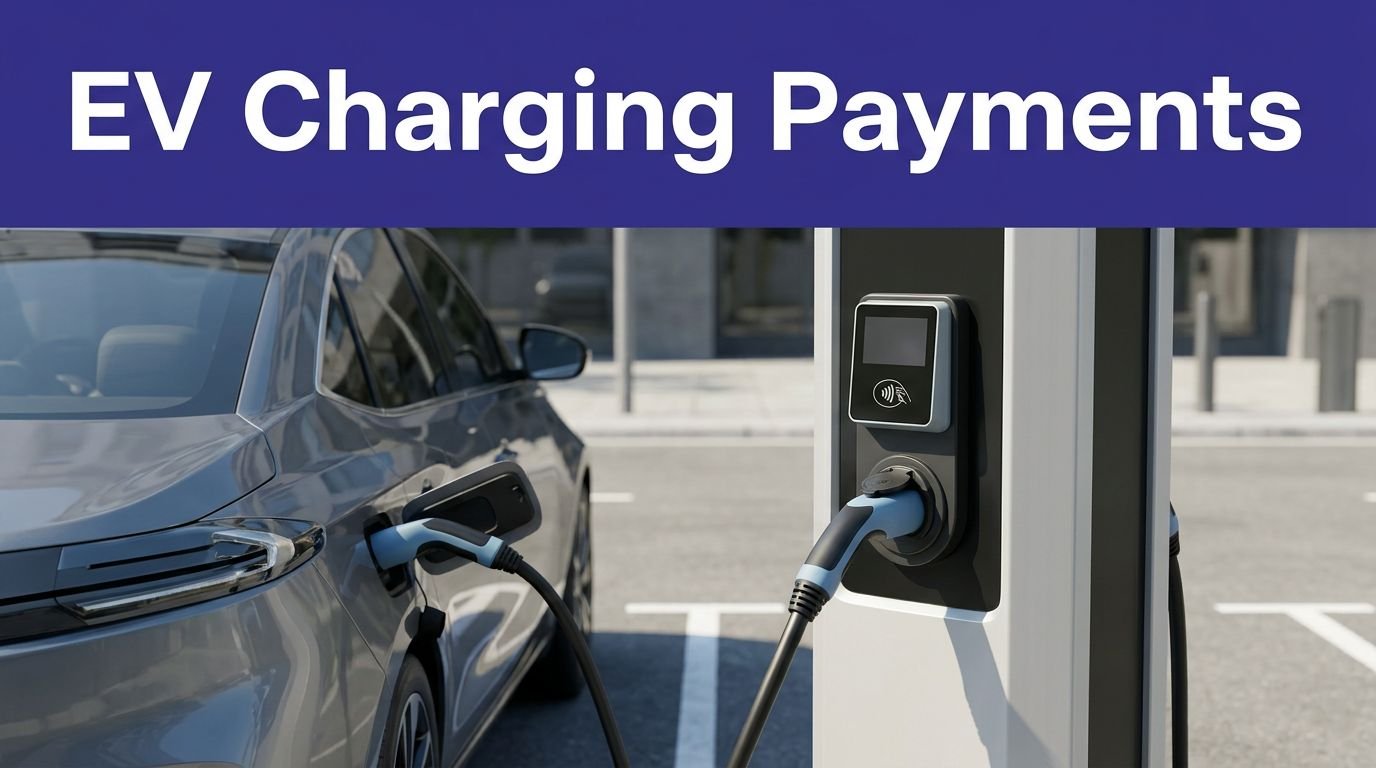
If you’re managing an apartment or condo, you’ll want chargers that balance speed, cost and tenant access. Level 2 units hit that sweet spot, but smart outlets and load management can cut upfront expense. You’ll need to weigh installation, billing and durability—and here’s what you need to know next.
Key Takeaways
- Install Level 2 (240V) smart chargers — 40A typical — to deliver 20–30 miles per hour and fit resident overnight routines.
- Choose OCPP-compatible, networked chargers with 23-foot cords and adjustable output for per-use billing and remote management.
- Prioritize certified safety features, durable enclosures, and reliable load management for multifamily shared-parking longevity.
- Consider smart outlet systems or lower-power Level 2 clusters to reduce upfront cost and scale with demand.
- Plan electrical assessments, permit-based upgrades, and third-party financing to minimize capital barriers and enable fair resident billing.
Why Level 2 Charging Is the Sweet Spot for Apartments and Condos
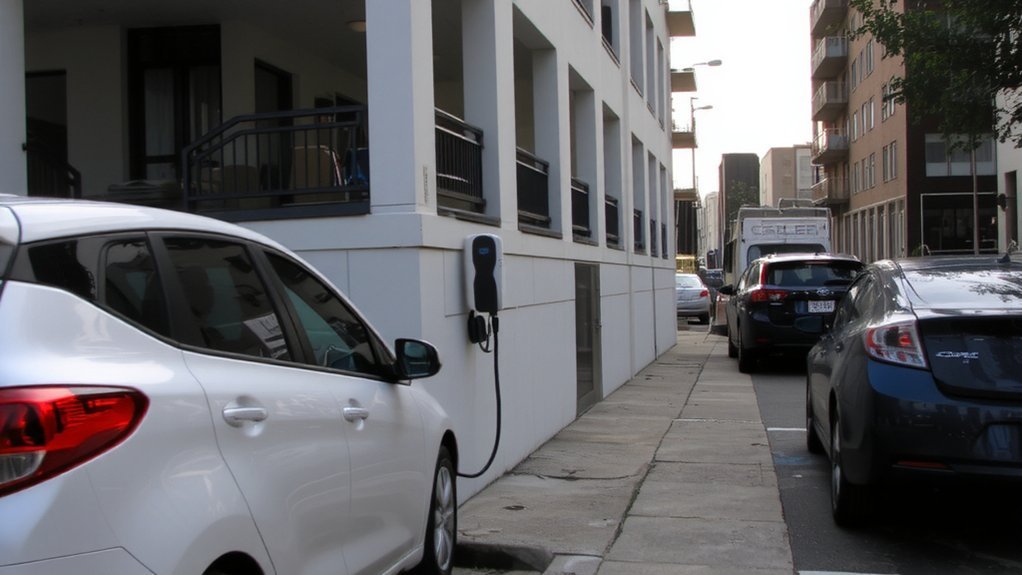
Because most residents park overnight, Level 2 chargers hit the sweet spot: they add about 20–30 miles of range per hour, letting EVs top off comfortably by morning while supporting daily commutes. They are 240-volt and typically 40-amp, which is why they charge much faster than a standard outlet.
You’ll find Level 2 offers fast, practical charging that fits typical resident routines, cuts time compared with slow Level 1 units, and reduces range anxiety safely. You can rely on universal compatibility with nearly all EVs and adapters, so residents won’t need new hardware as vehicles change.
Installation demands stay modest, avoiding costly electrical overhauls and limiting heat in enclosed parking—important for safety. Smart load management lets you scale chargers across spaces without overloading panels.
Best Level 2 Wall Units and Home Chargers for Multifamily Properties
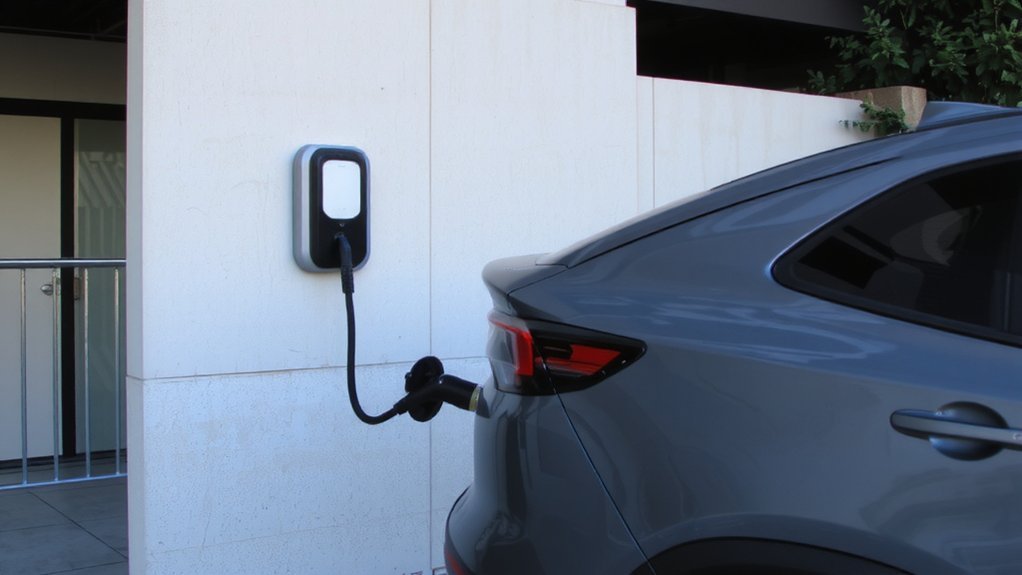
You’ll want chargers that deliver the right power and speed — 240V/40A Level 2 units typically provide 25–60 miles of range per hour, ideal for overnight charging in multifamily settings.
Consider installation needs carefully: professional 240V circuits, panel capacity, and parking layout will determine placement and scalability.
And plan billing ahead by choosing networked, OCPP-capable units with user authentication, scheduling, and energy reporting so you can track usage and charge residents accurately. For condos, a Tesla wall charger often has no standard connectivity to building charging management systems, so OCPP-capable smart chargers are a better choice for billing and load management.
Power and Speed
A good Level 2 wall unit delivers roughly 25–60 miles of range per charging hour (typical high-power models run 240V/40A up to about 9.6 kW), so you can fully top up most daily drivers overnight in multifamily settings.
For multifamily properties, High-power Level 2 charging often offers the best balance of speed and cost.
- High-power 240V/40A.
- Lower-power 240V/20A.
- Smart adjustable units.
Choose chargers that match your building’s capacity: high-power 240V/40A units (≈25–60 mi/hr) for quick turnaround, 240V/20A units (≈5–15 mi/hr) when panels limit output, and avoid Level 1 for apartment use. Smart, adjustable chargers let you set amperage between 16A–50A, schedule off-peak charging, and monitor safety metrics like overcurrent/overheat protection. Recommended features focus on reliable power, 23 ft cord length for convenience, OCPP compatibility, and certified safety protections so you and your neighbors charge securely and safe.
Installation and Billing
Having the right Level 2 units in place is only half the equation—installing them in multifamily settings and setting up fair billing are what make charging practical for residents. Nationwide infrastructure continues to expand, with over 74,000 public EV charging stations in America as of July 2025.
You’ll need electrical assessments to identify capacity upgrades and plan conduit routes; older buildings often require costly panels or service upgrades, so budget accordingly.
Use wall-mounted or lamppost/ceiling solutions where parking’s tight, and prioritize units with ground-fault protection and weather resistance.
Start early to secure licensed electricians and tap state/local incentives to offset costs.
For billing, choose networked chargers that support per-use or reservation fees, resident accounts, and smart load management to guarantee safe, accurate allocation of power.
Consider third-party financing to reduce upfront risk.
Keep records and reporting to maintain resident safety and trust.
Smart Outlet Systems and Low‑Cost Alternatives for Shared Parking

You can retrofit shared parking with smart outlet systems that deliver Level 2 charging, tap-to-charge convenience, and centralized billing for multifamily properties. Pando’s updated Gen2 Smart Outlet starts at $649 per unit and adds features like better tap-to-charge integration, stronger antenna connectivity, and a manual offline mode. They cost far less than traditional wall units, scale on a single circuit, and avoid common garage connectivity problems.
But you’ll trade off attached cables and some charging speed, so weigh convenience, cost, and future demand when choosing low-cost alternatives.
Smart Outlets for Multifamily
Smart outlets deliver Level 2 charging in apartments and condos while cutting hardware and installation costs by as much as 70% compared with traditional EV stations. Many modern units include automatic phase balancing to optimize charging across multiple vehicles. You’ll get robust, durable outlets that avoid bulky wall boxes, work in underground garages without Wi‑Fi or cellular, and use tap‑to‑charge or secure authentication so residents charge safely. You’ll rely on residents to bring portable chargers, lowering hardware costs but affecting convenience.
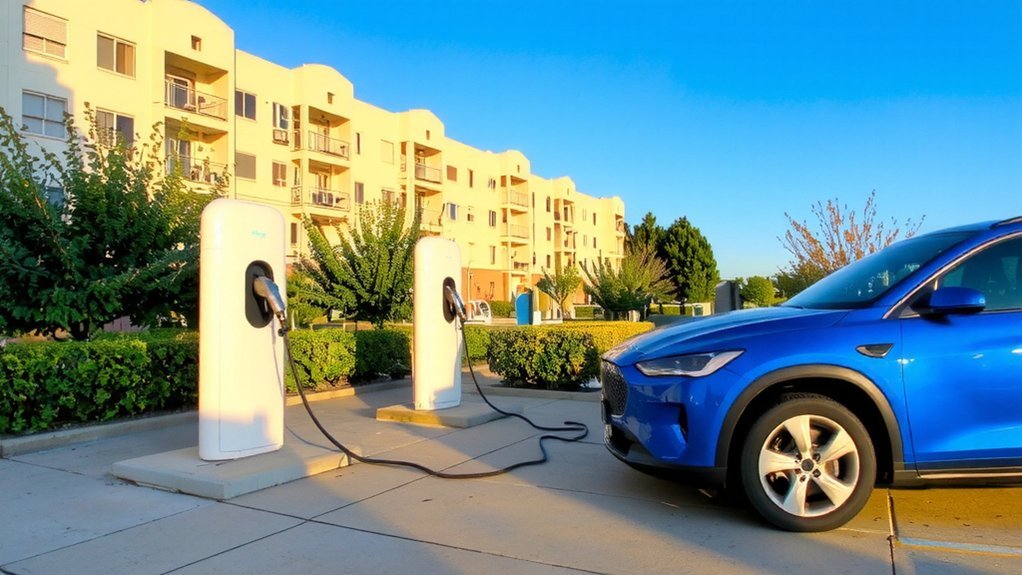
Consider these highlights:
- Lower upfront and maintenance costs — simpler hardware, no cords to break.
- Scalable deployment — adaptive load management balances power across spots.
- Managed billing and remote monitoring — property managers track usage and safety.
Be aware charging speeds can be reduced by electrical limits, and some incentives may not apply.
Low-Cost Alternatives and Tradeoffs
When space or budget’s tight, shared and low‑cost charging options give property owners practical ways to support residents’ EVs without installing a charger at every stall. You can deploy software-based sharing (like Parkade) to schedule and enforce time-limited use, preventing overstays and maximizing utilization while keeping access fair. Owners can monetize idle chargers; residents get predictable access and safer, managed charging. This approach lowers costs because Parkade is private to your building.
For broader coverage, low-cost installers (eg, Green Joulez) provide scalable Level 2 clusters, energy management, and driver billing with rebate help. Where infrastructure limits persist, dedicated outlets or portable Level 1/2 chargers let tenants charge overnight with landlord approval. These choices cut upfront costs, but you should assess load, permits, and clear billing to keep systems safe and code-compliant and continuously maintain resident trust.
User Authentication, Access Control, and Tenant Management
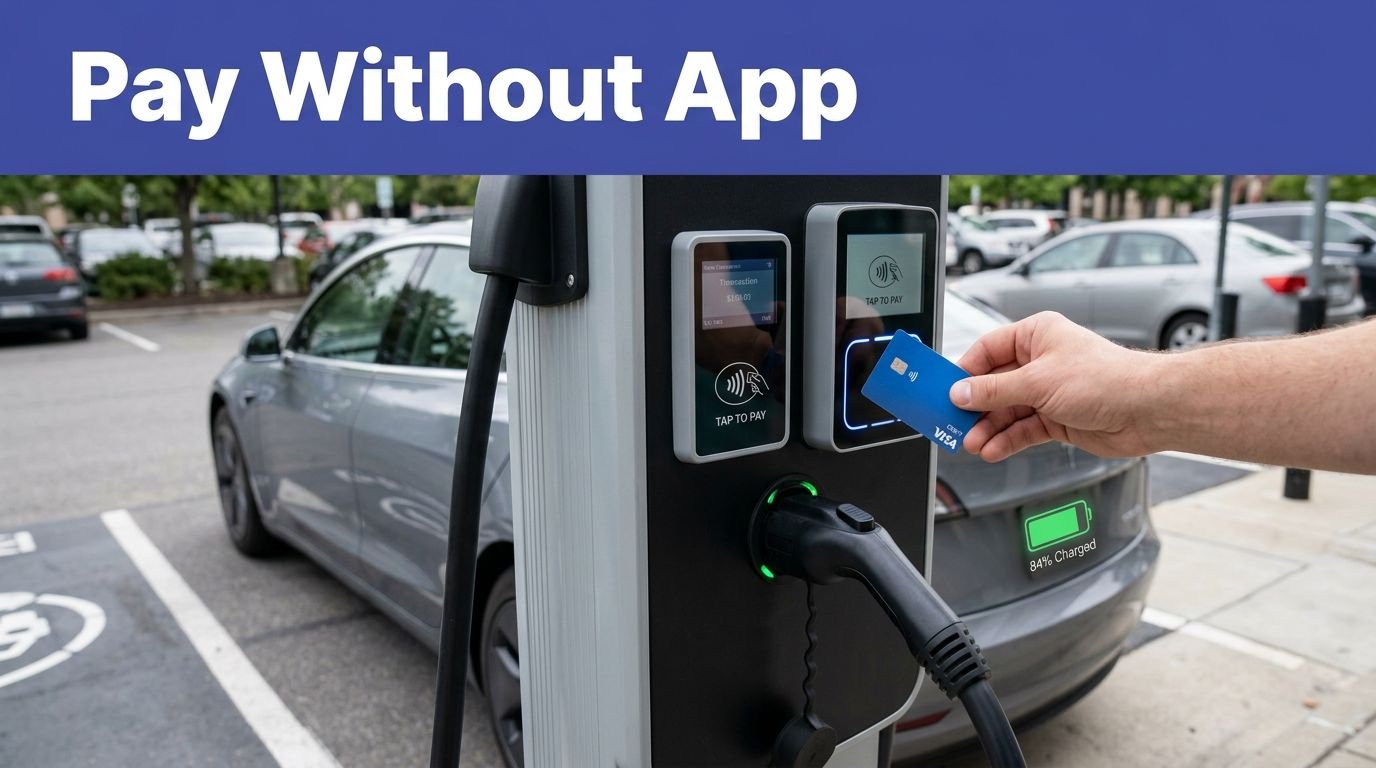
Although shared chargers boost convenience, they also create access, security, and billing challenges that need clear policies and reliable tech. You should pick authentication that balances convenience and safety: RFID, app logins with MFA, or QR codes; biometrics are rare in multi-unit housing. Surveys show that 74% of residents consider EV charging access crucial when choosing where to live. Role-based access and time/geofence controls limit who charges and when; lockable enclosures deter theft. For tenant onboarding, use digital portals to register vehicles, assign chargers to units, and bulk-manage users. Management software keeps audit logs for disputes and lets you notify residents about availability or maintenance.
- Choose secure auth: mobile apps + MFA.
- Enforce access: roles, schedules, physical locks.
- Simplify onboarding: portals, bulk uploads, clear policies.
You’ll also want systems that scale and integrate with building security seamlessly.
Billing, Chargeback and Rate Structures for Shared Chargers
Anyone managing shared EV chargers will need a clear, enforceable billing strategy that balances fairness, simplicity, and regulatory compliance. Recent policy shifts mean 46 states have passed legislation to redefine public utilities so businesses can charge for electricity used at chargers. You should favor metered kWh billing for transparency and safety, with time-based or hybrid models available where justified. Consider subscription or pay-per-session options for resident convenience.
Use submeters and automated chargeback software to allocate costs precisely and reduce billing disputes. Design rates to reflect utility tariffs: watch for commercial EV phase-in tiers, on/off-peak pricing, customer and demand charges, and local kWh taxes. Guarantee billing systems produce transparent statements and retain records for audits and tax reporting.
Integrate real-time monitoring, mobile payments, and roaming support, and verify compliance with state rules and incentive documentation. Train staff on billing procedures and emergency response related to charging equipment.
Electrical, Installation and Permitting Considerations
A clear installation plan will save time and money: size dedicated 208/240V circuits (typically 40A) for Level 2 chargers, route conduit and locate panels with future growth in mind, and design 40% EV-capable parking (with 10% active Level 2 in California) to meet state rules. You’ll follow NEC Article 625 and local codes; permits must be approved administratively if safety standards are met.
Plan installations: size 208/240V 40A circuits, route conduit, design 40% EV-capable parking per NEC 625
New construction is required to install electrical conduit capable of supporting a Level 2 charger EV-capable conduit. Coordinate with utilities, property managers and HOA to plan meter locations and direct wiring options that reduce costs and maintenance. Prioritize conduit, accessible parking, and clear electrical-room access for safety.
Consider these essentials:
- Panel location and conduit path planning.
- Dedicated 208/240V circuit sizing and wiring.
- Permit documentation and code compliance.
Keep records and inspections current for long-term safety.
Scalability, Load Management and Panel Upgrade Strategies
Once you’ve mapped circuits, conduit and permits for initial chargers, you’ll want a plan that lets the system grow without repeated costly rewiring. Make sure to integrate dynamic load balancing between chargers and building systems to continuously monitor and adjust power allocation. Start with panel-integrated dynamic load management so you can retrofit existing infrastructure and add chargers safely. Use circuit load sharing or dedicated circuits with centralized management depending on building size; both let you scale while staying within panel limits.
Implement load shifting, peak shaving and dynamic load balancing to protect capacity, lower costs and reduce grid stress. Tie chargers into demand response and energy storage when possible to shift energy use to off-peak times.
When upgrades are required, select future-ready or modular panels that support networking, smart controls and selective capacity increases to guarantee safe, predictable expansion and simplify long-term maintenance.
Durability, Maintenance and Reliability for Underground Garages
Because underground garages expose equipment to moisture, temperature swings, dust and limited ventilation, you should prioritize chargers and installations built specifically for that environment: hard‑wired, wall‑mounted units with corrosion‑resistant enclosures and simple user interfaces will cut failure points, while network‑independent operation, built‑in thermal management and quick fault detection guarantee day‑to‑day reliability. When possible, install a Level 2 charger fed by a 240-volt circuit to minimize charging time and reduce reliance on public chargers.
Prefer hard‑wired, wall‑mounted, corrosion‑resistant chargers with thermal management and simple, network‑independent controls for underground garages
Choose certified indoor/damp‑rated units, avoid touchscreens, and plan accessible mounting to facilitate service. Follow scheduled electrical inspections and keep spare parts and service contracts available. Maintain clear cable management and avoid flood‑prone locations to reduce hazards.
- Select corrosion‑resistant, hard‑wired chargers with thermal management.
- Favor network‑independent designs and simple interfaces.
- Schedule inspections, secure spare parts and guarantee easy service access.
Prioritize compliance with electrical safety codes and clear emergency procedures always.
Choosing Providers, Financing Options and Deployment Roadmap
After addressing durability and maintenance in underground garages, you’ll need to pick providers and finance options that match your building’s scale, budget and operational needs. In Q3 2024, Colorado surpassed California as the leading state for EV sales in the U.S. Choose vendors experienced with multifamily installs, offering integrated hardware, warranties, network services and responsive support; prioritize compatibility with multiple EV brands and scalable chargers.
Evaluate providers that bundle financing or tap large credit facilities and incentives so you minimize upfront risk. Layer grants, utility rebates, federal tax credits and state programs to cut net costs. Use equipment financing or targeted loans when ownership suits your structure, or consider provider-managed deployment for turnkey operations.
Build a phased roadmap: pilot a few stalls, verify operations and safety, then expand with monitored maintenance and clear tenant policies and documented maintenance and training.
Conclusion
You’ll see Level 2 chargers bring steady, apartment-ready power like a reliable lighthouse guiding nightly commutes. Pick smart 40A–50A wall units or scalable outlets, and you’ll balance speed, cost and tenant access with OCPP billing and load management. Plan permits, durable hardware and a phased rollout, and you’ll watch shared parking transform into a calm charging harbor that keeps residents moving and your building future-ready. Start small, iterate, and you’ll win tenant satisfaction and savings.