U.S. EV charger installations climbed about 35% in 2024, underscoring how quickly home and public charging are expanding. You’ll face real choices as you shop between ChargePoint, Autel, Tesla and Grizzl‑E, because they differ in speed, smart features and build quality—so you’ll want to know which strengths matter most to you.
Key Takeaways
- ChargePoint and Autel deliver up to ~50 amps (≈11.5–12 kW); Grizzl‑E tops at 40 amps (~9.6 kW).
- ChargePoint and Grizzl‑E offer advanced scheduling, load balancing, and strong app features; Autel provides basic Wi‑Fi/Bluetooth control.
- Tesla Wall Connector integrates most tightly with Teslas and Powerwall for automated charging and home energy optimization.
- Grizzl‑E focuses on rugged IP67/NEMA‑6 outdoor durability; ChargePoint and Autel are weather‑resistant but vary in cord flexibility and materials.
- Price/value tradeoff: Grizzl‑E is budget‑friendly, Autel mid‑range, ChargePoint pricier for ecosystem features, Tesla best value for Tesla owners.
Charging Power and Speed Comparison
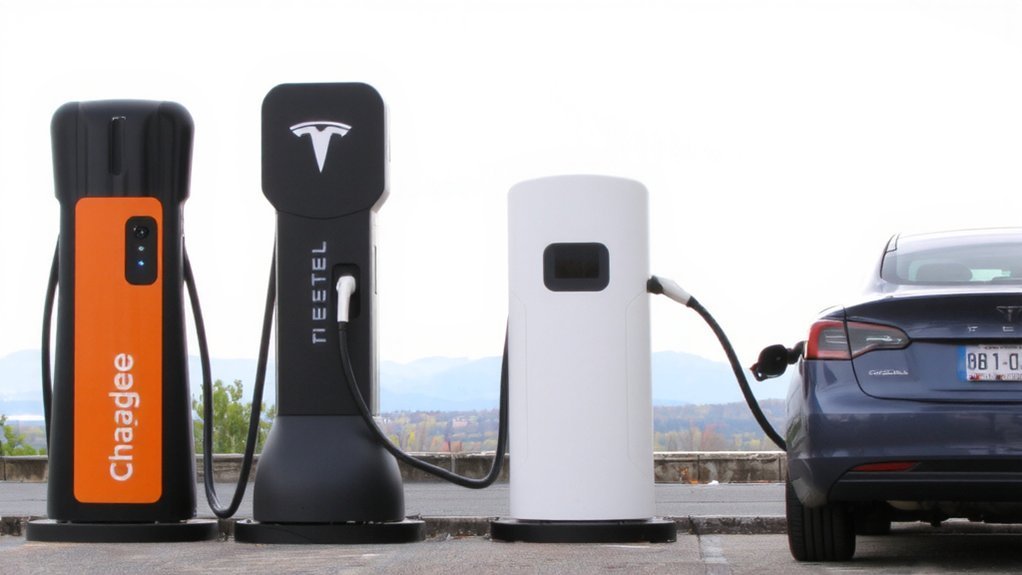
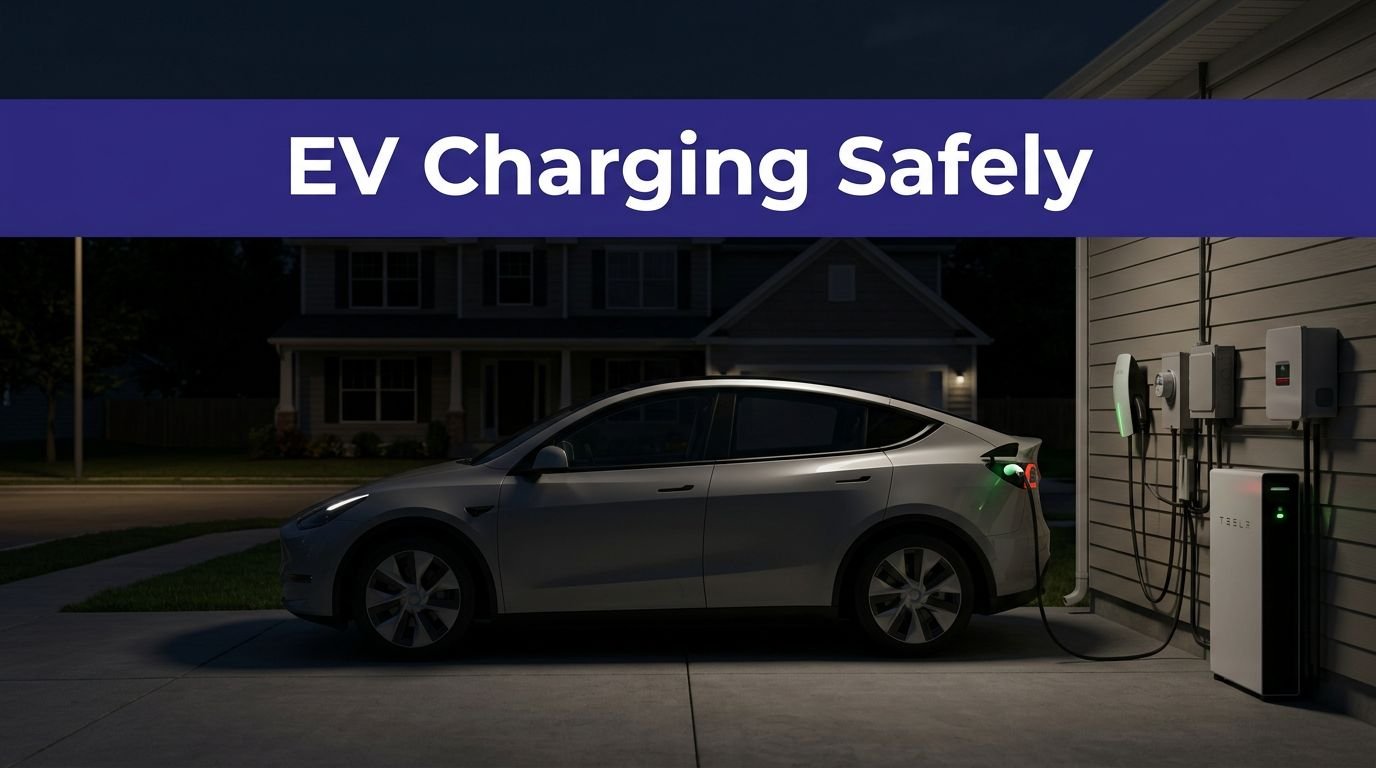
When you compare charging power and speed, ChargePoint’s Home Flex leads with up to 50 amps (12.0 kW), while Autel’s MaxiCharger Lite 50 matches that amp class with about 11.5 kW and Tesla’s Wall Connector follows closely at 48 amps (~11.5 kW) optimized for Teslas.
Grizzl‑E units top out at 40 amps (~9.6 kW), so they charge more slowly but still handle overnight needs. You’ll want higher amperage if you need quicker top-ups, and ChargePoint or Autel give you that headroom. Tesla’s 48 amps is excellent if you drive a Tesla.
Grizzl‑E is a safe, robust choice for overnight charging or dual-vehicle setups when you accept reduced per-vehicle speed. Always confirm circuit capacity and professional installation to keep charging safe and follow manufacturer guidelines. Keep in mind that most home units use Level 2 charging, which runs on 240 volts and typically provides 6–19 kW.
Smart Features, Connectivity, and User Experience
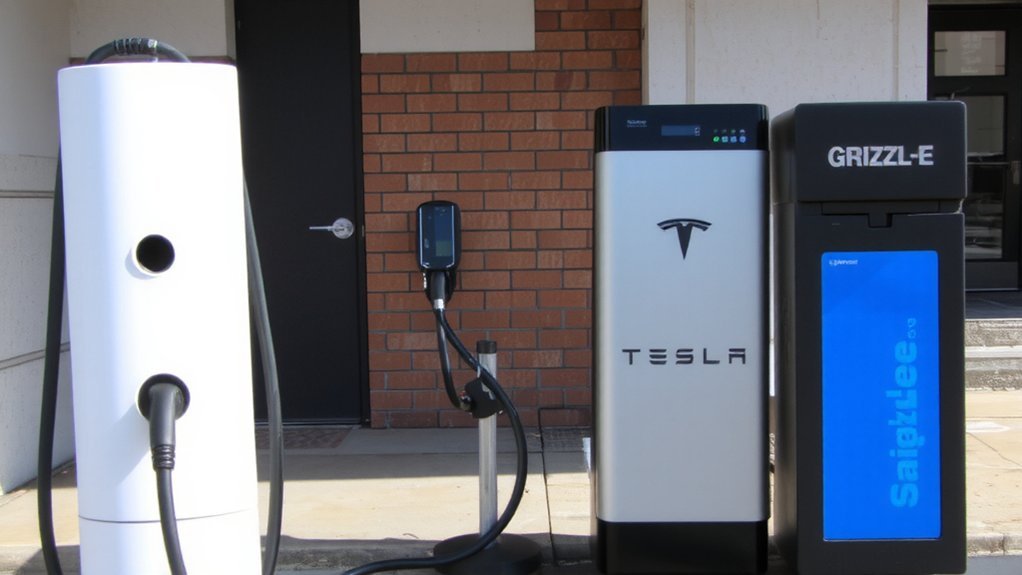
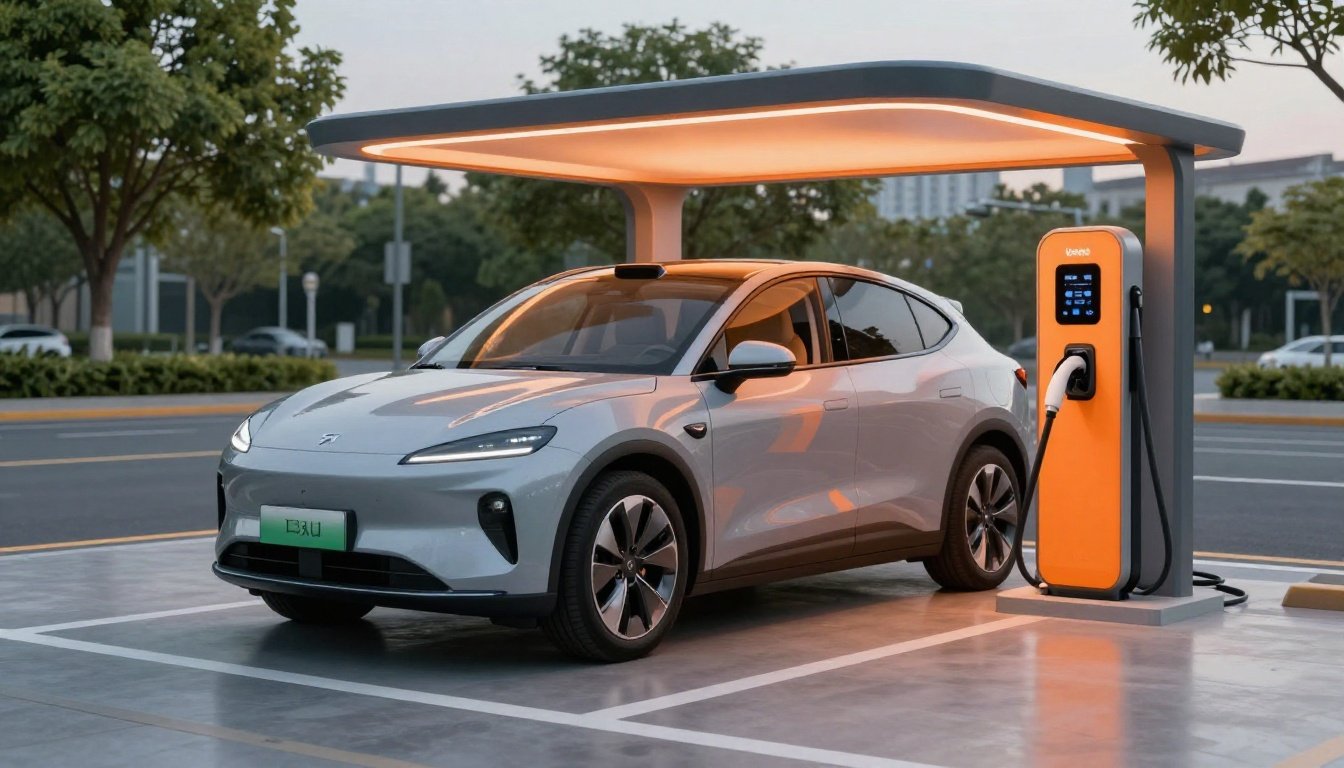
How smart your charger needs to be depends on whether you want networked energy management or just reliable remote control. You’ll choose ChargePoint if you need robust Wi‑Fi, field‑swappable cables, scheduling, cost tracking, and multi-unit load balancing for safe home energy management.

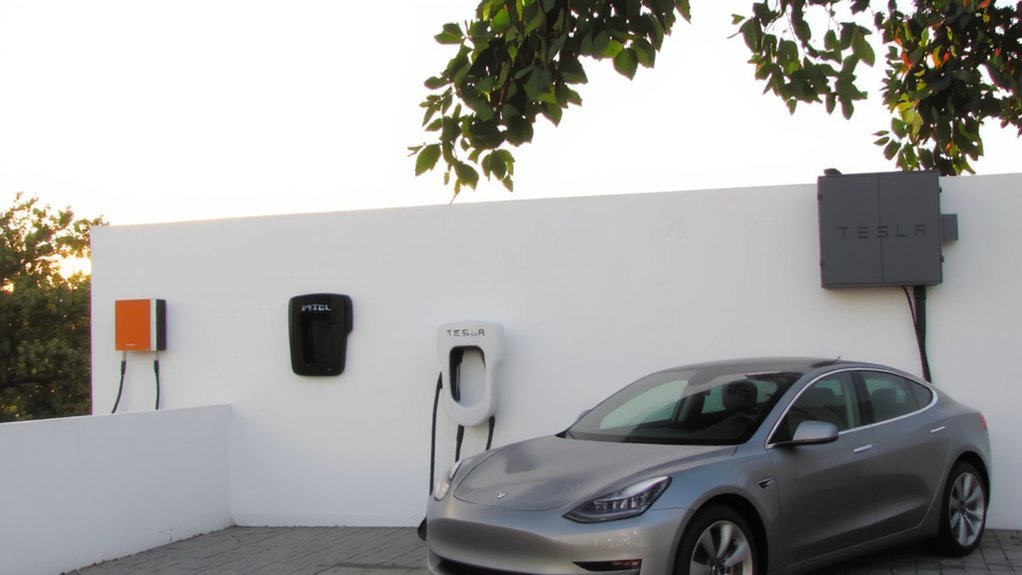
Grizzl‑E Smart gives adjustable current (16–40A), Wi‑Fi/Bluetooth control, ENERGY STAR efficiency, and simple apps for secure remote monitoring. Autel MaxiCharger Lite is reliable but offers basic Bluetooth/Wi‑Fi without advanced load sharing.
Tesla integrates deeply with Tesla vehicles, app and Powerwall for seamless, safety‑aware automation.
- Choose ChargePoint for advanced networking and detailed usage reports.
- Pick Grizzl‑E for straightforward control and adjustable current.
- Select Autel for reliable, no‑frills operation.
All options provide firmware updates and remote diagnostics to maintain safety and reliability. For example, some top models like the Emporia and Tesla offer a 48A rated current for faster Level 2 charging.
Durability, Build Quality, and Installation Considerations
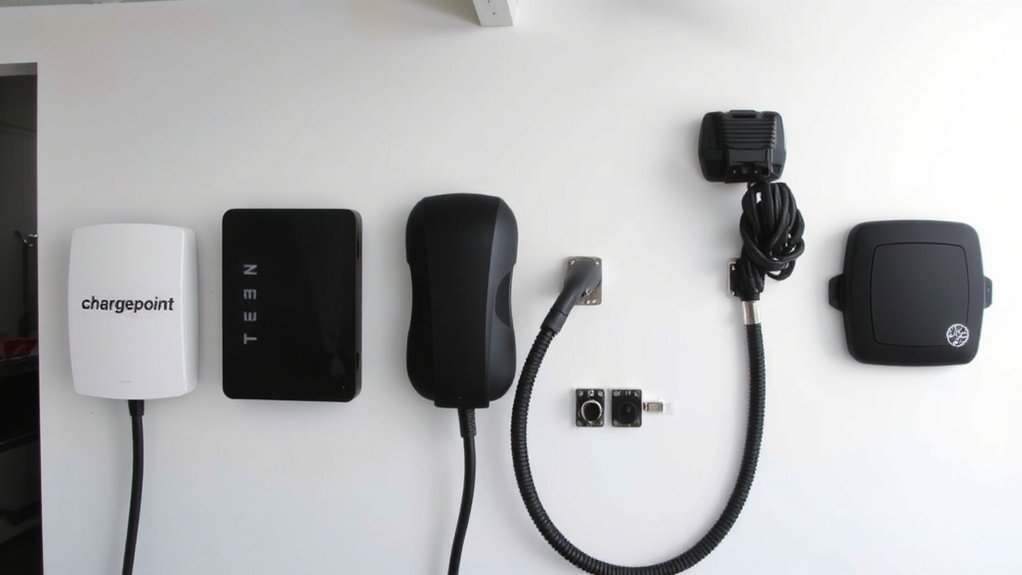
Durability and build quality matter because you’ll want a charger that survives weather, daily use, and a straightforward installation without surprise costs. Choose Grizzl-E if you need rugged IP67/NEMA‑6 protection and corrosion‑resistant housing—users report hose and dunk testing with no intrusion. Also, consider that Level 2 charging reliably refills vehicles overnight. Tesla Wall Connector uses premium materials and outdoor-capable construction, though public IP/NEMA specifics are sparse. ChargePoint balances solid construction and weather resistance suitable for outdoor home use. Autel shows robust assembly but has reported stiffer cords in cold weather.
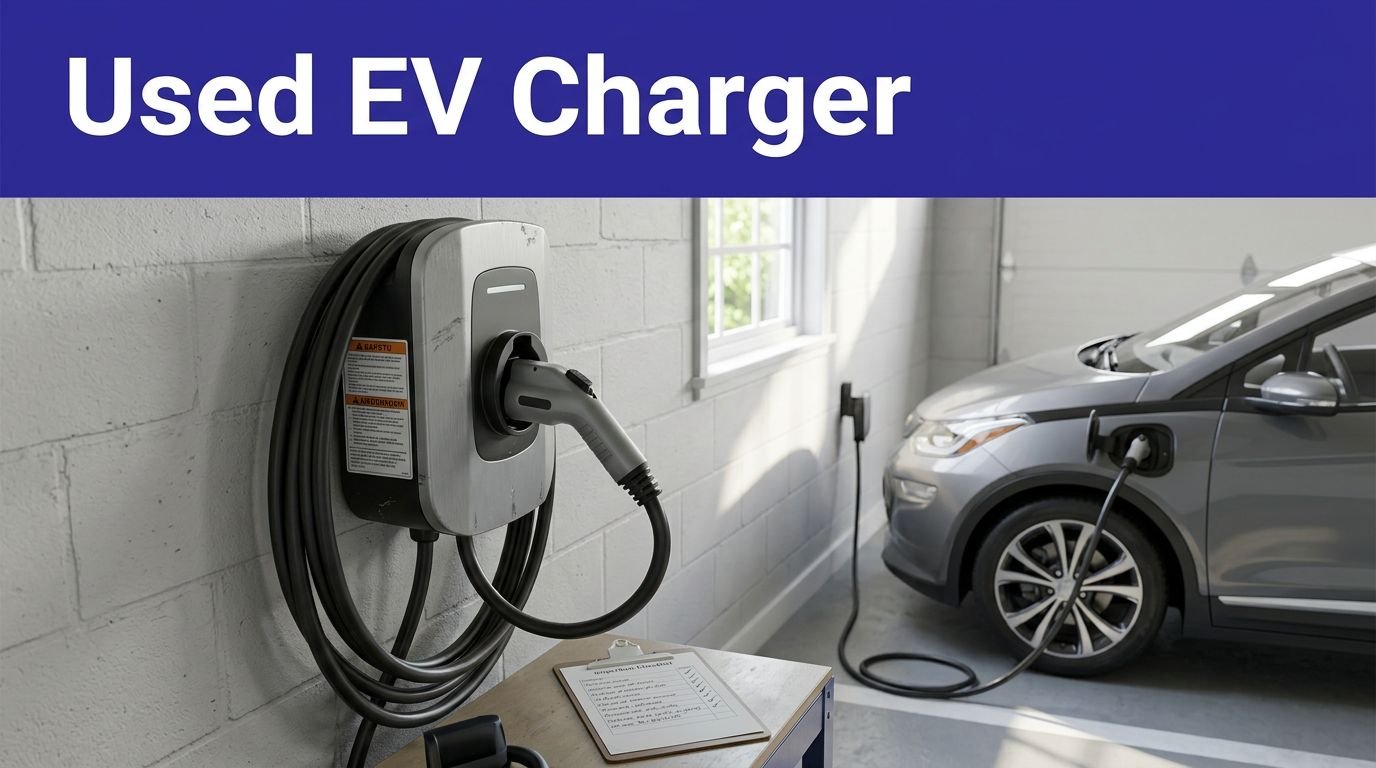
For installation, pick the mounting and connection style that matches your home: Grizzl-E and ChargePoint offer hardwire or NEMA 14‑50 plug options; Tesla and Autel typically need professional hardwiring at higher power. Check warranties—3–4 years common—for long‑term safety assurance. Prioritize certified electricians and inspections.
Price, Value, and Ecosystem Compatibility
Choosing an EV charger means balancing upfront price, long‑term value, and how well it fits your vehicle and smart ecosystem. You’ll pay more for ChargePoint‘s advanced app and ecosystem ($400–$700) but get detailed cost tracking and network integration.
Autel and mid‑tier brands (Emporia, JuiceBox, Wallbox) deliver solid smart features around $400–$500, offering strong value and safe remote control. Grizzl‑E gives rugged, budget‑friendly options ($350–$395) with basic smart features and Energy Star efficiency; Tesla’s Wall Connector is best value for Tesla owners (NACS), with a universal option for others.
Consider compatibility and warranty when prioritizing safety and long‑term savings, ensuring safe operation. Note that Level 2 chargers typically operate at 240 volts and offer faster home charging than Level 1.
- Compare upfront cost vs features.
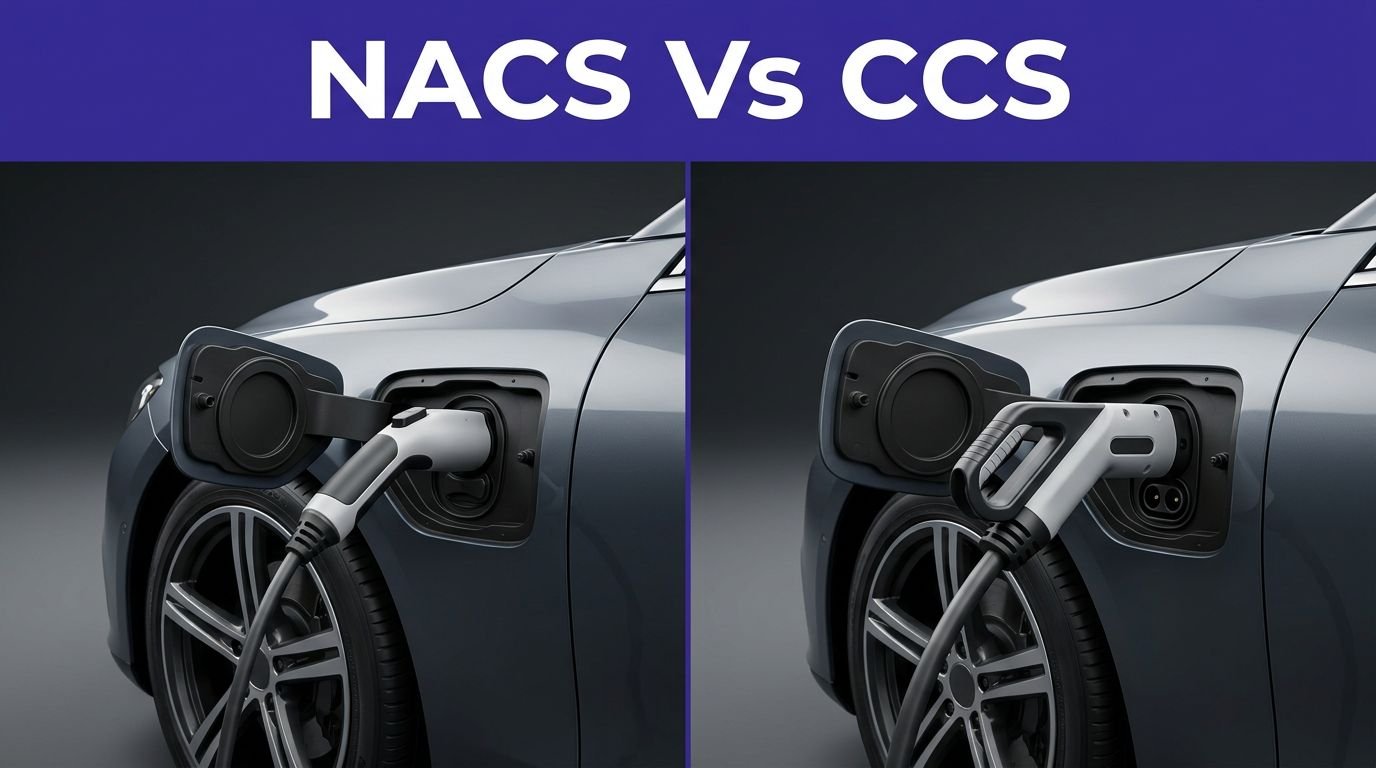
- Prioritize connector compatibility (J1772 vs NACS).
- Check app controls, warranty, support, and emergency procedures regularly.
Conclusion
You’ll pick the charger that fits your priorities. If you want top speed and smart networking, ChargePoint’s the leader; Tesla marries vehicle integration with reliable charging; Autel gives budget-friendly basics; Grizzl‑E serves rugged, no‑frills value. Think of these options like tools in a toolbox: each does a job well. Consider charging power, connectivity, durability, and ecosystem to make a choice you’ll be happy owning long term. Update your choice as needs evolve and technology improves.