You’ll find major retailers are turning their parking lots into practical EV charging hubs, but their scale and pricing vary a lot. This guide compares Walmart’s nationwide fast-charging push with Target’s growing network and Whole Foods’ urban focus. Keep going to see which stops save you time and money.
Key Takeaways
- Walmart is rolling out 5,000+ fast-charging sites by 2030, owning lots, and installing 400 kW CCS1 and NACS-capable chargers at many stores.
- Target operates 100+ sites with 600+ charging spaces via partners like Tesla, ChargePoint, and Electrify America across 20+ states.
- Whole Foods offers chargers at under 10% of locations, mostly Level 2 units concentrated in urban, higher-income areas.
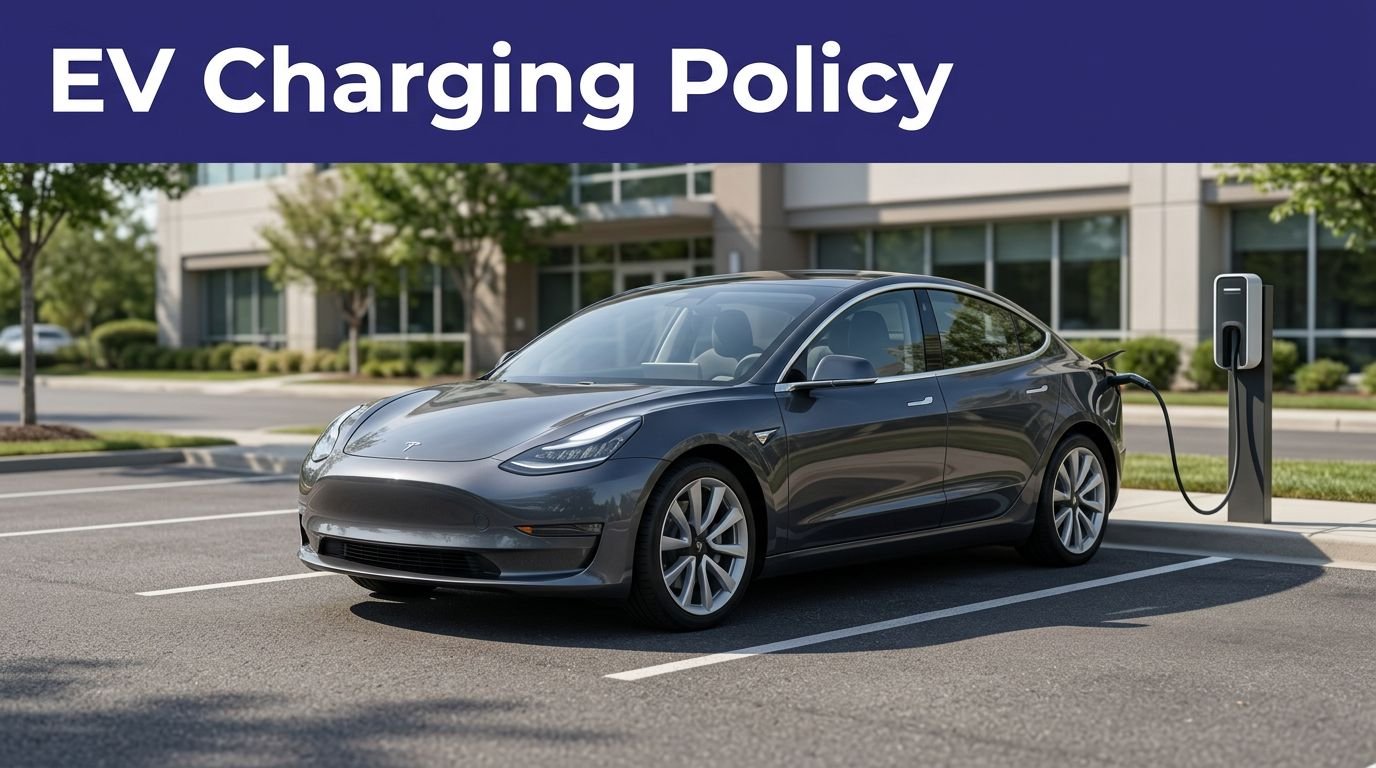
- Expect multiple stalls per Walmart/Target site, ADA-accessible and pull-through spaces, with trained associates and routine maintenance.
- Always check charging apps for real-time availability, per-kWh pricing, network fees, and charger compatibility before visiting.
Walmart’s National Fast-Charging Network: Scale, Technology, and Accessibility
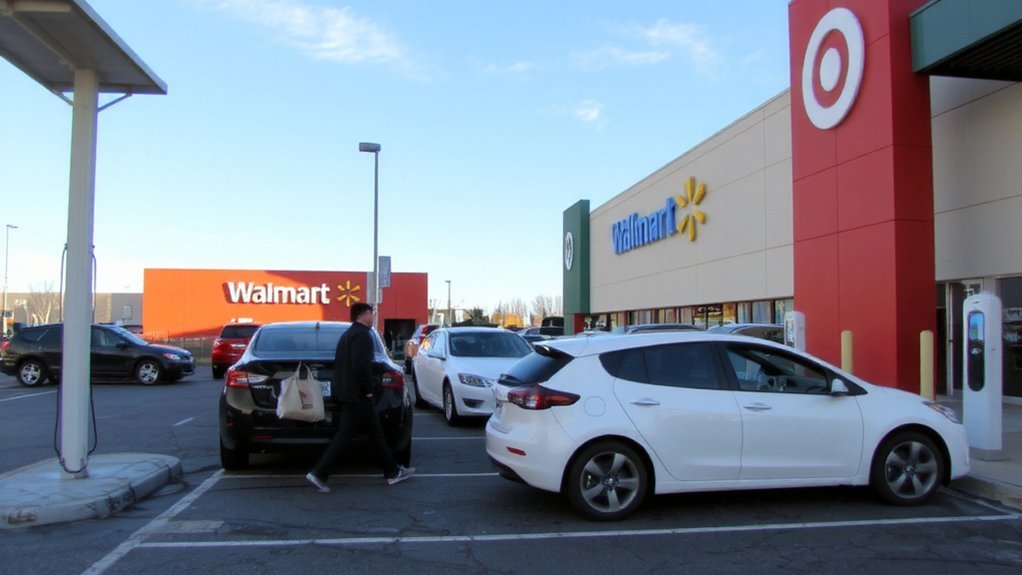
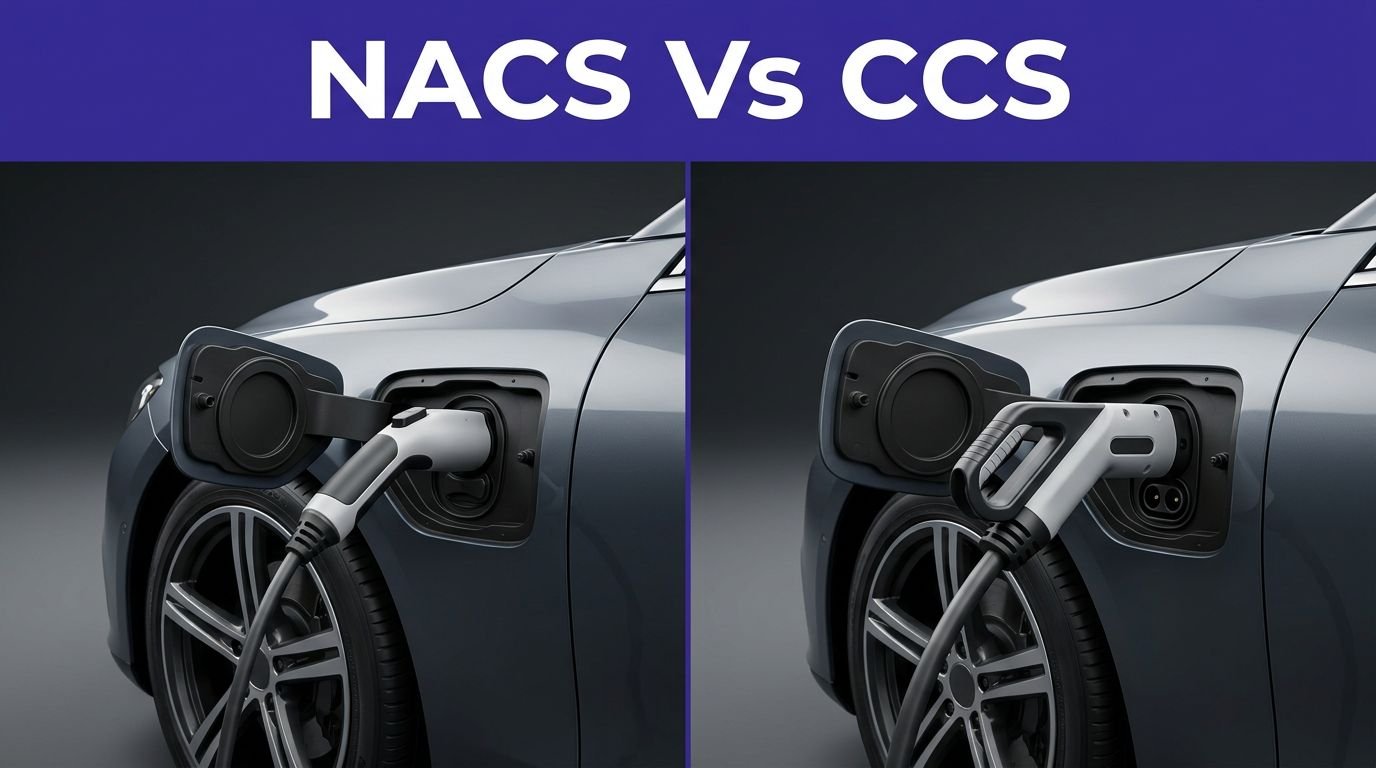
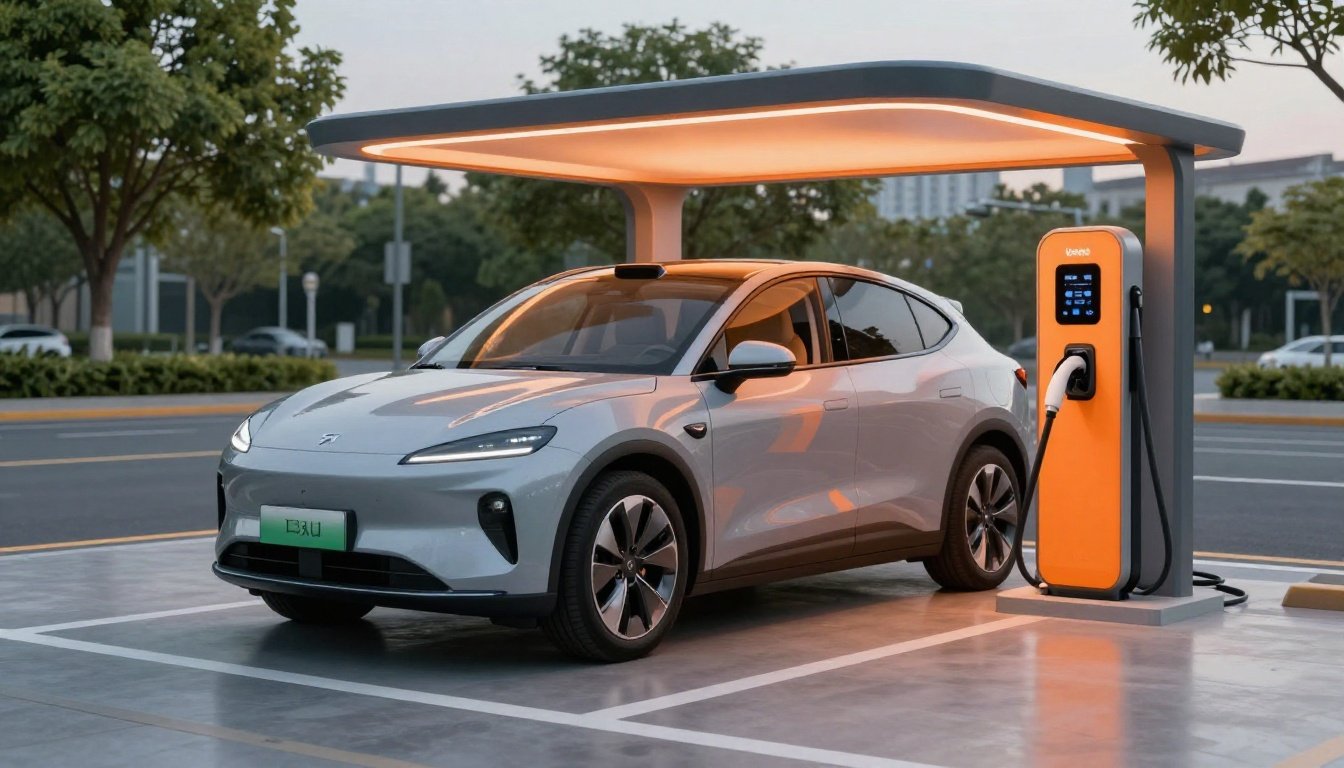
Because Walmart’s rolling out fast chargers at more than 5,000 U.S. locations by 2030, you’ll likely be within 10 miles of a station and can charge while you shop. You’ll find 400 kW DC fast chargers (Alpitronic HYC 400 and ABB models) with CCS1 and NACS compatibility, multiple stalls per site—often six or more—and ADA-accessible and pull-through spaces for larger vehicles.
Walmart funds the rollout itself, owning the land and parking to speed installation and guarantee maintenance. The company owns its stores and parking lots, which speeds installation and gives it full control over maintenance owns the land. Stations sit front and center, are well-lit, and integrate with the Walmart app for simple authentication; trained associates and support lines help if issues arise. Pricing follows Walmart’s everyday low approach, with Walmart+ perks and lower-than-gas cost targets. You can expect safety signage and routine inspections regularly.
How Target and Whole Foods Compare: Coverage, Ownership, and Customer Experience
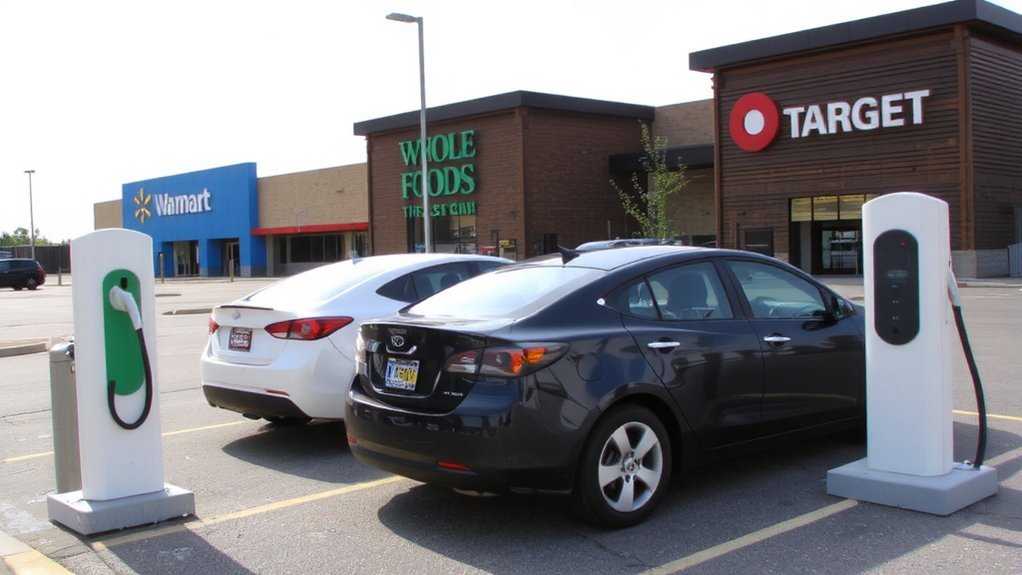


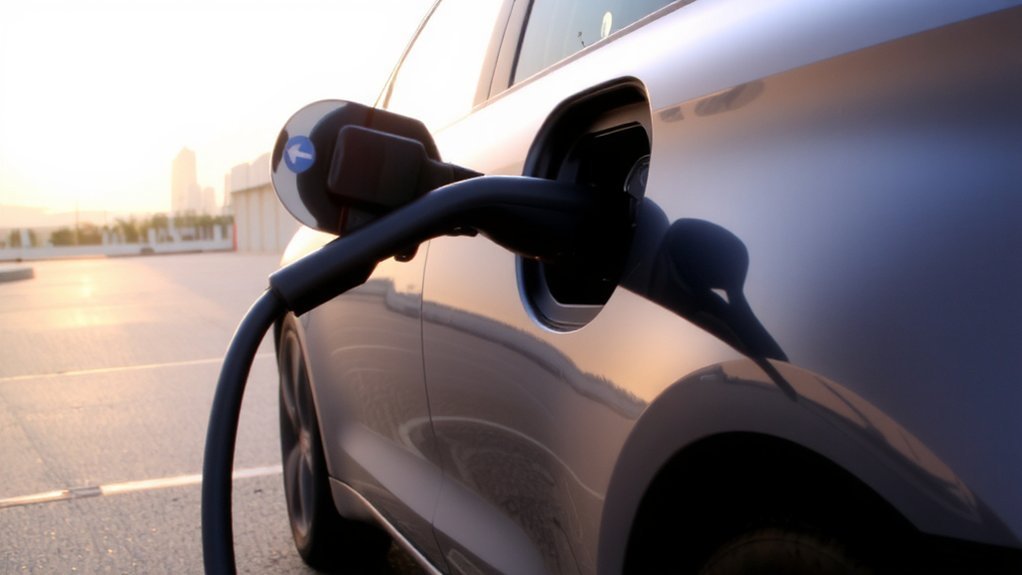
Between Target and Whole Foods you’ll notice clear differences in scale, ownership, and how charging feels as a customer. You’ll find Target offers broader coverage—over 100 stores in 20+ states and 600+ charging spaces—placed in high-traffic lots and supported by partners like Tesla, ChargePoint, and Electrify America. Target is expanding from 18 sites in five states to over 100 sites across 20+ states.
Whole Foods, owned by Amazon, provides chargers at under 10% of its stores, focused in urban, higher-income areas and often using Level 2 units. Ownership affects branding and choices: Target emphasizes sustainability and multiple provider networks; Whole Foods leans on Amazon’s infrastructure and a premium convenience narrative.
As a user, expect more availability and consistent maintenance at Target, while Whole Foods can be easier to access near entrances but has fewer stations and higher wait risk potential.
Practical Tips for Charging at Retail Locations: Pricing, App Use, and Shopping While You Charge
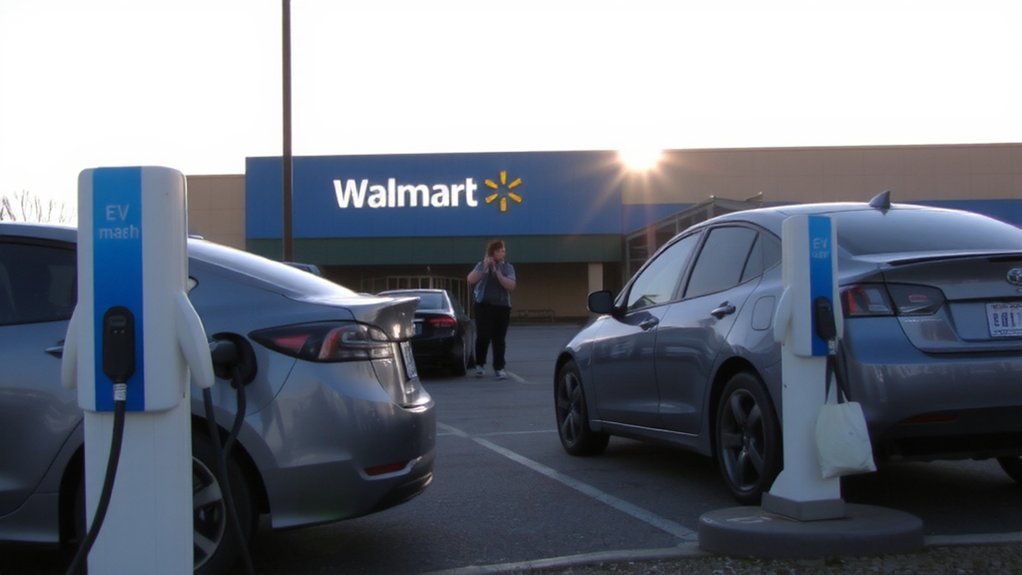
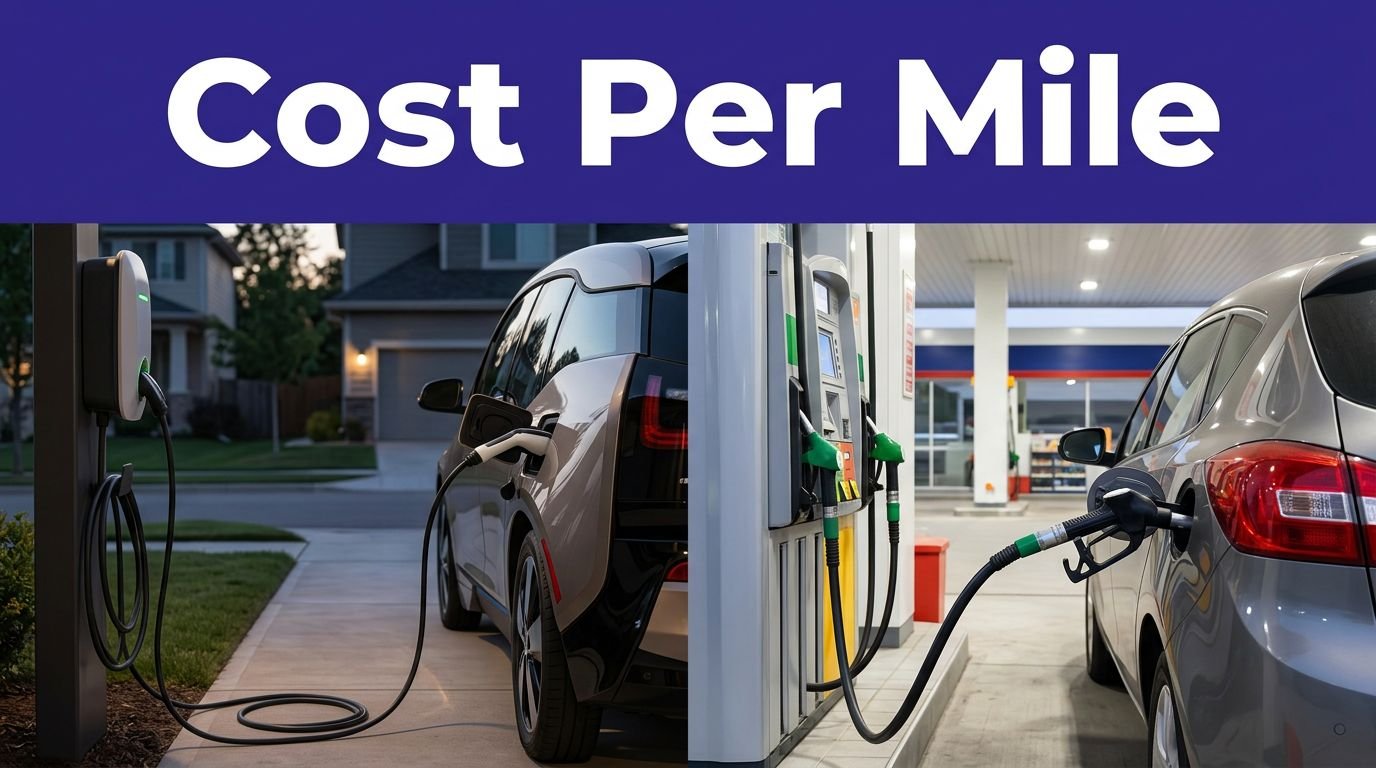
When you plan to charge at a store, check prices and availability in charging apps first so you won’t be surprised by costs or wait times. Some retailers even offer free charging as an amenity. Use apps like PlugShare or Chargeprice to compare per‑kWh rates, network fees, and real‑time availability; note Walmart’s lower pricing goals and that Target/Whole Foods vary by location.
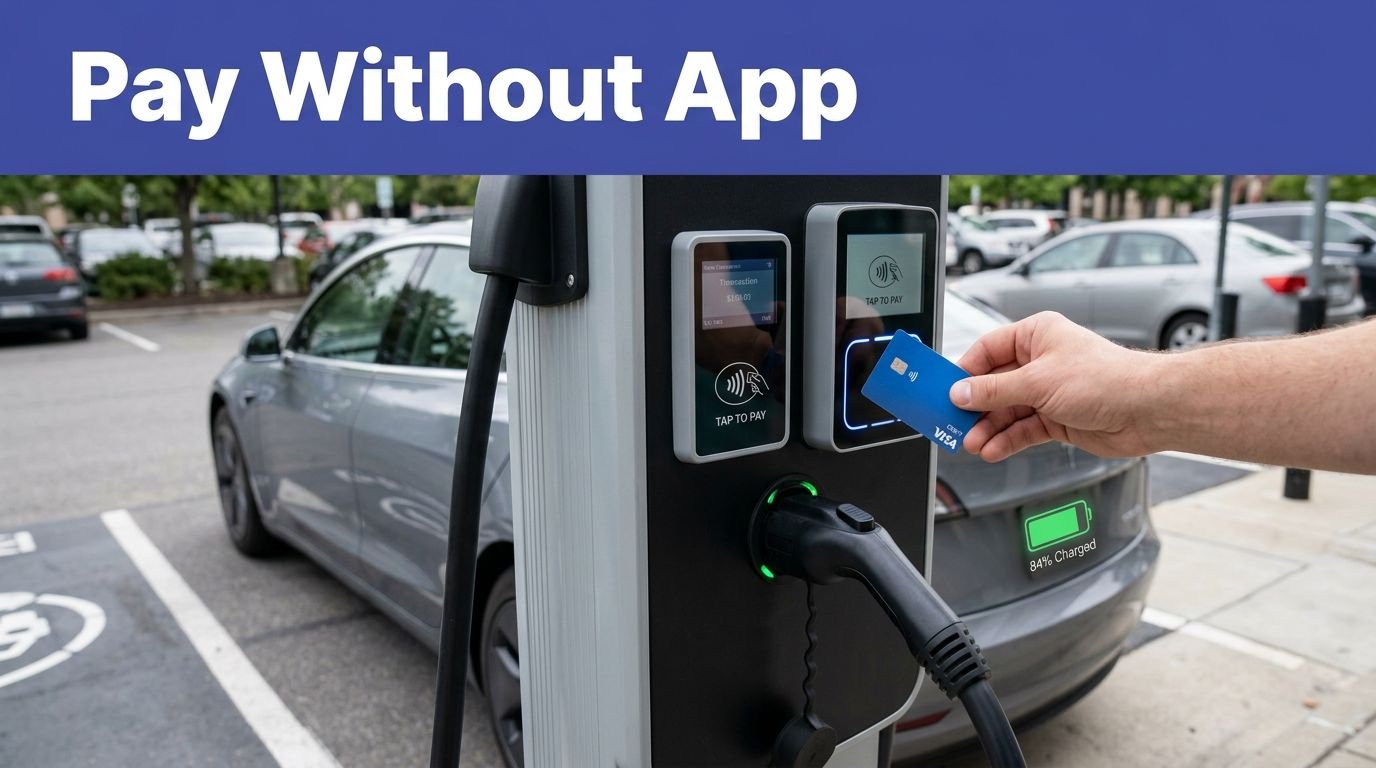
Carry a payment method accepted by networks and consider membership plans for lower rates. Prefer Level 2 chargers for typical shopping trips—10–20 miles per hour—and reserve DC fasters only when you need rapid top‑ups.
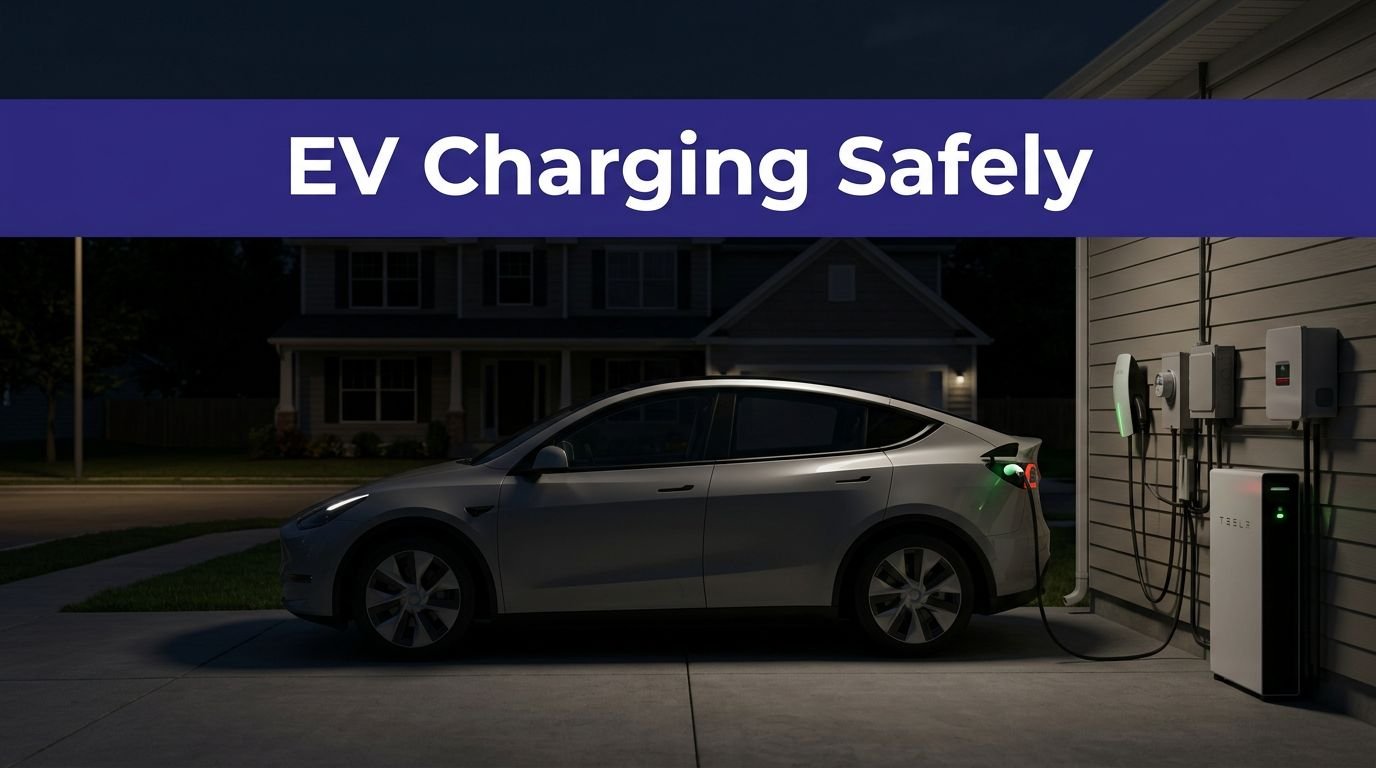
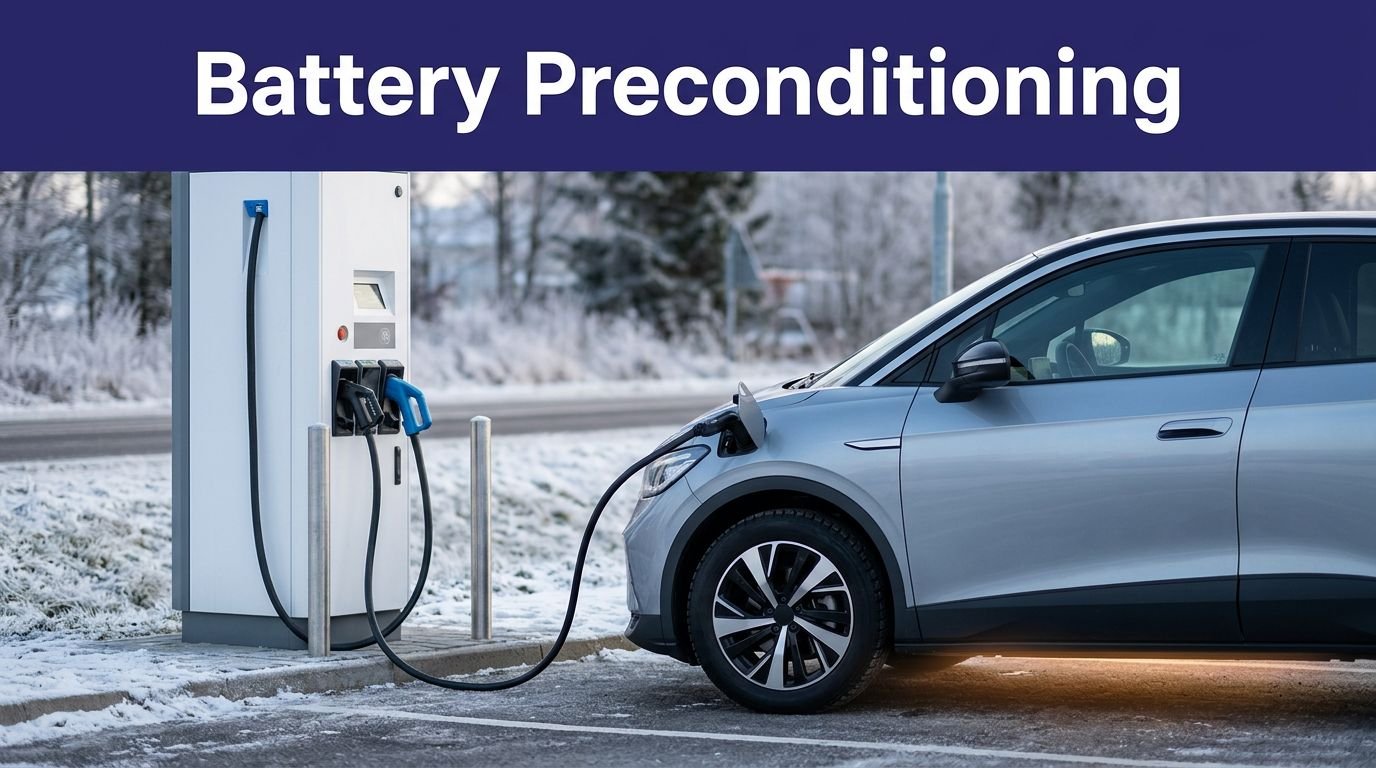
Arrive early during peak hours, park safely while plugged in, and monitor charging progress via the app. Stay aware of charger compatibility and ambient conditions to protect your battery and safety. Keep a charged phone and kit.
Conclusion
You’ve got clear choices: Walmart’s fast-charging network will give you 400 kW sites nationwide, Target offers widespread, convenient stalls with strong partnerships, and Whole Foods serves urban trips near store entrances. You can plug in, grab groceries, and get back on the road—killing two birds with one stone—while using apps to compare prices and availability. Plan routes, confirm charging compatibility, and you’ll be in the driver’s seat for smarter, faster charging and save time too.