Like waiting for a New York subway, timing matters. When you own a 2025–2026 Nissan Leaf, charging time depends on battery size and charger type, and it directly affects when you can drive again—so you’ll want to know which option fits your routine.
Key Takeaways
- Offered with 40 kWh (up to 149 miles) and 60 kWh (up to 212 miles) packs, affecting charge times and power output.
- Level 1 (120V) adds about 4–5 miles per hour, requiring roughly 24–36 hours for a near-empty battery.
- Level 2 (240V) home charging takes roughly 6–12 hours for a full charge, depending on battery size and charger amperage.
- DC fast charging reaches about 0–80% in ~40 minutes under ideal conditions; CHAdeMO limits: 40 kWh ≈50 kW, 60 kWh up to 100 kW.
- Charging speeds vary with temperature and battery state; topping to 80% and avoiding frequent fast charging preserves battery life.
Battery Options and EPA Range

Nissan offers the 2025–2026 Leaf with two lithium‑ion battery options: a 40 kWh pack on the base S trim and a 60 kWh pack on the SV Plus. The base S uses a 40 kWh battery.
You’ll choose the 40 kWh for typical daily commutes—EPA estimates up to 149 miles—or the 60 kWh SV Plus for longer drives, with an EPA estimate of 212 miles.
Both packs use lithium‑ion cells, mount in the floor for a low center of gravity, and power front‑wheel drive for stable handling.
The 40 kWh yields 147 hp and 236 lb‑ft; the 60 kWh boosts output to 214 hp and 250 lb‑ft, improving acceleration.
To protect battery life, you’ll monitor charging habits, limit extreme temperatures, and consult Nissan’s warranty and maintenance guidance and follow recommended service schedules.
Home Level 1 (120V) Charging Times
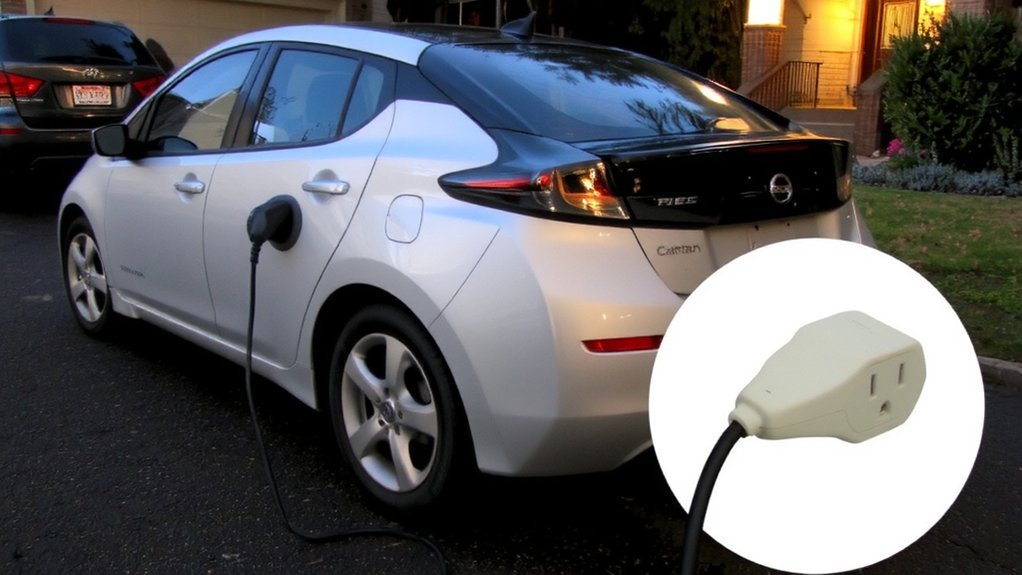
You’ll typically need 24–36 hours to fully charge a near-empty 2025 Nissan Leaf on Level 1.
You can expect roughly 4–5 miles of range added per hour of charging. So an overnight 8–12 hour charge will restore about 30–60 miles, making Level 1 best for low-mileage daily use. For more charging options, you can find public chargers through the MyNISSAN app.
Typical Charge Time
Although Level 1 uses a standard 120V outlet and needs no special installation, it’s the slowest option for the 2025–2026 Leaf: you can use the included portable cable, but expect long charge sessions. A portable cable is included standard with the vehicle for home charging. A full charge for the 40 kWh pack is roughly 60 hours at Level 1; the 60 kWh pack will take even longer, though Nissan hasn’t published exact figures.
You should plan to use Level 1 mainly for overnight top‑ups or low‑mileage days, not for rapid replenishment. Always use a dedicated outlet to avoid circuit overload, and remember actual times vary with state of charge, local voltage, temperature, and battery efficiency. In cold weather, charging can take longer; monitor progress and plan trips conservatively. Inspect cords and outlet for heat regularly.
Miles Added Per Hour
A standard 120V household outlet will typically add about 3–5 miles of range per hour to a Leaf, since portable Level 1 cords draw roughly 1.3–1.7 kW (about 12–15 amps). Expect roughly 3–5 miles/hour; a 40 kWh Leaf can take about 20 hours to reach full, while a 62 kWh Leaf Plus may need roughly 60 hours.
Level 1 chargers typically deliver 1,300–1,700 watts (12–15 amps); continuous draws above 12 amps can stress household circuits, so inspect outlets and avoid extension cords. Charging speed varies with battery state of charge, temperature, onboard charger limits and voltage stability.
Overnight charging (12–16 hours) will restore about 36–80 miles, suitable for short commutes. Confirm circuit capacity first. Note that the standard Leaf has 149 miles of range.
Home Level 2 (240V) Charging Times
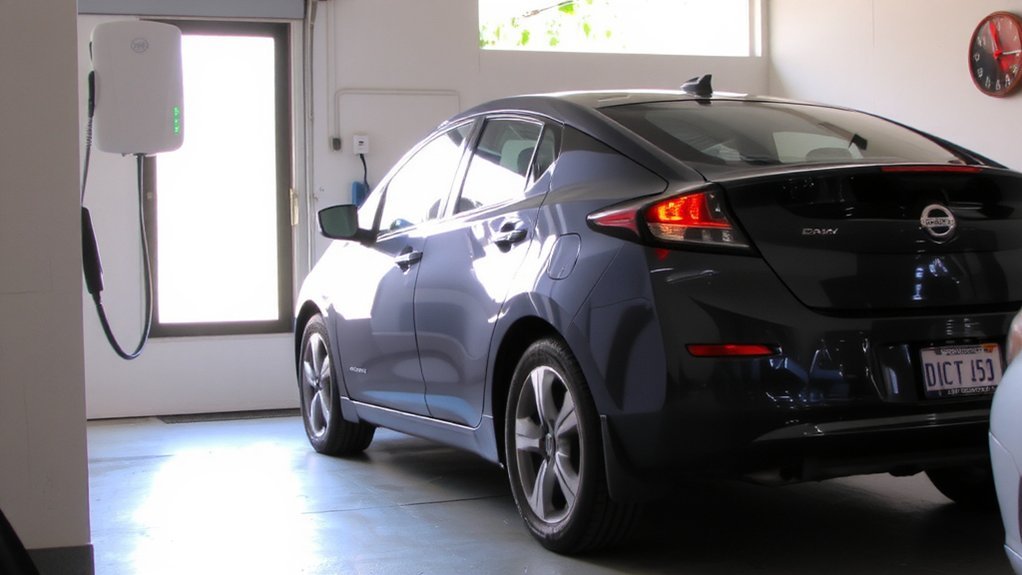
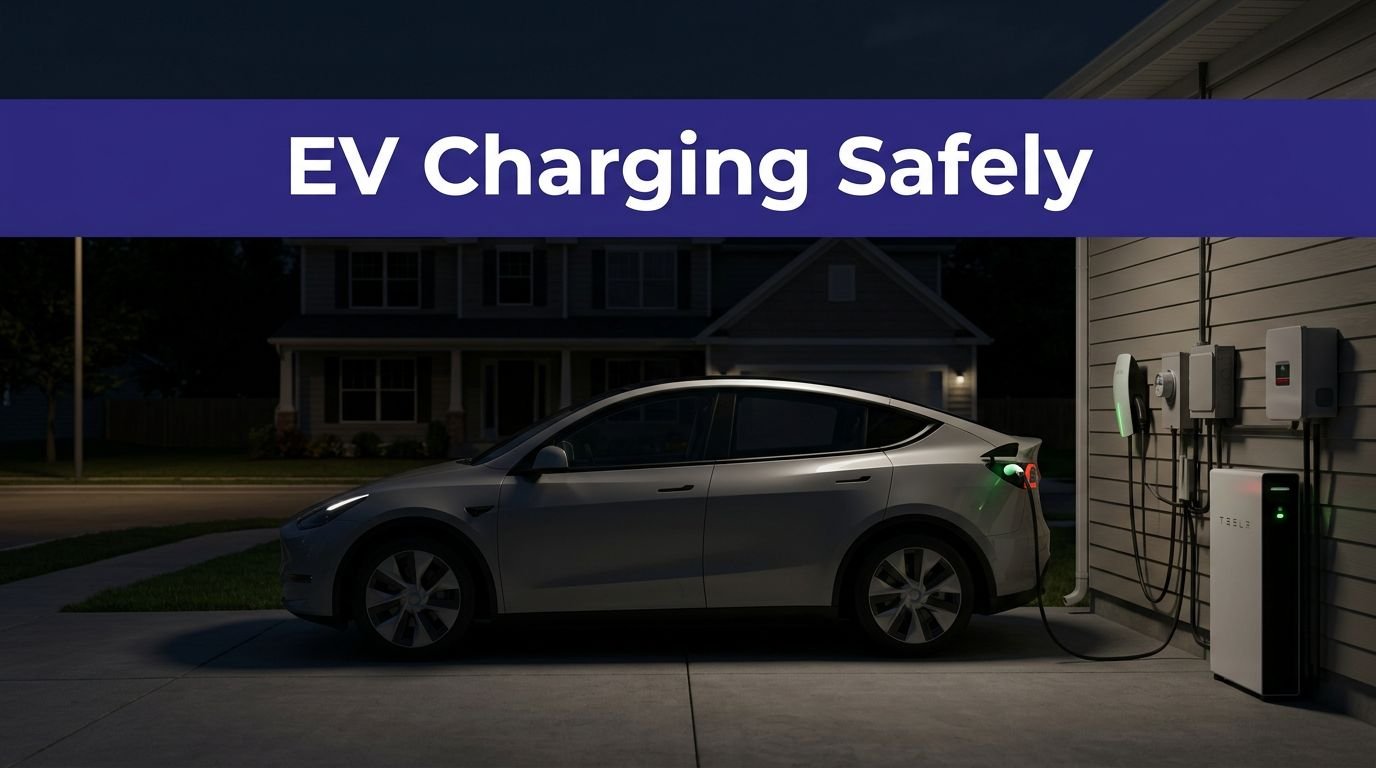
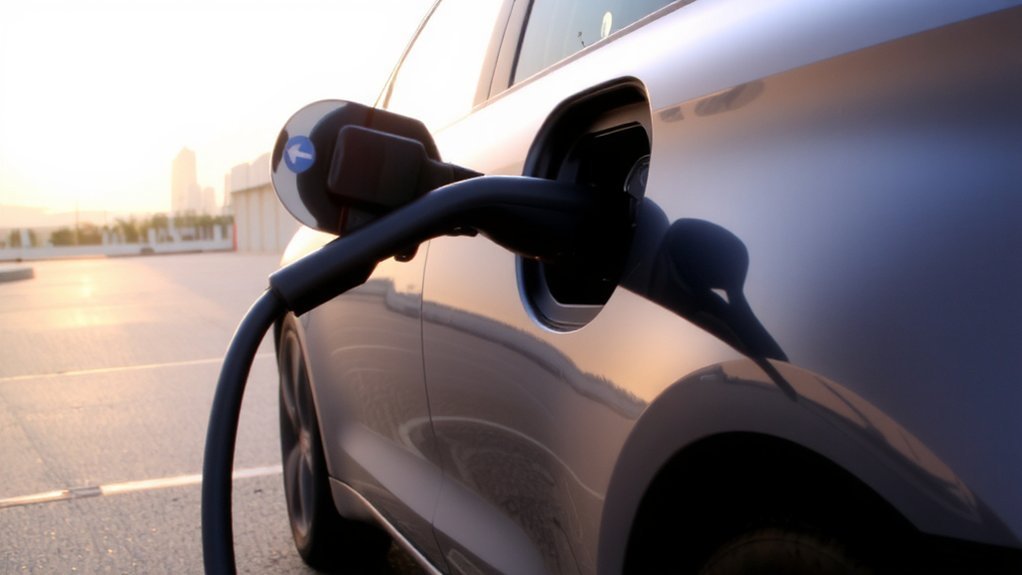
When you use a home Level 2 (240V) charger, expect a full 0–100% charge to take roughly 6–12 hours depending on battery size and the charger’s amperage. The current Leaf comes with two battery options. You’ll typically install a dedicated 240V station by a qualified electrician, since higher voltage and amperage require proper wiring, breaker sizing and permits.
Choose a charger amperage that matches your Leaf’s onboard charger and your home’s capacity; higher amps (for example 40A vs 32A) shorten time. Cold temperatures can slow charging, so avoid charging in extreme cold when possible. Overnight charging is practical for most commutes, and topping up to 80% greatly reduces session length.
Follow installation, inspection and manufacturer guidance to keep charging safe and reliable. Check for utility rebates and schedule regular electrical safety inspections.
DC Fast Charging (Level 3) Speeds
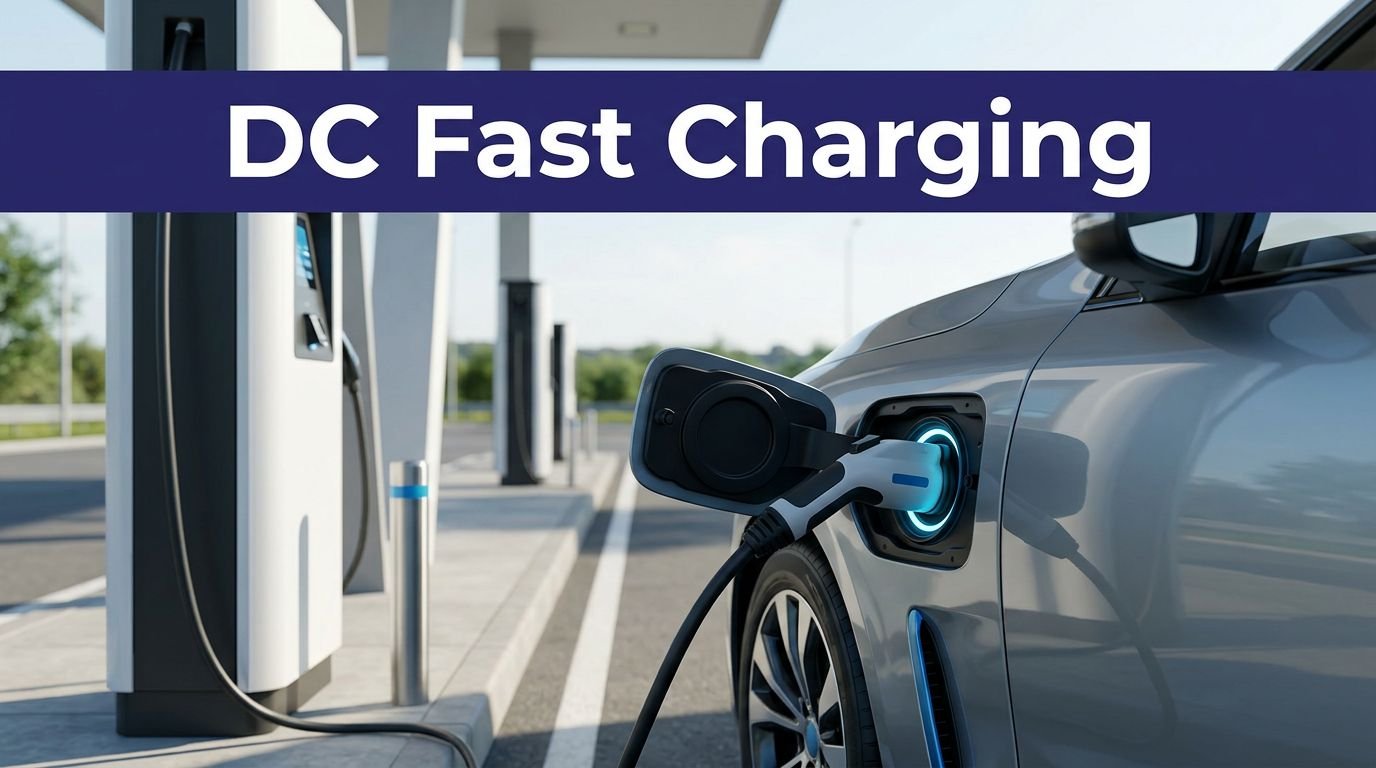
You can get the 2025 LEAF to about 80% in roughly 40 minutes with DC fast charging under ideal conditions. Actual speed depends on charger power and station compatibility—higher-power chargers and compatible protocols deliver faster fills.
You should use fast charging for quick top-ups but avoid constant DC fast charging to help preserve battery life. All trims come standard with DC fast charging, which helps ensure access to quicker fills across the lineup.
80% Charge Time
Anyone needing a quick top-up will appreciate that the 2025 Nissan LEAF supports DC Fast Charging, letting you go from 0 to 80% in about 40 minutes across all trims. You can rely on that roughly 40‑minute window whether you have the 40 kWh or 62 kWh battery — both accept DC fast charging and cut downtime on long trips.
For safety and battery longevity, charging speed tapers after 80%, so avoid using DC fast charging to reach 100%. Instead, plan frequent partial top-ups to about 80% and finish overnight on Level 2 or Level 1 if you need a full charge. This approach reduces wait time, preserves battery health, and keeps your travel plans predictable and safe. You’ll have more confidence on trips. Both trims also include DC fast-charging capability as standard.
Charger Power Differences
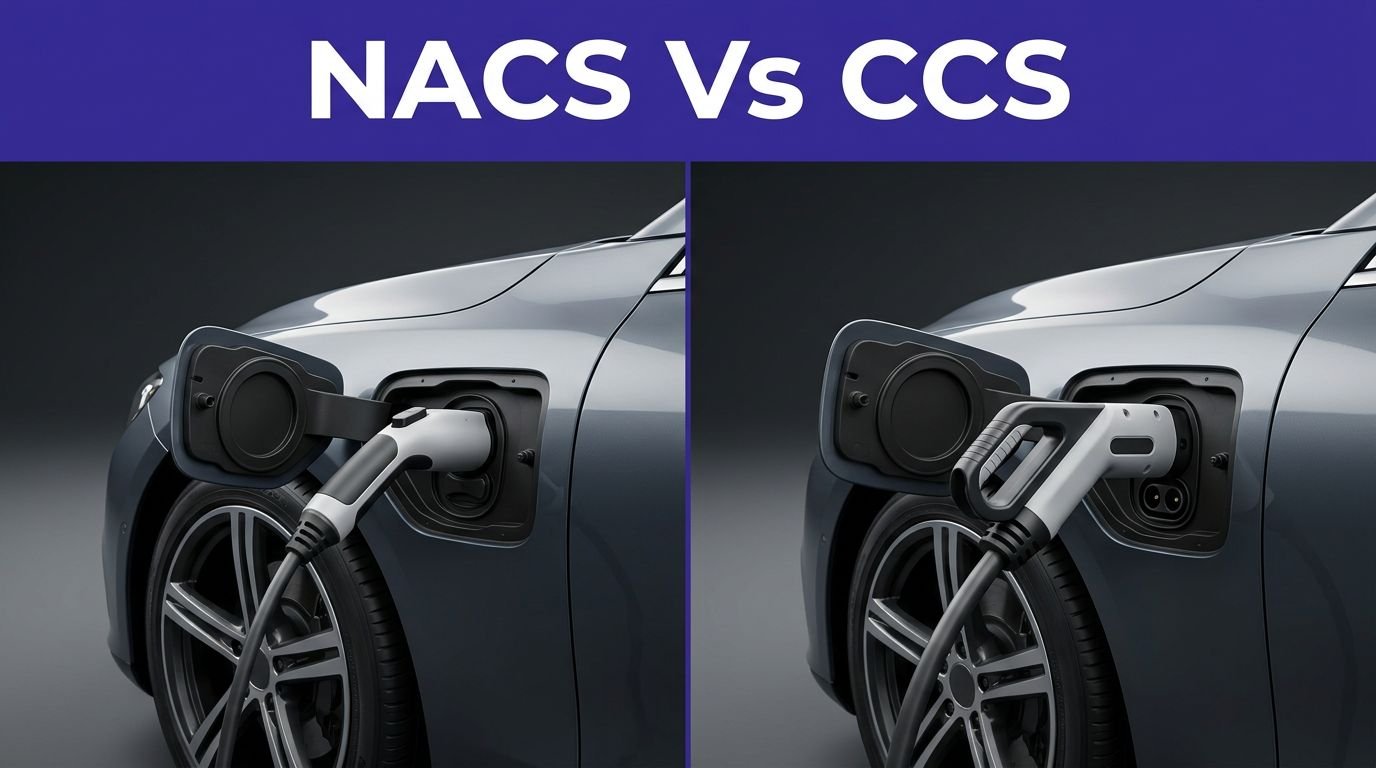
Although the 2025–2026 Nissan LEAF comes with DC fast charging, its CHAdeMO system tops out at about 50 kW, so charging is noticeably slower than many CCS-equipped rivals. You’ll find DC fast charging standard across trims, but CHAdeMO is the only Level 3 option and won’t work with CCS or Tesla Superchargers.
At a proper 50 kW station you can expect roughly 10% to 80% in about 40 minutes, sometimes as quick as 35 minutes under ideal conditions, with charging tapering as the battery fills. Charging speed is limited by the vehicle’s electronics, not just the station.
Because CHAdeMO chargers are less common and declining in deployment, plan routes and verify station capacity ahead for safe, reliable charging. Carry emergency contact and charging plan. It also remains one of the oldest EVs on the market.
Battery Life Considerations
One key trade-off is that DC fast charging gives rapid replenishment but can accelerate long‑term battery wear if used constantly. You can get up to 80% in about 40 minutes on any 2025 Leaf trim, and charging speed is similar for the 40 kWh and 62 kWh packs. Nissan’s battery management and thermal controls reduce stress, and safety systems slow charging above 80% or if temperatures rise.
To preserve capacity, don’t rely on Level 3 daily: mix in Level 1 and Level 2 sessions, limit frequent fast fills, and follow manufacturer guidance. Occasional fast charges are fine for trips, but regular high-frequency fast charging raises heat and gradual degradation, so monitor diagnostics and consult service if you notice capacity loss.
Charging Compatibility and Vehicle Limits
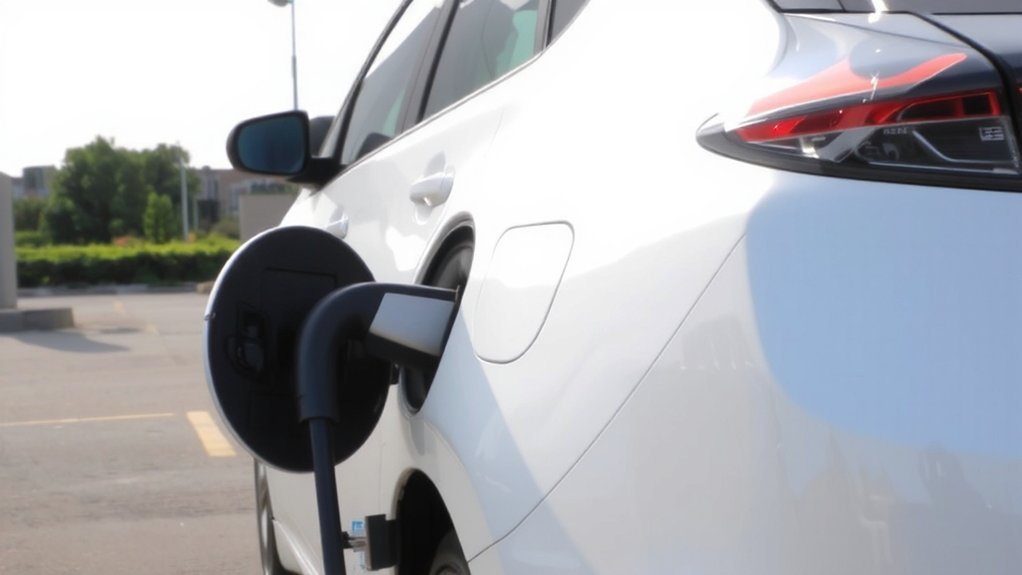
The Leaf uses a J1772 inlet for Level 1 (120 V) and Level 2 (240 V) charging and a separate CHAdeMO port for DC fast charging, so you won’t be able to use CCS chargers or adapters. You should confirm charger type before plugging in.
Your onboard AC charger limits Level 2 to 6.6 kW; Level 1 tops near 3.3 kW. For DC fast charging, the 40 kWh Leaf accepts up to 50 kW and the 60 kWh up to 100 kW, but actual rates depend on station output and battery state. Vehicle software manages rates and stops charging at full to protect the battery.
- Verify J1772 or CHAdeMO.
- Expect slower charging near full.
- Use rated cables.
- Follow prompts; stop if damaged.
Practical Tips and Environmental Considerations
Want to get the most from your Leaf’s charging? Charge overnight on a 240V Level 2 unit—about 7 hours for 40 kWh, up to 11 hours for 60 kWh—so you wake to a full usable range.
Use Level 3 DC fast charging sparingly: it’ll reach 80% in 40–60 minutes but frequent fast charges degrade the battery faster. Favor 80% daily limits, avoid regular 100% fills, and pre-heat the cabin in cold weather to improve efficiency.
Program charging during off-peak hours, pair with home renewables if possible, and use approved equipment and timers. Monitor onboard energy data, maintain connections, and rely on the vehicle’s thermal management. Check manufacturer guidance for exact limits. Check the inlet location; the Leaf uses a Type 2 inlet for AC charging and a CHAdeMO inlet for rapid DC charging.
Conclusion
Whether you’re charging the 2025–2026 Nissan Leaf at home or on the road, you’ll pick the option that fits your routine: Level 1 overnight for occasional use, Level 2 at home for daily driving, or DC fast charging when you need a quick top-up. You’ll want the 60 kWh SV Plus for longer range and faster charging. Isn’t it nice to have choices that match how you drive? You’ll save time and stress, too, often.