Your choice between mobile and fixed 50 kW chargers hinges on duty cycle, uptime SLAs, and grid headroom. Balance CAPEX vs OPEX, relocation costs, MTBF, and OCPP/ISO 15118 support, alongside NEC/IEC compliance and thermal derating. Factor permitting timelines, transformer sizing, and a ramp to 150 kW. Which setup maximizes utilization—under storms, seasonal peaks, or 24/7 access? The numbers point in different directions.
Key Takeaways
- Choose mobile units for seasonal spikes, grid constraints, or disaster response; choose fixed units for depots, construction sites, rental lots, and terminals.
- Mobile deploys in under two hours under NEC 590; fixed requires dedicated service, pads, trenching, conduits, permits, and phased energization planning.
- Mobile units typically serve 8–12 vehicles daily with 30–40 minute, 30–35 kWh sessions; fixed supports continuous 24/7 duty cycles.
- Total cost: mobile adds relocation labor, towing, insurance, security, and downtime; fixed has higher capex but better MTBF, lower MTTR, and lifecycle efficiency.
- Standardize on CCS/CHAdeMO, ISO 15118 Plug & Charge, OCPP 1.6/2.0.1, OCPI, and secure networks for roaming, reliable sessions, and remote diagnostics.
When Mobile 50 Kw Shines: Use Cases and Deployment Scenarios

When grid capacity is constrained or permanence isn’t justified, mobile 50 kW DC fast chargers bridge the gap with standards-compliant, rapid deployment. You roll them in as towable or palletized units, commission in under two hours, and deliver CCS1/CCS2 and CHAdeMO at up to 125 A, 200–920 V. With ISO 15118 Plug & Charge and OCPP 1.6/2.0.1, you integrate billing and telemetry immediately. For event charging, you handle seasonal spikes, serving 8–12 vehicles per day per unit assuming 30–40 minute, 30–35 kWh sessions. In disaster response, battery-buffered variants (150–300 kWh) sustain critical refuels when feeders are down, pairing with generators or microgrids. You meet NEC/IEC safety, NEMA/IP54 enclosures, and UL/CE listings, enabling pilots at depots, construction sites, and rental lots and port terminals.
Where Fixed 50 Kw Wins: Anchored Sites and Public Networks

You gain permanent infrastructure readiness with utility-grade interconnection (pad-mount transformer, NEC 625 compliance), UL 2202/2231 hardware, and site works that support 24/7 duty cycles and managed demand. You enable network interoperability via OCPP 1.6/2.0.1, ISO 15118 Plug&Charge, OCPI roaming, EMV/PCI payments, and ADA/Weights & Measures compliance for public networks. Field data shows fixed 50 kW sites deliver >98% uptime, 95–99% session success, and lower cost per kWh via remote diagnostics and load management—advantages mobile units can’t match at scale.
Permanent Infrastructure Readiness
Although mobile 50 kW rigs can bridge gaps, fixed 50 kW DC fast chargers are purpose-built for permanent infrastructure: they interconnect to 480 V three-phase service at roughly 60 A per dispenser (50 kW/√3/480 V), meet NEC 625 and UL 2202/2231 (IEC 61851-23/-24 and IEC 62196-3 in EU), and incorporate site civil protections for 24/7 unattended operation. You secure land tenure and utility easements, pour pads to ACI 318, anchor pedestals per ASCE 7, and add bollards, drainage, and ADA-conforming access. You specify NEMA 3R/4 or IP54 enclosures, seismic bracing, and Type 1/SPD surge protection. Plan feeder sizing per NEC 310/240, fault current per 110.9, and grounding to 250. Metering, lighting, cameras, and cybersecurity round out security provisions. Document uptime SLAs and preventive maintenance.
Network Interoperability Advantages

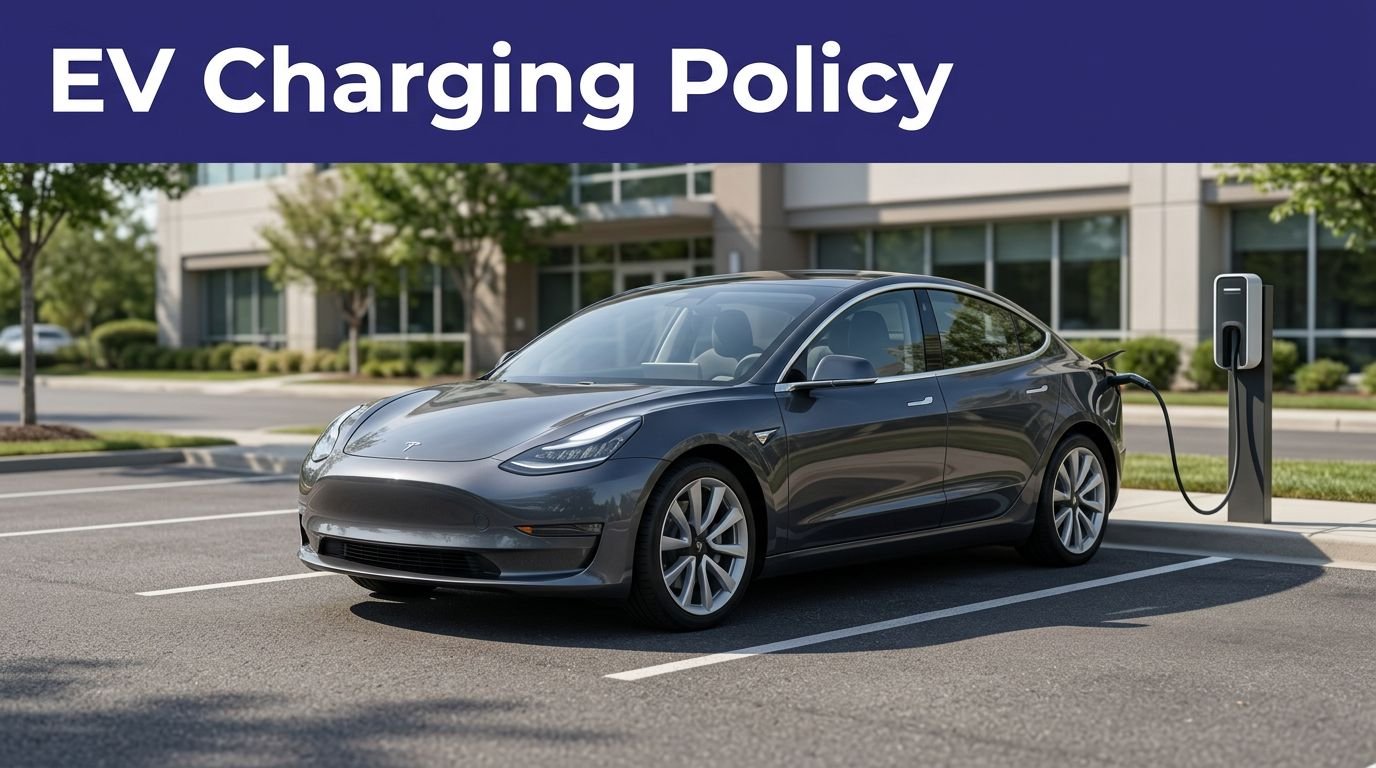
Since fixed 50 kW DC fast chargers anchor to site controllers and stable backhaul, they integrate cleanly with open roaming and control stacks: OCPP 1.6-J/2.0.1 (Security Profile 3, TLS 1.2+), OCPI 2.2.1 via Hubject/Gireve, and ISO 15118-2/-20 (Plug&Charge with PKI/OCSP). You gain protocol compatibility across CPO/eMSP platforms, deterministic latency, and hardened certificate management, which drives higher first-try authorizations and >98% session success. Anchored sites also support vendor neutrality: swap networks without truck rolls, maintain firmware baselines, and enforce uniform security policies. Stable IP paths eliminate CGNAT pitfalls common with mobile units, improving telemetry fidelity, price updates, and roaming settlement accuracy. You can expose stations to public networks confidently, meet utility programs, and aggregate chargers under open APIs for load management and predictive maintenance analytics.
Total Cost of Ownership: Purchase, Power, Maintenance, and Mobility
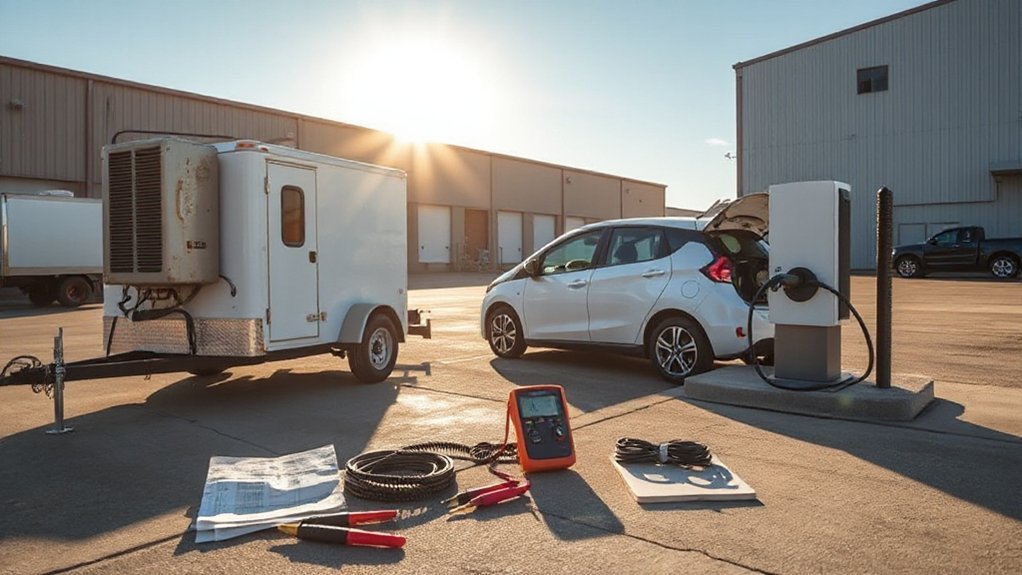
In capital planning for 50 kW DC fast charging, total cost of ownership (TCO) centers on four variables: purchase, power, maintenance, and mobility. For purchase, compare unit price, auxiliary options (cable management, payment modules), warranty length, and expected depreciation; model resale value and financing terms. For power, quantify kWh tariffs, demand charges, and utilization; simulate duty cycles aligned to ISO 15118 and OCPP metering to project throughput and revenue. For maintenance, price preventive service, spare parts, remote diagnostics, firmware updates, and uptime SLAs; track mean time between failures. For mobility, include relocation labor, towing or forklift rentals, commissioning time, physical security, and insurance premiums; factor downtime during moves. Run sensitivity analyses across utilization bands to select the lower TCO, under realistic fleet growth assumptions.
Grid, Permitting, and Infrastructure Requirements

For 50 kW DC fast chargers, grid capacity and permitting determine schedule, interconnection class, and civil scope. You’ll start with utility load studies to verify feeder headroom and fault duty; expect ~60–75 A at 480 V three‑phase per port, plus 5–8% losses. Fixed units typically require dedicated service, pad, trenching, conduit, and protection coordination (NEC 625, 240; IEEE 1547/519 for harmonics), with utility metering and disconnects per tariff. Mobile units qualify as temporary under NEC 590, connect to existing 480 V panels or gensets, and avoid foundations, but still need overcurrent protection, GFCI, and site access approvals. Permits span electrical, encroachment, and traffic control; verify environmental compliance (noise, spill control, stormwater). Document UL 2202/2231 listings and AHJ inspection requirements. Fire code clearances apply; signage.
Scalability and Fleet Growth Planning

Plan phased capacity expansion using utilization thresholds (e.g., >30–40% peak queuing or >50% average port occupancy) to time additions of 50 kW ports. Adopt a modular deployment strategy—containerized power units, standardized switchgear, and OCPP 2.0.1/ISO 15118-capable dispensers—so you can scale in 50 kW blocks without rework. Make future-proof choices by oversizing conduits and busbars, selecting 800 V and V2G-ready hardware (IEEE 1547), and deploying software with load sharing and open APIs to support migration to 150–350 kW as demand grows.
Phased Capacity Expansion
Staging capacity by phases lets you align 50 kW charging with fleet ramp rates while capping stranded capex. You sequence additions against verified utilization, demand charges, and facility load studies, using staged financing to match cash outlay to ROI milestones. Define capacity thresholds using SAE J3068/J1772 connector mix, average daily kWh/vehicle, and NEC Article 625 feeder limits.
- Establish trigger points: >70% charger occupancy at peak, three-month trend, and backlog minutes per session exceeding 10.
- Validate grid headroom: perform 15-minute interval load profiling; maintain N-1 redundancy; limit site demand to tariff breakpoint to avoid higher demand charges.
- Plan civil/electrical conduits, switchgear bays, and communications backhaul to accommodate future 50 kW increments without rework, meeting IEEE 1547 interoperability and OCPP 1.6/2.0.1 telemetry requirements.
Modular Deployment Strategy
While fleet energy demands evolve, you deploy 50 kW blocks as modular skids that scale with verified load and integrate without rework. Use standardized DC dispensers (IEC 61851, ISO 15118) and OCPP-managed power modules so you can add cabinets without reconfiguring upstream switchgear. Pre-size feeders and pads, stage breakers, and validate protection coordination per NEC and UL 2202. For mobile 50 kW units, plan quick-connect AC/DC interfaces and cord management to reallocate capacity between depots in minutes. For fixed banks, sequence commissioning in 50 kW increments to match demand tariffs and diversity factors. Define spares, MTTR, and operator training aligned to OEM modules. Document change control, asset tags, and firmware baselines to streamline expansions and site decommissioning with minimal downtime and regulatory recordkeeping requirements.
Future-Proof Infrastructure Choices
Building on modular 50 kW blocks, you harden the site for growth by sizing civil, electrical, and network backbones to the 5–10 year fleet forecast, not the day‑one load. For fixed systems, specify spare conduits, oversize switchgear to 800 A sections, and allocate space for cabinets. For mobile chargers, design compliant interconnects and laydown space to dock units without rework. Use IEC 61851/ISO 15118, OCPP 2.0.1, and segmented VLANs to preserve Cybersecurity resilience. Align capex with Lifecycle planning via phased energization and modular protection.
- Prewire 2x feeders per bay, landing on blank lugs; add CTs for load management.
- Reserve 20–30% transformer headroom; size MV for N+1 redundancy.
- Instrument with IEC 61557/IEEE 2030.5 telemetry; baseline utilization and degradation.
Operational Performance: Uptime, Software Integrations, and User Experience

Because operational performance hinges on measurable reliability and compliant integrations, compare mobile and fixed 50 kW DC chargers across uptime (MTBF/MTTR), protocol support, and session quality. You’ll see fixed units achieve higher MTBF and lower MTTR via redundant cooling, hardened power modules, and stable grid tie; mobile carts face transport vibration and thermal cycling that increase corrective maintenance. For software, require OCPP 1.6/2.0.1, ISO 15118 Plug & Charge, OCPI roaming, OpenADR, and secure device identity (TLS, 802.1X). Prioritize real time telemetry, remote firmware updates, and API observability to reduce truck rolls. Assess UX personalization: RFID, app, and AutoCharge flows, dynamic prices, accessibility, and consistent displays meeting IEC 61851 signaling. Instrument session KPIs—boot time, handshake latency, charge completion rate—to drive SLA-backed uptime and customer satisfaction.
Conclusion
You stand at the curb, grid humming, weighing 50 kW paths. If you’re chasing rapid rollouts, seasonal peaks, or disaster pivots, mobile carts deliver kW where wheels can go—at higher maintenance, commissioning, and relocation costs. If you want 24/7 duty, higher MTBF, OCPP‑compliant expansion, and fewer operational shocks, anchor fixed units to NEC/IEC, utility permits, and vendor‑neutral bays. Model TCO, utilization, and feeder headroom, then phase capacity—so trucks arrive, plug in, and uptime feels inevitable.