At one fleet depot, a 50 kW unit consistently delivered 32–68 kW to 400 V cars—like a breaker sized just right. You’ll validate utility capacity and service voltage, plan trenching and permits, and pick CCS/NACS, 1000 V–ready hardware with proper thermal margins. Require OCPP and ISO 15118, solid networking, payments, and cybersecurity, plus spares and warranties. If you want predictable installs and lower TCO without stranded assets, here’s what to verify before you sign the PO.
Key Takeaways
- 50 kW aligns with real EV charge acceptance, avoids tapering waste, uses common 400 V/125 A hardware, and improves port utilization at lower capex/opex.
- Verify service voltage, available kVA, and fault current; coordinate early with utility on transformers, upgrades, metering, and make-ready to prevent delays.
- Specify CCS and NACS, 1000 V-capable hardware, ISO 15118/DIN 70121 signaling, UL/CSA compliance, appropriate cable reach, and dual-port power-sharing behavior.
- Require OCPP 1.6 or 2.0.1 over TLS, plug-and-charge, OCPI roaming, PCI-compliant payments, strong cybersecurity, remote monitoring, OTA updates, and defined uptime SLAs.
- Budget total lifecycle costs, leverage incentives like NEVI and utility rebates, and future-proof conduits, switchgear, and software for higher power, metering, and interoperability.
Why 50kW Hits the Sweet Spot vs. Higher-Power DCFC

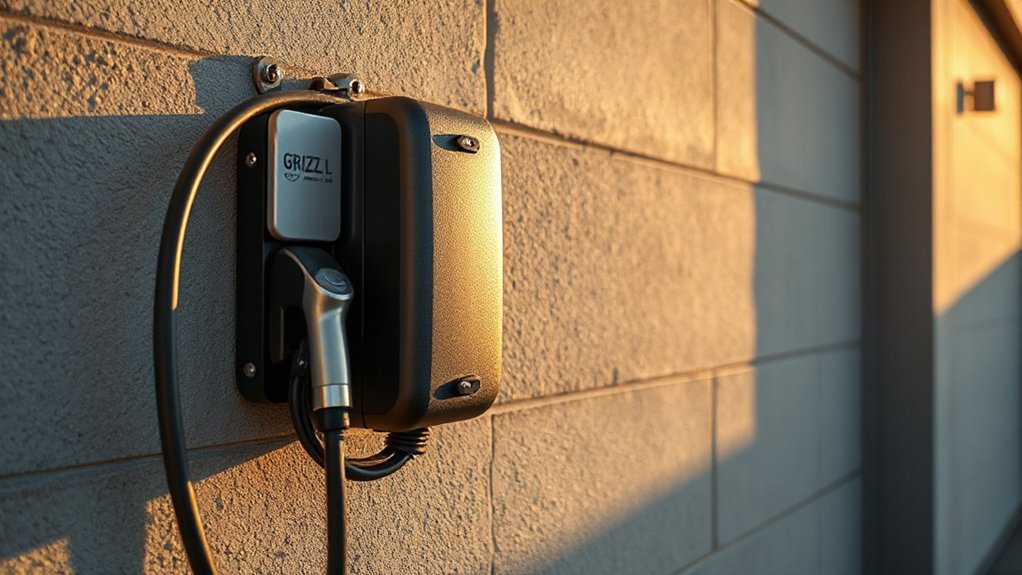



While ultra-high-power units grab headlines, a 50 kW DC fast charger often delivers the best fit for most sites because it matches real-world vehicle charge acceptance, grid constraints, and total cost of ownership. Most EVs sustain 30–70 kW over much of the SOC window; above that, tapering dominates, so you don’t buy unused kilowatts. At 400 V, 50 kW equates to ~125 A, aligning with common cable/connector ratings. Specify CCS and NACS with ISO 15118-2/DIN 70121, plus OCPP 1.6 or 2.0.1 for network control. Choose 1000 V-capable hardware to preserve Vehicle Compatibility with 800 V packs. For fleets and retail dwell profiles, 50 kW yields predictable Charge Time, higher port utilization, and lower capex/opex. Add accurate metering, uptime monitoring, and clear signage and labeling.
Power Availability, Utility Coordination, and Site Readiness

Because power availability drives DCFC design, first verify the site’s service voltage (208Y/120 or 480Y/277), available kVA, and available fault current from the utility, then size feeders, OCPD, and equipment SCCR accordingly (NEC 110.24, 220, 240, 250, 625). Coordinate early with the utility on transformer capacity, service upgrades, and metering; confirm grid interconnection, easements, and make-ready scope. Perform load calculations, fault-duty and voltage-drop analysis; plan trenching, conduit fill, grounding. Align permitting timelines with utility lead times and AHJ inspections to avoid idle assets. Validate civil constraints, ADA access, parking geometry, and bollards.
- One-line, load letter, fault-current data to utility/AHJ
- Utility service upgrade window and outages scheduled
- Trenching, pads, and conduits installed per drawings
- Grounding, bonding, labeling verified
- Commissioning, acceptance tests, and utility meter set
Hardware Choices: Connectors, Dual-Port, and Load Management
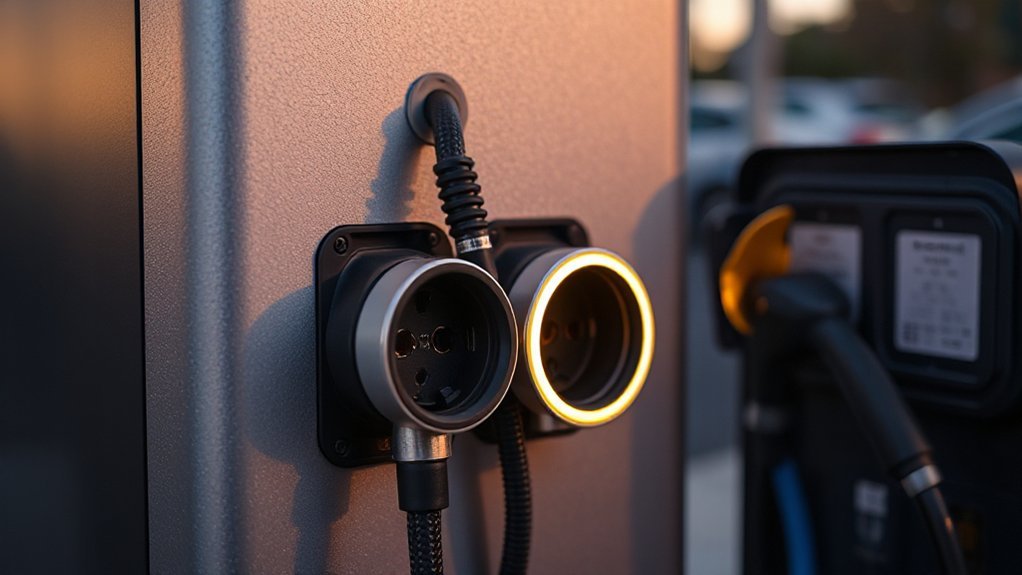
With service voltage, capacity, and fault duty confirmed, select hardware that matches the site’s electrical envelope and the vehicles you’ll serve. Choose connector standards based on your fleet mix and codes: CCS1/CCS2 predominates; CHAdeMO may be legacy; NACS support is accelerating. Verify compliance to IEC 61851-23/-24, ISO 15118-3 signaling, UL 2202, and UL 2251. Specify cable reach for parking geometries, prioritize Connector Ergonomics, strain relief, and latch durability. At 50 kW, air‑cooled assemblies typically suffice; still, validate conductor gauge and contact ratings, and design Thermal Management for high ambient sites. For dual-port units, confirm simultaneous versus sequential power sharing. Implement static or dynamic load management to stay within service limits and demand targets. Plan fault isolation, contactor coordination, and clear service disconnects and labeling.
Networking, Payments, Cybersecurity, and Uptime

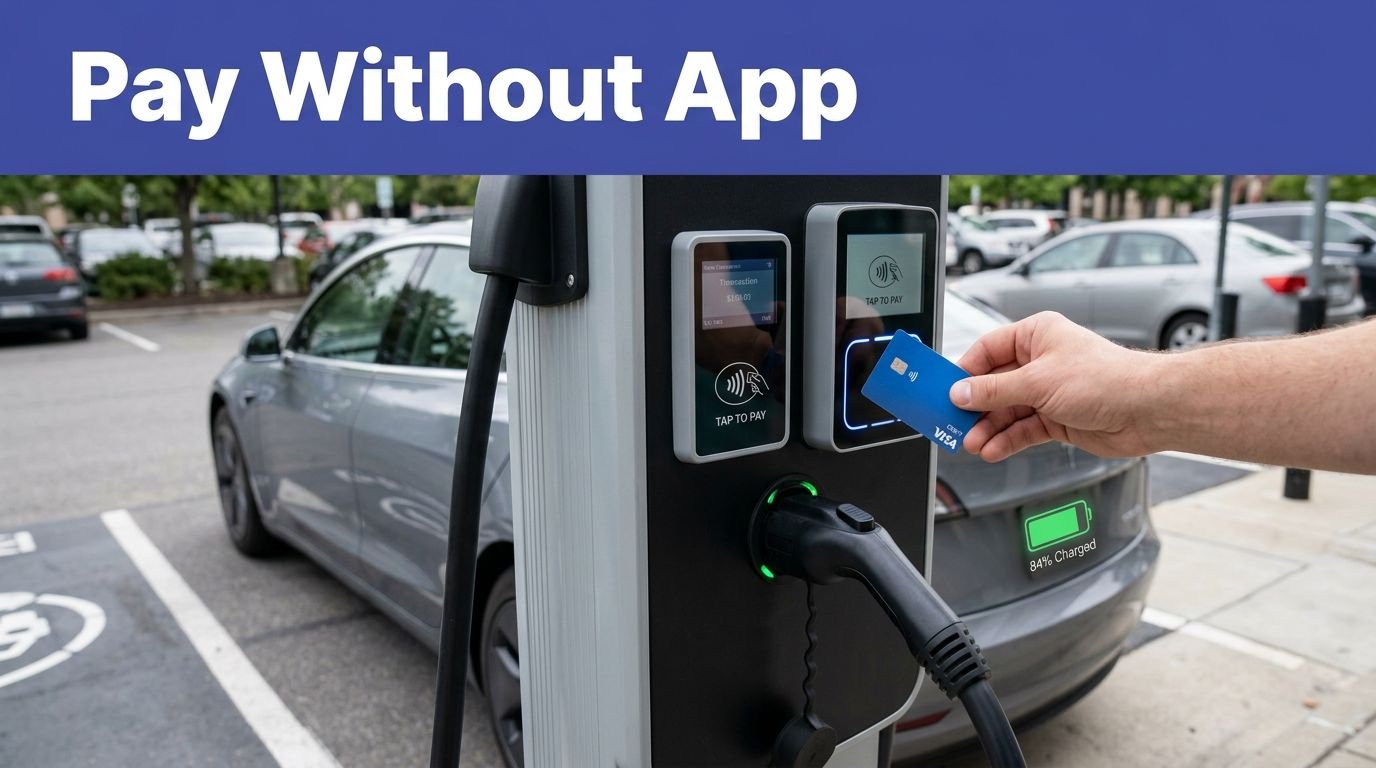
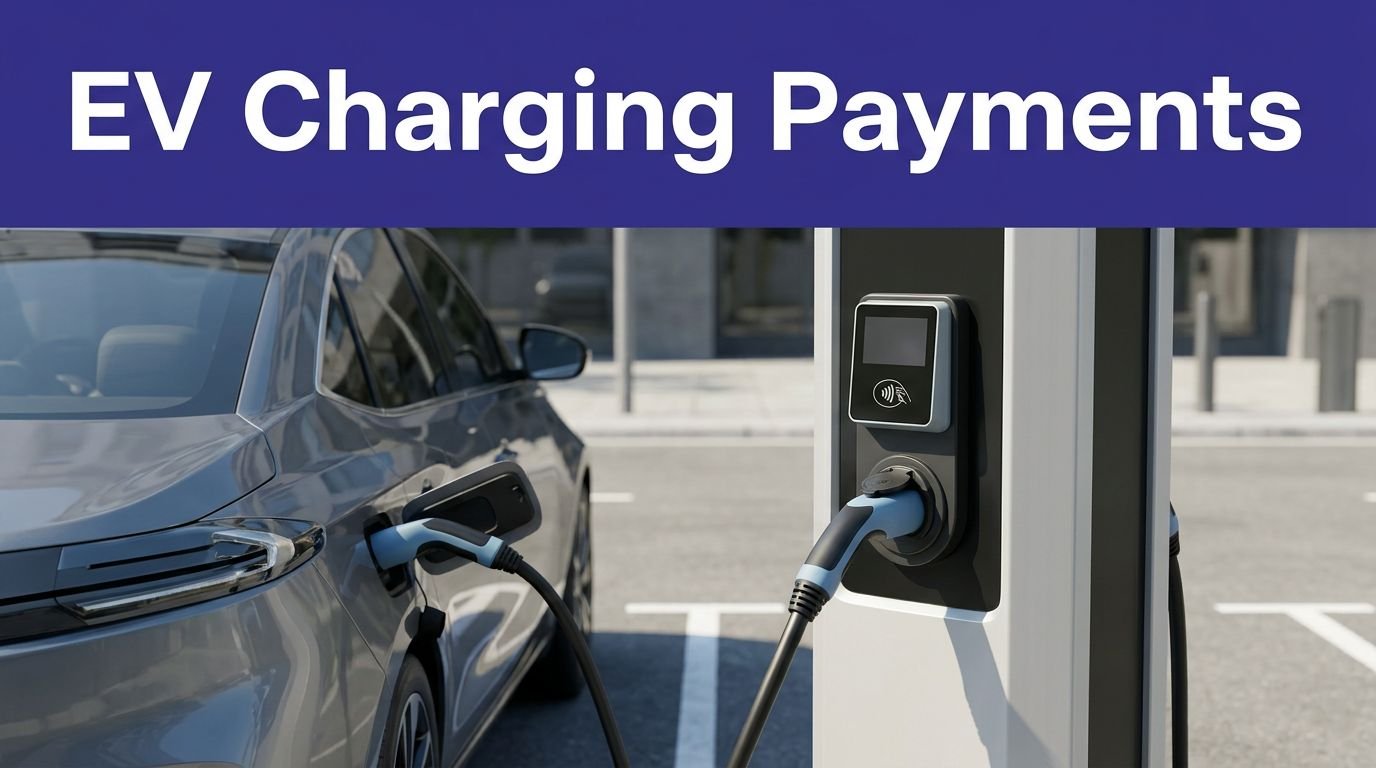
Even before energizing hardware, define the network, payments, security, and telemetry stack to meet interoperability and uptime targets. Use OCPP 1.6/2.0.1 over TLS 1.2+ with certificate pinning, and enable remote monitoring and OTA updates. For roaming, integrate OCPI; for plug-and-charge, align with ISO 15118 PKI. Harden chargers with 802.1X, VPN, and segmented VLANs. Specify PCI DSS–compliant payment flows, EMV contactless, and tokenized receipts to guarantee transaction security. Engineer redundancy: dual WAN (ethernet + LTE), buffered queues, and auto-retry to hit SLA reliably.
- Define uptime SLOs/SLA, alerting, MTTR, spare parts, on-call schedules, KPI reporting targets.
- Mandate syslog/SIEM feeds, audit trails, tamper alarms.
- Implement role-based access, least privilege, MFA for technicians.
- Configure watchdogs, heartbeat intervals, and safe fallbacks.
- Test OCPP failover, firmware rollback, and OCPI settlement.
Budgeting, Incentives, TCO, and Future-Proofing

While capital costs draw attention, build your budget around a full TCO model that spans make-ready construction, utility interconnection, demand charges, networking and cellular fees, software licenses, warranties, spare parts, field service, and SLA compliance. Use Lifecycle Budgeting to forecast capex, opex, and component wear over 10–12 years. Model throughput, TOU, ratchets, and escalation. Execute Incentive Mapping: align NEVI, utility make-ready, and rebates with Buy America, prevailing wage, and 97% uptime. Future-proof with conduit and switchgear sized for 150–200 kW plus modular rectifiers. Specify dual-cable CCS/NACS, ISO 15118-20 readiness, and OCPP 2.0.1 for interoperability. Require revenue-grade metering (ANSI C12.20), ADA/CTEP compliance, cybersecurity, and remote firmware updates. Negotiate parts stocking, MTTR, and end-of-life recycling. Run sensitivity analyses on utilization, adoption, and tariffs to protect ROI.
Conclusion
You’re not gambling; with 50 kW DCFC you hit the sweet spot: predictable 30–70 kW acceptance, manageable capex, and 400/480 V compatibility. Verify utility capacity, service voltage, and trenching/permitting. Specify CCS/NACS, 1000 V-ready stacks, and adequate thermal margins. Require OCPP and ISO 15118. Implement resilient networking, payments, and cybersecurity. Budget make‑ready, incentives, warranties, and spares. Execute now and your site will charge cars faster than a thunderbolt while staying standards-aligned and future-proof. For long-term reliability.