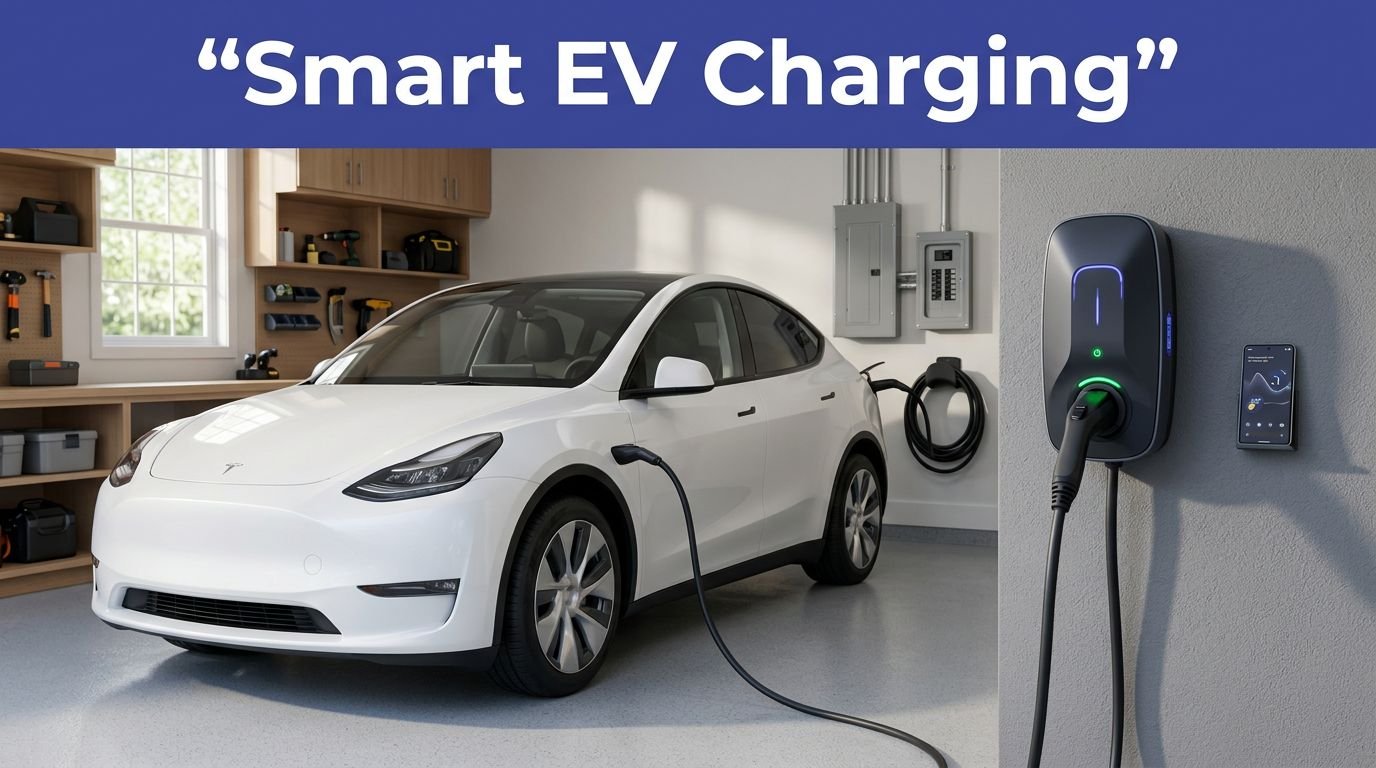
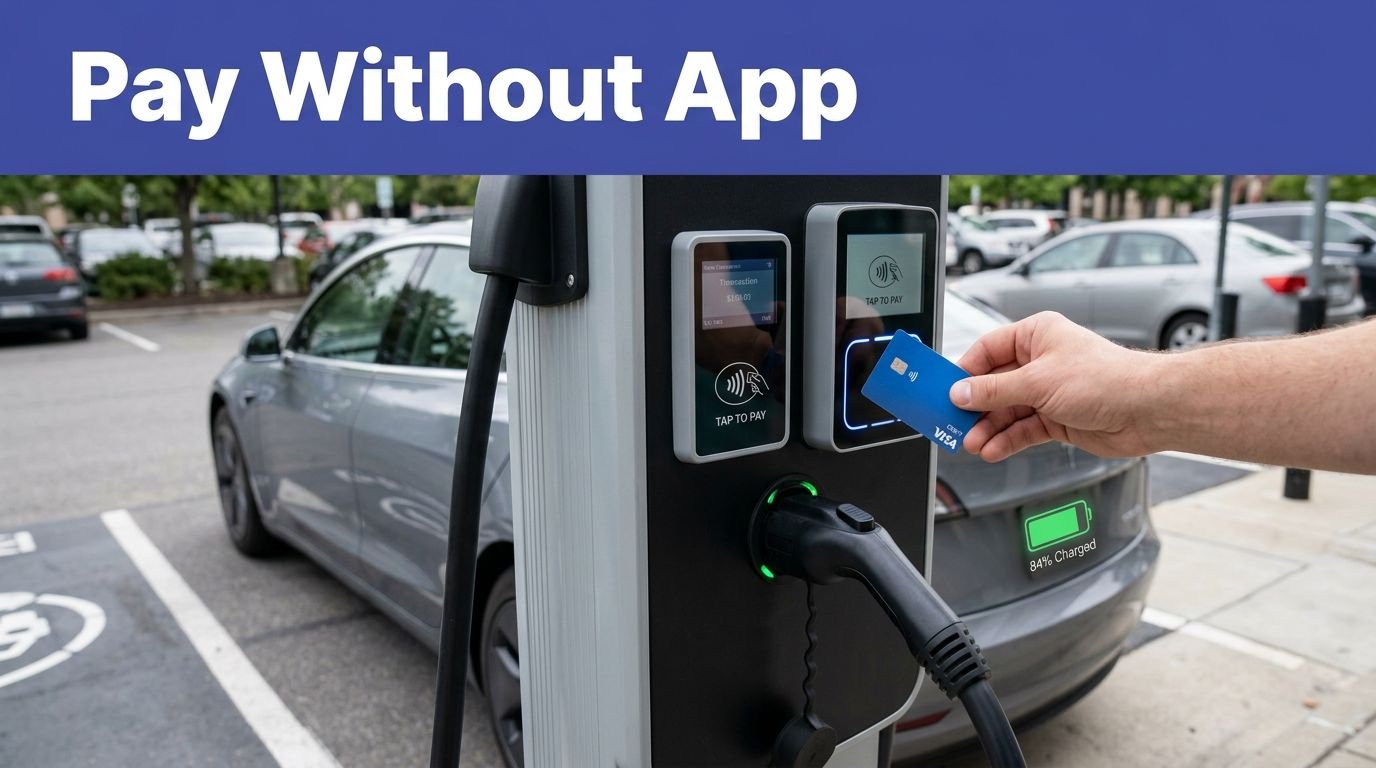
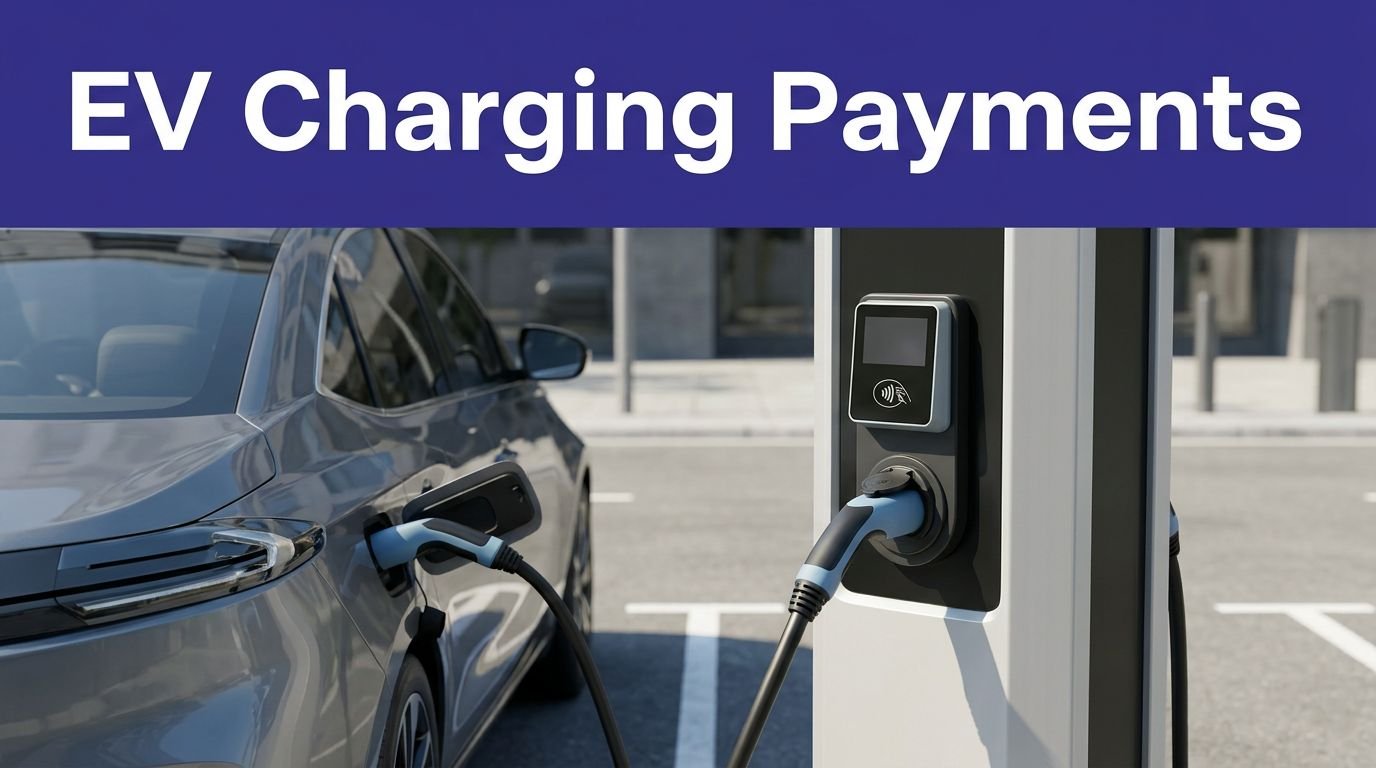
With NEVI mandating 97% uptime, you need 50 kW DC fast chargers delivering 96–98% efficiency, >0.99 PF, ISO 15118 Plug & Charge, CCS/NACS plus CHAdeMO, MID-grade metering, signed firmware, TLS mTLS, and UL/IEC compliance in rugged IP54/IK10 enclosures with hot‑swappable modules. OCPP 1.6/2.0.1, OCPI/OCSP, PCI‑DSS payments, OpenADR, and ADA/site readiness cut TCO. The catch: not all “50 kW” units hit these marks—especially in service and uptime SLAs.
Key Takeaways
- Choose chargers delivering 200–920 V, up to 125 A, ≥95% efficiency, PF ≥0.99, THD <5%, certified UL/IEC, CCS and CHAdeMO support.
- Prioritize IP54/IK10 hardware with modular, hot-swappable power stages, thermal derating management, MTBF 50k–100k hours, and fleet uptime ≥98% with MTTR under 48 hours.
- Require OCPP 1.6J/2.0.1 with Security Profiles, ISO 15118-20 Plug & Charge, PCI DSS/EMV payments, OCPI roaming, and signed meter values for auditable billing.
- Ensure TLS 1.3, secure boot, IEC 62443-aligned controls, RBAC with MFA, and SIEM logging for end-to-end operational security and compliance readiness.
- Evaluate total cost: $12k–$25k capex, $200–$600 networking, $300–$800 maintenance yearly, plus 2025 incentives (IRS 30C, FHWA CFI, utility make-ready).
What to Look for in a 50kW DC Fast Charger

When you evaluate a 50 kW DC fast charger, prioritize verifiable performance and standards compliance: DC output spanning ~200–920 V (up to ~125 A) with ≥95% efficiency, power factor ≥0.99, and THD <5%; 3‑phase 400/480 V, 50/60 Hz input. Specify CCS and CHAdeMO connectors, ISO 15118-2/-20 Plug & Charge, and OCPP 1.6/2.0.1. Require UL 2202/2231, NEC 625, and IEC 61851 safety; EMC per IEC 61000 with documented noise emissions. Demand metering to ANSI C12.20 (0.5%) and secure firmware/telemetry aligned to IEC 62443. Validate environmental ruggedness: IP54+ enclosure, IK10, -30 to +50 °C, 95% RH, surge IEC 61000-4-5. Check cable rating for 125 A, <65 dBA operation, and smart grid readiness (OpenADR 2.0b, IEEE 2030.5). Require OTA updates and authenticated payments (PCI DSS, EMV), and auditing.
Top Models With Proven Uptime and Service

A handful of 50 kW DC fast chargers stand out for documented reliability, with fleet-scale uptime ≥98% (per NREL/DOE methodology), MTTR under 24–48 hours, and remote-fix rates ≥60%. You should prioritize models with modular power stages, redundant cooling, IP54–IP55 enclosures, and field-replaceable contactors and rectifiers. Cross-check Operator Testimonials, parts logistics SLAs, and certified service coverage across your sites. Favor manufacturers with transparent incident metrics and strong Brand Reputation backed by third-party audits.
Choose 50 kW DCFCs with ≥98% uptime, modular redundancy, IP54–55, rapid MTTR, audited support, and high remote-fix rates.
1) Hardware resilience: sealed connectors, strain-relieved harnessing, and thermal derating that sustains nameplate output at 40–45°C.
2) Serviceability: hot-swappable modules, clear fault codes, and guaranteed spare parts within 72 hours.
3) Warranty and support: 5–10 year coverage options, proactive preventive maintenance, and standardized MTTR reporting aligning to NREL formulas and KPI definitions.
Software and OCPP Networking Capabilities
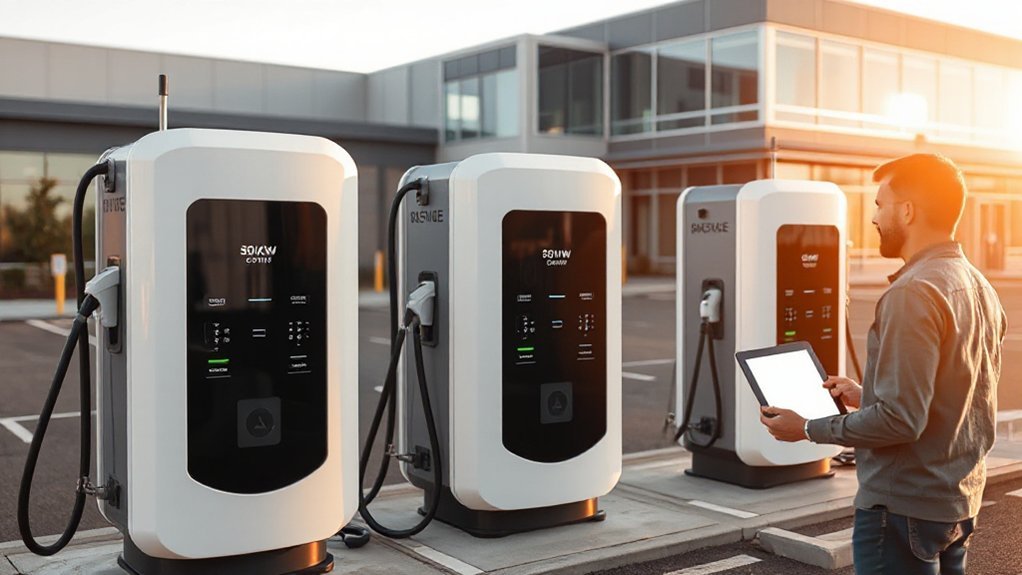
Beyond hardware uptime, the charger’s software stack and OCPP implementation determine real-world operability, interoperability, and fleet control. You should require native OCPP 1.6J today with a clear upgrade path to 2.0.1, full TLS 1.2/1.3, robust Certificate management (CSMS, CS, OEM), and OCSP/CRL handling. Verify secure boot, signed firmware, and role-based access. Demand deterministic session state handling, offline queueing, and idempotent message retries. Confirm Smart Charging Profiles, metering at 1 s resolution, and Telemetry aggregation for power, temperature, alerts, and queue depth. Provide webhooks/MQTT exports, northbound API reliability (99.9%+), and configurable heartbeats/ping timeouts. Require remote diagnostics, log streaming, and OCPP security profiles 1–3. Finally, validate load management via OCPP, ISO 15118 PnC token handling, and roaming via OCPI with automated settlement, and robust data retention.
Connector Options: CCS, NACS, and CHAdeMO Legacy Support

Connector strategy drives utilization and future‑proofing. At 50 kW, you should prioritize CCS1 (SAE J1772 Combo) and NACS (SAE J3400) while maintaining CHAdeMO only where fleet mix or legacy demand justifies it. Evaluate protocol support: ISO 15118/DIN 70121 over PLC for CCS/NACS, and CAN for CHAdeMO. 50 kW keeps cable gauges moderate; liquid cooling isn’t required.
- CCS1: North American baseline. Supports ISO 15118 features (Plug & Charge), load management, and broad vehicle coverage. Validate pinout differences vs CCS2 if you operate cross‑region.
- NACS/J3400: Rapidly standardizing. Favor native ports; rely on a robust adapter ecosystem during this shift.
- CHAdeMO: Plan for sunset. Confirm firmware supports 1.2/2.0, but track declining utilization and prioritize replaceable leads.

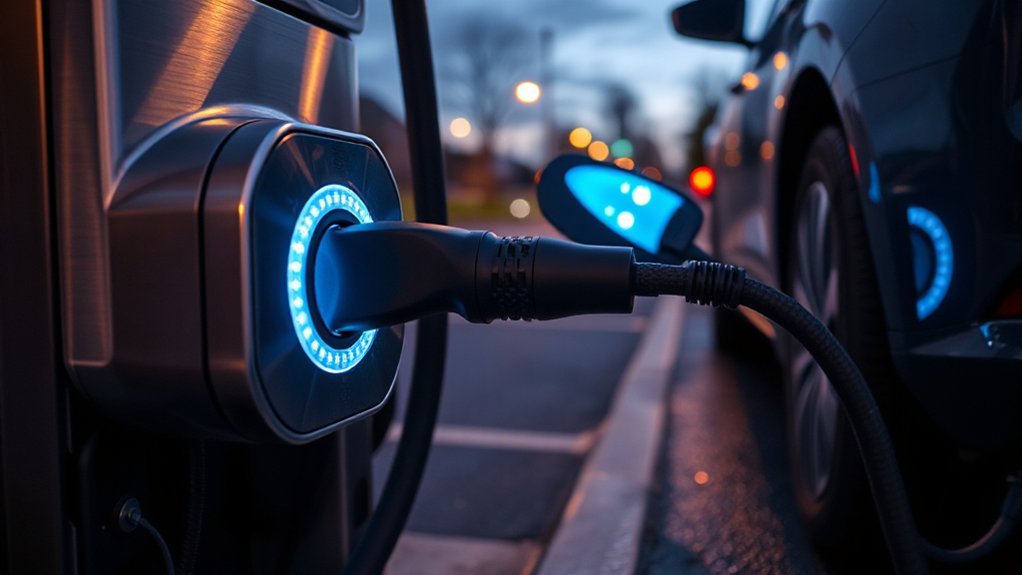

Require UL and SAE conformance.
Installation Requirements and Site Design Tips
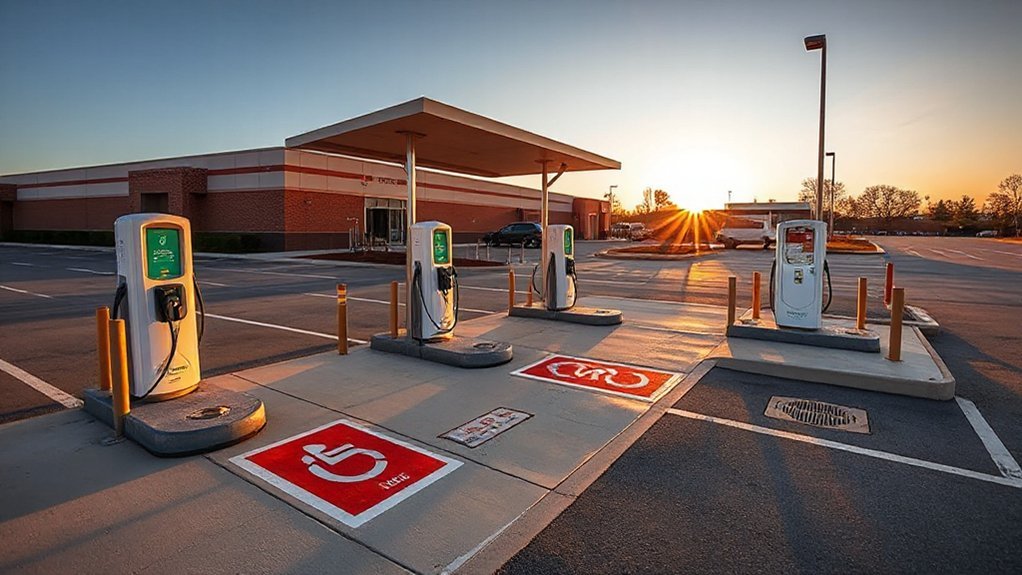
You size service and distribution per NEC 625/220, treating each 50 kW EVSE as a 125% continuous load and coordinating with the utility for transformer capacity, fault-current, and demand-management; at 480 V three-phase, expect roughly 65–75 A input per unit plus diversity and future expansion. You provide compliant access under the 2010 ADA Standards (≤2% slopes, 30×48 in clear floor space, operable parts 15–48 in AFF), with at least one van-accessible stall (96 in aisle, 98 in clearance) and an unobstructed route. You use MUTCD-compliant signage and pavement markings (e.g., D9-11b and R7-8), mount accessibility signs 60–66 in AFF, and post operating limits per local code.
Electrical Service Capacity
A proper electrical service capacity assessment underpins a reliable 50 kW DC fast charger deployment. You’ll calculate diversified demand, feeder ampacity, and short-circuit current to size service laterals, switchgear, and protection per NEC Articles 110, 215, 220, 240, and 625. Verify utility transformer kVA, fault duty at the point of connection, and voltage drop under 125 A DC output with conversion efficiency. Plan harmonic mitigation and thermal management to maintain power quality and equipment longevity.
- Load studies: Model coincident loads, future expansion to 150 kW, and diversity; validate with 15-minute interval data and IEEE 519 limits.
- Protection/coordination: Specify OCPD, relays, and grounding; perform arc-flash and coordination per IEEE 242/NFPA 70E.
- Distribution design: Right-size conductors, bus, and pads; provide ventilation, clearance, and derating for ambient.
ADA Access and Signage
While NEC governs power, the 2010 ADA Standards, ICC A117.1, and MUTCD control scoping, clearances, reach ranges, and signage for 50 kW DCFC sites. Provide at least one accessible charging position with a 30 by 48 inch clear floor space, slopes ≤1:48, and a 60 inch access aisle connecting to an accessible route. Mount operable parts and connectors 15–48 inches above finished floor; avoid tight grasping, pinching, or twisting. Maintain 36 inch continuous path and turning space where required. Locate curbs, bollards, and wheel stops outside the clear area. Post MUTCD-compliant EV signs and time-limit plaques; include International Symbol of Accessibility where applicable. Provide Braille Signage per ADA 703 at 48–60 inches, and Tactile Maps or wayfinding kiosks for orientation. Provide lighting ≥10 lux.
Load Management, Power Sharing, and Grid Integration
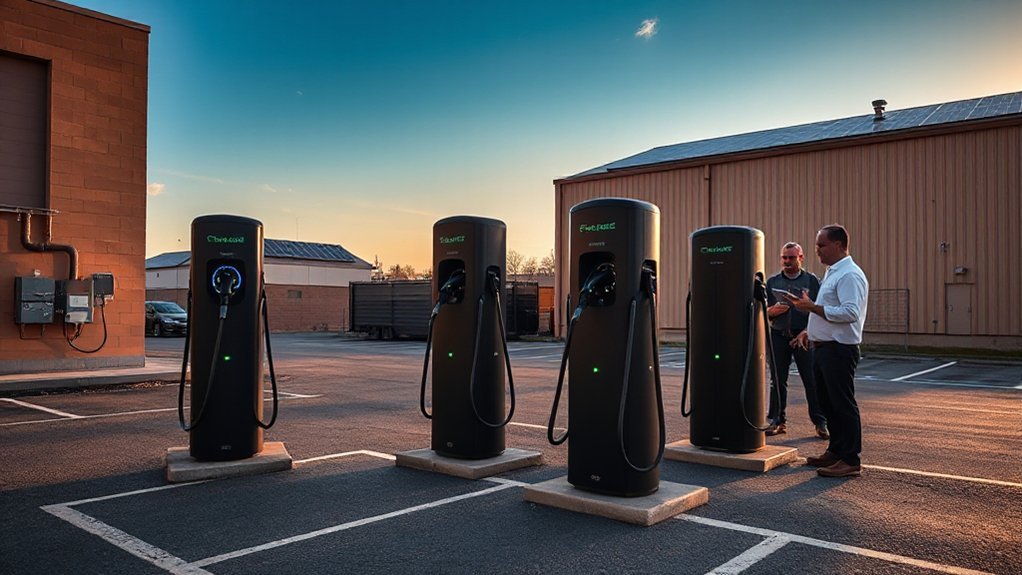
As sites deploy multiple 50 kW DC fast chargers, rigorous load management and power sharing keep aggregate demand within service limits, curb demand charges, and satisfy interconnection and power quality constraints. You’ll coordinate EVSE setpoints with feeder capacity, transformer, and PCC limits, using forecasting and SOC-aware profiles. Prioritize Battery Buffering to limit ramp rates, capture Renewable Curtailment, and ride-through. Enforce PQ targets (THD, flicker) per IEEE 519 and EN 50160; align controls with IEEE 1547/UL 1741. Expose demand response via OpenADR 2.0b or IEEE 2030.5, using ISO 15118-20 profiles.
- Deploy Battery Buffering and droop controls for peak shaving and fast transients.
- Apply dynamic power sharing to bound feeder current and transformer loading.
- Integrate utility signals to orchestrate curtailment, shedding, and recovery.
Payment Systems, Pricing Controls, and Access Management
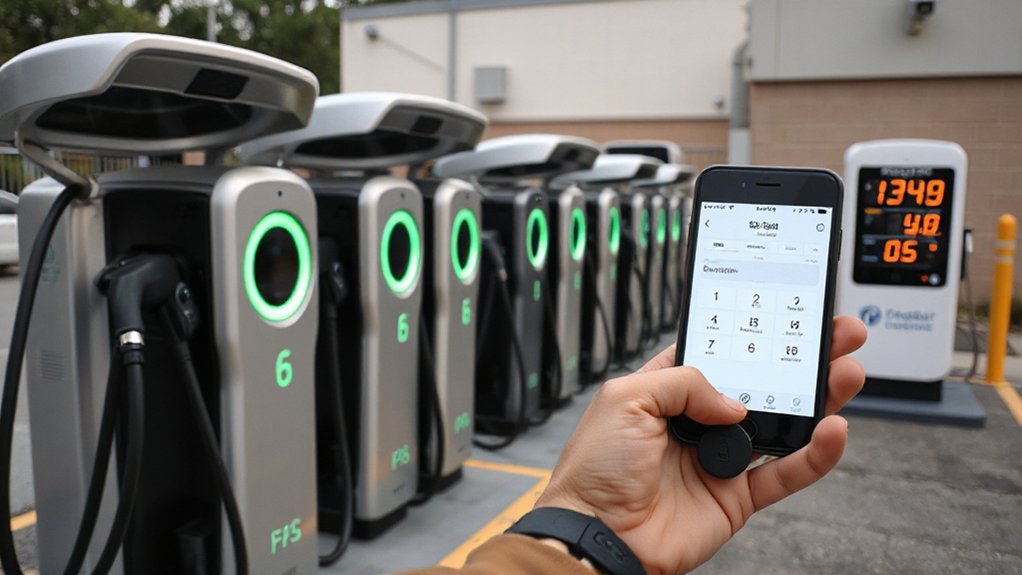
You’ll implement integrated payment gateways with EMV L2/L3 terminals, PCI DSS compliance, ISO 15118-20 Plug & Charge, and OCPP 2.0.1/OCPI 2.2.1 for roaming and authorization, targeting >99.5% transaction success and <500 ms auth latency. You’ll configure dynamic pricing via OCPI tariffs tied to TOU rates, demand charges, and congestion signals, with billing-grade metering (MID/ANSI C12.20) to maintain ≤1% accuracy. You’ll enforce role-based access controls using OAuth 2.0/OIDC and IEC 62443-aligned policies across charger, CSMS, and API layers, with auditable logs and token revocation SLAs under 5 minutes.
Integrated Payment Gateways
How do integrated payment gateways safeguard revenue integrity and controlled access for 50 kW DC fast chargers? You deploy PCI DSS-validated, EMVCo-compliant terminals with PSD2 SCA, tokenization, and ISO 27001-aligned key management, while supporting OCPI roaming and cross border settlements. Gateways reconcile MID-certified meter data with signed OCPP 2.0.1 meter values for auditable tax reporting. Access management binds ISO 15118 Plug & Charge certificates, RFID (MIFARE DESFire), and app credentials to per-connector entitlements.
- Security and compliance: TLS 1.3, mutual auth, secure elements, tamper logs, AML/KYC checks, and audit trails, SOC 2.
- Revenue assurance: CDR normalization, cryptographic session receipts, automated settlement files, exception handling, and chargeback evidence.
- Operator controls: tariff catalogs, whitelist/blacklist, role-based admin, fleet vouchers, and maintenance/test modes without billable posting.
Dynamic Pricing Strategies
Why tie tariffs to grid, site, and market signals? You maximize margin and reliability while meeting standards. In practice, ingest OpenADR 2.0b events, utility TOU/CPP schedules, and ISO/RTO LMPs, then translate them via OCPP 2.0.1 Tariff/Cost and ISO 15118-20 contract certificates into charger price profiles. Use Customer segmentation (fleet, rideshare, public) and Elasticity modeling to forecast session demand by price tier. Optimize kWh, per-minute, and idle-fee components under regulatory constraints (AFIR transparency, PTB-A 50.7/MID or NTEP accuracy). Include demand-charge mitigation: cap simultaneous kW, shift loads to off-peak, and set locational surcharges when site transformers near thermal limits. Expose real-time pricing through OCPI 2.2.1, with clear taxes/fees. Track KPIs: utilization, gross margin/kWh, grid incentives captured. Audit logs support compliance and pricing reproducibility across billing cycles.
Role-Based Access Controls
Enforce least‑privilege RBAC across chargers, the CSMS, and payment infrastructure to protect revenue and meet regulatory and security baselines. Map roles to OCPP 2.0.1 and OCPI functions, segmenting privileges for pricing edits, refunds, and firmware. Tie identities to IdP with SSO, MFA, and SCIM. Apply PCI DSS for payment tokens, and ISO 27001/NIST SP 800-53 for policy. Enable immutable access auditing and time-bounded approvals to reduce fraud windows. Log to SIEM with correlated device, user, and transaction IDs. Validate that field technicians can reboot but can’t alter tariffs; finance can reconcile but can’t deploy code.
- Define roles, scopes, and least privilege per asset group; review quarterly and on events.
- Enforce policy-as-code; test in CI; deny-by-default.
- Automate alerts, recertifications, and anomaly detection.
Total Cost of Ownership: Hardware, Networking, and Maintenance

Rigor in total cost of ownership starts by separating hardware, networking, and maintenance line items for a 50 kW DC fast charger. You model capex with depreciation schedules, account for insurance premiums, and isolate opex by function. Specify OCPP 1.6/2.0.1, ISO 15118, and MID/ANSI metering compliance to reduce integration risk. Evaluate enclosure NEMA ratings, power module redundancy, and connector cycle life to quantify failures and spares. Tie SLAs to measurable uptime and response times; verify firmware over-the-air pipelines and security patch cadence.
| Hardware | $12k–$25k capex; MTBF 50k–100k h |
|---|---|
| Networking | $200–$600/port/yr; OCPP 1.6/2.0.1 |
| Maintenance | $300–$800/yr; uptime 97–99.5% |
Benchmark costs, validate MTBF claims, and stress-test remote diagnostics to minimize truck rolls and stabilize TCO. Track spare parts lead times and field failure rates quarterly and costs.
Incentives, Compliance, and Funding Programs in 2025

While 50 kW DC fast chargers don’t meet NEVI corridor power minimums, 2025 still offers meaningful levers via the IRS 30C investment tax credit (subject to prevailing wage/apprenticeship and census‑tract eligibility), FHWA’s CFI Community grants, and utility make‑ready or demand‑charge mitigation programs—provided you align to current compliance baselines. You should map eligibility criteria early, standardize designs to NEC/NRTL and Buy America requirements, and quantify load profiles to access rate relief. Prioritize municipal partnerships to access public land, match funds, and streamline permits.
- Document wage compliance, apprenticeship ratios, and domestic content; keep audit trails for five years.
- Site in qualifying census tracts; verify Justice40 benefits and ADA conformance.
- Use OCPP 1.6/2.0.1, ISO 15118, and open roaming to meet CFI interoperability scoring.
Conclusion
You’ll select 50 kW DC fast chargers that meet IEC/UL/NRTL safety, IP54/IK10 durability, and 98%+ uptime with hot‑swappable modules. Prioritize ISO 15118 Plug & Charge, CCS/NACS with CHAdeMO legacy, MID-grade metering, signed firmware, and TLS mutual auth/OCSP. Require OCPP 1.6/2.0.1 with OCPI, OpenADR for demand response, and PCI‑DSS tokenized payments. Validate site readiness, ADA access, and scalable power sharing. Why pay more TCO later when standards compliance and proven service de-risk deployments today and maintenance?