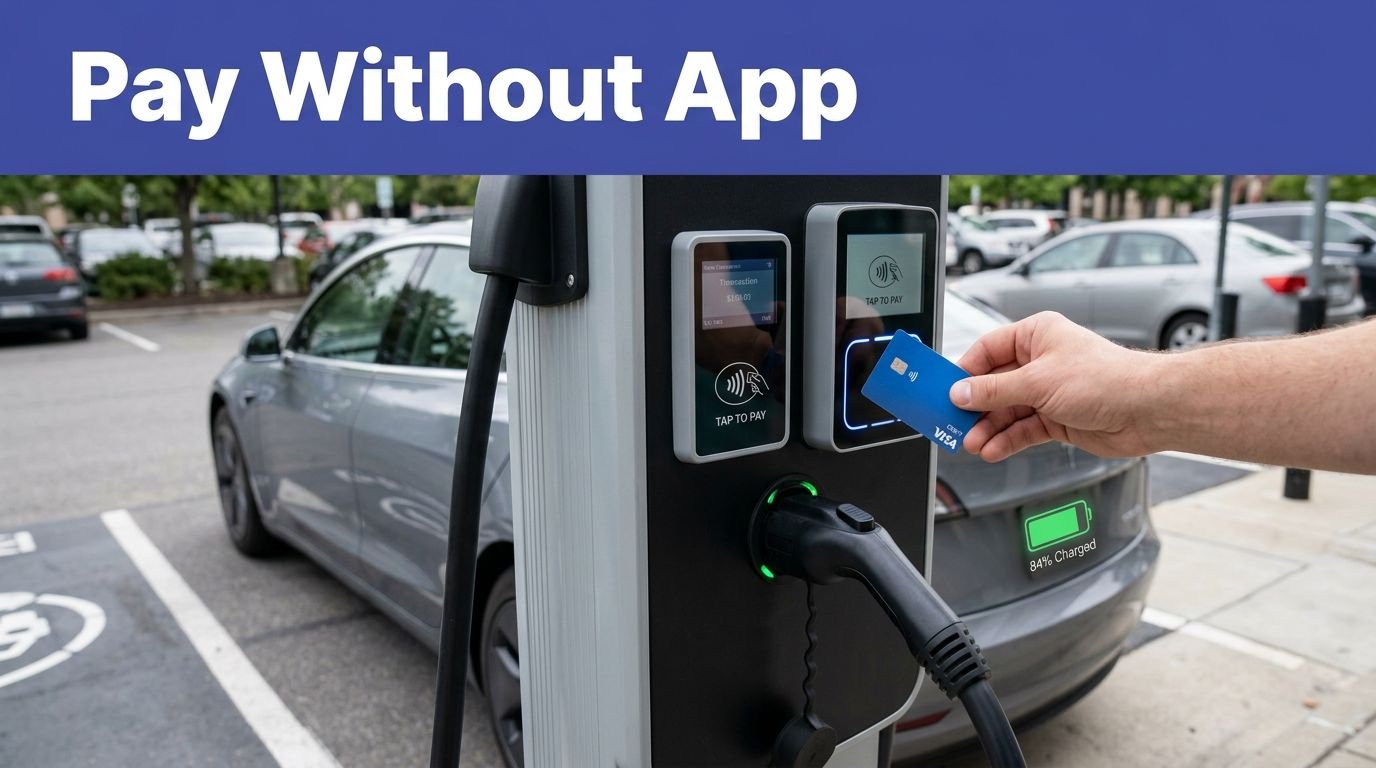
Think of EV charging like plumbing: a 7.2 kW Level 2 tap versus a 150 kW Level 3 fire hose. You’ll weigh AC Level 2 (SAE J1772/IEC 61851, ~6–11 kW, ~20–40 mi/hr) against DC fast (CCS/NACS/CHAdeMO, 50–350 kW) that’s pricier and harder on cells. Factor installation, tariffs, demand charges, and cycle aging. At home, work, or highway—what’s best for your duty cycle and battery warranty terms?
Key Takeaways
- Daily use: Choose Level 2 for home/work; 7–11 kW, ~25–45 miles/hour, full overnight, lowest cost.
- Trips: Choose Level 3 for on-the-road; 150+ kW when battery warm 20–60% SoC; fastest but tapers above 80%.
- Costs: Level 2 hardware $400–$900, install $500–$2,000; Level 3 costs tens of thousands plus demand charges.
- Battery health: Routine DC fast charging increases degradation; prefer Level 2, keep SoC 20–80%, precondition before fast sessions.
- Actual speed depends on vehicle limits, temperature, and station capability; a 150 kW charger may deliver less and share power.
How Level 2 and Level 3 Work

While both supply electricity to the vehicle, Level 2 and Level 3 differ in where AC–DC conversion occurs and in the governing standards and power limits. On Level 2, you feed AC (120–240 V) to the car; the onboard charger rectifies to DC under SAE J1772/IEC 62196 Type 1/2, with currents up to 80 A (≈19.2 kW). On Level 3 DC fast charging, the offboard rectifier supplies regulated DC at 200–1000 V, hundreds of amps, coordinated by the BMS. Connector Standards include CCS (SAE J1772 Combo, IEC 62196-3), CHAdeMO, GB/T, and SAE J3400 (NACS). Communication Protocols span J1772 pilot signaling, PLC per ISO 15118 and DIN 70121, or CAN for CHAdeMO. You negotiate voltage, current, boundaries, and safety interlocks, thermal constraints and connector status.
Charging Speed and Real-World Range Added
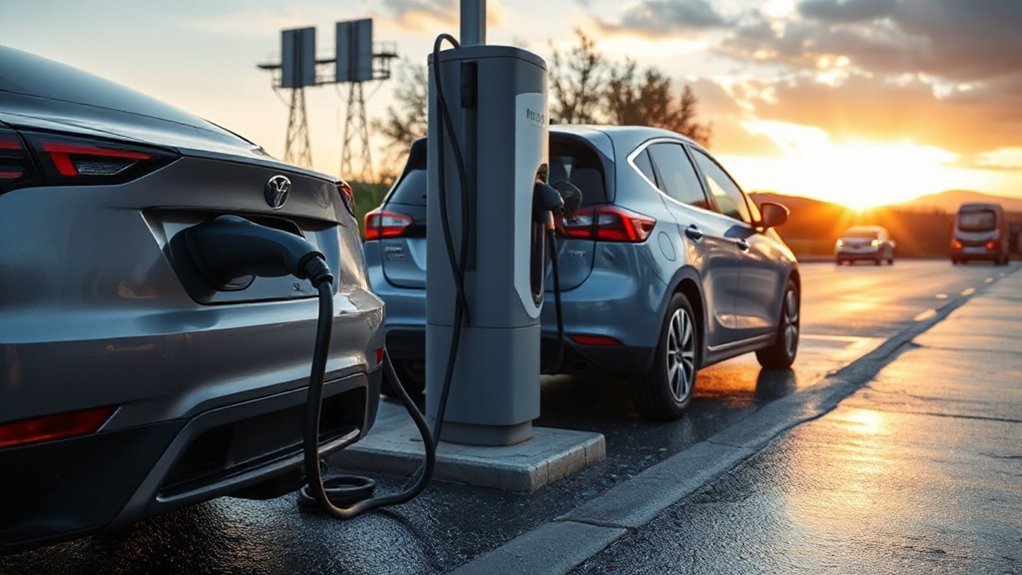
Although nameplate power grabs attention, real charging speed is the lesser of the station’s capability (per SAE J1772/IEC 62196-2 for AC; CCS/NACS/CHAdeMO under IEC 62196-3 for DC) and your vehicle’s max acceptance, then shaped by state of charge (SoC), temperature, and thermal limits.
On Level 2 you’ll typically see 6.6–11 kW; with 92–95% AC-DC efficiency and 250–350 Wh/mi consumption, that’s 17–40 miles per hour. DC charging spans 50–350 kW, but charge curves peak near 30–70% SoC, then taper to protect cells. Ambient Temperature triggers battery conditioning; preheat/cool can draw 2–10 kW, reducing net power. Accessory Draw (HVAC, lights, telematics) subtracts 0.3–3 kW. A “150 kW” session may deliver 110–130 kW at 20–60% SoC, then <60 kW past 80%. Convert kW to range: kW ÷ Wh/mi.
Upfront and Ongoing Costs
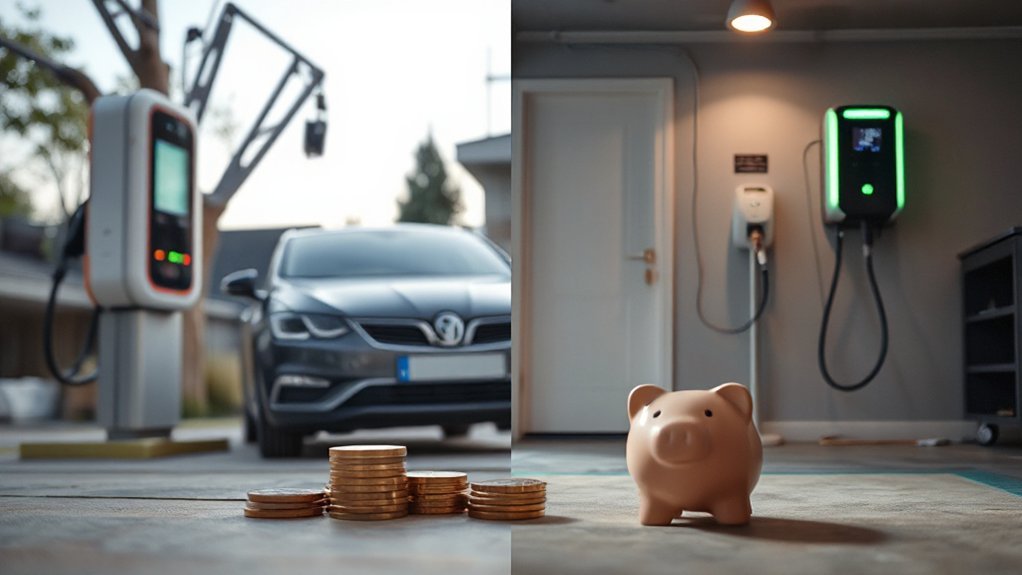
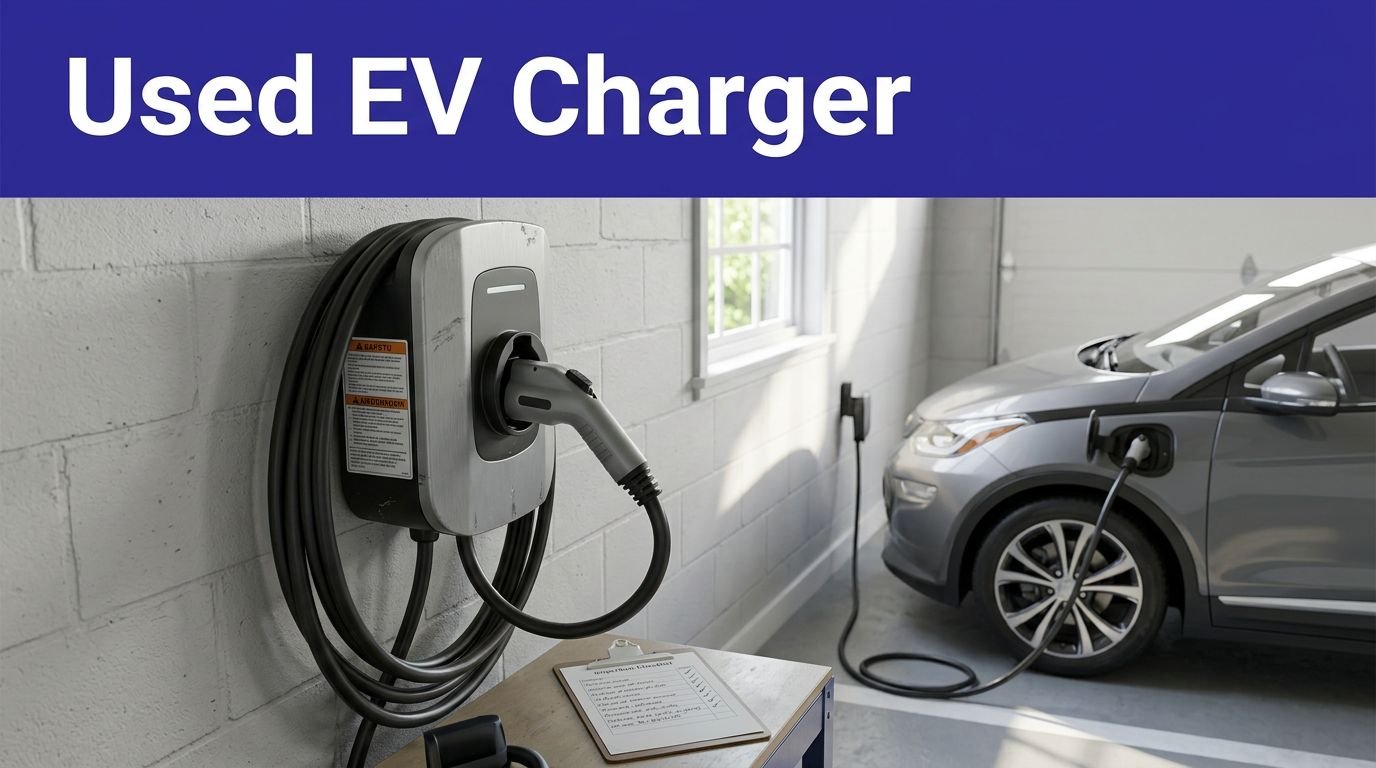
Charging performance sets expectations for time at the plug; costs determine what you install and where you charge. For Level 2, expect $400–$900 for hardware and $500–$2,000 for installation, driven by panel capacity, conduit run, and permits. Level 3 (DC fast) jumps to $30,000–$120,000 per dispenser, plus $20,000–$100,000 for utility upgrades. You’ll evaluate incentives: federal and state tax credits can offset 30%+ of qualified costs.
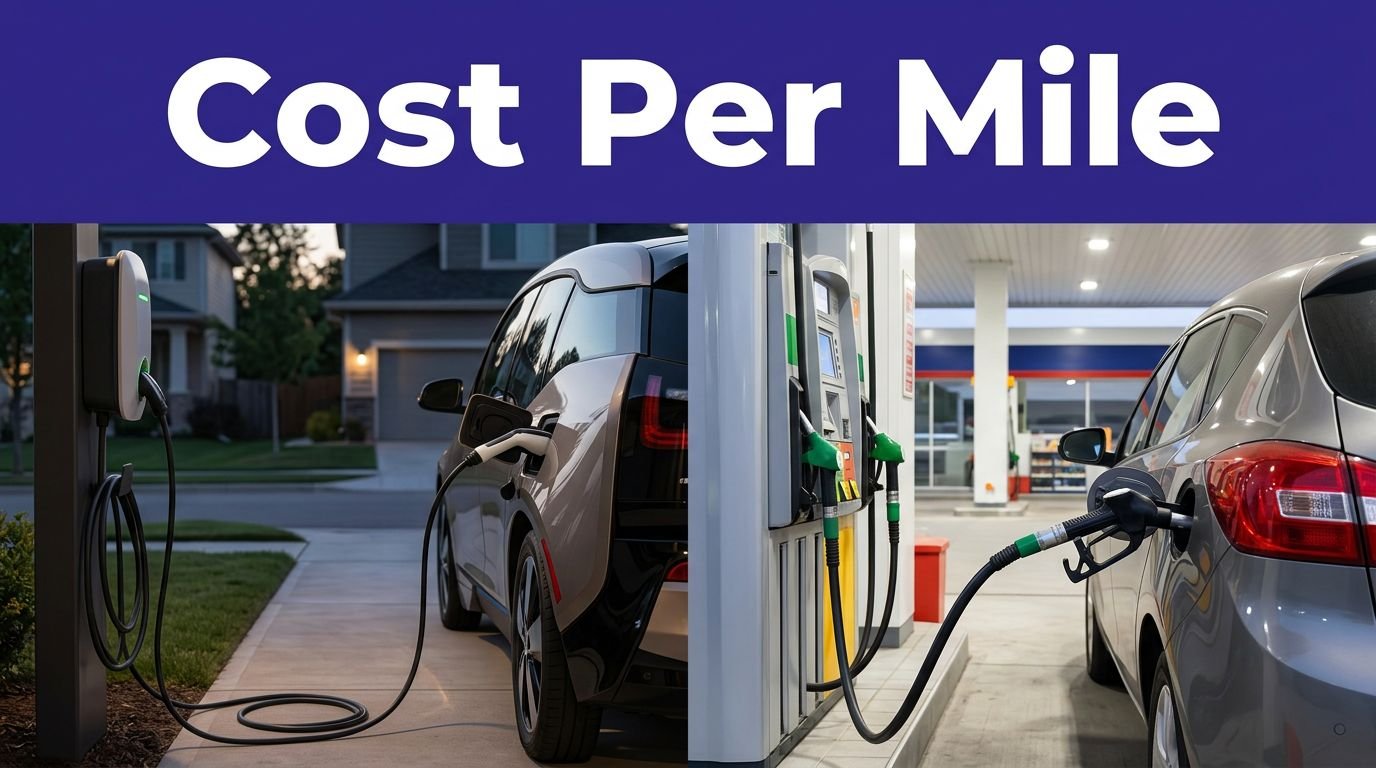
Ongoing costs diverge. Level 2 uses residential or commercial kWh rates with minimal maintenance; network fees run $60–$240/year. DC fast introduces demand charges, preventive maintenance, and warranty reserves. For fleets or retail sites, model utilization breakeven and cash flow, and consider resale depreciation of assets and site improvements. Map costs by category to standardize estimates and procurement decisions.
- CapEx
- OpEx
- Incentives/ROI
Battery Health and Charging Habits


How often should you fast charge, and what does it do to the pack? DC fast charging (Level 3) elevates cell temperatures and lithium plating risk at high SOC, accelerating Battery aging relative to Level 2. Field data and lab cycling show higher degradation when you frequently exceed 2–3 C charge rates, especially above 80% SOC. You’ll minimize loss by using Level 2 for routine charging and reserving Level 3 for trips, keeping average SOC between 20–80%.
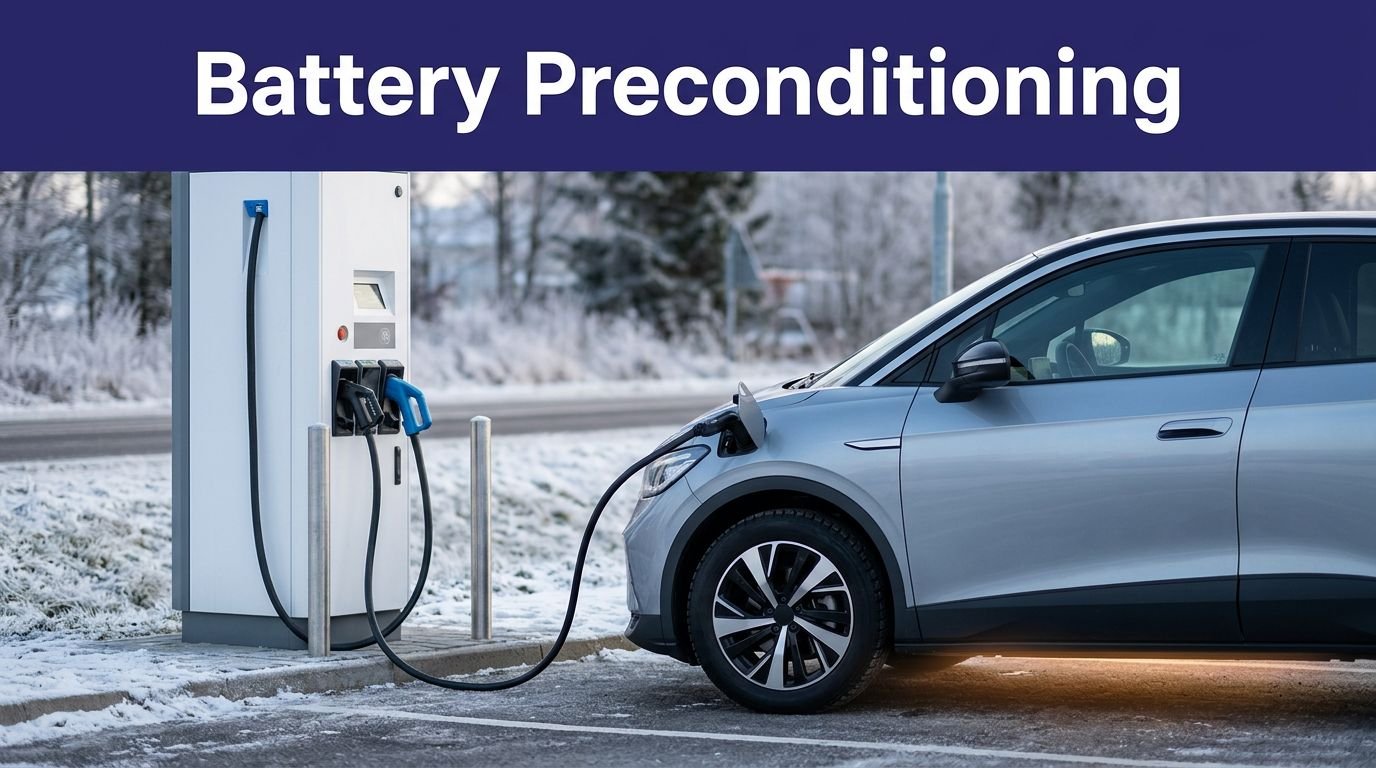
Follow OEM guidance and standards like IEC 61960 and UN 38.3 test regimes. Enable thermal preconditioning before fast sessions. Apply Charge scheduling to finish near departure, not hours earlier, reducing time at high SOC. Monitor SOH via OBD-II/telemetry and adjust charging current and cutoffs seasonally and climate.
Home, Workplace, and On-the-Road Access
You rely on Level 2 at home (SAE J1772/NACS) delivering ~7–11 kW (≈25–40 miles/hour), which supplies ~70–80% of total energy via scheduled overnight charging. At work, you evaluate port density (e.g., 2–5 Level 2 ports per 100 employees), access rules, and load management (OCPP), typically 6–7 kW per port. For trips, you plan around DC fast-charging networks (CCS/NACS) with 150–350 kW sites, target <50-mile corridor spacing, and uptime KPIs ≥97%.
Home Charging Convenience
Typically, Level 2 (AC) home and workplace charging at 7.2–11.5 kW (SAE J1772 or NACS) delivers ~25–45 miles of range per hour, enabling overnight replenishment of a 60 kWh pack in ~6–9 hours and covering most daily duty cycles; DOE data shows ~70–80% of charging occurs at home. At home, you control charge windows and costs with time-of-use rates while avoiding peak demand and improve daily convenience substantially. Smart EVSE adds app integration for user auth, kWh metering, and preconditioning; robust cable management, NEMA 3R/4 enclosures, and GFCI protection enhance safety and uptime.
- Schedule off-peak TOU charging, or absorb surplus solar generation automatically.
- Use load sharing to charge two EVs on a 60–100A feeder.
- Follow NEC 625: 40A continuous on 50A circuits; 48A hardwired.
Workplace Charging Availability
Increasingly, employers provision Level 2 AC workplace charging (SAE J1772 or NACS) at 7.2–11.5 kW to match 4–9 hour dwell times, delivering ~25–45 miles/hour; national charging behavior data places ~10–15% of sessions at work versus ~70–80% at home. You should evaluate connector availability, load management, and access controls. Employer incentives, utility make‑ready programs, and Parking policies materially affect cost and reliability.
| Criterion | Typical Spec | Impact |
|---|---|---|
| Ports per 100 employees | 4–10 | Reduces queuing, aligns with adoption forecasts |
| OCPP-enabled load sharing | Yes | Balances circuits, keeps 40A-48A sessions stable |
If your commute is 20–40 miles, workplace Level 2 can offset daily energy with minimal battery stress. Seek posted pricing, time limits, and uptime metrics (target ≥98%). Prefer documented SLAs. Confirm access controls and billing transparency before enrolling.
Highway Fast-Charging Coverage
While home and workplace AC cover most daily energy, highway DC fast charging governs trip feasibility and elapsed time. You should assess corridor density, station power (kW), connector standards, and uptime. Look for NEVI-compliant sites (≥4 ports, ≥150 kW each, 97% uptime) spaced ~50 miles. Verify NACS or CCS availability and cable current ratings to sustain peak charge curves. Identify coverage gaps, especially between metros; prioritize routes with redundancy to mitigate out-of-service risk. For rural expansion, track utility upgrades and backhaul constraints that limit site power.
- Map average spacing (miles) and maximum gap on your route.
- Compare charger nameplate kW vs sustained kW at 20–60% SOC.
- Review reliability metrics (uptime, successful sessions) and payment interoperability.
Leverage vehicle routing with live status.
When to Choose Each for Your Driving Pattern
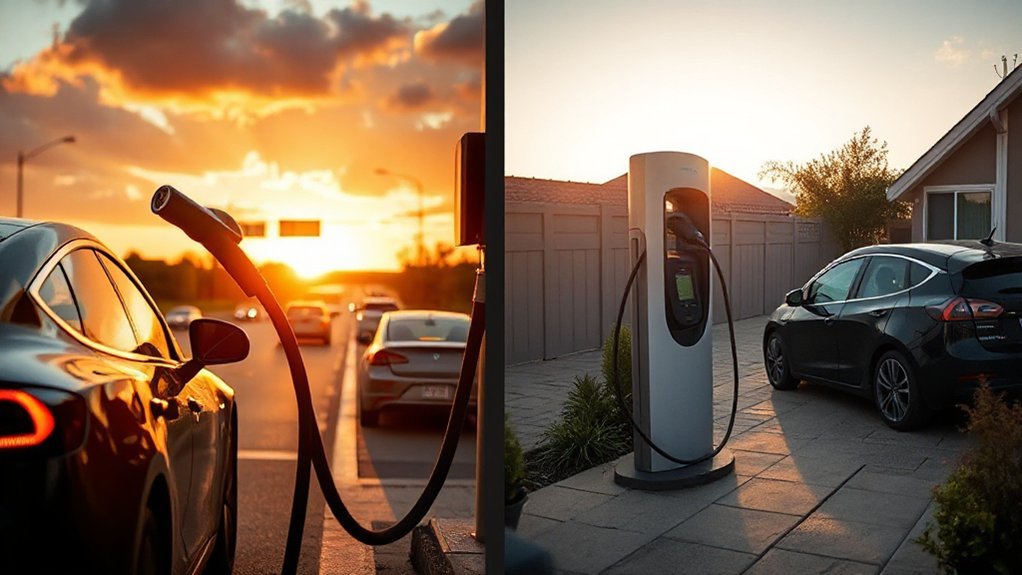
When should you choose Level 2 versus DC fast charging (Level 3) based on your duty cycle and dwell times? If your average daily energy demand is ≤12–20 kWh (≈35–60 miles at 3–4 mi/kWh) and you park ≥8 hours at home or work, SAE J1772 Level 2 at 7.2–11.5 kW optimizes Lifestyle fit, minimizes battery wear, and leverages off‑peak TOU rates. For high-utilization cycles—multiple 100–300 mile days, brief stops, or fleet dispatch—choose DCFC (50–350 kW, CCS/NACS) to maintain a 10–80% SoC window with <30 minute dwell. Evaluate site power, demand charges, and thermal limits; frequent DCFC increases calendar/cycle aging. Mixed patterns favor L2 baseline plus strategic DCFC on corridors validated by uptime metrics. Consider Resale impact: telematics logs showing gentle charging improve buyer confidence.
Conclusion
You’re the system architect of your EV life. For daily duty cycles, choose Level 2 AC (6–11 kW via SAE J1772/NACS): it adds ~20–40 miles/hour, costs less, and treats cells gently. When the clock screams, tap Level 3 DC fast charging (CCS/NACS), delivering 100–350 kW sprints—but with higher $/kWh and elevated thermal/mechanical stress. Build a hybrid strategy: home/work L2 as your baseline, DCFC as your pit stop. Your battery—and budget—will breathe easier for years ahead.