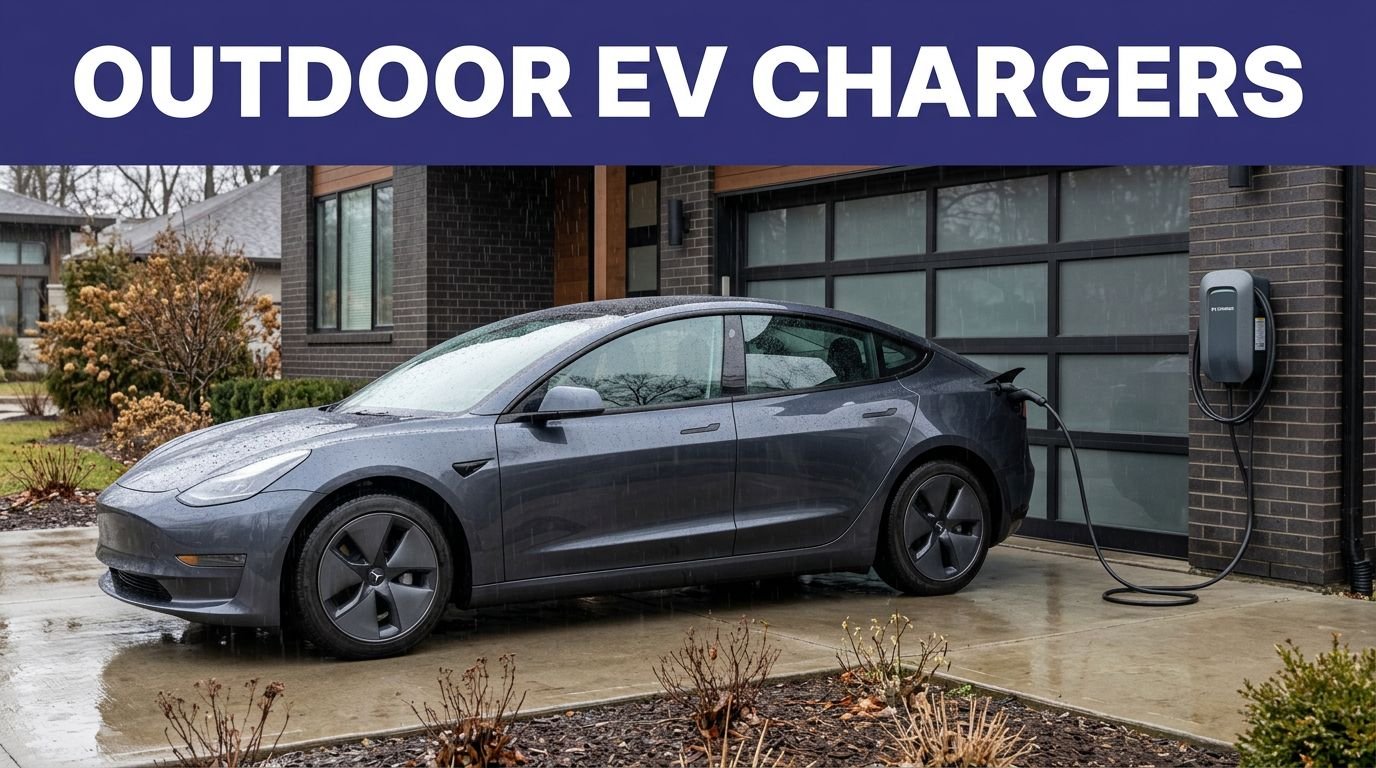
By coincidence, your daily range anxiety and the Blink portable EV charger meet at the same constraints: amps, volts, and protocol limits. You’ll match a portable EV battery’s kWh to SAE J1772/IEC 61851 negotiation, select 120/240 V inputs, and set safe current. With BMS cell balancing, GFCI/overcurrent protection, and CE/UL/UN compliance, you’ll add real miles when outlets are scarce—but the ideal setup depends on connector, duty cycle, and your use case…
Key Takeaways
- Portable EV batteries use Li‑ion NMC/LFP with BMS; regulated DC output; comply with UN 38.3, UL 2271, and IEC 62133.
- Blink Portable EV Charger: Level 1/2 AC EVSE (120/240 V) with J1772; pilot handshake, GFCI, self‑tests, and controlled current ramp.
- Charging rates: 1.4 kW ≈4–6 mi/hr, 3.6 kW ≈10–12, 7.2 kW ≈20–25; limited by vehicle charger and conditions.
- Safety/protections: OCP, OVP, UVP, OTP, insulation monitoring, ground fault; EVSE UL 2594/2231, IEC 61851; IP54+/NEMA 3R enclosures for outdoor.
- Power sources/adapters: NEMA 5‑15, 14‑50, TT‑30; follow 80% continuous‑load rule; verify NACS/Type 2 adapters and firmware compliance.
What Is a Portable EV Battery and How It Works
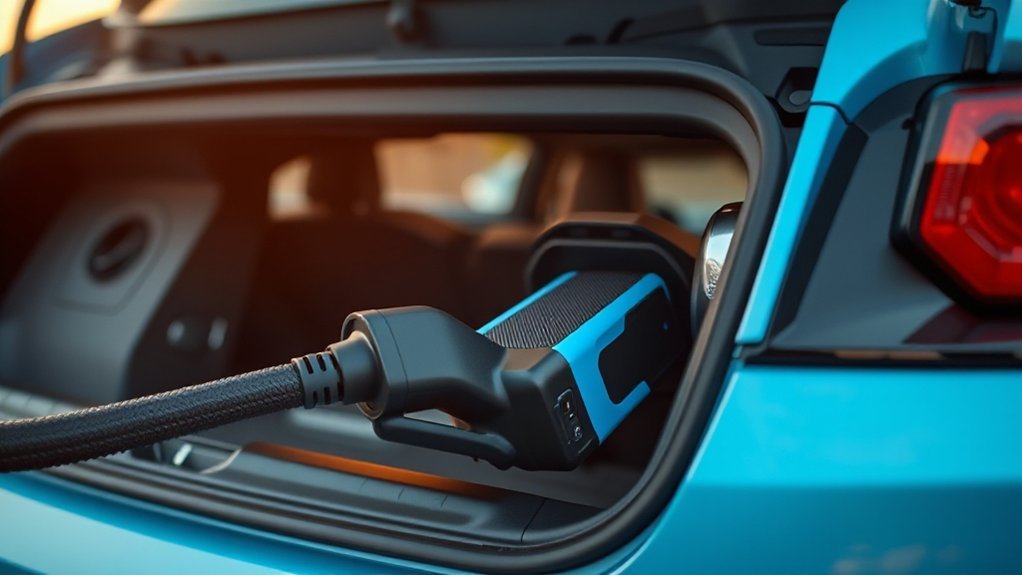
How does a portable EV battery work in practice? You carry an energy storage pack—typically lithium-ion NMC or LFP—managed by a BMS that enforces cell balancing, thermal control, and SOH/SOC estimation. The unit boosts DC to a regulated output and, via a control module, negotiates charge parameters with the vehicle per ISO 15118/IEC 61851 or CHAdeMO/CCS signaling. Integrated protections include OCP, OVP, UVP, OTP, insulation monitoring, and ground fault detection, validated under UN 38.3, UL 2271, and IEC 62133.
Through Historical evolution, capacities rose from sub‑1 kWh to 5–20 kWh, while Design innovations reduced mass with high‑nickel cathodes, silicon‑doped anodes, and aluminum housings. You assess kWh, C‑rate, peak kW, duty cycle, IP rating, and cycle life to match range needs under varied ambient conditions.
How the Blink Portable EV Charger Operates
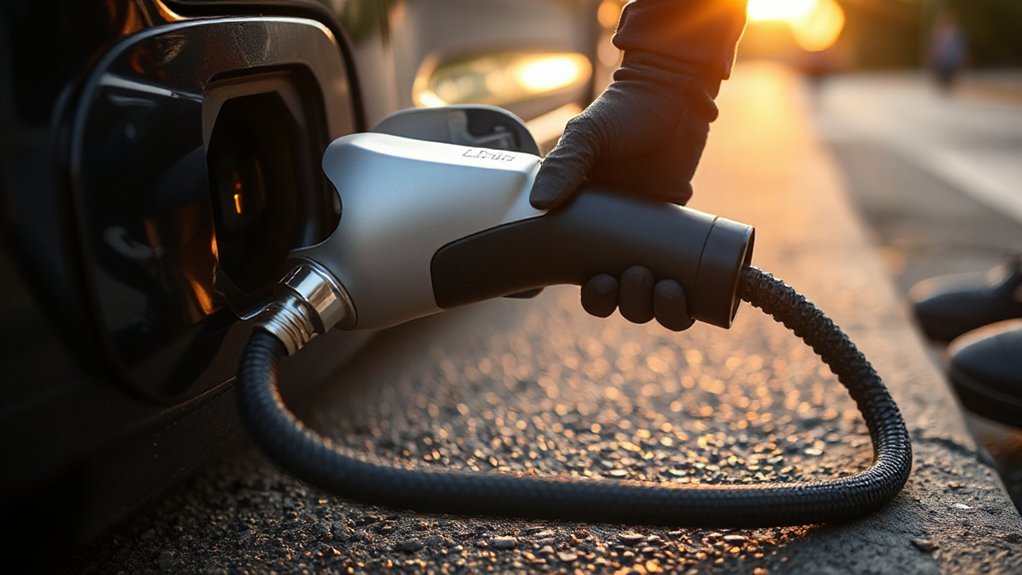
You’ll pick a power source—120 V Level 1 via NEMA 5-15 or 240 V Level 2 via NEMA 14-50/6-50—with selectable current limits (typically 12–32 A) to match the circuit. You connect the J1772 handle; the unit runs UL 2231/2594 self-tests, establishes the SAE J1772 pilot, then closes the contactor to deliver AC. During charging, it monitors ground-fault, temperature, and line quality per NEC 625, modulates current as negotiated, and stops on user command or vehicle charge-complete.
Power Source Options
Drilling down into power source options, the Blink Portable EV Charger functions as a Level 1/Level 2 EVSE, drawing single‑phase AC from 120 V or 240 V circuits at 50/60 Hz and advertising available current via the SAE J1772 control pilot per IEC 61851. You can plug into NEMA 5‑15/5‑20 (120 V) or 14‑30/14‑50 (240 V) receptacles; it limits current to the 80% continuous load per NEC 625/210 (e.g., 12 A on 15 A, 16 A on 20 A, 24 A on 30 A, 32 A on 40 A). For generators or inverters, use pure‑sine output with THD <5% at 60 Hz. For solar integration and microgrid options, pair with IEEE 1547/UL 1741 inverters and UL 9540 storage. Ground‑fault protection per UL 2231/2594 standards.
Charging Process Steps
Before energizing the vehicle, the Blink Portable EV Charger sequences the SAE J1772/IEC 61851 handshake to establish a safe load. You verify power quality, perform a pre charge inspection, and confirm connector integrity per SAE J1772 latching.
- Connect the J1772 coupler; the control pilot and proximity circuits validate readiness, ventilation requirements, and EVSE status (State B/C).
- Authorization completes; the pilot duty cycle advertises available current (e.g., 24–40 A). The EV closes contactors and requests charge.
- The EVSE ramps current within IEC 61851 limits, monitors ground continuity, GFCI, temperature, and voltage sag; it modulates current on faults.
- You stop via button or schedule; the EVSE drops to State B, opens relays, verifies zero current, secures the latch, and executes post charge logging for electrical safety.
Charging Speeds, Power Levels, and Real-World Miles Added
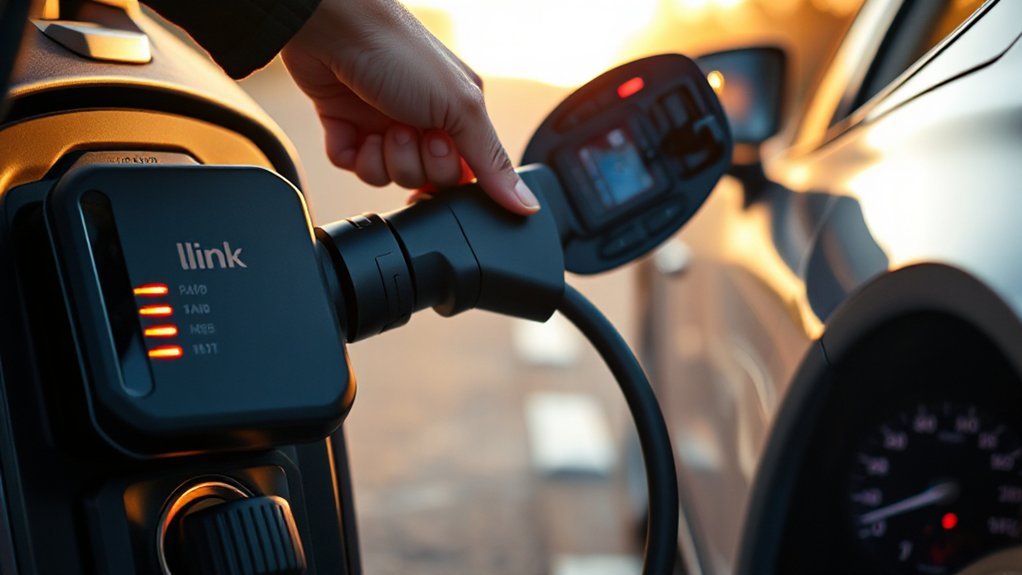
While charging standards define the interface, the rate you’ll see from a portable EVSE is set by voltage, allowable current, and your vehicle’s onboard charger. AC power equals V×A; usable charge rate equals (V×A/1000)×η, where η accounts for efficiency losses (typically 85–92%). The EVSE’s pilot per SAE J1772/IEC 61851 advertises current; your onboard charger then caps kW. Real-world miles added depend on your car’s consumption. At 1.4 kW, you’ll net ~4–6 mi/hr at 300 Wh/mi; at 3.6 kW, ~10–12; at 7.2 kW, ~20–25. Cold packs or high SOC taper reduce rates. Higher instantaneous kW increases grid impact; schedule off-peak to minimize it. For trip planning, estimate miles/hour = (kW×η)/(Wh/mi) and include ~5–15% overhead for thermal and conversion. Verify ratings in your vehicle’s specs documentation.
Outlets, Adapters, and Amp Settings for Home and Travel
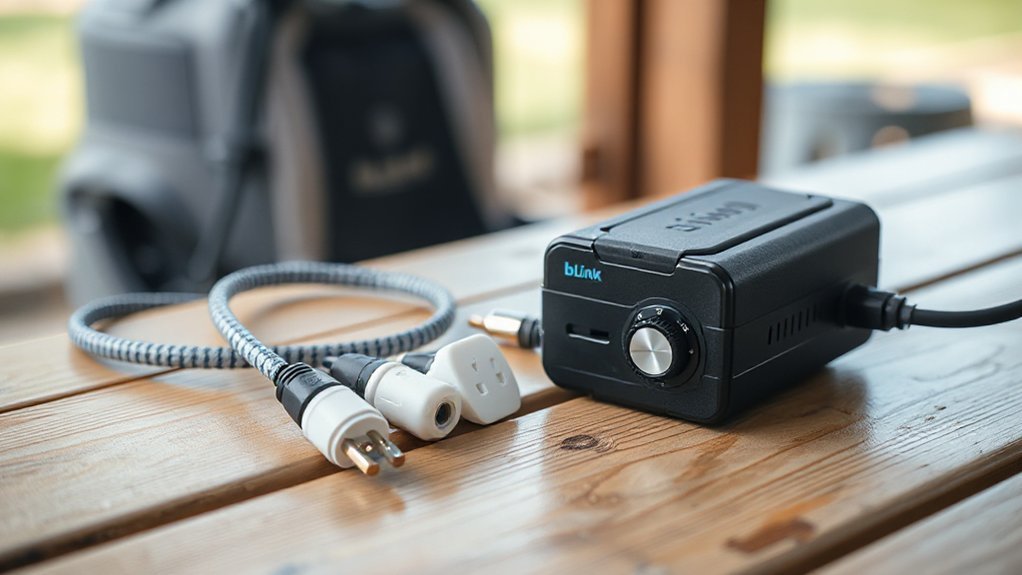
How do you map plugs, adapters, and amp settings to safe, standards‑compliant charging at home and on the road? You align connector standards and circuit ratings with your EVSE’s configurable current, per SAE J1772, IEC 62196, and NEC 625 continuous-load sizing. Prioritize clear labeling, Outlet aesthetics, and disciplined Cable management to reduce confusion when traveling.
Align connector standards and circuit ratings with EVSE current; label, tidy cables, and travel confidently.
1) NEMA 5‑15 (120 V): set 12 A; ~1.4 kW. Use a 5‑15P adapter to your EVSE’s J1772 lead.
2) NEMA 14‑50 (240 V): set 32–40 A, matching breaker; ~7.7–9.6 kW.
3) TT‑30 (120 V/30 A): set 24 A; ~2.9 kW. Use a TT‑30P adapter; not 240 V.
4) Abroad Type 2 (IEC 62196): carry a T2‑to‑J1772 lead; set 10–32 A to match the host circuit for reliable performance.
Safety Features, Certifications, and Best Practices
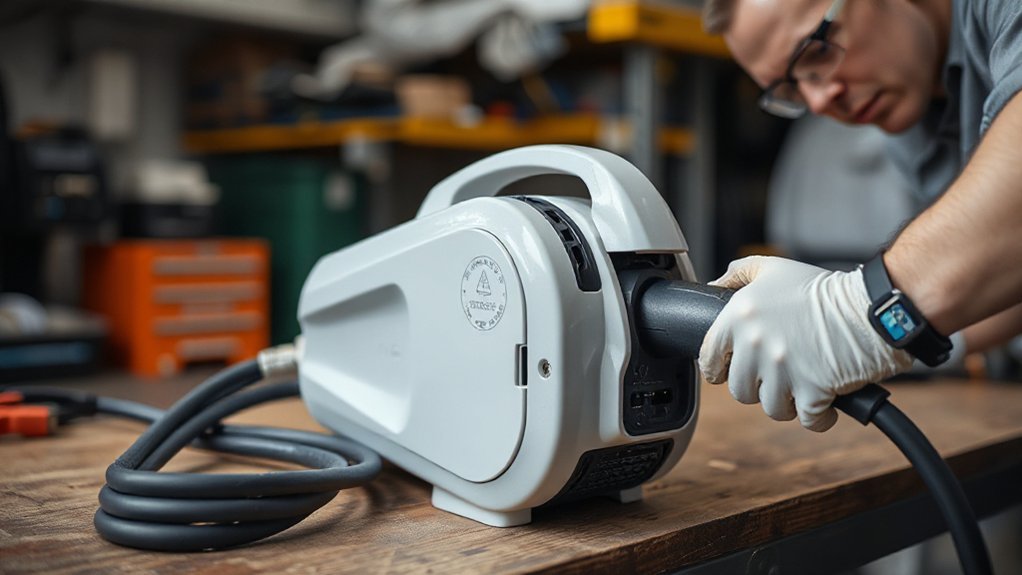
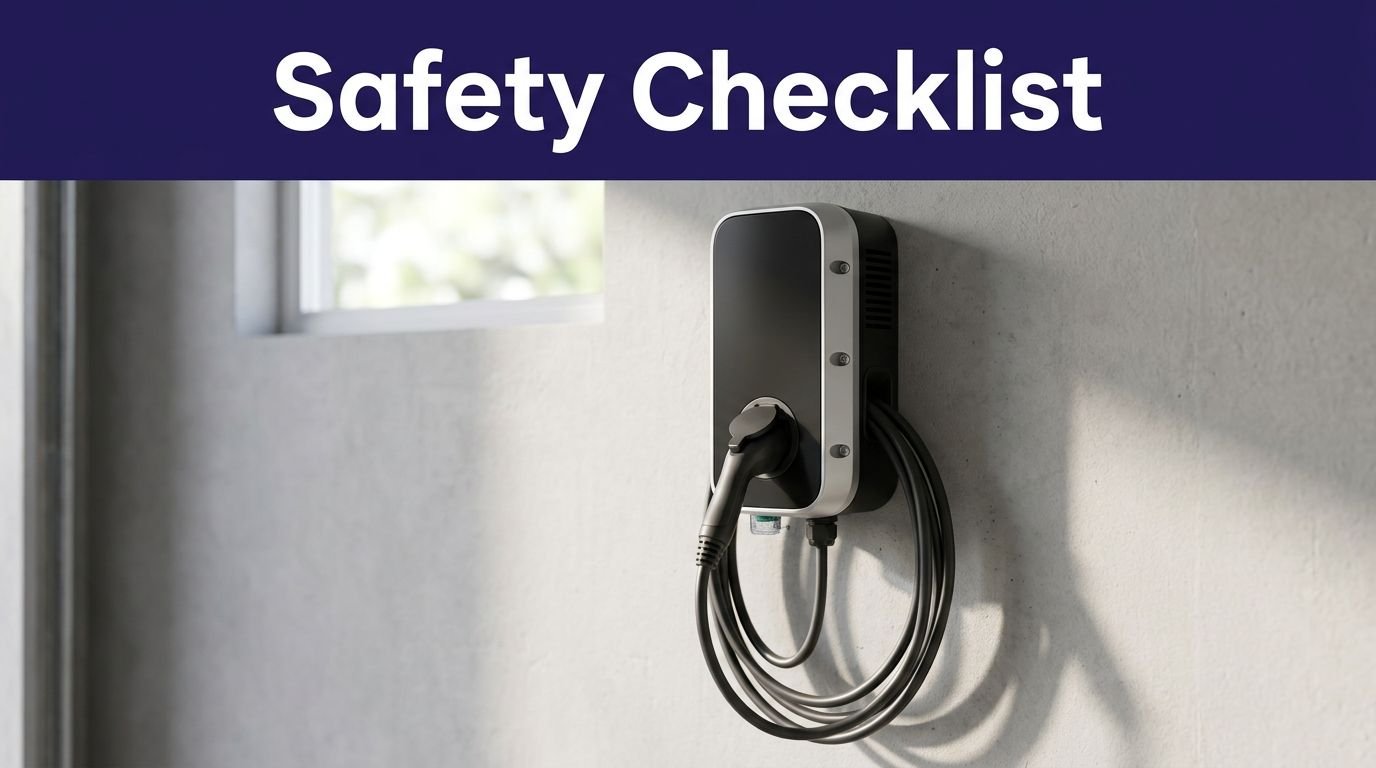
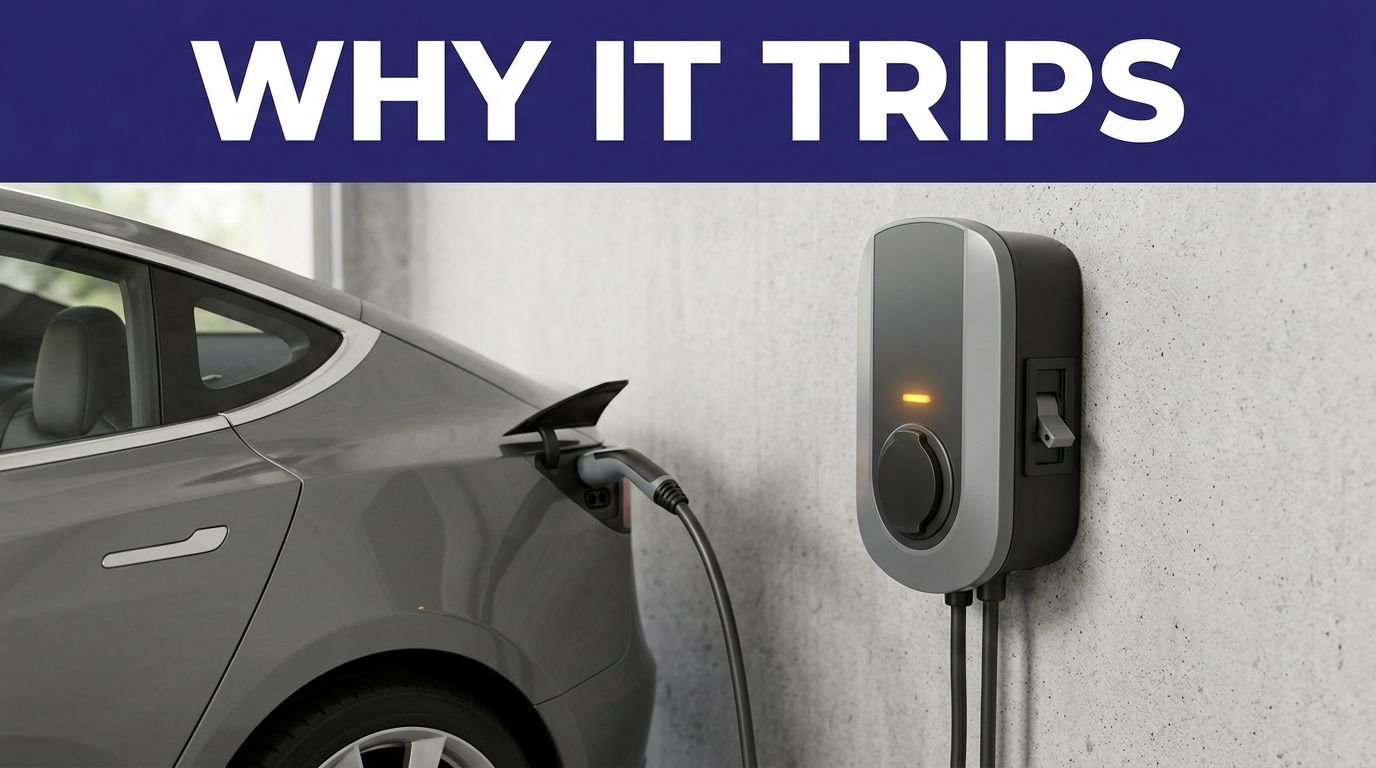
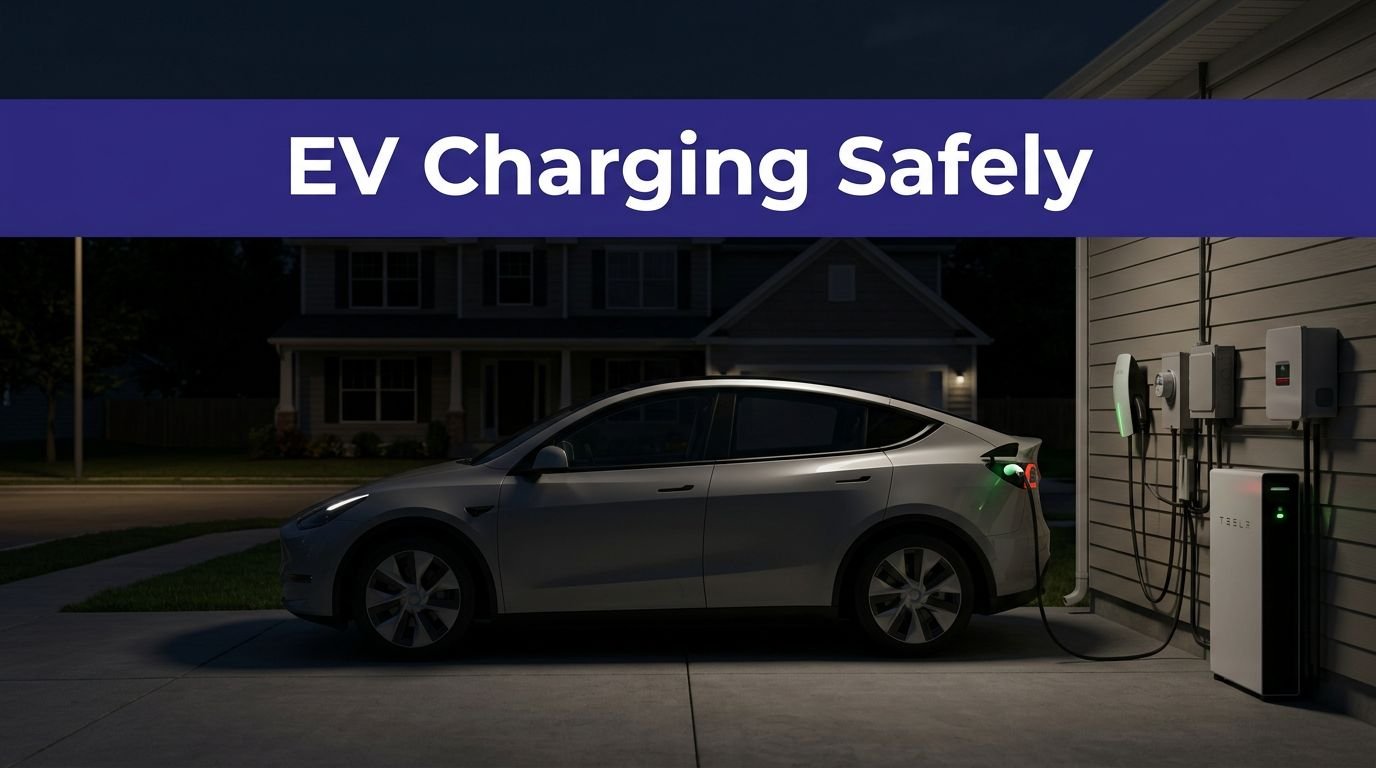
You should verify third-party certifications (e.g., UL 2594, UL 2231-1/-2 or ETL equivalent; FCC Part 15; EU: IEC 61851/62752 with CE) and enclosure ratings (e.g., NEMA 3R+ or IP54+). Confirm integrated protections: 20–30 mA ground-fault/RCD (Type A or B as required), overcurrent/short-circuit, over/under-voltage, overtemperature with thermal derating, and SAE J1772 pilot/PE continuity checks. Follow safe practices: use a dedicated circuit per NEC 625 with the 125% continuous-load rule, avoid unrated extension cords/adapters, inspect cables/connectors, and stop if the plug or receptacle exceeds roughly 60°C.
Key Safety Certifications
A safe portable EV charger hinges on third‑party certifications that verify conformity to electrical, thermal, and EMC requirements. You should verify the Certification Timeline and the Regulatory Bodies overseeing each mark before purchase.
1) UL 2594 and UL 2231-1/-2: certifies EVSE construction and personnel protection; includes ground-fault, temperature rise, dielectric, and leakage limits.
2) SAE J1772/IEC 62196 interoperability: confirms connector, pilot signaling, and current derating behavior across vehicle makes.
3) EMC/EMI: FCC Part 15 Class B, ICES-003, and CISPR 32 compliance; tests radiated/conducted emissions and immunity per IEC 61000-4 series.
4) Global access: CE (LVD/EMC), UKCA, and RoHS/REACH attestations; enclosure ratings (NEMA 3R/4 or IEC 60529 IP54+) for outdoor use.
Also check NRTL listing scope, surveillance cadence, and serial/model coverage before fielding or scaling.
Safe Charging Practices
Consistently treat safe charging as a system requirement: use a NRTL‑listed portable EVSE (UL 2594 with UL 2231‑1/‑2 personnel protection) on a dedicated branch circuit sized per NEC 625’s continuous‑load rule (EVSE current ≤80% of breaker rating).
Verify integral GFCI, ground‑continuity monitoring, and temperature derating are functional via self‑test. Use SAE J1772 equipment; don’t defeat pilot current limits. Inspect cords, plugs, and couplers for damage; maintain dry, clean contacts and adequate strain relief. Avoid adapters and extension cords; connect to a properly wired, correctly rated receptacle. Keep cables off traffic surfaces; provide ventilation per manufacturer specs. Update firmware to maintain protections and charging profiles. Implement Operator training, pre‑use checklists, and incident reporting. Document trips, over‑temperature events, or nuisance faults, and remediate before reuse promptly.
Compatibility With EV Models and Connector Standards
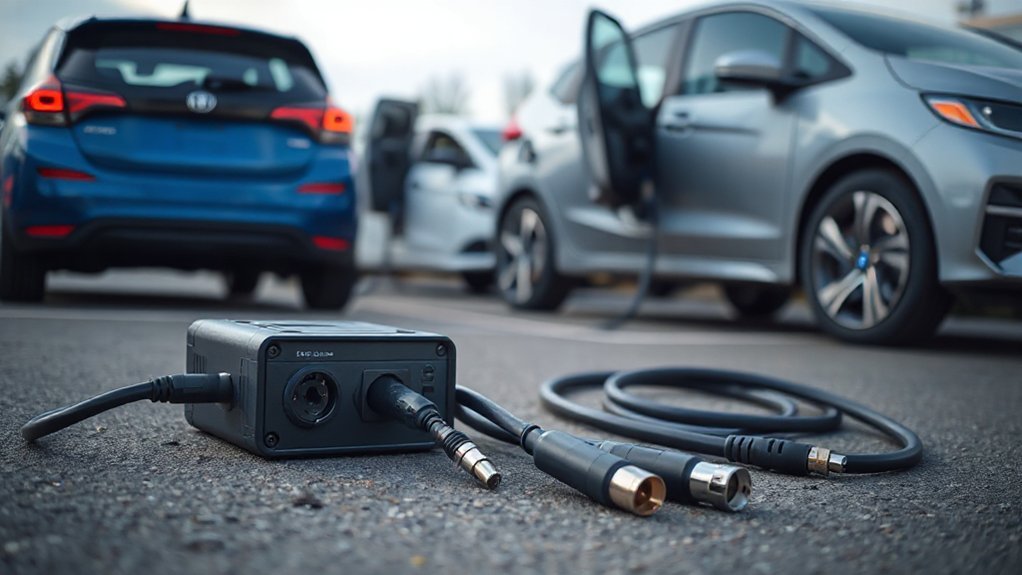
While portable EVSEs supply AC only, compatibility depends on your vehicle’s inlet and the regional connector standard. Verify the plug form factor and control pilot signaling align with SAE J1772, IEC 62196-2 Type 2, or Tesla/NACS. Assess current limits (10–32 A), voltage (120/230 V), and single- vs three‑phase per IEC 61851-1. Favor units advertising Protocol Interoperability and Legacy Support for EVs.
Portable EVSEs: verify J1772/Type 2/NACS signaling, current limits, voltage, and phase per IEC 61851-1; favor interoperability and legacy support.
- J1772 (Type 1): North America/Japan; 120/240 V; up to 40 A; OEM adoption.
- Type 2: EU/ANZ; 230/400 V; 1- or 3‑phase; up to 32 A portable; latches.
- NACS/Tesla: Compact; adapters enable cross-use; check OEM approvals and amp derates.
- GB/T AC: China; distinct pinout; adapters require electronics; confirm PWM compatibility.
Confirm firmware compliance, ground-fault protection, and adapter legality before purchase.
Use Cases: Urban Street Parking, Road Trips, and Emergencies
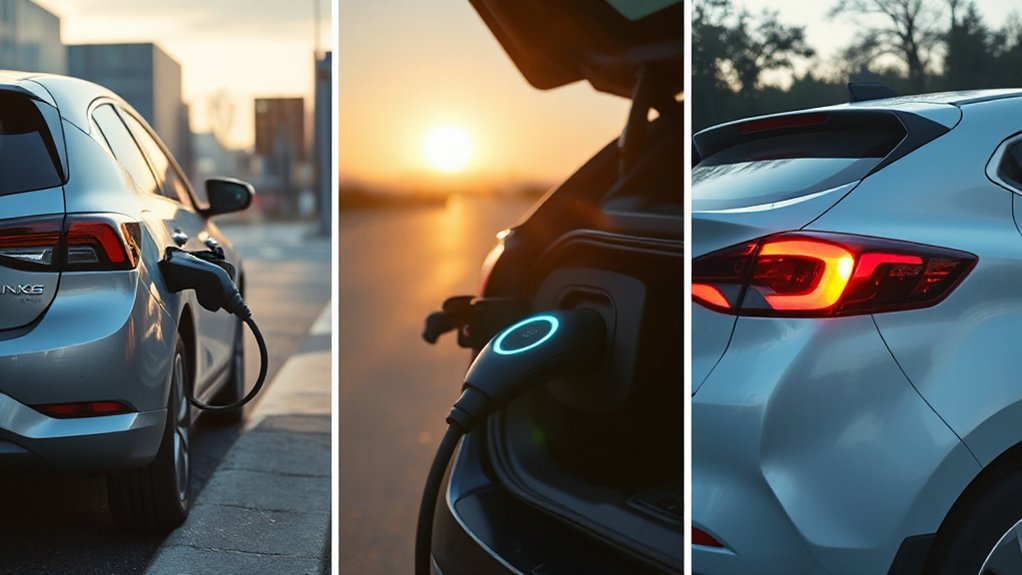
Because urban curbside parking, long-distance travel, and grid outages impose different constraints, a portable EVSE provides standardized AC charging (IEC 61851-1 Mode 2) wherever a compliant outlet exists. In cities, you’ll connect to a 120–240 V receptacle and draw 8–16 A (≈1–3.8 kW), recovering 5–15 miles of range per hour, while honoring parking regulations and curbside etiquette. Use a GFCI/RCD-equipped circuit, verify earthing, and keep connectors with IP44+ enclosures off wet pavement.
On road trips, you’ll bridge gaps between DC fast sites by charging at hotels, campgrounds (NEMA 14-50, 40 A circuit, derated to 80%), or friends’ garages, logging plug type and breaker rating before energizing.
During emergencies or outages, you’ll stabilize SOC from portable generators with pure sine output, bonded neutral, and grounding.
Cost, Portability, and Choosing the Right Setup
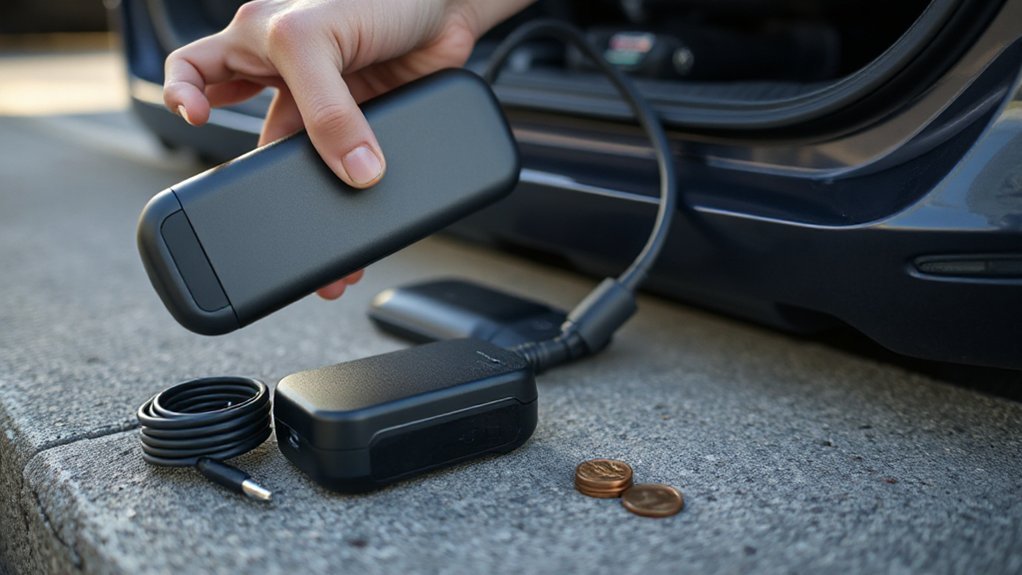
Balance upfront cost, power capability, and weight to select a portable EVSE that matches your charging scenarios and local standards. Target units certified to UL 2594/2231, with SAE J1772 or IEC 62196 connectors, IP55+ enclosures, and clear derating at 120/240 V. Compare 1.9–7.6 kW models; heavier 32–40 A units (3–7 kg) charge faster but reduce portability and trunk space. Assess total cost of ownership, including adapters, warranty, and resale value; if needed, use financing options. Evaluate cable stowage and thermal limits too.
Balance cost, power, and weight; prioritize certified, weatherproof EVSE with clear derating, right amperage, accessories, and manageable cable heat.
- Define use cases: home, workplace, or travel; verify outlet types (NEMA 5-15, 14-50).
- Calculate daily kWh and required charge hours; size amperage accordingly.
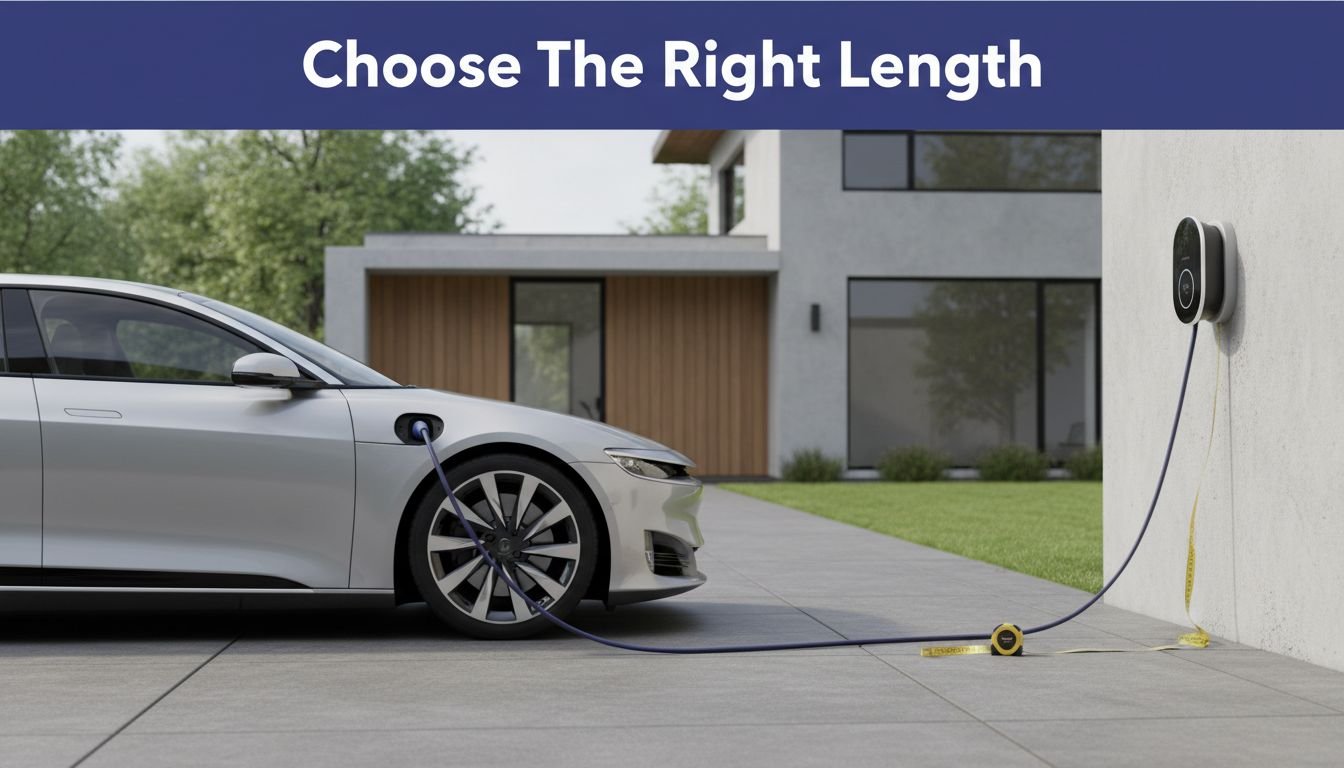
- Check cable length (20–25 ft), temperature range, and GFCI protection.
- Confirm firmware updates, RFID/app control, and plug-locking for security.
Conclusion
You’ve seen how a portable EV battery paired with a Blink portable charger extends range safely, efficiently, and per standards. With SAE J1772/IEC 61851 signaling, CE/UL/UN 38.3 compliance, and logged sessions, you control amps, outlets, and real‑world miles. Remember: about 80% of charging occurs at home, so portable Level 1/2 flexibility matters for street parking, road trips, and outages. Choose capacity, weight, and adapter set by kWh needs, breaker limits, and your vehicle’s onboard charger.