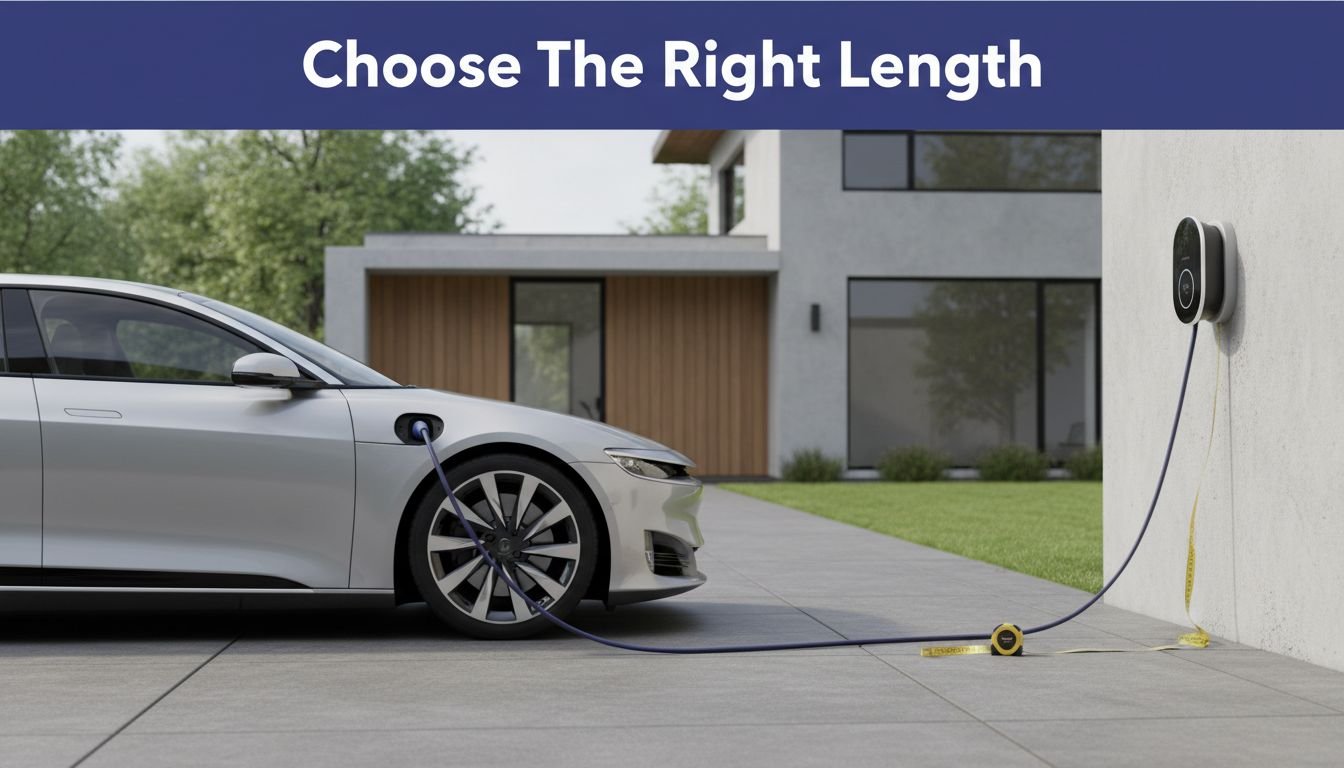
Choosing a portable EV charger in 2025 means matching Level 1 or 2 (120/240V) to your circuit, verifying NEC 625 continuous‑load sizing, and confirming UL or ETL listing with GFCI and temperature monitoring. You’ll compare J1772 vs. NACS compatibility, IP‑rated housings, cable length, and app features like scheduling or OCPP data. You also need to know when adapters or generators are unsafe. Here’s how to avoid costly mistakes—and what actually earns a spot in your trunk.
Key Takeaways
- Confirm your vehicle inlet (J1772 vs NACS) and choose a UL‑listed EVSE with matching plug or certified adapter; avoid CCS misconceptions.
- Size amperage to your circuit per NEC 80% rule; typical Level 1 12A, Level 2 16–40A for 3–35 miles/hour.
- Prioritize safety: UL 2594/2231 certification, 20 mA CCID, 6 mA DC detection, temperature sensing, fault codes, and IP54+ (ideally IP65–67) enclosures.
- Look for practical design: 18–25 ft 105°C cable, robust strain relief, swappable NEMA adapters (14‑50/6‑20/TT‑30), and generator‑friendly current adjustment.
- Consider smart features and value: scheduling, amperage capping, accurate metering, OTA updates, warranty/support, and OCPP if you need fleet/load management.
How Portable EV Chargers Work: Level 1 vs. Level 2, 120V vs. 240V, Amperage
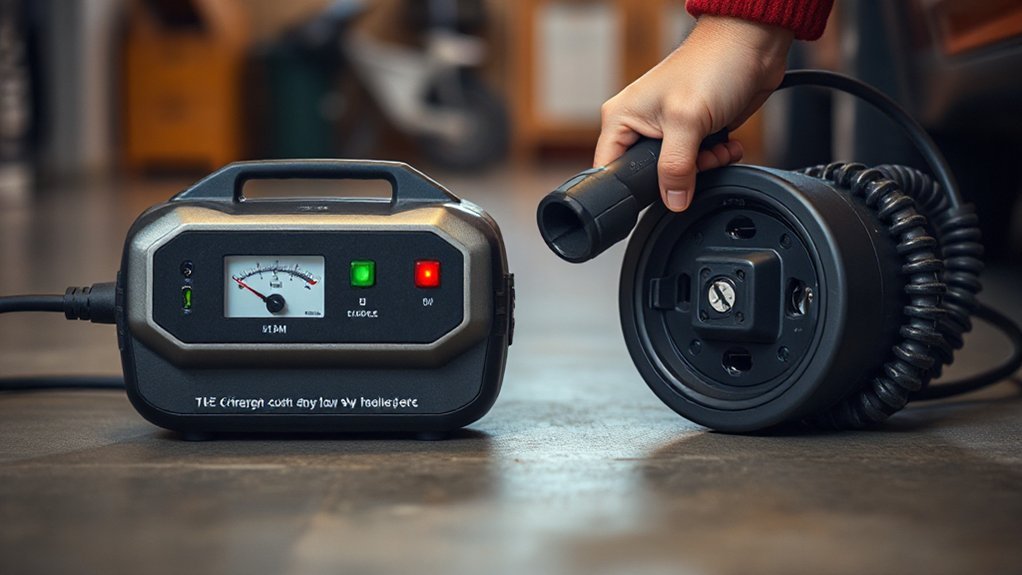
Although people call them “chargers,” portable units are actually EVSEs that safely deliver AC power and tell the car’s onboard charger how much current to draw via the SAE J1772 control pilot. Level 1 uses 120V, typically 12A (1.4 kW), adding about 3–5 miles/hour; Level 2 uses 240V at 16–40A (3.8–9.6 kW), adding roughly 15–35 miles/hour. Follow NEC 625 and the 80% continuous-load rule: a 15A circuit supports 12A; a 50A circuit supports 40A. Verify UL certification, integral GFCI, temperature sensing, and adequate conductor gauge. Set amperage in the EVSE to match the breaker. Charge Time and Energy Costs depend on pack size and $/kWh; at $0.15/kWh, 10 kWh costs $1.50, while higher power only shortens time, not energy used, for the same range.
Plug Standards and Compatibility: J1772, NACS/Tesla, CCS, and Adapters
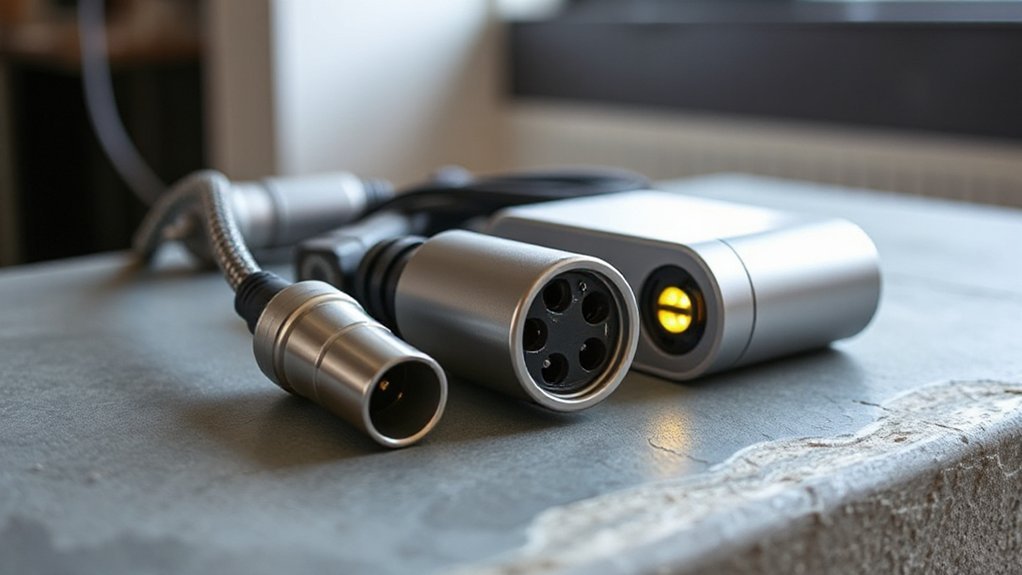
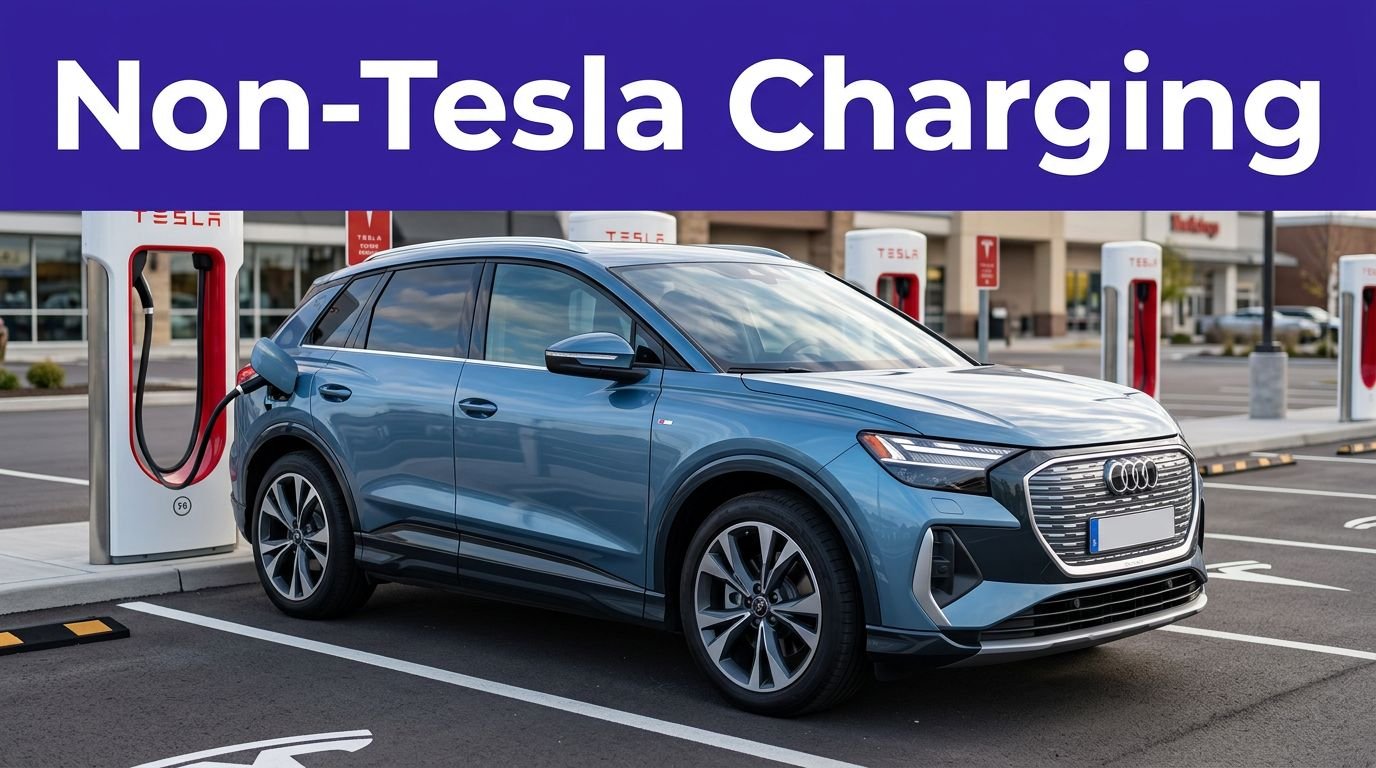
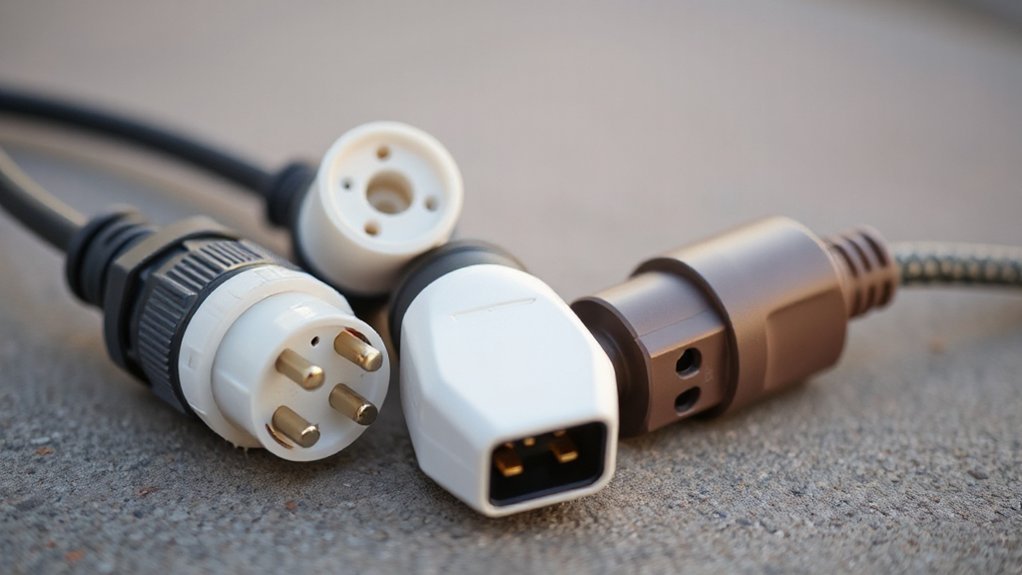
You should confirm whether your car’s inlet is SAE J1772 or SAE J3400 (NACS/Tesla), because most portable Level 1/2 EVSE ship with a J1772 connector and require a J1772‑to‑NACS adapter for newer Teslas. CCS (SAE Combo 1) is a DC fast‑charging interface, so portable chargers don’t use it; “CCS adapters” are for DC stations, not AC EVSE. For safety, use UL/ETL‑listed adapters sized to the EVSE’s amperage, avoid stacking adapters, and verify compliance with UL 2594/UL 2231 and NEC 625 with temperature and ground‑fault protection.
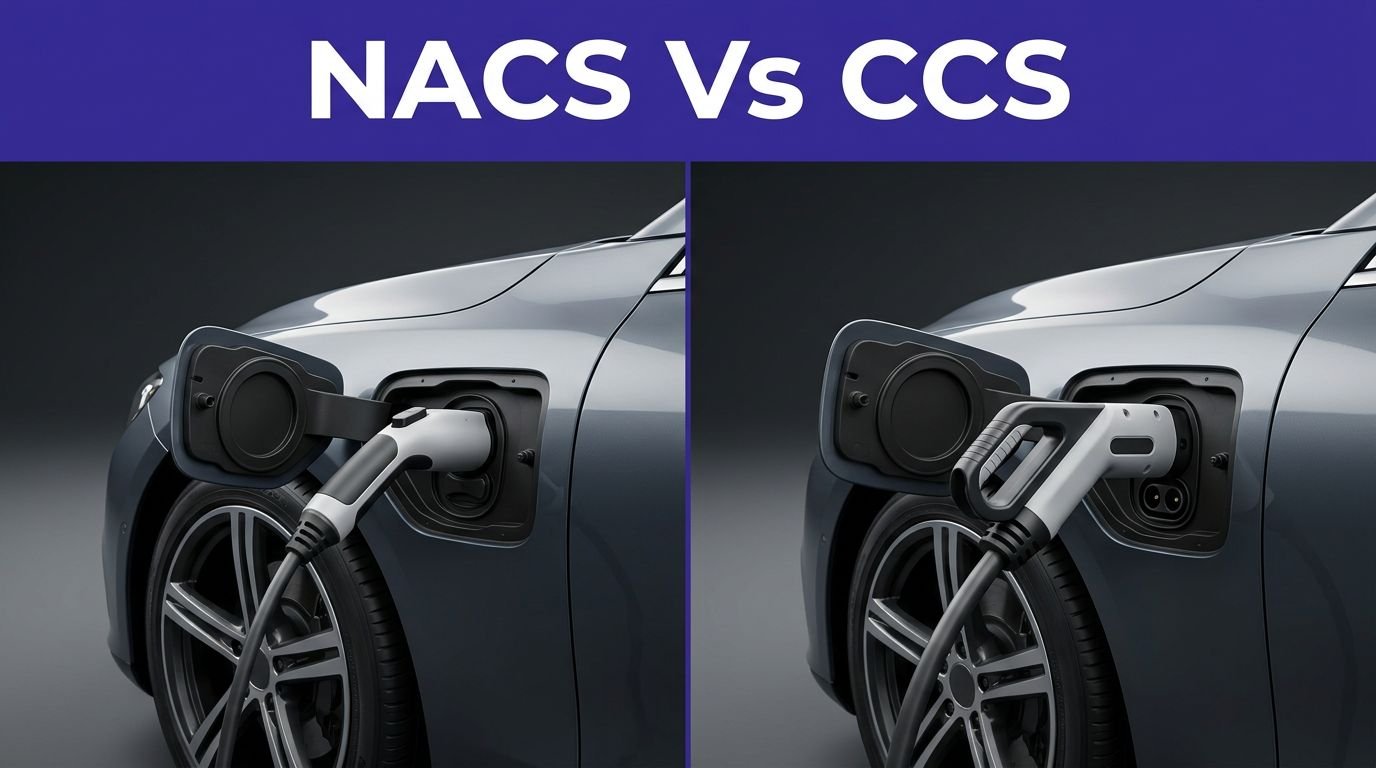
J1772 Vs NACS
How do J1772 and NACS differ, and what does that mean for portable chargers in 2025? SAE J1772 (AC Level 1/2) remains the legacy North American inlet, rated to 80 A/240 V (19.2 kW). SAE J3400 (NACS) consolidates AC and DC in a smaller connector; for AC, you’ll see up to 80 A as well, with tighter packaging and a latch that resists inadvertent disconnect. Given 2023–2025 market adoption shifts—most major U.S. OEMs pledging NACS—manufacturer strategies have pivoted: more portables now ship in NACS or dual-head variants. Prioritize UL 2594/2231 certification, NEC 625 compliance, temperature derating, and ground-fault protection. Check cable gauge and IP rating (IP54+ for outdoor). If your vehicle is J1772, verify controller firmware negotiates pilot correctly on either standard during charging.
CCS Adapter Options
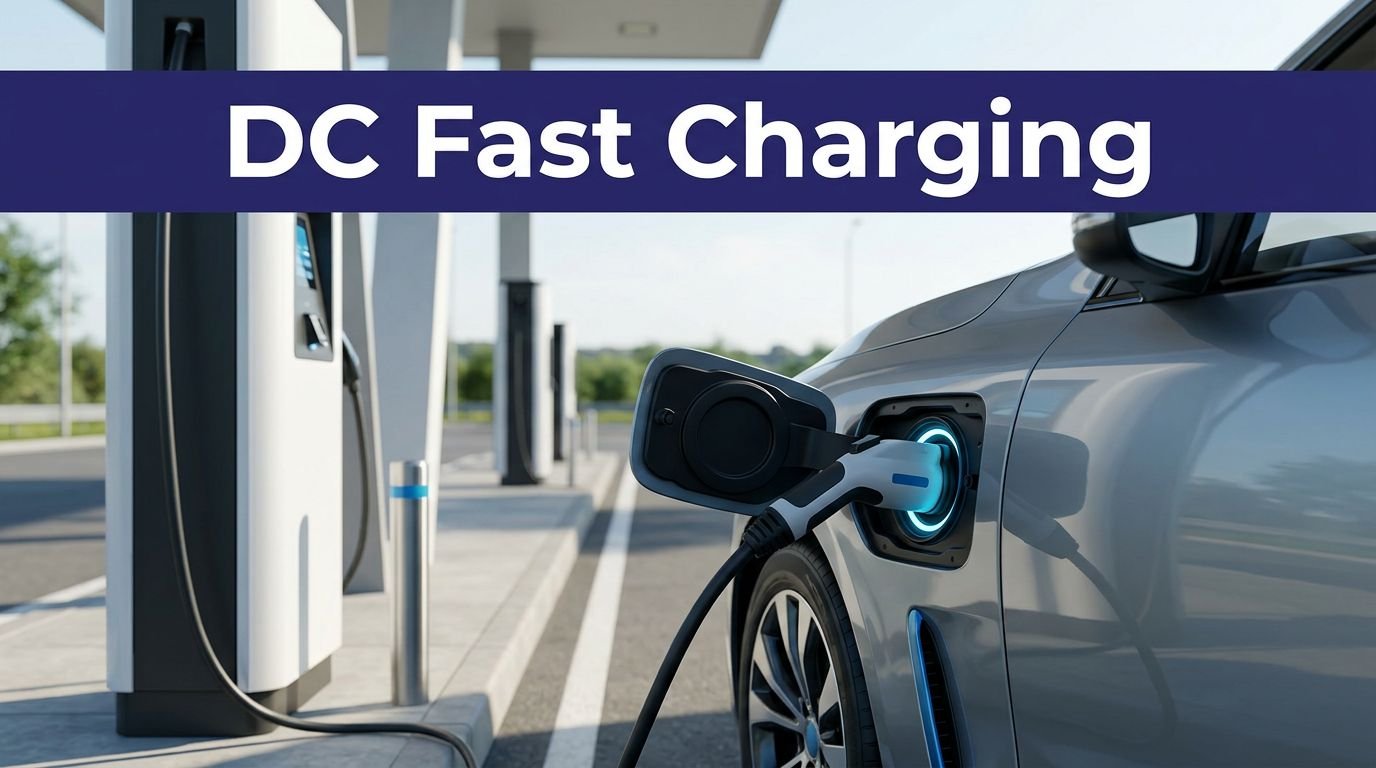
When planning CCS compatibility in 2025, separate AC from DC: CCS1 is primarily a DC fast-charging interface, while your portable EVSE delivers AC. A CCS-to-NACS adapter lets Tesla and some NACS-enabled cars use DC stations; it won’t help an AC charger. Verify IEC 62196-3 hardware and DIN 70121/ISO 15118 support if you intend DC use.
- Confirm your vehicle’s whitelist for CCS adapters; some need firmware updates.
- Look for UL/CSA marks, 200 A continuous ratings, and thermal sensors to prevent overheating.
- Match regions: CCS1 (North America) vs CCS2 (EU/Australia); don’t mix.
- Track pricing trends; avoid counterfeits to protect safety and warranty.
Expect ~$175–$300 for CCS-to-NACS DC adapters. AC adapters run ~$20–$80. Choose compact designs to cut weight and improve environmental impact overall.
Safety and Certification Essentials: UL Listing, Ground Fault Protection, Temperature Monitoring
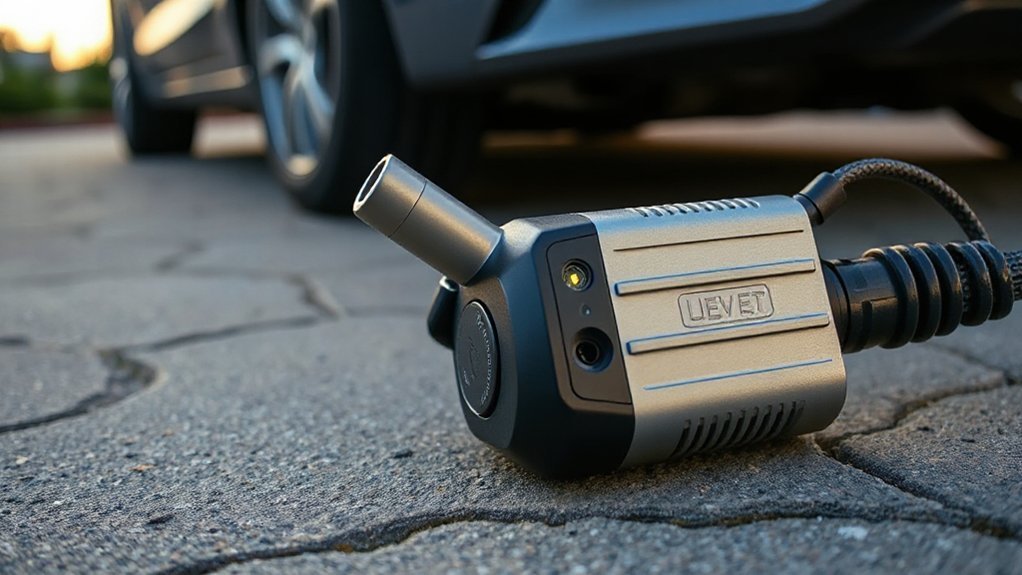
Although portability adds convenience, safety hinges on third-party certification and built-in protection. Choose units with UL Listing to UL 2594 (EVSE) and UL 2231-1/-2 (personnel protection); ETL or CSA NRTL marks are equivalent. Verify documentation shows NEC 625 compliance, including a 20 mA CCID ground-fault circuit and automatic self-test on power-up. Look for integrated temperature monitoring at the plug and electronics; robust designs derate or shut down above ~90–100°C to prevent connector damage. Confirm overcurrent protection, welded-contact detection, and stuck-relay fault handling. Review manufacturer recall procedures and service bulletins, and check CPSC databases for actions. Ask about field inspections results from AHJs for commercial deployments. Finally, insist on tamper-evident seals and clear fault codes to speed troubleshooting, and document periodic tester calibration records annually.
Build Quality, Weatherproofing, and Cable Length
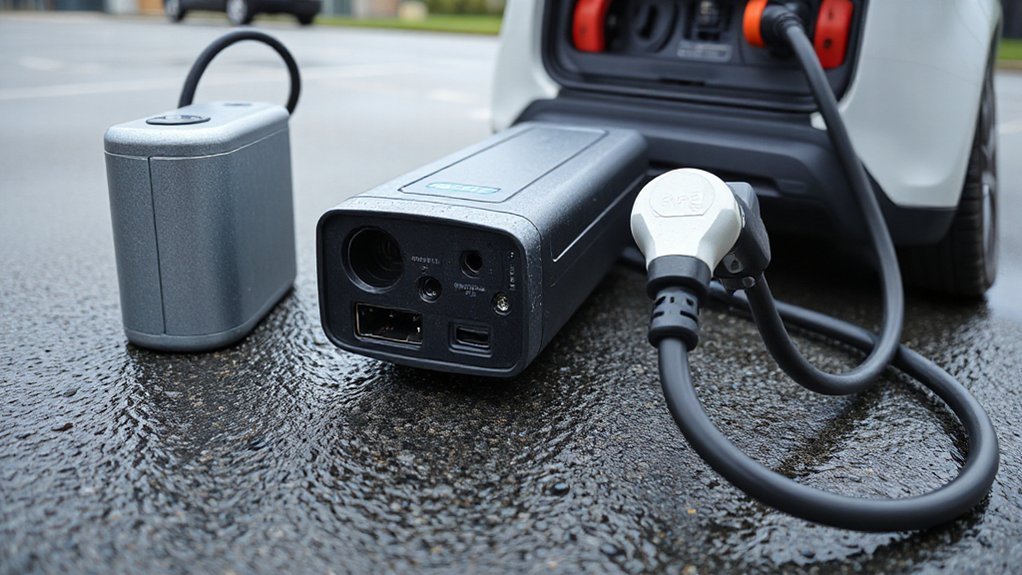
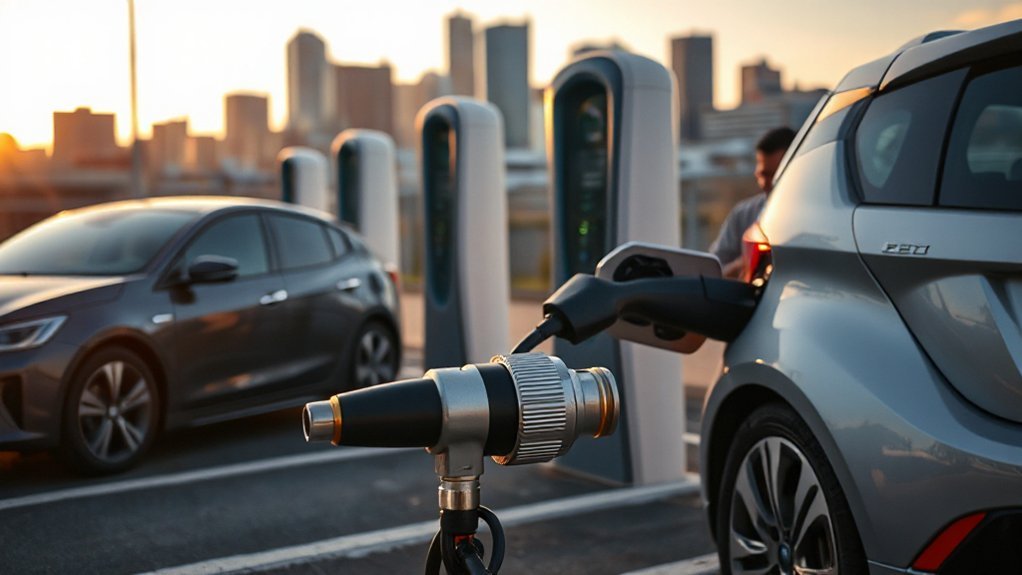
You’ll want enclosure build and gasketing rated at least IP54 per IEC 60529 for splash protection; harsher outdoor use calls for IP65–IP67 with UV-stable seals and corrosion-resistant fasteners. Verify robust strain relief and cable construction ratings (e.g., UL 62/FT2) and an operating range suited to your climate to prevent insulation cracking and thermal derating. Choose an ideal cable length—typically 18–25 ft (5.5–7.6 m)—to balance reach with voltage drop and trip risk, and note NEC 625 generally caps EVSE output cords at 25 ft.
IP Ratings and Seals
How do you judge a portable EV charger’s build for outdoor use? Start with the IP Code from IEC 60529—born from Historical Origins in European standards and mirrored by Regional Variants like NEMA/UL Types. For splash-prone driveways, target IP65; for heavy rain or brief submersion, look for IP66–IP67. Verify third‑party certifications (TÜV, UL, CSA) and an IK impact rating where listed. Examine seals: molded gaskets around enclosures, potted electronics, and IP‑rated cable glands that maintain strain relief and water tightness. Check UV resistance and corrosion protection for road salts.
- Confirm rating: “IPXY” where X=dust (0–6), Y=water (0–9K)
- Prefer test reports over marketing claims
- Inspect O‑ring, screw torque, and vent plugs
- Match NEMA/UL Type to locale and mounting conditions when applicable.
Optimal Cable Length
After verifying ingress protection, size the cord for reach without extensions and code compliance. Measure bumper-to-outlet distance, add 20% slack to avoid strain, and target 20–25 ft for most driveways per NEC 625.17(A). Shorter (16–18 ft) lowers resistance and weight, improving User ergonomics; longer (30–40 ft) adds flexibility but raises trip and overheating hazards. Follow SAE J1772/IEC 62196 bend-radius guidance and keep cords uncoiled for Tangle prevention.
| Scenario | Recommended length | Rationale |
|---|---|---|
| Apartment parking | 25 ft | Varying stalls; avoid extensions |
| Home garage | 18–25 ft | Efficient routing; less copper loss |
| Travel/emergency | 30 ft | Reach distant outlets safely |
Never use extension cords outdoors.
Smart Features and App Controls: Scheduling, Load Management, and Data
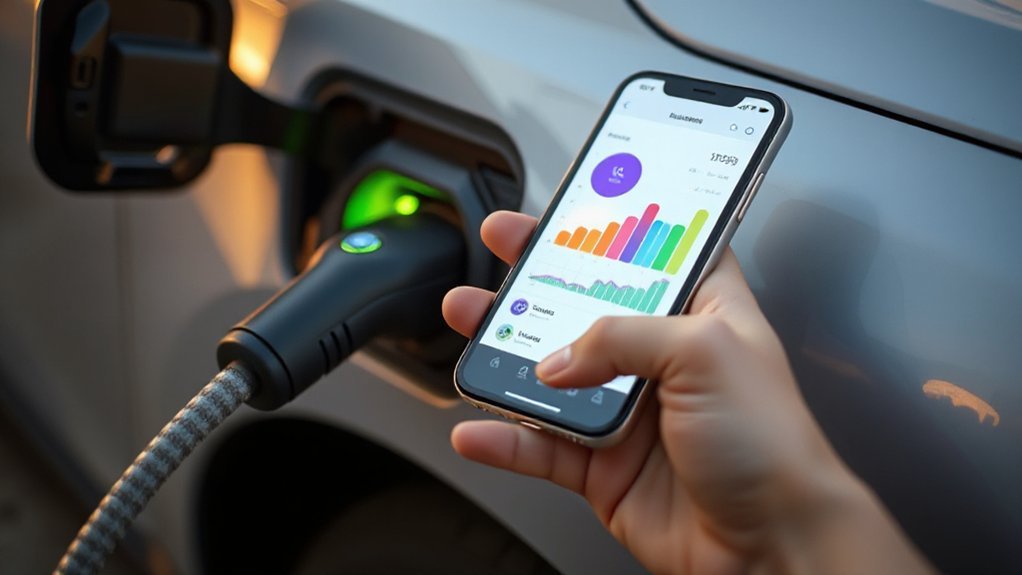
While many portable EVSEs look simple, the 2025 crop adds app-controlled intelligence that improves safety, cost, and interoperability. You’ll schedule off‑peak sessions to match TOU rates, cap amperage to protect circuits, and audit via Usage Analytics. Verify UL 2594/UL 2231 listings, NEC 625 compliance, and J1772 or IEC 62196 support. Multi User controls with per-driver permissions, RFID, or PINs allocate costs, prevent misuse. Secure apps should use TLS, support OTA firmware, and export via OCPP 1.6J/2.0.1.
- Dynamic load balancing derates current on voltage sag or high temps, avoiding trips.
- Schedule windows by tariff, kWh price, or carbon intensity to cut operating costs.
- Session logs capture kWh, duration, start/stop, voltage, peak/avg current, and fault codes.
- Safety alerts flag ground faults, overtemp, and miswiring, with guidance.
Powering on the Go: Outlets, Extension Cords, and Generator/Off‑Grid Use
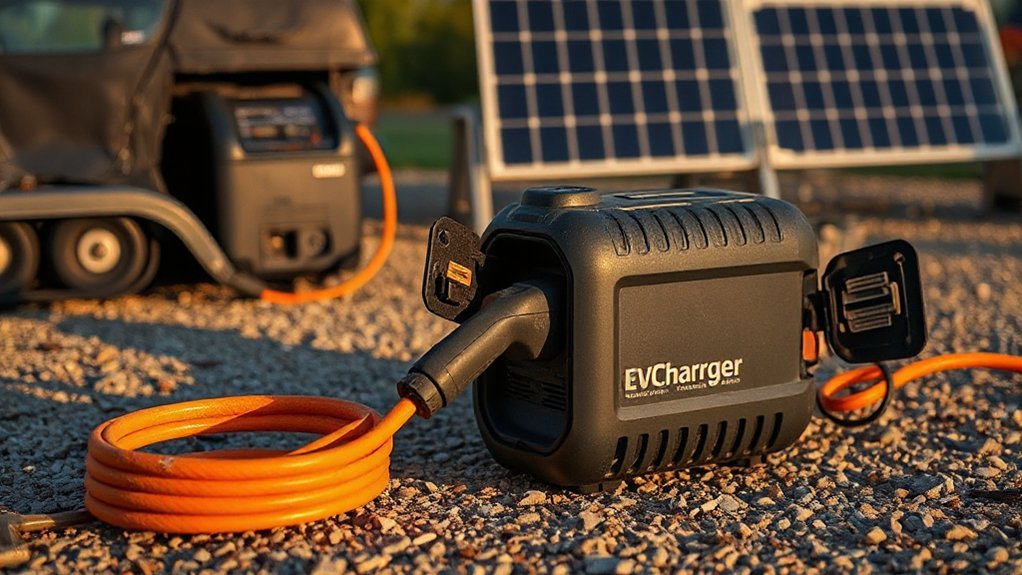
Because portable EVSEs draw a continuous load, you must match plugs, circuits, and sources to code and nameplate limits to avoid nuisance trips and fire risk. Follow NEC’s 125% rule: a 40 A circuit supports 32 A charging; a 20 A circuit supports 16 A. Use properly configured NEMA adapters (14‑50, 6‑20, TT‑30) and verify GFCI/AFCI compatibility. Avoid extension cords; if unavoidable, choose EV‑rated, 10–12 AWG, ≤50 ft, and keep voltage drop under 3%. Never daisy‑chain. Generators should be inverter types with THD <5%, adequate continuous wattage, and correct neutral‑ground bonding; reduce EVSE current to prevent overload. For off‑grid inverters, confirm pure sine output and continuous rating. Respect campground etiquette, pedestal rules, and local regulations; obtain permission before using shared outlets during any travel.
Recommendations by Use Case: Road‑Trippers, Apartment Dwellers, and Multi‑EV Homes
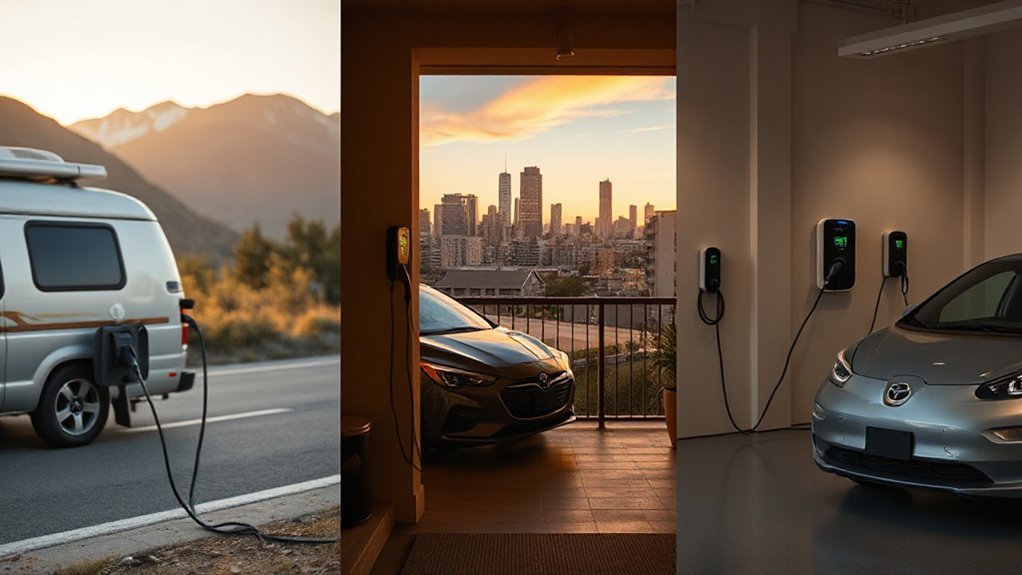
With circuits, plugs, and sources sized to code, the right portable EVSE depends on how you charge: on the road, in an apartment, or in a multi‑EV household. Match amperage to your circuits, confirm NEMA plug types, and seek UL or CSA listings. Road‑trippers: prioritize NACS/J1772 adapters, IP66 cases. Apartment dwellers: favor 120/240 V flexibility, tamper‑resistant plugs, and locked cases for community charging. Multi‑EV homes: use load‑sharing and clear duty cycles.
- Confirm GFCI and 6 mA DC detection per UL 2231/2594; size to 80% continuous per NEC 625.
- For travel, log photos and readings; keep receipts for insurance considerations.
- In apartments, coordinate labeled circuits, shared billing, and secure storage to minimize hazards.
- For multi‑EV homes, schedule sessions and use adjustable current to avoid trips.
Best Portable EV Chargers of 2025: Top Picks and Why They Stand Out
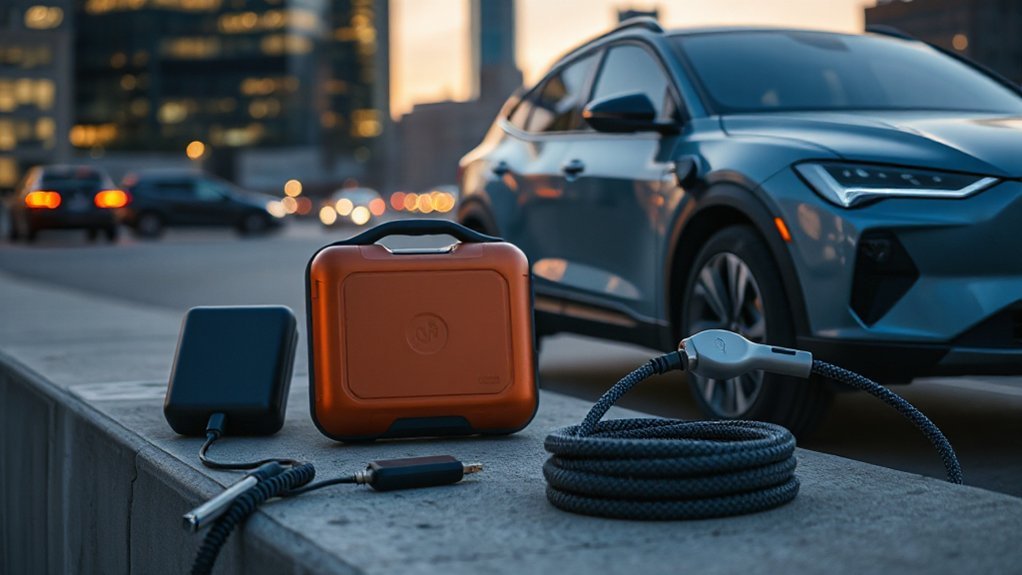
Although 2025 brings NACS-native plugs and smarter electronics, the best portable EVSE still earn their spot by verified safety and real-world robustness. You’ll notice four standouts: J+ Booster 2 (40A), Tesla Mobile Connector (NACS, 32A), Autel MaxiCharger AC Portable (40A), and ClipperCreek PCS-15 (12A). They’re UL 2594 and UL 2231 compliant, include 20–30 mA ground-fault protection per NEC 625, and maintain output without thermal derating in independent load tests. J+ Booster 2’s IP67 metal body survives drops; ClipperCreek’s cords meet SAE J1772 cable pull specs. Autel adds accurate metering (<2% error). Tesla’s compact Aesthetic design and tidy Unboxing experience fit gloveboxes. All provide swappable NEMA adapters, clear OLED or LED status, and locked relays that open only after pilot verification, for added safety margin.
Buying Checklist, Warranty, and Value Over Time
After narrowing to a short list of proven units, you should verify the fundamentals that drive safety, uptime, and total cost.
- Safety certifications: UL 2594 and UL 2231, NEC 625 compliance, NEMA 4X enclosure, validated derating.
- Grid and vehicle compatibility: J1772/NACS adapters, 120/240 V support, adjustable amperage, GFCI 20–30 mA trip.
- Cable and build: 20–25 ft 105°C cable, IP65–IP67 rating, strain relief, -30°C cold-bend performance.
- Smart features and firmware: OTA updates or OCPP, energy metering ±1%, schedules, automatic ground-fault self-test.
Compare baseline 2–3 year coverage and extended warranty including cordset and contactor. Ask for MTBF data and replacement cost per kWh delivered. Check support SLAs, parts availability for 5–7 years, and documented failure rates. Resale value improves with transferable warranty and certification labels.
Conclusion
You test the tidy theory that any portable charger works anywhere, but the numbers don’t. You picture rain on an IP67 brick, a UL‑listed GFCI tripping before heat blooms, and NEC 625’s 125% rule sizing your amperage. You check NACS/J1772 adapters, verify ±2% metering, and schedule loads in the app. Do that, and your trips, apartments, and multi‑EV nights charge safely, efficiently, and as spec’d every time. You’ll avoid hazards and maximize range without guesswork.