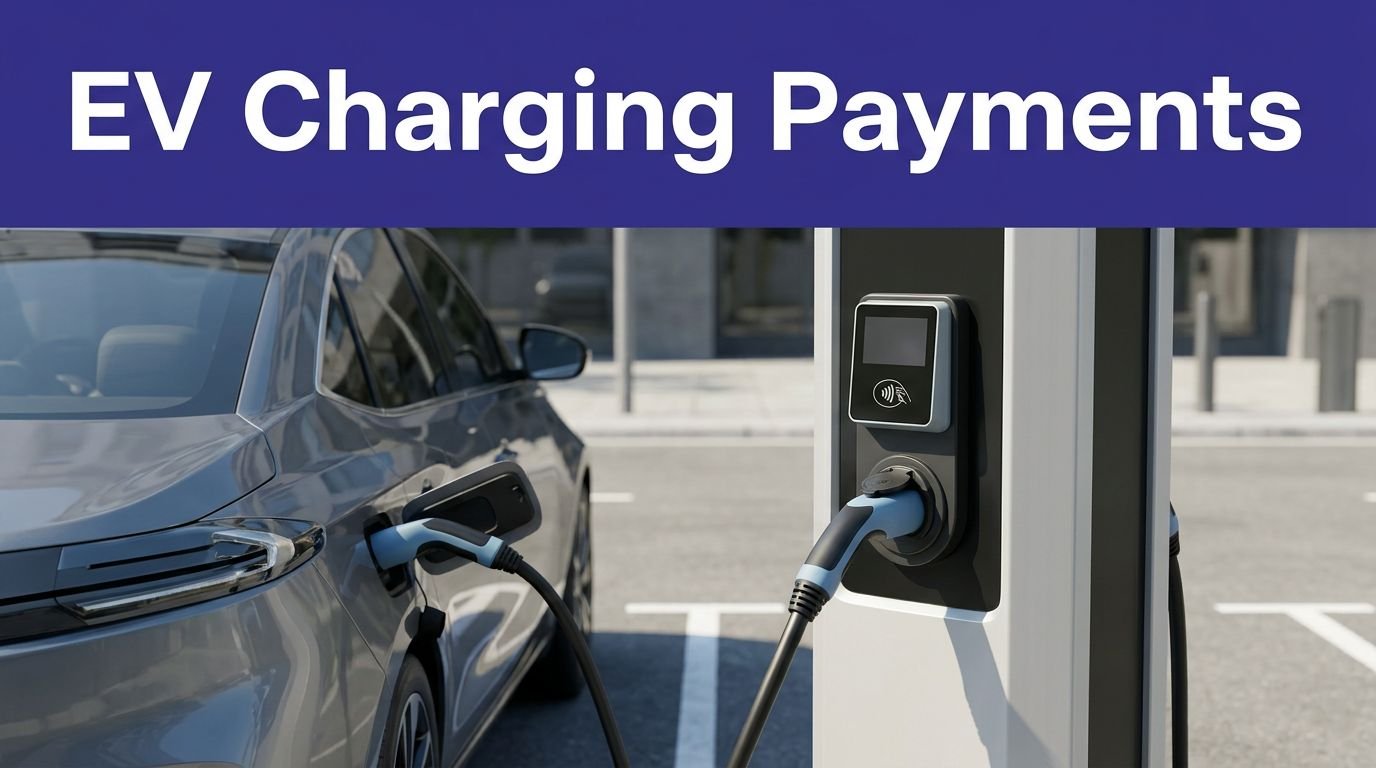
You’re choosing between two standards with real trade-offs: J1772 supplies up to 19.2 kW AC at 240 V, while NACS (SAE J3400) carries both AC and DC, scaling to ~1,000 V and 500+ A. You get a smaller connector with NACS, broader Level‑2 ubiquity with J1772, and shifting automaker roadmaps. Interoperability, adapters, and network reliability complicate it—and the best pick depends on where and how you charge.
Key Takeaways
- NACS (SAE J3400) supports both AC and high‑power DC to 1,000 V; J1772 is AC only.
- AC capability is similar (up to 80 A/19.2 kW), with NACS optionally allowing 277 V AC.
- NACS connectors are smaller, lighter, and require less force, improving ergonomics and reducing damage.
- North America is pivoting to NACS/J3400 by 2025–2026, with dual‑cable sites and broader network support.
- Legacy EVs use J1772/CCS1; adapters enable NACS access—verify current ratings, safety listings, and compatibility.
What Are J1772 and NACS?

What exactly are J1772 and NACS? You’re looking at two North American EV charging interface specifications. SAE J1772 defines AC charging (Level 1: 120 V ≤16 A; Level 2: 208–240 V ≤80 A, ≤19.2 kW) and the signaling used by most CCS DC systems. Its standards history traces to early 2000s drafts, with the 2009 revision establishing today’s pinout; naming origins stem from the SAE document identifier. NACS, Tesla’s connector, was opened in 2022 and standardized by SAE as J3400 in 2023. It supports AC (up to 277 V, ≤80 A) and DC (up to 1000 V; high current per cable rating). You’ll encounter broad automaker migration to NACS/J3400 starting in 2023, while legacy AC ports remain J1772 on many vehicles across North America.
Connector Design and Ease of Use
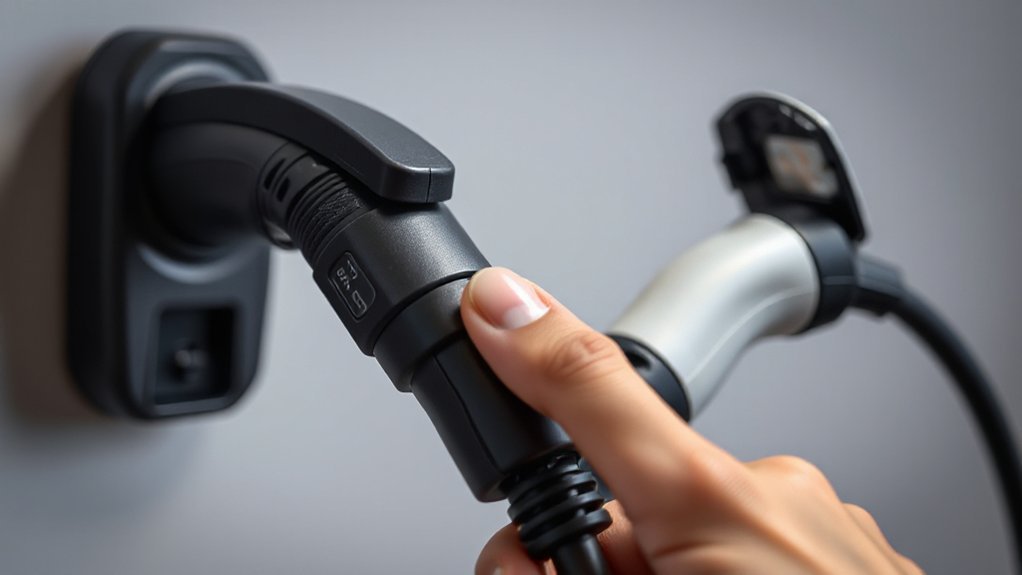
How do the two plugs differ in form and ergonomics? You handle a bulkier J1772 (≈43–48 mm nozzle OD, 5 pins) versus a slimmer NACS (≈35–40 mm, 5 conductors in 2 contacts). Typical handle mass: J1772 320–450 g; NACS 240–320 g. Latch actuation force averages 10–18 N on J1772, 6–12 N on NACS. Both specify Weather sealing to IP54–IP55 at the vehicle inlet. Locking mechanisms differ: J1772 uses a mechanical latch; NACS integrates a vehicle-side electronic lock.
| Attribute | Spec/Notes |
|---|---|
| Connector interface | J1772: 5-pin circular; NACS: coaxial dual-contact |
| Alignment features | J1772: chamfer + key; NACS: tapered nose, magnet assist |
| User feedback | J1772: audible click; NACS: click plus vehicle lock icon |
Both grips support one-handed operation; NACS typically reduces insertion angle and wrist torque during coupling.
Charging Speed: Level 2 and DC Fast Metrics
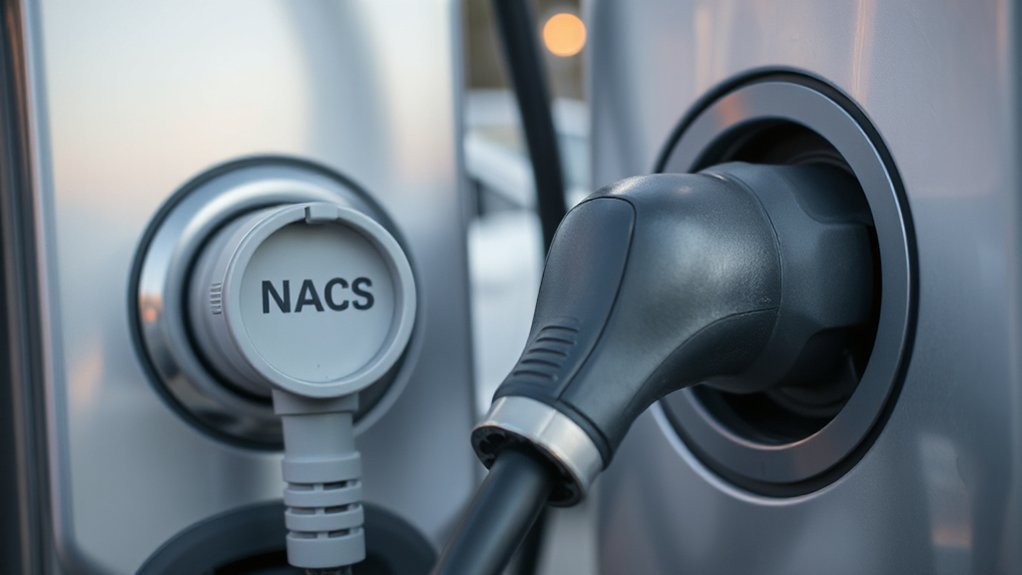
Beyond connector ergonomics, charging performance hinges on the electrical envelopes each interface supports. On Level 2 AC, J1772 specifies up to 80 A at 240 V (19.2 kW), with common deployments at 32–48 A (7.7–11.5 kW). NACS supports similar AC limits, typically 48 A (11.5 kW) in residential hardware, with provisions up to 80 A.
For DC fast charging, J1772 doesn’t define DC; North America pairs DC with other couplers. NACS integrates DC and publishes capability up to 1,000 V and 1,000 A with liquid-cooled cables; power and thermal limits govern sustained current. You should evaluate Charge Curves, not just peaks: taper behavior controls average Energy Throughput over a session. Compare kWh delivered in 10, 20, and 30 minutes under SOC and temperature conditions.
Compatibility With Current EV Models
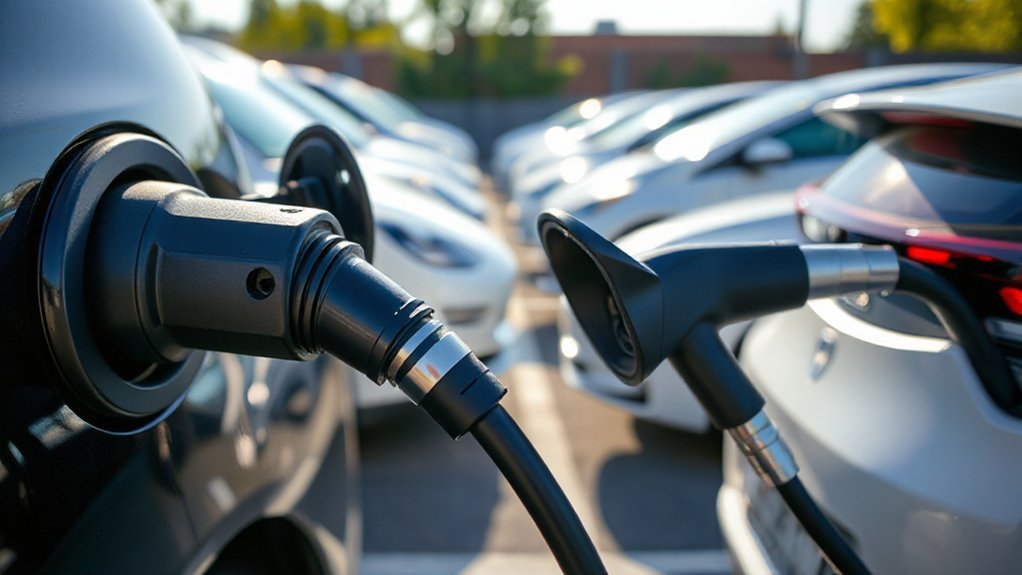
You’ll see most North American OEMs committing to SAE J3400 (NACS) on 2025–2026 models, while SAE J1772 remains the AC Level 2 standard on nearly all 2011–2024 non‑Tesla EVs. Over 15 automakers—including Ford, GM, Hyundai–Kia, BMW Group, Mercedes‑Benz, VW Group, Toyota/Lexus, Honda/Acura, Nissan, and Volvo/Polestar—have announced adoption, with rollout timing varying by model year. You’ll typically need a NACS adapter to use Tesla AC/DC hardware if you own a non‑Tesla, and a J1772 adapter to use legacy public Level 2 if you own a Tesla, until native J3400 ports phase in by brand.
Automaker Adoption Status
Although Tesla has long used NACS for both AC and DC, nearly all non‑Tesla EVs sold in North America through model year 2024 ship with a J1772 AC inlet and a CCS1 DC fast‑charge port. You now see rapid OEM convergence on NACS: by late‑2024, over 15 automakers—representing roughly 85–90% of U.S. EV sales—committed to integrate NACS ports starting in 2025–2026. Regulatory incentives, especially NEVI rules requiring CCS1 access, are driving dual‑standard roadmaps and precise labeling. Fleet commitments from utilities, rental fleets, and parcel operators reinforce connector harmonization and uptime benchmarks. Key adopters include Ford, GM, Rivian, Mercedes‑Benz, Nissan, Honda/Acura, Toyota/Lexus, Hyundai, Kia, BMW Group, Volkswagen Group, Stellantis, Volvo/Polestar, Lucid, and Subaru, targeting SOP in 2025 models. Expect phased overlap across model years industrywide.
Adapter Needs by Brand
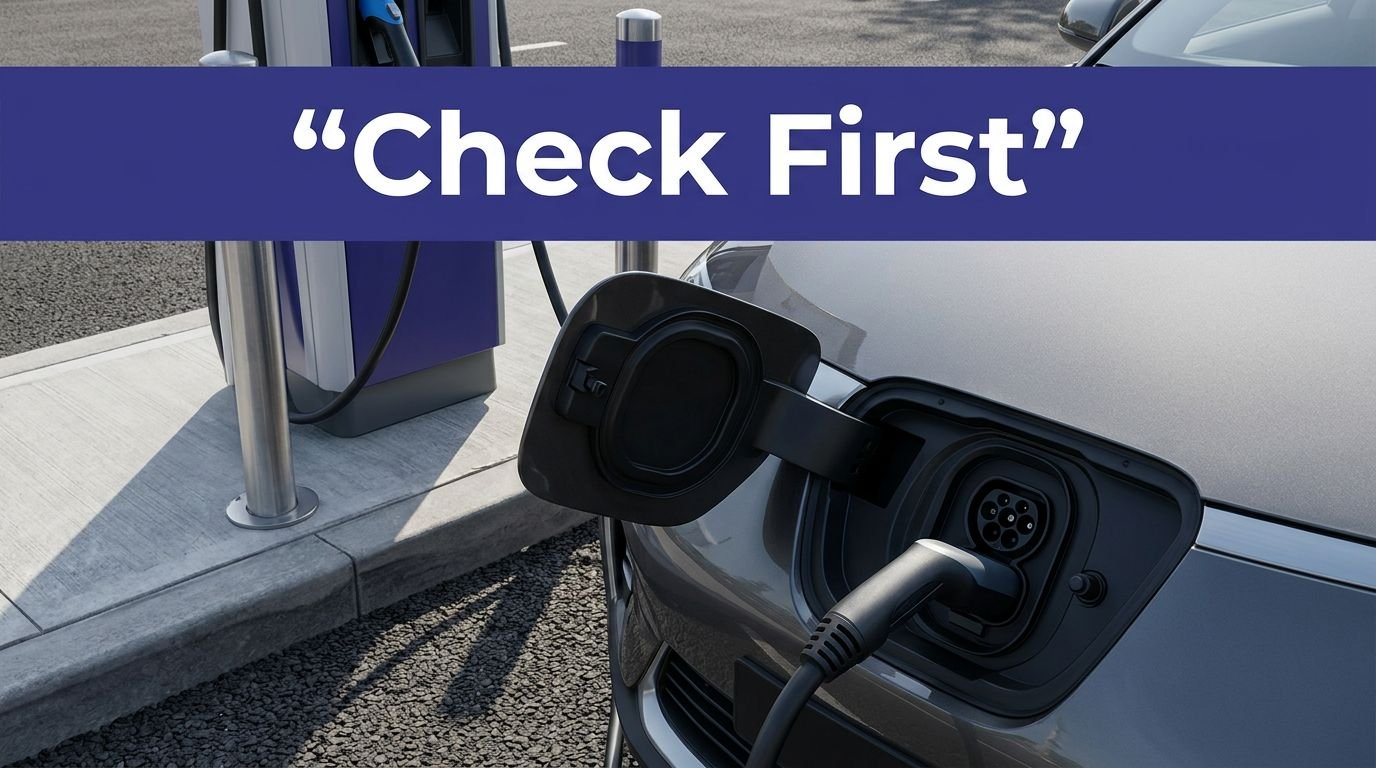
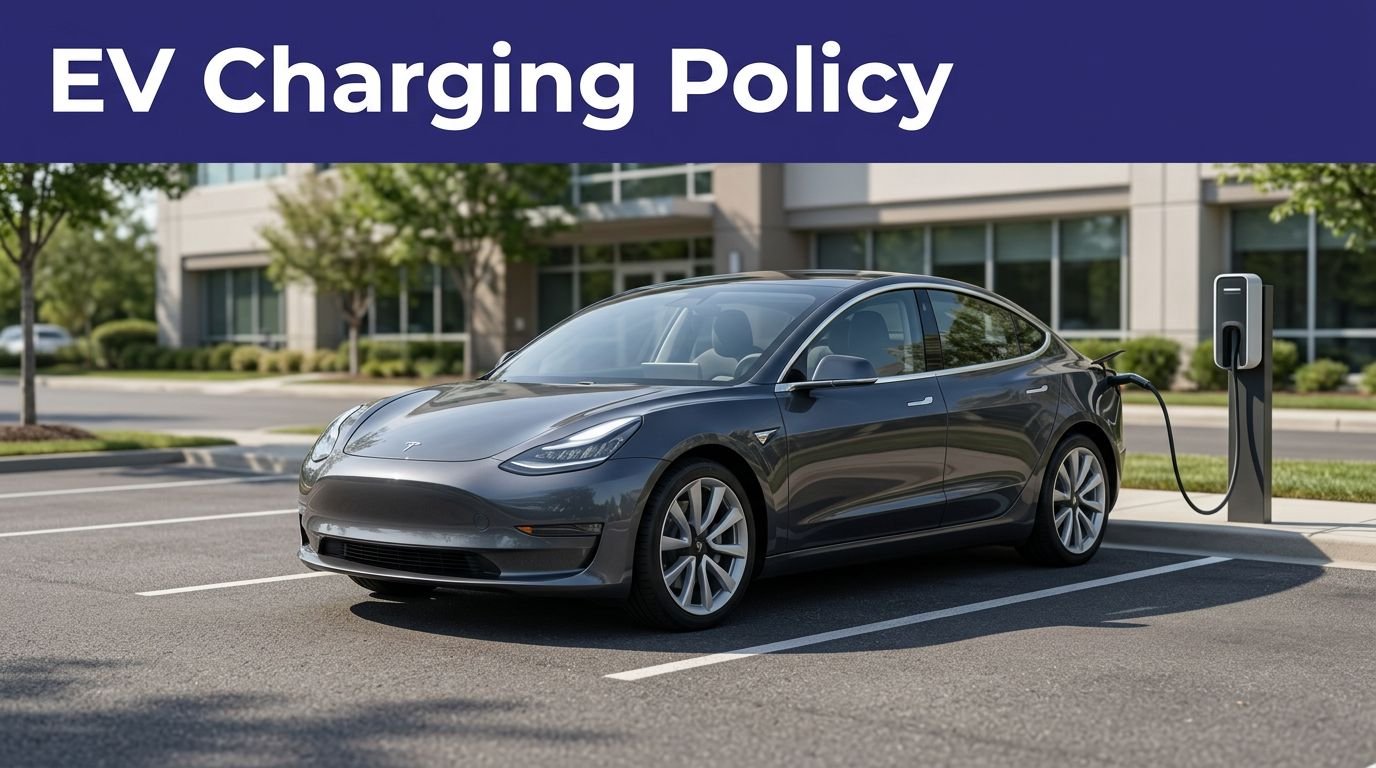
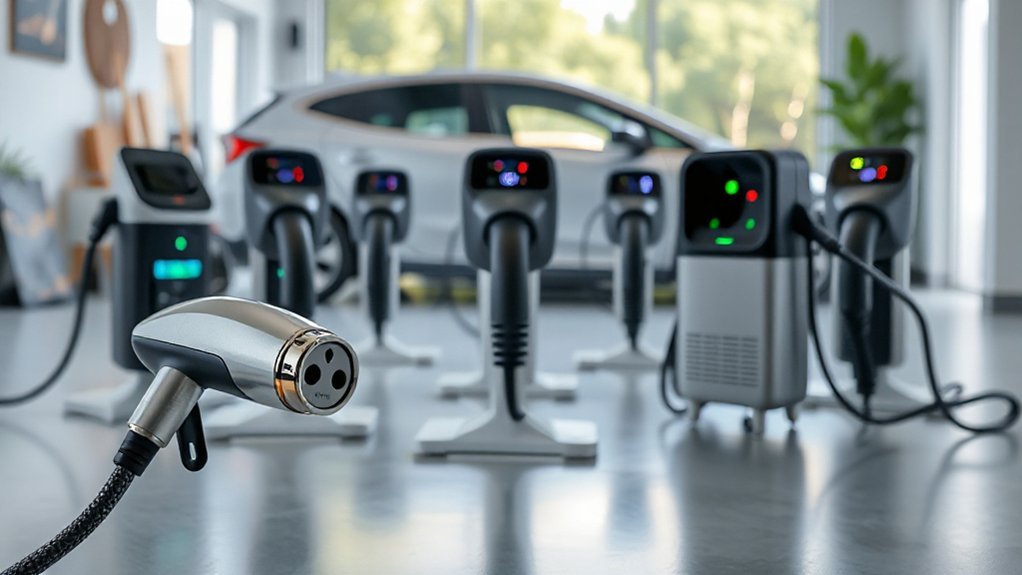

Since current North American EVs use three inlet/plug standards—J1772 for AC, CCS1 for DC, and NACS for both—adapter needs vary by brand, model year, and site type. Tesla (2012–2024) uses NACS ports; you’ll need a J1772-to-NACS adapter for Level 2 at legacy J1772 stations and, pre-2025, a CCS1-to-NACS adapter for some DC sites. Ford, GM, Rivian, and Volvo models with CCS1 (≈2019–2025) need CCS1-to-NACS for Superchargers and NACS-to-J1772 for Tesla Wall Connectors. Nissan Leaf (2011–2024) uses J1772/CHAdeMO; you’ll need J1772-to-NACS for AC and CHAdeMO-to-NACS isn’t broadly supported. Hyundai/Kia/Volkswagen/Audi/BMW CCS1 models mirror Ford/GM needs. Verify adapter current rating (A), voltage (V), and IP rating, and confirm Warranty coverage and Accessory branding before purchase. Check cable gauge, temperature de-rating, and locking compatibility at target networks first.
Public Charging Network Availability

How widely can you plug in today? In U.S. public sites, J1772 Level 2 ports remain most numerous, concentrated at workplaces, municipal lots, and retail—often 4–12 ports per site with strong urban coverage. NACS access hinges on Tesla’s network plus growing multi-network adoption; Supercharger sites average 8–20 stalls, primarily DC, with select co-located Level 2. For corridor travel, NACS DC availability is dense on Interstates; J1772 supports destination charging but not DC fast. You’ll also face network and site rules: access windows, parking policies, and idle fees vary by operator. By 2025–2026, many new DC sites add NACS and CCS1; most AC pedestals still ship J1772. Practically, you’ll find broader AC availability on J1772, and broader DC density on NACS, in most major metros.
Home Charging Setup and Costs
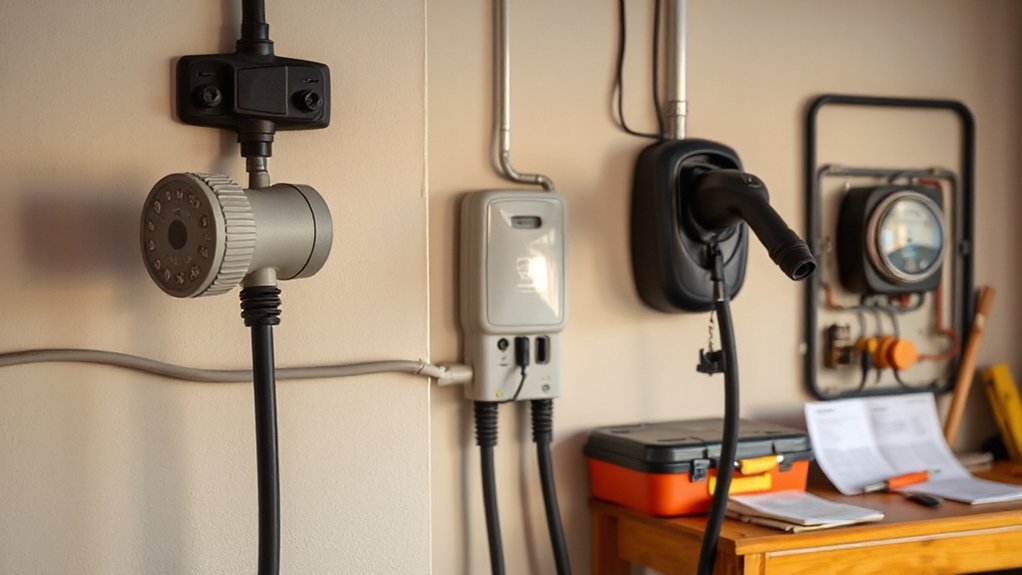
Why does the plug standard matter at home? It drives hardware choice, circuit sizing, and installation cost. J1772 wallboxes typically list 32–48 A (7.7–11.5 kW); NACS wall connectors support 48–80 A circuits but deliver up to 11.5 kW onboard AC limits. Equipment costs: J1772 $300–$700; NACS $350–$500. Installation runs $300–$1,500 for a new 240 V circuit; Electrical Upgrades such as panel upsizing or subpanels add $1,000–$3,000. NEC 625 and the 80% continuous-load rule mean a 60 A breaker yields 48 A charging. You’ll see 15–45 miles/hour, depending on kW and vehicle efficiency. Utility Incentive Programs often provide $200–$1,000 rebates, plus lower time-of-use rates. Choose the standard that aligns with your vehicle inlet, desired amperage, and available capacity. Factor permitting fees and inspection timelines locally.
Adapters and Interoperability Considerations
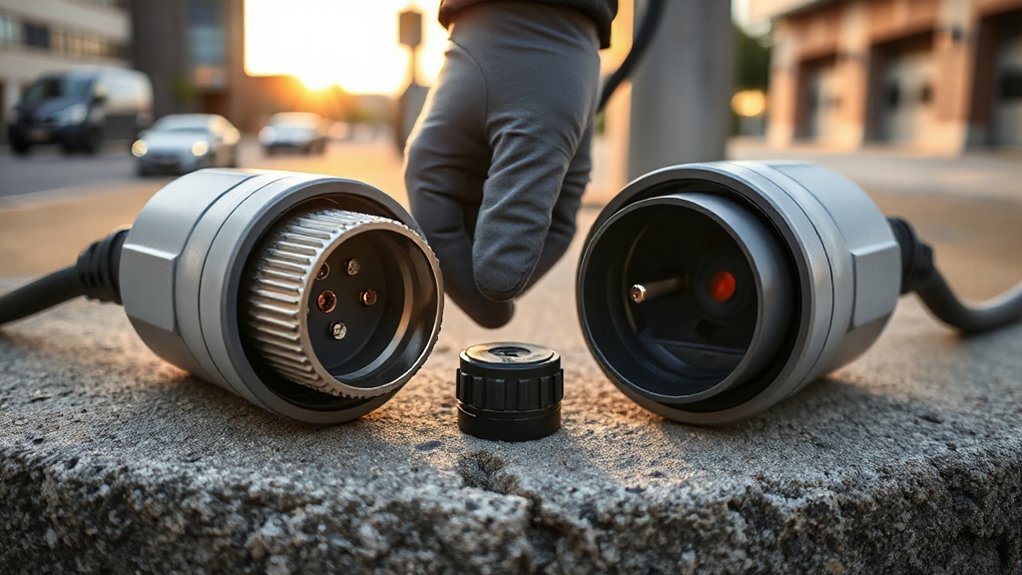
After sizing your home circuit and EVSE, interoperability hinges on whether you can safely bridge J1772 and NACS with adapters. You must match current ratings: most passive adapters handle 48 A AC at 240 V (11.5 kW), while some are limited to 32 A. Verify conductor gauge, temperature ratings to 105°C, and UL/ETL listing. Make sure pilot signaling translates correctly: J1772 uses a 1 kHz PWM duty cycle; adapters must preserve maximum current negotiation and proximity detection.
Confirm security protocols and firmware compatibility for networked EVSE. If the adapter includes electronics, check handshake support, overcurrent protection, and leakage detection per SAE J1772 and UL 2251. For DC, use only certified NACS-CCS/J1772 solutions; demand SAE J3400-compliant connectors and ISO 15118 message bridging. Verify enclosure ingress ratings.
Reliability and User Experience
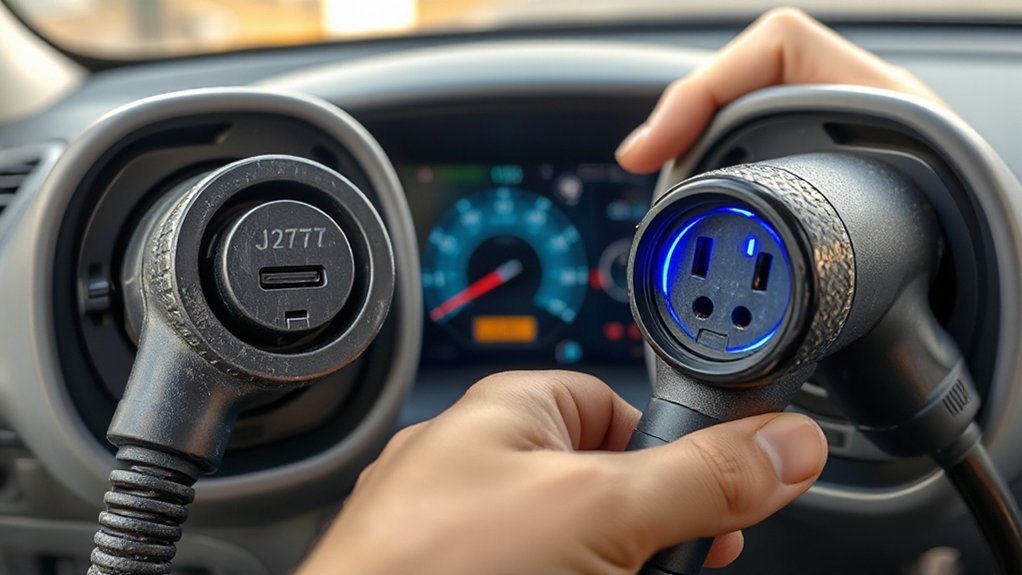
You should assess reliability through network uptime rates, using metrics like percentage of operational ports, session success rate, and NEVI’s ≥97% availability threshold. You should compare cable ergonomics per SAE J1772 and SAE J3400, focusing on connector mass, insertion/retention force (N), cable diameter, bend radius, and low-temperature flexibility. You should quantify differences with standardized tests, including thermal derating under load and cold-soak performance (e.g., −30°C), to predict plugability and user fatigue.
Network Uptime Rates
Most networks benchmark availability with port-level uptime, typically defined as the percentage of time a charger can initiate and sustain a session within spec. You should examine MTBF, fault codes, and successful-session ratios, not just online status. Public data show NACS sites often report 97–99% uptime at the port level, while mixed J1772/DCFC deployments range from 92–97%, depending on operator. Audit methodology matters: exclude planned maintenance, and measure during all hours. Account for regional variability and seasonal impacts: cold-soak failures, derating in heat, and grid outages skew results. Validate uptime with plug-in verification, payment success rates, and OCPP heartbeat integrity. You’ll want redundancy metrics too: stalls per site and queue length affect realized availability. For parity, compare SLAs, spare-part lead times, and remote-restart success.
Cable Ergonomics
How much do connector geometry and cable mass shape real‑world reliability? You feel it every session. NACS’s smaller shell (~60% of J1772 volume) cuts wrist torque; typical 4–6 mm smaller OD cables lower drag. SAE J3400 and J1772 specify ≥10,000 mating cycles; lower insertion force (NACS ~45–55 N vs J1772 ~60–80 N) reduces wear. A tighter minimum bend radius degrades jackets; aim ≥6× OD. Holstered storage solutions prevent drops and water ingress (IP54–IP55).
| Metric | J1772 | NACS |
|---|---|---|
| Connector mass | ~420 g | ~310 g |
| Cable OD (AC) | ~16–18 mm | ~12–14 mm |
| Min bend radius | ≥96–108 mm | ≥72–84 mm |
Coil assist reels and pedestal height per NEC 625 minimize tripping, while strain-relief boots (UL 2251) maintain conductor integrity. You’ll plug with fewer misalignments and less connector damage.
Future Adoption and Automaker Roadmaps
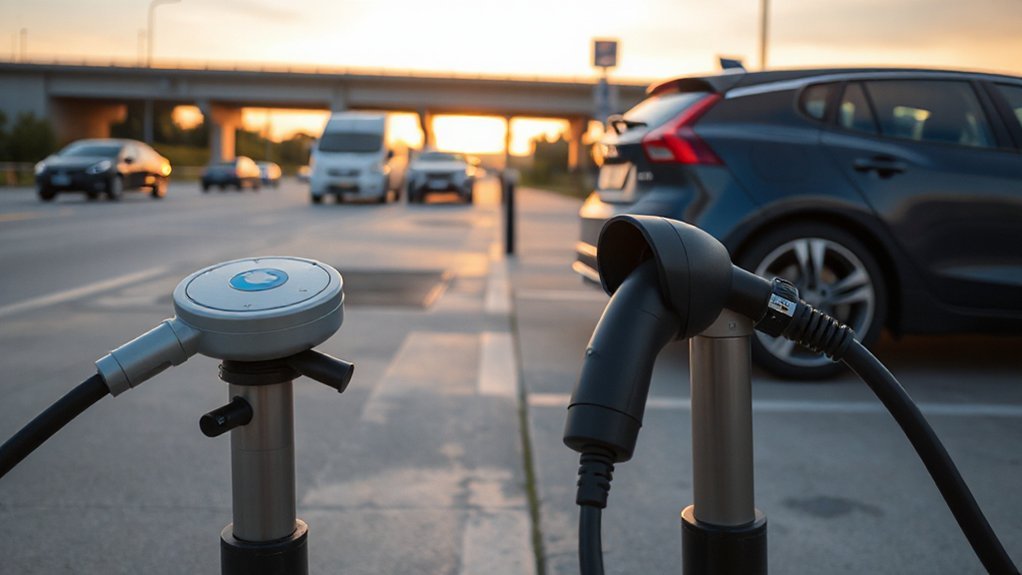
Although J1772 still anchors AC Level 2 today, SAE’s formalization of Tesla’s NACS as J3400 (Dec 2023) triggered a rapid pivot in North America: by mid‑2024, nearly all high‑volume automakers had announced J3400 adoption, targeting adapter support in 2024 and native inlets on 2025 model launches. You’ll see JV commitments tied to NEVI eligibility, 97% uptime, and ISO 15118‑2 Plug&Charge; policy incentives compress milestones. Suppliers retool to J3400 geometries, boosting supply chain resilience with multi‑vendor tooling and UL 2251 listings.
Automaker roadmaps converge: 2024 adapters enable J3400 DC access for CCS and J1772 vehicles; 2025 models add native J3400 supporting AC to 80 A and DC to 500 A, 1,000 V. Networks plan dual‑cable J3400 sites by 2026 with OCPP 2.0.1 and ISO 15118.
Choosing the Right Standard for Your Needs

Why choose J1772 versus J3400/NACS? Evaluate coverage, power, and cost. J1772 AC handles up to 19.2 kW (80 A at 240 V); it’s ubiquitous at workplaces and homes. J3400/NACS supports AC plus DC to 250–500 kW, enabling 15–20 minute highway stops. Check availability: count ports within 10 miles; if ≥70% are J1772 AC, home-first use fits J1772. If ≥60% of DC fast ports are NACS, prioritize J3400. Assess adapter paths: J1772↔NACS adapters cost $20–$200 and add 0–1% loss. Verify cable lock, IP rating, and temperature range. Consider total ownership: installation (240 V circuit cost), charging speed per commute kWh, network uptime (aim >97%), and resale value—buyers increasingly prefer NACS. Finally, compare environmental impact: faster DC reduces idling, while home AC uses lower-peak grid emissions.
Conclusion
You’ve seen that J1772 remains a simple, ubiquitous Level‑2 choice (up to 19.2 kW), while NACS/SAE J3400 consolidates AC and high‑power DC (up to 1,000 V) in a smaller connector. Choose based on use: about 80% of EV charging happens at home, so J1772 may suffice; for highway fast charging and future interoperability, NACS increasingly wins. Verify adapter support, vehicle inlet, and local network access to minimize friction and maximize standards compliance, reliability, and speed.