
One driver cut home‑charging time by about 30%—like opening a second checkout lane—after installing a 40A Level 2 at 9.6 kW. You’ll size it per NEC continuous‑load rules: a dedicated two‑pole 50A breaker, copper conductors (often #6 AWG), proper grounding, and listed equipment to local code. You’ll also weigh 32A vs 48A/60A, hardwired vs NEMA 14‑50, and smart load management—here’s how to choose safely.
Key Takeaways
- A 40A Level 2 charger provides about 9.6 kW on 240V, adding roughly 29 miles of range per hour at 3 mi/kWh.
- NEC 625 requires a dedicated 240V circuit with a 50A two-pole breaker, sized at 125% of the charger’s 40A continuous load.
- Use appropriately sized copper conductors (often #6 AWG for longer runs), verify grounding, GFCI where required, and pull permits for inspection.
- Many EVs cap AC charging between 7–11 kW, so higher-amperage circuits may not charge faster than a 40A EVSE.
- Hardwiring supports full 40A; NEMA 14-50 plug-ins are convenient but still limited to 40A continuous; popular picks include ChargePoint, Wallbox, Emporia, Grizzl‑E.
What a 40A Level 2 Charger Delivers
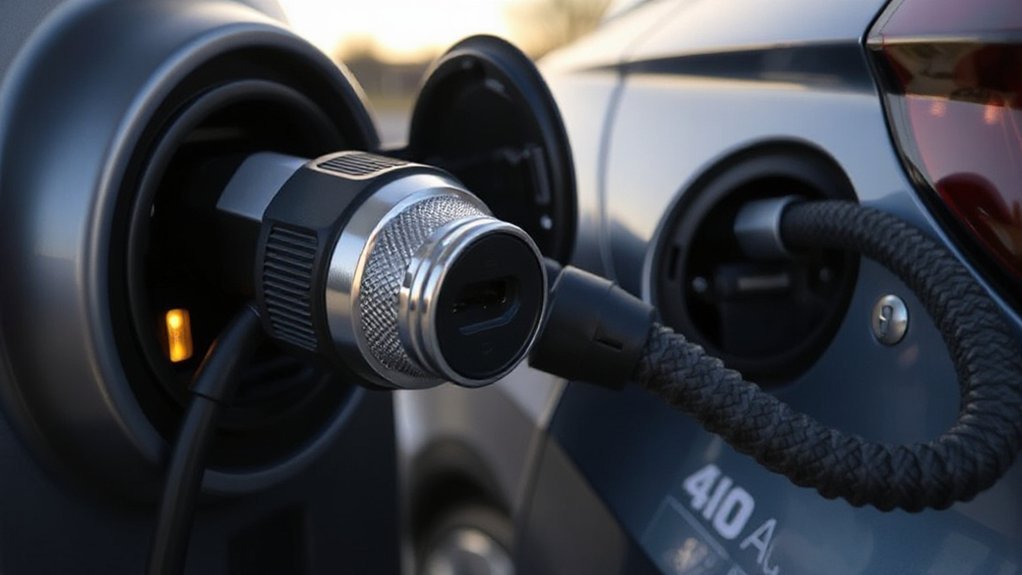
How much does a 40A Level 2 charger really deliver? On a 240V branch circuit, it supplies up to 40A continuous to the vehicle, provided you install it on a 50A breaker per NEC 625 and the 125% rule. Use copper conductors sized at least #6 AWG for longer runs, with a 2‑pole breaker, GFCI protection where required, and a properly rated disconnect. Hardwire when possible; if plug‑in, match the receptacle and enclosure NEMA ratings. Perform load calculations, label the circuit, and verify bonding and grounding.


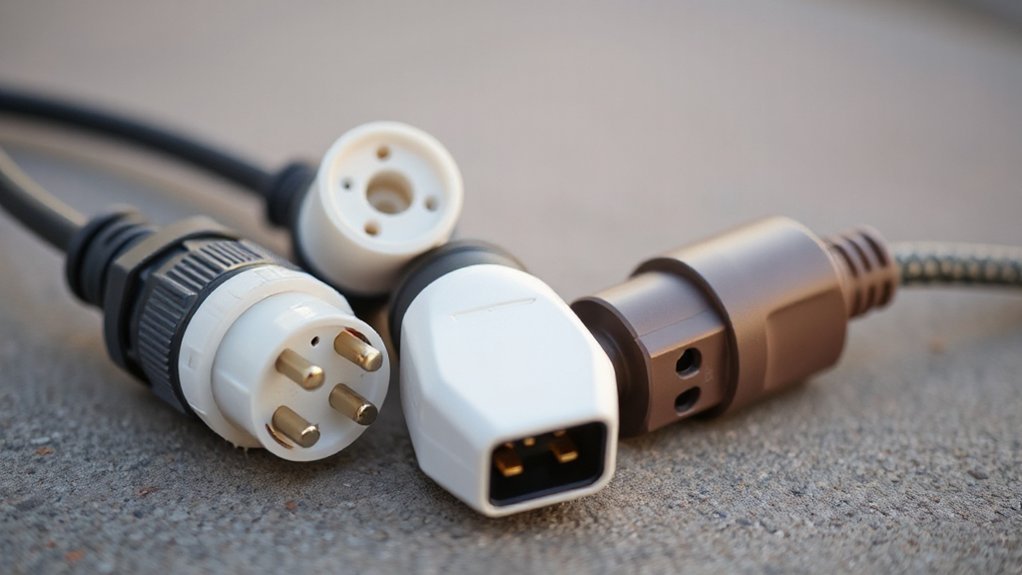
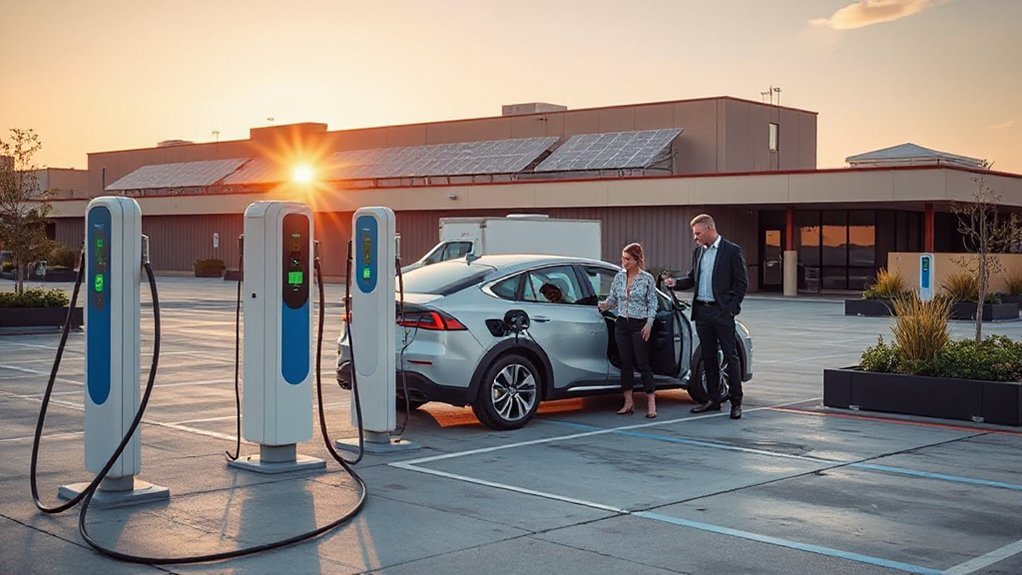
You manage charging etiquette by scheduling sessions, enabling load sharing, and freeing the connector when done. Commission the unit, update firmware, and verify pilot signaling. A permitted, documented installation protects safety and can improve resale value and compliance.
40A Vs 32A, 48A, and 60A: Charging Speed and Costs

With the 40A Level 2 on a 50A circuit established, here’s what 32A, 48A, and 60A mean for charging speed and budget: at 240V you’ll see about 7.7 kW (32A on a 40A breaker), 9.6 kW (40A on a 50A), 11.5 kW (48A on a 60A), and 14.4 kW (60A on a 75A), all per NEC 625 continuous-load sizing at 125%.
Translated to miles added per hour (assuming ~3 mi/kWh), you’re looking at ~23, 29, 35, and 43 mph respectively—use this for a time comparison against your daily needs. If your EV’s onboard charger caps at 7.2–11 kW, higher-amperage circuits won’t speed anything; charging economics suffer because you’re paying for capacity unused. Confirm UL listing and correct pilot current to avoid overheating and faults.
Electrical Requirements: Breakers, Wiring, and Hardwired Vs NEMA 14-50
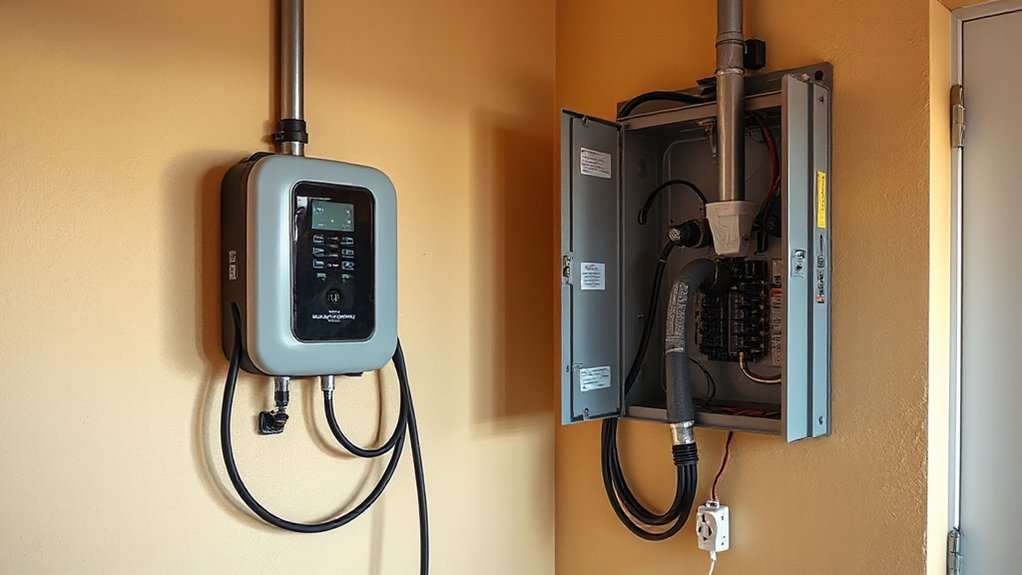
Although EVSEs look simple, you must size and install the branch circuit like any other continuous load under NEC 625: use a dedicated 240V circuit, size the breaker to at least 125% of the EVSE’s maximum continuous current (e.g., 32A→40A breaker, 40A→50A, 48A→60A, 60A→75A), and match conductor ampacity and temperature ratings to the breaker and terminations. Perform panel Load calculations before adding a 40A EVSE, and verify voltage drop on long runs.
- Breakers: use 2-pole, common-trip; terminals must match conductor size; include an EGC.
- Wiring: copper THHN/THWN-2 in conduit, or NM-B where allowed; use 75°C ampacity.
- Conduit sizing: follow Chapter 9; check fill, derating, and bend radius.
- Hardwired vs NEMA 14-50: hardwired supports higher current; 14-50 offers portability but limits continuous load to 40A.
Safety, Code Compliance, and Installation Costs

Beyond sizing the circuit, you must install the EVSE to meet safety and code requirements and budget accordingly. Follow NEC 625, 110.3(B), and local amendments: use a 125% continuous-load calculation, GFCI protection for garage receptacles (210.8), correct conductor ratings, listed fittings, and proper torqueing and labeling. Maintain required mounting clearances, wet-location ratings, and equipment grounding; bond metal raceways and verify fault current paths. Pull a permit, schedule inspections, and plan for permit timelines of 1–4 weeks. Expect typical installed costs of $500–$2,500; service upgrades, long conduit runs, trenching, or panel relocation can add $2,000–$5,000+. Ask your utility about rebates. Document the installation and keep the inspection record; unpermitted work can trigger insurance implications, claim denials, or resale issues. Notify your insurer in writing promptly.
Smart Features, Vehicle Compatibility, and Top Picks

When selecting a Level 2 EVSE, match smart features to your electrical capacity and your vehicle’s charge interface while staying within code. For a 40A EVSE, use a 50A breaker per NEC 625’s 80% rule, and verify the unit is UL-listed with integral GFCI. Confirm J1772 or NACS compatibility and adapter use. Prefer App integration, OCPP, load sharing, and secure lockouts. Outdoor installs need NEMA 3R/4 enclosures and 60°C/75°C conductor ratings.
- ChargePoint Home Flex: set max to 40A; strong App integration; Vehicle profiles; UL, ENERGY STAR.
- Wallbox Pulsar Plus 40A: compact, schedule by utility rates; good cable management.
- Emporia Smart Level 2: derate to 40A; load management; OCPP pending.
- Grizzl‑E Smart 40A: rugged NEMA 4; firmware updates; adjustable pilot; reliable.
Conclusion
Is the theory that a 40A Level 2 is the sweet spot true? You get up to 9.6 kW on a 240V circuit with a 50A breaker under NEC continuous‑load rules, often using #6 Cu, a dedicated two‑pole, and proper grounding. It’s fast, code-compliant, and cheaper than 48–60A upgrades. But verify your EV’s onboard charger, panel capacity, and listing. Choose hardwired or 14‑50 wisely. Use smart load management. Hire a licensed pro and pull permits.