
Quick miles, strict code: a 40‑amp Level 2 adds about 25–35 miles/hour at 240 V, but it requires a dedicated 50 A breaker and 6 AWG copper under NEC’s 125% continuous‑load rule. You’ll weigh NEMA 14‑50 vs hardwired, panel capacity, permits, and your car’s onboard charger limit. Costs vary and rebates can help. Learn how to avoid nuisance trips, pass inspection, and future‑proof your install—before you spend a dollar.
Key Takeaways
- A 240V, 40A Level 2 delivers up to 9.6 kW, adding roughly 25–35 miles of range per hour.
- Size as a continuous load: install a 2‑pole 50A breaker, 6 AWG copper conductors, keep voltage drop under 3%, and provide required GFCI.
- Charging speed depends on the car’s onboard charger; set EVSE pilot to circuit rating, as many vehicles accept only 32–40A.
- Hardwired units handle 40A continuous reliably; NEMA 14‑50 offers portability but often limits plug‑in EVSEs to 32A and requires GFCI.
- Expect $400–$800 for the EVSE and $350–$1,200+ installation; secure permits, confirm panel capacity, and claim eligible rebates or tax credits.
How Fast Is a 40 Amp EV Charger?
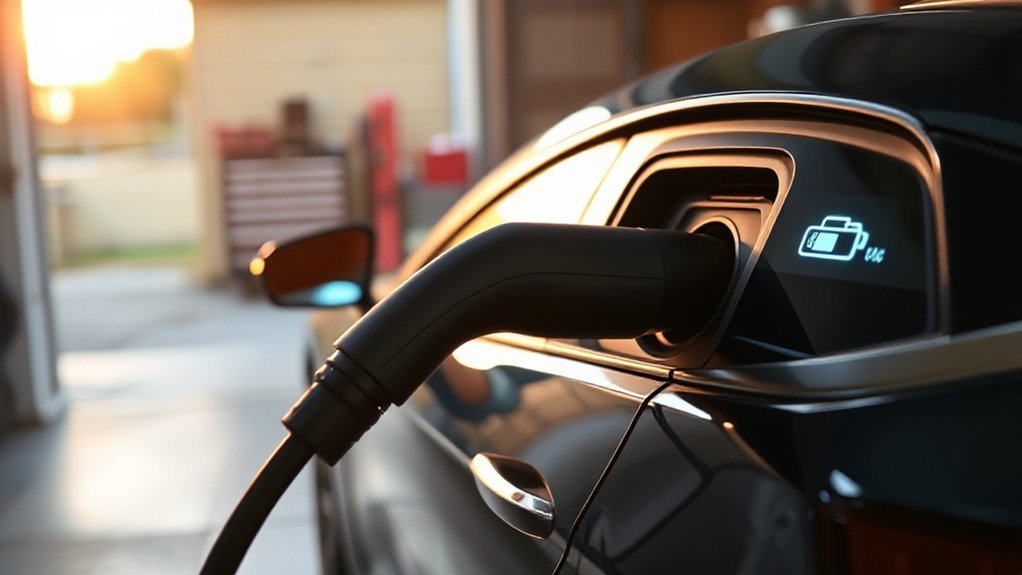
At 240 V, a 40‑amp Level 2 EVSE delivers up to 9.6 kW, typically adding about 25–35 miles of range per hour—provided your car’s onboard charger can accept 40 A and the circuit supplies a true 240 V.
That charging speed equals 9.6 kWh added each hour. For a 60 kWh pack, you’ll regain about 50% charge in over three hours, or go from 10% to 80% in 4.5 hours. Cold batteries accept less power until they warm, and charging tapers near a high state of charge, so budget extra time for the last 10–20%. Expect stronger range recovery with efficient vehicles; larger, less efficient models gain fewer miles per kWh. Monitor temperature and EVSE indicators; stop if you detect heat, odor, or damage.
Circuit Requirements and Vehicle Compatibility
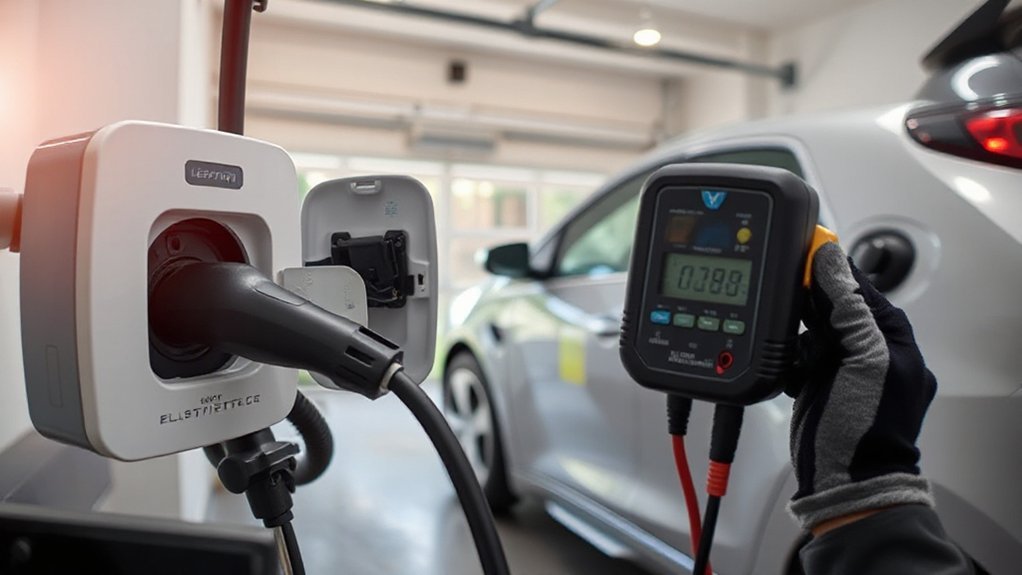
For a 40 A EVSE (continuous load), you’ll use a dedicated 240 V circuit sized at 125%—typically a 50 A breaker with properly rated conductors, often 6 AWG copper, adjusted for run length, temperature, and derating per code. Your vehicle’s onboard charger must support 40 A at 240 V (~9.6 kW); if it’s limited to 32 A, the car will automatically throttle to that lower current. Confirm both in the EVSE and vehicle manuals before purchase to avoid nuisance trips, overheating, and noncompliance.
Breaker and Wire Gauge
While EV charging seems simple, breaker and conductor sizing must follow NEC continuous-load rules to stay safe and compliant. A 40-amp EVSE is a continuous load, so you size at 125%. That means a dedicated 2-pole 50A breaker and conductors with at least 50A ampacity. Use ampacity charts for the correct insulation and termination temperature ratings. With 60°C terminations (common for receptacles), choose 6 AWG copper or 4 AWG aluminum. If all terminations are 75°C and marked, 8 AWG copper can serve a 50A breaker. Keep the run short to limit voltage drop (<3%), and consider thermal management in insulation-packed walls or attic spaces. Provide an equipment grounding conductor sized per 250.122, and install GFCI protection where required by 625.54. Local amendments may apply.
Onboard Charger Compatibility
Breaker sizing is only half the story—charging speed ultimately depends on the vehicle’s onboard charger and the EVSE pilot current. A 40‑amp EVSE on a 50‑amp, 240‑volt branch circuit can advertise 40 A, but your car may accept less. Many onboard chargers are limited to 32 A (≈7.7 kW) or 40 A (≈9.6 kW); others need 48 A to reach 11.5 kW. Confirm your car’s AC charging spec, connector standard, and allowable voltage range in the manual.
Set the EVSE’s pilot to the circuit’s continuous rating, and verify with calibrated test equipment. Don’t be surprised by manufacturer variability and software updates altering limits. Maintain code compliance: use copper conductors, terminations, and listed equipment. If nuisance trips occur, reduce pilot current and investigate thermal issues.
NEMA 14‑50 Outlet Vs Hardwired Installation
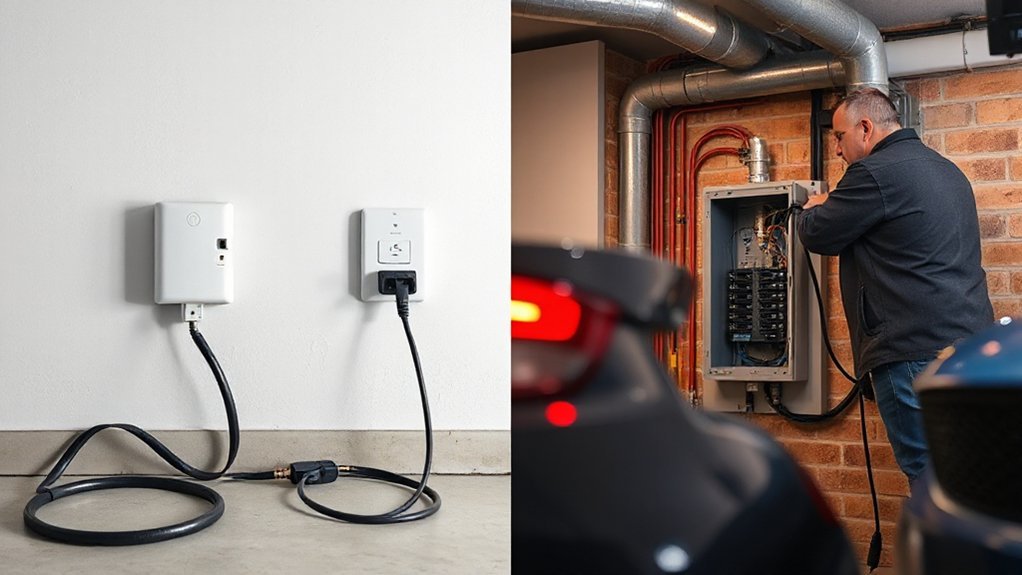
Although both approaches can be code-compliant, choosing between a NEMA 14‑50 receptacle and a hardwired connection for a 40‑amp EV charger comes down to continuous-load sizing, listing, and location. A hardwired EVSE can be listed for 40 A continuous and installed on a 50 A branch circuit with properly sized conductors, a dedicated breaker, and a readily accessible disconnect; you’ll eliminate receptacle heat points and weather exposure. A 14‑50 gives Rental Flexibility and easier service swaps; however, most plug‑in EVSEs are listed at 32 A continuous, so your Portability Comparison often trades speed for convenience. For garages and exteriors, use GFCI protection on receptacles, follow 125% continuous-load sizing per NEC 625/210, respect manufacturer torque specs, and keep cable strain relief and mounting clearances correct.
Cost to Buy and Install
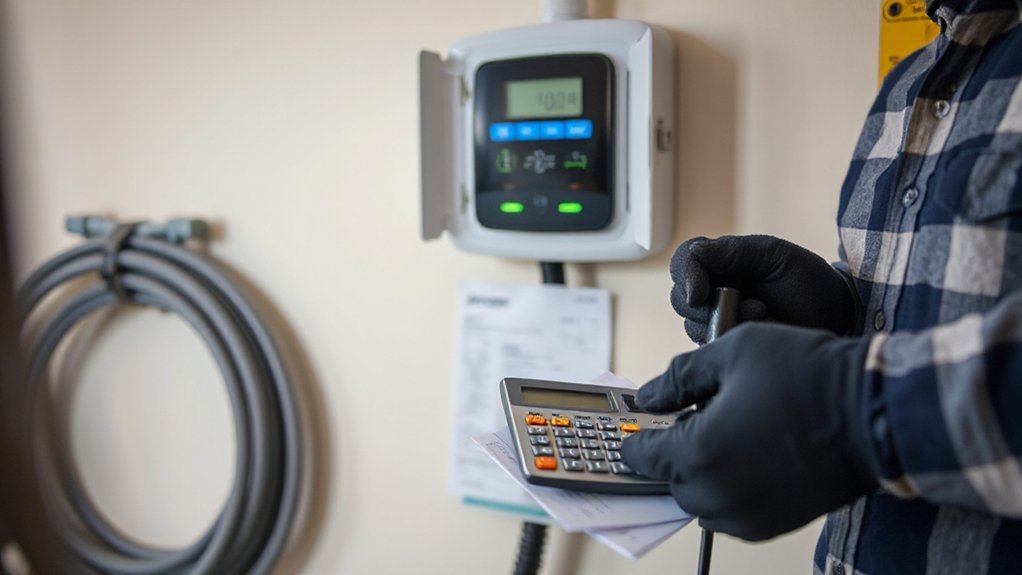
For many installations, expect $400–$800 for a 40‑A Level 2 EVSE and roughly $350–$1,200 for a straightforward, permitted install on an existing panel; costs can reach $1,500–$5,000+ if you need a service/panel upgrade, long conduit runs, or trenching. Get quotes that itemize permit fees, load calculation, 50‑A breaker, GFCI/AFCI requirements, conductor size, and mounting hardware.
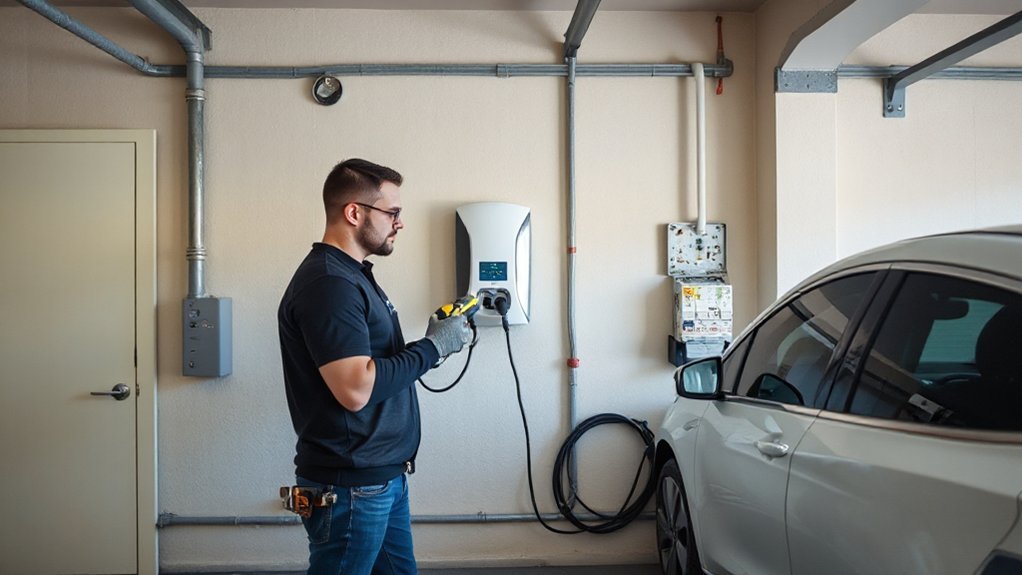

For code compliance, get a local permit and final inspection. Specify copper THHN in conduit or rated cable, correct breaker type, and a labeled disconnect if required. Factor charger warranty, Equipment depreciation over 5–10 years, and utility demand charges. Check rebates and tax credits; they can offset hardware and labor. If cash flow matters, consider Financing options from your utility or installer, but compare APR to expected fuel savings.
When You Need a Panel Upgrade or Subpanel
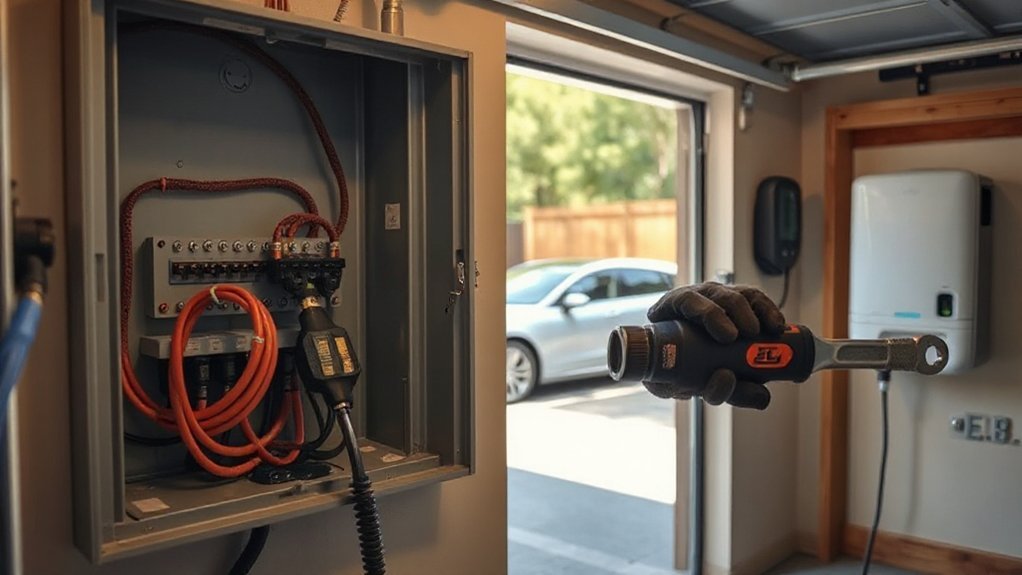
You should assess capacity with an NEC Article 220 load calculation and watch for warning signs like frequent breaker trips, warm or corroded bus bars, no spare spaces, tandem/double-tapped breakers, or a 100A service already near its limit. If the service can handle the added continuous load (32A EVSE on a 40A breaker) but the panel lacks spaces, you’ll add a properly sized, permitted subpanel. If the load calc shows the service or main bus is undersized, you’ll plan a code-compliant service/panel upgrade with permits and utility coordination.
Panel Capacity Warning Signs
When an EVSE pushes your service close to its limits, watch for warning signs that the panel lacks capacity. You should heed nuisance breaker trips, dimming under load, and warm breakers. NEC 625 and 210 require continuous EV loads be sized at 125% of the EVSE rating; a 40A charger draws 32A continuously, so margins matter. If symptoms appear, stop charging and call a licensed electrician for a load calculation and voltage drop check.
1) Flickering lights when the EV starts or ramps: indicates voltage sag and poor capacity.
2) A burning smell, discoloration, or crackling at the panel: suggests loose lugs or overheated bus.
3) Breakers running hot to the touch, or humming: points to overloaded circuits or failing breakers.
Document symptoms and timestamps for diagnosis.
Subpanel Vs Main Upgrade
Because a 40A EVSE is a continuous load, deciding between a subpanel and a main upgrade comes down to capacity versus space. If your load calculation (NEC 220) shows the service can handle 125% of 40A on a 50A circuit, but the panel lacks breaker spaces, add a 60–100A garage subpanel. Feed it with a 4‑wire cable, isolate neutrals, bond the equipment grounding bar, and respect 110.26 working clearances and Aesthetic placement.
Choose a main service upgrade when the calculation exceeds service ampacity, breakers run hot, or voltage drop is excessive. Upgrading to 200A or higher improves headroom and future EVs. Secure permits, utility coordination, and required disconnects. In multifamily settings, follow Tenant agreements, meter arrangements, and local GFCI/AFCI requirements. Label circuits and documentation.
Permits, Safety, and Code Basics
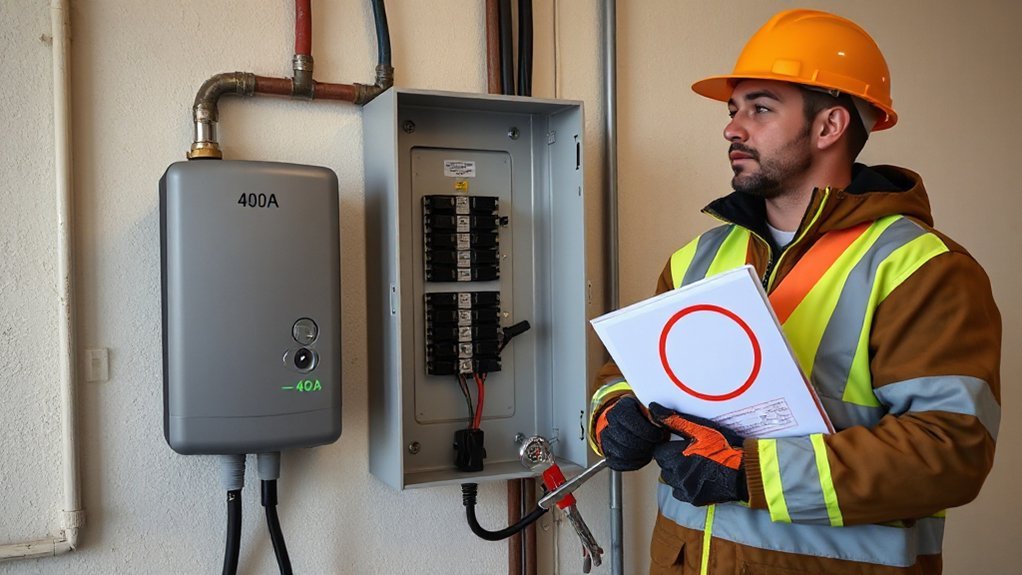
Although a 40‑amp EV charger may look simple to add, the job starts with a permit from your local authority having jurisdiction (AHJ) and ends with a passed inspection. You’ll submit load calculations, a one‑line diagram, manufacturer specs, and mounting details. Use a dedicated 2‑pole 50‑amp breaker (80% continuous load rule) on copper conductors sized per NEC 310.16; typically 6 AWG Cu to a 14‑50R or hardwired EVSE rated 40A continuous. GFCI protection and correctly sized equipment grounding conductor are mandatory. Bonding and working clearances must meet NEC 110. Verify short‑circuit rating, available fault current, and breaker listing. Outdoor installs need a NEMA 3R enclosure and an in‑use cover.
- Labeled shutoff; Emergency procedures.
- Conduit supported; 3R enclosure.
- Torqued lugs; Liability insurance.
Smart Features, Load Management, and Rate Optimization
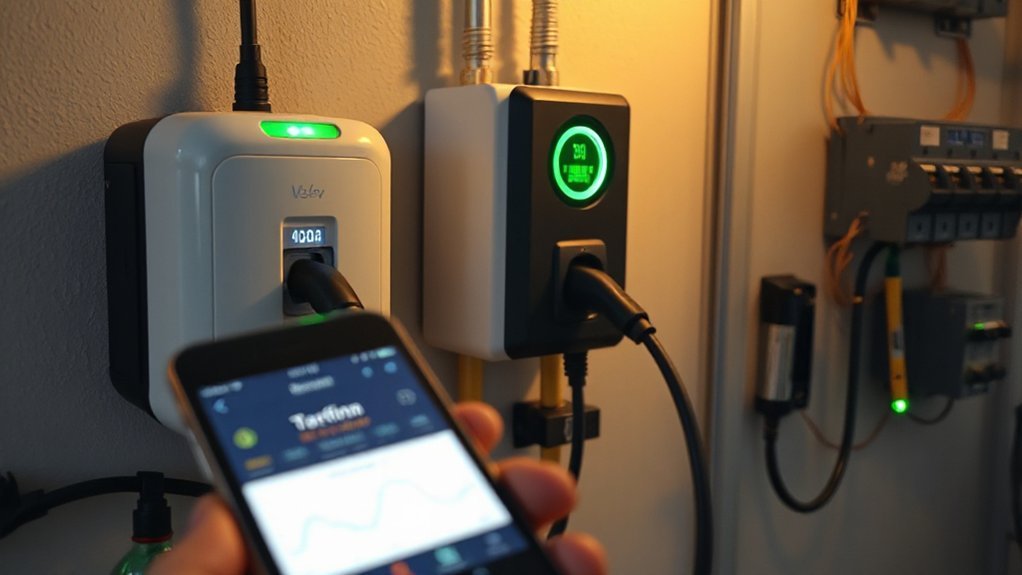
How do you make a 40‑amp EV charger “smart” without compromising safety or code? Choose a unit with UL listing, locked 40 A output on a 50 A breaker per NEC 625, and networked controls that never exceed the nameplate. Use Wi‑Fi or Ethernet to schedule charging by utility time‑of‑use rates, but keep local fail‑safe logic so loss of connectivity can’t start or overcurrent a session. Enable secure Firmware updates, signed and verifiable.
Set load management correctly. If you share a panel, use OCPP or manufacturer clustering to dynamically throttle current and respect your main service rating. Configure Demand response so the charger sheds load during grid events while honoring your minimum SOC. Log sessions, verify breaker temperature, and test GFCI monthly. For safety.
Incentives and Future‑Proofing Your Setup
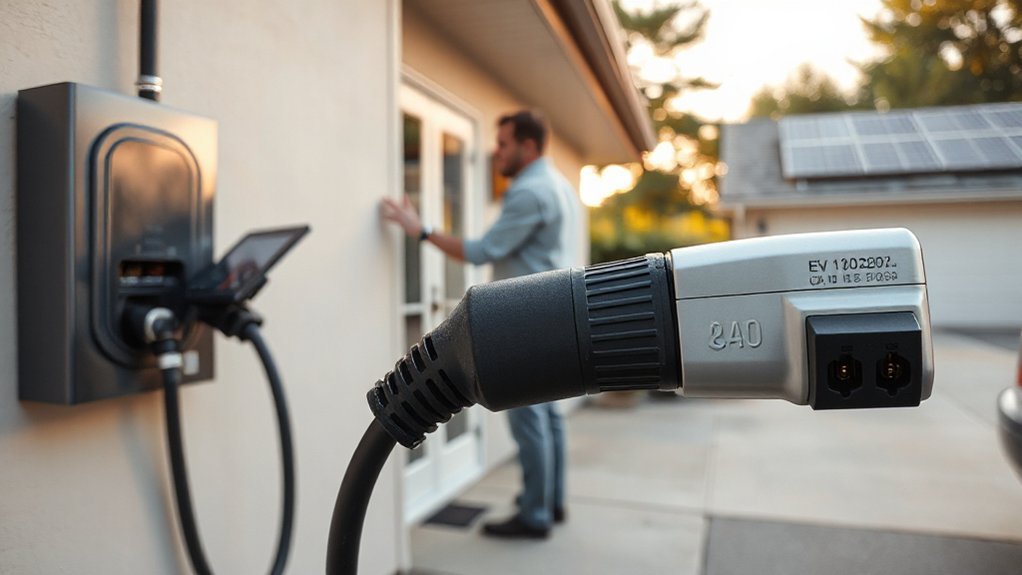
Even as you prioritize safety and code compliance, don’t leave money on the table or limit future upgrades. Claim eligible tax credits and utility rebates; keep itemized permits, load calculations, and commissioning photos for proof. Choose ENERGY STAR and networked-ready units that qualify. To future‑proof, install a dedicated 60A, 240V circuit with copper conductors rated 75°C, ample conduit, and a NEMA 3R enclosure; set your 40A EVSE to 32A or 40A per label and NEC 625. Plan surge protection and whole‑home load management to prevent nuisance trips and panel overheating. These choices shorten payback and boost resale value.
- A tidy, labeled panel with AFCI/GFCI protection.
- A ceiling‑hung cable reel keeping cords off wet floors.
- Conduit stubs capped for a second port or NACS adapter.
Conclusion
You’ve got a clear path: a 40‑amp Level 2 delivers up to 9.6 kW, typically 25–35 miles per hour, when paired with a dedicated 50 A breaker and 6 AWG copper per NEC’s 125% continuous‑load rule. Worried it’s overkill or too costly? It isn’t—hardwiring reduces failures, rebates offset price, and load management can defer panel upgrades. Pull permits, schedule inspection, verify your car’s onboard‑charger limit, and you’ll charge faster, safer, and code‑compliant—today and future‑ready too.