
You’ll charge an Audi EV fastest on DC CCS (up to ~170–270 kW depending on model), but most miles come from Level 2 at home (7–11 kW, matching the onboard charger). Compare J1772 AC vs CCS DC, plan 20–80% routines, and use myAudi for preconditioning and Plug & Charge where supported. Installation needs a 40–60A circuit, proper load calculation, and firmware-ready hardware—yet cost, incentives, and battery care can shift your ideal setup.
Key Takeaways
- Level 1 adds 3–5 miles/hour; Level 2 adds ~20–40; DC fast peaks 150–270 kW depending on Audi model.
- For home charging, install a 40–48 A Level 2 EVSE; size the breaker at 125% per NEC 625.
- Audi uses J1772 for AC and CCS1 for DC; adapters enable NACS where supported.
- Typical 10–80% DC fast times: Q4 e-tron 30–40 minutes, Q8 e-tron 25–35, e-tron GT 18–22.
- Use AC overnight for efficiency; precondition before DC fast charging, avoid repeated back-to-back sessions to reduce battery stress.
Understanding Audi EV Charging Levels: Level 1, Level 2, and DC Fast
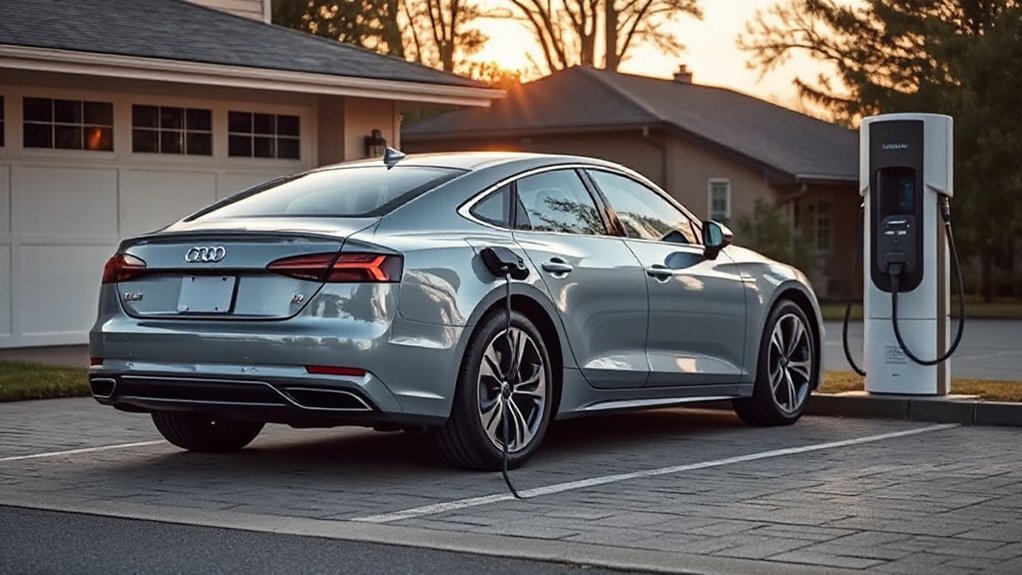
Although all Audi EVs plug into the same J1772/CCS standard, charging speed varies by level: Level 1 (120 V, ~12 A) delivers about 1.3–1.4 kW, adding roughly 3–5 miles of range per hour; Level 2 (240 V, typically 32–48 A) supplies ~7.7–11.5 kW—matched to Audi onboard chargers of 7.2–11 kW—adding ~20–40 mph; DC fast charging over CCS bypasses the onboard charger and ranges ~125–270 kW depending on model and charger, restoring 10–80% in roughly 25–35 minutes for Q8 e-tron (~170 kW peak), ~30–40 minutes for Q4 e-tron (~150 kW), and as little as ~18–22 minutes for e-tron GT (~270 kW). You’ll interpret Voltage Differences and amperage together: power equals volts times amps. Consumer Misconceptions persist; onboard-charger limits cap Level 2, not the outlet itself.
Charging Speeds by Model: Q4 E-Tron to Q8 E-Tron

Across Audi’s SUV EV lineup, charging performance varies by model: the Q4 e-tron typically accepts ~7.2–11 kW on Level 2 (limited by its onboard charger) and peaks around ~150 kW DC, yielding roughly 30–40 minutes for 10–80%; the Q8 e-tron supports ~11 kW AC standard (with ~19 kW where equipped) and up to ~170 kW DC, cutting 10–80% to about 25–35 minutes.
You’ll see differences in taper profiles, too, driven by battery chemistry and pack thermal performance. For the Q4’s smaller pack, preconditioning and arriving warm sustain higher mid-curve rates; cold-soaked packs drop below 80 kW quickly. With the Q8 e-tron’s larger buffer and upgraded cooling, you’ll hold ~150 kW longer, then taper under 60%. On AC, size your home circuit to the car.
Connectors and Standards: J1772, CCS, and Adapters
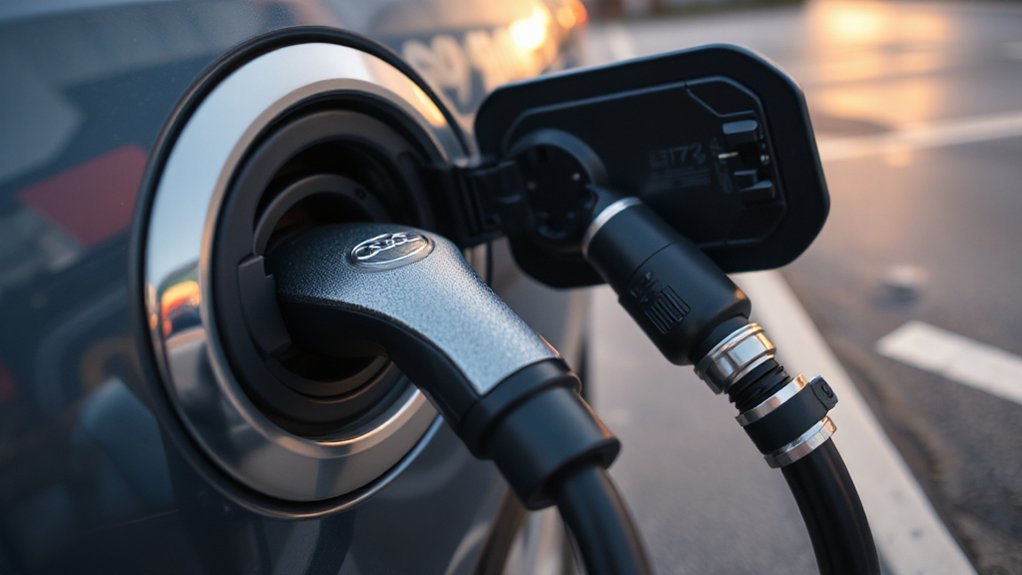
Charging hardware determines where you can get those rates: in North America, current Audi EVs use a CCS1 combo inlet that accepts J1772 for AC (Level 1/2) on the same upper pins and CCS for DC fast on the two large DC pins.
You charge AC via J1772 without an adapter; for DC, you use CCS1. Pin configurations define current paths: the two lower DC pins carry amperage, while the upper J1772 pins manage pilot and proximity. Signal protocols differ: AC uses PWM on CP/PP; CCS negotiates via PLC (ISO 15118/DIN 70121). NACS adapters exist.
| Connector | Pin configurations | Signal protocols |
|---|---|---|
| J1772 (AC) | 5 pins | PWM on CP; proximity on PP |
| CCS1 (DC) | 7 pins (J1772+2DC) | PLC; ISO 15118/DIN 70121 |
| Adapters | Varies | Mechanical; protocol passthrough |
Home Charging Setup and Installation Requirements
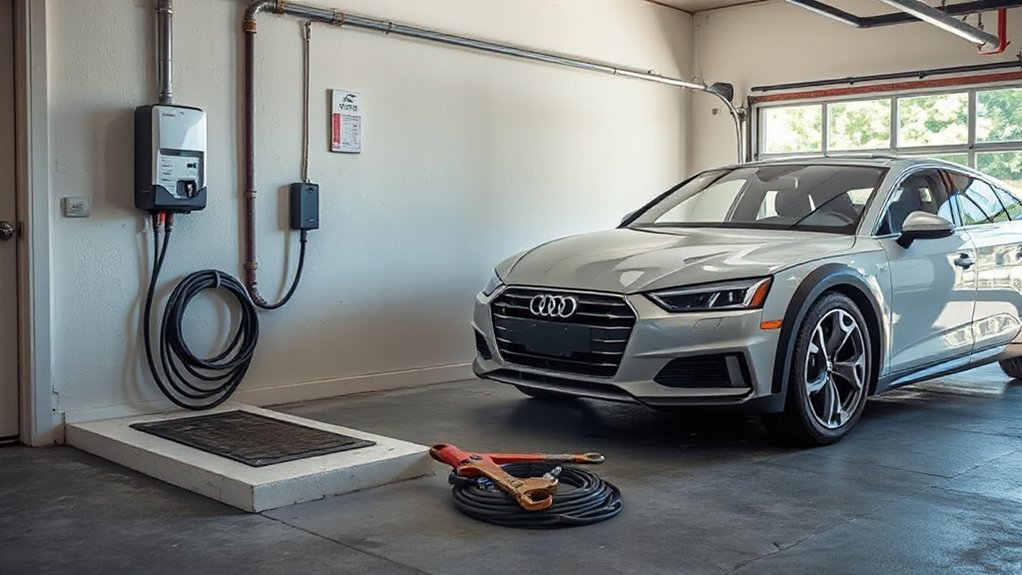
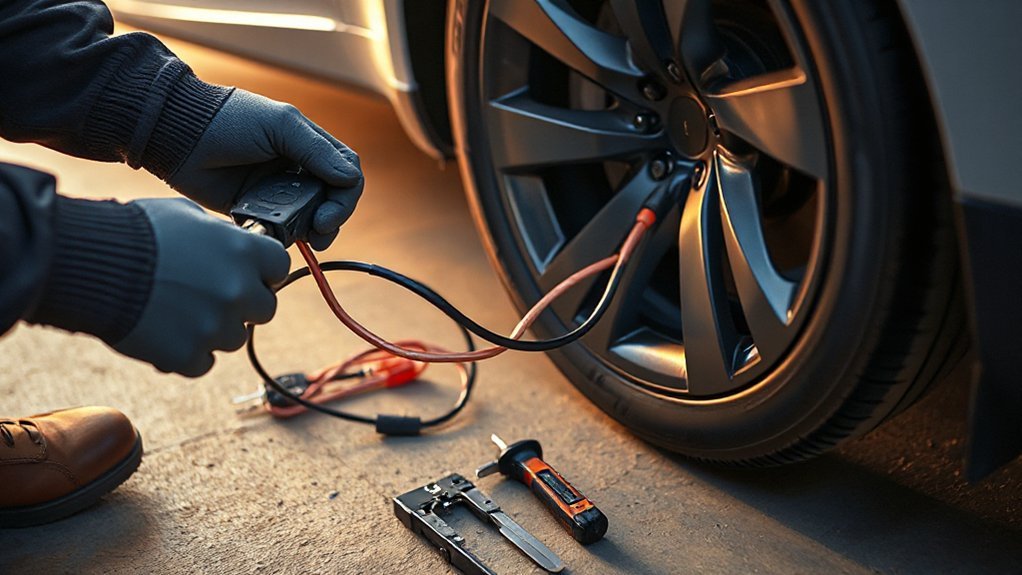

Before you install a home EVSE for your Audi, align your electrical capacity with the car’s onboard AC charger and your daily energy needs. Size the circuit to 125% of continuous load per NEC 625; a 40A EVSE requires a 50A breaker, while 48A units need 60A and #6 AWG copper. If your panel lacks capacity, compare load-shedding versus a service upgrade. Choose hardwired for sustained 48A, or NEMA 14-50 for portable 32–40A use. Require GFCI protection, a dedicated circuit, and NEMA 3R/4 enclosures outdoors. Evaluate run length, conduit fill, and trenching for detached garages. Plan Cable Management and mounting height to keep the cord off the floor. Confirm local Permit Process, inspection steps, and utility rebates before purchasing hardware, and scheduling electrician availability.
Smart Charger Features and Myaudi Integration

How do smart Level 2 chargers complement myAudi? They extend vehicle telemetry into your garage: you schedule departure times in myAudi, and the charger enforces load, amperage, and session windows. Compared with basic plug-and-charge, you gain dynamic current control, RFID/user access, and over-the-air Firmware Updates that improve OCPP interoperability. myAudi aggregates SOC, range, and charge rates, while the charger reports voltage sag, temperature, and fault codes, letting you diagnose issues faster. App Personalization lets you map profiles—home, work, travel—so automations toggle by location.
- Peak-shaving algorithms coordinate with utility signals for demand response and grid constraints.
- Dynamic load balancing protects circuits when two EVs charge in real-time.
- Session analytics expose kWh, efficiency, and average power curves.
- Secure OTA, TLS, and PIN features harden access control.
Costs, Electrical Needs, Rebates, and Tax Incentives
You’ll scope total installed cost ($500–$2,500) by charger level (Level 1 vs Level 2 at 40–60A), circuit length, and panel capacity, comparing plug-in versus hardwired installs. You’ll verify electrical needs with a NEC load calculation and the 80% continuous-load rule to see if a 40A EVSE (32A output) fits a 100–125A service or needs a subpanel/upgrade. You’ll cut net cost with rebates and tax incentives—utility programs often $200–$1,000 and a federal credit up to 30% with caps in eligible areas—comparing stackability and enrollment requirements.
Costs and Electrical Needs
While hardware is relatively affordable, total cost hinges on your home’s electrical capacity and install complexity. Expect $200–$700 for a 240V charger, but $800–$3,500 for installation depending on panel upgrades, conduit runs, and permits. Verify service size (100A vs 200A) and available breaker space; Level 2 at 40A continuous draws 32A, and 48A units draw 40A. A load calculation determines if you need a subpanel or service upgrade. Short cable paths and surface‑mounted conduit lower labor. Choose NEMA 14‑50 plug-in for flexibility or hardwired for higher amperage, outdoor ratings, and code compliance. Charge off-peak to minimize utility rates and potential demand charges if applicable.
- Panel upgrade: $1,500–$4,000; service increase adds utility coordination.
- Trenching: $20–$40/ft to detached garages.
- Permits, inspection: $150–$500.
- Load management reduces upgrades.
Rebates and Tax Incentives
Because incentives can offset a large share of install costs, map them before you buy: the federal Alternative Fuel Refueling Property Credit (Form 8911) covers 30% of residential EVSE hardware and installation, capped at $1,000 per dwelling, but after 2022 it applies only if the property lies in an eligible low‑income or non‑urban census tract. You can stack state credits and utility rebates ($200–$1,500 typical), but review eligibility criteria: income or tract qualification, ENERGY STAR or networked charger requirements, and permit/inspection proof. Credits are nonrefundable; rebates pay cash. Compare timelines: rebates fund in 4–12 weeks; credits arrive at filing. Follow the application process: verify tract, secure pre‑approval, install to code, submit invoice, final inspection, and enroll in TOU/demand‑response for extra bill credits and savings.
Public Networks, Route Planning, and Road Trip Strategy

How do you turn raw charger maps into a time‑optimized route? Start by filtering networks by maximum kW, plug type, uptime, and real‑time occupancy. Compare Electrify America, EVgo, and ChargePoint on average session speed, station density along corridors, and reported reliability. Use your Audi’s planner plus A Better Routeplanner to model consumption at your cruising speed and elevation.
Filter chargers by power, plugs, uptime, and occupancy; model consumption with Audi planner and ABRP.
- Prioritize 150–350 kW sites within 5 minutes of highways.
- Validate payment integration: app, RFID, Plug & Charge.
- Check queuing probability via historical dwell time.
- Apply charger etiquette: vacate when charging tapers; share stalls fairly.
Plan stops around rest breaks, not empty batteries, to minimize variance. Sort candidates by kWh delivered per minute, not nameplate power. Cross‑check pricing: per kWh vs minute; compute $/100 miles at efficiency.
Battery Care, Charging Best Practices, and Safety
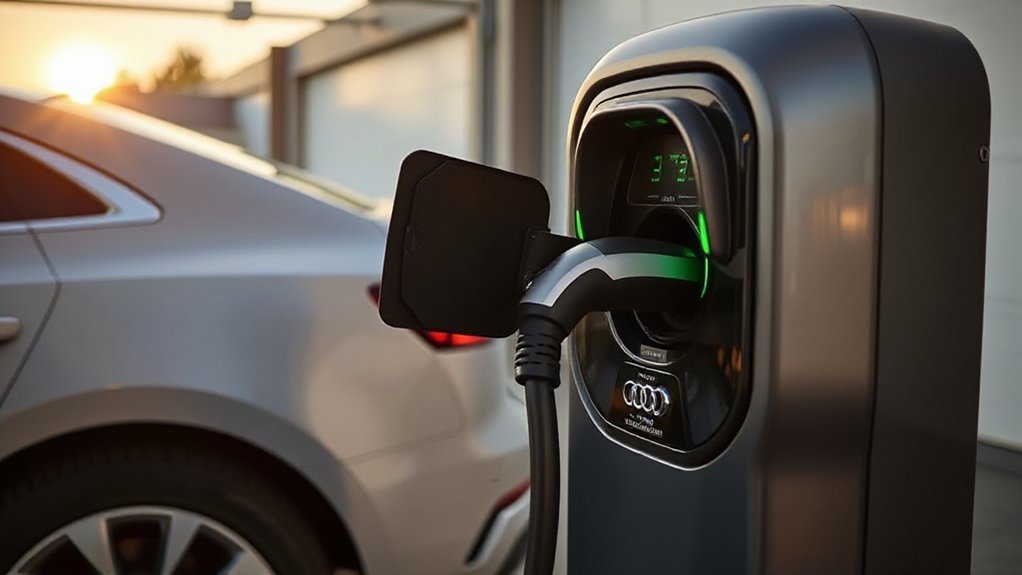
Balancing speed, longevity, and safety starts with managing state of charge (SoC), temperature, and charge power to match your Audi’s chemistry and thermal controls. Target 20–80% SoC for daily use; reserve 100% for immediate departure. Precondition the pack before DC fast charging; cold batteries accept less current, hot packs increase degradation risk. Use AC charging overnight for higher round‑trip efficiency; use DC only when time matters. Watch the charge curve: peak power near 10–50% SoC tapers above 60%, so arriving low shortens stops. Rely on built‑in thermal management; avoid repeated back‑to‑back fast sessions. Store at 30–50% if parked long. Inspect cables, connectors, and vents monthly. In emergencies, follow emergency procedures, stop charging, isolate the vehicle, and contact assistance. Keep firmware updated for charging optimization.
Conclusion
You’ve seen the numbers: Level 2 at 9–11 kW refills ~30–40 miles/hour, while DC fast at 150–170 kW adds 10–80% in ~30 minutes on Q4–Q8 e-tron. Connectors (J1772/CCS) and myAudi/Plug & Charge simplify sessions. Now test a theory: home Level 2 covers 90–95% of trips. Compare logs—daily 20–80% cycles, preconditioning, and dynamic load balancing cut costs and degradation versus chasing peaks. Use rebates, right-size circuits, and plan CCS only for true time-critical travel when needed.