
A neighbor’s $1,800 install jumped to $3,200 after a panel upgrade—home EV charging is like remodeling: simple until wiring says otherwise. You’ll typically spend $1,000–$3,000 for a code‑compliant Level 2 setup, including a UL/ETL‑listed EVSE. Aim for a 40–48A hardwired unit on a 60A breaker; consider NEMA 14‑50 only if loads and distance permit. You want safe, fast, reliable charging—now let’s pinpoint the right charger and the rebates that cut the bill.
Key Takeaways
- Total installed cost typical: equipment $400–$800, accessories $30–$80, electrician $500–$1,500, plus permits and possible panel upgrades.
- Factors driving price: run length, trenching/coring, outdoor conduit, service capacity/load calc, permits/inspection timing.
- Audi onboard chargers ~9.6–11.5 kW; 40–48A Level 2 is ideal—higher-amp EVSE won’t charge faster than the car allows.
- Recommended UL-listed models: ChargePoint Home Flex, Wallbox Pulsar Plus, JuiceBox, Grizzl‑E, ClipperCreek; prefer hardwired 48A on 60A breaker.
- Save with rebates: pick networked, UL/ETL units; keep invoices, model numbers, photos; utilities favor smart chargers and demand-response participation.
What Level 2 Home Charging Costs for Audi E-Tron and Q4 E-Tron
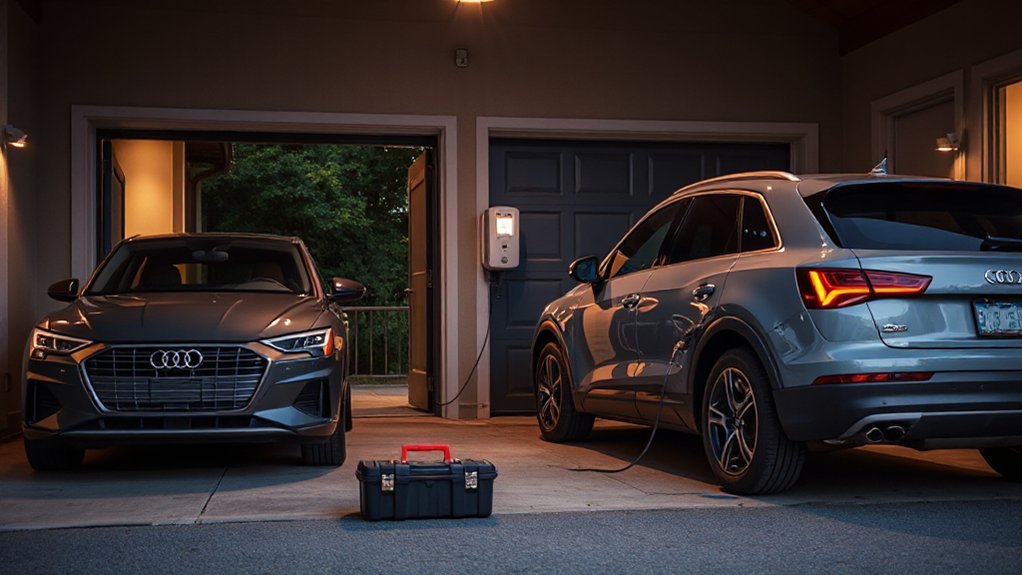
Most owners will spend two kinds of money to add Level 2 home charging for an Audi E‑Tron or Q4 E‑Tron: equipment and code‑compliant installation. Expect $400–$800 for a 40–48A UL‑listed EVSE, plus $50–$150 for a NEMA 14‑50 receptacle or hardwire kit, and $30–$80 for a listed in‑use cover or strain relief. Installation typically adds $500–$1,500 for a licensed electrician following NEC 625, GFCI protection, and proper labeling. You’ll budget extra for load calculations and commissioning tests to verify voltage, ground‑fault response, and correct torque. Choose copper conductors, correct breaker sizing (125% of continuous load), and manufacturer‑approved mounting. Keep receipts and as‑built photos; they help with insurance implications and future service. A documented, code‑compliant installation can support home resale and cut risk for buyers.
Factors That Drive Installation Price: Distance, Permits, and Panel Upgrades
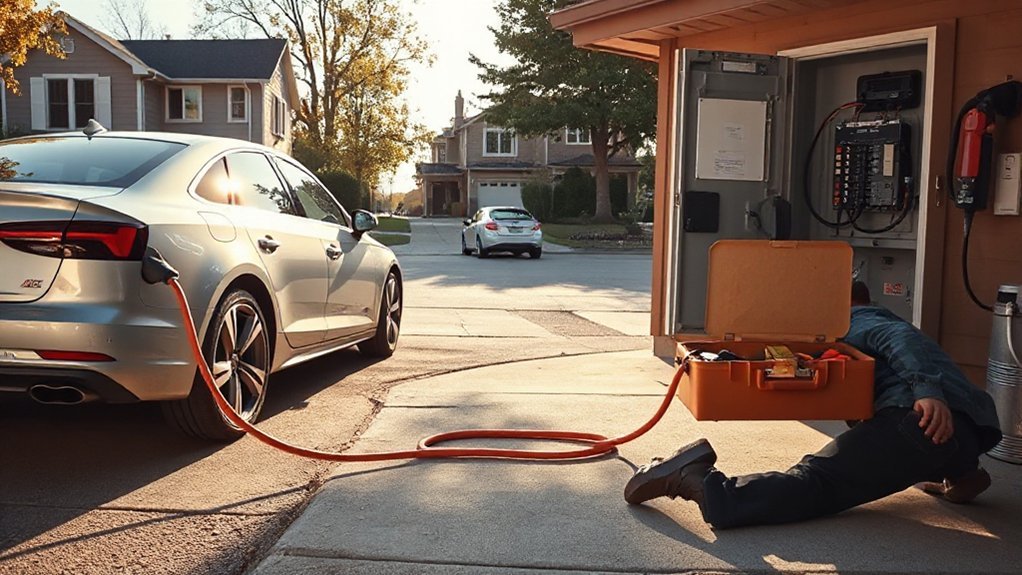
Because EVSE work must meet NEC 625 and your local AHJ, three variables drive price: how far you run power, what your jurisdiction requires, and whether your service can handle the load. Longer runs increase conductor size to control voltage drop, add conduit, and raise labor. Exterior routes add Trenching Impact; depth and wiring method must meet NEC 300.5 and 300.11. Permits add fees and inspection steps; Permit Timing varies by AHJ, especially if plan review is required. You’ll need load calculations per NEC 220 to confirm the panel can support a dedicated EV branch circuit. If not, budget for a service or panel upgrade, new spaces, and labeling. Expect GFCI/receptacle requirements, proper grounding, and listed equipment installed per 110.3(B), verified torque and clearances.
Charger Power and Audi Onboard Specs: 40A Vs 48–60a Explained
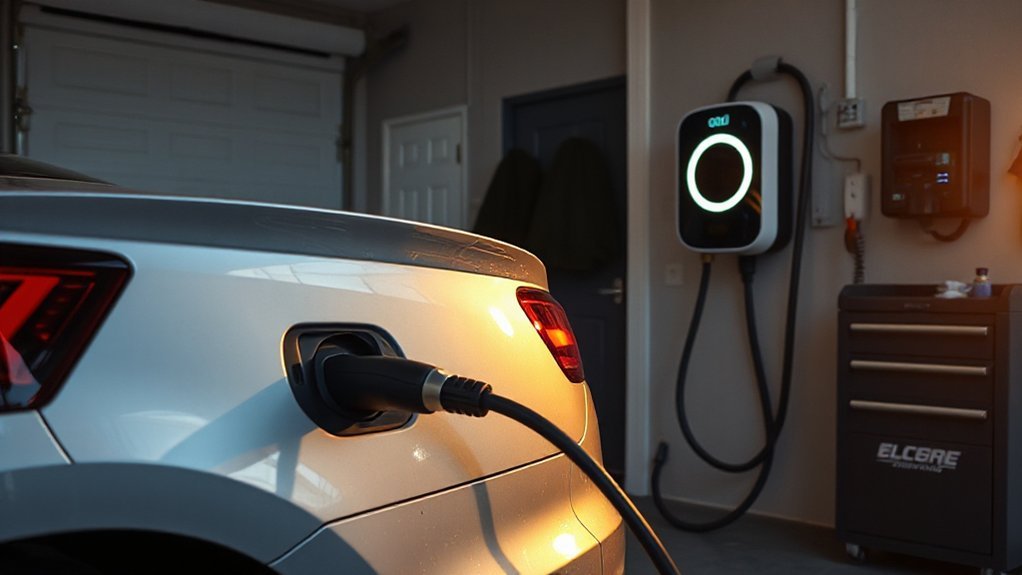
You’ll choose between 40A (on a 50A breaker) and 48–60A (on 60–75A breakers) EVSE ratings, with conductors and breakers sized to NEC’s 80% continuous-load rule. Your Audi’s onboard charger sets the AC current ceiling (often ~9.6–11.5 kW), so a higher-amp EVSE won’t exceed that limit. In real use, charge time only improves moving from 40A to 48A if your car supports it; 60A helps only on models with higher onboard capacity.
40A Vs 48–60a
Two numbers matter when sizing home AC charging for an Audi: the EVSE’s output (40, 48, or 60 A) and the car’s onboard charger limit. You’ll balance speed and code. A 40A EVSE on a 50A circuit is gentler on wiring, supports Battery longevity, and boosts Resale appeal. Stepping to 48–60A adds speed but demands heavier wire, breakers, and load calculations.
| EVSE Output | Typical circuit (NEC 125% continuous) |
|---|---|
| 40A | 50A breaker, 6 AWG Cu, GFCI as required |
| 48–60A | 60–75A breaker, 4–6 AWG Cu, dedicated circuit |
For safety, install a hardwired, UL-listed unit, set max current in software, and label the disconnect. Verify panel capacity, temperature ratings, and conduit fill before inspection.
Onboard Charger Limits

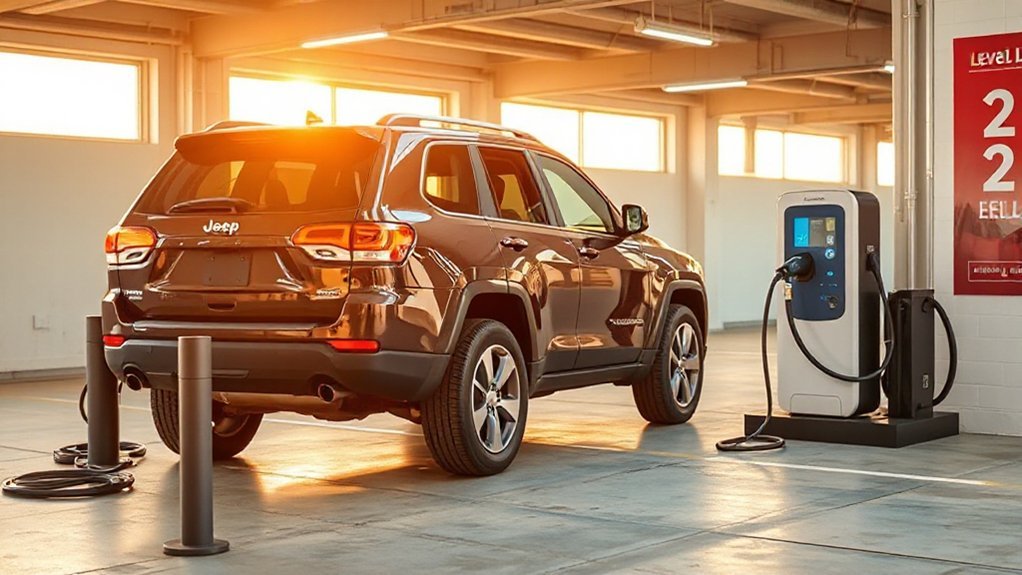
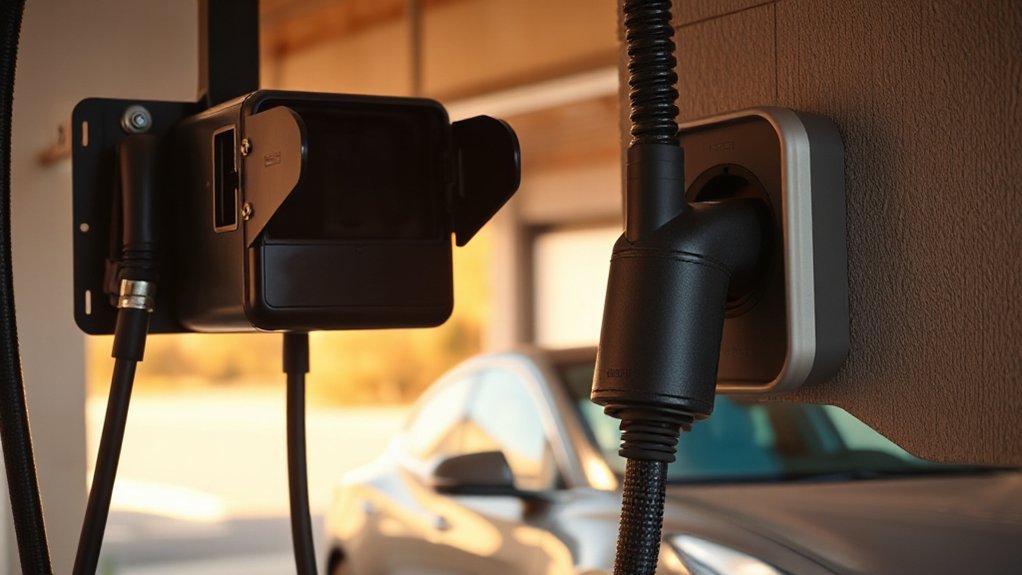
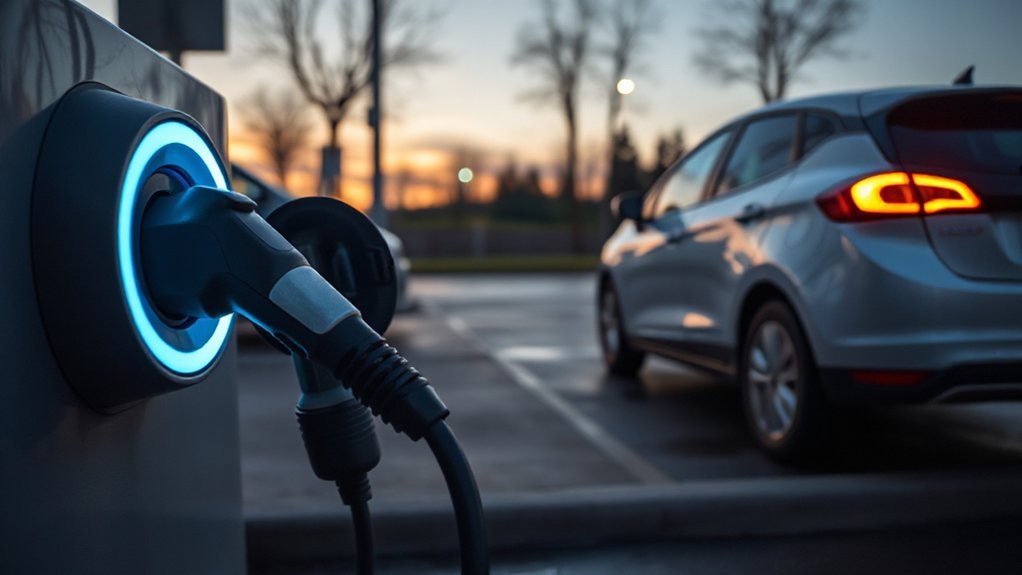
Sizing your install starts with the car’s onboard charger, which hard-limits AC charging current regardless of EVSE rating. If your Audi carries a 9.6 kW module (40A at 240V), it will never draw above 40A, even from a 60A-or-80A-capable EVSE. Many newer Audis support 11.5 kW (48A); to feed 48A continuously, code requires a 60A branch circuit and wiring sized accordingly, because continuous loads are limited to 80% of breaker rating. A 50A circuit can only deliver 40A continuous. Select an EVSE whose maximum setting matches the onboard limit, then set current via dip-switch/app to protect conductors. Expect Software Throttling and Thermal Management to temporarily reduce current in high temperatures or voltage sag. Always verify panel capacity, conductor ampacity, and breaker type before installation.
Real-World Charge Times
While the EVSE’s label can suggest more, your Audi’s onboard charger sets the real AC charging rate—and that rate drives actual hours-to-add. If your car supports 40A (~9.6 kW), a 48–60 A EVSE won’t speed things up; you’ll still add about 9–10 kWh per hour. With a 48A onboard (~11.5 kW) or the 19.2 kW option (80A onboard), higher-power EVSEs help—provided the branch circuit is sized per code (e.g., 48A EVSE on a 60A breaker).
To estimate time, divide energy needed by power: adding 50 kWh takes ~5.2 h at 9.6 kW, ~4.3 h at 11.5 kW, ~3.5 h at 14.4 kW. Expect slower rates from temperature effects, high state-of-charge balancing, and battery aging. Use dedicated circuits, correct wire gauge, and listed equipment for safety.
Hardwired Vs NEMA 14-50: Choosing the Right Setup for Your Space
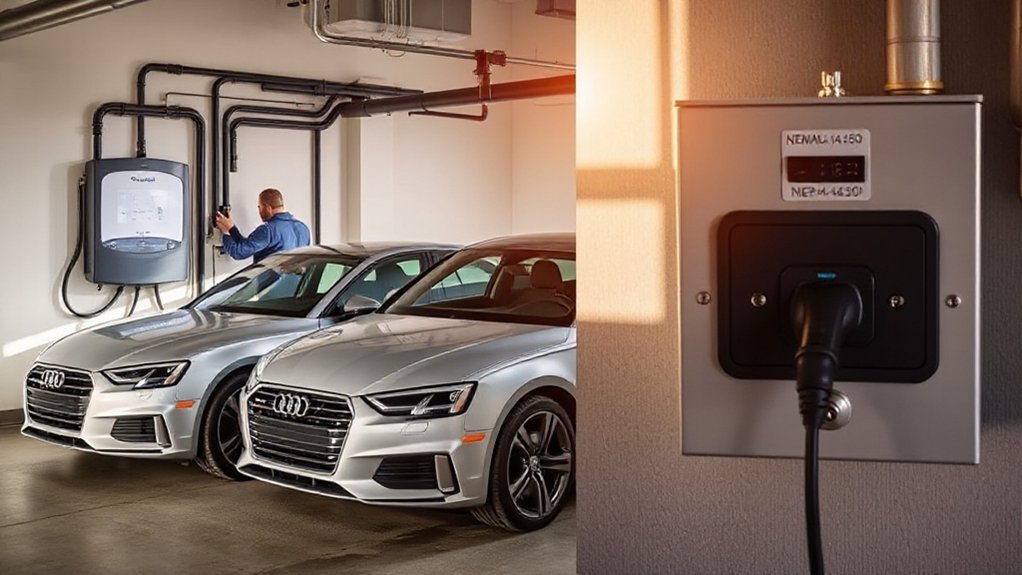
You’ll weigh installation cost drivers—panel capacity, circuit length, permit/inspection fees, and required GFCI protection—where a NEMA 14‑50 is often cheaper upfront but can cost more if load calculations or upgrades are needed. For charging speed, a NEMA 14‑50 supports 40A continuous on a 50A circuit, while a hardwired EVSE can deliver 48A on a 60A circuit (or up to 60A on a 75A circuit) if your Audi and unit support it. Apply NEC continuous-load sizing (125%), use a dedicated circuit with properly sized conductors, and choose the option that balances budget with desired charge rates and future capacity.
Installation Cost Factors
Two common installation paths—hardwired EVSE and a NEMA 14‑50 receptacle—differ in cost, capacity, and code requirements. You’ll budget for a load calculation, permits, and inspection, then choose wiring, overcurrent protection, and enclosure ratings that match your site conditions. Distance from panel, wall construction, and outdoor runs drive conduit size, wire gauge, and Labor Rates. If trenching or coring’s required, include patching and Landscape Restoration.
- Service capacity: main upgrade, subpanel, or tandem breaker alternatives, plus NEC 625 load calculations.
- Run specifics: conductor gauge, copper vs aluminum, conduit type, GFCI where required, wet‑location boxes.
- Termination choice: hardwired disconnect, in-use covers for NEMA 14‑50, labeling, torque verification.
- Site work: trench depth, locator marking, bonding, surge protection, pedestal or wall mount, final testing too.
Charging Speed Differences
How do charging speeds differ between a hardwired EVSE and a NEMA 14‑50 receptacle? You’ll see faster, steadier current from a properly sized, hardwired 240‑V circuit because it allows 48 A EVSEs on a 60 A breaker; a NEMA 14‑50 plug tops out at 40 A continuous. Hardwired also reduces heat at terminations, improving reliability under high ambient temperature. Either way, the car limits charge to protect the pack and manage battery aging. Choose hardwired if you want maximum speed; choose a NEMA 14‑50 if you need flexibility or a simpler permit path.
| Setup | Continuous current |
|---|---|
| Hardwired | 48 A |
| NEMA 14‑50 (50 A circuit) | 40 A |
| Representative power @240 V | 11.5 kW vs 9.6 kW |
| Typical overnight miles added | ~35–44 mi/h vs ~28–35 mi/h |
Best Home Chargers for Audi EVs: Features, Reliability, and Warranties
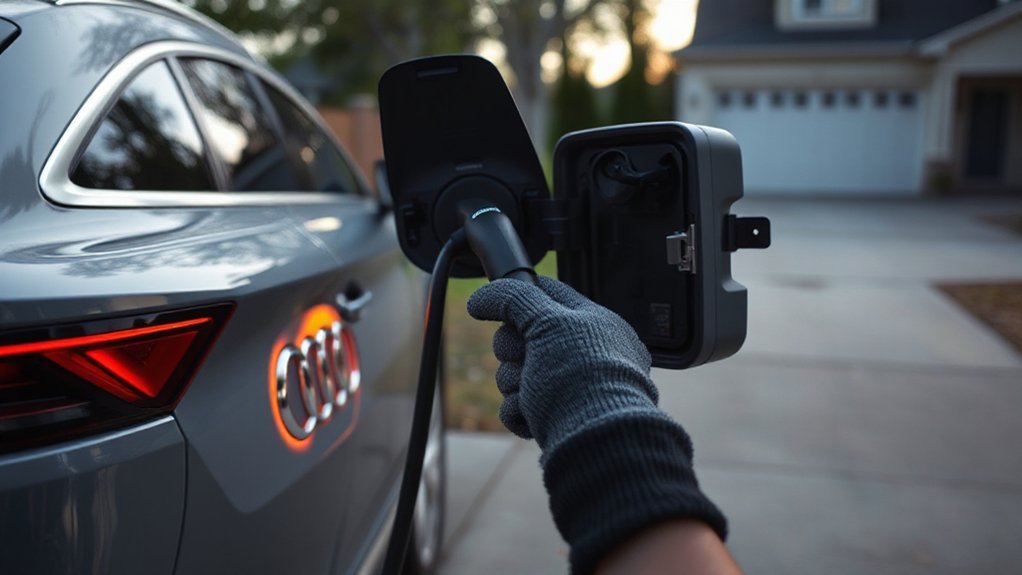
While Audi EVs charge on any SAE J1772 Level 2 unit, the best home chargers combine verified safety, adequate power, and solid support. Target a 40–48A charger on a dedicated 60A breaker, NEMA 3R or better enclosure, and UL/ETL certification. Prefer hardwiring for 48A operation, integrated ground-fault protection per UL 2231, and a durable 23–25 ft cable. Prioritize dependable App Integration, responsive support, and explicit Warranty Transferability.
- ChargePoint Home Flex (48A): UL listed, robust app, reliable uptime, 3-year warranty, flexible mounting.
- Enphase/ClipperCreek (32–48A): industrial build, no-frills reliability, optional app kits, 3-year warranty.
- Wallbox Pulsar Plus (40–48A): compact, load management, solid app, 3-year warranty, NEMA 4.
- Grizzl‑E (40A): rugged NEMA 4, simple electronics, field-replaceable cable, 3-year warranty and responsive U.S. support.
Rebates, Utility Programs, and Practical Ways to Lower Total Cost
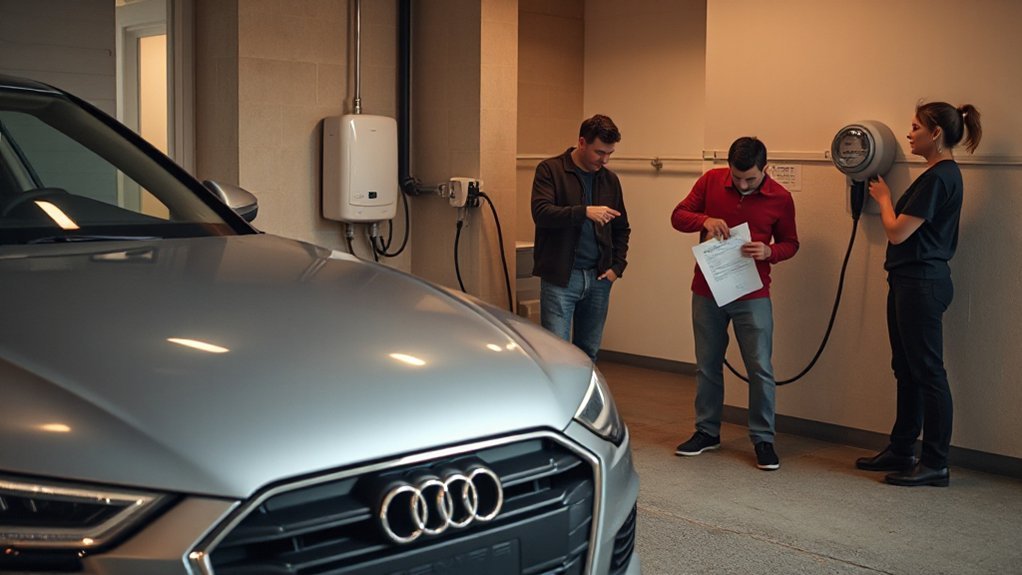
Because incentives can cut hardware, installation, and energy costs substantially, map every eligible program before you buy or pull a permit. Start with federal and state tax incentives, then check your utility’s EV pages for charger rebates, make‑ready construction, and panel‑upgrade credits. Many utilities stack time‑of‑use rates, demand‑response bill credits, and smart charger rebates if you enroll networked equipment. Ask your city about permit fee reductions and inspection fast‑tracks. Use community programs for income‑qualified rebates or no‑cost wiring upgrades.
To qualify safely, select UL‑listed equipment, follow NEC 625, use a dedicated circuit with GFCI protection, and complete a load calculation. Keep invoices, model numbers, and photos for verification. Charge off‑peak, set current limits to fit your service, and enable scheduled charging to save more.
Conclusion
You’re ready to charge smarter at home. Budget $1,000–$3,000 installed and, if capacity allows, spec a 40–48A hardwired EVSE on a 60A breaker to meet NEC’s 125% continuous-load rule. Choose a UL/ETL-listed unit (ChargePoint, Pulsar Plus, JuiceBox, Grizzl‑E), pull permits, and hire a licensed electrician. A Level 2 adds roughly 25–35 miles per hour—plenty for overnight. Check utility rebates and load-calcs; avoid adapters; label disconnects; verify GFCI, torque, and AFCI where required by local code.