Nearly 80% of EV charging happens at home. You’ll want a charger that’s reliable, affordable, and easy to install. In 2025–2026, several models under $500 hit that sweet spot, but choices vary by power, portability, and smart features—so you’ll need to match one to your circuit, commute, and living situation…
Key Takeaways
- Choose 40–48A Level‑2 hardwired or plug‑in chargers like Grizzl‑E Classic/Smart, Emporia 48A, or Tesla Wall Connector for fastest under‑$500 options.
- For smart scheduling and energy savings, prioritize chargers with Wi‑Fi app, rate tracking, or utility integration (Grizzl‑E Smart, Emporia, ChargePoint).
- If you need portability, get a 40A portable unit with NEMA adapters (Lectron, Grizzl‑E Mini, Duevolt) and a 40/50A circuit on site.
- Prefer all‑metal, IP/NEMA‑rated enclosures and premium connectors for durability, weatherproofing, and long cable life.
- Always install Level‑2 chargers on a dedicated 240V circuit by a certified electrician and follow manufacturer safety instructions.
Top Budget EV Chargers To Consider
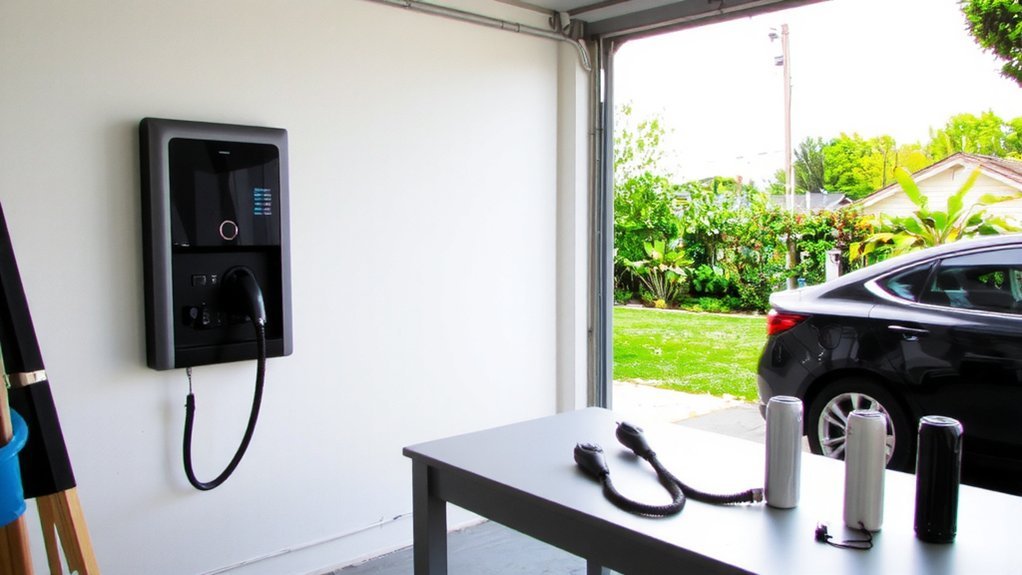
If you’re shopping for a reliable Level 2 home charger under $500, several strong options balance power, durability, and smart features.
You’ll find the Grizzl‑E Classic 40A (≈$380) delivers steady 40A/9.6 kW with a rugged, weatherproof build and 24‑ft cable. The Grizzl‑E Smart adds Wi‑Fi scheduling for about $440 while keeping the same reliable hardware.
Emporia’s 48A unit (~$429) gives up to 11.5 kW and utility rate tracking to lower charging costs safely. Tesla Wall Connector (~$420) reaches 48A/11.5 kW and integrates with Tesla’s app; it’s ideal if you own a Tesla or use an adapter.
ChargePoint Home Flex (MSRP varies) offers 16–50A adjustability and advanced app controls for secure, scheduled charging. Choose based on amperage, installation needs, and weather resistance. Verify wiring and breaker compatibility.
The Duevolt Portable EV Charger is a strong budget-friendly choice that delivers 40A fast charging and supports off-peak charging times.
Best Portable Level 1 and Level 2 Options
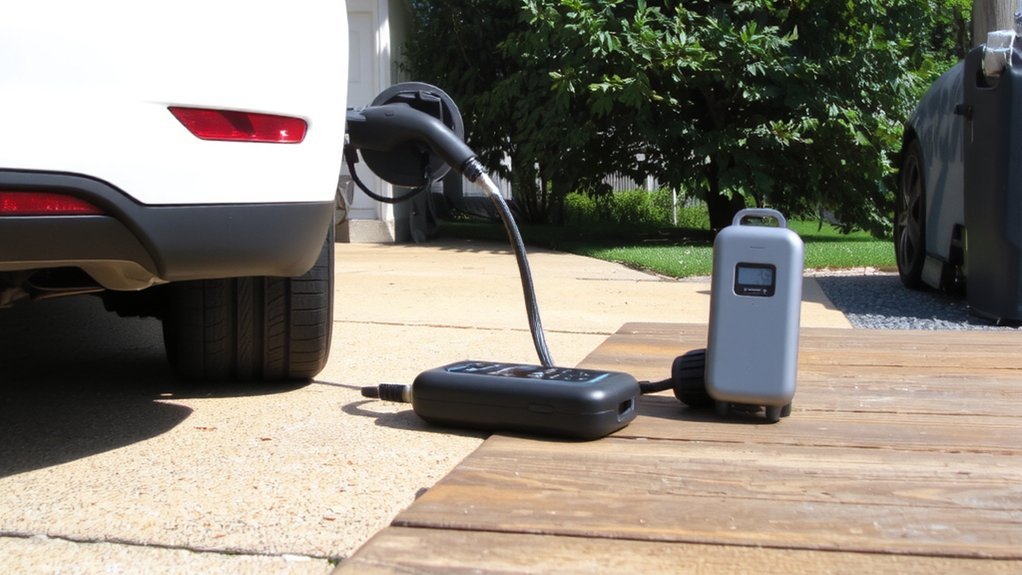
When you need charging on the go, portable Level 1 and Level 2 chargers under $500 give practical, flexible options that cover everything from overnight trickle charging to near–home fast fills. You can rely on Level 1 units for easy, no-install overnight top-ups at 3–5 miles per hour; Lectron’s Level 1 models (about $150–$300) are universally compatible with NEMA 5-15 outlets and make a safe, affordable travel backup.
For much faster fills, choose a portable Level 2 like Lectron’s 40A unit or the Grizzl‑E Mini Connect (up to 40A, ~9.6 kW) in the $229–$479 range. Look for dual‑plug options, adjustable amperage, simple cord management, clear interfaces, three‑year warranties, and app scheduling to protect battery and reduce cost, and follow manufacturer instructions for safe use. Remember that most homes require a dedicated 40- or 50-amp circuit for Level 2 charging.
Most Durable and Weatherproof Choices
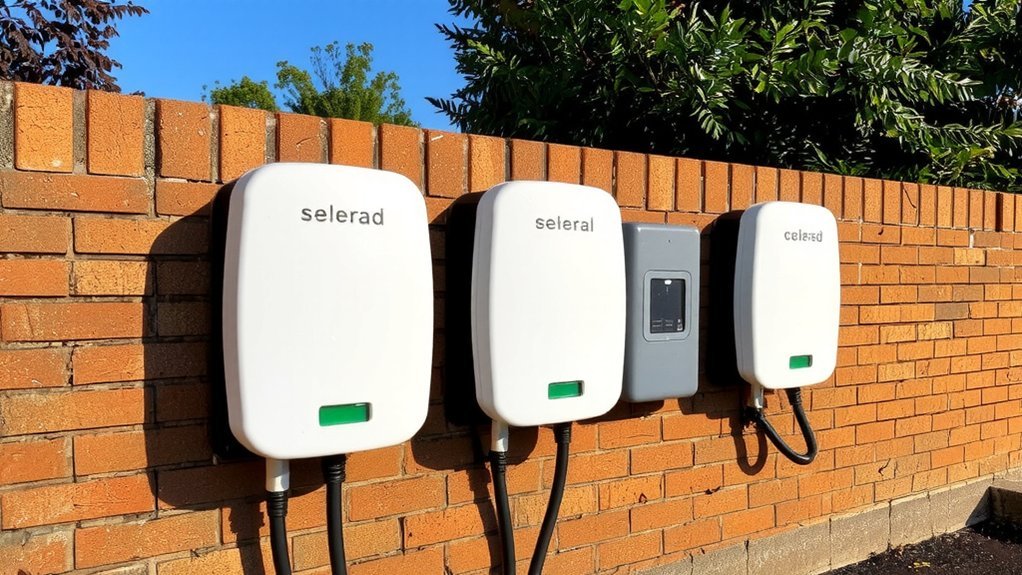
When choosing a durable, weatherproof charger you’ll want models with all-metal enclosures that resist impact and long-term sun exposure. Check IP and NEMA ratings (like IP67 or NEMA 3R/4/4X) to match local exposure to rain, dust, salt, and freezing temperatures.
Also prioritize heavy-duty, weather-sealed cables and connectors with robust strain relief so your cord stays flexible and watertight over time. For most home EV owners, choosing a Level 2 charger strikes the best balance between cost and charging speed.
All-Metal Enclosures
Because all-metal enclosures combine corrosion resistance, impact toughness, and superior shielding, they’re the go-to choice when you need maximum durability and weatherproofing for an EV charger. They also protect from moisture, preventing short circuits and corrosion. You’ll get stainless steel for top corrosion and impact resistance in harsh or industrial settings, or lighter aluminum that resists rust while easing installation.
Metal housings resist UV, rain, snow and extreme cold, keeping electronics protected from dust and debris. Choose IK10-rated designs for vandal and impact resistance; they reduce downtime and maintenance for commercial or fleet use. Remember to ground metal enclosures properly to mitigate electrical conductivity risks and meet safety codes.
Though heavier and pricier than plastic, all-metal units cut long-term repair costs and improve security against tampering. Look for powder-coated finishes for coastal environments too.
IP and NEMA Ratings
All-metal housings give mechanical protection; you still need IP and NEMA ratings to verify how a charger will handle dust, water and corrosive environments. Check IP ratings: the first digit covers solids, the second covers liquids—IP65 blocks dust and low-pressure jets, IP66 withstands powerful jets, and IP67 tolerates temporary immersion.
In North America you’ll often see NEMA: 3R guards against rain and sleet, 4 resists windblown dust and hose-directed water, 4X adds corrosion resistance, and 6 allows temporary submersion. IP and NEMA aren’t identical but higher ratings mean longer, safer outdoor service.
For outdoor installs choose at least IP55 or NEMA 4 (4X if corrosive conditions exist) and prefer UV-resistant finishes for extended durability. Have a qualified electrician confirm enclosure selection and proper installation. Also note that IP ratings are a global standard overseen by the IEC.
Cable and Connector Durability
Although cheaper connectors can save you up front, premium materials and robust construction make the real difference in long-term reliability. You should choose connectors with nickel‑plated copper alloys and multi‑material housings to cut contact resistance and resist heat, lowering fire risk.
Look for spring‑loaded contact pins with dual seals and corrosion ratings around 1,200 salt‑spray hours; those features keep moisture out and stable contact force. Pick cables with abrasion‑resistant jackets rated for 25,000+ bend cycles that stay flexible in cold, and protective terminal caps and ergonomic handles to reduce strain.
Check drop and temperature test ranges (about −30°C to 120°C) and prefer models with holsters or hooks so connectors don’t hang or collect debris—simple steps that enhance safety and lifespan and reduce maintenance costs.
Independent testing has shown a 17% drop in conductivity after 10,000 simulated thermal cycles, so investing in higher-quality connectors pays off over time.
Best Chargers for Fast Overnight Charging
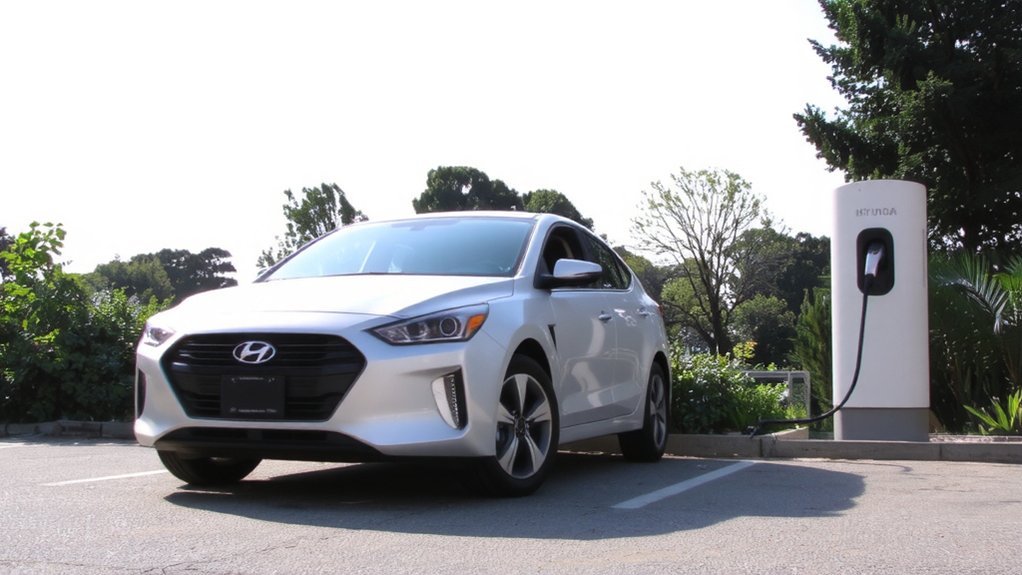
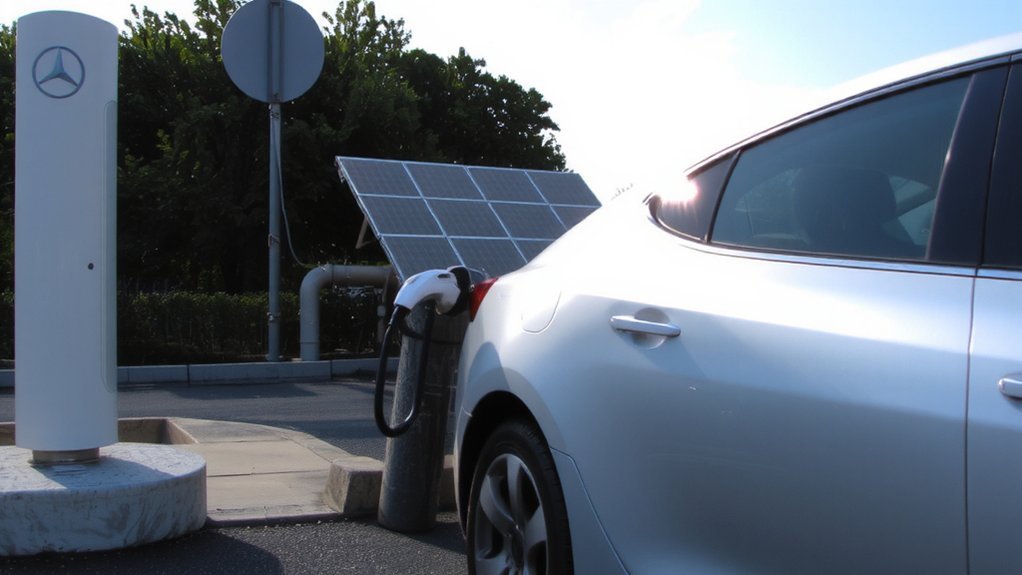
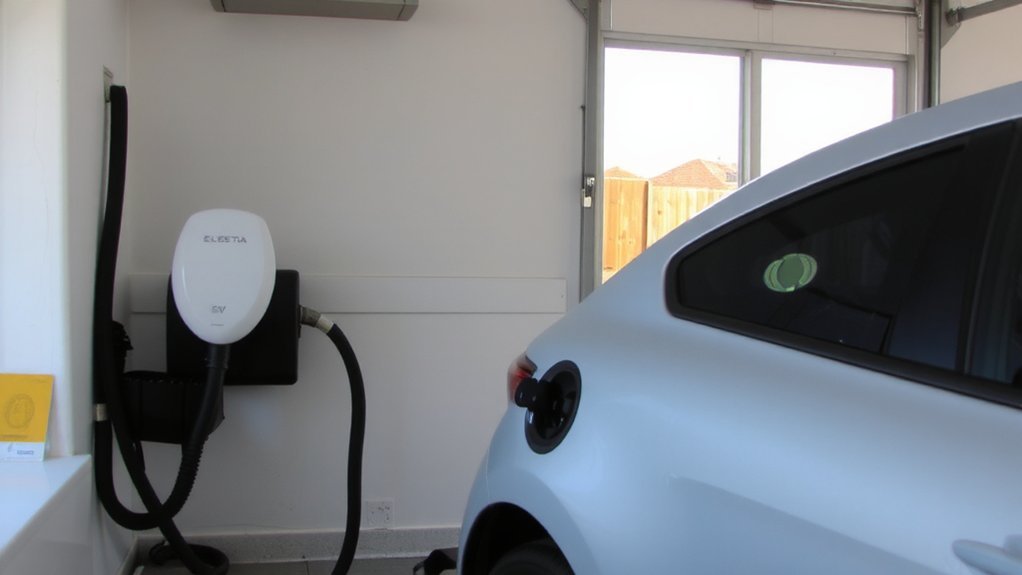

You want a high-amperage Level 2 charger (40–50A) to refill most EVs overnight. Adjustable amperage control lets you match your home circuit and avoid costly panel upgrades while still maximizing charge rate. Also look for chargers that offer load management to automatically adjust output based on your home’s electrical draw.
Pick models with 23–25 ft cables so you can park flexibly without extensions.
High-Amperage Level 2
Three high‑amperage Level 2 home chargers — ChargePoint Home Flex, Tesla Wall Connector, and the Grizzl‑E line — deliver 40–50 amps so you can add roughly 25–50 miles of range per hour and finish most overnight charges. You’ll get fast, dependable overnight fills when you pair these units with a dedicated 240V circuit and professional installation. Each offers long cables and smart features for safe scheduling and monitoring.
- ChargePoint Home Flex: up to 50A, 23 ft cable, Wi‑Fi app.
- Tesla Wall Connector: up to 48A, 24 ft cable, NACS compatible.
- Grizzl‑E Classic/Smart: 40A, 24–25 ft cable, plug‑in or hardwired.
- Emporia Pro/Classic: up to 48A, energy monitoring.
- All: require dedicated circuit and certified installer for safety.
Always consult a licensed electrician to verify panel capacity before installation. These chargers connect to your vehicle through the home Electric Vehicle Service Equipment, commonly called the EVSE, which passes electricity to the vehicle’s onboard charger.
Adjustable Amperage Control
High‑amperage Level 2 units show what a faster overnight charge looks like, but adjustable amperage lets you tailor that speed to your home’s wiring and daily routine. For occasional or supplemental charging, many owners find Level 1 charging adequate. You can set charging current to match circuit capacity and desired fill rate: higher settings (32A–48A) add roughly 25–45 miles per hour, while lower settings (12A–24A) protect older wiring or shared circuits.
Choose app‑based controls like Grizzl‑E Mini Connect for remote scheduling and live adjustment, or budget manual units like Emporia Classic and Lectron for simple, reliable control. Confirm whether full output needs hardwiring, and insist on UL/ETL overcurrent and thermal protection.
Proper configuration keeps overnight fast charging both efficient and guarantee safety. Also consider app logging and electrician confirmation to avoid circuit overloads and maintain warranty coverage.
Long Cable & Reach
Why choose a long cable? You’ll avoid awkward parking and reduce extension cord risks by reaching common outlet locations. Long cords (23–25 ft) balance reach and manageable handling, letting you position safely in garages or shared spots.
- 25 ft gives flexibility in tight garages (Evgoer, Emporia, Grizzl-E Smart).
- 24 ft handles most layouts and supports high amperage (Grizzl‑E Classic, Tesla Wall Connector).
- 23 ft suits typical setups with easier storage (ChargePoint Home Flex).
- Weather‑rated units (IP65, rugged housings) protect against moisture and hazards.
- Look for cord wrap or add management to prevent tripping and wear.
Choose 40–50A chargers for fast overnight replenishment, and install per code to keep charging safe. Consult a licensed electrician if you’re unsure about wiring. Many quality options are available in the $200–$1,000 price range.
Best Plug-and-Play Models for Renters
If you’re renting and don’t want to mess with hardwiring or landlord approvals, plug-and-play Level 2 chargers give you fast, portable charging without permanent installation. You can choose models like the Evgoer J1772 (NEMA 14-50) for up to 50A and about 25 miles/hour, Lectron’s dual-plug unit for 12–40A flexibility, or Emporia’s 48A plug-in with basic load management to prevent overloads.
ChargePoint Home Flex can appear used near $500 if you want app control and scheduling. These options emphasize safety features—ground-fault and overcurrent protection, weather resistance, and certifications—rather than bells and whistles. Pick the plug type your parking offers, confirm cable length reaches your charge port, and follow manufacturer instructions for safe, reliable, renter-friendly charging. Always verify outlet rating and breaker capacity with a tester.
Best Value-for-Money Chargers
Value hunters will find several strong choices under $500 that balance charging speed, reliability, and useful features: You’ll want a charger that’s safe, dependable, and straightforward. Consider these five value options:
- Emporia Classic Charger — Wi‑Fi, load management, up to 11.5 kW; tracks usage, but the app feels cluttered.
- Grizzl‑E Classic 40a — rugged, 9.6 kW, 24‑ft cable; no smart features, yet very reliable.
- Grizzl‑E Smart 40a — adds Wi‑Fi and scheduling for remote control.
- Evgoer J1772 Home Charger — up to 50A, NEMA 14‑50, IP65 weather rated; simple, durable.
- Duevolt Portable EV Charger — very affordable, 12–40A adjustable; portable but lacks smart controls.
Match the charger to your safety needs and daily routines, and you’ll get reliable charging without overspending and maintain regular inspections for safe operation.
What to Know About Installation and Circuit Requirements
Picking the right charger isn’t the only step—you’ll also need to confirm your home’s electrical capacity and plan the dedicated 240V circuit, permits, and wiring work required for safe, code-compliant installation. For new single-family homes local codes now often require that electrical conduit be installed to support future Level 2 charging, so plan for electrical conduit during construction.
Beyond choosing a charger, verify service capacity and plan a permitted 240V circuit installation.
Check your service size: most homes since the late 1980s have 150–200 amps, early 1980s 100–150 amps, while older 100‑amp services often need upgrades. A licensed electrician will assess available amperage, spare breaker spaces and distance from panel, then perform load calculations.
Level 2 chargers need a dedicated 240V circuit—typically 40–50 amps—with properly sized breaker, conduit and wiring. Expect permit applications, diagrams and proof of credentials; inspections usually follow and permitting can add one to two weeks.
Note upcoming 2026 NEC changes will restrict DIY installations in many areas. Plan for utility coordination.
Connectivity and Smart Features to Expect
When you shop for a budget EV charger under $500, expect basic connectivity—Wi‑Fi, Bluetooth and sometimes Ethernet—that lets you control the unit from a smartphone app and see real‑time energy use. Keep in mind that Charging speed is still a key factor, even on budget units, because higher-power chargers reduce overall charging time. You’ll schedule charging during off‑peak hours, monitor kWh per session, and use app controls to start or pause charging for safety and cost savings.
Look for clear app alerts, secure authentication, and compatibility with home automation or voice assistants for hands‑free commands.
- Wi‑Fi for remote scheduling and live status
- Bluetooth fallback when Wi‑Fi is unavailable
- Ethernet for stable wired connections
- Energy monitoring with per‑session analytics
- Voice assistant and smart‑home integration
These features help you prevent overloads, verify charging sessions, and reduce electrical risks while saving on utility bills.
Warranty, Reliability, and Long-Term Value
After evaluating connectivity and smart features, you should weigh warranty, reliability and long‑term value—because a sub‑$500 charger can still cost more over time if it lacks solid coverage, durable hardware, or responsive support.
Check warranty lengths: most budget units offer 1–3 years, some reach 5. Grizzl‑E models typically give about 3 years and they’re praised for rugged outdoor performance; Emporia has solid coverage but limited long‑term fulfillment data. Expect warranties to cover material and workmanship but not improper installation or environmental damage.
Choose chargers with proven safety protections—ground‑fault and overcurrent detection—to lower repair risk. Prefer brands with responsive support; smaller makers may delay claims. Finally, factor replacement‑part availability and connector durability into total ownership cost. Also consider energy‑saving scheduling to cut operating expenses annually. The portable EV charger market was valued at $63.2 million in 2025.
Conclusion
You’ve got a clear roadmap: affordable chargers like the Grizzl‑E, Emporia, and Tesla Wall Connector let you plug into savings without sacrificing speed or weatherproof reliability. They’ll sit in your garage like dependable sentinels, ready for overnight sips of power. Whether you pick a portable Level 1 and 2 for flexibility or a smart hardwired unit for scheduled charging, you’ll be steering toward lower costs and simpler charging — bright horizon for your EV ownership.