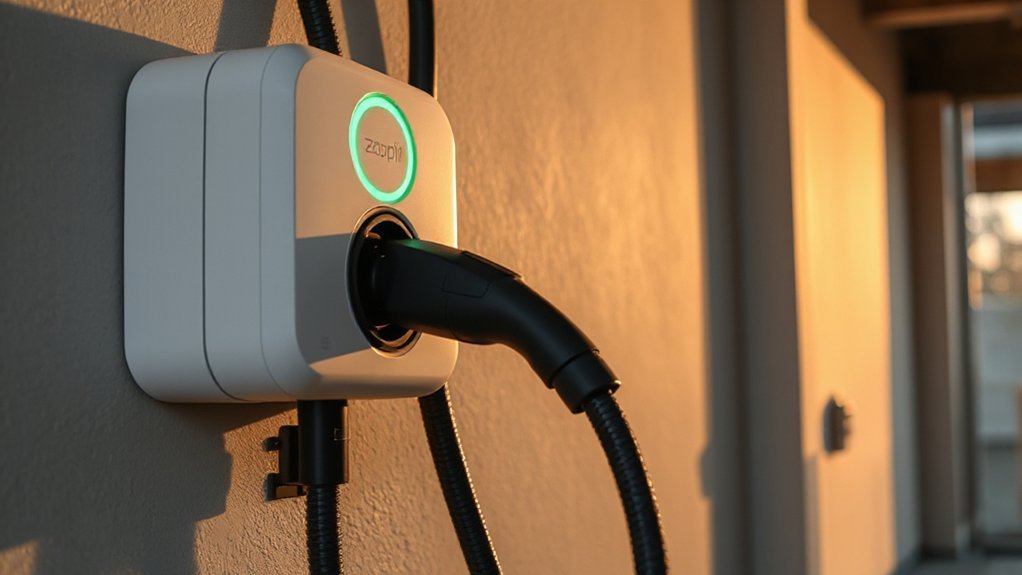
Measure twice, wire once—your Audi e‑tron deserves a UL‑listed Level‑2 J1772 sized to its onboard charger, typically 40–48A on a dedicated 50–60A circuit per NEC 625. You’ll decide between hardwire or NEMA, verify load calcs and permits, require NEMA 3R/IP65 and a pliable 18–25 ft cable, and favor smart scheduling and energy metering. Here’s how to pick models that charge fast, meet code, and avoid do‑overs—starting with details installers check first.
Key Takeaways
- Match EVSE current to Audi e-tron onboard AC limit; 40A value, 48A performance if panel supports; set pilot to breaker per NEC 625 (125%).
- Choose UL-listed, NEMA 3R/4, 23–25 ft pliable cable, hardwired preferred; use copper conductors sized for run length and under 3% voltage drop.
- Prioritize smart scheduling, dynamic current, load sharing, revenue-grade metering, reliable firmware updates, and offline fail-safe charging.
- Use J1772 Level 2 at home; keep CCS1 cable for DC fast travel; plan for 2025 NACS with UL-listed adapter and confirmed firmware support.
- Pull permits; dedicated 240V circuit (48A EVSE→60A breaker, 40A→50A); GFCI where required; schedule off-peak charging and cap daily charge at 80–90%.
Know Your Audi E‑Tron Charging Specs and Onboard Limits
Knowing your Audi E‑Tron’s onboard charging limits lets you select the right EVSE and size the circuit correctly.
Verify the vehicle’s AC onboard charger rating in the owner’s documentation; the EVSE can’t exceed what the car will accept. Choose a UL-listed, outdoor-rated unit, install on a dedicated branch with GFCI protection, and follow manufacturer torque specs. Make sure the EVSE supports dynamic current setting so you can align with the car’s Charging Curve and thermal behavior. A conservative, steady charge profile reduces heat, helping slow Battery Degradation. Use appropriately sized conductors, proper strain relief, and drip loops to protect connectors. Mount the unit at code height, provide working space, and label the disconnect. Keep cable reach practical but avoid tripping hazards and sharp bends.
Home Charging Levels, Amperage, and Circuit Sizing
You’ll choose between Level 1 (120V) trickle charging and Level 2 (240V) faster charging based on daily miles and panel capacity. Match the EVSE’s continuous amp draw to a breaker sized at 125% per NEC 625 (e.g., 32A EVSE on a 40A breaker, 48A on a 60A), and verify available spaces. Select wire gauge for ampacity and run length—copper THHN/THWN-2 in conduit, typically 8 AWG for 40A and 6 AWG for 60A—while keeping voltage drop under 3%.
Level 1 Vs 2
Because EV charging is a continuous load, size the circuit before you choose Level 1 or Level 2 for your Audi e-tron. Level 1 uses a 120V receptacle and delivers modest range per hour, suitable for light daily miles and overnight dwell times. Level 2 uses 240V, supports higher charging currents, and shortens sessions, aligning with heavier use or future needs. Code-wise, match conductor ampacity, receptacle rating, and EVSE nameplate, and verify panel capacity. Use a dedicated branch circuit, GFCI where required, proper bonding, and listed equipment.
Consider historical evolution and market adoption: most e-tron owners favor Level 2 for practicality. Plan wiring runs, enclosure locations, and cable management to avoid trip hazards, moisture, and heat sources. Pull permits and schedule inspections before energizing the EVSE.
Amp Draw and Breakers
Two rules anchor circuit sizing for an Audi e-tron EVSE: treat charging as a continuous load and size the breaker to at least 125% of the EVSE’s continuous output. If your EVSE delivers 32A, use a 40A breaker; 40A output needs 50A; 48A needs 60A. Put the EVSE on a dedicated circuit. Match the EVSE’s nameplate maximum current to its dip‑switch/app setting so the breaker isn’t undersized. Verify your panel’s spare capacity and complete a dwelling load calculation before installing. In garages, provide required GFCI protection and install a breaker with thermal protection that tolerates normal ambient temperatures. Avoid nuisance tripping by selecting the correct breaker type and location, accounting for voltage drop and continuous duty heat. Label the circuit clearly at the panel.
Wire Gauge Requirements
Breaker sizing sets the starting point for conductor size, and the EVSE’s continuous load drives the ampacity you need. Size conductors at 125% of the EVSE nameplate current per NEC for continuous duty: 32A EVSE → 40A breaker, typically 8 AWG Cu; 48A EVSE → 60A breaker, typically 6 AWG Cu. For 120V Level 1 on a 20A circuit, use 12 AWG Cu. Use 75°C-rated terminations and THHN/THWN‑2 in conduit, adjusting for ambient temperature, fill, and voltage drop; upsize when runs exceed ~100 feet. Prefer copper for tighter terminations; if using aluminum, follow antioxidant, torque, and lug listings. Stranding benefits include flexibility, easier pulls, and reduced fatigue. Match metals and fittings to mitigate Galvanic corrosion. Bond, label, and test. Verify GFCI and disconnect requirements.
Smart Features That Matter: Scheduling, Load Sharing, and Energy Insights
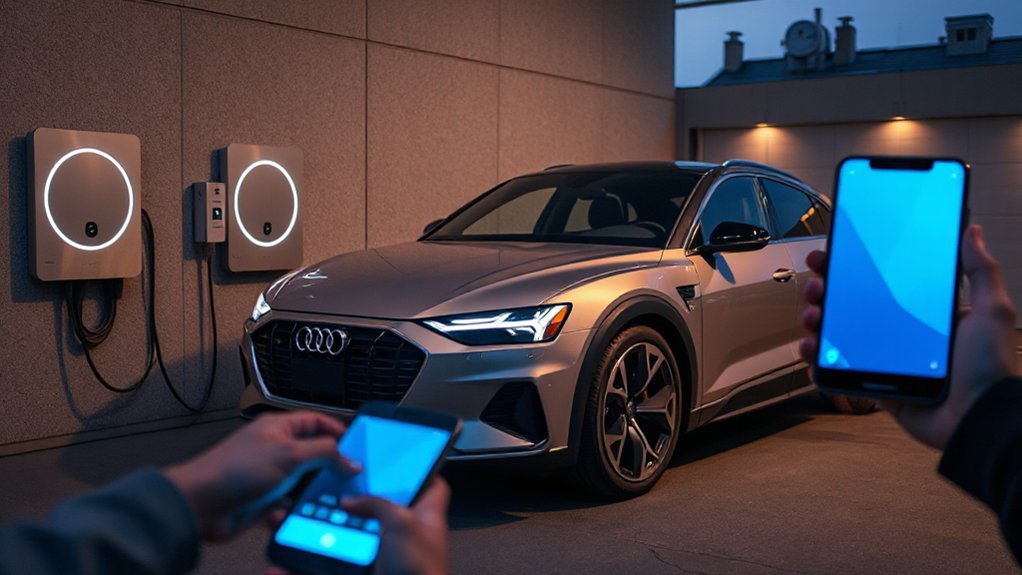
While your Audi E‑Tron will charge from any UL‑listed Level 2 EVSE, smart features—scheduling, load sharing, and energy insights—make the installation safer, code‑compliant, and cheaper to operate. Use scheduling to align charging with your utility’s off‑peak rates and local demand‑response programs, reducing heat, breaker stress, and operating cost. Select chargers that let you set a hard current limit matching the branch circuit and derating rules. The system should dynamically cap combined amperage, honor NEC 625, and fail safe on network loss. For energy insights, prefer models with CTs, revenue‑grade metering, and exportable logs. AI optimization can auto‑tune charge windows, but verify opt‑in controls, data minimization, and clear privacy implications. Require on‑device scheduling, Ethernet or Wi‑Fi with WPA3, secure firmware signing, and contractor‑accessible commissioning tools.
Outdoor Readiness: Weatherproofing, Cable Management, and Length

For outdoor installs, choose a listed EVSE with NEMA 3R/4 or IP65 ratings, gasketed seals, stainless hardware, and UV-resistant components to keep moisture and dust out per NEC 625 and local code. Plan cable management with a wall holster and strain relief so the cord stays off the ground, maintains bend radius, and doesn’t create a trip hazard. Select an 18–25 ft cable (UL 2594 max 25 ft) to reach the e-tron’s charge port without extensions.
Weatherproof Ratings and Seals
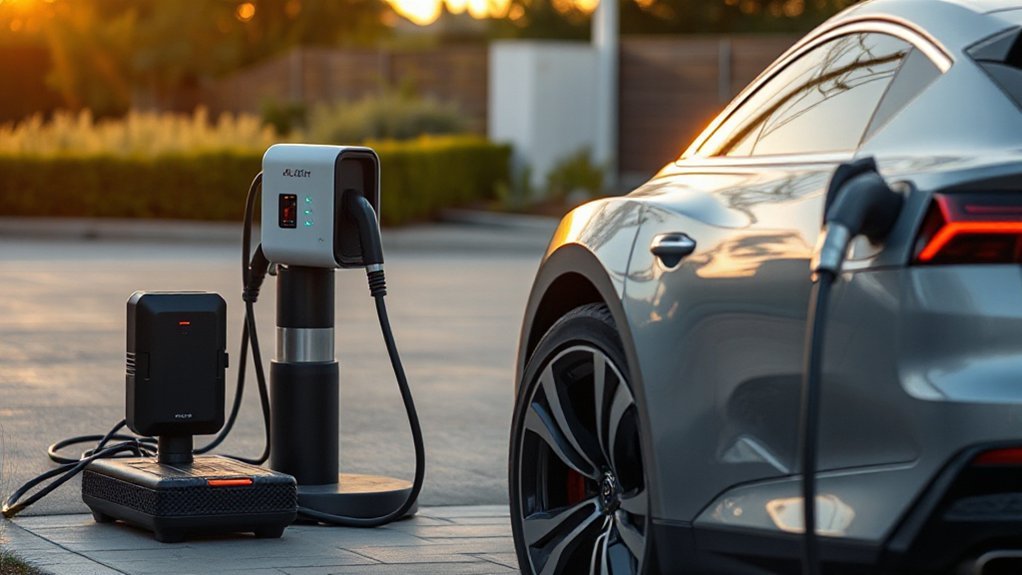
A weather-ready EVSE for your Audi e-tron starts with the right enclosure and seals: choose a unit listed to UL 2594 with an outdoor rating of NEMA 3R minimum (4/4X preferred in coastal or corrosive areas) or IP65/IP66, gasketed seams, and raintight hubs. Verify molded gaskets compress evenly, screws torque to spec, and all penetrations use listed liquidtight fittings. Apply non-hardening Seal Adhesives only where the manufacturer permits; don’t clog weep paths. Use stainless fasteners and UV-stable plastics to resist UV Degradation and salt spray. Mount plumb on a rigid surface, under an eave when possible, maintaining top-to-bottom water-shedding geometry. Bond the enclosure, follow NEC 110.11 for environmental deterioration, and torque lugs per labeling. Check seals annually and replace cracked gaskets before rainy seasons.
Cable Management and Length
Because outdoor runs face UV, water, and ice, select an EVSE with a listed outdoor cable (UL Type EV/EVJE) that remains flexible in cold, uses a UV/oil-resistant jacket, and pairs with a sealing J1772 holster. Choose 18–25 feet for driveway reach without excess slack; longer than 25 feet invites voltage drop and management issues. Mount a hose-style reel or rigid hook above bumper height, add strain relief, and keep the connector holstered to maintain garage aesthetics and trip prevention. Route the cable off walking paths, respect NEC 625 working clearances, and keep the cord 18–24 inches above grade on saddles or stanchions. If hardwiring, orient the EVSE to minimize bends. Where you must cross, install a low-profile cord cover or rated overhead support bracket.
Real‑World Charging Speeds and Time‑to‑Charge Examples
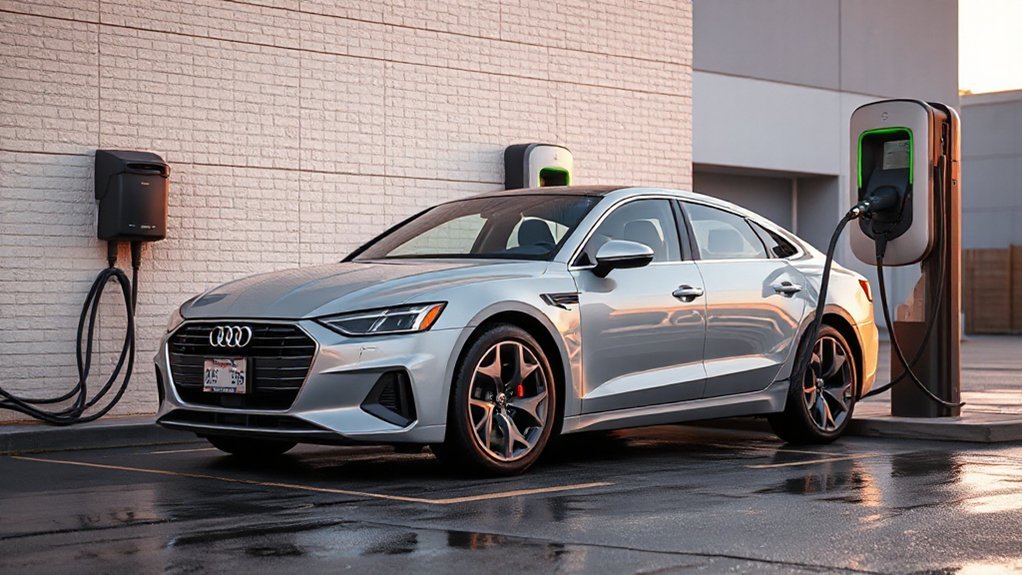
While brochure specs list peak rates, you should size and install your charger around the e‑tron’s real behavior: on AC, most models accept up to ~11 kW, and on DC, up to ~150–170 kW depending on year (earlier e‑tron 55 vs. later Q8 e‑tron). A 48A EVSE on a 60A breaker (NEC 125% rule) maximizes AC speed safely. Cold ambient temperature and high states of charge taper power, protecting the pack and limiting battery degradation.
- 0–80% on 11 kW AC: roughly 70–75 kWh in 7 hours; use a dedicated 6‑gauge run with GFCI.
- 10–80% on 150 kW DC: about 30–35 minutes when warm; slower in winter.
- 20–100% on 9.6 kW AC (40A circuit): ~9–10 hours; set 80–90% daily to preserve longevity.
Connector Compatibility: J1772 at Home, CCS for DC, and the 2025 NACS Transition
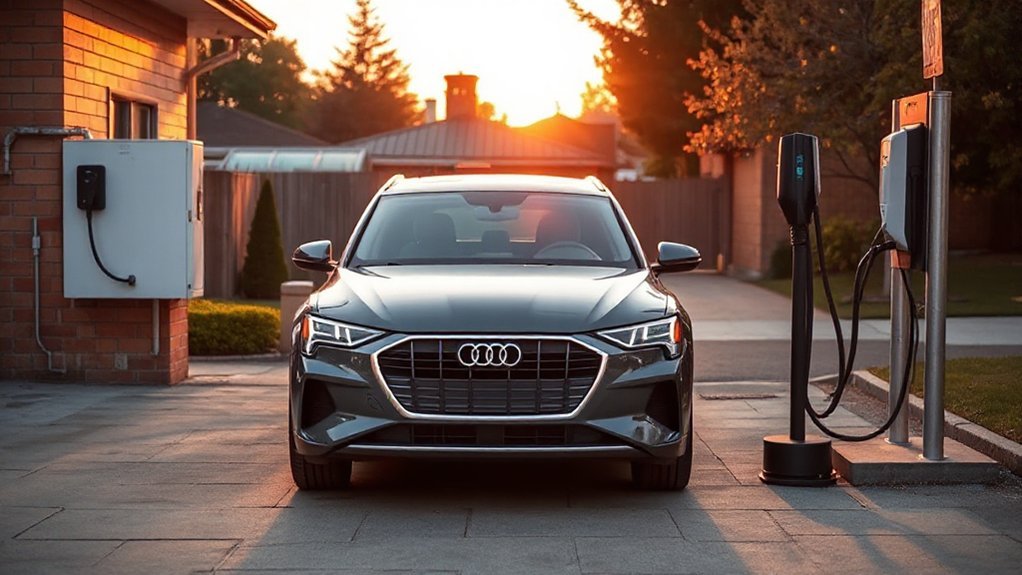
If you’re installing charging for an Audi e‑tron, match connector standards to use and code: J1772 for Level 2 at home, CCS1 for DC fast, and plan for the 2025 shift to NACS. For a residential Level 2, use a listed J1772 EVSE on a dedicated 240V circuit, sized per NEC 625 (continuous load at 125%), with proper grounding and GFCI where required. Mount the holster, label the breaker, and verify voltage under load.
| Use case | Connector/Action |
|---|---|
| Home L2 | J1772 EVSE, 40A on 50A breaker |
| DC fast | CCS1; no home DC installs |
| 2025 shift | Add NACS adapter; check firmware |
Expect an adapter ecosystem as manufacturer strategies pivot to NACS; choose UL-listed adapters, confirm firmware support, and keep CCS1 cables for travel until access broadens.
Top Charger Picks Compared: Performance, Price, Warranty, and App Experience
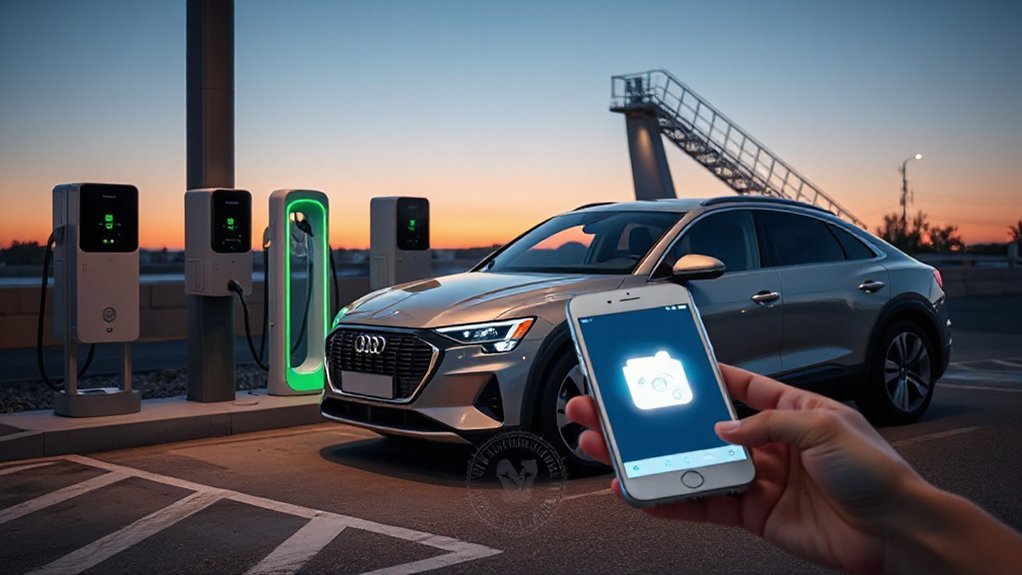
Three factors drive a smart, code-compliant pick for your Audi e‑tron’s Level 2 charger: performance under load, total cost (hardware plus installation), and long-term support. Prioritize a 48A unit on a 60A breaker when capacity permits; otherwise choose 40A on 50A for cooler runs. Demand UL listing, NEMA 3R or 4, and a pliable 23–25 ft cable.
1) Performance pick: 48A, strong thermal management, fast ramp, reliable Wi‑Fi, load-sharing, clean Design aesthetics.
2) Value pick: 40A, solid app with scheduled charging, bundled holster and pedestal Package deals, mid-tier price.
3) Support pick: 3–5 year warranty, U.S.-based service, OCPP/firmware updates, clear install docs, robust surge protection.
Confirm hardwire vs NEMA 14‑50, torque specs, GFCI requirements, and conductor size; safer installs deliver better lifecycle cost overall.
Installation, Incentives, and Rebates to Lower Total Cost
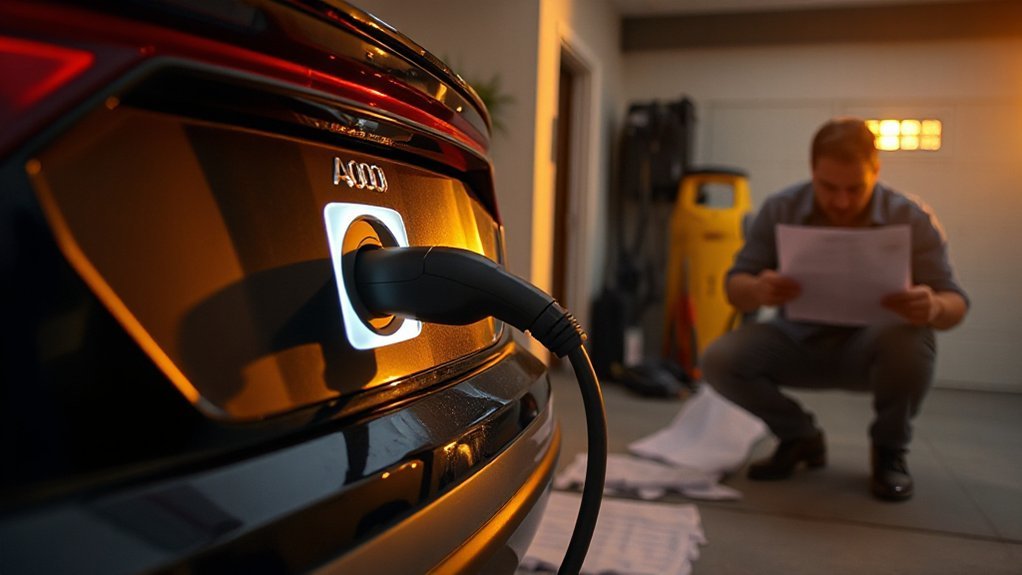
Because installation drives both safety and lifetime cost, start by hiring a licensed electrician to perform a load calculation, pull the permit, and size the circuit correctly (e.g., 60A for 48A chargers, 50A for 40A), with copper conductors, proper torque, and a listed disconnect if required. Have them verify panel capacity, GFCI requirements, and conductor temperature ratings, and document the permit process for inspections. Choose a hardwired, outdoor-rated, UL-listed unit and set the pilot to match breaker size.
Use incentives to offset costs: federal tax credits, state rebates, and utility make-readies. Keep invoices, spec sheets, and photos.
| Program | Typical Benefit |
|---|---|
| Federal 30C | 30% up to $1,000 |
| State EV grant | $200–$1,000 |
| Utility rebate | $200–$600 |
| TOU rate | Cheaper off-peak kWh |
Apply early to secure.
Conclusion
Choose a UL-listed Level‑2 J1772, size it to your e‑tron (40–48A), and install to code like a belt-and-suspenders pro. Hardwire on a dedicated circuit, 125% continuous-load sizing (48A → 60A breaker), permit pulled, GFCI where required, and NEMA 3R/IP65 for outdoors. Use 18–25 ft pliable cable, secure cable management, and smart features for 80–90% daily limits and off-peak scheduling. Verify load calculations, consider load sharing, commission the app, and claim rebates to cut total cost.