
If you’re picking a 40‑amp home EV charger in 2025, you’ll want UL/cUL listings, a 50 A circuit, proper conductor sizing, and weather‑rated enclosures. Prioritize smart scheduling, load management, and reliable apps. Check connector flexibility (NACS/J1772), cable length, and cord handling. Decide between NEMA 14‑50 plug‑in or hardwired for code compliance and future upgrades. Now compare the top units and see which fits your panel, driveway, and utility incentives…
Key Takeaways
- Top 40A picks: Tesla Universal Wall Connector, Grizzl‑E Classic 40, Wallbox Pulsar Plus, Emporia Level 2, ChargePoint Home Flex.
- Prefer UL/cUL listed units with integral 20–30 mA GFCI, ground monitoring, and NEMA 3R/4 or IP54 for wet locations.
- A 40A EVSE requires a dedicated 50A two‑pole breaker and 8 AWG copper conductors per NEC 625 continuous‑load sizing.
- Look for Wi‑Fi/app control, scheduling, RFID/lockout, OCPP support, and demand‑response readiness to cut costs and manage multi‑EV load sharing.
- Verify panel capacity via NEC load calculation, add surge protection, and leverage utility rebates and time‑of‑use rates for cheapest overnight charging.
Top 40A Home EV Chargers of 2025
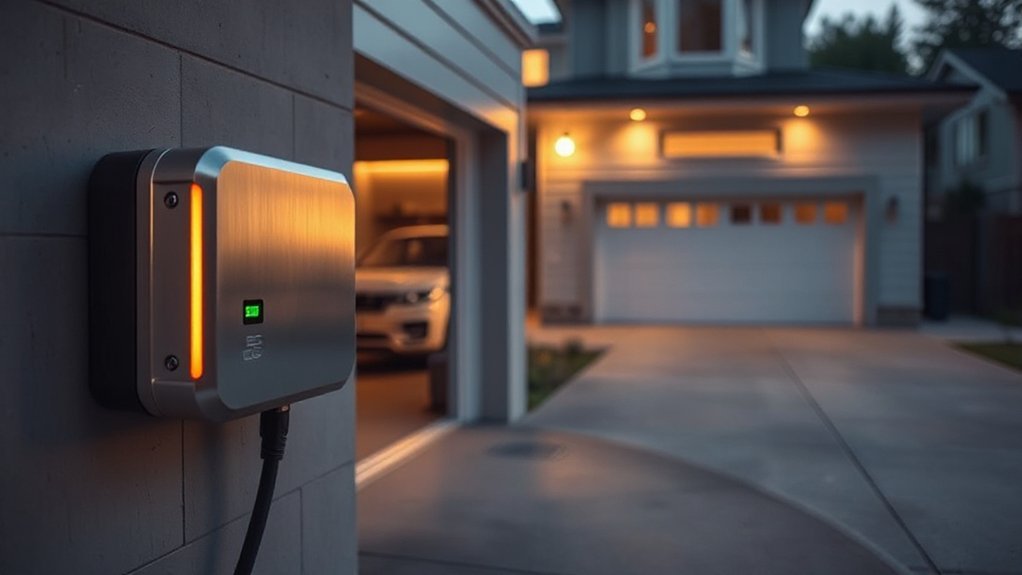
While 40A Level 2 EVSEs look similar on the surface, the best 2025 models pair robust safety engineering with code-ready installation. You’ll find standouts like Tesla’s Universal Wall Connector (settable to 40A), Grizzl‑E Classic 40, Wallbox Pulsar Plus, Emporia Level 2, and ChargePoint Home Flex configured at 40A. Each carries UL/cUL listings, integral 20–30 mA GFCI, ground monitoring, and temperature derating, with NEMA 3R/4 enclosures for outdoor duty. Most offer Wi‑Fi, OCPP or app control, and reliable RFID/lockout. Cable management, sealed contactors, and swappable J1772/NACS leads improve serviceability and design aesthetics. You benefit from Energy Star efficiency and demand‑response readiness. Price trends remain stable to slightly down, with rebates narrowing net cost, especially on load‑sharing, solar‑aware units. Warranty terms now extend five years standard.
How to Choose the Right 40A Level 2 Charger
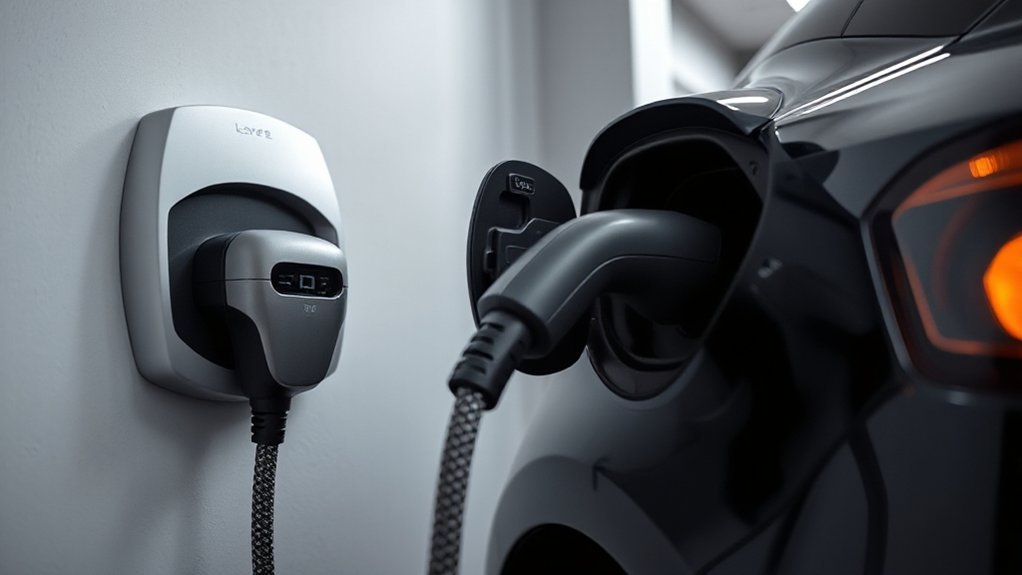
You’ll choose plug-in vs hardwired based on environment and code: plug-in units use a 50A receptacle (e.g., NEMA 14‑50) for flexibility, while hardwired units provide a sealed, permanent connection often required by the AHJ for outdoor locations. Verify connector compatibility: J1772 serves most non-Tesla EVs, while NACS (Tesla) is standard on Tesla and many 2025+ models—use the native connector or a UL-listed adapter approved by both EV and EVSE makers. Confirm the unit is listed for the location (wet/damp), includes integral GFCI, and uses cable length/gauge that meets voltage-drop and strain-relief requirements.
Plug-In Vs Hardwired
Because EV charging is a continuous load, choosing plug-in vs hardwired centers on code, circuit sizing, and installation environment. For a 40A EVSE, size the branch circuit at 50A (125% rule) with copper conductors and a GFCI breaker. Hardwiring eliminates receptacle heat and plug wear, supports outdoor wet locations with a listed enclosure, and simplifies load management via a dedicated disconnect. Plug-in units on a NEMA 14-50 offer portability but often must be set to 32–40A per listing and receptacle ratings; install an in-use cover, proper cord strain relief, and limited cycle wear. Hardwire when vandal resistance, snow/UV exposure, or long runs demand robustness. In rentals, secure landlord permissions; your insurer may require permits, photos, and inspections—key insurance considerations. Keep documentation for claim support.
Connector Compatibility
How do you make sure a 40A Level 2 charger actually mates safely with your EV? Confirm connector type against your vehicle inlet and local code. Most North American models use NACS; J1772 remains on many legacy cars. CCS2 dominates Europe. Match rated current, conductor gauge, and cable temp range. Evaluate the Adapter ecosystem only as a temporary bridge; minimize contact resistance.
- Identify Regional standards: NACS/J1772 in North America, Type 2/CCS2 in EU, GB/T in China; choose a unit certified for your market.
- Check listing and markings: UL/ETL/CE, IP54+ enclosure, -30°C to 50°C cable rating, 40A continuous.
- Validate latch geometry, pin plating, and strain relief; verify firm insertion without wobble.
- Plan future-proofing: swappable cables or OEM adapters, but avoid daisy-chaining.
Plug‑In NEMA 14‑50 Vs Hardwired: Which Is Best?
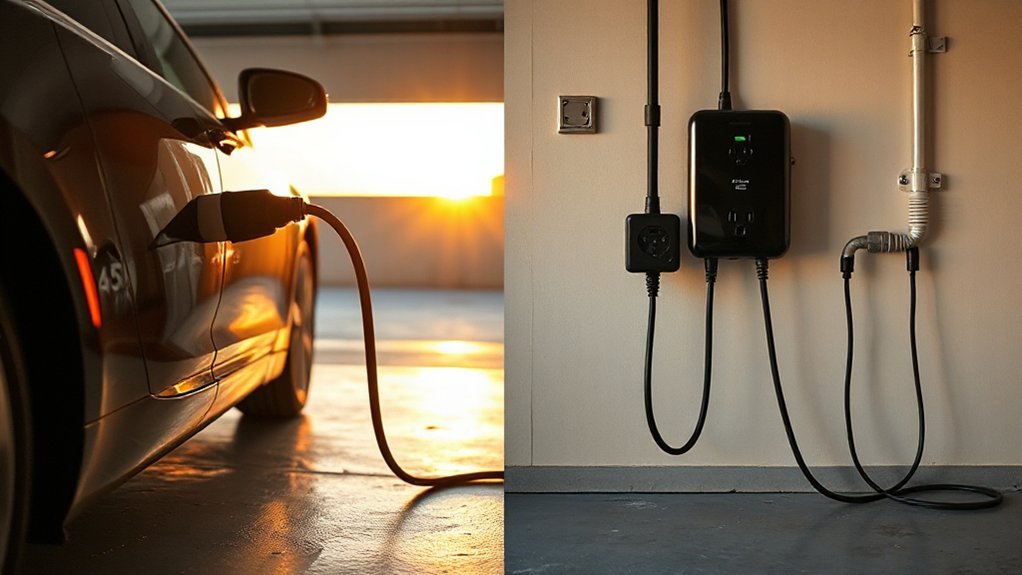
Why choose a plug‑in NEMA 14‑50 over a hardwired connection for a 40‑amp EV charger? You gain rental flexibility: unplug, remove the EVSE, and leave the receptacle. A 40 A EVSE requires a 50 A, 240 V branch circuit by the 125% continuous‑load rule. With a 14‑50, specify a properly rated receptacle, copper conductors, and GFCI protection in garages. Hardwiring eliminates the plug interface, reducing heat at terminations, and is preferred where local code demands a secured connection. Choose plug‑in if you may relocate, want easy replacement, or have a spare 50 A space. Choose hardwired for cleaner cable management, lower contact resistance, and permanently installed equipment. Pull permits, document load calculations, and keep inspection records; they matter for insurance implications and future resale.
Safety and Certifications You Should Expect
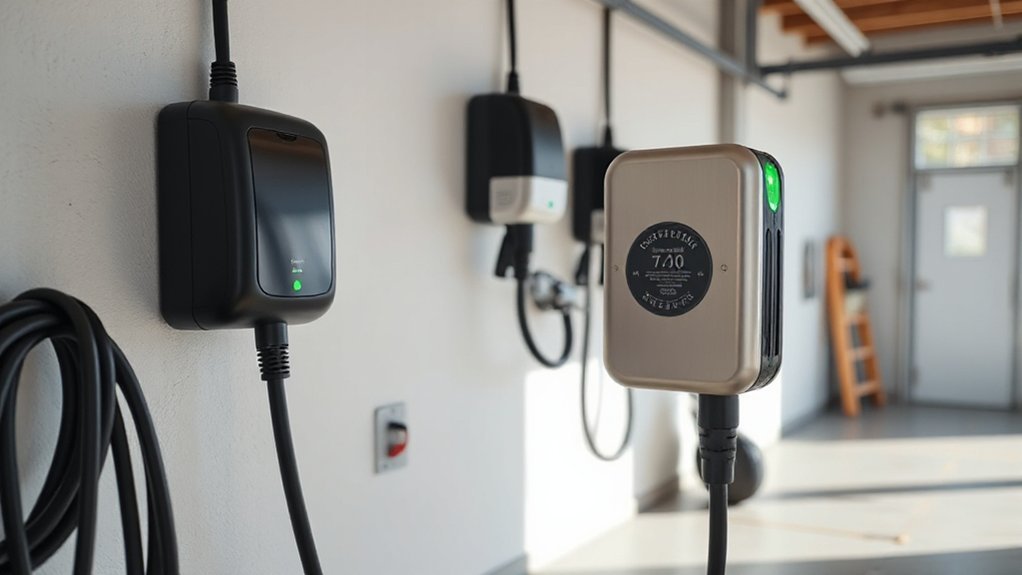
Whether you choose plug‑in or hardwired, your 40‑amp EVSE must carry third‑party safety listings and meet specific code references. Look for UL listings, not CE marks. Verify NEC 625 and 110.3(B) compliance. Require integral ground‑fault protection and thermal monitoring for Fire prevention.
- Listing: UL 2594 EVSE, UL 2231‑1/‑2 personnel protection, and a recognized enclosure; accept ETL only when tested to the same UL standards.
- Circuit: Treat 40 A as continuous; install a 50 A breaker, copper conductors sized per NEC 310.16, and 75 °C‑rated terminations.
- Environment: NEMA 3R or 4 enclosure, UV‑rated cord, strain relief, and derating documented across ambient temperature.
- Installation: Dedicated branch circuit, correct torque, proper bonding, surge protection (Type 2 SPD), and periodic inspection at least annually.
Smart App Features, Scheduling, and Energy Insights
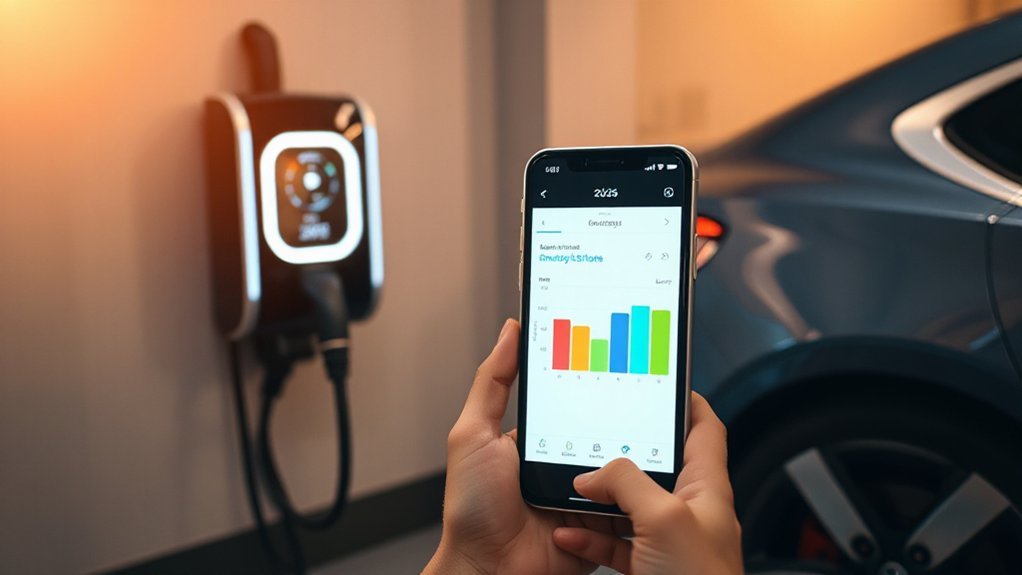
While the hardware moves the electrons, the app determines when and how safely you deliver them. You set amperage limits, define charge windows aligned with utility TOU rates, and lock the connector when not in use. Good apps verify firmware, alert on GFCI trips, and log session data locally and in the cloud. You’ll want granular scheduling (per weekday, holiday overrides), departure-time targets, and automatic rate-plan updates. Energy Insights should include kWh totals, cost estimation, and circuit temperature trends. Demand simple, exportable logs and clear Data Visualization: per-session graphs, rolling averages, and thresholds. Enforce User Privacy: opt-in data sharing, anonymous analytics, and local-only mode. Require MFA, OAuth, and encrypted APIs. Make sure permissions are minimal and revocable. Audit access logs regularly and update firmware promptly.
Load Sharing for Multi‑EV Households
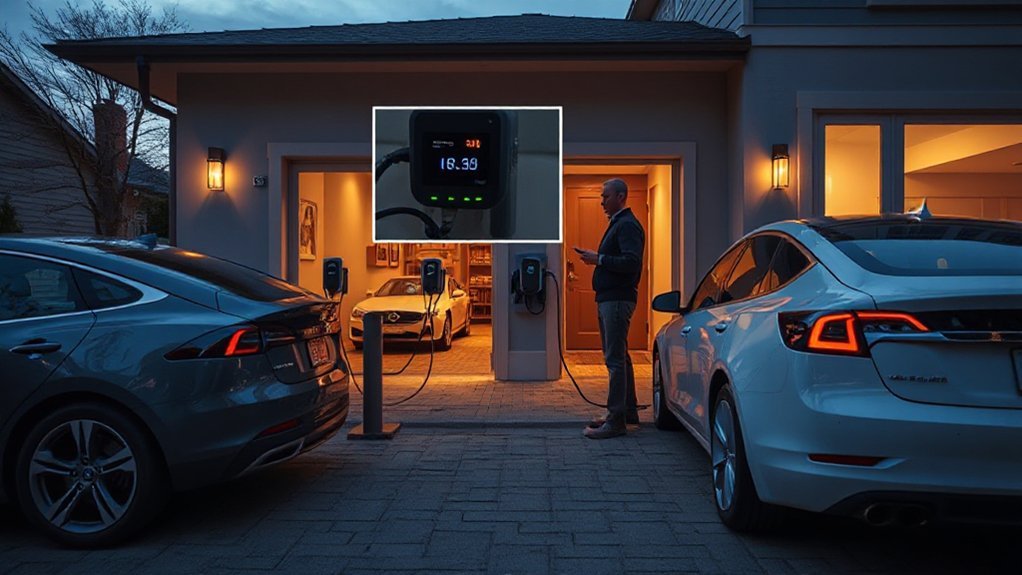
Because most homes have limited service capacity, load sharing lets multiple 40 A EVSEs dynamically divide available amperage so you avoid overloading a circuit or main service. You configure a master and peers, set a site limit aligned with your service rating, and let Allocation Algorithms arbitrate current per vehicle in real time.
- Verify panel capacity, breaker sizes, and conductor ratings; set the aggregate current cap to 80% of the weakest link.
- Choose EVSEs that communicate via hardwire or secure Wi‑Fi and support fail‑safe current rollback.
- Prioritize vehicles by departure time; enforce Household Etiquette in the app to resolve conflicts.
- Log sessions and alerts; confirm the system sheds load during HVAC or range demand to maintain code compliance.
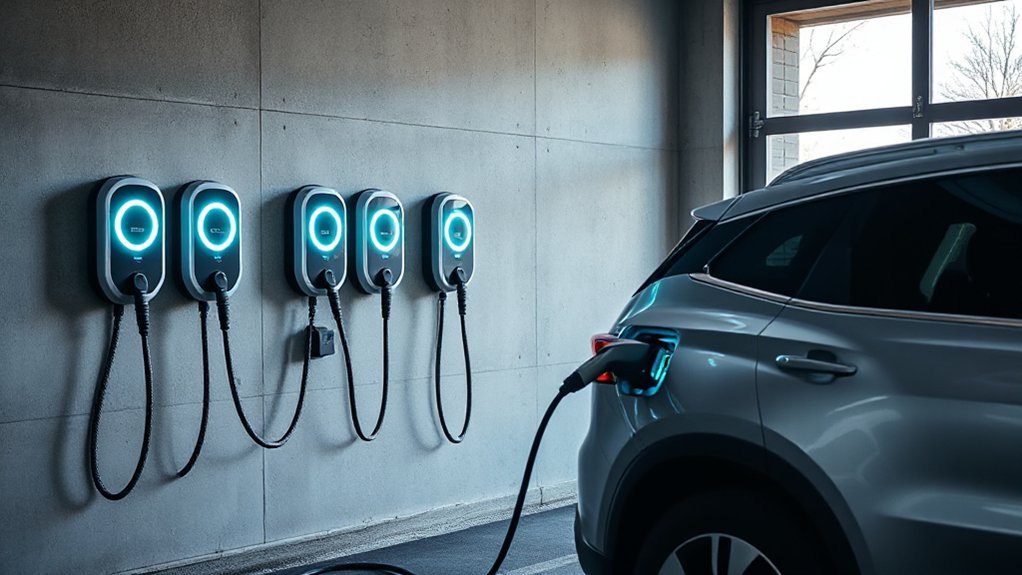
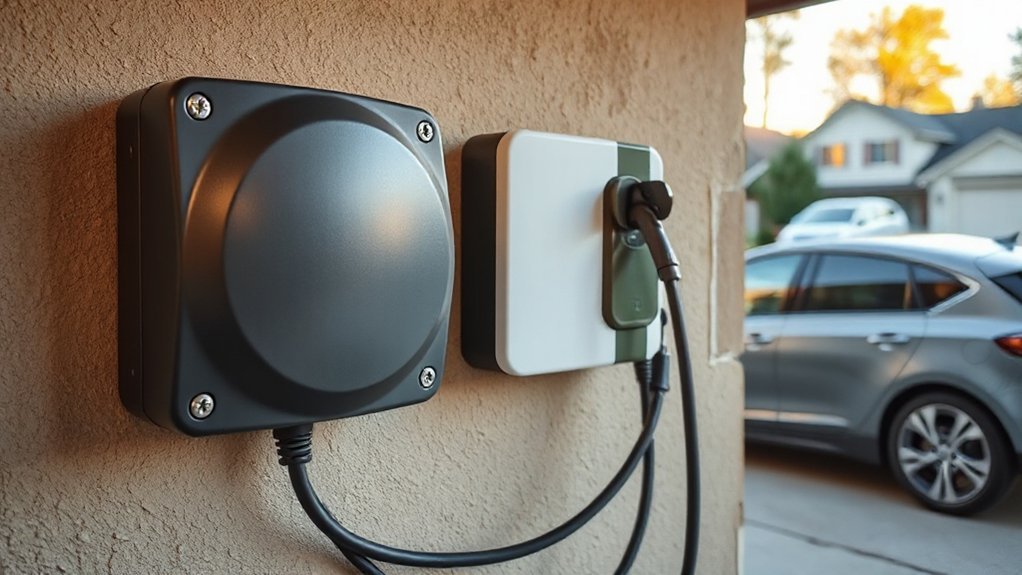


Document settings and test redundancy before commissioning.
Outdoor Ratings, Cable Length, and Cord Management
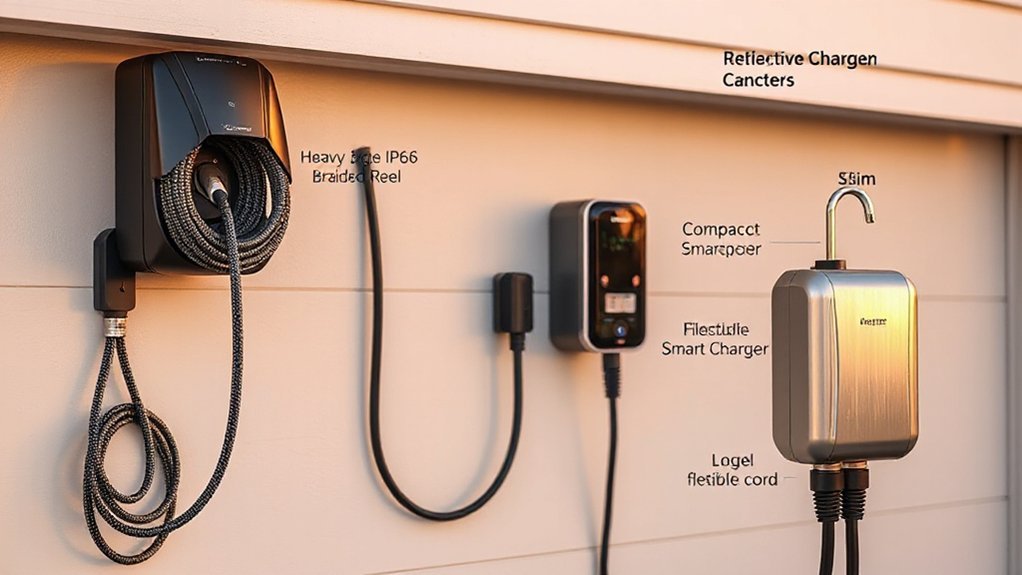
After you’ve set up load sharing, verify the hardware itself can live outdoors without violating code. Choose an enclosure with a UL listing, NEMA 3R or 4X, or IP65+, with gasketing, weep paths, and corrosion resistance. Confirm operating range matches your climate and that plastics specify UV resistance. A 40‑amp EVSE should include integral GFCI, welded‑contact relays, and a rain‑tight holster to keep the coupler off the ground.
Size the cable for reach without creating trip hazards. For most garages, 18–25 feet covers multiple parking positions; avoid runs across walkways. Provide strain relief at both ends and flexible cold‑weather jacketing. Use cord hooks or Retractable reels rated for wet locations, with positive latching. Follow NEC 625 cord‑management requirements to prevent abrasion and puddling risks.
Installation Requirements, Breaker Sizing, and Wiring
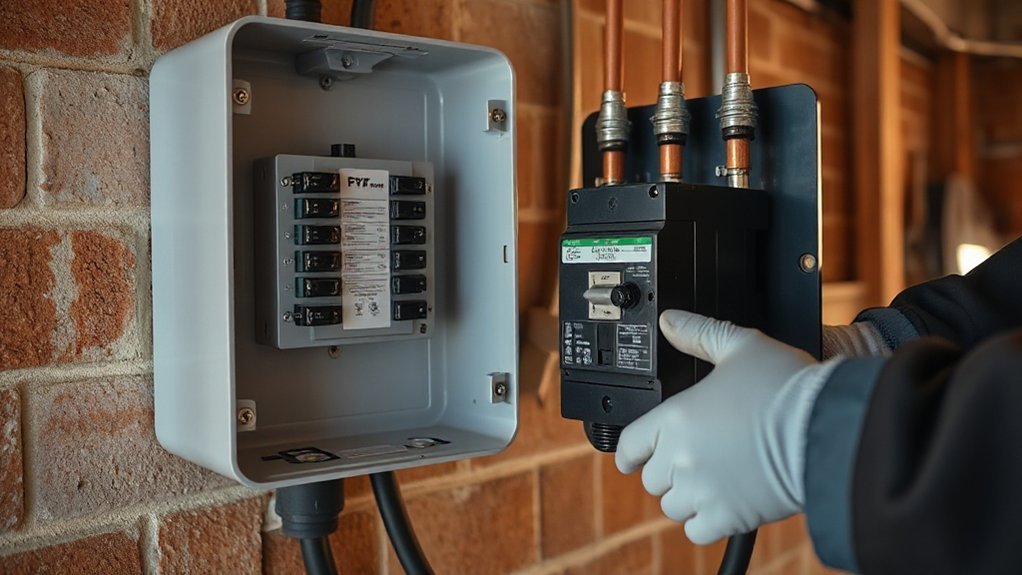
Verify your electrical service capacity with a load calculation (NEC 220) to confirm the panel can support a continuous 40A EVSE load. For a 40A charger, size the branch circuit at 125% continuous load: use a 2‑pole 50A breaker and conductors rated for 50A (typically 8 AWG copper or 6 AWG aluminum with 75°C terminations). Follow manufacturer instructions and local code for wiring method, grounding, GFCI requirements, and conductor temperature ratings.
Electrical Service Capacity
Diligence in load calculation and protection sizing keeps a 40‑amp EV charger safe and code‑compliant. Start by confirming your main service rating and continuous load headroom at 125% of EVSE nameplate. Account for HVAC, ranges, dryers, and additions using NEC Article 220 methods, plus Service forecasting tied to solar plans. Evaluate utility Transformer limitations and feeder capacity before you commit to a schedule.
- Verify utility transformer capacity and service drop rating; note Transformer limitations in older neighborhoods.
- Perform dwelling-unit standard or optional method load calc; document continuous and noncontinuous loads for the panel.
- Assess panel bus rating versus main; apply the 120% bus rule when conditions are met; consider load shedding.
- Coordinate with AHJ and utility for permits, lateral upsizing; schedule inspection before energizing.
Breaker and Wire Gauge
How do you size the breaker and conductors so a 40‑amp EV charger stays code‑compliant? Treat EV charging as a continuous load. Multiply the nameplate current by 125% to select the branch‑circuit rating. If the EVSE draws 40 A continuous, you’ll install a 50‑amp, 2‑pole breaker, and conductors with ampacity ≥ 50 A at the terminal’s temperature rating. Use copper THHN/THWN‑2 or listed aluminum; apply anti‑oxidant and address material corrosion when using aluminum. Verify 60/75°C terminations, conductor derating for ambient and conduit fill, and keep voltage drop near 3%.
For receptacles, provide GFCI protection; for hardwired EVSE, follow the listing. Size the equipment grounding conductor per 250.122. Torque all lugs to the labeled terminal torque. Label the disconnecting means per code and manufacturer instructions.
Utility Programs, Demand Response, and Time‑of‑Use Savings
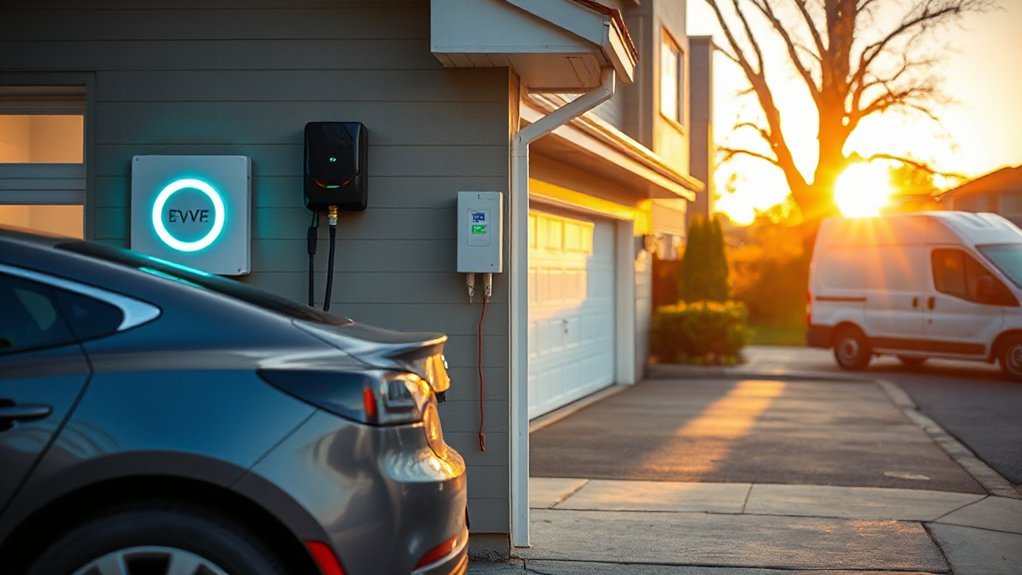
Why enroll in your utility’s EV program when installing a 40 A Level 2 charger? You’ll lower charging costs, protect the grid, and stay code-compliant. Programs often bundle equity programs and rebates, plus demand response incentives that improve grid resilience. Verify your charger supports scheduling, sub‑metering, and secure OCPP or utility APIs.
- Enroll in a time‑of‑use rate. Set charging windows (e.g., 12–6 a.m.). You’ll shift load off-peak and cut $/kWh.
- Join demand response. Allow brief curtailments; preserve 80% charge minimum for mobility.
- Use load management. Coordinate with HVAC/water heater; keep feeder and 50 A breaker within NEC 80% limits.
- Document settings. Label panel, store program terms, and confirm GFCI, bonding, and conductor temperature ratings. Review annually for rate plan updates.
Future‑Proofing: Plug & Charge, Solar Integration, and V2H Readiness
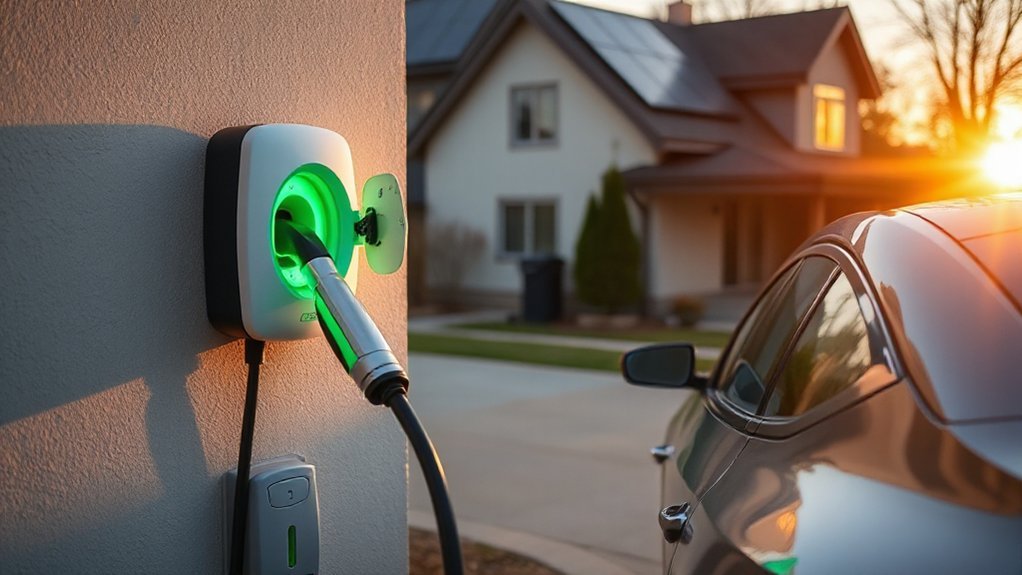
To future‑proof a 40 A home EVSE, you verify ISO 15118 Plug & Charge support with secure certificate management. You specify solar‑aware controls—CTs or inverter data via SunSpec/Modbus—to prioritize excess PV, cap grid import, and honor breaker/feeder limits. For V2H, you confirm bidirectional hardware, UL 9741 and UL 1741 SA listings, utility interconnect approval, a code‑compliant transfer switch with anti‑islanding, and a vehicle that supports discharge.
Plug and Charge Compatibility
When future‑proofing a 40 A home EVSE, prioritize native Plug & Charge (ISO 15118‑2 today, upgradable to ‑20) with secure element hardware, certificate management, and OCPP 2.0.1 support for remote updates. This enables automatic vehicle authentication, tamper‑resistant credentials, and predictable home charging with clear billing transparency and user education built into the app.
- Require an ISO 15118 stack with PnC certificate provisioning (V2G root, OEM leaf), a hardware secure module (EAL6+), and TLS 1.3.
- Verify OCPP 2.0.1 PnC service profiles, firmware‑over‑the‑air with rollback, and signed updates, plus secure boot and device attestation capabilities.
- Check interoperability: CCS1 connector, back‑office conformance, PKI enrollment (Plug&Charge, EIM), and VIN‑based whitelisting.
- Configure safety: 40 A continuous at 240 V, GFCI/CCID 20 mA, welded‑contact detection, ground monitoring, and fail‑safe isolation.
Solar Integration Controls
Design your 40 A EVSE’s solar controls to measure PV output and service load with listed CTs, compute real‑time net import/export, and modulate charging current (1–40 A) to match surplus generation while complying with NEC 625 and 705 export rules. Use UL 61010/UL 2231 compliant sensing, fail‑safe to 6 A or stop on CT error, and inhibit backfeed. Implement irradiance forecasting to smooth ramps and pre‑limit current before clouds reduce PV. Apply curtailment algorithms with a deadband to prevent oscillation and respect breaker and service bus ratings per NEC 240. Provide user‑set priorities: self‑consumption first, grid‑limit kW cap, and schedule windows. Log interval data, alarms, and setpoints; time‑stamp with NTP. Honor DR/TOU signals; never exceed pilot or conductor ampacity. Label the service equipment clearly.
V2H Readiness Checklist
How ready is your 40 A EVSE for Plug & Charge, solar‑aware control, and future vehicle‑to‑home (V2H) operation? Verify hardware, code compliance, and interlocks before you rely on bidirectional power. Confirm bonding, GFCI, OCPD sizing, and transfer equipment meet NEC and utility rules, and document insurance considerations.
- Interface support: ISO 15118-2/20 for Plug & Charge and V2G/V2H messaging; OCPP 1.6/2.0.1 for backend control.
- Bidirectional pathway: UL 9741/1741 SB–listed inverter or charger, certified islanding transfer switch, and ATS load‑shedding logic.
- Control stack: secure firmware updates, signed certificates, utility DRM, and solar CTs for export limiting.
- Site readiness: dedicated 60 A breaker for 40 A EVSE, conductor ampacity, surge protection, grounding electrode integrity, and commissioning tests.
Record maintenance schedules and warranty terms.
Conclusion
Choose a 40‑amp charger like a pilot selects instruments: verified (UL/cUL), grounded, and smart. You’ll weigh Tesla’s Universal Wall Connector, Grizzl‑E, Pulsar Plus, Emporia, or Home Flex, then size a 50‑A circuit, copper conductors, and GFCI per code and the manual. Prefer hardwire for continuous duty; use NEMA 14‑50 only when permitted. Validate load calc, Wi‑Fi controls, and outdoor ratings. Install by a licensed electrician. Do it right, and garage hums like a silent powerplant.