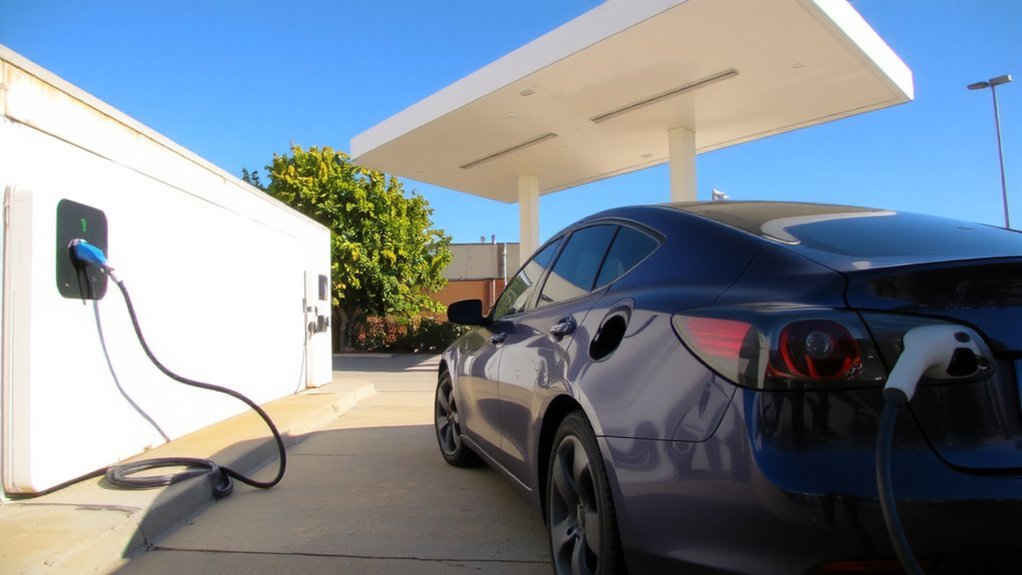
Picking a home EV charger is like choosing the right key for a high-performance engine. You want something reliable, fast, and smart, but choices and electrical limits can make it complicated. We’ll compare top options, installation needs, and costs so you can match a charger to your Tesla and daily routine.
Key Takeaways
- Tesla Gen 3 Wall Connector: up to 48 A (11.5 kW), 24-ft cable, Wi‑Fi, app scheduling, OTA, best native Tesla charging option.
- Tesla Universal Wall Connector: configurable 12–48 A, supports NACS and J1772, ideal for mixed EV households.
- Consider Emporia Pro/Classic for superior load balancing, strong app energy monitoring, and top overall 2025 home-charger ratings.
- Portable options (Lectron V-BOX Pro, Mobile Connector) provide 30–46 miles/hour for flexibility or temporary installations.
- Always hire a licensed electrician, confirm panel capacity, use 50–60 A dedicated breakers, and enable power-sharing to avoid overloads.
Tesla Gen 3 Wall Connector — In-Depth Review
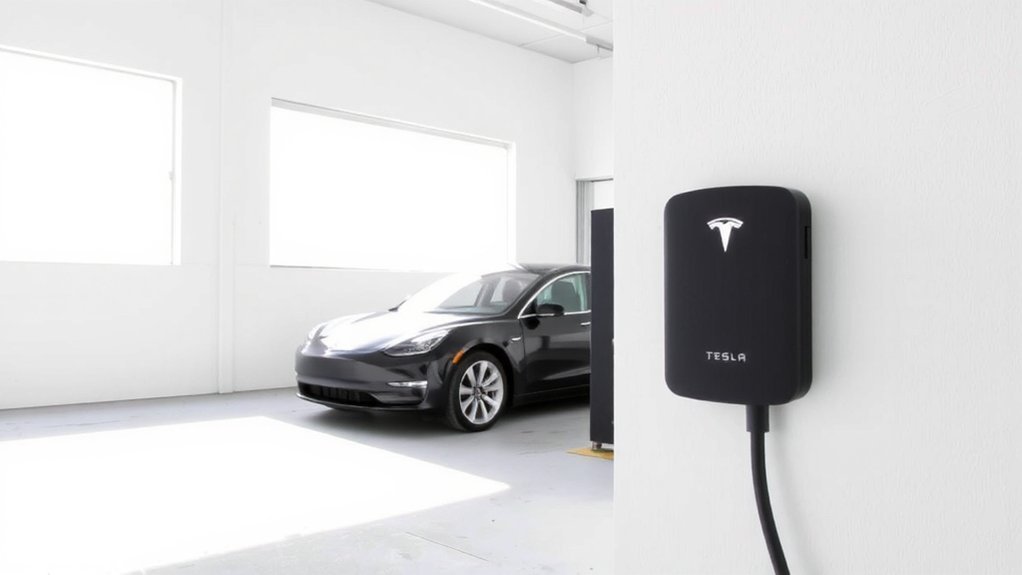
The Tesla Gen 3 Wall Connector delivers up to 48 amps (11.5 kW) Level 2 charging—about 44 miles of range per hour—with a 24-foot cable and built-in Wi‑Fi for app scheduling, remote diagnostics, and over‑the‑air updates. It is available directly from Tesla for $420.00 as of August 12, 2025.
You’ll get adjustable current from 12–48 A, compatibility with single‑ or three‑phase supplies, and power‑sharing for multi‑charger setups. Installers must hardwire it to a protected NEMA‑compliant junction box and follow local codes; you should hire a qualified electrician.
The compact unit includes cable management, an auto‑sensing handle that opens Tesla ports, LED status indicators, and safety protections for ground faults, overcurrent, and overcharge. Wi‑Fi enables OTA updates, remote scheduling, and diagnostics. Tesla backs it with a four‑year residential warranty and online technical support. Keep records of commissioning and usage.
Tesla Universal Wall Connector — Features and Performance
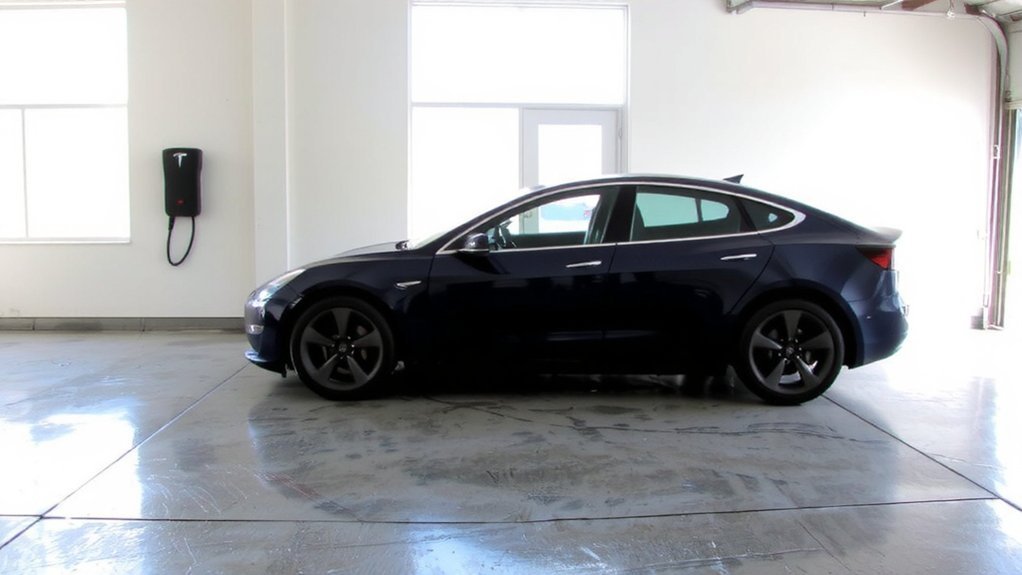
You’ll get up to 11.5 kW output (200–240 V, 12–48 A) for fast home charging. At max output expect roughly 44 miles of range per hour, and the 24 ft cable plus built‑in J1772 adapter make access simple for Tesla and non‑Tesla vehicles.
Built‑in 2.4 GHz Wi‑Fi connects the unit to the Tesla app for scheduling, monitoring, OTA updates, and power management. The unit is an AC Level 2 Charger designed for hardwired installation.
Power, Range and Speed
Although hardwired, the Tesla Universal Wall Connector gives you a Level 2 boost—delivering up to 11.5 kW (48 A at 200–240 V) and configurable from 12–48 A so it matches your home circuit and yields about 44 miles of range per hour for Teslas (roughly 45 miles/hour for other EVs). The Wall Connector is designed for nominal 200-240 V single-phase service to support that output. You’ll get considerably faster charging than a 120V outlet, with up to nine times the speed and a 24‑foot cable for flexible placement.
The connector supports NACS and J1772, so you can safely charge nearly any EV without an adapter. Because it’s hardwired, you must hire a qualified electrician to size the circuit and verify grounding, enclosure rating, and CCID20 ground‑fault protection. That keeps charging reliable and code‑compliant. Follow manufacturer instructions for safe operation.
App Integration and Access
Tap into the Tesla app to monitor charging in real time, schedule off‑peak sessions, and start or stop charging remotely. You’ll see energy usage, cost estimates, charging history and event notifications, and receive firmware update alerts.
Built‑in 2.4 GHz Wi‑Fi (802.11b/g/n) connects using WPA2‑CCMP/AES; commissioning links the Wall Connector to your network and enables over‑the‑air updates and remote diagnostics.
Manage who can charge with user access, guest access toggles, and per‑vehicle permissions; notifications warn of unauthorized activity. The Wall Connector also supports power sharing to intelligently allocate available current among connected units. Group Power Management supports up to six units, dynamically balancing load and prioritizing lower batteries so you avoid overloads or unsafe draws.
Integration with solar and Powerwall lets you opt for Charge on Solar and view real‑time power allocation in the app. Follow commissioning and secure credentials.
Best Multi-Brand Chargers Compatible With Tesla
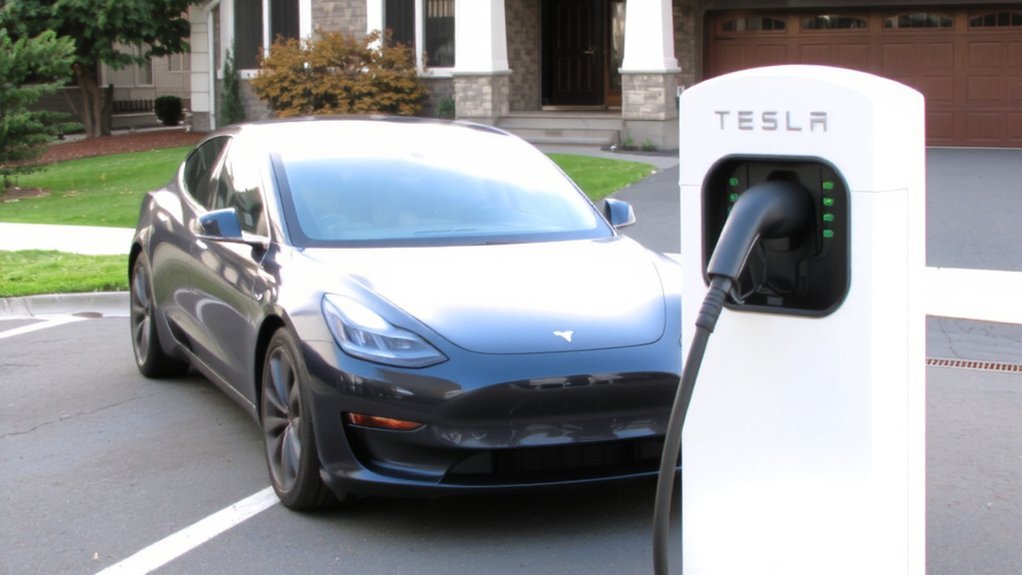
You’ll want a charger that offers universal compatibility—native NACS or J1772 with a reliable adapter—so your Tesla charges without fuss. Choose units with replaceable cables or adapter-ready plugs to switch between Tesla and non-Tesla cars easily.
Also prioritize smart features and apps for scheduling, energy monitoring, and remote control to optimize charging and costs. Consider the Tesla Wall Connector since it provides high-speed charging at home and integrates well with residential power systems.
Universal Compatibility & Adapters
How can a multi-brand home charger reliably work with a Tesla? You choose chargers that support J1772 or CCS and use manufacturer-approved adapters (Tesla-to-J1772 or CCS-to-NACS) so you maintain safe connections and full functionality. Many major automakers and charging networks are aligning around this connector, signaling a move toward the NACS standard.
Automaker-backed adapters generally deliver better integration, consistent charge speeds, and Plug & Charge support when available. Check certifications, firmware compatibility, and installation by a licensed electrician.
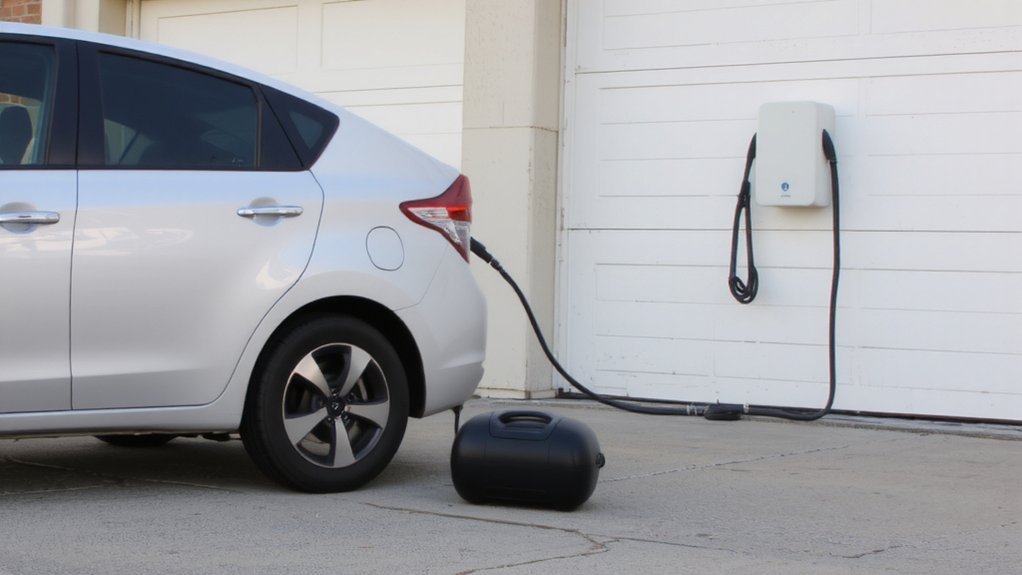
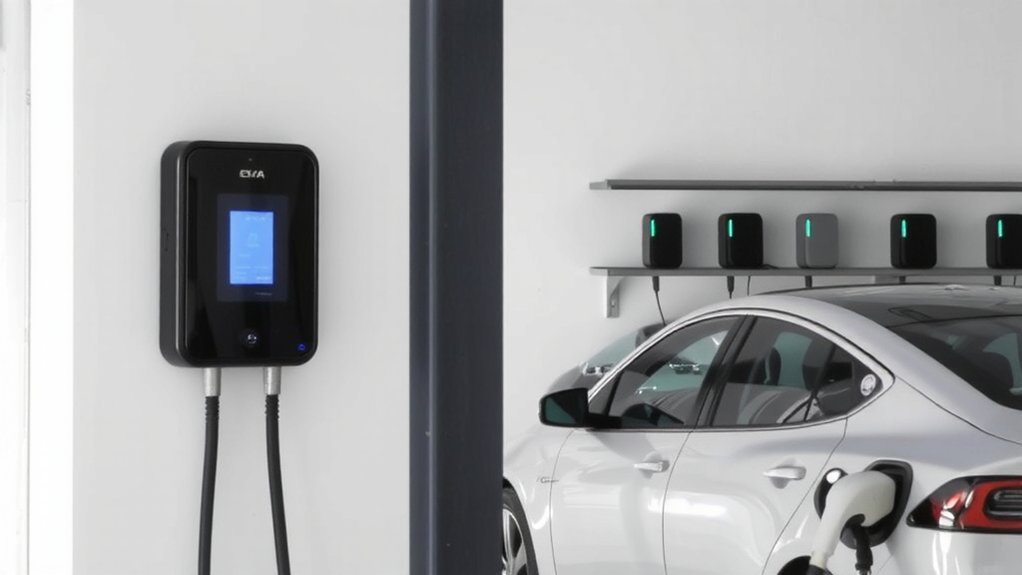
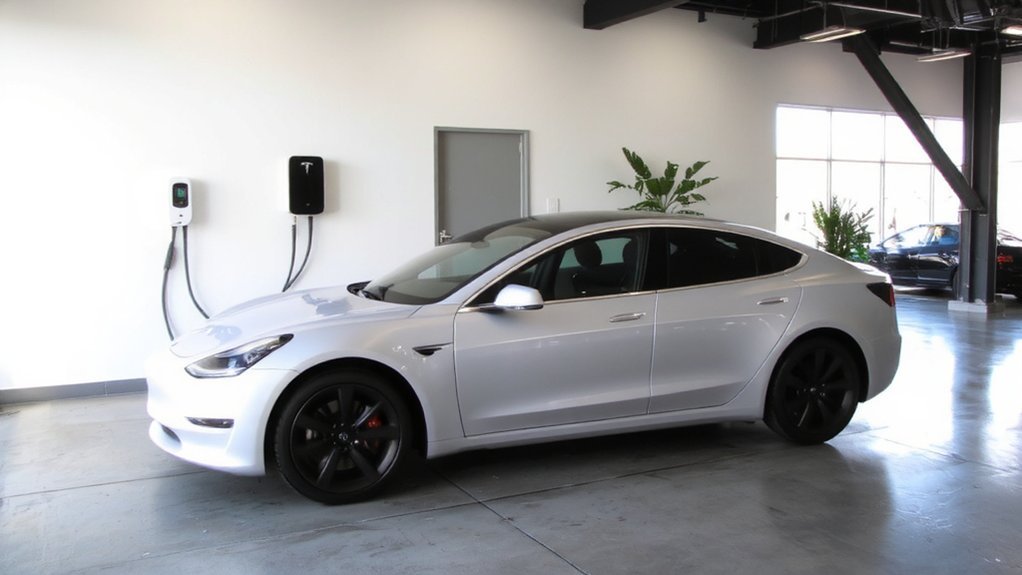
Use Tesla-to-J1772 and CCS-to-NACS adapters approved for your model. Prefer automaker-certified adapters for Plug & Charge and reliable speed. Install Level 2 equipment with proper grounding, circuit protection, and professional setup.
Adopt adapters only from trusted sources, verify warranty coverage, and periodically inspect connectors and cables for wear to prevent hazards and guarantee consistent charging performance. Replace damaged parts immediately. Stay informed on standards.
Smart Features and Apps
When you plug a multi-brand Level 2 charger into your Tesla, pick one with a robust app and Wi‑Fi/Bluetooth so you can monitor charging in real time, schedule off‑peak sessions, and track energy use and cost. Remember that a Level 2 charger typically provides 14–44 miles of range per hour.
Look for units like Tesla Wall Connector, Lectron, ChargePoint Home Flex, and Emporia that combine safety certifications with rich app control. Their apps let you start/stop charging, view kWh and costs, set time‑of‑use schedules to lower bills, and receive firmware updates and alerts.
Portable options like Tesla Mobile Connector work as backups but lack advanced scheduling. Prioritize chargers with UL/GFCI ratings, weatherproof enclosures, and clear remote status so you’ll protect your vehicle and home electrical system while maximizing savings and reliability, and guarantee compliant installation professionals are used.
Installation, Electrical Requirements, and Load Management
Why check your electrical panel before installing a Tesla charger? You need to confirm capacity, possible main or sub‑panel upgrades, and that breakers and wiring can handle a continuous 48A+ load. Hire a licensed electrician to perform a load calculation, pull permits, and follow local code.
Check your electrical panel first — confirm capacity, possible upgrades, and hire a licensed electrician for load calculations and permits.
Expect 50–60A dedicated breakers and 6 AWG (for 48A/60A) or 8 AWG (for 40A) THHN/NM-B routed in conduit outdoors. Confirm your supply is 240 volts to match charger requirements.
Installers mount the unit, connect L1/L2, neutral and ground, torque terminals, seal the enclosure, then test before final inspection.
Use load management or sub‑panel options to avoid tripping during peak household use.
Budget $500–$1,500+, allow 2–8 hours; prioritize safety and certified pros. Romex must be concealed; exposed runs require conduit, and all connections should be tightened to torque specifications. Hire professionals.
Smart Features, Apps, and User Experience
Connecting your Tesla charger to Wi‑Fi lets you control and monitor charging from the Tesla app, so you can start or stop sessions, schedule off‑peak charging, and get real‑time notifications on status or errors. You’ll receive live data on energy use, charging speed, and session history, and the app pushes firmware updates and supports remote diagnostics to keep the unit secure and reliable.
Auto‑sensing handles, built‑in load sharing, and integration with home energy systems help prevent overloads and coordinate safe charging for multiple vehicles. The setup is guided in the Tesla app, LEDs show clear status, and multiple user accounts and vehicle profiles simplify shared use. Weatherproof hardware means safe indoor or outdoor installation. Pause charging remotely if you notice unsafe conditions or alerts. The Tesla Wall Connector is best for Tesla owners.
Cost, Value, and Long-Term Ownership Considerations
Several factors determine the true cost of owning a Tesla home charger: the unit itself (typically $400–$700 for Level 2 models, with Tesla’s Wall Connector often around $400–$500), professional installation (commonly $200–$1,000+ depending on your home), and the electricity to refill your battery (about $11–$18 per full charge at U.S. average rates, roughly $0.043–$0.05 per mile assuming 85–90% charging efficiency). On average in 2025, a full home charge costs approximately about $11–$18.
You should weigh price, installation, and per‑charge electricity when deciding. Warranties (3–5 years) and expected 10+ year life affect value. Prioritize weatherproof hardware, proper grounding, and maintenance to reduce electrical risks.
- Get pro installation and permits for safety.
- Compare warranties, updates, and build quality.
- Use off‑peak charging or load management to lower bills.
Plan inspections and firmware updates to keep your charger safe reliable.
Choosing the Right Charger for Your Home and Driving Habits
Often you’ll pick a charger based on how far you drive, where you park, and how much you’re willing to invest in installation and convenience.
If you drive little daily, Level 1 (120V) gives about 3 miles/hour and is safest for occasional use. For daily commuting choose a hardwired Level 2 like the Tesla Wall Connector (up to 44 miles/hour, 11.5 kW) or Lectron V-BOX Pro (up to 46 miles/hour). Emporia Pro/Classic are often rated best overall for home charging in 2025 because they combine high output, load balancing, and strong apps.
Portable Level 2 and Mobile Connector offer flexibility—up to 36 miles/hour or 30 miles/hour on a NEMA 14-50—and are handy for travel. Guarantee NACS compatibility or use adapters, hire a licensed electrician for 240V installs, pick weather-resistant units for outdoor mounting, and use smart scheduling to reduce costs and keep charging safe and reliable.
Conclusion
You’ve seen how the Tesla Gen 3 and Universal Wall Connector dominate home charging, and you’ve got solid multi-brand options too. Pick a charger that fits your electrical panel, driving habits, and budget, and schedule professional installation for safety. Use smart features to optimize charging and costs. With the right choice, you’ll never worry about range anxiety again—it’s literally a game-changer for everyday driving and long-term ownership and enjoy hassle-free charging every single day today.