
Like a lighthouse for your electrical system, a 22 kW charger should be IEC 61851/62196 compliant, Type B RCD protected, and IP54/IK10 rugged. You’ll want OCPP, dynamic load balancing, OTA updates, and MID‑approved metering; decide on tethered versus untethered based on site risk and access control. Provide surge protection and pro make‑ready. Next, you’ll weigh real‑world vehicle limits and installation costs to avoid nuisance trips—and a false sense of capacity.
Key Takeaways
- Confirm EV and site can use 22 kW: 3-phase supply, EV onboard charger supports 32 A three-phase, voltage drop minimized.
- Choose IEC 61851/62196 chargers with Type B RCD or Type A + 6 mA DC, PEN protection, Type 2 SPD, and IP54/IK10 enclosures.
- Prioritize smart control: OCPP 1.6J/2.0.1, TLS, OTA updates, dynamic load balancing, PV-aware scheduling, RFID/BLE/Wi‑Fi, role-based access, offline safety.
- Pick tethered for convenience and anti-theft holsters; untethered for compatibility and replaceable cables; ensure shuttered inlets, strain relief, and holster integrity.
- Plan installation and operations: permits, commissioning tests, MID metering for billing, model tariffs and demand charges, pursue incentives, and schedule maintenance.
Top Picks: Best 22kW Three‑Phase Chargers for Home and Business
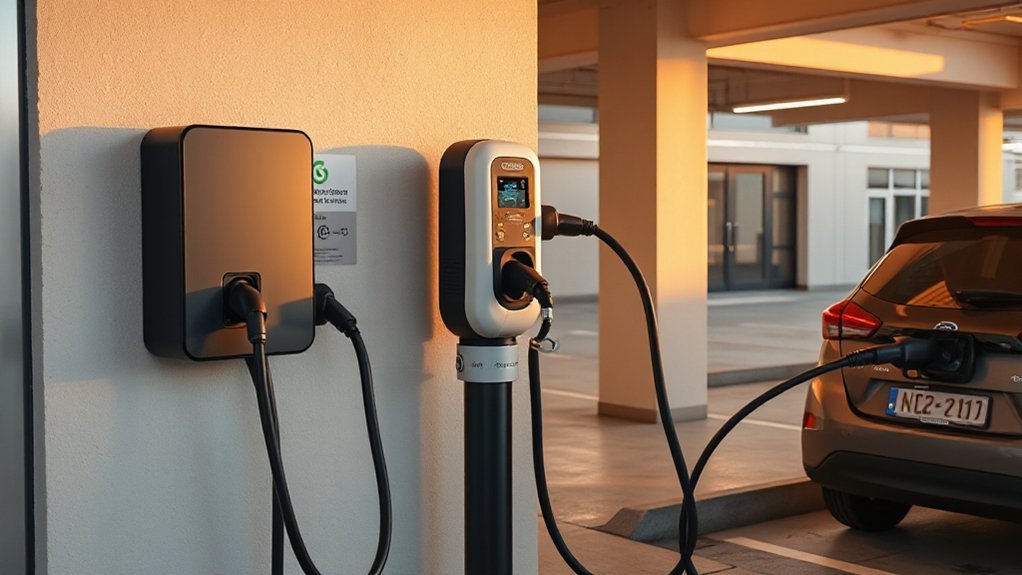
While many 22kW units look alike on paper, the best three‑phase chargers distinguish themselves by standards compliance, protection features, and smart controls that fit your site. You should shortlist models certified to IEC 61851 and IEC 62196, with Type B RCD or Type A plus 6 mA DC detection, PEN fault protection, and surge protection (Type 2 SPD). Prefer enclosures rated at least IP54/IK10, UV‑stable housings, and lockable connectors. Verify adjustable current limits to match your supply, plus clear installation manuals and local code listings. Look for MID‑approved metering if you bill users. Check warranty terms, service networks, and Retail availability from reputable distributors. If aesthetics matter, confirm Color options and cable lengths. Always use a licensed electrician and document commissioning tests for compliance.
Key Features to Prioritize: Smart Control, Load Balancing, OCPP, Solar
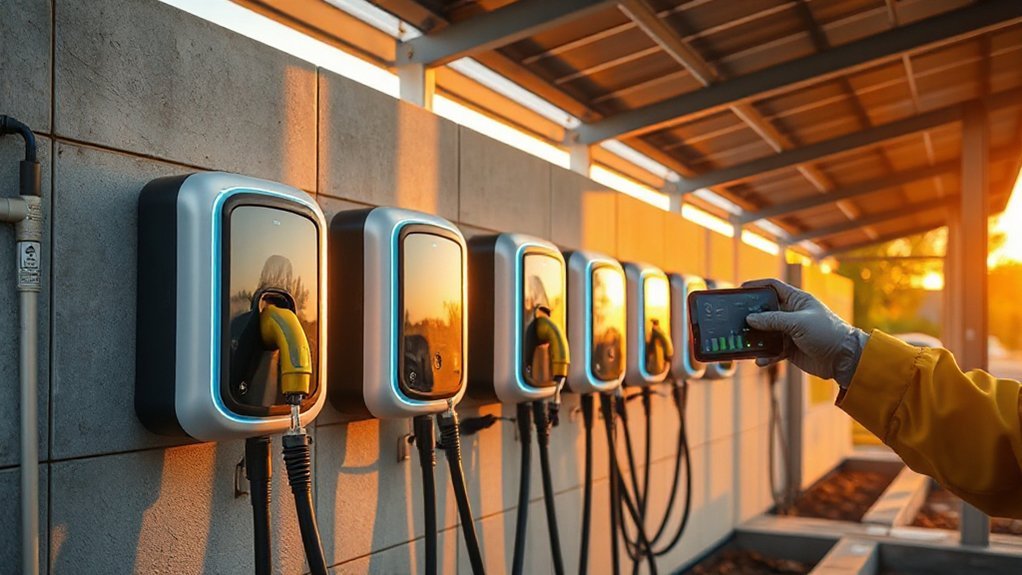
How do you make sure a 22 kW installation stays within supply limits, meets codes, and scales? Choose chargers with smart control that reads utility CTs, enforces dynamic load balancing per phase, and honors demand limits you configure. Verify OCPP 1.6J or 2.0.1 for networked control, firmware updates, and open roaming. Require TLS-secured websockets, hardened Cybersecurity protocols, role‑based access, and signed updates. For solar, use PV-aware scheduling, excess‑export tracking, and phase‑aware curtailment to prevent reverse flow violations.
Specify MID‑approved metering, integrated Type B RCD or RDC‑DD, and configurable protections aligned with local regulations. Verify offline fallbacks preserve safety limits. Prioritize clear dashboards and APIs that enhance User experience without sacrificing audit trails, alerts, and detailed session records. Document commissioning tests and retain compliance reports.
Tethered Vs Untethered: Choosing the Right Cable Setup
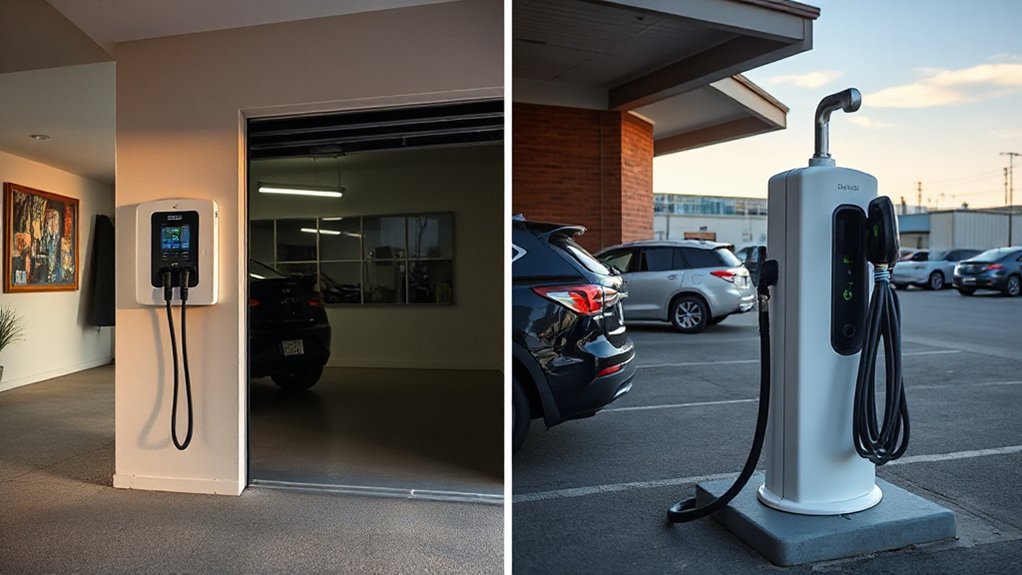
Why pick tethered or untethered for a 22 kW EVSE? Tethered units provide grab-and-go convenience, minimize misplugging risk, and allow controlled cable lengths that meet local clearance and trip-hazard requirements. They typically offer better Connector Durability because the plug lives in a holster, not on the ground. Lockable holsters and integrated cable locks improve Theft Deterrence and reduce vandalism exposure.
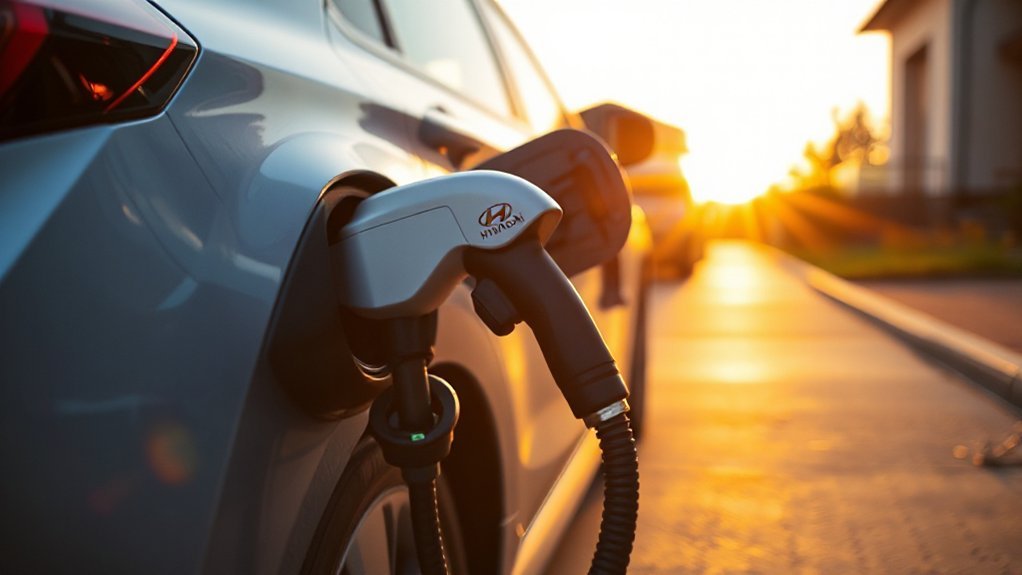
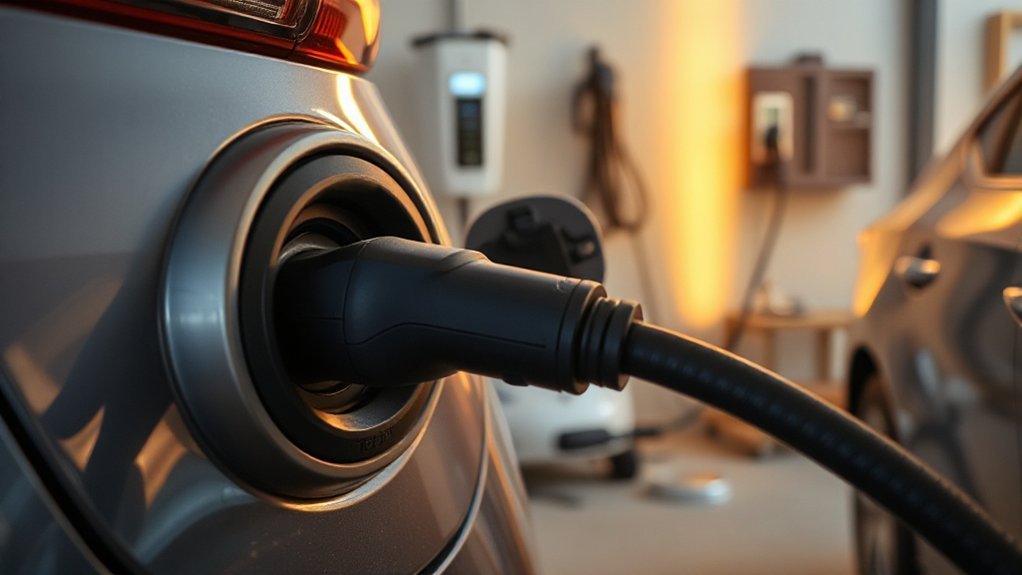
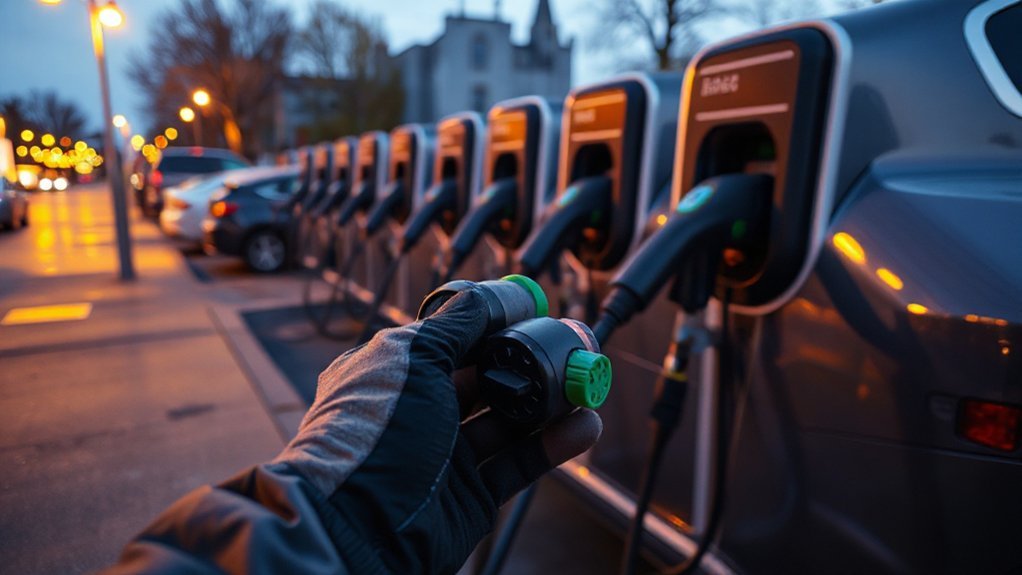

Untethered sockets maximize vehicle compatibility and keep the EVSE lighter to mount. You can replace a worn or contaminated cable without opening the enclosure, aiding uptime. Specify a shuttered, weather-rated inlet with a closing cap, and post cord management signage. For any option, verify strain relief, IP rating, and holster integrity; schedule inspections, clean contacts, and train users to stow cables, eliminate trip hazards.
Real‑World Charging Speeds: Onboard Limits, Wiring, and Supply Phases
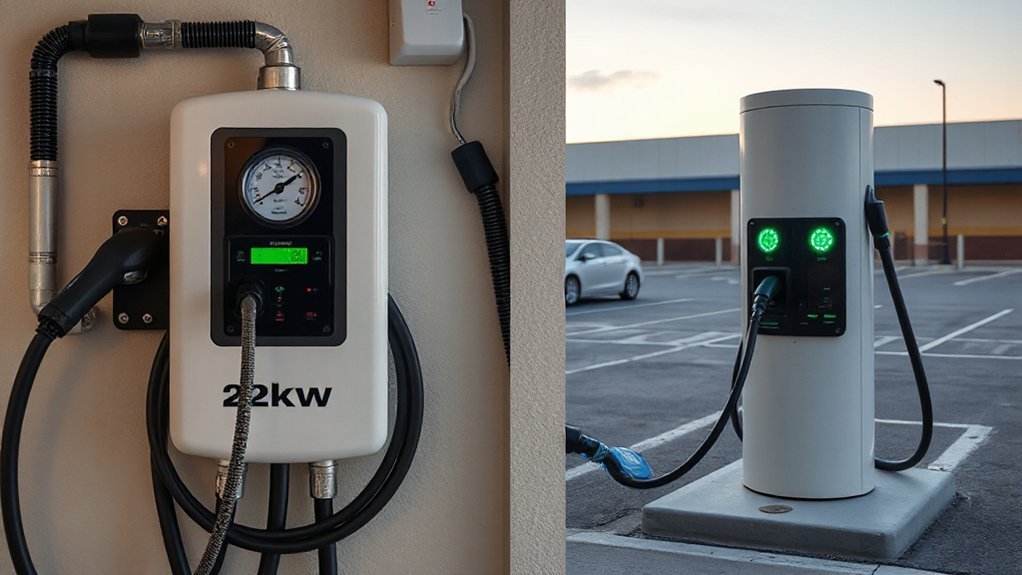
Because real‑world AC speed depends on the slowest link, a “22 kW” rating only materializes when the vehicle’s onboard charger accepts three‑phase 32 A and the supply, wiring, and EVSE are rated accordingly. Your car may cap at 7.4 or 11 kW; the EVSE can’t bypass that onboard limit. Single‑phase service constrains phase current and balance, while three‑phase distributes load. Long runs add voltage drop, shaving power at the plug. As components warm, the charging curve flattens from thermal limits. Load management may reduce current to protect capacity.
- Confirm onboard charger phase/amp spec; it sets the ceiling.
- Keep cable runs short or upsized to reduce voltage drop.
- Use balanced three‑phase EVSE for steadier charging curve.
- Track temperatures and derating; protection will throttle current safely.
Installation & Compliance: Site Surveys, Electrical Requirements, Safety
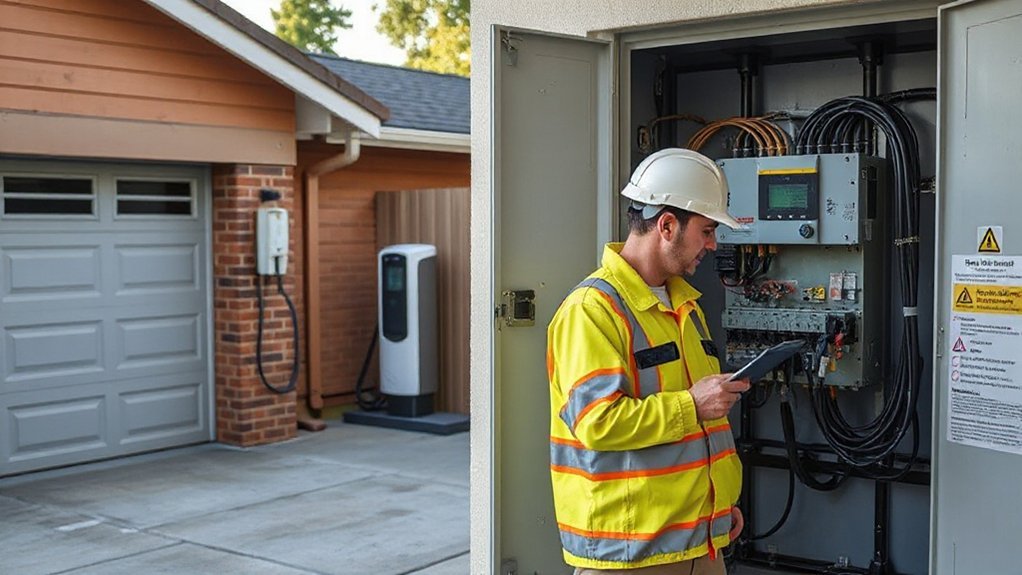
You’ll start with a pre‑installation site assessment that verifies service capacity (three‑phase availability), panel space, grounding/bonding, prospective fault current, clearances, cable routes, and mounting. You’ll then align the design with applicable electrical codes (NEC/IEC) and AHJ requirements—conductor sizing, overcurrent protection, RCD/GFCI and surge protection, disconnecting means, and load calculations. You secure permits and inspections before energizing, document test results (insulation resistance, earth continuity, loop impedance), and implement labeling and safety controls to mitigate shock, arc, and fire risks.
Pre-installation Site Assessment
How you assess the site determines whether a 22 kW EV charger can be installed safely and in compliance. Begin with load capacity verification at the service panel, feeder path, and grounding integrity; note clearances, working space, and protection from impact, weather, and corrosion. Evaluate cable runs for voltage drop, conduit fill, and bonding. Plan mounting height, bollards, drainage, and signage. Perform an accessibility audit and consider aesthetic integration for residential or brand-sensitive locations.
- Validate equipment locations: maintain required working space, egress, and vehicle maneuvering.
- Confirm cable management: reach to parking bays, strain relief, hose reels, and trip-hazard minimization.
- Assess environmental exposure: IP rating needs, sun, ice, chemicals, and mechanical damage risks.
- Verify safety interfaces: emergency shutoff placement, lighting, wayfinding, and clear operator instructions.
Electrical Codes and Permitting
Before you mount a 22 kW EVSE, align the design and permit package with the Authority Having Jurisdiction (AHJ) and the controlling electrical code (e.g., NEC Article 625 with local amendments or IEC 61851/60364). Submit a complete application: one-line diagram, load calculations, available fault current, grounding and bonding details, overcurrent sizing at 125% of continuous load, disconnect location, and wiring methods. Clarify utility coordination, metering, and demand-response controls. Budget Permit Fees and schedule inspections—rough-in and final. For commercial sites, address ADA access, signage, bollards, and cable management. Verify working clearances per 110.26, GFCI where required, surge protection, and labeling per 110.21/625.5. If conditions conflict with code or site constraints, propose engineered alternatives and follow AHJ Variance Procedures, documenting hazards mitigations and manufacturer instructions accordingly.
Total Cost of Ownership: Hardware, Installation, Software, Incentives, and Maintenance
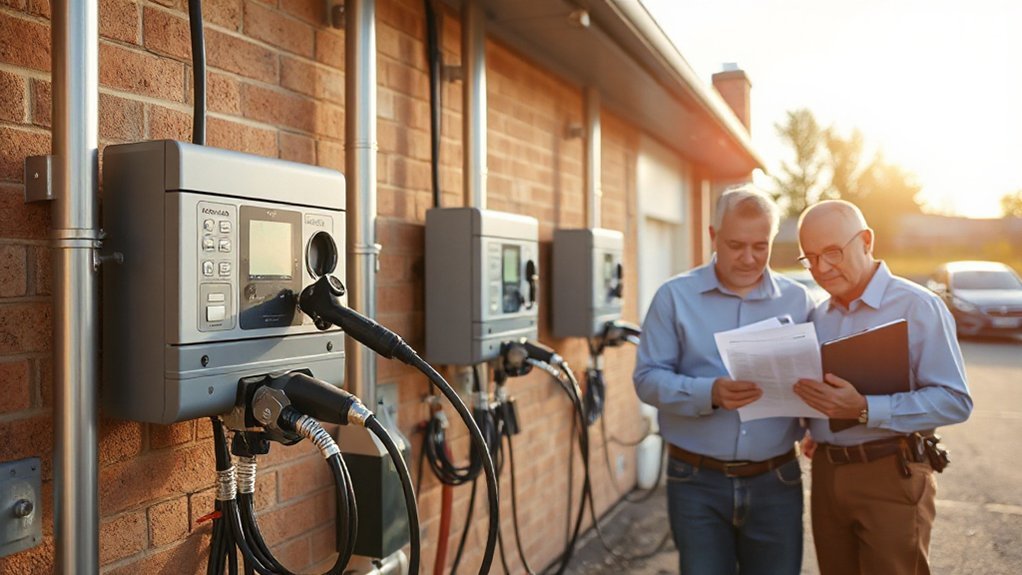
You should model total cost of ownership by itemizing hardware, code‑compliant installation, and a software breakdown covering licensing and transaction fees. Then factor incentives (rebates, tax credits, demand‑response payments), planned maintenance, and spare parts to preserve uptime and safety. With these inputs, you can estimate cash flow, payback, and lifecycle cost per kWh delivered.
Hardware, Installation, Software Breakdown
Map the total cost of a 22 kW EV charger by itemizing hardware, installation, and software, then offsetting with incentives and planning for maintenance. For hardware, specify Type 2 socket, RFID/BLE/Wi‑Fi, MID meter, enclosure ratings, and robust thermal management. Verify component sourcing meets IEC 61851, 62196, and local grid codes. For installation, size feeders, breakers, and RCDs, confirm earthing, and perform load studies. For software, budget OCPP networking, firmware support, and cybersecurity.
- Hardware: 3-phase 32A, Type B RCD compatibility, surge protection, lockable holster, IP54/IK10 enclosure.
- Installation: cable runs, trenching, panels, labeling, commissioning tests, as-built documentation.
- Software: OCPP 1.6/2.0.1, OTA updates, user authentication, tariff scheduling, APIs, vendor SLAs.
- Risk controls: thermal derating, clearances, fault-current coordination, signage, routine functional checks and records.
Incentives, Maintenance, Payback
While capital outlay centers on hardware, installation, and software, the total cost of ownership for a 22 kW EV charger also hinges on available incentives, disciplined preventive maintenance, and realistic utilization-driven payback. Prioritize rebate programs, tax credits, and utility make-ready funds; verify eligibility, prevailing-wage, and Buy America clauses. Model energy tariffs, demand charges, and load management to forecast annual operating expense and revenue.
Establish service contracts aligned to manufacturer schedules: thermal scans, torque checks on lugs, RCD/GFCI testing, firmware updates, connector inspection, and cable strain relief. Maintain as-built documentation, logs, and lockout/tagout procedures. Track uptime, sessions, and kWh to compute ROI. For commercial sites, target 10–20% capacity factors; adjust pricing and access controls accordingly. Budget replacements for contactors, cords, and signage over time safely.
Conclusion
You choose a 22 kW charger not just for speed but for safety: IEC 61851/62196, Type B RCD, IP54/IK10. You balance convenience with compliance: tethered locks or universal inlets, OCPP with role‑based access, dynamic load balancing, OTA updates. You weigh home simplicity against commercial uptime: MID metering, surge protection, make‑ready installs, routine inspections, service contracts. Specify three‑phase capacity, correct wiring, solar integration, and incentives. Do this, and you maximize uptime, minimize risk, and protect ROI.