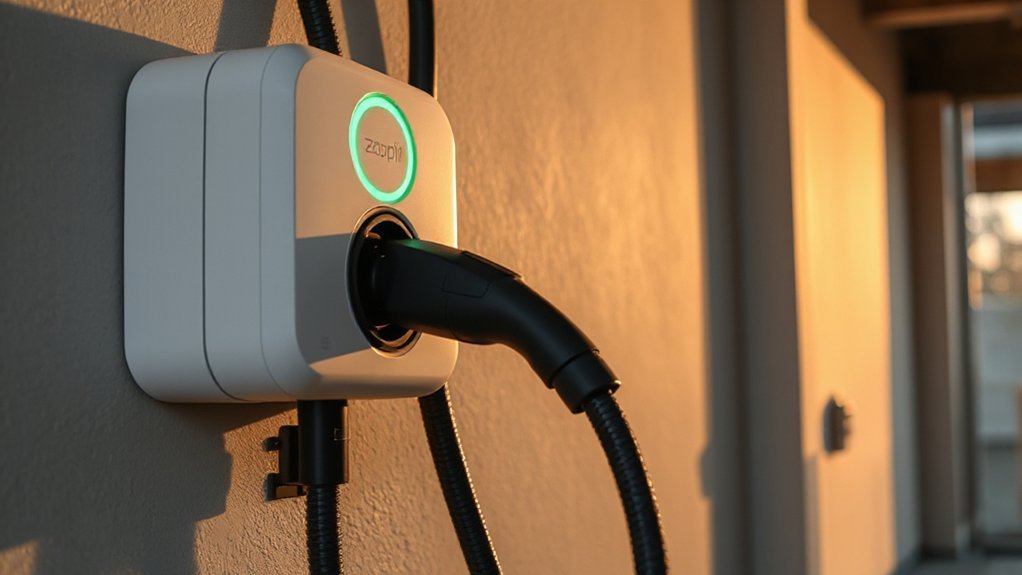
Choosing the best Level 2 charger for your 2025 Nissan Leaf starts with matching the car’s onboard AC limit (3.3 or 6.6 kW) to a 240 V EVSE and sizing breakers per NEC’s 125% rule. You’ll weigh 32 A (40 A breaker) vs 48 A, plug‑in vs hardwired, NEMA ratings, cable length, and smart features—plus permits and rebates. Make one mistake here, and you’ll waste money or capacity—here’s how to avoid it.
Key Takeaways
- Most 2018–2024 Leafs accept ~6.6 kW AC; choose a 32A (7.7 kW) EVSE to maximize speed and future‑proof.
- Install on a dedicated 40A circuit per NEC 125% continuous‑load rule; use 8 AWG Cu and UL 2594‑listed equipment.
- Prefer units with 20–25 ft 105°C flexible cables, thermal sensing, and NEMA 4X/IP66 enclosures for outdoor durability.
- Smart features to prioritize: adjustable current, TOU scheduling, load sharing for multi‑EV homes, and per‑session energy tracking.
- Choose plug‑in NEMA 14‑50 for portability or hardwired for permanent outdoor installs; verify rebates require UL‑listed, permitted professional installation.
Key Specs That Matter for the Nissan Leaf (Amperage, J1772, Cable Length)
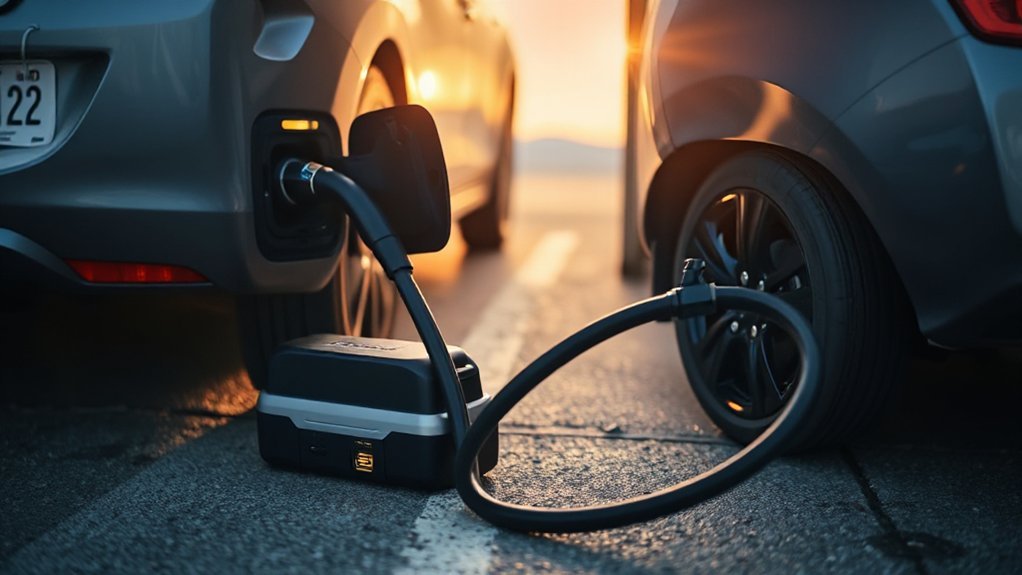
Because the Leaf’s onboard charger caps AC charging speed, you should size the EVSE’s amperage, connector, and cable length to what the car and your electrical system can safely support. Most 2018–2024 Leafs accept 6.6 kW; older trims may be 3.3 kW. On a 240 V circuit, select a 32 A EVSE for 6.6 kW, or 16 A for 3.3 kW, and apply the NEC 125% continuous-load rule when sizing breakers and wiring. Use a UL-listed J1772 connector with a spring-loaded dust cap and robust strain relief to protect pins and safeguard Connector longevity. Choose a 20–25 ft cable for reach without excess voltage drop; verify 105°C, oil-resistant insulation. Prioritize Cable management: wall hooks, swivel holsters, and kink-free coils reduce tripping hazards and wear.
Plug-In Vs Hardwired: Which Setup Fits Your Home
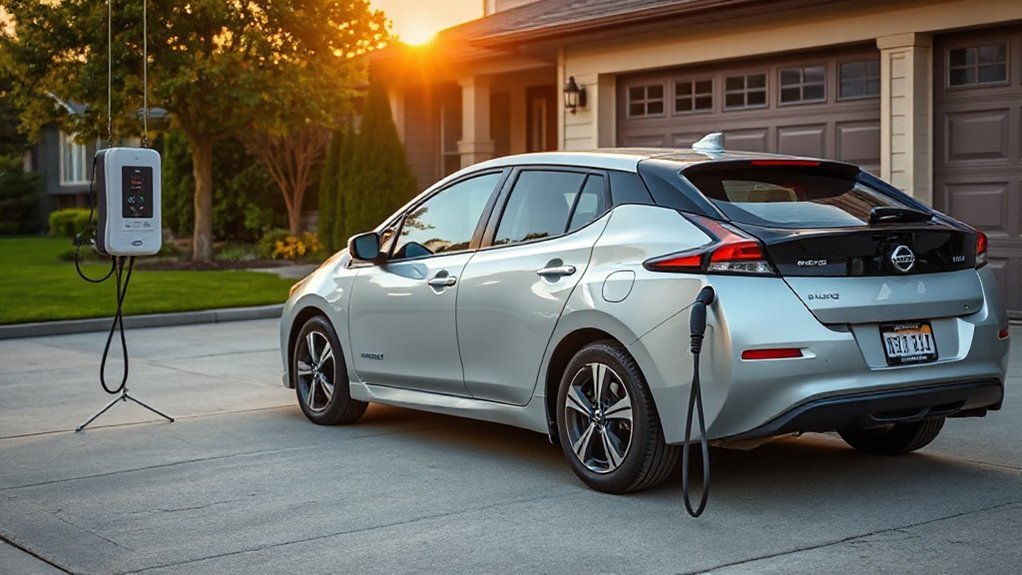
Which setup best matches your panel, space, and code requirements—plug-in or hardwired? Choose plug-in if you’ve got a NEMA 14‑50 or 6‑50 receptacle with GFCI protection and you value portability. It’s ideal for rental compatibility or future moves, and you can swap units easily. Choose hardwired when you want a permanent install, better cable management, and fewer failure points outdoors. Always use a licensed electrician, follow NEC 625, and verify your local utility or rebate rules.
- Indoor garage with limited wall depth: plug-in keeps conduit minimal.
- Wet/exposed locations: hardwired, in-use cover, and listed enclosure.
- Load management or smart panel integration: hardwired simplifies control wiring.
- Travel use or backup charging: plug-in wins flexibility and resale value.
- HOA or inspection preferences: labeling, disconnect means, and scope.
Breaker Sizing and Electrical Requirements (32A, 40A, 48A)
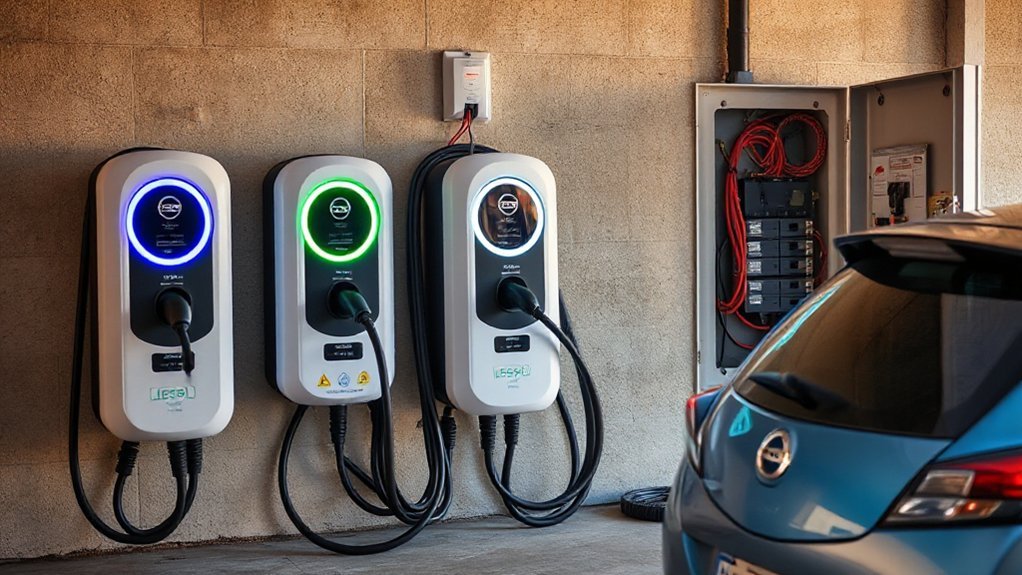
Now that you’ve chosen plug-in or hardwired, size the circuit to the EVSE’s output using NEC’s continuous-load rule: rate the branch circuit at least 125% of the charger’s maximum current and use the next standard breaker size. For 32A EVSE, use a 40A breaker; for 40A EVSE, a 50A breaker; for 48A EVSE, a 60A breaker. Match conductors: typically 8 AWG Cu for 40A, 6 AWG Cu for 50–60A, temperature-rated to terminal listings. Account for thermal derating and conduit fill. Verify panel capacity, GFCI.
| EVSE Output | Min Breaker | Typical Wire |
|---|---|---|
| 32A | 40A | 8 AWG Cu |
| 40A | 50A | 6–8 AWG Cu |
Allow for inrush current at startup; the right breaker will avoid nuisance trips. Don’t share the circuit; dedicate it per code. Label the breaker.
Weatherproofing, Durability, and Outdoor Installations
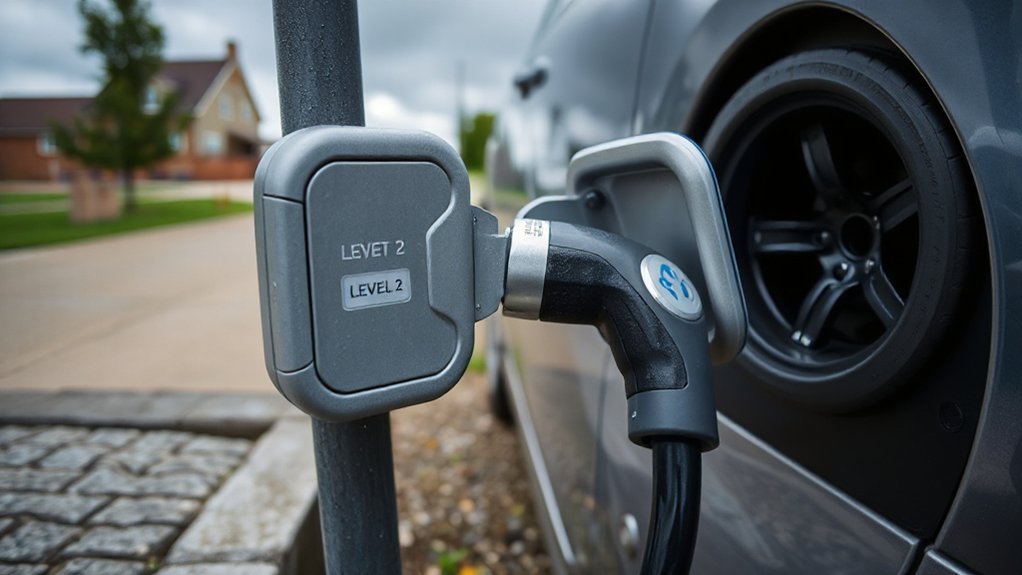
You should select a listed EVSE with a NEMA 3R or higher enclosure and a documented IP rating (e.g., IP66) to control water and dust ingress for outdoor installs. Install per the listing and manufacturer instructions (NEC 110.3(B)), ensuring gaskets, cable glands, and conduit fittings preserve the enclosure rating and prevent water intrusion. Specify UV-stabilized housings and stainless or powder-coated hardware to resist sunlight and corrosion.
NEMA Ratings Explained
Why do NEMA ratings matter when installing a Level 2 charger for your Nissan Leaf? They define enclosure performance for weather, dust, corrosion, and impact, guiding safe outdoor mounting and maintenance. NEMA’s Historical background and Naming conventions help you compare boxes consistently across manufacturers and local code.
- NEMA 1: indoor, dry, minimal dust; keep EVSE in protected, locked spaces.
- NEMA 3R: outdoor under cover; resists sleet, ice formation, and wind-driven debris.
- NEMA 4: sealed against airborne particulates; suited for exposed walls.
- NEMA 4X: adds corrosion resistance; choose for coastal, deicing-salt, or chemical atmospheres.
- NEMA 12: indoor industrial; protects against circulating dust and oil drips.
Verify NEC 625 compliance, enclosure UL 50/50E listing, proper strain relief, and AHJ approval before energizing. Label disconnect clearly nearby.
Water Ingress Protection
Beyond NEMA type, verify the EVSE’s IEC 60529 Ingress Protection (IP) rating to match real weather exposure. For uncovered outdoor installs, target at least IP65 for wind-driven rain; choose IP66 for hose-down areas and IP67 only where brief immersion is plausible. Confirm gasketed enclosure seams, rated cable glands, and downward-facing knockouts to prevent capillary ingress. Require PCB Potting or conformal coating on control boards, plus breather membranes for Condensation Mitigation. Mount per NEC 625: above anticipated snow/flood levels, with a drip loop on the output cable, and a raintight disconnect. Seal conduits with duct seal to block vapor. Inspect the charge handle’s IP rating too; look for self-sealing caps. After installation, megger-test insulation and function-test the GFCI. Document ratings on permit set with photos.
UV and Corrosion Resistance
Often, outdoor-rated EVSE survives only if its materials resist UV and corrosion per code. You should specify NEMA 3R/4X or Type 4X enclosures, UV-stabilized polymers, and marine-grade fasteners. Seek UL 2594 listings with Accelerated Aging data and salt-spray hours per ASTM B117. Powder-coated aluminum or 316 stainless housings, silicone gaskets, and drain paths extend life in coastal sun and freeze-thaw cycles. Confirm wet-location fittings and apply anti-seize on dissimilar metals. Use sealed strain reliefs. Prefer replaceable cables with UV-rated jackets. Specify flame-retardant jacketing and ferrules.
- UV inhibitors in cable jackets; 10+ year sunlight exposure ratings
- 316 SS hardware; dielectric barriers prevent galvanic couples
- Surface Treatments: powder coat, anodize, e-coat verification
- Conformal-coated PCBs; breather vents prevent condensation
- Warranty clauses tying corrosion to maintenance and environment
Smart Features: Apps, Scheduling, Load Sharing, and Energy Tracking
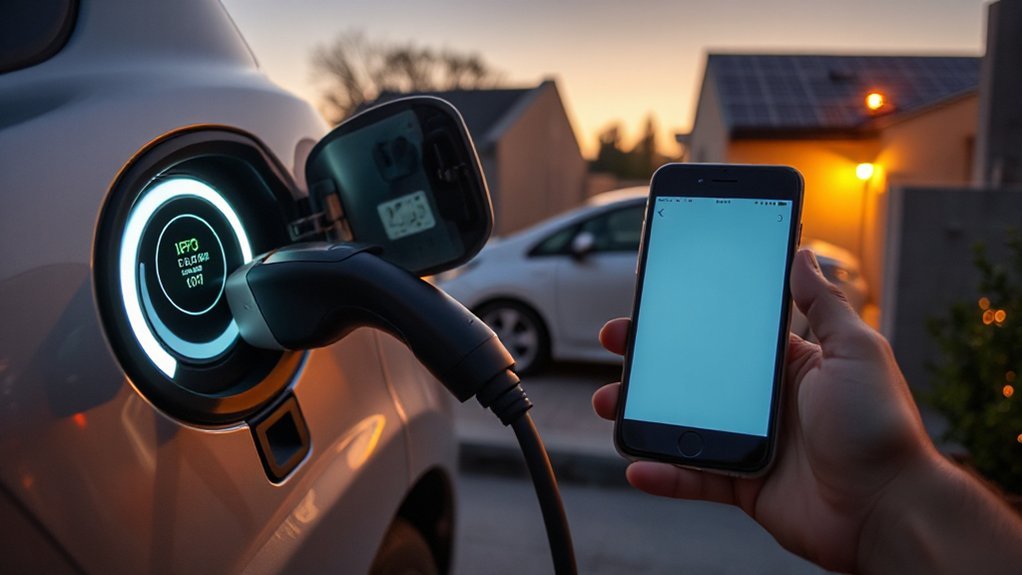
While smart Level 2 EVSE won’t change the Leaf’s J1772 charging fundamentals, they give you precise control over when and how power flows. Use the app to set NEC-friendly charge schedules that align with utility TOU rates, or cap current to match a circuit’s continuous-load rating (80% of breaker). Dynamic load sharing lets two or more units balance amperage on one feeder, preventing nuisance trips and respecting service limits. Energy tracking reports per-session kWh, costs, and CO2 estimates, useful for reimbursement.
Review vendor Privacy Concerns: require least-privilege permissions, local control options, and encrypted communications. Enable automatic Firmware Updates, but verify release notes and maintain Wi‑Fi signal strength for safe installs. Require ground-fault, overcurrent, and temperature protection, and confirm UL/ETL listing and proper bonding verification.
Best Budget Chargers for Leaf Owners

Several budget EVSEs suit the Leaf without sacrificing safety or code compliance. Prioritize UL-listed units with 240V, J1772 connectors, GFCI, and thermal protection. A 32A rating balances cost and circuit capacity; you can derate to 24A on a 30A breaker for continuous loads per NEC. Hardwire only if the product is listed for it; otherwise use a NEMA 14-50 or 6-50 plug with a properly sized circuit. Weatherproof enclosures (NEMA 3R/4) and strain relief reduce failures outdoors. Favor Compact Designs with clear LEDs and a sturdy holster. Scan User Reviews for cable flexibility in cold weather, warranty support, and accurate amperage settings. Avoid uncertified adapters, daisy-chained extension cords, and non-GFCI subpanels.
- 25 ft cable
- Adjustable 16–32A
- NEMA 4 enclosure
- 6 mA CCID
- 3-year warranty
Best Midrange Chargers Balancing Speed and Features
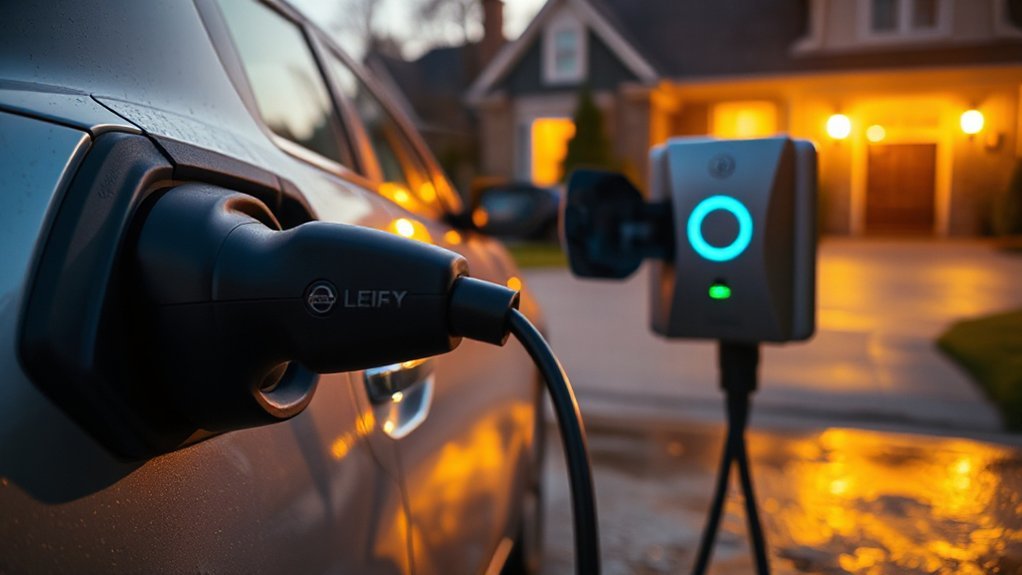
You should target the 7–11 kW sweet spot to future‑proof (your Leaf draws up to ~6.6 kW) and pair it with a 40–60 A branch circuit sized per NEC’s 125% continuous‑load rule. Require smart‑app essentials—scheduled charging, adjustable amperage, session data, OTA firmware—and secure access via app lock/RFID and encrypted Wi‑Fi. Choose chargers with outdoor ratings (NEMA 3R/4X or IP54+), safety certifications (UL/cUL 2594, UL 2231), integral GFCI and thermal protection, and use a licensed electrician with permits where required.
7–11 Kw Sweet Spot
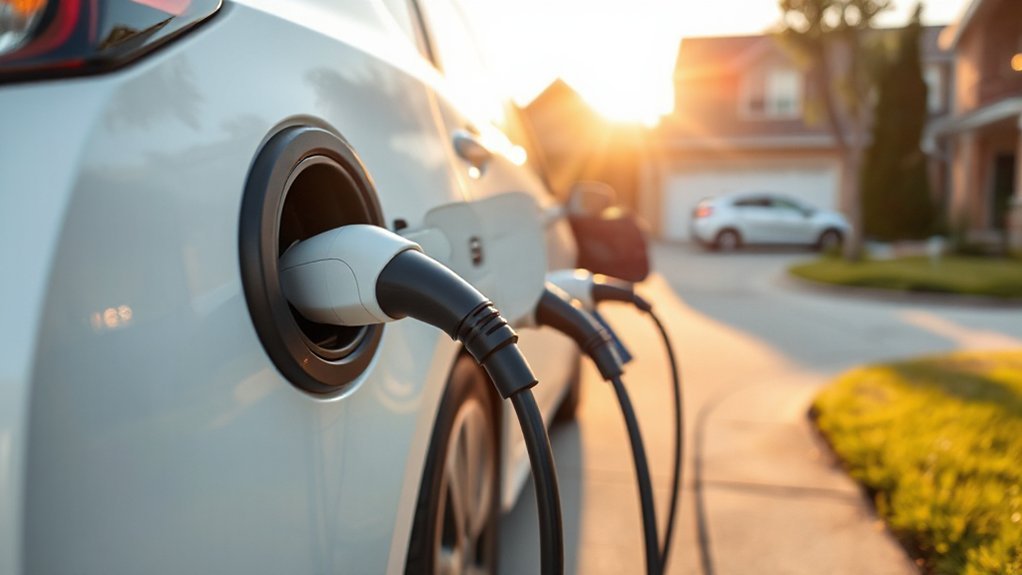
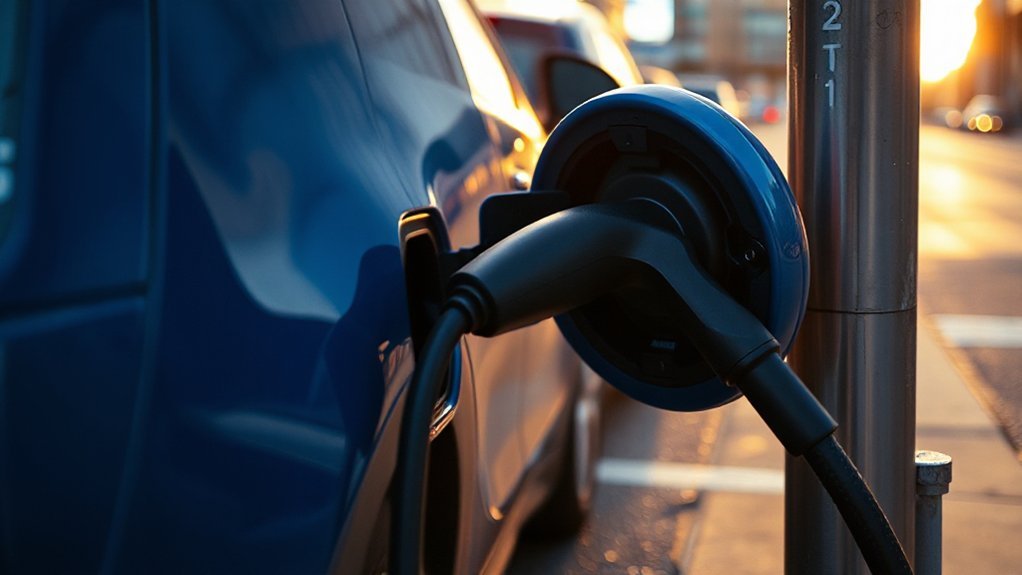
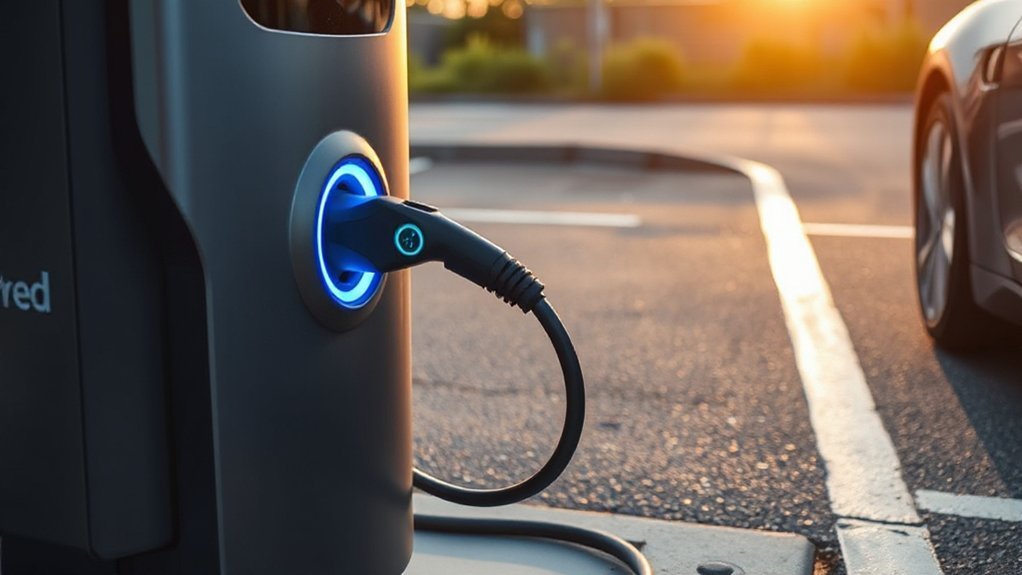

One clear sweet spot for the Leaf sits around 32 A at 240 V (≈7.7 kW), delivering fast daily charges without overpaying for capacity the car can’t use. You’ll replenish overnight, limit heat, and reduce BOS costs. Use a 40 A branch circuit to meet the 80% rule, paired with a UL-listed, GFCI-protected EVSE, 6 AWG copper, and a sturdy J1772. Hardwire or a dedicated NEMA 14‑50 works if derated correctly. Weather-sealed enclosures (NEMA 3R/4) plus thermal sensing reduce risk and preserve pack health. This rate also balances the emissions tradeoff and charging psychology by aligning with off-peak, cleaner kWh.
- 32 A output; Leaf-limited
- 40 A breaker; copper conductors
- UL listing, integral 20–30 mA GFCI
- NEMA 3R/4; UV-stable, outdoor ready
- 20–25 ft flexible cable
Smart App Must-Haves
Targeting the Leaf’s 32 A sweet spot, the best midrange EVSE apps provide reliable control, safety, and cost optimization without bloat. Prioritize time-of-use scheduling, adjustable max current, and utility rate import so you hit least-cost windows without tripping breakers. Require granular notifications for start, stop, faults, and ground faults, plus remote stop/lock to prevent unauthorized use. Insist on strong Privacy Controls: local-only mode, minimal telemetry, encrypted transport (TLS 1.2+), and explicit consent for analytics. Demand digitally signed Firmware Updates with release notes and safe rollback. Look for per-user access, PIN/RFID lock, and load sharing across two ports, and open APIs or OCPP for future integrations. Guarantee accurate kWh logging, voltage/current graphs, and automatic derating guidance to satisfy the NEC 80% rule during setup commissioning.
Outdoor Rating and Safety
While you’re weighing speed and apps, outdoor rating and safety dictate whether a Leaf-ready 32 A EVSE survives real weather and stays code-compliant.
- Choose NEMA 4X or IP66 housings with UV-stable plastics, gasketed seams, and stainless hardware to block rain, dust, and corrosion.
- Verify UL 2594 and NEC 625 compliance, integrated 20–30 mA GFCI, and auto-restart logic after faults without masking persistent issues.
- Prioritize surge suppression and Lightning protection: Type 2 SPD, robust grounding, and MOV thermal fusing to withstand utility transients and storms.
- Inspect cable rating: 105°C, oil-resistant jacket, cold-weather flexibility, and strain relief; use a holster that shields pins from water intrusion.
- Add Tamper detection, lockable latch, breakaway mount, and Wi‑Fi alerts; confirm NFC/RFID access control to deter misuse and secure uptime.
Premium EVSE Picks for Maximum Performance and Reliability
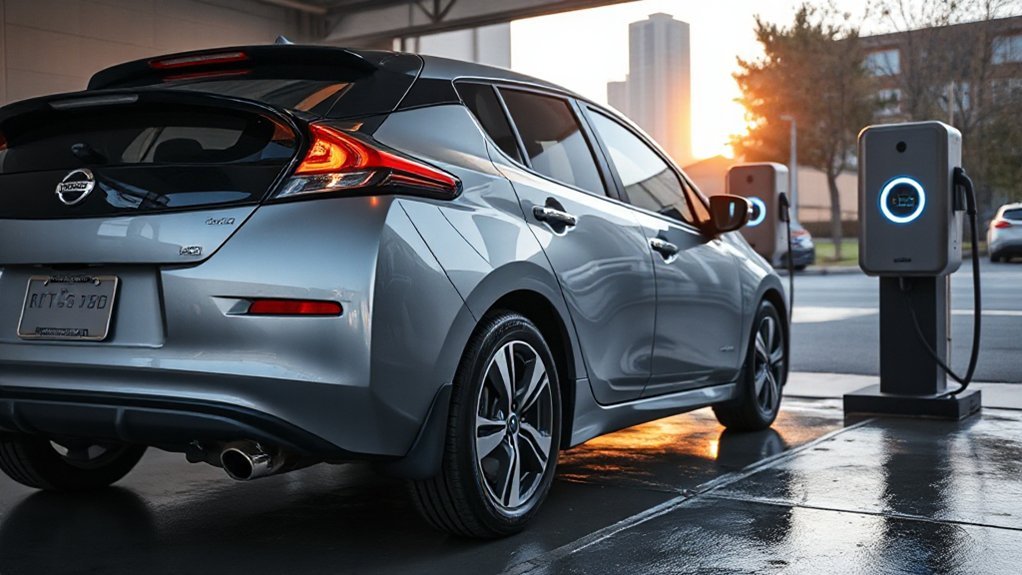
Because the Leaf’s onboard charger tops out at 6.6 kW, premium Level 2 picks should deliver 32–40 A at 240 V, carry UL 2594 and UL 2231 listings, and use NEMA 4/4X enclosures for long-term reliability. Choose units with robust Thermal management, firmware support, and proven Brand reputation. You’ll want 25–30 ft, 40 A‑rated cables, J1772 connectors with silver‑plated pins, and ground‑fault, overcurrent, and temperature sensors. Prefer hardwire installs on 40 A or 50 A circuits, following NEC 625, torque specs, and AFCI/GFCI requirements.
| Feature | Spec |
|---|---|
| Output current | 32–40 A |
| Enclosure/cable | NEMA 4/4X |
Look for Wi‑Fi or OCPP for updates and diagnostics, utility TOU scheduling, and load‑sharing that won’t compromise safety and UL markings.
Considerations for Older Vs Newer Leafs and Multi‑Ev Households
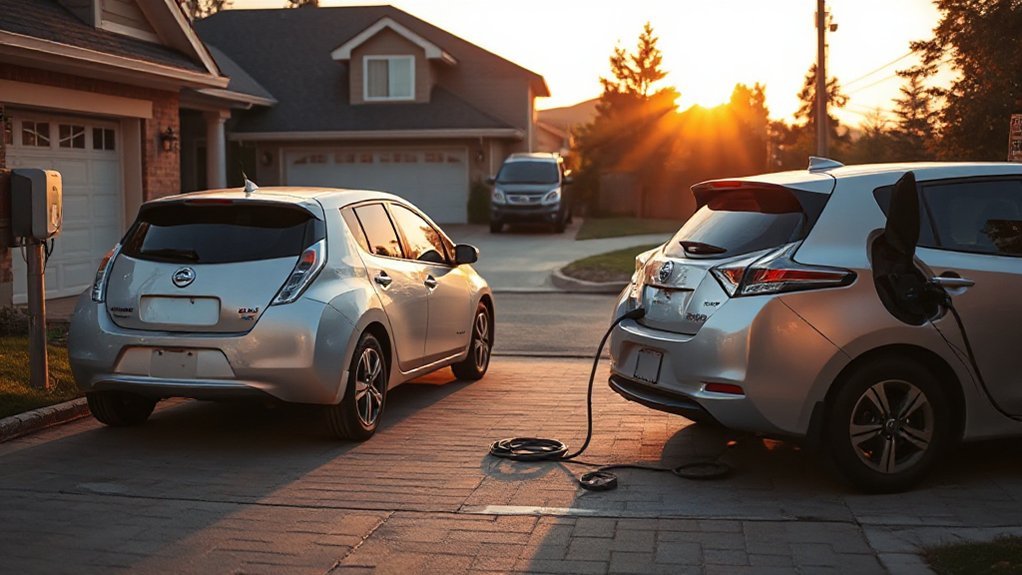
You’ll need to match the EVSE to the Leaf’s onboard charger limits—older models at ~3.3 kW and newer ones at 6.6 kW—so you don’t expect charge rates the car can’t accept. In multi‑EV homes, pick EVSEs with certified load‑sharing features (coordinated current limiting) to prevent overcurrent on shared circuits or the main service. Plan circuit capacity per code: apply the 125% continuous load rule, use properly sized dedicated 240 V circuits, and run a service load calc if you’ll charge vehicles simultaneously.
Onboard Charger Limits
Even though a wall unit might advertise 40–48 A, your Leaf’s onboard charger sets the real AC charging ceiling. Older Leafs typically accept 3.3–6.6 kW; newer trims support up to 6.6–7.2 kW. Supplying more current won’t speed AC charging beyond the car’s limit, but it can accommodate other vehicles. Match EVSE settings to your branch circuit and the Leaf’s acceptance rate to stay within code and protect hardware. Use a clamp meter to confirm actual current draw.
- Verify nameplate EVSE output vs Leaf acceptance (amps/kW).
- Identify Hardware bottlenecks: cable gauge, connector heat limits.
- Watch Firmware ceilings: car may cap current after high temps.
- Apply NEC 80% rule for continuous loads; size breakers/wire accordingly.
- For multi‑EV homes, set the EVSE current to the weakest vehicle.
Load Sharing Features
Knowing the Leaf’s onboard charger caps AC draw, focus next on how multiple EVSEs share a circuit safely. Choose units with UL-listed dynamic load management that coordinates amperage per port via master‑follower control. Good systems sense total draw and allocate current proportionally, pause/resume sessions, and default to a safe minimum if comms fail. That protects older 3.3 kW Leafs and lets newer 6.6–7.2 kW Leafs take surplus without tripping protection.
Prioritize EVSEs supporting OCPP or vendor cloud for user access, RFID permissions, and billing integration in multi‑driver homes. Look for Wi‑Fi/Ethernet backhaul, per‑port GFCI, ground monitoring, and automatic derate on high temperature. An emergency backup mode that rotates charging sequentially can keep both cars usable during constrained supply or outages with transfer equipment installed.
Circuit Capacity Planning
Before selecting amperage, treat the EVSE as a continuous load and size the branch circuit to 125% per NEC 625.
Older Leafs with 3.3–6.6 kW chargers fit 30–40A circuits; 6.6 kW trims suit 40A, while future‑proofing may justify 50A. For multi‑EV homes, you evaluate panel capacity, perform NEC 220 load calcs, and choose EVSEs with adjustable current or coordinated sharing.
- Size conductors and breakers per 75°C column; derate for ambient, bundling, and distance voltage drop.
- Use GFCI protection, listed EVSE, and properly rated receptacles or hardwired terminations.
- Balance EV loads across legs for Phase balancing on split‑phase services.
- Specify THHN/THWN‑2 copper in conduit; bond and ground per NEC 250.
- Choose EVSE with power factor correction and Harmonic mitigation to limit neutral and transformer stress.
Rebates, Incentives, Permits, and Warranty Tips

While incentives can substantially reduce the cost of a Level 2 charger for your Nissan Leaf, you’ll only benefit if you follow program rules, permitting requirements, and manufacturer instructions.
Verify eligibility for federal or state Tax Credits and utility rebates before purchase; many require a UL-listed EVSE, professional installation, and closed permits.
Document the Claim Process: purchase receipt, model/serial, electrician license, permit number, photos, and final inspection.
Pull a permit with your AHJ, follow NEC 625 and 110, perform load calculations, and use a dedicated 240V circuit with correct breaker and wire gauge.
Install a labeled disconnect if required.
Protect warranty: avoid DIY wiring, use surge protection, keep invoices, register the unit, update firmware, and don’t exceed rated amperage or outdoor NEMA rating limits.
Conclusion
You’ve got the roadmap: match the Leaf’s 3.3–6.6 kW onboard limit, pick a UL‑listed J1772 EVSE, and size conductors/breakers to NEC’s 125% rule (e.g., 32 A on a 40 A breaker). Choose NEMA 3R/4, 20–25 ft cable, and adjustable amps; hardwire or plug‑in to suit permits and rebates. Enable secure scheduling and metering. Like Odysseus steering between Scylla and Charybdis, you’ll balance speed and safety—and arrive home with reliable, code‑compliant charging for your Nissan Leaf.