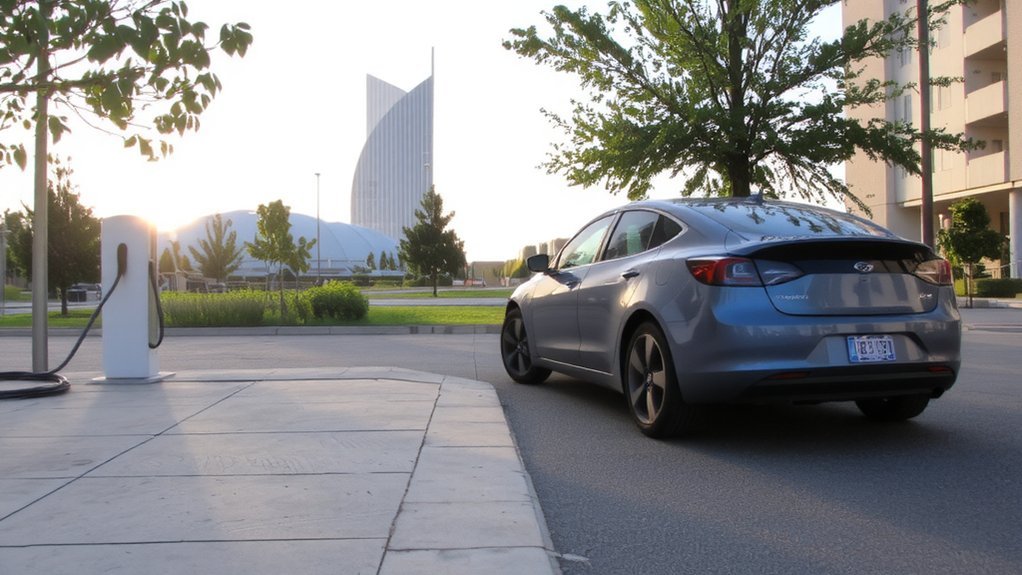
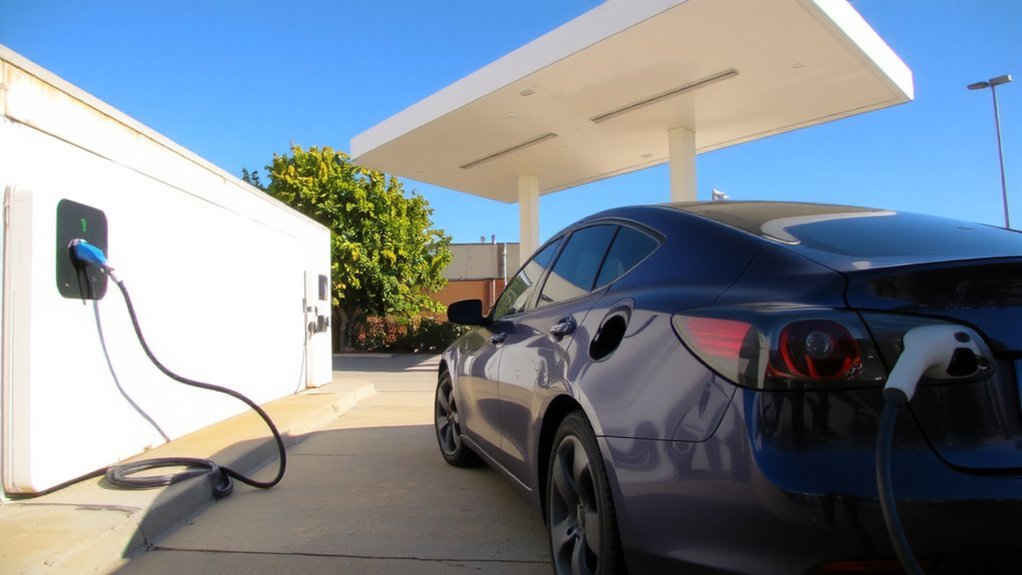
You want reliability, you want durability, you want safety. If you’re installing an EV charger outdoors, you can’t skip weatherproofing and code‑compliant installation. I’ll outline top models, key specs like IP ratings and corrosion resistance, plus permit and placement tips—starting with…
Key Takeaways
- Prioritize chargers with IP66/NEMA 4X (or higher) ratings, sealed enclosures, and breathable membranes for reliable outdoor water and dust protection.
- Choose models with corrosion‑resistant materials (316/316L stainless, aluminum, or GRP) for coastal or high‑humidity environments.
- Consider top weatherproof Level‑2 options like Grizzl‑E, Emporia, ChargePoint Home Flex, LENZ, and Tesla Wall Connector for durability and power.
- Ensure built‑in safety: ground‑fault protection, automatic shutdown, surge arrestors, and UL/ETL listings for wet‑weather operation.
- Hire a licensed electrician, obtain permits, and confirm NEC compliance, wet‑rated wiring, and proper conduit/cable management for outdoor installs.
Why Weather Resistance Matters for Outdoor EV Chargers
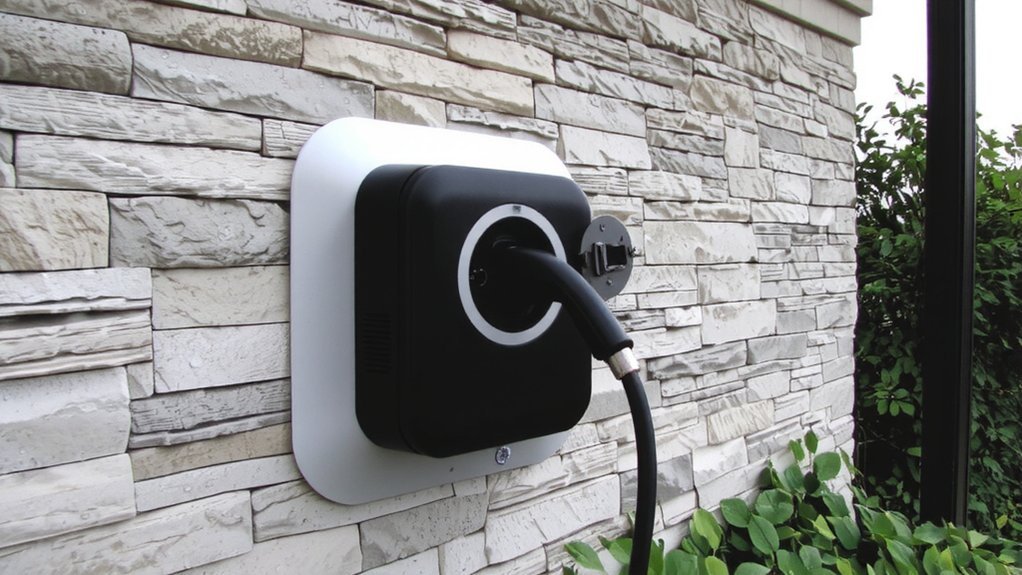
If you install an EV charger outdoors, weather resistance is nonnegotiable: rain, snow, salt air and dust can penetrate unsealed equipment and cause shorts, corrosion, insulation failure and ground faults. Choosing an EVSE with an IP66 waterproofing rating provides proven protection against dust and powerful water jets. You should choose units with IP66 or higher so heavy water jets, dust and debris can’t reach live parts.
Waterproof connectors, sealed enclosures and breathable membranes prevent moisture and salt-related corrosion that degrades contacts and control boards. In freezing climates you’ll want heaters or adaptive software to avoid connector icing and seal breakdown.
Built-in ground-fault protection, automatic shutdown and surge arrestors cut power instantly if moisture causes a fault. Proper drainage and recessed interfaces further reduce water accumulation. Meeting UL and IEC standards confirms the charger handles real-world wet weather safely. Protect your investment.
Top Weatherproof Level 2 Chargers for 2025–2026
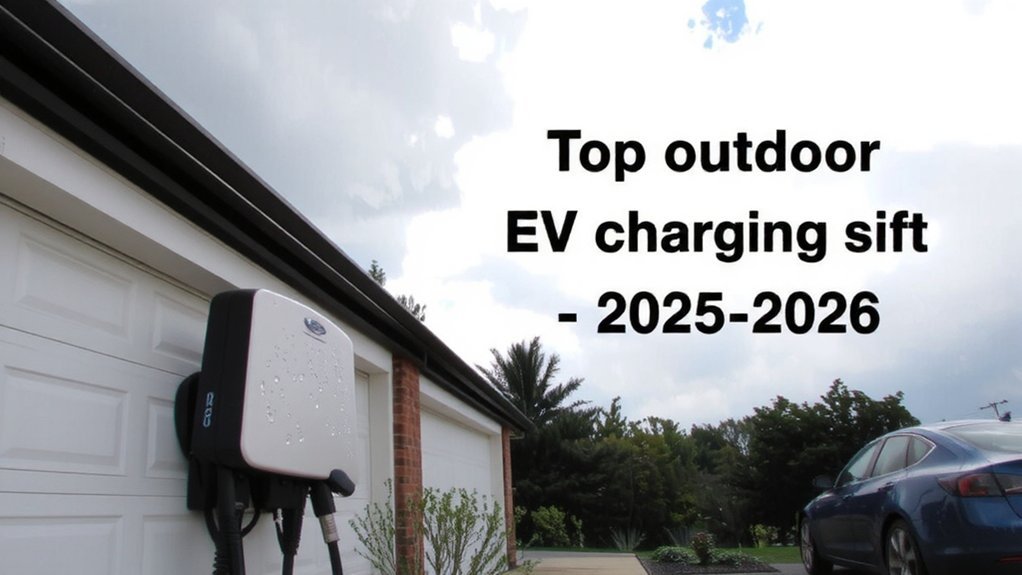
Choosing the right weatherproof Level 2 charger means balancing power, durability and smart features for your climate and routine. You’ll want reliable options: Grizzl‑E Classic offers rugged aluminum housing, 40 A (9.6 kW) output, dual‑plug models and corrosion‑resistant thick cables for extreme temperatures, trading off smart connectivity.
Emporia adds 50 A charging, Wi‑Fi/Bluetooth, an RFID reader for secure access, NEMA 4 protection and a 3‑year warranty. ChargePoint Home Flex gives adjustable 16–50 A output, strong app control and home automation integration in a compact outdoor design. LENZ supplies a simple, durable 40 A metal‑enclosed unit without smart features. Tesla’s Universal Wall Connector supports up to 48 A, electronic adapter locking and app monitoring. Pick what matches your safety and usage priorities and weatherproof ratings. The Duevolt portable option also provides 40A fast charging for rapid top-ups.
Installation and Permitting Considerations for Outdoor Chargers
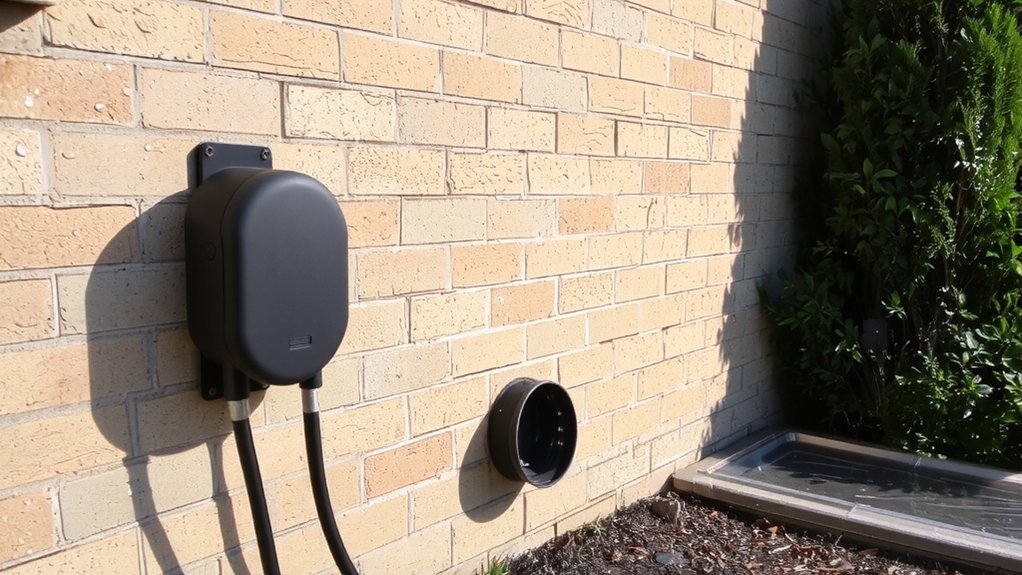
You’ve picked a weatherproof Level 2 unit; now you’ll need to handle the site, code and permit work that makes outdoor charging legal and safe. Note that wet-rated cables are required for outdoor installations to meet NEC requirements. Start by securing an electrical permit—most jurisdictions require one for new 240V circuits and hardwired chargers.
You’ve chosen a weatherproof Level 2 charger; secure an electrical permit and follow local code for safe outdoor installation.
Hire a licensed electrician to prepare plans, submit documentation, and guarantee NEC compliance: wet-rated cables (NEC 625.17), durable labels (625.42), extra-duty weatherproof covers (625.56), and minimum mounting and control-box heights of 24 inches (NEC 625.50).
Assess location for accessibility, cable reach, conduit type (RNC or equivalent), and cable-management to avoid trip hazards. Expect conduit support spacing and proper wire sizing—typically 6 AWG copper—and additional building permits if structural changes are needed.
Check with authorities before you begin.
Durability and Material Features to Look For
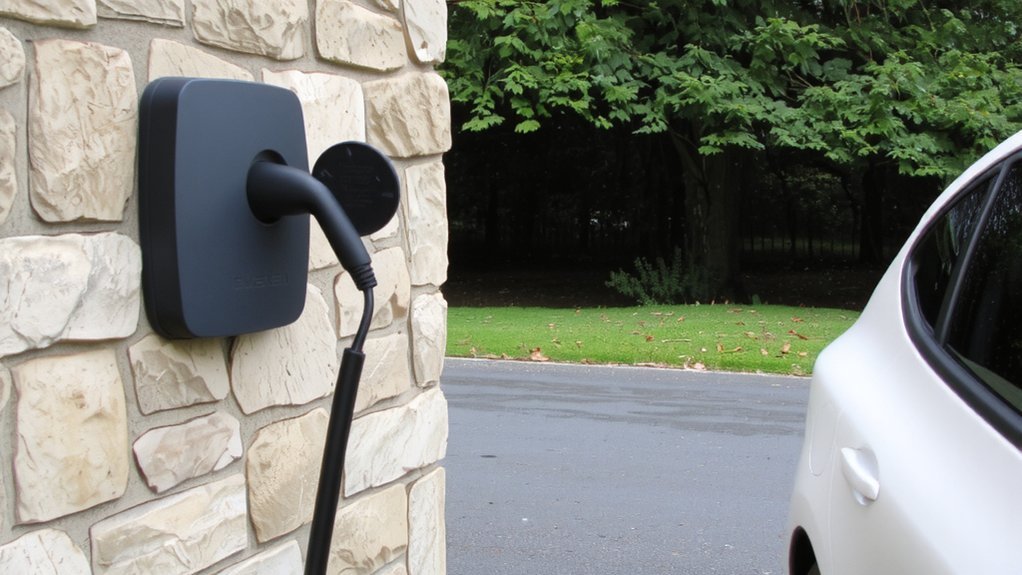
When choosing an outdoor EV charger, you should prioritize weatherproof enclosures (IP65 or higher) that keep dust and water out.
Look for corrosion-resistant materials like stainless steel, powder-coated aluminum, polycarbonate, or copper components to guarantee long-term reliability in coastal or humid areas. Also pick chargers with UV-resistant cable jackets so cords stay flexible and safe after prolonged sun exposure. Because the EV power module is responsible for converting AC to DC for EV batteries, choosing chargers with durable power modules also helps ensure reliable long-term performance.
Weatherproof Enclosures
You’ll want an enclosure made of cold-rolled or stainless steel with toughened, UV-protected display panels, NEMA 3R (or higher) ratings, and built-in vents and drainage so water, dust, and heat can’t compromise the charger.
Choose units with secure, lockable access—key or combination locks—to prevent tampering and unauthorized use, protecting wiring and electronics. Guarantee interior space allows airflow and service clearance; roomy layouts accommodate cables, multiple chargers, and sensors for temperature and humidity monitoring.
Verify UL listing and NEC compliance for outdoor receptacles and installation. Confirm mounting hardware and design resist impacts and temperature extremes without warping. Prioritize enclosures that channel moisture away, keep dust out, and provide clear, UV-stable displays so your outdoor charger stays safe and operational over many seasons of use reliably. Also look for enclosures built specifically for Level 2 chargers to ensure proper fit, mounting, and ventilation.
Corrosion-Resistant Materials
Enclosure materials determine how long an outdoor charger lasts in salt air, freeze–thaw cycles, and heavy use, so after picking a weatherproof housing you should focus on corrosion-resistant metals, alloys, and polymers. A robust conduit system is critical for reliable high-power EV charging stations. You’ll want 316/316L stainless steel for coastal or humid sites; 304 works inland. Galvanized or aluminum‑zinc plated steel and aluminum‑magnesium alloys give lightweight, impact‑resistant protection where corrosion and mechanical stress are concerns. Fiberglass‑reinforced composites and high‑grade outdoor polymers resist chemical and environmental degradation while lowering weight.
Match materials to your climate, guarantee compatibility with electrical components to avoid galvanic corrosion, and require proper grounding during installation. Look for NEMA 4X and IP65–IP67 ratings plus ETL listings. Inspect and maintain enclosures regularly to preserve safety and long service life, and reduce lifecycle costs.
UV-Resistant Cable Jackets
Although sunlight can quickly degrade ordinary jackets, choosing UV-resistant compounds like TPU or advanced TPE keeps EV charging cables flexible and crack-free outdoors. You should prefer TPU or specialist TPE because they resist UV, oils, ozone and retain flexibility down to −30°C or lower, unlike PVC, which hardens and becomes brittle.
Look for UL, EN or GB/T certifications that include UV and flexibility testing to verify outdoor suitability. TPU gives superior abrasion and mechanical strength for pavement use; advanced TPE balances softer handling with improved wear. Consider LSHF/HFFR options where thermal stability and low smoke are critical.
Inspect jackets regularly for discoloration, cracks or stiffness, and select materials aligned with local temperatures and maintenance practices to maximize safety and reduce repair and replacement risks. Manufacturers such as Alphagary supply purpose-built compounds for these requirements, including GARAFLEX TPE grades for long-term outdoor durability.
Cable Management and Connector Protection Solutions
If you park or install chargers outdoors, pick weather-resistant holders, reels, and pedestals that keep cables off the ground and connectors dry. Use stainless steel, powder-coated steel, or UV-resistant plastics for holsters and hooks to resist rust, UV and dust.
Choose downward-tilted or angled holsters and sealed housings for retractable reels to shed water and block debris. Retractors (up to ~96 inches reach) reduce tangles, support thick cables and heavy weights, and improve safety by preventing tripping hazards.
Wall-mounted, pedestal-mounted, and free-standing pedestals with integrated management protect connectors from pooling water and physical damage. Prefer products with weather-resistance testing or relevant certifications, and select installations that avoid cable kinks and keep connectors secure and dry for reliable outdoor charging. And simplify maintenance tasks regularly. Also, recognize that Loose cables can be tripping hazards.
Placement, Accessibility, and Safety Best Practices
Where should you place an outdoor EV charger for safe, convenient use? Mount the charger within 15 feet of the parking spot so the cable reaches easily, avoid obstructions like trees or structures, and give clearance for maintenance and upgrades. Position units at least 24 inches above ground (NEC 625.50) and aim for a 3–5 foot user height for comfortable access and accessibility.
Choose sheltered locations out of direct rain, snow, and harsh sun; use IP65+ rated, UV‑resistant, corrosion‑resistant models and wet‑rated cables. Guarantee clear, well‑lit paths, avoid traffic lanes and flammable materials, and install security lighting or cameras. Verify panel capacity, provide an accessible disconnect (NEC 625.43), use weatherproof outlet hoods, and follow all local and NEC wiring requirements. Ensure the charger is supplied by a dedicated 240V circuit. Prioritize safety and compliance.
Conclusion
By choosing a weatherproof Level 2 charger and installing it properly, you’ll keep your EV charging reliably through rain, snow, and salt air for years to come. Look for IP66 or better, corrosion-resistant materials, UL-listed safety features, and solid cable management. Remember permits and outdoor-rated enclosures. One striking fact: outdoor chargers with proper weatherproofing reduce downtime by about 70% versus inadequately protected units—so investing in durability saves time, money, and protects resale value.