
You can estimate EV charge time with precision by inputting battery capacity (kWh), current and target SoC (%), charger power (kW), and efficiency losses. The tool applies SAE charging levels (L1/L2 AC) and DC fast standards (CCS/NACS), accounts for onboard charger limits, and models tapering above ~80%. You’ll see how temperature and connector compatibility shift results—and how to optimize sessions—yet one variable often surprises most drivers.
Key Takeaways
- Compute time = required_kWh ÷ effective_kW, adjusted for AC/DC efficiency and taper; report average kW and total kWh.
- Calculate required_kWh = usable_battery_kWh × (target SoC − start SoC), considering state of health.
- Effective_kW is capped by the lowest of vehicle acceptance, EVSE current×voltage limits, wiring/breaker, and ISO 15118 negotiated profiles.
- Expect slower charging above 60–80% SoC due to constant-voltage taper; plan fast sessions between roughly 10–60%.
- Typical station power: Level 1 1.4–1.9 kW, Level 2 3.3–19.2 kW, DC fast 50–350 kW; vehicle limits may dominate.
How the EV Charging Time Calculator Works
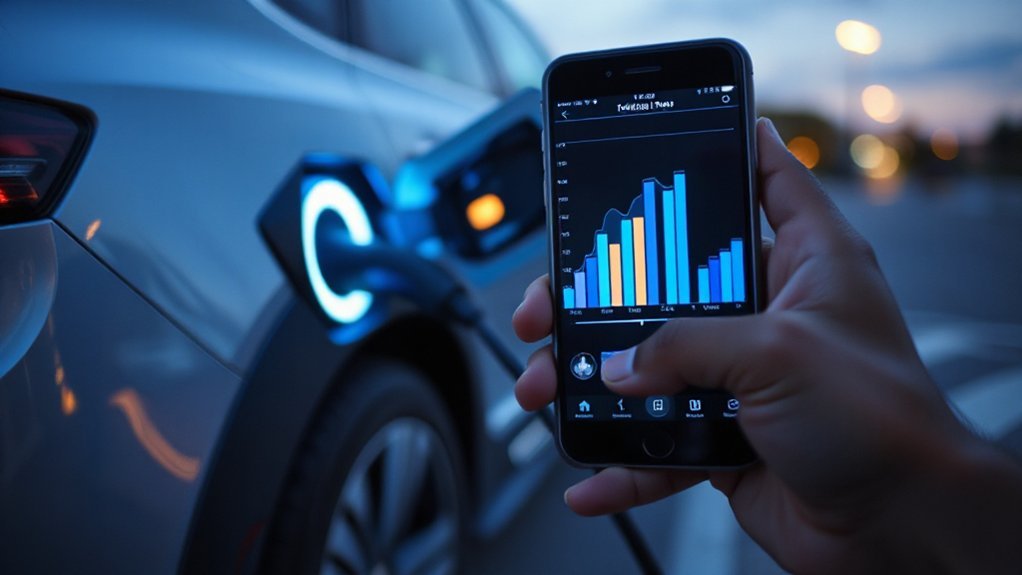
Although the interface looks simple, the calculator applies a standards-based power model to estimate time from energy needed and effective charge power. You enter parameters, and the Calculation algorithm maps them to power limits using IEC 61851/J1772 duty-cycle rules, AC/DC efficiency factors, and line-voltage constraints. It computes usable power, caps it by negotiated limits (ISO 15118 profiles), and integrates energy over time with stepwise tapering when thresholds apply. The User interface presents a deterministic estimate: time = required_kWh ÷ effective_kW, adjusted for efficiency and taper coefficients. It validates ranges, snaps to standard power steps, and exposes assumptions so you can audit inputs and outputs. Results include average kW, total kWh processed, and confidence bands derived from variance in efficiency. All calculations remain transparent always.
What You’ll Need: Vehicle, Battery, Charger, and Starting Charge
To apply that standards-based model, gather the inputs that bound power and energy. You’ll specify vehicle constraints: onboard charger acceptance (kW), peak DC acceptance (kW, if applicable), and thermal derating behavior. Enter battery parameters: usable capacity (kWh), state of health (%), target SoC (%), and starting SoC (%). Provide charger/EVSE limits: connector standard, maximum current (A), supply voltage (V), circuit breaker rating (A), and cable rating. Include efficiency factors: AC/DC conversion (%), balance-of-system losses (%), and ambient temperature assumptions. Confirm compliance with SAE J1772/CCS/ISO 15118 where relevant. Note effects on ownership costs: faster hardware may raise equipment price and utility demand charges. Record insurance implications if installing home hardware or using public sites requiring liability coverage. Document metering method and time-of-use tariff selection details.
Charging Levels Explained: Level 1, Level 2, and DC Fast Charging
Why do charging levels matter? They determine power (kW) delivered and therefore hours to add kWh. Level 1: 120 V AC, 12–16 A, ~1.4–1.9 kW via SAE J1772; adds ~4–6 miles/hour. Level 2: 208–240 V AC, 16–80 A, 3.3–19.2 kW (common 7.2–11.5 kW) using J1772; suitable for daily charging. DC fast charging: 400–1000 V DC, 50–350 kW via CCS (SAE J1772 Combo) or NACS (SAE J3400); enables rapid energy transfer on trips.
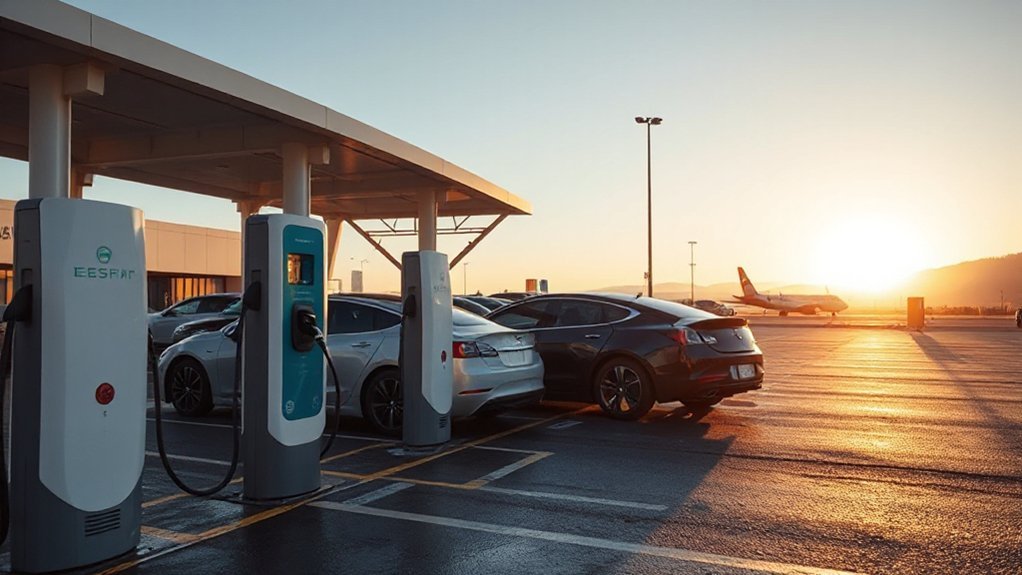
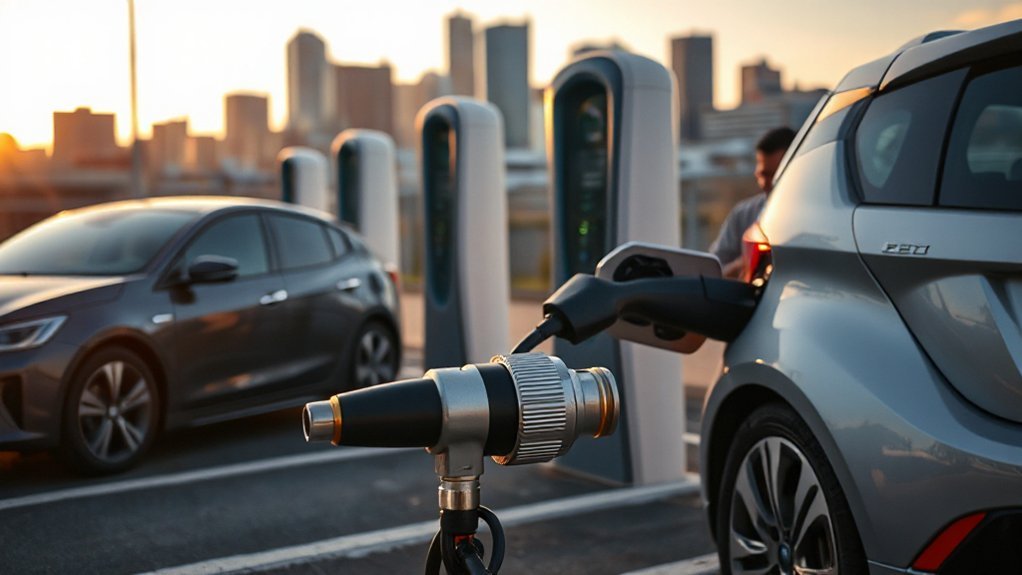
You’ll choose based on breaker capacity, vehicle onboard charger rating (AC limit in kW), and connector support. Standardization efforts (SAE, IEC, ISO 15118) improve interoperability, Plug & Charge, and safety. For grid integration, prefer stations supporting OCPP, load sharing, and demand-response so utilities can modulate power without compromising your constraints or schedules.
Charging Curves, Tapering, and Why the Last 20% Takes Longer
While EV chargers advertise kW, the battery dictates the charging curve: a constant‑current phase followed by constant‑voltage taper as cell voltage approaches its upper limit.
You’ll see near‑plateau power early, then declining amperage to hold pack voltage within BMS limits. Internal resistance and safety margins require taper, so the final 20% consumes disproportionate time. Standards like IEC 61851 and ISO 15118 coordinate setpoints and limits. Use Visualization Techniques—power‑time and energy‑time graphs — to estimate remaining time with precision. Historical Evolution: earlier chemistries tapered sooner; modern NMC/LFP sustain higher current longer but still obey CV. Target energy, not headline kW, when estimating end-of-session time accurately now.
| Phase | Window | Power profile |
|---|---|---|
| Ramp‑in | 0–10% | Power rises to charger/battery cap |
| Constant‑current | 10–60% | Power near maximum |
| Constant‑voltage | 60–100% | Power tapers; current decays exponentially by design specifications |
Factors That Impact Charge Time: Temperature, State of Charge, and Power Limits
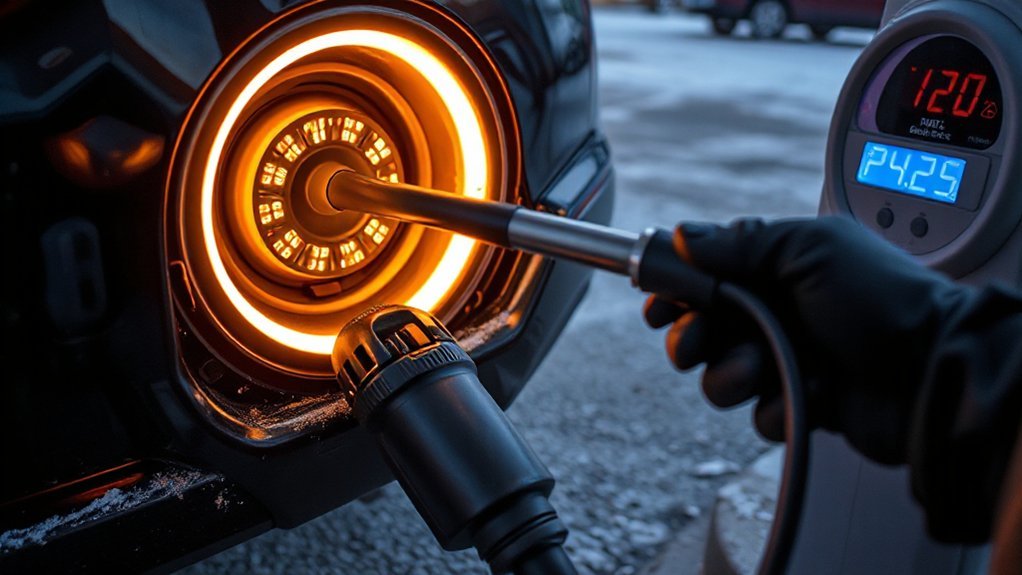
Because lithium‑ion cells accept current safely only within temperature‑ and voltage‑bounded envelopes, the BMS dynamically caps charging power based on three variables: pack temperature, state of charge (SoC), and available supply power. Below 10°C or above ~45°C, you’ll see reduced C‑rates; preconditioning to 25–35°C enables near‑max power. As SoC rises, voltage approaches upper limits, so current is tapered; plan fastest sessions in the 10–60% window. Available supply power is bounded by circuit limits and upstream constraints; utilities may curtail to preserve Grid Stability. Thermal and electrical losses grow with I²R; minimize Cable Resistance, keep connectors clean, and use short, rated cables. The BMS enforces cell delta‑T and voltage‑imbalance limits, further modulating current to protect lifetime and assure compliance with safety standards and grid codes.
Onboard Charger and Station Compatibility: Matching Kw to Maximize Speed
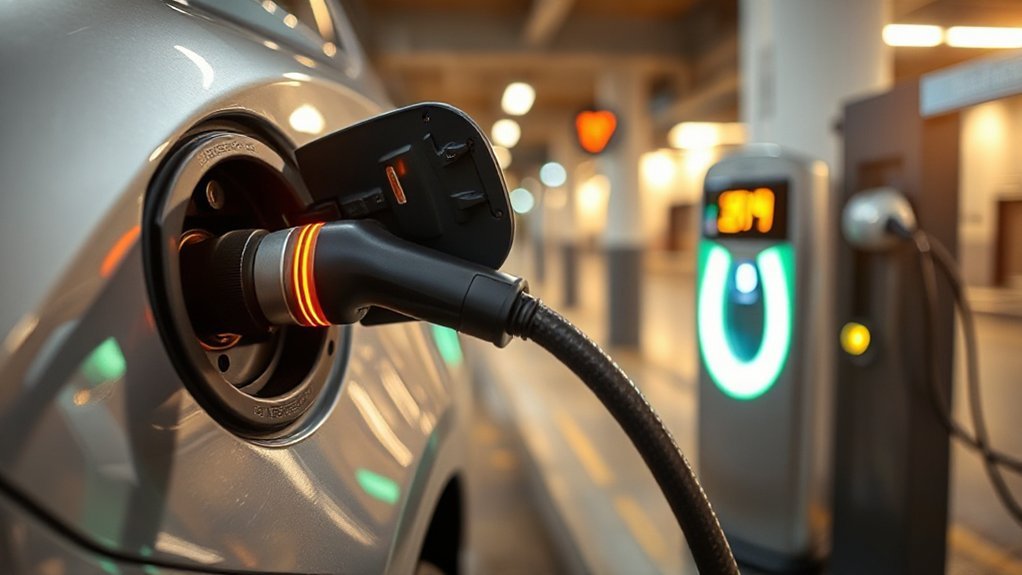
Although a charging station may advertise 22 kW AC or 350 kW DC, your vehicle’s onboard charger (OBC) or DC fast‑charge limit sets the true ceiling. To maximize speed, match station power to your car’s AC OBC rating (e.g., 7.4 kW single‑phase, 11 kW or 22 kW three‑phase) and its DC voltage/current envelope. On DC, charging caps at min(max kW, voltage × station current, thermal limits). Verify Connector Compatibility: CCS1/CCS2, NACS, CHAdeMO for DC; J1772/Type 2 for AC. Confirm Communication Protocols: IEC 61851 for AC control, IEC 62196 for interfaces, ISO 15118 or DIN 70121 for DC, SAE J1772 signaling. If the OBC is 7.4 kW, a 22 kW AC post delivers ~7.4 kW. Similarly, a 120 kW car won’t pull 350 kW.
Real-World Scenarios: Home, Work, and Road Trip Charging Strategies
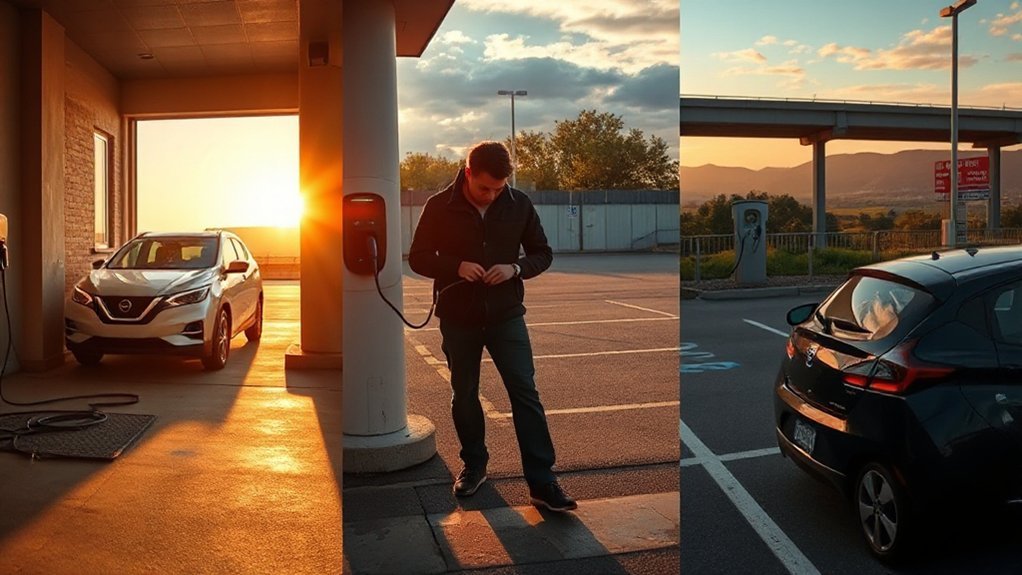
How do you turn power and protocol limits into a practical plan at home, work, and on the road? At home, size your circuit to 240 V × 32–48 A (7.7–11.5 kW) per NEC/IEC ratings, then schedule to add daily use: kWh needed = miles × Wh/mi ÷ 1000. Target arrival SOC 20–30% and depart 70–90% when time allows. At work, Level 2 at 6–7 kW typically restores 30–40 kWh in an 8‑hour shift; rotate per charging etiquette, moving at set SOC or time caps. On trips, use DC fast by connector standard (CCS or NACS), confirm station kW and shared power. Plan legs by usable kWh, expected C‑rate, and elevation. Destination planning: book lodging with Level 2, and buffer 10–15% SOC for contingencies.
Tips to Charge Faster While Protecting Battery Health
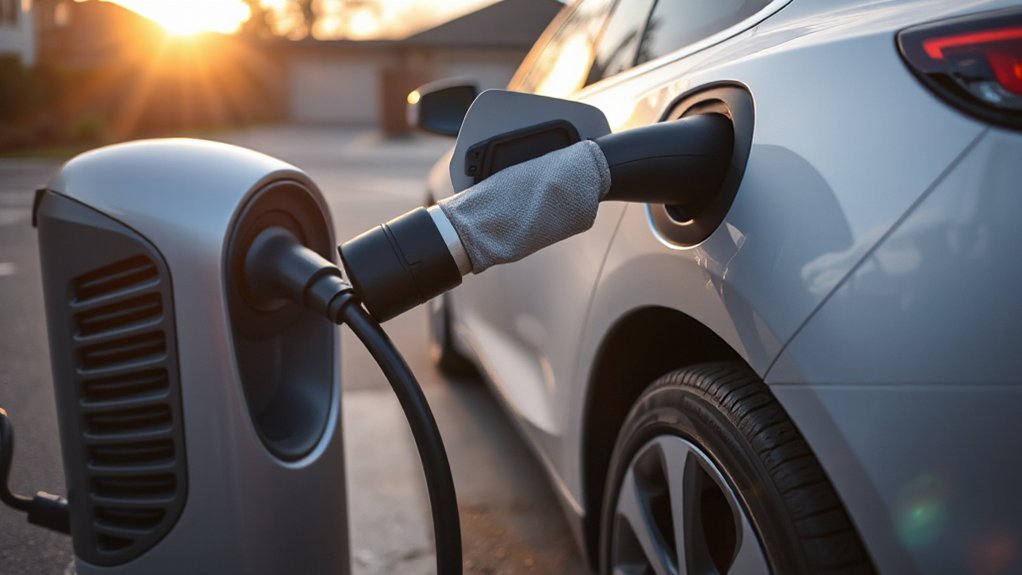
While you can shorten sessions by maximizing power within standards and BMS limits, prioritize settings that avoid thermal and SOC stress. Precondition the pack to 20–35°C before DC fast; use navigation to trigger it. Target the 10–60% SOC window for peak kW; taper accelerates above ~70%. Choose sites that match your vehicle’s max kW and protocol (CCS/SAE J1772, IEC 61851, ISO 15118) to avoid handshake downgrades. If cell or inlet temp exceeds 45°C, manually cap current or switch to AC. Schedule charge to finish near departure; avoid routine 100%. Keep effective C-rate ≤1.0 on hot days. Run Battery Diagnostics periodically to verify resistance growth. Observe Charging Etiquette: avoid occupying high-power stalls when limited by your car or shared cabinets. Verify cable cooling and connectors.
Conclusion
You now have a repeatable method to predict charge time. Input battery kWh, start/target SoC, charger kW, and 5–15% losses; the calculator applies taper per SAE/IEC profiles and AC/DC limits. Match station power to onboard acceptance, prefer 10–80%, precondition, and choose compatible connectors (CCS/NACS/CHAdeMO). Use Level 1/2 for dwell, DCFC for trips. Plan sessions like a flight plan—precise, efficient, safe—and you’ll minimize time, costs, and degradation while meeting real-world schedules under varied climates and loads.