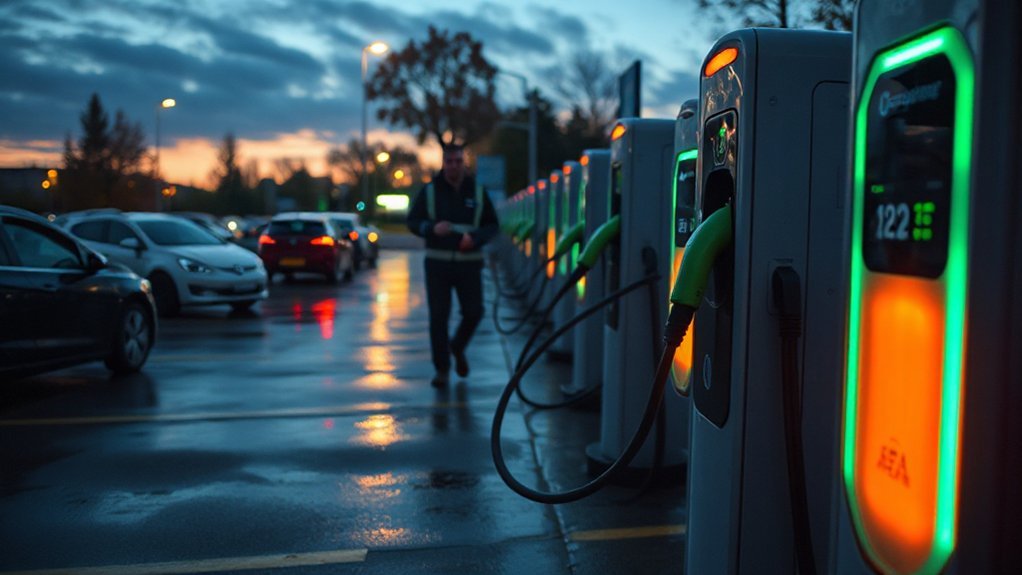
You can usually charge an electric car in the rain; modern chargers and inlets are sealed and include automatic safety cutoffs. Still, there are practical checks and rare exceptions you’ll want to know about to stay safe and avoid trouble.
Key Takeaways
- Yes — modern EVs and chargers are designed to charge safely in rain, with sealed connectors and automatic fault‑interruption systems.
- 2025–2026 standards mandate improved waterproofing, moisture detection, RCD/GFCI protection, and stricter firmware safety testing on chargers and vehicles.
- At public stations, avoid pooled water, check seals and indicator lights, and report damaged or warm connectors before plugging in.
- For home charging use weatherproof EVSE, GFCI‑protected circuits, sealed outdoor inlets, and store portable cables off the ground.
- Do not charge during flooding, heavy lightning, visible damage, wet or hot connectors, persistent fault warnings, or after collision damage until inspected.
Why Charging an EV in the Rain Is Generally Safe

You can charge an EV in the rain because chargers, vehicle inlets, and safety systems are built to keep water out and cut power if something goes wrong. You’ll find connectors and ports sealed with gaskets and covers, and most public and home chargers have weatherproof ratings.
Charging circuits monitor current and voltage constantly, so they’ll interrupt power if they detect faults. The vehicle also communicates with the charger, confirming a safe connection before energy flows.
You should still avoid puddles around equipment, inspect cables and plugs for damage, and park on stable ground to reduce risk. If you see corrosion, frayed insulation, or loose fittings, stop and get a qualified technician to inspect before charging. They’ll verify safety and repair issues promptly there.
Updated Safety Standards and Built‑In Protections (2025–2026)
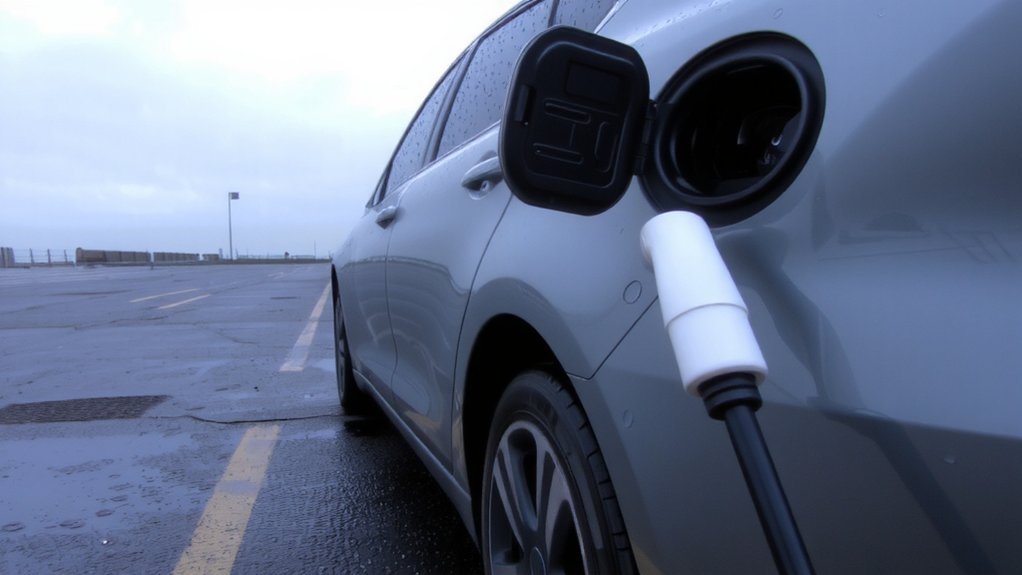
How have safety rules kept pace with wider EV adoption? Regulators updated standards in 2025–2026 to tighten waterproofing, connector interlocks, ground-fault protection, and software safety. You benefit from IP-rated enclosures, mandatory automatic shutoff if moisture enters a port, and PLN-style residual current devices now standard in many chargers.
Automakers deploy layered protections: sealed high-voltage modules, humidity sensors, and real‑time monitoring that isolates faults before current flows. Firmware must meet stricter cybersecurity and safety validation, so you get safer updates and predictable shutdown behavior.
Standards also require clearer labeling and testing under realistic wet conditions. Follow manufacturer guidance and choose certified equipment; these built‑in protections reduce risk and let you charge with greater confidence when weather turns wet. Inspect seals periodically to maintain protection regularly.
What to Check at Public Charging Stations During Wet Weather
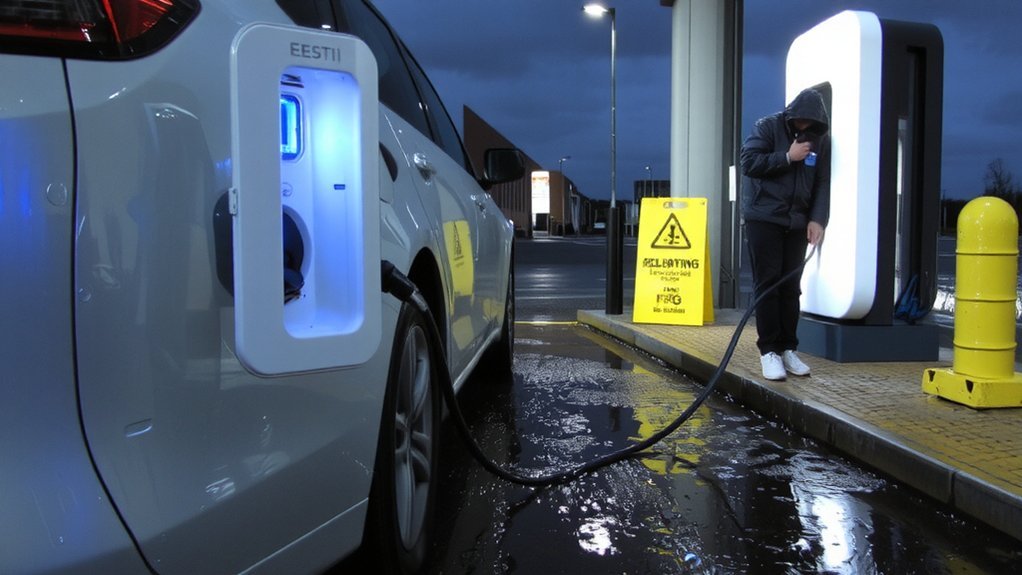
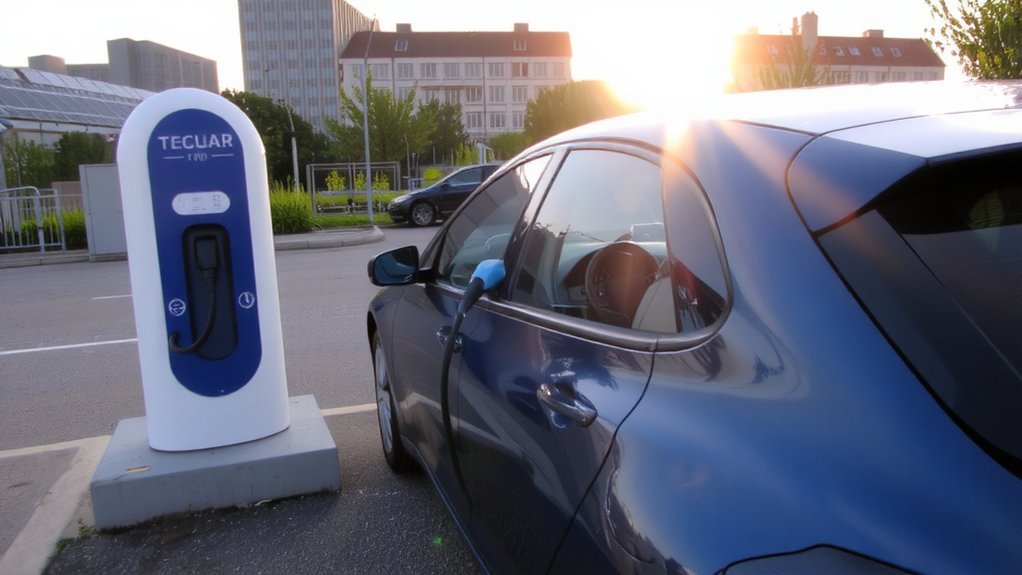
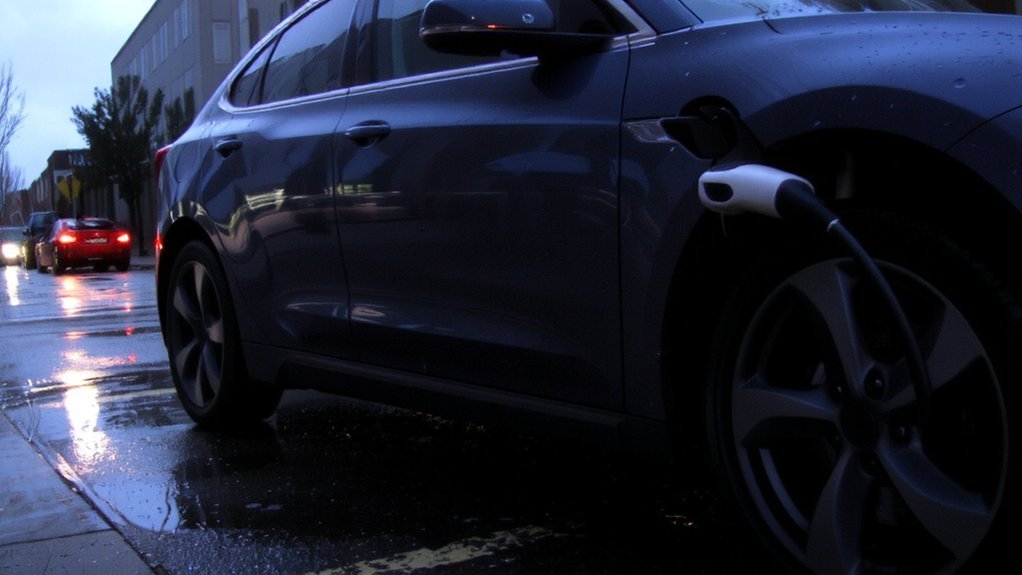
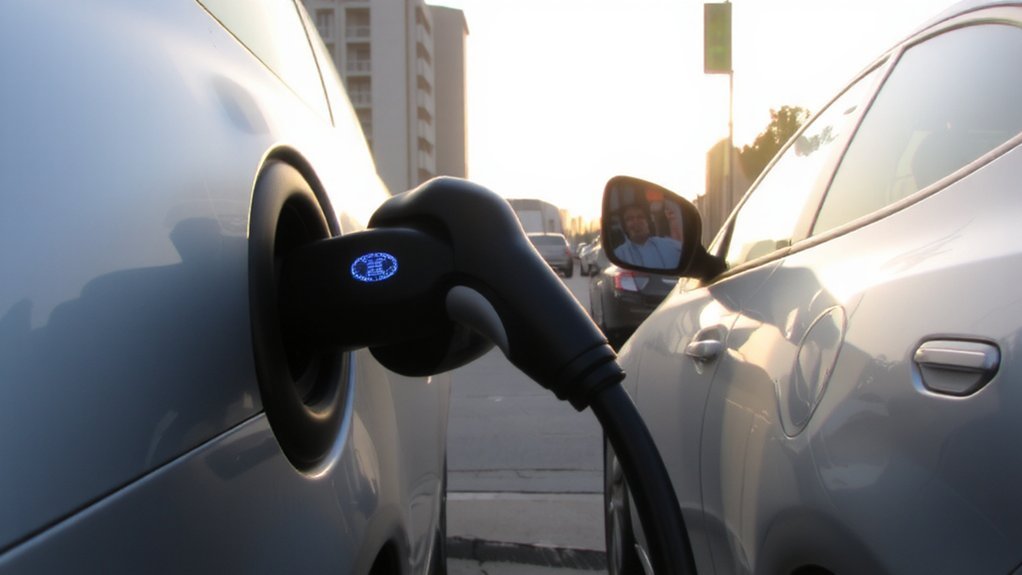
A few quick checks will cut your risk when charging at a public station in the rain. Before you plug in, inspect the area for pooled water, exposed wiring, frayed cables, or damage to the connector.
Make sure the station has intact weather seals, covers, and a visible certification or maintenance sticker. Check that the unit’s indicator lights or display show normal status and that emergency stop and residual current device (RCD)/GFCI protections are present.
Stand on dry ground, avoid metal grates or puddles, and route the cable so it doesn’t create a trip or get submerged. If the connector feels loose, warm, or wet, don’t use it—move to another stall and report the issue to the operator or app. Safety first, every time.
Home Charging Best Practices for Rainy Conditions
When charging at home in wet weather, take a few simple precautions to keep you and your EV safe: park on dry, level ground, use a dedicated weatherproof EVSE or properly installed outdoor-rated outlet, and keep connectors, cords, and the charging port clear of standing water.
Stand on a dry surface and handle plugs with dry hands; wear insulating footwear if the pavement is damp. Use a GFCI-protected circuit and guarantee the outdoor inlet and conduit have proper seals and weatherproof covers.
Inspect cables, connectors, and seals regularly for cracks, fraying, or corrosion, and replace damaged components promptly. Store portable chargers off the ground and under cover when not in use.
Follow your EV and charger manufacturer guidelines for wet-weather care and stay informed.
Signs and Situations When You Should Avoid Charging
Even if you follow good home-charging habits, there are clear signs and specific situations where you should avoid plugging in—if you see water pooling around the charger, exposed wires, damage to the connector, or persistent dashboard warnings.
Don’t charge during active flooding, heavy lightning, or when the outlet or charger feels wet or unusually warm. If the vehicle’s inlet cover won’t close, charging port smells like burning, or the charger’s LED indicates a fault, stop and disconnect.
Avoid charging after recent collision damage until a professional inspects electrical systems. If you’re unsure, don’t guess: contact your EV manufacturer, installer, or a certified technician. Prioritize safety over convenience; delaying a charge is better than risking shock, fire, or further damage—and get it checked promptly.
Conclusion
Think of charging in the rain like sheltering under a well-built awning: you’re usually protected. You can trust modern chargers, vehicle inlets, and layered safety systems introduced by 2025–2026, but you should still check connectors, seals, and the area for damage or standing water. At public stations and home setups, follow basic precautions and heed warning signs. If you spot damage, moisture intrusion, or persistent faults, don’t charge until a pro inspects it first today.