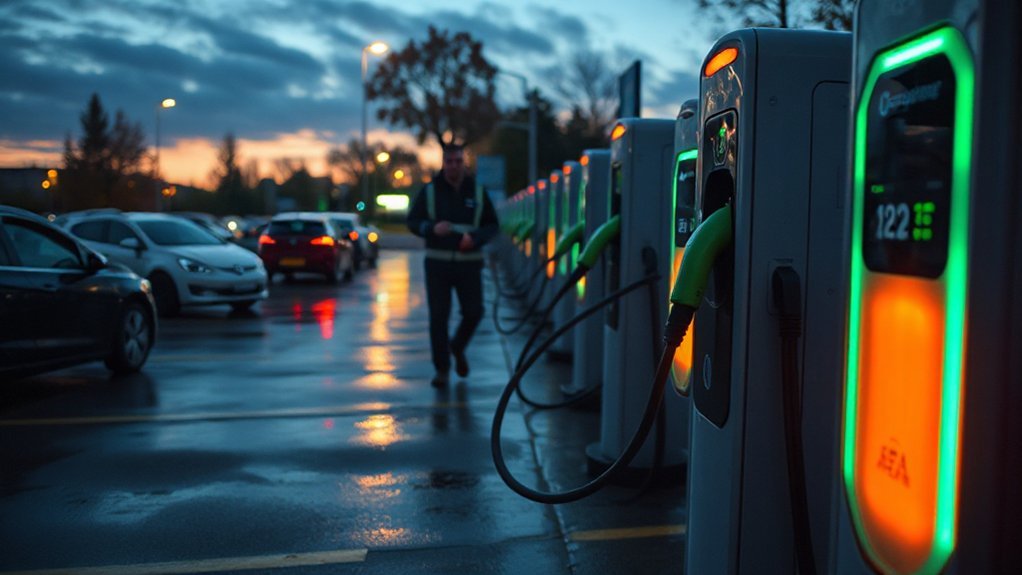
You can charge an EV from a standard 120V outlet—it’s called Level 1—and you don’t need special installation. It’s slow, typically adding 3–5 miles per hour, but it can be practical for low-mileage drivers or plug-in hybrids. Know the safety limits, typical recharge times, and when a 240V upgrade makes sense; we’ll cover what matters most…
Key Takeaways
- Yes — most EVs and PHEVs can charge from a standard 120V household outlet using the manufacturer-supplied Level 1 cable.
- Charging rate is slow: about 1.3–2.4 kW, roughly 3–5 miles of range added per hour.
- Best for plug-in hybrids, low-mileage drivers, or overnight top-ups; full BEV charges can take 40–70+ hours.
- Safety: use a grounded outlet on a dedicated circuit, avoid extension cords, watch for warm outlets or tripped breakers.
- For daily driving or larger batteries, install a 240V Level 2 charger (faster, safer) via a licensed electrician.
What Is Level 1 Charging and How It Works
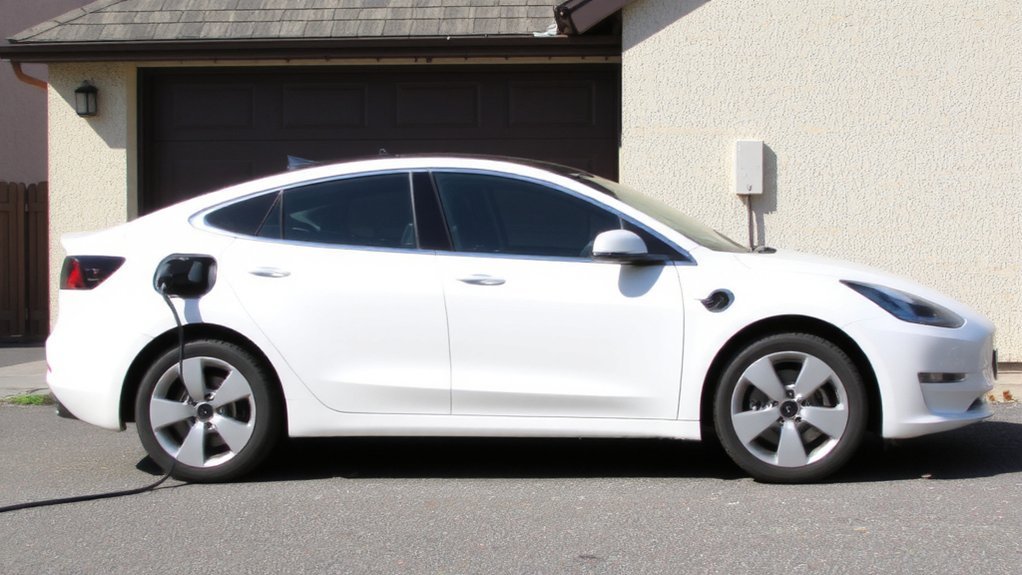
If you plug your EV into a standard 120-volt household outlet, you’re using Level 1 charging: the slowest but most convenient option that usually comes with the car and plugs directly into a wall socket without special installation.
You can rely on the included cable to plug into typical home or office outlets without hiring an electrician, making it a practical choice for overnight residential charging or occasional workplace top-ups. It’s best for short daily driving or plug-in hybrids and for owners who can plug in regularly.
For safety, avoid sharing the circuit with high-draw appliances, inspect cords and outlets for damage, and use grounded, code-compliant receptacles to reduce fire and shock risks. If unsure, consult a qualified electrician before using an outlet regularly.
They typically deliver 1.3–2.4 kW of power, adding about 3 miles (5 km) of range per hour.
Charging Speed, Range Gain, and Typical Outputs
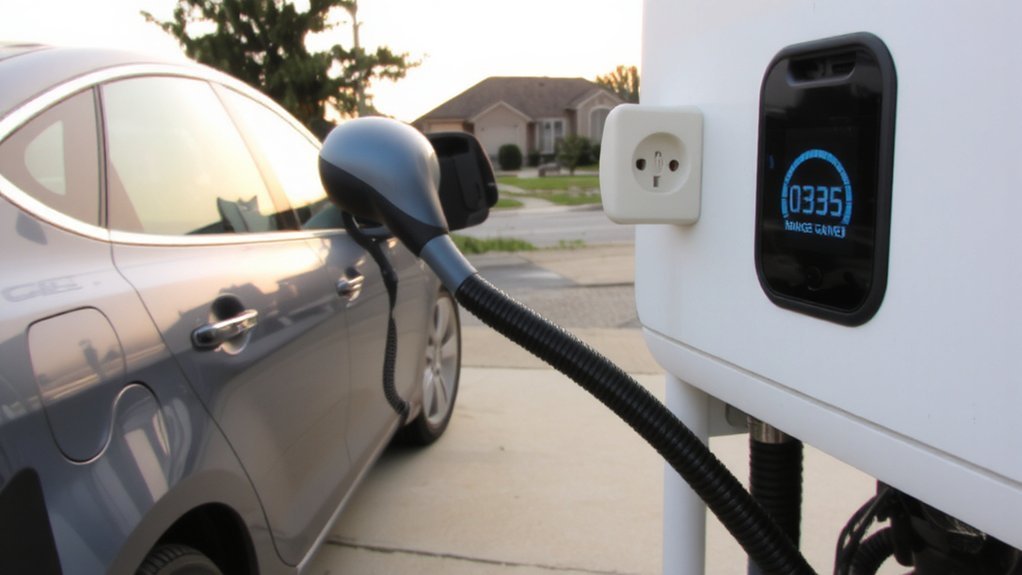
Because Level 1 runs on a standard 120‑volt household circuit, it delivers roughly 1.4 kW and adds about 3–5 miles of range per hour, so you’ll typically get 30–60 miles from a 10–12 hour overnight charge.
Level 1 uses a 120V outlet, ~1.4 kW, adding about 3–5 miles per hour
You’ll see full BEV recharges take 40–50+ hours on Level 1, while most PHEVs fill in 5–6 hours. Charging rate is limited by household current; you can’t speed it up without upgrading to 240V.
Short sessions—four hours—add about 12–20 miles, enough for many commutes. Range gain is linear with time plugged in, but older wiring may trip breakers, so inspect circuits and avoid overloading outlets.
Level 1 is safe, low-cost, and convenient for low‑mileage drivers or overnight top-ups, though impractical for frequent long-distance use. Plan charges around needs. If you need faster fill-ups, upgrading to Level 2 will require professional installation.
Which Vehicles Are Best Suited for a Regular Outlet
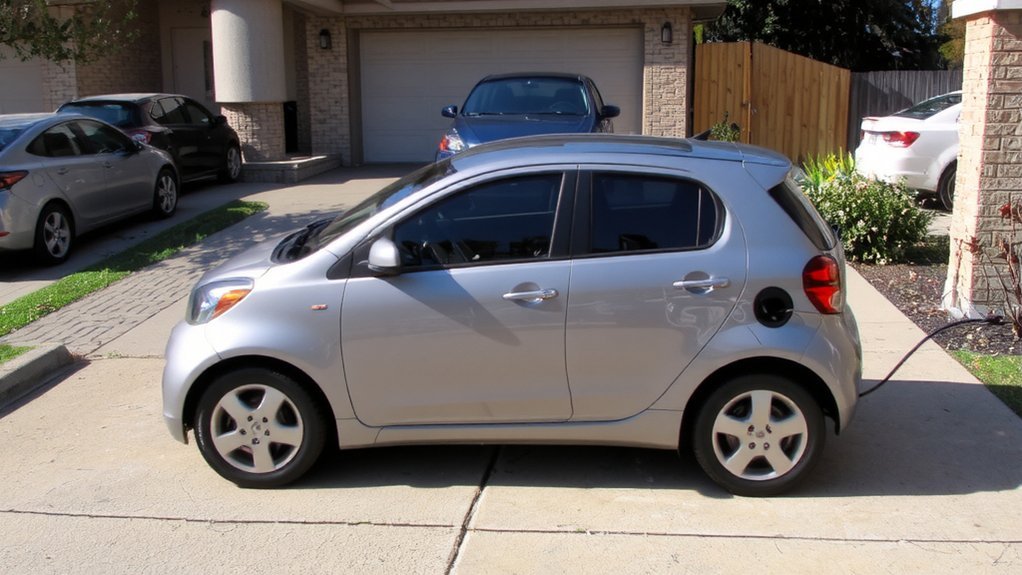
Most plug-in hybrids and virtually all battery-electric cars will charge from a regular 120V outlet, so you can rely on Level 1 for daily top-ups and overnight fills. You can plug in PHEVs and BEVs with standard J1772 fittings, Teslas include an adapter, making compact urban EVs and entry-level models ideal if you prioritize simple, safe charging at home. Tesla has begun opening its Superchargers to other brands, a strategy tied to network expansion.
Choose vehicles that offer charge scheduling, notifications, and built-in timers so you can avoid risky late-night unplugging and optimize off-peak charging.
- Nissan Leaf, Mini Cooper SE, Chevrolet Bolt EV
- Toyota Prius Prime, Honda Clarity Plug-In, Mitsubishi Outlander PHEV
- Hyundai Kona Electric (base), Kia Niro EV (base), Ford Escape PHEV
Inspect cords and outlets regularly, and follow manufacturer safety guidance. Always use grounded outlets.
Real-World Charging Times for Common Battery Sizes
If you own a plug-in hybrid or an EV with a 60–100 kWh battery, you’ll face different charging needs than smaller packs. On a standard outlet expect roughly 2–5 miles of range per hour and full charges to take about 18 to 35 hours depending on battery size and your vehicle’s onboard charger.
Also factor in temperature, battery age and outlet load, which can cut charging speed by up to about 20%. This method is called Level 1 charging.
Plug-in Hybrids
When you compare plug-in hybrids, charging time comes down to battery size and the power level you’re using. They combine an internal combustion engine with a rechargeable battery and offer a limited all-electric driving range.
- Level 1: about 1.2 kW, overnight top ups for Prius Prime about 6.7 hours
- Level 2: 3.3 to 7.2 kW, about two hours to eighty percent
- DC Fast: rare for PHEVs, not typical at home
Most PHEVs have ten to twenty kilowatt hour packs, so Level 1 gives slow overnight fills and Level 2 provides quick daily recovery when installed properly. You won’t usually find DC fast charge for PHEVs. Aim to charge between twenty percent and eighty percent to protect battery life and follow manufacturer specs always. At public chargers, secure cables and avoid wet connections for safety. Check your owner manual for exact times.
60–100 Kwh EVS
Although a 100 kWh battery gives long range, you’ll find charging times vary dramatically by charger type and the car’s charge acceptance. If you use a regular 120V household outlet (Level 1) expect roughly 1.4–1.9 kW, meaning a full charge from empty can take about 40 to 70+ hours — practical only for emergencies or small overnight top-ups, adding roughly 3–5 miles per hour.
A 240V Level 2 charger (7–22 kW) cuts that to about 5–10 hours, often completing a full charge during an overnight or workday session, though vehicle acceptance (commonly 7–11 kW) can limit speed. DC fast charging (50–350 kW) can take 30–50 minutes to reach 10–80%, but you should rely on it for trips, not daily charging, to protect battery health. Remember that EV charging is measured in kilowatts.
Safety Risks When Using Standard Household Outlets
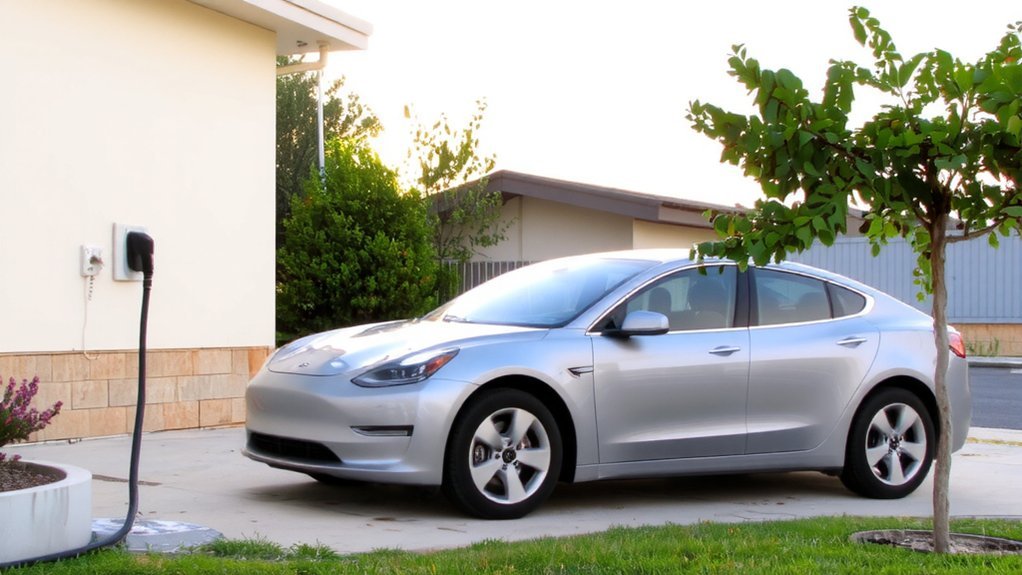
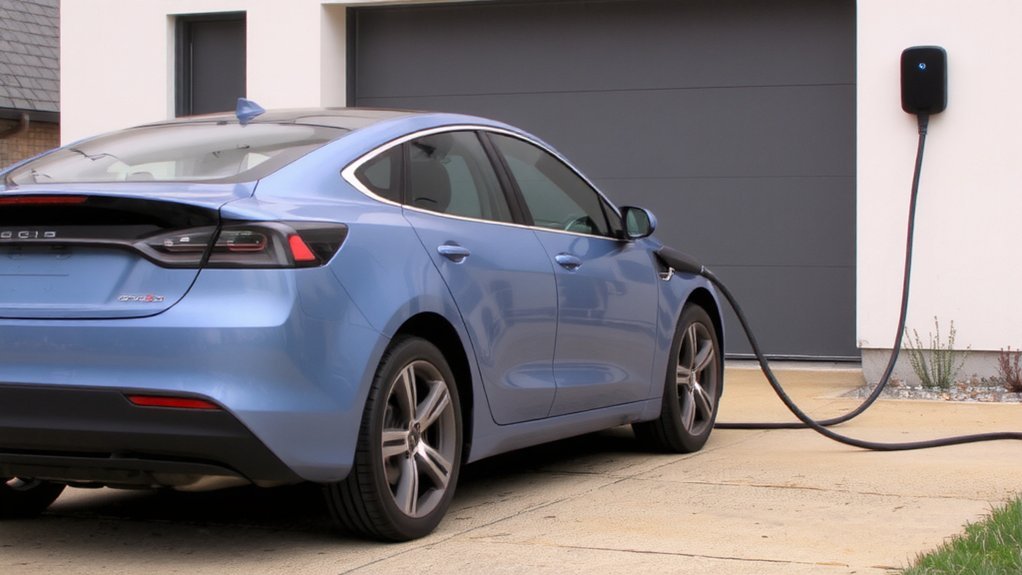
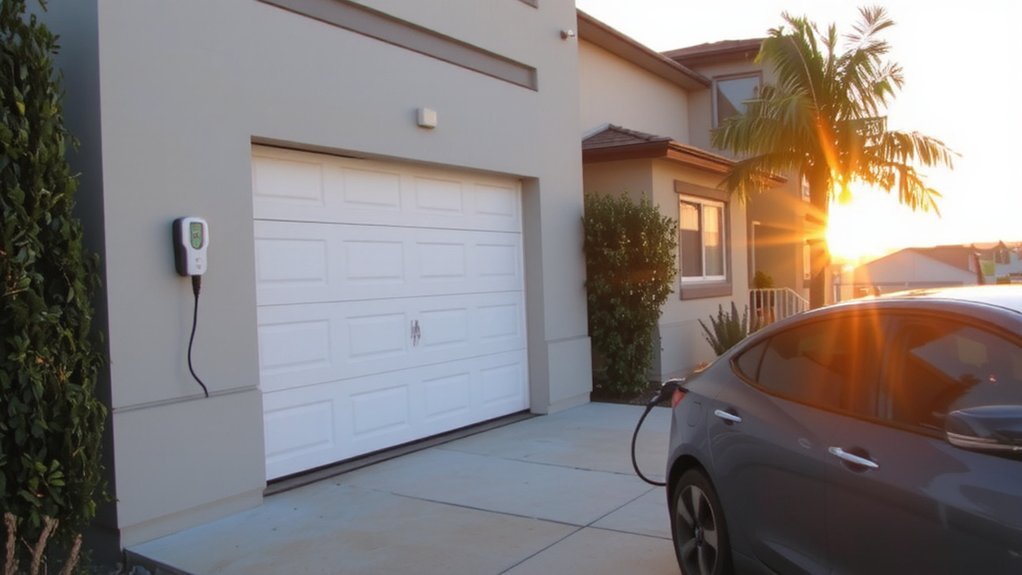
You’ll risk overheating and even fire if a standard outlet or cheap charger gets hot, smells, or shows discoloration after charging. Charging on circuits not sized for continuous EV loads can overload and trip breakers, indicating wiring stress.
If you notice heat, burning odors, or frequent trips, stop charging and get a licensed electrician to inspect the circuit. Also, remember that improper installations are a common cause of EV charging fires.
Overheating and Fire Risk
If you plug an EV charger into a regular household outlet, you can create conditions that lead to overheating and even fire. You’ll notice warning signs such as warm outlets, burning smells, or discolored plugs; these indicate excessive heat from poor connections, degraded wiring, or incompatible materials. Many automakers warn against using extension cords for EV charging, as they are not rated for the continuous high current.
Never use extension cords — they’re not rated for sustained charging and can melt, warp, or ignite. Get a licensed electrician to inspect and upgrade outlets, grounding, and wiring to modern standards. Consider dedicated receptacles designed for EVs. Don’t leave charging unattended until fixed.
- Watch for warm outlets, burning odors, or warped plates.
- Avoid extension cords or ad‑hoc adapters for charging.
- Arrange professional inspection and use properly grounded, code‑compliant outlets.
Act on warning signs.
Circuit Overload and Tripping
Overload risk rises when you charge an EV from a standard 120V, 15–20A household outlet; these outlets aren’t designed for continuous high-current loads. You may draw up to 12A—close to a 15A circuit’s limit—so running a microwave, vacuum, or other appliances on the same circuit can trip the breaker or exceed capacity.
Repeated near-capacity charging degrades wiring insulation, connections, and can wear out breakers, which don’t always trip immediately. Older panels and shared circuits increase frequency of trips and hidden damage.
To stay safe, avoid using the circuit for other heavy loads while charging, inspect outlets and breakers for wear, and consult a licensed electrician. A code-compliant dedicated 240V circuit eliminates overload and reduces fire and reliability risks and protects your home and family. Also, EV chargers and vehicles negotiate charging current using PWM signals.
How to Set Up a Safer Home Level 1 Charging Station
Because Level 1 charging uses a standard 120‑volt outlet, set up a grounded, GFCI‑protected receptacle within 15–20 feet of your car’s charge port and use only the manufacturer‑supplied cord. Ensure the outlet is on a dedicated 120‑volt circuit to meet Level 1 power source requirements. Place the outlet at a convenient height, avoid wet or high‑traffic areas, and label it “EV Charging.”
Don’t use extension cords, power strips, or daisy‑chained adapters. Inspect the cord and receptacle monthly for wear, heat, or damage, and unplug the charger when not charging.
- Use the supplied Level 1 cord only.
- Install surge protection and consider a smart plug with monitoring.
- Keep the area clear and ventilated; avoid extreme temperatures.
Follow manufacturer instructions and local code to keep charging safe and reliable. If you’re unsure, consult a licensed electrician before installing the outlet for safety.
When a Dedicated 240V Level 2 Upgrade Makes Sense
After you’ve got a reliable Level 1 setup, a dedicated 240V Level 2 charger makes sense when you want much faster, more dependable home charging. You’ll get 10–75 miles of range per hour—up to about 19× faster than 120V—so most BEVs recharge in 4–13 hours instead of 40–50+ hours.
Level 2 is ideal if you’re a daily driver, frequent commuter, have multiple EVs or large battery packs, or need flexibility for short-notice trips. Install a dedicated 240V circuit (commonly 40–60A; 60A future-proofs higher-rate cars) and use J1772 plugs; Teslas work with an adapter. Choose a smart charger for scheduling, load balancing and monitoring.
Check local rebates and utility incentives, and prioritize professional installation for safety and code compliance. It reduces range anxiety and stress. A Level 2 charger typically adds 20–40 miles of range per hour, further speeding routine charging.
Cost Comparison: Outlet Charging vs. Public and Home Level 2
How much you pay to charge mostly comes down to where and when you plug in, not the outlet itself. For context, the Tesla Model Y and Chevy Bolt EV/EUV each use about 28 kWh to go 100 miles. At home a regular 120V outlet costs about $0.16–$0.17/kWh, so Level 1 and Level 2 draw the same energy; Level 1 just takes longer. You’ll save versus public stations but trade time.
Plan safe, well-ventilated, and inspected circuits when using long cords.
- Home (Level 1/2): ~$0.16–$0.17/kWh; monthly ≈ $55–$60 for ~1,000 miles.
- Public Level 2: ≈ $0.30–$0.35/kWh; convenient but pricier.
- DC Fast: ≥ $0.50/kWh; fastest, most expensive.
Use smart scheduling and off-peak rates where available to reduce bills while keeping charging safe. If you upgrade, hire a licensed electrician for the 240V circuit, confirm breakers, and avoid extension cords to prevent overheating and hazards.
Practical Scenarios and Charging Strategies for Daily Use
You’ve seen how location and timing affect cost; now consider how charging fits into your daily routine. Keep in mind that Level 1 chargers are slow and can take up to 24 hours to fully charge larger batteries. Use a regular 120-volt outlet mainly for overnight top-ups: expect 3-15 miles per hour, so plan 8-12 hours for typical daily needs.
Favor plug-in hybrids or short-commute EVs with small batteries; full charging of larger packs can take 20-40 hours. Schedule charging during off-peak hours and avoid running other heavy appliances on the same circuit to reduce overload risk. Don’t use extension cords and check the outlet and cord for heat or damage before each long charge.
If you need faster, more reliable daily charging, invest in a professionally installed Level 2 circuit and charger. Also consider utility incentives and vehicle apps for safer, cost-aware scheduling purposes.
Troubleshooting Common Issues With Outlet Charging
If your EV won’t charge reliably from a standard 120V outlet, start by narrowing the cause into five areas: power supply (tripped breakers, voltage drop, or intermittent feed), equipment and connections (damaged cords, loose plugs, or dirty ports), vehicle compatibility (some cars and adapters won’t support Level 1), software/system errors (dashboard faults or needed firmware updates), and environmental or safety issues (wet conditions, extreme temperatures, or overheating). Also check for a faulty charging cable or connector, which is a common cause.
Check breakers, wiring for tripping or voltage drop. Inspect cables, plugs and ports for damage, dirt or moisture. Stop charging if cords overheat; call a pro.
Check outlet; don’t use extensions. Confirm your EV supports Level 1, clear dash errors, install updates. If wiring is old or see overheating, call a licensed electrician immediately.
Conclusion
You can rely on a regular outlet to keep your EV quietly humming overnight, but don’t expect miracles. For short trips and plug in hybrids it’s a comforting little companion; for bigger batteries it’s a gentle steer toward patience. You’ll want to respect circuit limits, watch charging habits, and upgrade when convenience outweighs thrift. In short, you’re choosing slow stewardship over fast indulgence, practical, modest, and perfectly sensible for many drivers who value simplicity daily.