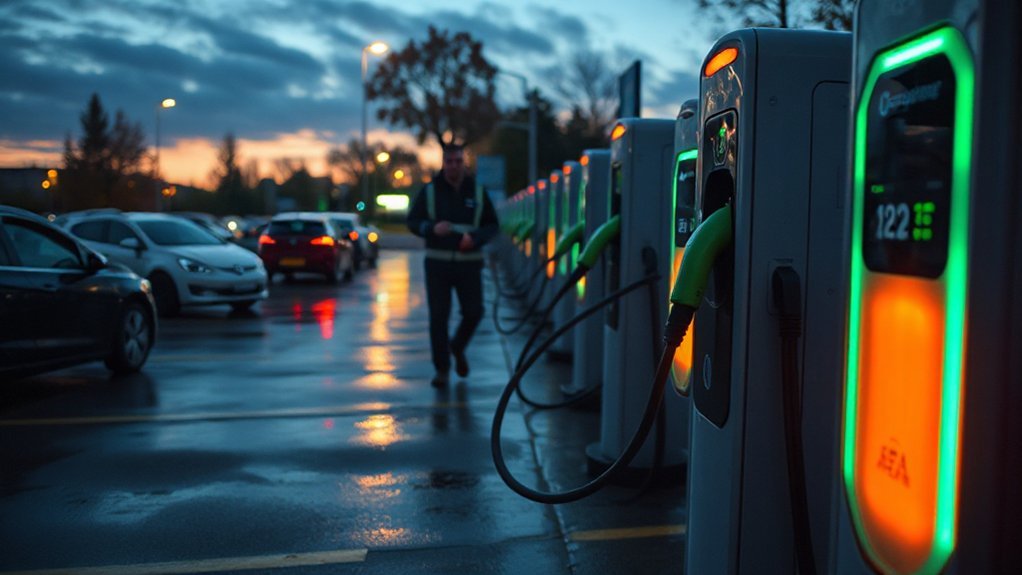
If you’re a little too generous with the charger, it sounds alarming but it’s not the calamity many imagine. You’re protected by a BMS that prevents cells from hitting truly dangerous voltages, yet frequent 100% fills and aggressive fast charging still nibble at long‑term capacity. There’s clear 2025–2026 data on what that nibbling looks like and what you should change next.
Key Takeaways
- Modern EVs have a BMS that prevents true overcharging by monitoring cell voltage, current, and temperature in real time.
- Overcharging chemically stresses cells, raising temperature and increasing thermal runaway, fire, and capacity-loss risks if protections fail.
- Charging to 100% shortens battery life; manufacturers and experts recommend keeping daily SOC between about 20% and 80%.
- Level 2 charging is recommended for routine use; reserve DC fast charging for long trips to minimize heat-related degradation.
- Regular software updates, proper charger installation, and reporting anomalies ensure the BMS and protections remain effective.
How Modern EV Batteries and Battery Management Systems Prevent Overcharging
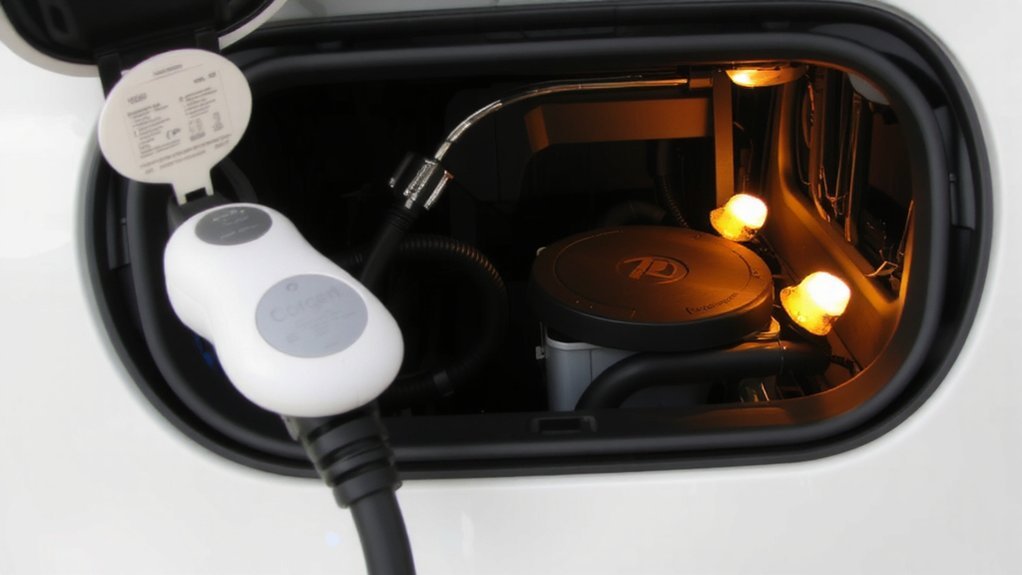
Many modern EVs use a battery management system that continuously watches each cell’s voltage, current, and temperature with high-resolution sensors (think 1 mV ADCs and distributed NTCs) and acts immediately to prevent overcharge. Many automakers favor the 800V architecture for faster charging and reduced heat in high-power applications. You’ll rely on the BMS to detect anomalies early, regulate charge and discharge rates, and halt or throttle charging as SOC thresholds approach. Kalman filters and adaptive algorithms estimate SOC, SOH and SOP so the system adjusts multi-stage CC‑CV profiles for safety and longevity.
Thermal sensors and active cooling keep cells in ideal ranges and block charging at unsafe temperatures. Redundant, microsecond-scale protections can disconnect modules during faults, log history for safer settings, and report clear SOC/SOH data to your display for informed, safe decisions and prompt maintenance recommendations when needed.
What “Overcharging” Really Means for Lithium‑Ion Packs
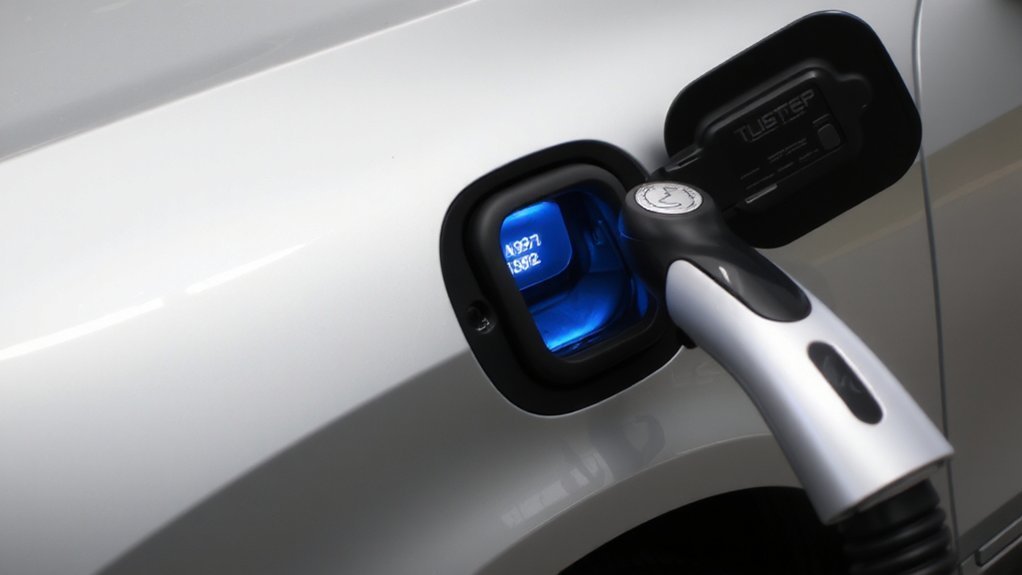
If a lithium‑ion pack keeps drawing current after its cells hit their full‑charge voltage, you’re dealing with overcharging: extra lithium is forced into the anode, the electrolyte begins to break down, and cell voltage and temperature climb beyond safe limits.
You should understand that overcharging is a chemical and electrical imbalance: ions overfill the anode, plating and structural changes occur, and internal pressure rises. If unchecked, overcharging raises cell temperature and can trigger thermal runaway.
You can detect early signs—voltage above spec, unusual heat during topping, physical swelling, and leakage. Monitor and act promptly to protect the pack and occupants. Use BMS alerts, proper charger settings, and manufacturer guidance to stop continued charging current immediately.
- Voltage readings above charge cutoff
- Noticeable warmth after full charge
- Visible swelling of cells or modules
- Electrolyte leakage or odor
Risks and Real-World Effects of Excessive Charging
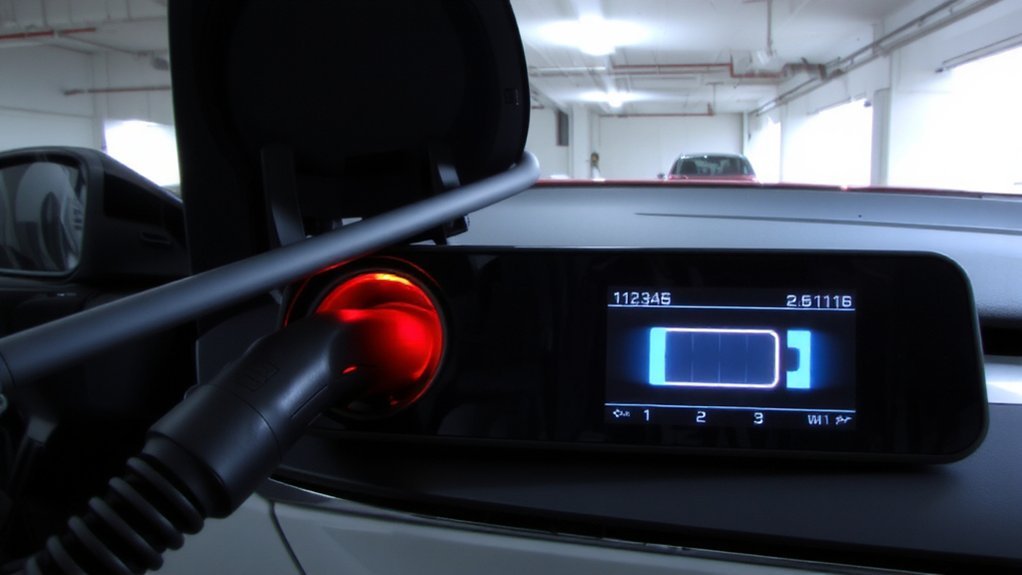
Because overcharging forces extra lithium into the anode and breaks down the electrolyte, it quickly raises cell temperature and accelerates chemical degradation, increasing the risk of thermal runaway, fires, or even explosions. In electric vehicles, Overcharging occurs when cells are driven past full capacity due to charger or control failures.
Overcharging drives extra lithium into the anode, breaking down electrolyte, raising temperature and risking thermal runaway, fires, or explosions.
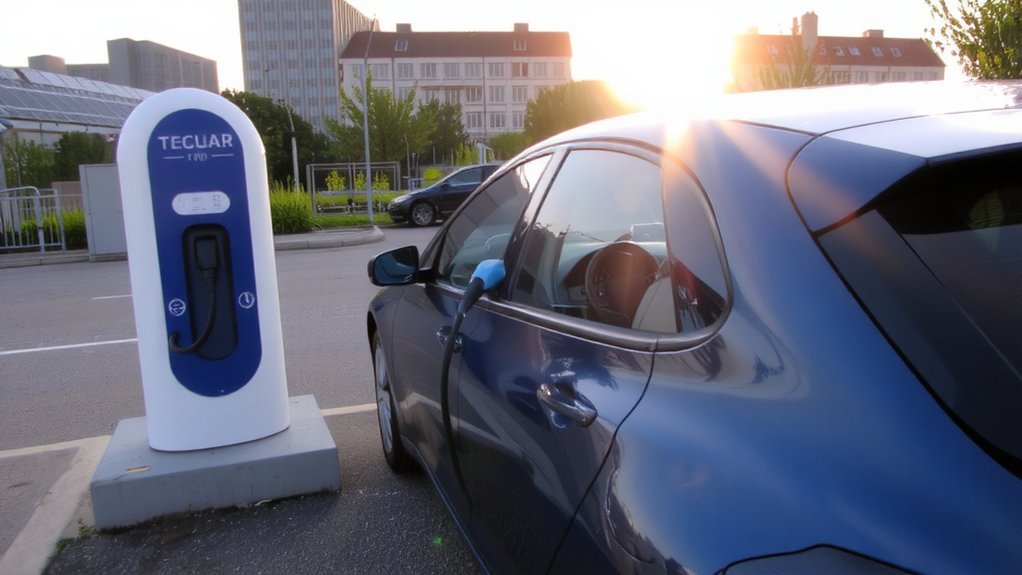
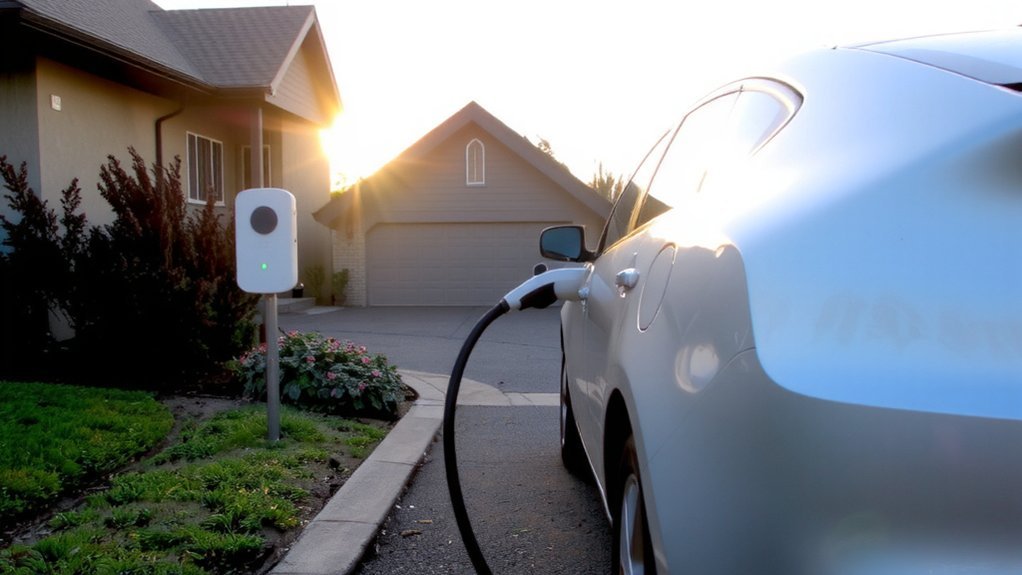

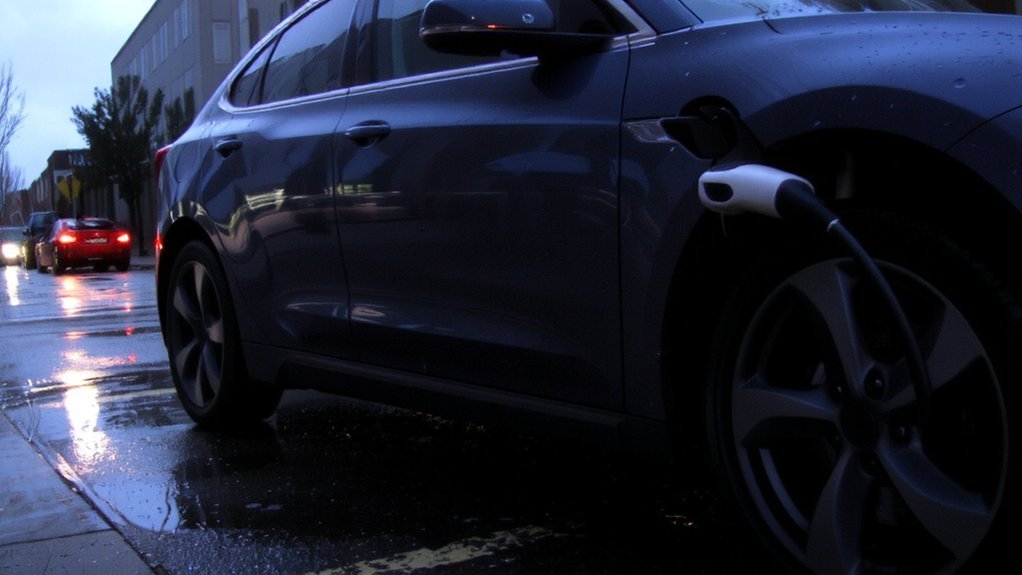
You should know excessive charging produces heat that shortens cell life, releases gases in some chemistries, and can cause electrolyte leakage that’ll damage wiring, electronics, and nearby structural components.
Repeated overcharging speeds capacity loss and can shave years off battery lifespan, reducing driving range.
Real-world incidents show chargers or systems failures have triggered thermal runaway and vehicle fires, sometimes with extensive property damage.
Emergency responders now use specific EV protocols, and regulators track such events.
If you suspect overcharging or smell heat or smoke, treat it as an immediate safety hazard, seriously.
Best Charging Practices to Maximize Battery Life
To maximize your EV’s battery life, keep the state of charge mostly between about 20% and 80%, use Level 2 (240V) charging for routine fills, and reserve DC fast charging for occasional long trips. Charge regularly before the battery falls below 30%, avoid full-time 100% charging except when manufacturer suggests (e.g., occasional LFP calibration), and let regenerative braking recapture energy. Precondition the battery in extreme temperatures and store the vehicle near 50% if unused.
- Prefer Level 2 home charging for daily use.
- Use Level 1 only when time allows.
- Limit DC fast charging to necessary trips.
- Keep charger installation and software updated for safety.
Monitor BMS alerts and schedule professional checks as recommended. Follow manufacturer guidance for charging limits and temperatures. In many cases, Level 2 charging can replenish roughly 40 miles of range in under two hours.
Myths, Misconceptions, and What 2025–2026 Data Shows
You’ve probably been warned that leaving an EV plugged in or using fast chargers will “overcharge” and ruin the battery, but much of that worry comes from misunderstandings. Modern EVs include Battery Management Systems that monitor voltage, temperature, and state of charge to prevent overcharging. Modern EVs use Battery Management Systems that stop charging at safe limits, so true overcharging—charging beyond cell voltage limits—is virtually impossible unless protections fail.
Charging to 100% is discouraged for longevity, not because it exceeds design limits. Fast chargers raise temperature and can speed normal degradation, but they don’t overcharge. 2025–2026 data show most batteries keep 80–90% capacity after 8–10 years and failures from overcharging are extremely rare.
To stay safe, follow manufacturer charge limits, avoid constant 100% SOC, and limit frequent DC fast charging. Check software updates and report charging anomalies to dealership promptly today.
Conclusion
You don’t need to fear ‘overcharging’ an EV in normal use because modern BMSs stop charging before cells reach harmful voltages. Still, charging to 100% regularly can speed wear, so you should top off only when needed for range. Even if you worry that frequent fast charging ruins batteries, 2025–2026 data shows most packs keep 80–90% capacity after 8–10 years when you follow basic practices, so occasional full charges are fine and reduce anxiety considerably.