
You probably don’t know CCS1’s control pilot and proximity pins actively arbitrate DC current alongside J1772 AC pins, enabling up to 1000 V with liquid‑cooled cables exceeding 500 kW—when firmware, thermal limits, and ISO 15118/DIN 70121 negotiations align. You’ll see why Plug & Charge works at one site, stalls at another, and how pricing tiers, derating, and adapters affect stop times—so you can choose hardware and apps that actually deliver.
Key Takeaways
- CCS1 combines SAE J1772 Type 1 AC with two DC pins, supporting up to 1000 V with PLC per DIN 70121/ISO 15118 and CP/PP interlocks.
- Practical power: air‑cooled ~200–250 A; liquid‑cooled ~500–700 A enabling ~350–500 kW, limited by pin temperatures, cable jackets, and coolant performance.
- Charging follows constant‑current then constant‑voltage taper; acceptance depends on SOC, temperature, aging, inlet temps, and EVSE derating for environment or feeder limits.
- Safety/standards: UL 2251 and IEC 62196‑3 compliance, HVIL, insulation monitoring, PE checks, embedded pin RTDs, and IP54–IP69K ingress protections.
- 2025 landscape: CCS1 coexists with J3400/NACS; NEVI favors dual‑cable/adapters; Plug & Charge via ISO 15118 with PKI, TLS, and signed meter values.
How CCS1 Works: J1772 Plus DC Pins
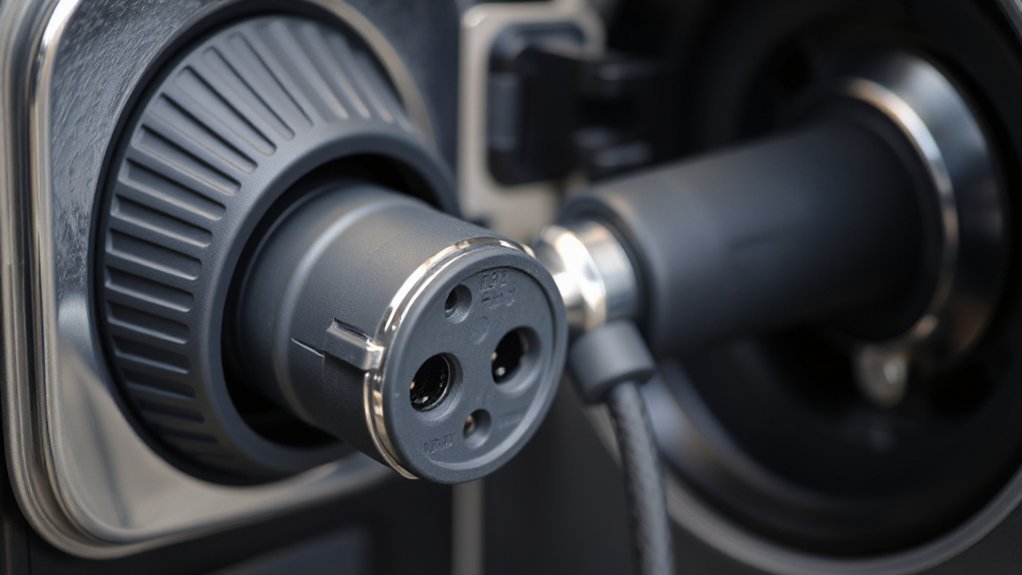
While it retains the SAE J1772 Type 1 AC interface, CCS1 adds two high‑current DC pins to form the Combo 1 connector, enabling direct DC fast charging that bypasses your onboard charger. You still use the J1772 control pilot (CP) and proximity (PP), but DC charging switches to power line communication over CP per DIN 70121 and ISO 15118. The EVSE verifies Grounding Methods via PE continuity, insulation monitoring, and HVIL, then closes contactors and performs a pre‑charge to match pack voltage. Temperature sensors in the DC pins protect connectors and cables. Contact Materials typically use silver‑plated copper alloys with low contact resistance and high hardness, reducing I2R losses. The standard specifies pin geometry, creepage/clearance, and latch forces to guarantee interoperable, safe mating operation.
Charging Speeds, Curves, and Stop Times
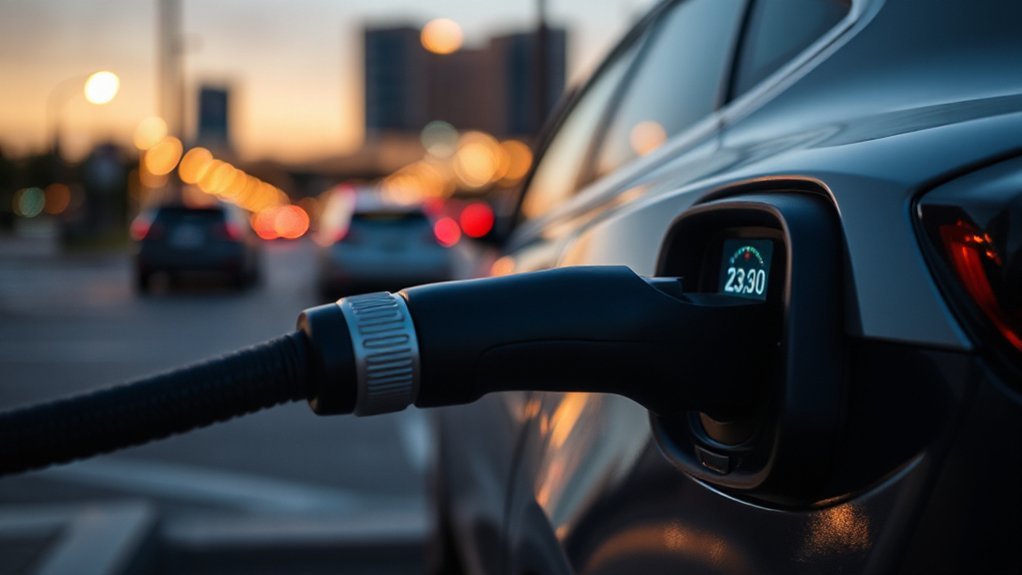
Two variables govern CCS1 DC performance: the station’s bus envelope and your vehicle’s acceptance limits. Power equals pack voltage times current within the negotiated window. You’ll see a constant‑current phase until pack voltage nears the BMS target, then a constant‑voltage taper. State of charge, ambient temperature, and battery aging shift the acceptance curve: colder or older packs accept less current, so taper begins earlier.
To estimate stop time, compute energy needed (kWh) divided by expected average power, not the peak. Example: adding 40 kWh at a site capable of 400 V, 500 A yields 200 kW peak, but your car may average 120 kW from 10–60% and 60 kW from 60–80%. Weighted average ≈96 kW; stop time ≈40/96 = 0.42 h (~25 min) under typical conditions.
Connectors, Cables, Cooling, and Power Levels
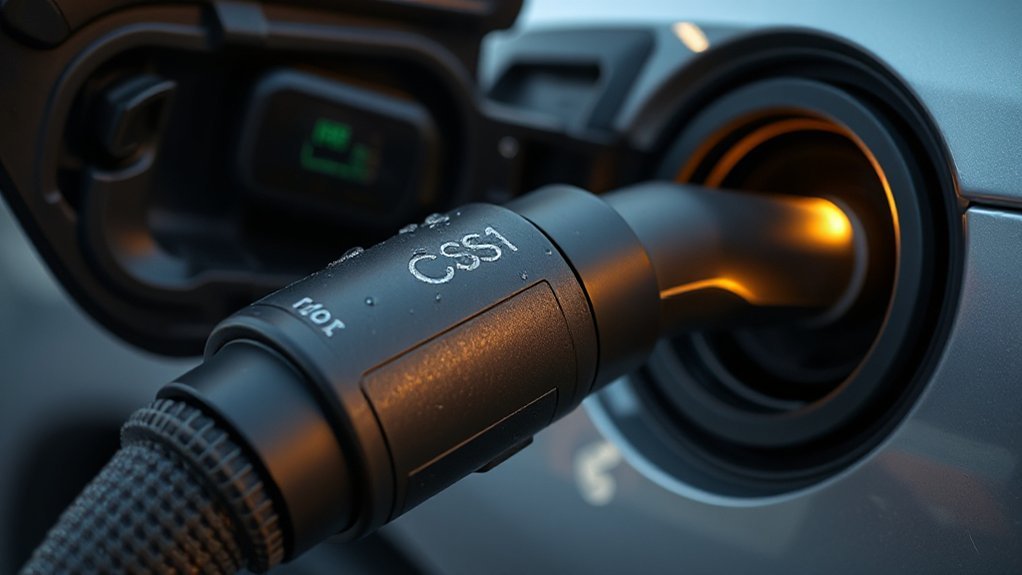
You’ll assess CCS1 connector design per SAE J1772 Combo/IEC 62196-3—pin layout (DC+/DC−, CP, PP), voltage class (up to 1000 V), and integrated temp sensing for derating. You’ll compare cable systems, noting air-cooled assemblies typically support ~200–250 A continuous while liquid-cooled designs reach ~500–600 A, constrained by UL 2251 thermal rise and hose/coolant specs. You’ll quantify max power as P=V×I (e.g., 500 A at 800–1000 V ≈ 400–500 kW) and set practical limits from cable temperature, contact resistance, connector duty cycle, and pack voltage.
CCS1 Connector Design
Connector–cable architecture in CCS1 integrates the SAE J1772 Type 1 AC interface with two high‑current DC pins to form the Combo 1 plug specified in SAE J1772 and IEC 62196‑3. You align keyed geometry, engage the latch, and let the proximity and control‑pilot circuits manage interlock and signaling per IEC 61851 and DIN 70121/ISO 15118. Material selection targets low contact resistance, thermal stability, and UV‑rated housings; an ergonomic grip and balanced strain relief reduce insertion force. Typical air‑cooled assemblies support up to 1000 V DC and roughly 200–250 A continuous, with embedded temperature sensing to protect contacts. You verify IP54–IP55 ingress protection, UL 2251 compliance, and conductor gauges sized for voltage drop and temperature rise. Cable flexibility remains within bend‑radius limits under rated loads.
Liquid-Cooled Cable Systems
Building on air‑cooled CCS1 assemblies capped around 200–250 A continuous, liquid‑cooled cable systems lift continuous current to roughly 500–700 A at up to 1000 V DC (≈350–500 kW) while maintaining pin and conductor temperatures within IEC 62196‑3 and UL 2251 limits. You’ll see glycol‑water loops or dielectric fluids circulate through micro‑channel jackets around conductors and pins, with embedded RTDs enabling IEC 61851‑1 control to dynamically modulate current. Connectors use silver‑plated contacts, FKM seals, HVIL, and strain‑relieved, low‑resistance leads to manage thermal rise and EMI. Pumps, heat exchangers, and leak sensors meet IP67/IP69K, with pressure and flow telemetry reported via OCPP. Define Maintenance protocols: coolant conductivity checks, filter swaps, sensor calibration, and pressure decay tests. Plan Recycling considerations: coolant disposal, copper recovery, and polymer separation.
Max Power and Limits
While liquid‑cooled CCS1 harnesses enable 500–700 A continuous at up to 1000 V DC, maximum deliverable power is constrained by interface voltage limits, contact temperature rise, and system derating rules defined in IEC 62196‑3, UL 2251, and IEC 61851‑23/‑1. You’ll see practical site limits of 350–500 kW because inlet pins must stay below 90–105 °C, cable jackets below 60–90 °C, and coolant supply return deltas under 10–15 °C. Controller logic reduces current with rising ambient, altitude, and voltage sag, and enforces 0.5–1% per‑meter voltage‑drop budgets based on conductor cross‑section. EVSE firmware also honors battery requests via DIN 70121/ISO 15118, then caps power for feeder capacity, demand charges, and regulatory caps. Exceedances trigger protective trips, warranty exposure, and insurance implications for fire risk and downtime.
CCS1 Vs NACS and the Phase‑Out of CHADEMO
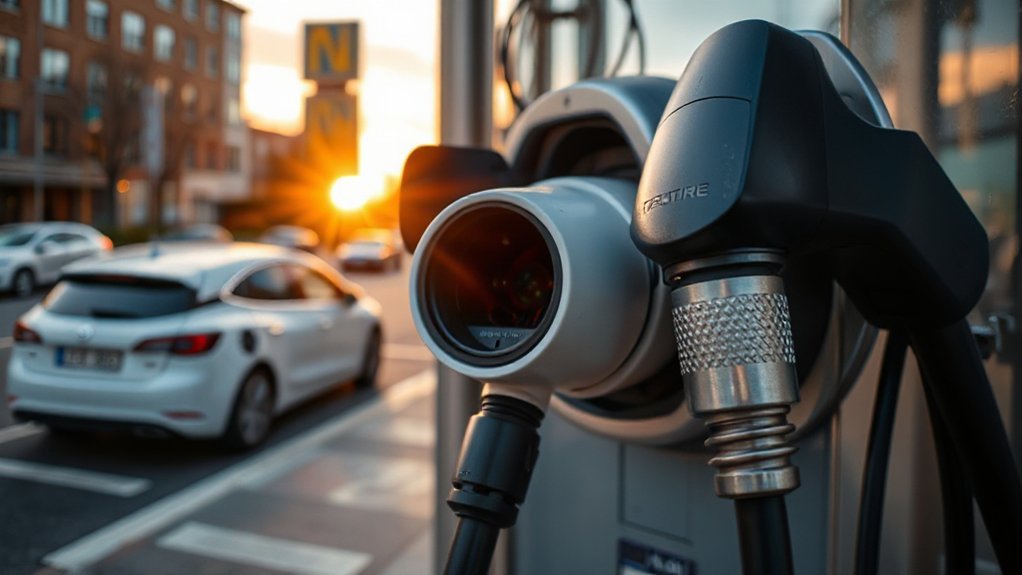
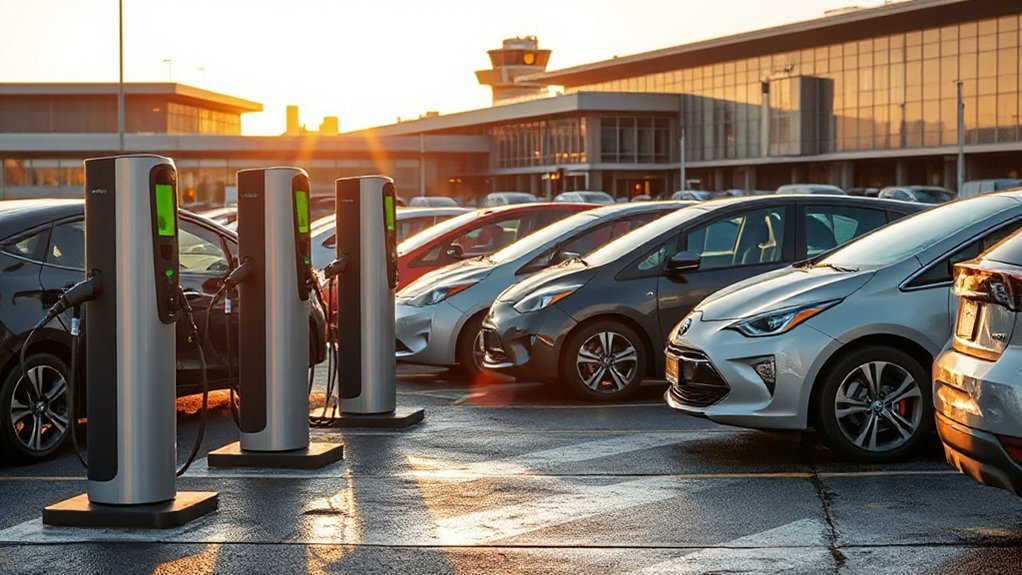
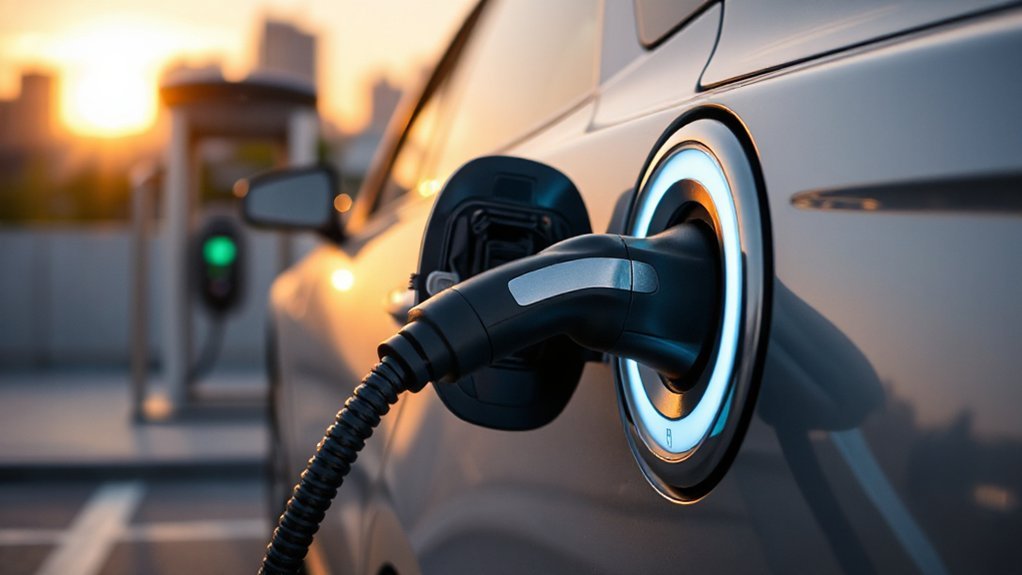

How do CCS1 and SAE J3400 (NACS) stack up as North America retires CHAdeMO? You’ll see both deliver up to 1,000 V; typical liquid‑cooled CCS1 peaks near 500 A (~350 kW), while J3400 implementations regularly target ~615 A (~500–600 kW) in similar cable mass. J3400’s compact coupler reduces insertion force and packaging volume. CCS1 remains prevalent in 2025 site counts, but J3400 port adoption accelerates as major OEMs switch. CHAdeMO’s share of DC ports has fallen below ~5% and new deployments are rare. Policy implications: NEVI‑funded corridors are shifting from CCS1‑only mandates to permitting J3400, boosting adapter availability and dual‑cable dispensers. Manufacturer strategies: you’ll see native J3400 in 2025–2026 models, CCS1 via adapters during migration, and networks retrofitting dual leads to preserve uptime reliably.
Plug & Charge, ISO 15118, and Payments
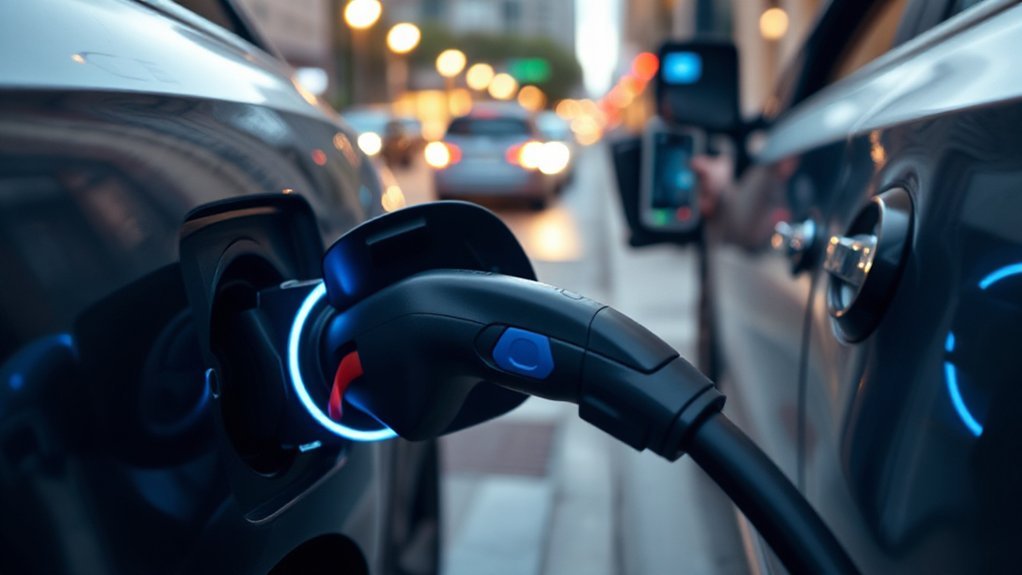
You use Plug & Charge on CCS1 by having the EV present a contract certificate to the charger’s SECC, which authenticates and authorizes the session automatically. To meet ISO 15118-2/-20, you need EVCC/SECC with TLS 1.2+, X.509 v3 certificates (OEM + contract), a trusted V2G-PKI chain (V2G Root CA), and back-end alignment (e.g., OCPP 1.6/2.0.1) with certificate provisioning and OCSP/CRL. You execute contract-based payment flows with mutual authentication, session key establishment, signed meter values, and token‑less settlement, while enforcing MITM/spoofing defenses via TLS, certificate validation, revocation checks, and secure elements in the EV.
Plug & Charge Basics
Why does Plug & Charge matter for CCS1 deployments? It removes RFID apps and screens by authenticating your vehicle over the high-level communication link, then initiating metered DC charging and billing to a pre-enrolled account. With CCS1, Plug & Charge uses certificate-based identification, cryptographic session establishment, and utility-grade meter data to support kWh-based pricing, idle fees, and receipts. You gain lower failure rates, shorter start times, and fewer charge-aborts, improving site throughput.
For operators, scope your Deployment timeline: backend PKI integration, contract certificate provisioning, and settlement with roaming hubs. Align User education so drivers know enrollment steps, supported models, and station badges. Track KPIs: median plug-to-power (<20 s), success rate (>97%), billing dispute rate (<0.5%), and certificate renewal success (>99%). Monitor firmware rollback safety.
ISO 15118 Requirements
Although CCS1 sites can run without it, a robust ISO 15118 implementation sets the baseline for secure Plug & Charge and interoperable payments. You’ll target ISO 15118-2 compatibility now and stage upgrades for 15118-20 to cover AC/DC, bidirectional readiness, and service discovery. Implement standards-based Certificate Management using V2G root trust chains, OEM provisioning, and secure element storage on controllers. Enforce Privacy Requirements by minimizing personally identifiable data in contract certificates and rotating pseudonymous identifiers. Validate conformance with harmonized tests and run interoperability events with OEMs. Document requirements in supplier contracts and SLAs.
- Version support matrix by charger model, EV brand, firmware; pass/fail rates.
- PKI operations: automated enrollment, contract updates, CRL/OCSP, time sync, disaster recovery.
- Network baselines: TLS 1.2/1.3, approved ciphers, secure boot, signed firmware.
Payment Flows and Security
While ISO 15118 defines the cryptographic basis for Plug & Charge, end‑to‑end payment security hinges on how you orchestrate flows between the EV, EVSE, CSMS, eMSP/roaming hubs, and payment acquirers. Use mutual‑TLS, certificate pinning, and V2G PKI with rigorous revocation (OCSP/CRL). Align OCPP 2.0.1 security profiles with PCI DSS; avoid PAN transit via tokenization and HSM‑backed keys. Enforce least‑privilege APIs, signed tariffs, and deterministic session IDs. Monitor telemetry, rate‑limit contracts, and automate Incident Response. Schedule Vendor Audits and continuous PKI rotation.
Attestations.
| Layer | Standard | Key control |
|---|---|---|
| EV↔EVSE | ISO 15118-2/-20 | Mutual TLS, contract certs, OCSP, pinning |
| EVSE↔CSMS | OCPP 2.0.1 | TLS 1.3, signed firmware, secure boot, logging |
| CSMS↔eMSP | OCPI 2.2.1 | JWT auth, idempotent sessions, replay defense, alerts |
| eMSP↔Acquirer | PCI DSS | Tokenization, P2PE, fraud monitoring, settlement, chargebacks |
Station Reliability, Pricing, and Apps
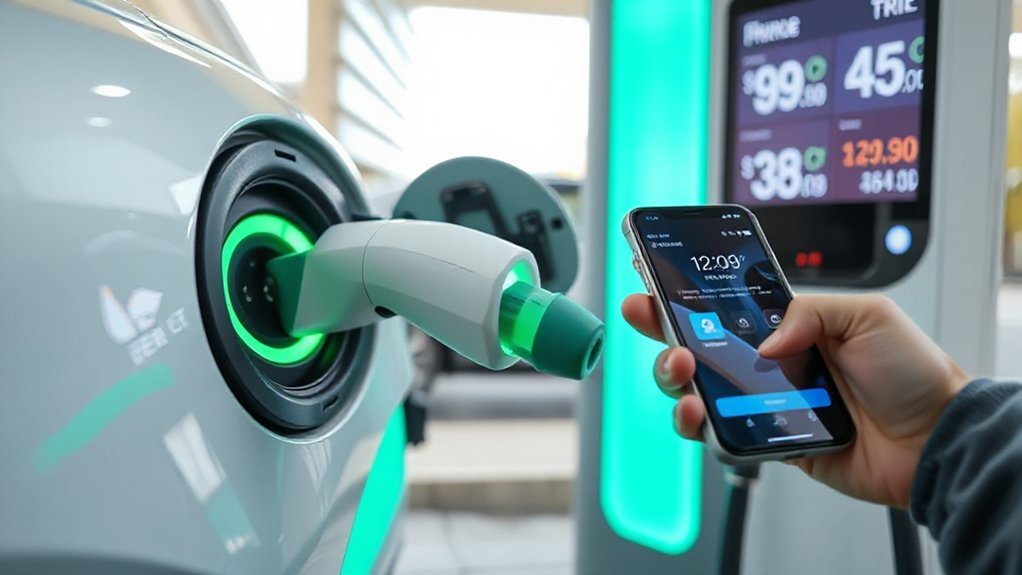
Because network performance and cost transparency govern real-world usability, evaluate CCS1 infrastructure against explicit metrics and standards. Track uptime (target ≥97% per NEVI), MTBF, MTTR, and connector availability via downtime analytics. Verify pricing schemas: per‑kWh, per‑minute, session fees, and idle charges, with pre‑tax totals visible before you plug in. Prefer networks supporting OCPP, OCPI, and ISO 15118 for consistent telemetry, roaming, and accurate receipts. Use subscription models only when your utilization justifies lower energy rates and reduced session fees.
- Validate app features: live power, queue length, and verified prices; require time‑stamped receipts.
- Compare effective cost: (energy + fees + idling) ÷ delivered kWh; model peak vs off‑peak.
- Monitor reliability trends by site; escalate chronic faults with ticket IDs and logs documentation.
Adapters, Compatibility Quirks, and Vehicle Support
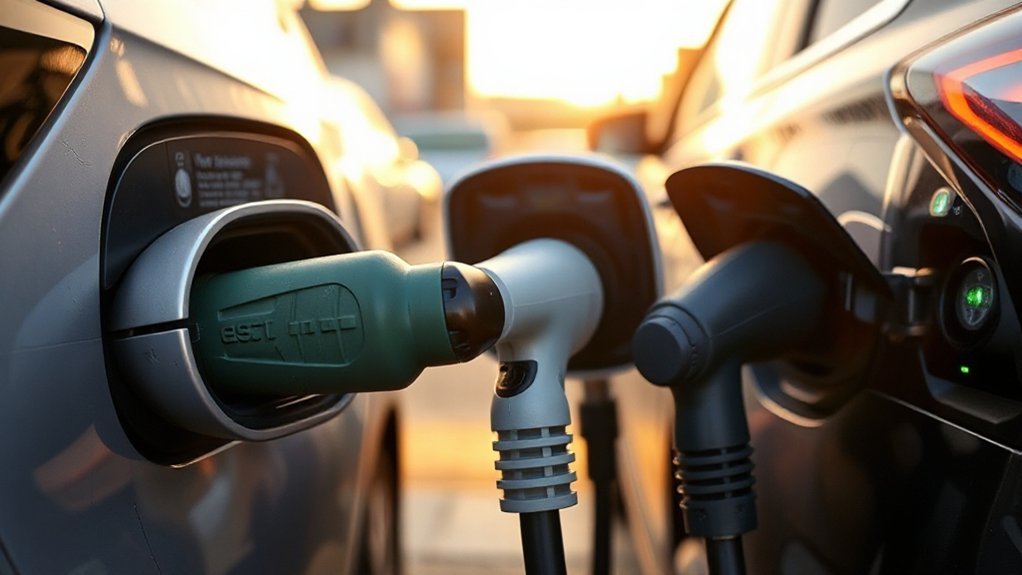
How do you guarantee a CCS1 session works across adapters, vehicles, and networks? Start by matching standards: your car should support DIN 70121 and/or ISO 15118-2; your adapter must pass CCS1 pinout, PLC, and thermal limits equal to the charger. Verify ratings: ≤1000 V, 500 A continuous, UL-listed, with cable temperature sensing. Many adapters cap at 200–300 A, reducing peak power on 400 V packs.
Check firmware release notes. Firmware mismatches among EV, adapter, and EVSE often break PWM/PLC handshakes, plug-and-charge, or certificate chains. Update all three.
Confirm vehicle support matrices: max charge voltage, BMS preheat control, and inlet temperature derating vary by model/year. Use OEM-approved adapters to avoid warranty implications. Test on multiple networks; log session IDs, faults, and negotiated current and voltage.
Road‑Trip Planning and Home‑Charging Considerations
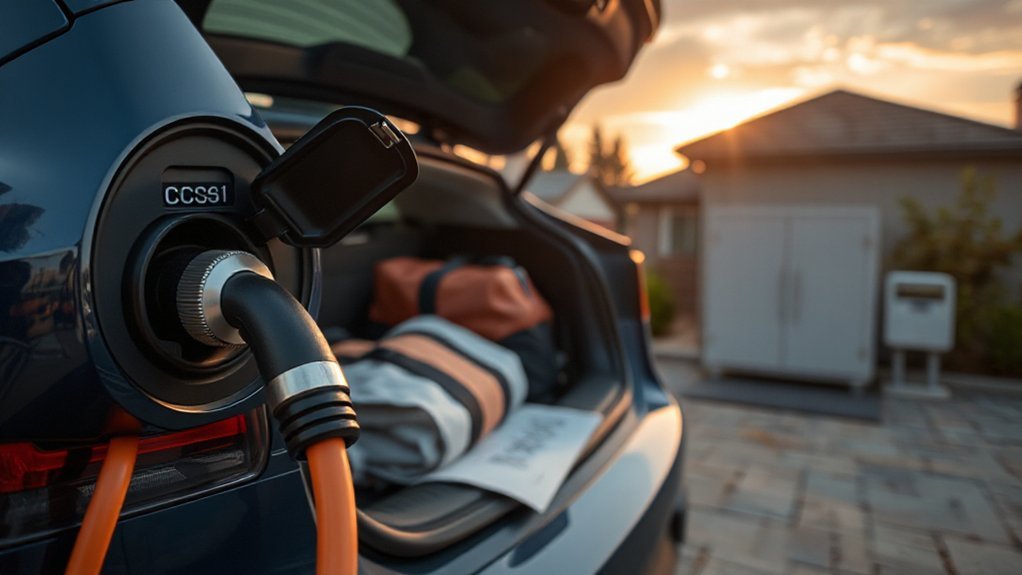
Although route planners estimate stops, you should anchor road‑trip and home‑charging decisions to standards, power limits, and your vehicle’s charging curve. For CCS1, plan sessions around site nameplate kW, connector count, and power redundancy; target arrivals at 10–30% SoC and depart near the knee of your curve. Verify CCS1 plugs, 500–1000V support, uptime, and pricing data. At home, right‑size AC: 40A on a 50A circuit fits most; go higher only if commute or climate requires. Confirm panel capacity, load calcs, and local home permits. On trips, filter for destination amenities that enable productive dwell.
- Calculate net kWh versus elevation, temperature, and speed.
- Prefer sites with ≥2 CCS1 stalls and 99% 90‑day uptime.
- Precondition to hit peak kW; avoid sharing limited-power cabinets.
Conclusion
You now know how CCS1 combines J1772 signaling with high-current DC pins, negotiates via DIN 70121/ISO 15118, and safely delivers up to 1000 V and 350–500+ kW with thermal derating. You’ll plan stops by charge curves, cable cooling, and price per kWh, use Plug & Charge PKI, and verify station uptime in apps. Treat adapters and compatibility notes as gating specs, not guesses, so trips run like a well-tuned control loop under predictable constraints always.