Like air traffic control for electrons, you coordinate hardware, software, and the grid to hit >97% uptime while meeting NEVI, AFIR, and VAT rules. You align OCPP, ISO 15118 Plug&Charge (PKI), and OCPI for roaming; implement dynamic load management to cap demand charges; and track MTTR, session success, and security certificates. Transparent pricing, auditable billing, and telemetry-driven maintenance matter—but the tradeoffs across fleets, public sites, and utilities get sharper when…
Key Takeaways
- Interoperability via OCPP 2.0.1, OCPI 2.2.1, and ISO 15118 enables roaming, smart charging, Plug&Charge, and decoupled hardware–software ecosystems.
- Uptime and reliability tracked at connector level with MTBF, MTTR, session success, predictive maintenance, and NEVI-compliant ≥97% availability targets.
- Transparent pricing and payments: EMV tap-to-pay, mobile wallets, RFID, ad-hoc access, OCPI tariffs, VAT-compliant invoices, and dispute workflows.
- Site planning optimizes load, hosting capacity, permits, and thermal limits; right-sized power electronics and telemetry ensure reliable kW in extreme conditions.
- Security and compliance: TLS, certificate lifecycle management, signed firmware, AFIR/NEVI alignment, audit logs, and OCPI-published locations, pricing, availability.
The EV Charging Ecosystem: Hardware, Software, and Grid

As EV adoption accelerates, the charging ecosystem hinges on tight integration of hardware, software, and the grid. You design sites around load profiles, feeder capacity, and demand charges, then size power electronics, cables, and thermal management to deliver reliable kW at ambient extremes. You deploy edge controllers for safety, metering, and fault detection, while cloud software forecasts load, optimizes charging schedules, and monetizes flexibility through demand response and V2G pilots. You use real-time telemetry to enforce uptime SLAs, flag impedance drift, and prevent connector overheating. Grid-facing logic shapes load to coincide with low LMPs, renewable peaks, and transformer thermal limits. Capital plans prioritize circuits with hosting capacity, while permitting, make-ready rebates, and NEVI standards drive siting, cybersecurity, and uptime targets. Rigorous field maintenance programs.
Interoperability and Standards: OCPP, ISO 15118, OCPI
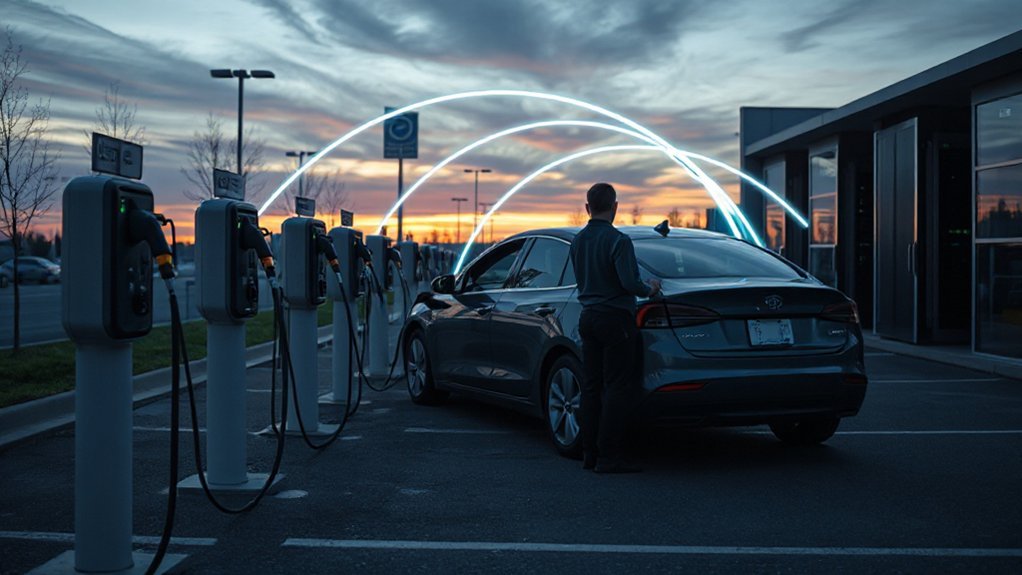
While hardware reliability sets the floor, interoperability standards—OCPP, ISO 15118, and OCPI—set the ceiling for scalable EV charging networks. You deploy OCPP 2.0.1 to decouple chargers from backends, enable Smart Charging, device management, and secure event telemetry over TLS 1.2+. ISO 15118 enables Plug&Charge with PKI-based mutual authentication, contract certificates, and load authorization without RFID. Robust Security Frameworks require end-to-end encryption, signed firmware, and role-based access; Certificate Management (issuance, rotation, revocation, CRLs/OCSP) becomes operationally critical. OCPI 2.2.1 lets you roam: publish locations, tariffs, and availability, settle CDRs, and reconcile via eMSP–CPO contracts. Regulators increasingly mandate open protocols—EU AFIR and U.S. NEVI favor OCPP/OCPI and ISO 15118—so standards compliance reduces vendor lock-in, improves market liquidity, and accelerates scale. It also streamlines testing, certification, and interoperability.
Reliability, Uptime, and Maintenance Operations
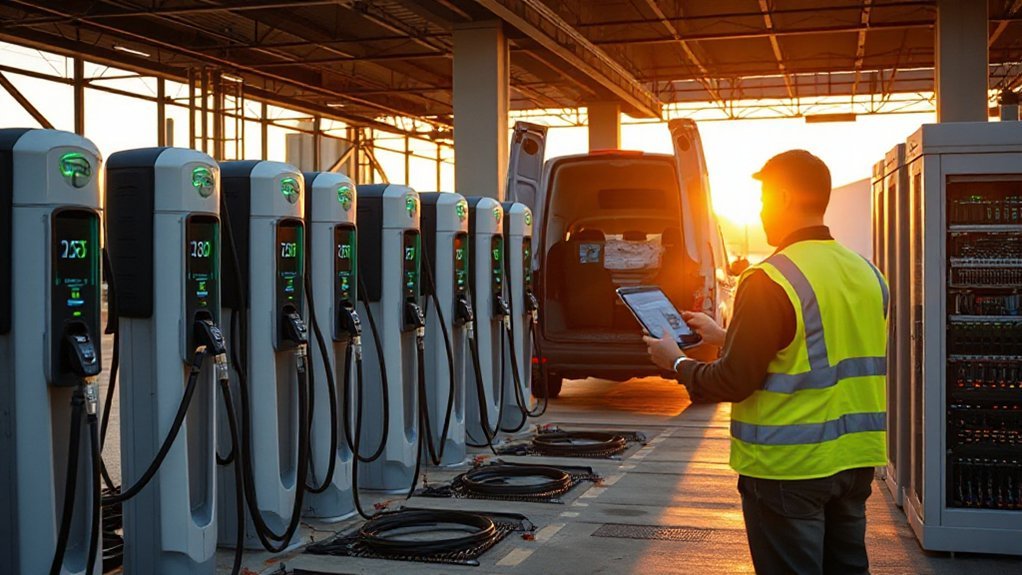
You set explicit uptime KPIs (e.g., ≥97% per NEVI) and track MTBF, MTTR, and session success rates per site and connector in real time via telemetry and audit logs. You instrument chargers and backends to forecast failures (contactors, cooling, comms) and schedule predictive maintenance windows, parts staging, and technician dispatch before outages. You enforce SLAs and root-cause reporting with automated alerts, spare-parts policies, and change management to maintain compliance and cut truck rolls and lifecycle cost.
Uptime Metrics Tracking
Consistently measuring charger uptime requires a precise definition, standardized telemetry, and auditable calculations. You should codify “available” states at the connector level, excluding planned outages, and capture session start failures, power derates, and payment faults as downtime. Instrument stations with OCPP heartbeats, error codes, and meter values at sub-minute intervals, then reconcile with site controllers and cloud logs.
Define a defensible numerator and denominator: total minutes available divided by total scheduled minutes per connector. Publish SLA targets, and automate regulatory reporting with immutable event streams and change logs. Apply privacy compliance by aggregating user data, minimizing retention, and pseudonymizing identifiers. Use anomaly detection to flag data gaps, and run independent spot checks. Audit quarterly and disclose methodology. Align APIs with open, testable schemas standards.
Predictive Maintenance Scheduling
Uptime telemetry forms the labeled feature set for predictive maintenance scheduling that reduces MTTR and prevents avoidable downtime. You aggregate charger health signals, enrich them with weather, grid events, and session anomalies, then train classifiers to flag pre-failure conditions with SLA-aware thresholds. You sequence work orders by risk, customer impact, and travel-time constraints, optimizing Technician coordination and Parts logistics to hit uptime targets and safety codes.
| Input | Action |
|---|---|
| Thermal drift | Derate, dispatch |
| Relay chatter | Swap contactor |
| RCD nuisance trips | Inspect earth, recalibrate |
| High CRC errors | Update firmware, reroute traffic |
You align schedules with utility curtailment windows, site access policies, and labor rules. You track precision/recall, time-to-dispatch, first-time-fix rate, and inventory turns, feeding results back to retrain models and refine spares staging across your network.
User Experience: Discovery, Access, and Payment
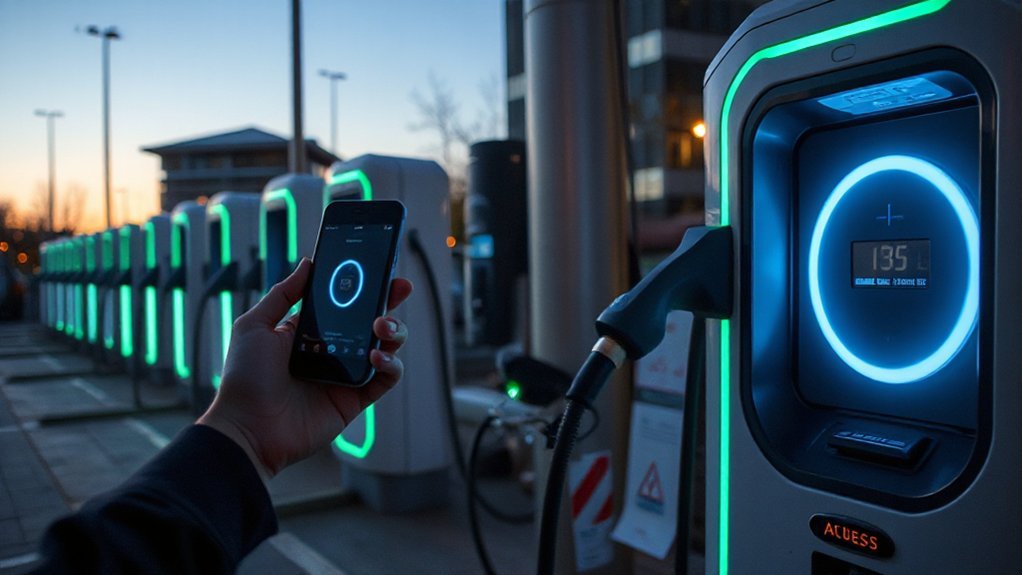
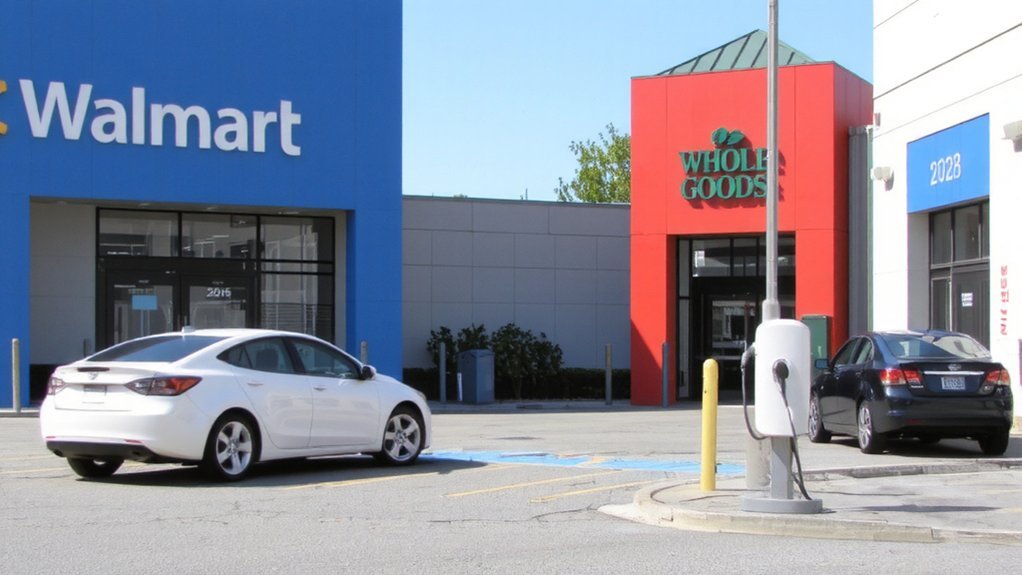

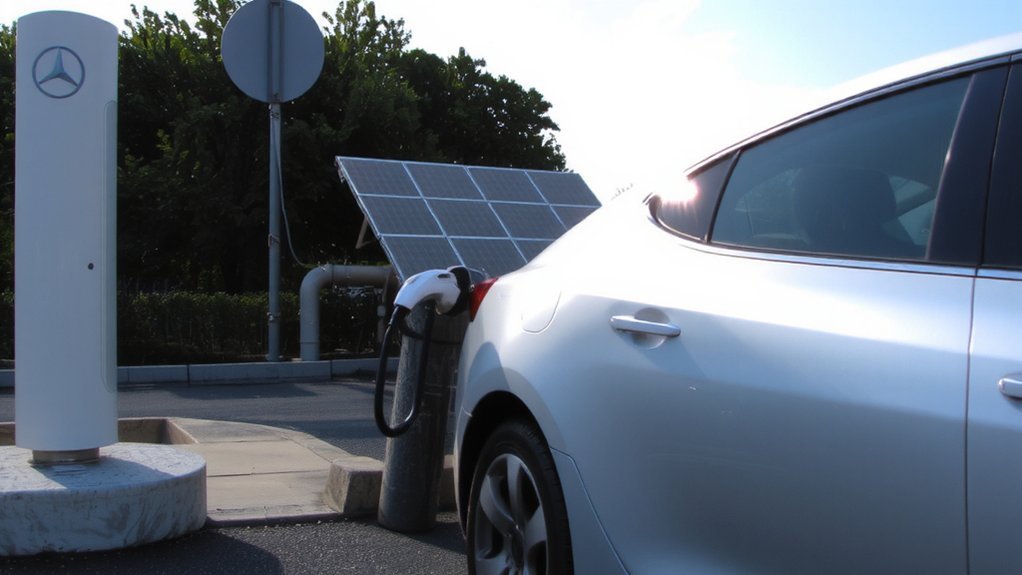

How do drivers find, start, and pay for a charge without friction? You integrate standardized wayfinding interfaces, real-time availability, and ADA-informed accessibility design into apps and signage. Publish OCPI endpoints to expose location, connector types, pricing, uptime, and plug-share status. Use reliable geocoding and curb-level instructions to cut search time by 30%. Enable cross-network roaming via OCPP/OCPI plus ISO 15118 QR/NFC credentials. Support tap-to-pay (EMV), mobile wallets, and RFID, with transparent per-kWh and idle-fee pricing. Cache credentials offline to handle weak coverage. Localize UI for language, currency, and tariffs. Comply with NEVI rules on uptime, open access, and pricing transparency. Provide receipt APIs, VAT-compliant invoices, and dispute workflows. Instrument funnels, measure session start success, and A/B test flows. Report KPIs publicly to build trust.
Smart Charging, Load Management, and V2G
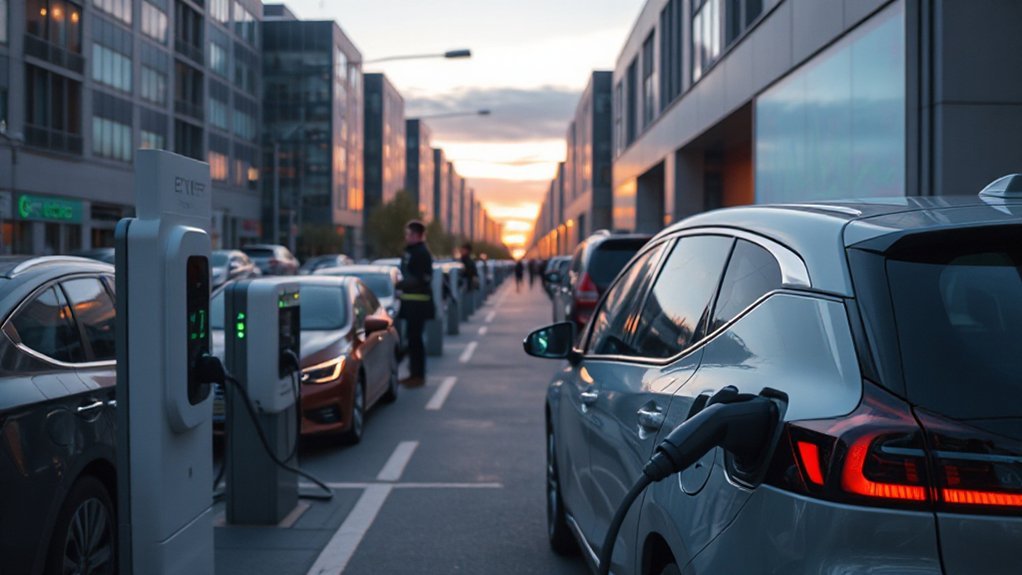
You deploy dynamic load balancing to allocate kW across ports based on feeder limits, state-of-charge, and demand charges, routinely cutting site peaks by 20–40% while staying within interconnection constraints. You schedule charging against time-of-use and real-time prices, plus demand-response calls, yielding 15–30% energy-cost reductions without breaching service-level targets. You enable V2G with ISO 15118-20 and IEEE 1547-compliant controls, aggregating resources for wholesale market participation under FERC Order 2222 while meeting warranty, metering, and cybersecurity requirements.
Dynamic Load Balancing
Orchestrating charger power in real time maximizes throughput without breaching grid or site limits. You continuously reallocate kW across ports using feeder headroom, phase balance, and vehicle state-of-charge, respecting UL 1741, IEEE 1547, and site protection settings. With ISO 15118 telemetry, you’ll cap instantaneous demand, prevent nuisance trips, and prioritize critical fleets. Your controller enforces hard constraints (service capacity, transformer thermal limits) and soft ones (driver priority, session SLAs), while logging decisions for Algorithm Auditing and dispute-ready Liability Allocation. Use state estimation and predictive queues to preempt overloads; shed or ramp sessions within 100–500 ms. Expose OpenADR and OCPP controls so utilities can signal curtailments. Verify fairness metrics (Gini, wait-time percentiles) and resilience KPIs under N-1 faults and DER contingencies, and cyber event scenarios.
Time-Of-Use Optimization
While tariffs increasingly concentrate costs into evening peaks, time-of-use optimization schedules smart charging, load management, and V2G across day-ahead, intra-day, and 1–5 minute horizons to cut cost and reduce grid stress. You align charge profiles to TOU price spreads (often 2–4x between off-peak and peak) and demand charges, throttling ports 20–80% based on feeder headroom and ISO forecasts. Algorithms ingest OpenADR events, weather, and occupancy to prioritize kWh when marginal emissions and locational marginal prices are lowest. You segment drivers via Behavioral Segmentation, then run Education Campaigns to boost opt-in rates and adherence. Policy rules—IEEE 2030.5, OCPP smart charging, and utility EV tariffs—govern controls and settlement. KPIs include peak clipping (≥30%), bill savings (10–25%), charger utilization, and exception minutes across sites and fleet depots.
Vehicle-To-Grid Integration
Leveraging bidirectional EVs turns chargers into controllable DERs that deliver peak shaving, frequency response, and capacity while earning market and tariff revenues. You orchestrate smart charging and V2G dispatch via ISO signals, feeder limits, and building EMS constraints, using SoC, degradation models, and locational marginal prices to optimize cycles and maintain availability SLAs.
You align interconnection, metering, and UL 1741/IEEE 1547 compliance, then aggregate assets into virtual power plants to bid into capacity, ancillary services, and demand charge management. Load management uses OpenADR/OCPP to coordinate setpoints and mitigate transformer thermal limits. Quantify battery wear costs with empirical cycle aging curves; embed them in bids and warranties. Address policy frameworks, data privacy, and taxation. Secure indemnities, cyber coverage, and structured insurance models for fleet owners.
Roaming, Pricing Transparency, and Billing Models
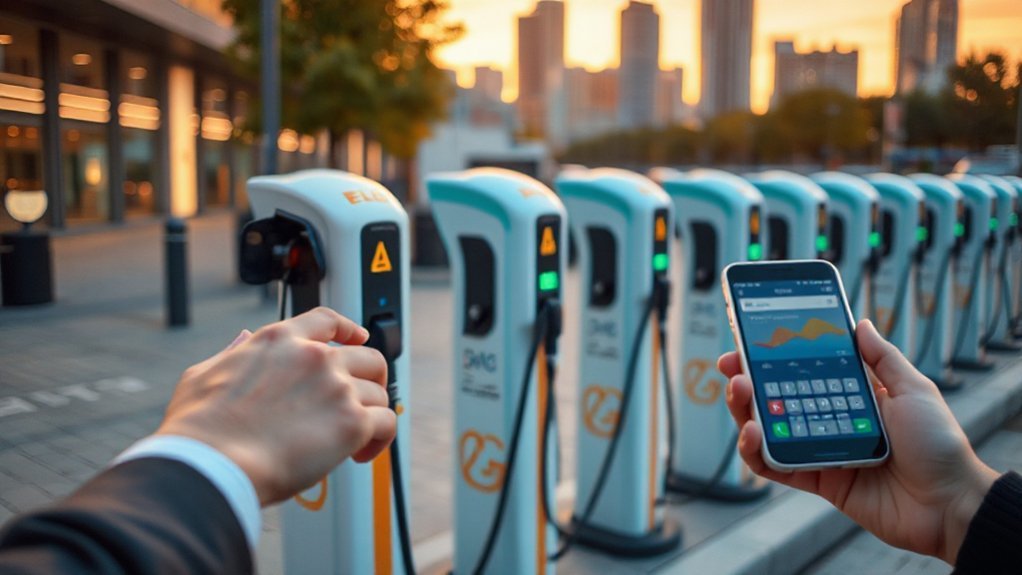
Although networks still run diverse tech stacks and business rules, effective roaming depends on interoperable protocols (OCPI for eMSP–CPO roaming, OCPP for charger control) and e-roaming hubs (e.g., Hubject, GIREVE) that enable contract-based access, PnC via ISO 15118-2/20, and token federation (RFID/app). You should verify Cross border Pricing and Regulatory Compliance: AFIR mandates ad-hoc access and price disclosure; consumer law requires clear units, taxes, FX; VAT rules vary by country.
Deliver pricing transparency by publishing OCPI Tariffs (kWh, time, session, idle) and separating roaming markups, fees, and local surcharges. Use ISO 15118 contract certificates for PnC billing, with PSD2 SCA for card-on-file top-ups. Offer pay-as-you-go, subscription, and fleet invoicing; itemize CDRs, meter values, and receipts. Reconcile eMSP–CPO settlements with SLAs, clauses, and chargeback workflows.
Data-Driven Services for Operators and Fleets

Pricing transparency and interoperable roaming lay the groundwork for analytics that improve network performance and fleet TCO. With standardized data schemas and secure APIs, you fuse charger telemetry, vehicle SOC, and dispatch KPIs to drive decisions in real time.
Transparent pricing and roaming enable real-time decisions by unifying telemetry, SOC, and dispatch KPIs.
- Predictive maintenance: apply anomaly detection on session currents, connector temps, and retry codes to cut downtime and SLA penalties.
- Energy and demand management: forecast load, align smart charging with tariffs, and automate curtailment to avoid peak charges.
- Fleet route optimization: combine charger availability probabilities with dwell-time models and driver schedules to minimize detours and missed windows.
- Compliance and carbon reporting: calculate grid-intensity-adjusted kWh, attribute emissions by trip, and generate auditable datasets for CSRD, SEC, and ZEV mandates.
Operationalize insights via closed-loop controls and robust dashboards.
Conclusion
You orchestrate charging networks like a well-tuned grid engine: align OCPP, OCPI, and ISO 15118 with PKI Plug&Charge, enforce SLAs for 99%+ uptime, sub-4h MTTR, and >95% session success. You optimize siting, feeder limits, and demand charges via dynamic load management and V2G. You deliver roaming, transparent tariffs, VAT-compliant receipts, and auditable billing. With telemetry-driven predictive maintenance and cybersecurity hygiene, you scale fleets and public access while meeting regulatory reporting, incentives, and market design requirements.