
You can install a 240V Tesla circuit yourself—but only if you pull a permit, follow NEC continuous-load sizing at 125%, verify panel capacity with proper load calcs, and use GFCI/AFCI where required. You must lockout/tagout, torque to spec, and bond/ground correctly. Or you can hire a licensed electrician to shoulder the risk, inspection, and liability. Which path actually protects your home?
Key Takeaways
- Permits and inspections are required by the AHJ; unpermitted work risks insurance claims and resale complications.
- EV charging is a continuous load; perform NEC Article 220 load calculation and size at 125% of nameplate current.
- DIY can mount conduit and plan routing; a licensed electrician handles panel work, permits, load calcs, and outlet selection to meet code.
- Pros ensure GFCI/AFCI, correct breaker-wire-device matching, voltage-drop review, proper torque, and commissioning tests; DIY mistakes can cause overheating or nuisance trips.
- Cost: DIY is cheaper but riskier; professional installation costs more but delivers code compliance, documentation, and long-term reliability.
What a 240V Tesla Charging Circuit Requires
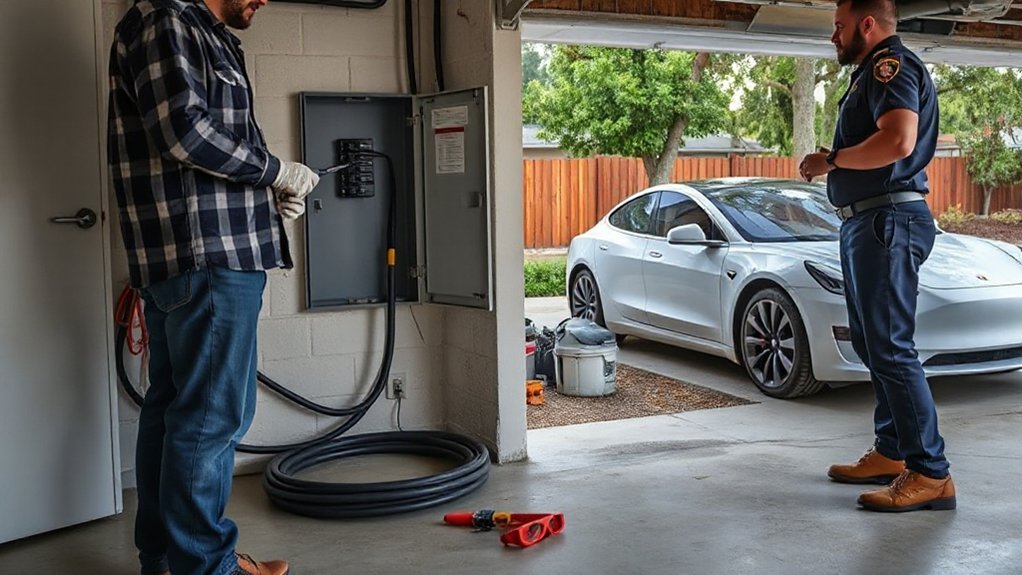
Foundation first: a 240V Tesla charging circuit needs a dedicated, correctly sized branch circuit installed to NEC and local code. Size the breaker and conductors for a continuous EV load at 125% of the charger’s maximum current. Use copper conductors, correct insulation temperature rating, and an equipment grounding conductor bonded at the service. Choose a NEMA 14-50 receptacle or a hardwired Wall Connector; match device rating to circuit ampacity. Provide GFCI protection where required and maintain proper working clearances. Terminate with listed fittings, torque lugs to spec, and label the circuit. Verify the EVSE pilot signal handshakes and set charge current limits accordingly. Update the charger and vehicle firmware updates before commissioning. Test voltage, polarity, ground fault, and insulation resistance. Record all test results.
Permits, Code Compliance, and Local Regulations
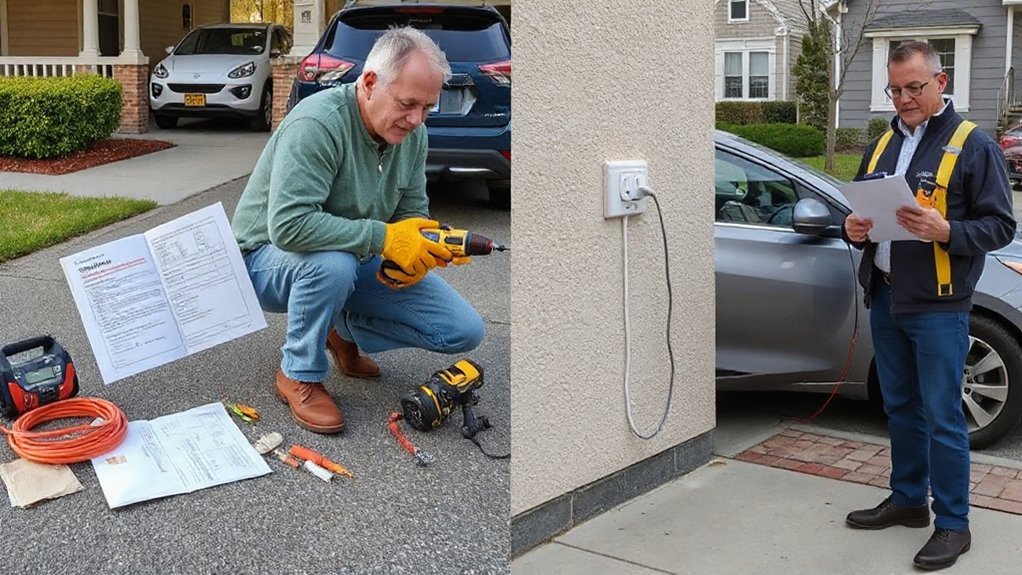
Before you run wire, confirm whether your jurisdiction requires an electrical permit and inspection for a 240V EV charging circuit. You must meet the latest NEC Article 625 and any stricter local amendments, including conductor sizing, overcurrent protection, GFCI requirements, and receptacle type. Contact your authority having jurisdiction (AHJ) to confirm permit steps, plan review, and inspection timing so your installation passes on the first visit.
Permit Requirements
Although requirements vary by jurisdiction, you must secure an electrical permit and final inspection from your local authority having jurisdiction (AHJ) to install a 240V outlet for EV charging. Apply before any work begins. Expect application fees, plan review, and inspection scheduling. If you hire a licensed electrician, they’ll usually pull the permit, but you remain responsible for access, clear labeling, and corrections. Unpermitted work can void insurance and stall real estate transactions.
- Confirm scope: new circuit, receptacle type, amperage, and location to match the permit description.
- Provide load calculation and panel details so the reviewer can verify capacity.
- Be present for inspection; keep the workspace safe, panel directory updated, and corrections completed promptly.
Obtain approval before energizing the outlet; retain permit records onsite.
NEC and Local Codes
While the NEC sets the safety floor, your AHJ’s adopted edition and local amendments govern your 240V EV outlet installation. Verify which NEC year your jurisdiction enforces and note the Adoption Timeline; many cities lag one or two cycles. Read the local Amendment Process notes for EV branch circuits, GFCI requirements, receptacle types, conduit, and labeling. Confirm whether a continuous load calculation at 125% applies to your charger setting and circuit size. Check garage GFCI and AFCI mandates, mounting heights, working clearances, and receptacle location relative to vehicles. If you DIY, document conductor sizes, breaker ratings, and equipment listings to pass inspection. When in doubt, ask the AHJ’s plans examiner. Compliance protects you, preserves insurance, and avoids rework and potential fines, delays, and hazards.
Panel Capacity and Load Calculations
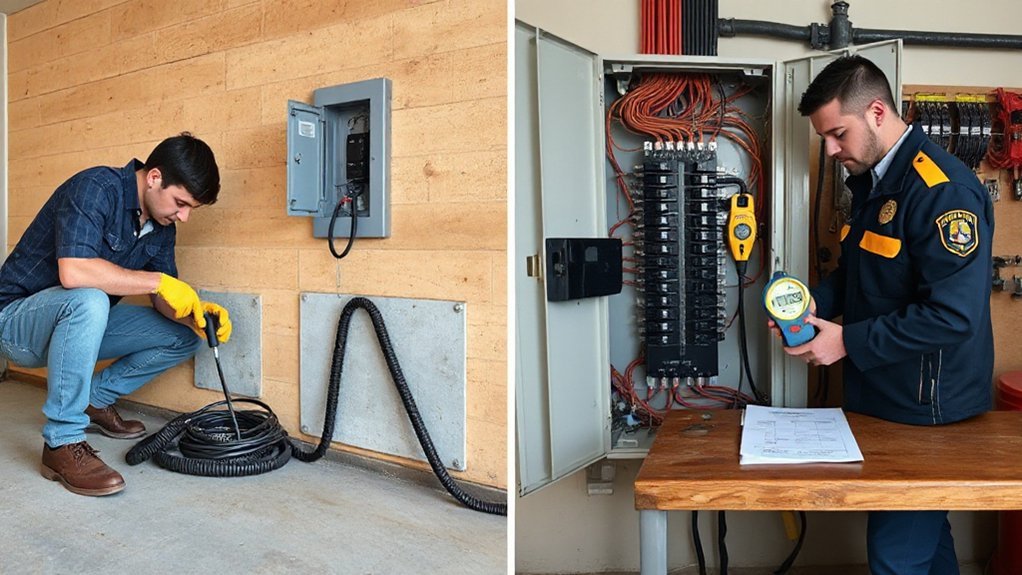

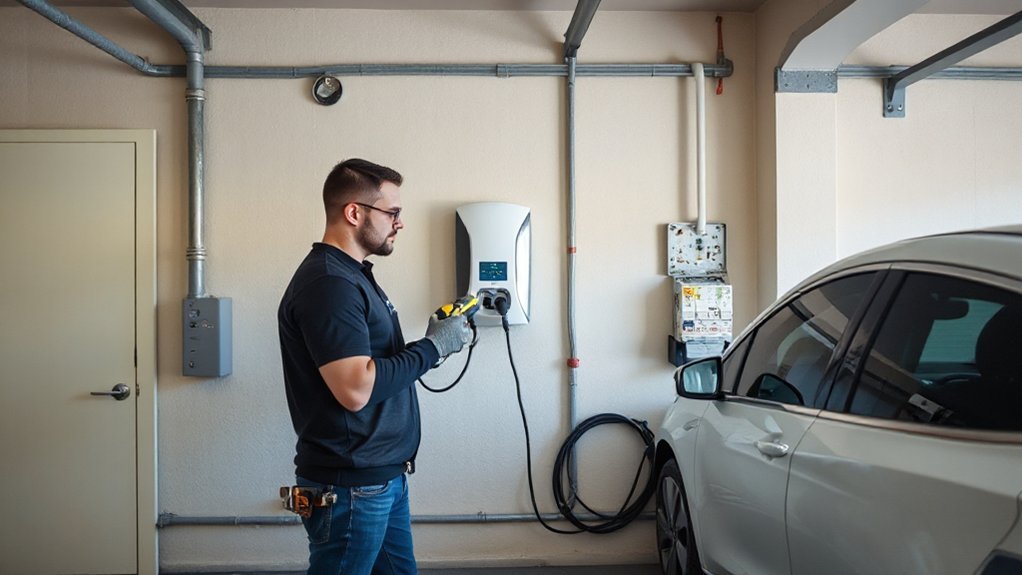
Verify your service amperage and panel bus rating before adding a 240V EV circuit. Apply continuous-load rules—treat EV charging as continuous and use 125% when sizing the breaker and conductors. Perform an NEC 220 load calculation to confirm the panel’s available capacity; if the demand plus the EV load exceeds ratings, plan a service or panel upgrade.
Service Amperage Basics
Before you add a 240V charging outlet, determine your service ampacity and perform a code-compliant load calculation to confirm capacity. Read the main breaker rating, then verify conductor size and meter rating so the service components align. Understand amperage terminology: service ampacity isn’t the same as available fault current or branch-circuit rating. Inventory fixed appliances, general lighting, and demand factors per NEC Article 220, then total the calculated load in amperes at 240V. Compare that value to your service rating with margin for future circuits. If numbers don’t fit, plan a service upgrade or load management.
- Don’t trust amperage myths; confirm values from labels and nameplates.
- Keep neutral and grounding conductors distinct and bonded.
- Document calculations, panel schedules, and panel labeling after final verification.
Continuous Load Rules
With your service capacity confirmed, apply NEC continuous-load rules to EV charging circuits. EVSE is a continuous load, so size the branch circuit at 125% of the nameplate current. Use a breaker rated to handle that continuous current (80% of its rating unless listed for 100% at the enclosure). Match conductor ampacity to the adjusted load using the correct temperature column for terminations (often 75°C) and account for ambient and bundling derates. Use a dedicated circuit; don’t share neutrals on multi-wire circuits without a common disconnect. Choose receptacles and inlets with equal or higher ratings. Torque all terminals to specification to prevent overheating, Insulation Degradation, and Terminal Corrosion. Maintain clear working space and label the circuit “EV Charging – Continuous Load” at the panel.
Calculating Available Capacity
How do you know your service and panel can accept a 240V EVSE without overloading? Perform a NEC Article 220 load calculation. Identify service rating, main breaker, and bus rating. List fixed appliances and general lighting per square footage. Treat the EVSE as a continuous load at 125% of nameplate. Compare calculated demand to service ampacity and panel bus; leave margin for future solar integration and backup loads. If totals exceed 80% of service or feeder, downsize charging current, schedule charging, or upgrade. Document calculations and keep permits; an inspector will verify compliance on-site safely.
- Incorporate demand forecasting to model seasonal and EV usage peaks.
- Verify feeder and branch conductors meet ampacity; assess voltage drop.
- Consider subpanel, service upgrade, or managed charging for resiliency.
Choosing the Right Outlet: NEMA 14-50 Vs 6-50 Vs Hardwired Wall Connector
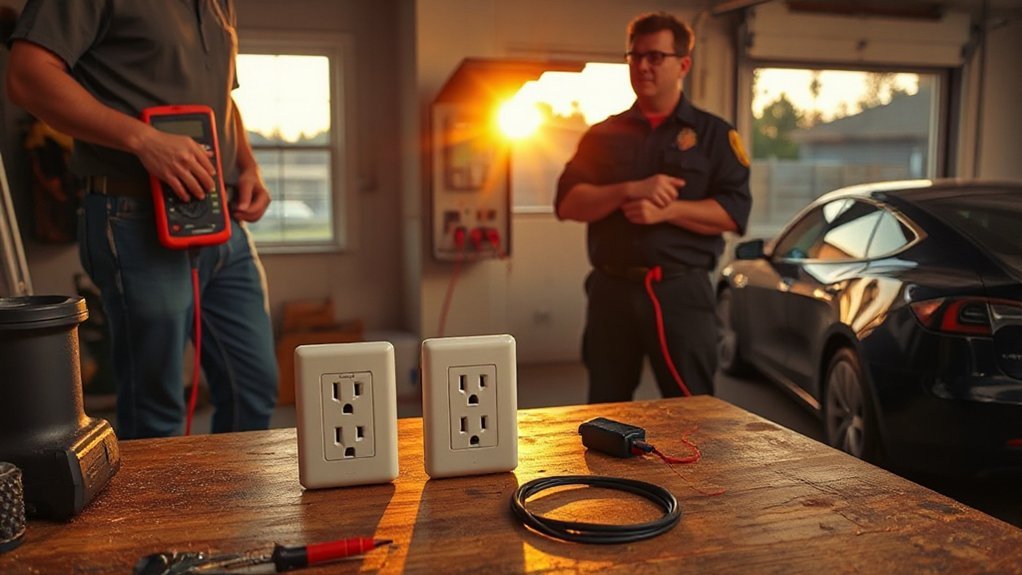
Which option best fits your load, wiring, and inspection requirements: NEMA 14-50, NEMA 6-50, or a hardwired Wall Connector? Choose based on circuit ampacity, code, and your vehicle’s charging needs. A 14-50 provides hot-hot-neutral-ground, supports appliances, broad Brand Compatibility, and easy use with Travel Adapters; however, garages often require a GFCI breaker and in-use covers, which can nuisance-trip. A 6-50 is hot-hot-ground only, good when no neutral exists, fewer terminations, and typically lower device cost; it also needs a GFCI where required. Both receptacles serve 32–40A continuous loads on 50A circuits (80% rule). A hardwired Wall Connector on a 60A circuit delivers up to 48A, avoids receptacle heat/failure points, and simplifies load management. Verify conductor size, breaker type, labeling, and permit/inspection before final energizing.
DIY Scope, Tools, and Safety Precautions
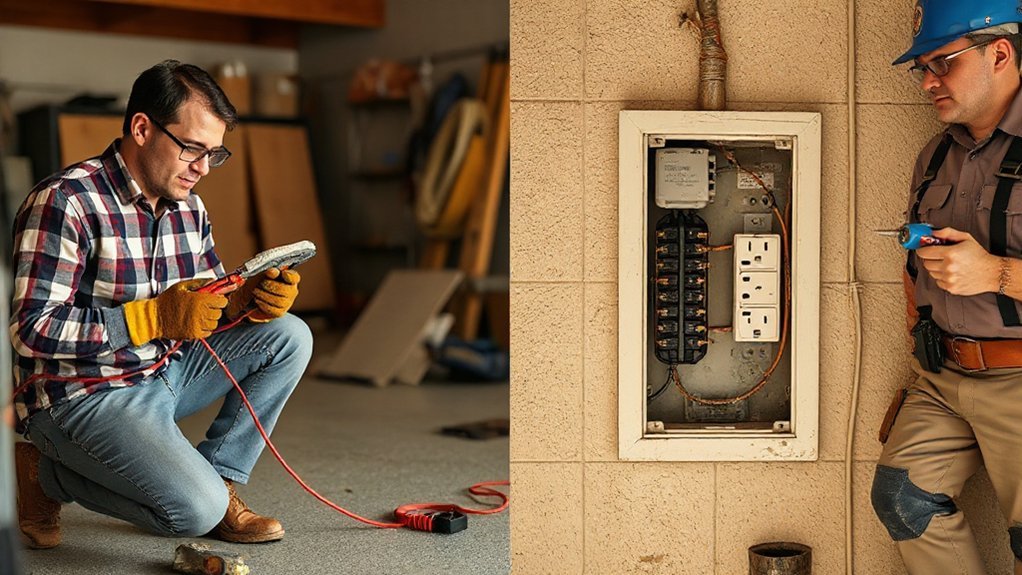
Before pulling wire or mounting hardware, define what you can legally and safely do yourself and what must go to a licensed electrician. Pull permits, verify service capacity, and follow NEC and local amendments strictly. You can plan circuit routing, mount enclosures and conduit, and label; leave upgrades, panel work, and final terminations to a pro if required by code. Use a torque screwdriver, multimeter rated CAT III/IV, bender, tape, and gloves. Wear Protective eyewear and PPE. De-energize, lockout/tagout, and test for absence of voltage. Maintain Tool maintenance: calibrate meters, inspect cords, and replace worn bits.
- Verify breaker, conductor, and receptacle ratings match the calculated load.
- Maintain clearances and GFCI/AFCI requirements where applicable.
- Document installation with photos, labels, and torque records.
Common Pitfalls and How People Get It Wrong
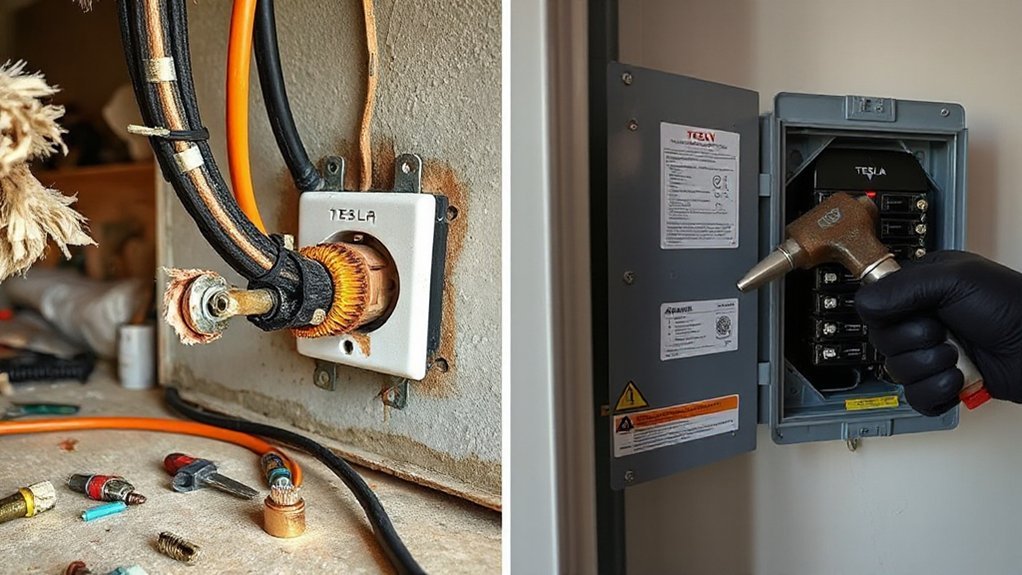
Even when intentions are good, most mistakes trace back to ignoring code rules for continuous loads and the specifics of EV charging. You oversize the receptacle or undersize the circuit: installing a NEMA 14-50 on a 40A breaker, or running 8 AWG on a 60A breaker. You forget the 125% rule, so a 32A charger belongs on a 40A circuit, not 30A. You skip required GFCI protection in garages. You mix neutral and equipment ground, or land them on a bonded bar in a subpanel. You mis-torque lugs, exceed box or conduit fill, and ignore voltage-drop on long runs. Confirmation bias and a Shortcut mentality push you to use adapters or extension cords. Labeling, receptacle orientation, and proper clamp strain relief get overlooked often.
What Licensed Electricians Deliver and When to Call One
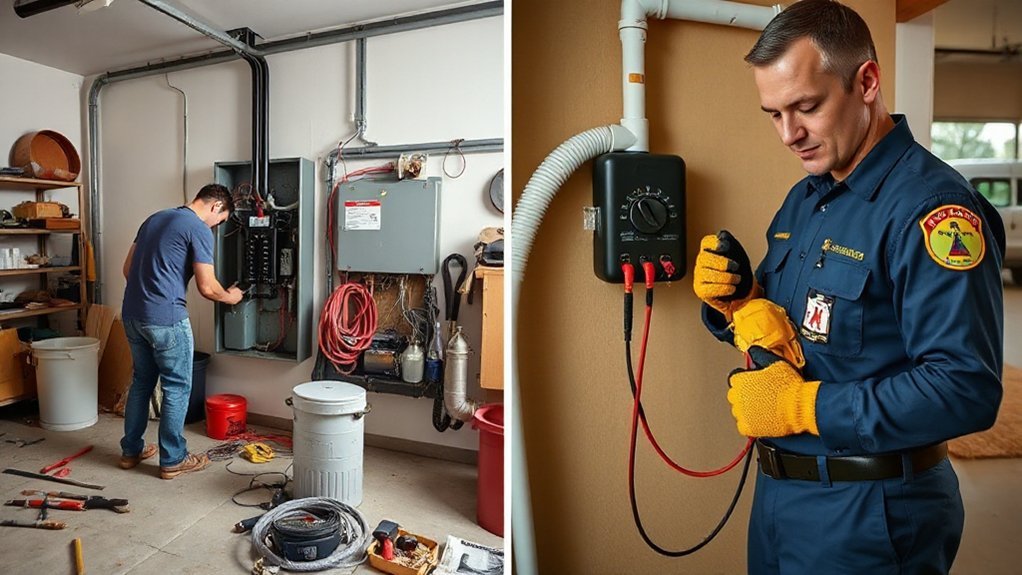
When should you bring in a licensed electrician? You call one when service capacity is uncertain, panel space is tight, grounding is questionable, or local permits are required. A pro performs load calculations, pulls permits, coordinates inspections, and installs a code-compliant 240V receptacle or hardwired EVSE. They size conductors and breakers correctly, verify grounding and bonding, follow torque specs, and label circuits. They test GFCI protection, measure voltage drop, and document the work. You gain warranty benefits, clear liability, and emergency response if problems arise.
- Prevents nuisance tripping and overheating through precise load balancing and routing.
- Makes sure permits and inspections align with NEC, utility rules, and insurer expectations.
- Provides documentation, labeling, and training so you operate and maintain equipment safely over time at home.
Cost, Time, and Long-Term Reliability Trade-Offs
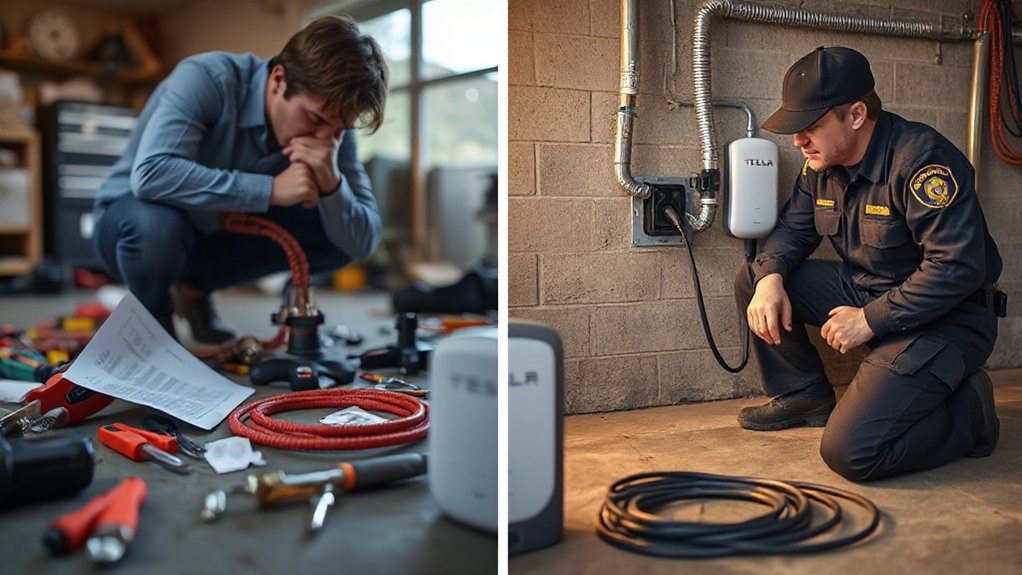
With a licensed electrician handling permits and code, you still face trade-offs in cost, timeline, and durability. A pro install costs more up front—labor, materials, permit fees—but you gain validated load calculations, correct conductor sizing, GFCI where required, and documentation for insurance. That reduces fire risk, nuisance tripping, and workmanship disputes. It also protects equipment and can limit warranty impact if a fault occurs.
DIY can save cash and start sooner, but errors—undersized wire, loose terminations, or missing AFCI/GFCI—shorten outlet life and risk heat damage. Re-inspections or corrections erase savings and delay charging. Over time, a compliant installation maintains voltage stability, which treats the vehicle charger better and preserves resale value. If you’re uncertain, budget for professional commissioning and final inspection by city inspectors.
Conclusion
You can install a 240V Tesla circuit, but treat it like life-safety work. Pull a permit, size at 125% continuous load, verify panel capacity, and torque to spec with GFCI/AFCI where required. Think visually: sketch a one‑line—utility → meter/main → panel → 2‑pole breaker → sized conductors → receptacle or Wall Connector → vehicle. If that diagram or the calculations feel uncertain, hire a licensed electrician. It costs less than a failed inspection—or a fire.