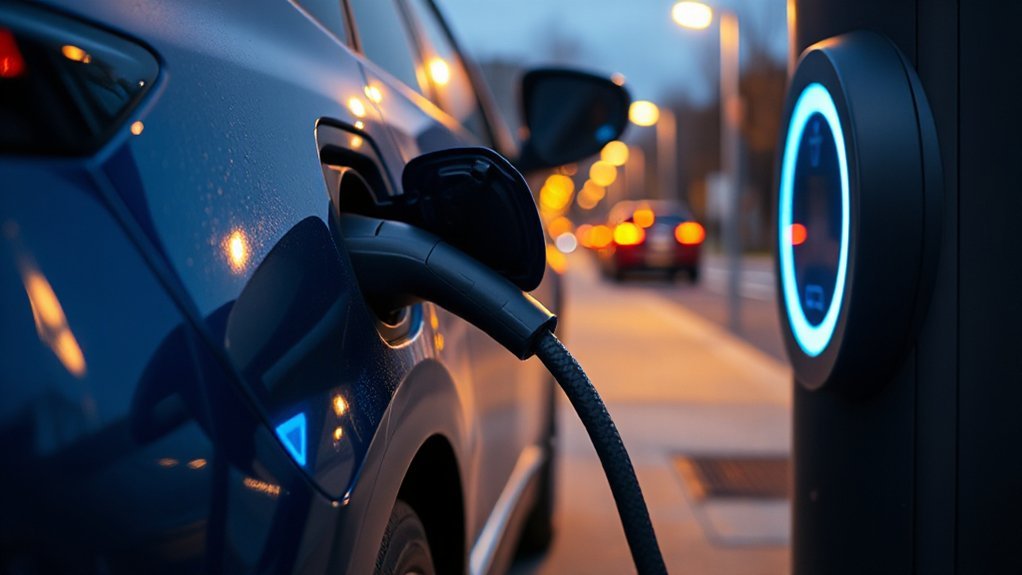
Picture a charging network that breathes with the grid as you scale homes, workplaces, fleets, and public sites. You use right-sized, interoperable hardware, smart charging, and load balancing to cut demand charges and shift sessions to cleaner hours. With storage, bidirectional capabilities, OCPP compliance, roaming, and 24/7 cloud support, you secure uptime and automated billing. The strategic choice now is where to capture the most value—at the meter, the vehicle, or the cloud?
Key Takeaways
- ENGIE delivers turnkey EV charging for fleets, workplaces, and cities, covering site assessment, design, installation, and operations.
- Smart charging and load balancing optimize tariffs, cap peak demand, and align charging with driver schedules.
- Integration with onsite renewables and storage enables low-carbon charging, peak shaving, and grid-friendly services, including demand response.
- OCPP/OCPI interoperability supports multi-vendor hardware, secure remote management, and roaming with transparent billing.
- Cloud management and 24/7 NOC provide monitoring, remote fixes, SLAs, and analytics on uptime, costs, and carbon intensity.
End-to-End Charging Solutions for Homes, Workplaces, Fleets, and Public Spaces
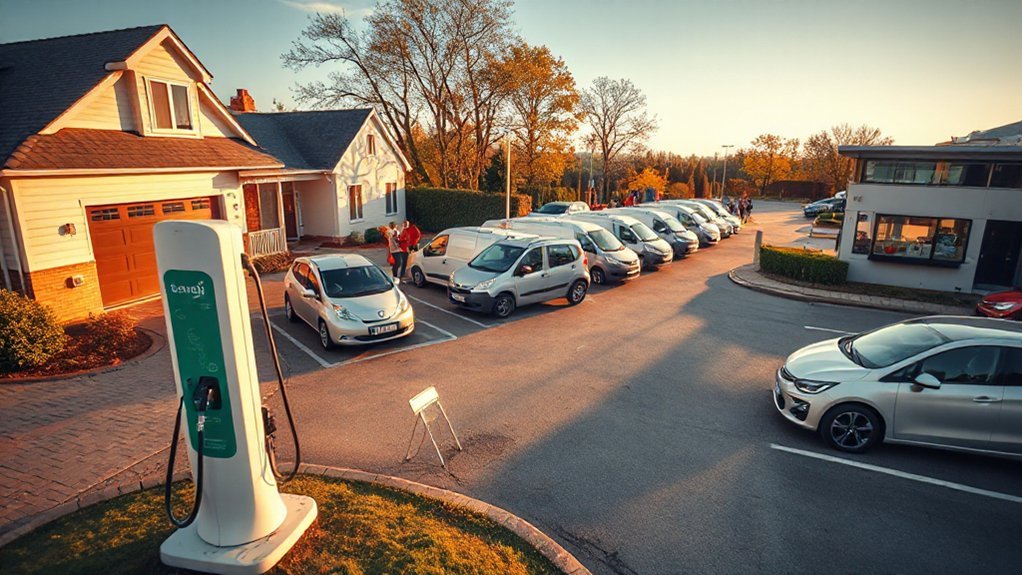
How do you scale EV charging without inflating costs or carbon? You standardize an end-to-end model that meets homes, workplaces, fleets, and public spaces with right-sized hardware, resilient design, and measurable outcomes. Start with rigorous Site Assessment: map demand profiles, grid capacity, parking churn, accessibility, and permitting timelines. Specify interoperable chargers, ADA-compliant layouts, renewable-ready wiring, and vandal-resistant enclosures. Streamline construction with prefabricated pedestals and trench minimization to cut embodied emissions. Establish commissioning protocols that verify uptime, safety, and kWh accuracy. Build lifetime value through Maintenance Planning: define SLAs, spare-part staging, remote diagnostics triggers, and field response tiers. Track utilization, dwell times, and reliability against sustainability KPIs, then iterate siting and capacity. You reduce lifecycle footprint, accelerate adoption, and protect capital while enhancing user experience.
Smart Charging, Load Balancing, and Cost Optimization

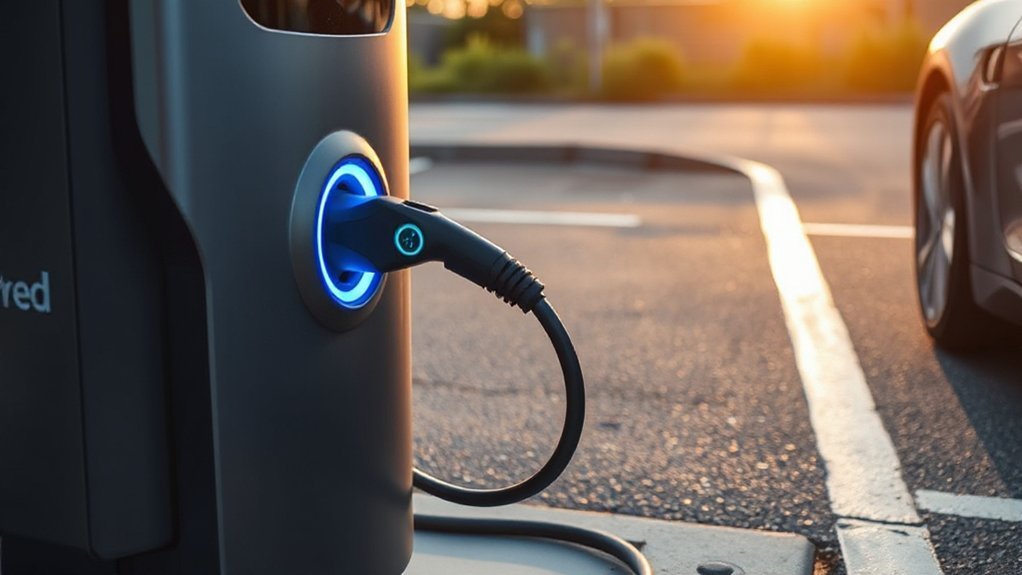
While energy prices and grid carbon intensity fluctuate hourly, smart charging turns variability into savings and resilience. You orchestrate chargers with dynamic setpoints, aligning power draw with tariffs, demand charges, and driver needs. Intelligent session scheduling prioritizes state-of-charge, dwell time, and departure deadlines, so vehicles get exactly what they need—no more. Real-time load balancing caps site peak, protecting transformers and avoiding costly upgrades. Predictive cost forecasting uses historical usage and tariff curves to simulate scenarios, choose the least-cost plan, and verify outcomes. You enforce kW budgets per feeder, shift flexible loads to off-peak windows, and cap simultaneous sessions when constraints tighten. Dashboards surface KPIs like cost per kWh, peak kW avoided, and carbon intensity, guiding continuous optimization. Results: lower bills, higher uptime, compliance assured.
Renewable Integration and Grid-Friendly Energy Services
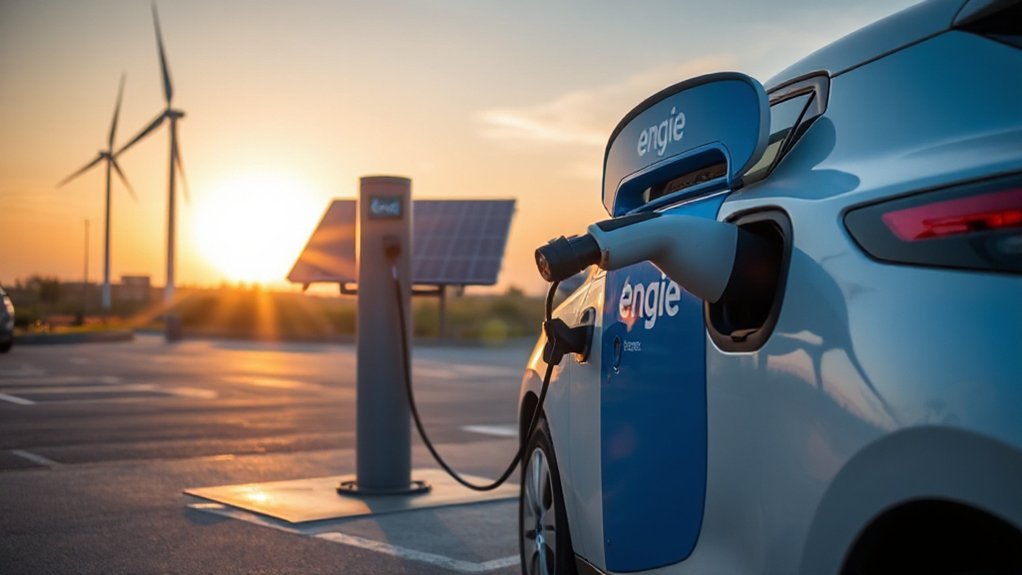
Linking EV charging to on-site renewables and grid services turns your network into a flexible, low-carbon energy asset. You schedule charging against solar and wind output using renewable forecasting, align sessions with real-time carbon intensity, and discharge grid storage to shave peaks. With bidirectional chargers, you monetize demand response, frequency regulation, and capacity programs while protecting driver experience through dynamic reservations and SOC thresholds. You standardize site controllers to prioritize kWh with the lowest marginal emissions and verify impact with interval data. Optimized power flows raise self-consumption, cut grid imports, and stabilize voltage. You also hedge volatility by stacking revenues across energy, ancillary, and resiliency services, using predictive controls that adapt to weather, tariffs, and fleet mobility patterns. Results: lower costs, higher uptime, resilience.
Interoperability, OCPP Compliance, and Roaming Partnerships

To make those grid-optimized strategies work at scale, you need interoperable chargers, software, and partners built on open standards. You standardize on OCPP 1.6/2.0.1, enforce Protocol Harmonization across vendors, and validate security profiles. That enables reliable session control, remote diagnostics, and future-proof upgrades. You extend reach via OCPI-based roaming, so drivers charge anywhere while you retain cost and carbon transparency. With automated Billing Reconciliation and token management, you close revenue gaps, cut disputes, and quantify avoided emissions across networks. Open APIs simplify integrations and reduce vendor lock-in.
| Metric | Outcome |
|---|---|
| Roaming coverage | +30% sessions captured across partner CPOs |
| Interop pass rate | 98% device compliance under conformance testing |
| Dispute cycle time | -60% via automation and unified charge detail records |
| Emissions accounting | Site-to-network traceability with auditable ledgers |
Deployment, Cloud Management, and 24/7 Support

As you scale sites across regions, we execute standardized deployments with grid-ready designs, rapid permitting support, and commissioning SLAs to hit time-to-energize targets without overruns. We prioritize low-embodied-carbon materials, right-size transformers, and sequence civil works to minimize rework. Our playbooks cut average install time 22% and reduce change orders 30%.
Through cloud orchestration, you manage chargers, tariffs, and firmware centrally while Edge provisioning secures local resiliency during backhaul outages. We stream telemetry, forecast demand, and schedule smart charging against carbon intensity, lowering lifecycle emissions and energy cost. Automated alerts escalate to 24/7 NOC with tiered Incident response, remote fixes, and truck-roll avoidance. KPIs—uptime, MTTR, session success—stay transparent in dashboards. You get audit trails, role-based access, and API hooks for ERP and mobility at scale.
Conclusion
You’re weighing a theory: smarter charging slashes costs and carbon without sacrificing uptime. Test it. With Engie EV Charging, you deploy right-sized hardware, OCPP‑compliant interoperability, and load‑balancing that trims demand charges by double digits. You align sessions with renewables, tap storage and V2G, and monetize grid services. Cloud analytics, roaming, and 24/7 support drive growth. Pilot a site, benchmark kWh, peak kW, uptime, and CO2e. You’ll see performance scale—and sustainability pay off for you.